

When you're on the hunt for a great high-protein snack, you're looking for something that packs a punch with at least 10-15 grams of protein per serving. The best ones are built on whole-food ingredients, keep added sugar to a minimum, and include a dose of healthy fats. Think Greek yogurt, cottage cheese, hard-boiled eggs, or for a grab-and-go savory crunch, a clean option like Gym Snack.
What Makes a Snack Genuinely High in Protein
The snack aisle is a minefield of marketing terms. Labels shouting "high protein," "healthy," and "all-natural" can be incredibly misleading. More often than not, these are just buzzwords plastered on a glorified candy bar to make it seem like a smart decision.
To find snacks that actually work for you, you have to become a savvy label reader and look past the flashy promises. It's about understanding what's really going on inside that wrapper.
The Power Trio of Nutrients
A truly great snack isn't just a protein bomb. It's a well-rounded team of nutrients working in sync to fuel your body and keep you feeling full. Think of it as a balanced meal in miniature. Here are the three key players:
- Protein: This is your MVP. It’s essential for building and repairing muscle, but it's also a powerhouse for curbing hunger and keeping your energy levels steady. The goal is to get a solid dose without a ton of extra calories.
- Healthy Fats: Found in foods like nuts, seeds, and avocados, these fats are crucial for hormone health and play a huge role in satiety—that feeling of being satisfied after you eat.
- Fiber and Complex Carbs: This is your slow-burning fuel source. Getting your carbs from whole foods provides fiber, which slows down digestion and prevents the sugar rush—and subsequent crash—that you get from simple sugars.
When these three work together, the result is sustained energy and lasting fullness. A snack that's all protein but lacks healthy fats and fiber will often leave you looking for another snack just an hour later.
Understanding Protein Density
Not all protein is created equal, especially when it's packaged as a snack. A "high protein" claim can be deceptive if the snack is also packed with calories from sugar or processed fats.
The real secret is to check the protein-to-calorie ratio. A truly effective snack gives you a significant amount of protein for its total calorie count. For instance, a 150-calorie snack with 15 grams of protein is a much smarter choice than a 300-calorie snack that has the exact same amount.
A truly effective high-protein snack prioritizes nutrient density. It delivers a substantial protein punch while keeping calories from sugar and processed ingredients in check, ensuring every bite works for you, not against you.
If you start looking at labels, you'll see this everywhere. Some "high-protein" bars might have 20-25 grams of protein per 100g, but they can be calorie bombs. On the other hand, a high-protein yogurt might have 10-12 grams for the same amount, but with far fewer calories. Knowing how to properly increase your protein intake is all about making these kinds of informed choices.
Once you start thinking this way, you can easily cut through the marketing hype and pick snacks that actually support your health and fitness goals.
How to Read Nutrition Labels Like a Pro
The front of a snack package is marketing. It’s designed to grab your attention with exciting words like “protein-packed,” “natural,” or “keto-friendly.” But the real story—the one that tells you if a snack will actually fuel your body or just lead to a sugar crash—is always on the back.
Learning to decode the nutrition label is the single most important skill you can have in your pocket. Think of it this way: the front of the box is the movie trailer, full of flashy highlights. The nutrition facts panel is the full, unedited film. It tells you everything.
The Five-Second Scan: What to Check First
Before you get lost in the details, a quick scan can tell you 90% of what you need to know. When you pick up a potential snack, your eyes should immediately jump to three key spots: the serving size, the protein content, and the ingredients list.
This quick check is your first line of defense against marketing tricks. You might discover that a tiny bag actually contains two or three servings, which means you have to double or triple all the numbers. Or you’ll see a snack that boasts high protein but comes with an equally high dose of sugar.
Spotting the Red Flags on a Label
Once you know what to look for, the "unhealthy" snacks pretending to be good for you become incredibly obvious. Certain ingredients and numbers are immediate red flags that should make you put the package right back on the shelf.
Here are the biggest warning signs to watch for:
- Hidden and Added Sugars: Sugar has dozens of aliases. Be on the lookout for high-fructose corn syrup, cane juice, dextrose, maltodextrin, or any kind of "syrup." A solid rule of thumb is to stick to snacks with less than 5 grams of added sugar per serving.
- Sky-High Sodium: A little sodium is fine, but many processed snacks are loaded with it, which can leave you feeling bloated. Aim for snacks that stay under 200mg of sodium per serving.
- Unhealthy Fats: Scan the ingredient list for the phrase "partially hydrogenated oils." That's just a fancy name for trans fats, which you should avoid completely. Be cautious with high levels of saturated fat from processed sources, too.
- A Novel-Length Ingredient List: If the ingredient list is a paragraph long and full of words you can't pronounce, that's a tell-tale sign of a heavily processed product. The best snacks are made from simple, recognizable, whole-food ingredients.
The Green Flags: Signs You've Found a Winner
Just as there are red flags, there are also clear green flags that signal you’ve found a high-quality snack. These are the markers of a nutrient-dense option that will actually support your health and fitness goals.
A truly great protein snack doesn’t just have protein sprinkled in; it’s built on a foundation of clean, functional ingredients. The best options have a short ingredient list you can actually understand, with a whole-food protein source listed right near the top.
Prioritize snacks that show these positive signs:
- Whole Foods First: Ingredients are listed by weight, so the first one matters most. Look for whole foods like nuts, seeds, chickpeas, or a clean source like pea protein leading the charge.
- Strong Fiber Content: Fiber is what helps you feel full and supports good digestion. A snack with 3 grams of fiber or more is an excellent choice that will keep you satisfied for hours.
- Allergen-Conscious Formulas: For anyone with sensitivities, clearly labeled, clean formulas are a must. For more on this, check out our guide to delicious gluten-free high protein snacks to see how simple ingredients can make all the difference.
Label Showdown: Healthy Protein Snack vs. Unhealthy Pretender
Let's put this all together with a side-by-side comparison. Seeing two labels next to each other makes the good, the bad, and the ugly crystal clear. This is the kind of practice that builds real confidence for your next trip to the grocery store.
Healthy Protein Snack Label vs Unhealthy Pretender
| Nutritional Feature | Example of a Great Choice | Example of a Poor Choice |
|---|---|---|
| Protein Source | Pea Protein Isolate, Almonds | Soy Protein Isolate, Collagen Hydrolysate |
| Protein per Serving | 15 grams | 15 grams |
| Added Sugar | 1 gram | 18 grams (from corn syrup, fructose) |
| Fiber Content | 5 grams | 1 gram |
| First 3 Ingredients | Chickpeas, Pea Protein, Sunflower Oil | Brown Rice Syrup, Soy Nuggets, Cane Sugar |
| Ingredient List | Short and recognizable | Long and full of chemical-sounding names |
As you can see, the protein count might be the same, but the "Unhealthy Pretender" is really just a glorified candy bar, packed with sugar and cheap fillers. The "Great Choice," on the other hand, delivers high-quality protein without any of the nutritional baggage. This is the difference-maker.
Matching Your Snack to Your Specific Goal
Let's get one thing straight: the idea of a single "best" high-protein snack is a myth. The perfect snack is the one that lines up with what your body needs in a specific moment. It’s less about finding a holy grail product and more about building a smart toolkit of options for your unique schedule and goals.
Think of it like this: you wouldn't wear hiking boots to go swimming. In the same way, the ideal snack to fuel a workout is completely different from what you need to crush an afternoon craving or rebuild muscle after a tough gym session.
Getting this right is the key to making your snacks work for you. It turns mindless munching into a strategic tool for better performance, sustained energy, and hitting your health targets. When you match the right nutrients to the right time, you unlock the real power of your food.
Fueling Up for a Workout
Before you hit the gym, your body needs one thing: accessible energy. The goal is to give it fuel that's easy to digest and won't sit like a rock in your stomach. A common mistake is loading up on heavy fats or too much fiber right before a workout, which can slow digestion and leave you feeling sluggish or uncomfortable.
The winning formula here is a combination of easily digestible protein and carbohydrates. Carbs provide that immediate energy to power through your reps, while a moderate dose of protein helps protect your muscles from breaking down and gets them ready for recovery.
- Good Example: An apple with powdered peanut butter. You get quick-acting carbs from the fruit and lean protein from the powder, which has most of the slow-digesting fat removed.
- Good Example: A small bowl of Greek yogurt topped with a handful of berries. The yogurt delivers quality protein, and the berries add that quick carb boost.
If you're curious about how specific nutrients can impact your endurance, looking into different foods that boost stamina can help you fine-tune your pre-workout plan.
Optimizing Post-Workout Recovery
After a workout, your mission changes entirely. Your muscles are like a sponge, primed to soak up nutrients for repair and growth. This is your window of opportunity, and a snack packed with fast-absorbing protein is non-negotiable. Research shows that getting protein within 30-45 minutes after exercise can give muscle protein synthesis a serious boost.
Aim for a snack that delivers at least 15-20 grams of protein. The focus should be on high-quality sources that provide the essential amino acids your body is crying out for.
- Top Choice: A clean, plant-based protein snack like Gym Snack delivers over 15g of pea protein per serving. It's crunchy, savory, and super easy to digest.
- Another Option: A scoop of whey or plant-based protein powder shaken up with water or a high-protein milk like Fairlife.
The post-workout window is your prime opportunity to give your muscles exactly what they crave. A high-quality, easily digestible protein source is the most direct route to effective recovery and growth.
By looking for low sugar and a short list of ingredients you can actually recognize, you can be confident your snack is truly helping your recovery.
Managing Weight and Crushing Cravings
When weight management is the name of the game, your snack needs to deliver maximum staying power. The goal is satiety—something that keeps you feeling full and satisfied for hours, so you aren't tempted by less-healthy options later on.
Protein is the undisputed champion of satiety because of the way it helps regulate hunger hormones. When you pair it with fiber and some healthy fats, you create a powerful trio that slows down digestion and keeps blood sugar stable, effectively shutting down cravings before they even start. You can dive deeper into this topic in our guide to high protein snacks for weight loss.
- Hard-boiled eggs: A classic for a reason. They offer a perfect balance of protein and healthy fats.
- Cottage cheese: This is loaded with slow-digesting casein protein, which provides a sustained feeling of fullness.
- Savory roasted chickpeas: They give you that satisfying crunch you crave, along with a solid hit of both protein and fiber.
The Top Categories of High Protein Snacks
Alright, now that you know what to look for on a label, let's dive into the fun part: the food itself. The world of high-protein snacks is huge, with great options for every diet, craving, and schedule. Knowing the main categories helps you build a solid rotation of go-to snacks you won't get tired of.
This isn't just a niche trend, either. The demand for genuinely healthy, protein-packed snacks is exploding. In fact, the global protein snacks market is expected to hit USD 42.1 billion by 2034, which is a huge leap from its USD 21.4 billion valuation in 2024. This growth is all about a collective shift toward healthier living and a stronger fitness culture. If you're curious about the market forces at play, you can dig into the full report on Market.us.
Let's break down the main players so you can stock your pantry and gym bag like a pro.
Dairy-Based Powerhouses
For those who can handle dairy, this category is home to some of the most effective and easily absorbed protein sources out there. These classics are loaded with casein and whey proteins, a dynamic duo for muscle repair and keeping you full for hours.
- Greek Yogurt: A single cup can easily pack over 20 grams of protein. My advice? Stick with the plain versions to dodge all the added sugar, then toss in your own berries or a handful of nuts.
- Cottage Cheese: This is the undisputed champion of slow-digesting protein, making it a perfect snack to crush hunger pangs for the long haul. A one-cup serving delivers a hefty 25 grams of protein.
The obvious downside here is the dairy itself. If you're lactose intolerant or sensitive, these are a no-go. Also, always be on the lookout for hidden sugars in the flavored versions.
Plant-Based Champions
The plant-based aisle has absolutely blown up with innovation, and it's fantastic. You can now find powerful protein snacks made entirely without animal products. Plus, they're often packed with fiber and other micronutrients, making them incredibly well-rounded choices for vegans, vegetarians, or anyone just looking to mix things up.
- Roasted Chickpeas and Edamame: I love these for their savory crunch. They deliver a great mix of protein and fiber. A half-cup of roasted chickpeas has about 7-8 grams of protein, while dry-roasted edamame can give you up to 14 grams per serving.
- Plant-Based Protein Snacks: This is where products like Gym Snack really shine. It’s been specifically designed to give you a serious protein boost in a super convenient form. With over 15g of pea protein per bag, it delivers a savory, cheesy crunch that hits the spot without any dairy, soy, or gluten.
These options are typically easy on the digestive system and better for the planet. Just remember to still read the labels to make sure you aren't getting a ton of sodium or inflammatory oils.
The best plant-based snacks prove that you don't need dairy or meat to hit your protein goals. They combine clean protein sources with fiber and flavor, offering a satisfying and nutrient-dense way to fuel your body.
On-The-Go Protein Bars and Bites
Protein bars are the ultimate convenience food, but they are also the wild west of the snack world. The quality ranges from truly excellent, nutrient-dense fuel to what is essentially a candy bar with a bit of protein sprinkled in. Your best weapon here is a sharp eye for reading labels.
When you're picking a bar, aim for at least 15 grams of protein and keep the added sugar under 5 grams. The ingredient list should be short, with whole foods you recognize right at the top. Even the best bars are still highly processed, so I recommend using them for those chaotic days, not as an everyday staple.
Savory Meat and Jerky Options
When you need a savory, high-protein kick, it's hard to beat meat-based and vegan jerky snacks. They provide complete proteins with all the essential amino acids your body needs for building and repairing muscle.
- Louisville Jerky: A one-ounce piece usually has between 9-12 grams of protein. Look for brands with minimal sugar and no added nitrates.
- Meat Sticks: These are perfectly portioned for convenience, offering around 6-9 grams of protein per stick.
The main thing to watch with jerky and meat sticks is the sodium, which can be sky-high. They also don't have any fiber, so pairing them with an apple or some veggie sticks makes for a much more balanced snack.
Nutrient-Dense Nuts and Seeds
Don't overlook the simple power of nuts and seeds. They offer a fantastic combination of protein, healthy fats, and fiber, which is the magic formula for sustained energy and feeling full.
- Almonds: Just a one-ounce handful gives you about 6 grams of protein along with heart-healthy monounsaturated fats.
- Pumpkin Seeds (Pepitas): These little green seeds are a protein powerhouse, packing around 9 grams of protein per ounce.
While they're nutritional gold, nuts and seeds are also calorie-dense. If you're managing your weight, portion control is key. A one-ounce serving is the sweet spot to get all the benefits without going overboard on calories.
Making Your Own High-Protein Snacks at Home
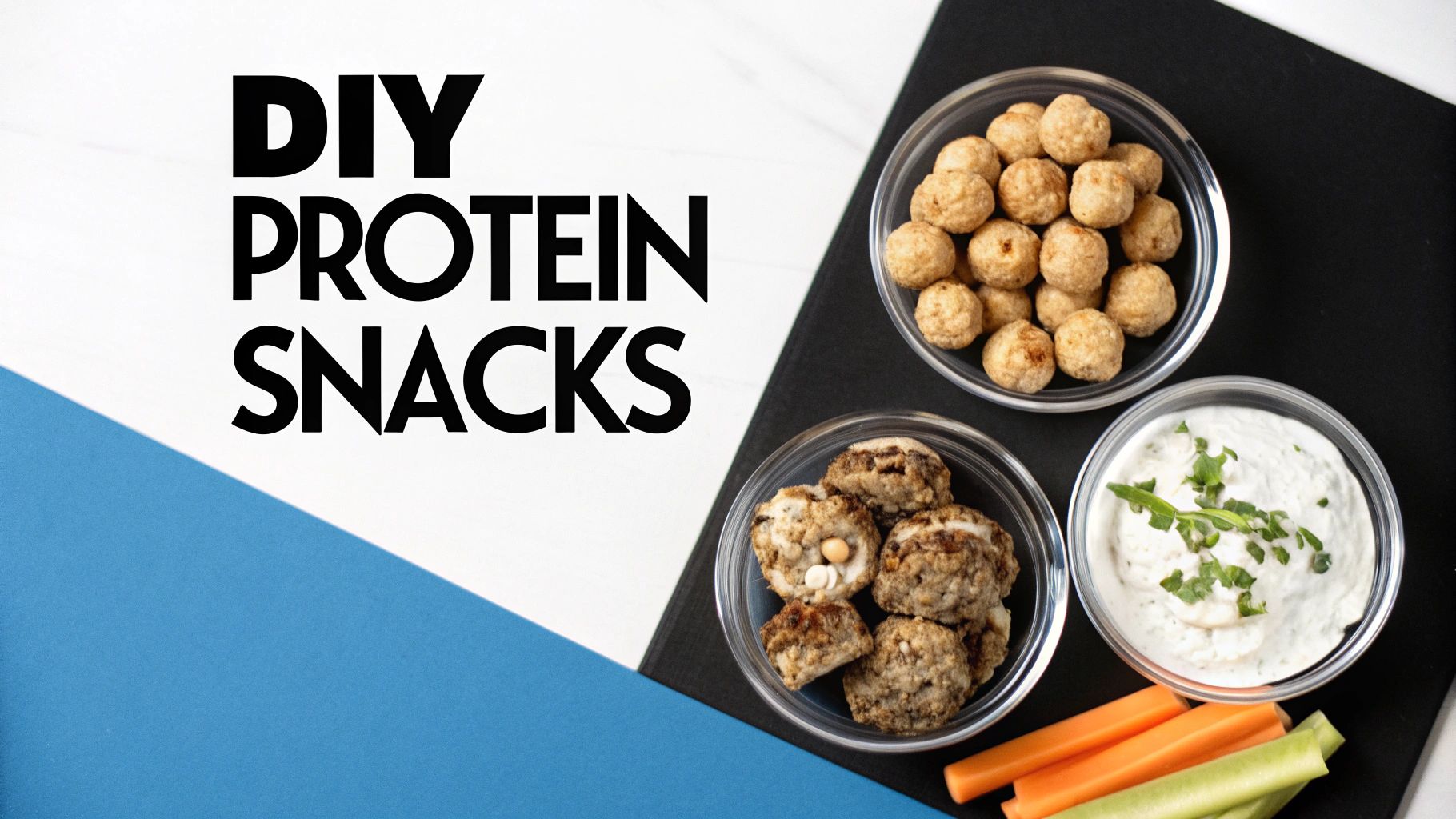
While grabbing a pre-packaged snack is undeniably convenient, nothing beats making your own. When you're in the driver's seat, you control every single ingredient—no mystery preservatives, no sneaky sugars. You get to fine-tune the flavors and macros to perfectly match what your body needs.
The best part? You don’t need to be a chef or spend your entire Sunday in the kitchen. We're talking about simple, no-fuss recipes that are big on both nutrition and flavor. These are perfect for whipping up a batch to have on hand all week.
No-Bake Protein Energy Balls
This is probably the easiest and most versatile grab-and-go snack you can make. All you need is one bowl and a few minutes—no oven required. Feel free to play around with different protein powders, nut butters, and add-ins to find your perfect combo.
What You'll Need:
- 1 cup rolled oats
- ½ cup vanilla or chocolate protein powder
- ½ cup almond or peanut butter
- ⅓ cup honey or maple syrup
- ¼ cup ground flaxseed or chia seeds
- 2-4 tablespoons of water or almond milk (just enough to get the right texture)
How to Make Them:
- Toss all the dry stuff (oats, protein powder, seeds) into a large bowl and give it a good mix.
- Add the wet ingredients (nut butter, honey/syrup) and stir until you have a thick, sticky dough.
- If it feels too crumbly, add water or milk one tablespoon at a time until it holds together easily.
- Roll the dough into 1-inch balls and set them on a tray lined with parchment paper.
- Pop them in the fridge for at least 30 minutes to firm up. They’ll keep in an airtight container in the fridge for up to a week.
Estimated Nutrition (per ball): 120 calories, 6g protein, 5g fat, 14g carbs, 3g fiber
Savory Greek Yogurt Dip
Forget the store-bought stuff. This creamy, high-protein dip is a game-changer for your veggie game. It's amazing with bell peppers, cucumbers, and carrots, giving you a truly satisfying and nutrient-packed snack.
What You'll Need:
- 1 cup plain Greek yogurt (I find 2% or full-fat works best for creaminess)
- 1 tablespoon lemon juice
- 1 clove garlic, minced
- 2 tablespoons fresh dill, chopped
- Salt and pepper to taste
How to Make It:
- In a small bowl, combine the Greek yogurt, lemon juice, and minced garlic.
- Stir in the fresh dill, then season with salt and pepper until it tastes just right.
- For the best flavor, cover it and let it hang out in the fridge for at least 20 minutes before serving.
Estimated Nutrition (per ¼ cup serving): 60 calories, 10g protein, 1g fat, 3g carbs, 0g fiber
Crispy Roasted Chickpeas
Got a craving for something salty and crunchy? These roasted chickpeas are the perfect answer. They blow potato chips out of the water and pack a serious punch of protein and fiber that actually keeps you full.
Making your own snacks is about more than just saving money. It’s an opportunity to create food that is perfectly aligned with your health goals, free from the hidden sugars and additives common in packaged goods.
What You'll Need:
- 1 (15-ounce) can of chickpeas, rinsed and drained
- 1 tablespoon olive oil
- ½ teaspoon paprika
- ½ teaspoon garlic powder
- Salt and pepper to taste
How to Make Them:
- Preheat your oven to 400°F (200°C).
- Now for the most important step: dry the chickpeas thoroughly with a paper towel. This is the secret to getting them super crispy.
- Toss the dry chickpeas with olive oil and all the seasonings until they're evenly coated.
- Spread them out in a single layer on a baking sheet.
- Bake for 20-25 minutes, giving the pan a good shake halfway through, until they’re golden brown and perfectly crunchy.
Estimated Nutrition (per ½ cup serving): 150 calories, 7g protein, 6g fat, 18g carbs, 6g fiber
And if you're looking for another comforting homemade option, check out how to make a delicious high protein oatmeal—it's not just for breakfast
Here is the rewritten section, designed to sound like an experienced human expert.
Why Smart Snacking is a Game-Changer
Figuring out how to choose the right high-protein snacks isn't just a diet trick—it's a massive upgrade to your entire nutrition strategy. What you eat between meals can either be a roadblock or a catalyst for your health goals. When you learn to read the story a nutrition label tells and pick snacks that fit what your body needs, every bite becomes a powerful tool helping you get where you want to go.
This isn't just a niche idea anymore; it's quickly becoming the norm. The market for healthy, high-protein snacks hit a staggering USD 5,381.8 million in 2024 and is on track to more than double by 2033. This boom is fueled by a collective lightbulb moment: people are realizing just how crucial protein is for everything from muscle repair to feeling full and satisfied. If you want to dive deeper into the numbers, you can find more insights about the high-protein snacks market on Grand View Research. You're part of a huge wave of people shifting toward more intentional eating.
What's Next on the Snack Aisle?
The world of snacking is always changing, and the future looks pretty exciting. It's all about finding that sweet spot between health and convenience.
Here’s what to keep an eye out for:
- Smarter Protein Sources: We'll see more creative plant-based options, like proteins from peas and fava beans, step into the spotlight. They pack a punch and are much kinder to the planet.
- Snacks with Benefits: Get ready for snacks that do more than just fill you up. Think additions like probiotics to support gut health or adaptogens to help you manage stress.
At the end of the day, smart snacking is about putting you back in control. It's knowing you have the power to nourish your body well, one thoughtful choice at a time.
So stay curious, keep an eye on those labels, and always choose the snacks that leave you feeling strong, energized, and ready for whatever comes next.
Got Questions About High-Protein Snacks? We've Got Answers.
Stepping into the world of high-protein snacking can feel a little overwhelming at first. Let's tackle some of the most common questions that come up, so you can snack smarter and feel confident about your choices.
How Much Protein Is Actually in a "High-Protein" Snack?
You'll see "high-protein" slapped on a lot of labels, but what does that really mean? A good rule of thumb is to look for a snack with 10 to 20 grams of protein.
This range is the sweet spot. It's enough to kick hunger to the curb, keep your energy steady, and support your muscles without going overboard on calories. Think of 10 grams as a solid pick-me-up for that 3 PM slump. If you're looking for something more substantial, like after a tough workout or to hold you over until a late dinner, aiming closer to 20 grams is the way to go.
Is It Okay to Eat a Protein Snack Before Bed?
Yes, you absolutely can! In fact, the right kind of protein snack before bed can be a game-changer for muscle recovery. While you sleep, your body is in repair mode, and giving it the right fuel can make a huge difference.
The trick is to choose a protein that digests slowly, like the casein you find in Greek yogurt or cottage cheese. This provides a slow, steady stream of amino acids to your muscles all night long. Just keep it light and low in sugar to avoid messing with your sleep. A small scoop of cottage cheese is a classic for a reason.
A smart bedtime snack isn't about loading up on calories. It's about giving your body the building blocks it needs for overnight repair, turning your sleep into an active recovery session.
Are Protein Bars a Good Choice for a Daily Snack?
This is one of those classic "it depends" scenarios. Protein bars are undeniably convenient, but honestly, many of them are just glorified candy bars loaded with sugar, questionable fats, and a laundry list of artificial ingredients.
If you're going to grab a bar, be a label detective. Look for a short list of ingredients you can actually recognize, at least 15 grams of protein, a decent amount of fiber, and minimal added sugar. While they're great in a pinch, relying on whole-food snacks most of the time is always going to be the better move for your long-term health.
Ready to find a savory, crunchy snack that actually hits the mark? Gym Snack packs over 15g of clean, plant-based protein into every serving to crush your cravings and fuel your goals. Build your custom pack today!