

When you're looking for the best on-the-go protein snack, aim for something that packs 15-25 grams of protein and balances it with fiber and healthy fats. You'll also want to keep an eye out for low sugar and minimal artificial ingredients. Think savory plant-based crunch snacks, Greek yogurt, or a high-quality protein bar—these are the kinds of options that deliver sustained energy and support your muscles without the dreaded crash.
Your Guide to Smarter Snacking on the Move
Let's be honest: finding a genuinely healthy and satisfying snack when you're rushing around can feel like a lost cause. The snack aisle is a dizzying maze of flashy packaging and grand health claims, making it tough to tell what's actually good for you and what's just clever marketing.
This guide is here to cut through that confusion. We'll show you what really makes for a great protein snack when you're on the move, looking beyond just the protein number plastered on the front of the bag to focus on what truly fuels your body.
What Makes a Great Protein Snack
A truly effective snack does more than just quiet a rumbling stomach for a few minutes. It should work with your body to provide lasting energy and genuine satisfaction. The secret lies in finding snacks that get these three things right:
- Balanced Macros: A smart mix of protein, healthy fats, and fiber is the trifecta for sustained energy and feeling full.
- Clean Ingredients: Your body knows what to do with real, whole foods. Snacks made from ingredients you can actually recognize are far easier to digest and use as fuel.
- Satiety Mechanisms: The right nutrients can actually trigger your body's fullness hormones, keeping you satisfied longer and helping you sidestep mindless overeating.
It's clear people are catching on. The demand for convenient, health-first foods has exploded, with the global protein snacks market valued at around USD 4.92 billion and projected to hit USD 10.83 billion. That's a huge shift toward better snacking. You can explore more on the protein snacks market trends to see just how big this movement is.
An ideal protein snack should function like a well-oiled machine, delivering steady power for your body, not a quick jolt followed by an inevitable crash. Think of it as premium fuel for your personal engine.
Moving Beyond Sugary Bars
For years, the protein snack scene was completely dominated by sweet bars and shakes that were often glorified candy bars. Sure, they had protein, but they also came loaded with sugar, artificial sweeteners, and a laundry list of ingredients you couldn't pronounce.
This guide will give you a simple, clear framework for picking snacks that actually fit your health goals. Whether you're fueling a workout, trying to curb hunger between meals, or just need a nutritious option for a chaotic day, we've got you covered. We’ll dive into everything from decoding nutrition labels to understanding the real-world differences between plant-based and animal-based proteins. By the end, you'll know exactly how to make smarter choices that keep you energized and on track.
How to Read a Protein Snack Nutrition Label
Let's be honest, staring at a wall of protein bars in the snack aisle can feel overwhelming. But once you know what to look for, the nutrition label becomes your secret weapon for picking a winner. Think of it less like a list of boring numbers and more like a spec sheet for the fuel you’re putting in your body.
The big, bold protein number on the front of the package is just the headline. The real story is in the details on the back—the protein, fiber, fats, and sugars. Getting this combination right is the difference between sustained energy for your day and a disappointing crash an hour later.
The Protein Sweet Spot
First up, the main event: protein. To keep you full, repair muscle, and provide steady energy, you want to see 15-25 grams of protein per serving. This is the magic number—enough to kickstart your body’s fullness hormones and support muscle recovery, but not so much that it’s wasteful.
Going much higher than 30 grams in one go doesn't really offer extra benefits, since your body has a limit on how much it can use at once. Sticking to that 15-25 gram range is simply more efficient.
Fiber: The Unsung Hero of Satiety
Next, glance over to the fiber content. If protein is the engine, fiber is the cruise control. It ensures a slow, steady release of energy by slowing down digestion. Aim for a snack with at least 3-5 grams of fiber.
This protein-fiber partnership is what makes a great snack truly great. It’s what keeps your blood sugar stable and prevents that "I'm hungry again" feeling from creeping in too soon.
Decoding Fats and Sugars
When it comes to fats, quality over quantity is the name of the game. Look for healthy, unsaturated fats from whole-food sources like nuts and seeds. The numbers you need to watch are saturated fat (keep it low) and trans fat (which should always be 0 grams).
Sugar is the ultimate saboteur of an otherwise healthy snack. So many bars and bites are packed with it, often hiding behind sneaky names like corn syrup, dextrose, or agave nectar. Your target is less than 10 grams of sugar per serving—the lower, the better. Anything more will just set you up for a classic energy spike and crash.
To help you remember these targets, here's a quick reference table.
Quick Guide to the Ideal Protein Snack Profile
Use this reference to quickly evaluate snack labels and identify the optimal ranges for key nutrients that support energy and satiety.
| Nutrient | Ideal Range Per Serving | Why It Matters for Performance |
|---|---|---|
| Protein | 15–25 grams | Triggers satiety hormones (GLP-1/PYY) and supports muscle repair. |
| Fiber | 3–5 grams | Slows digestion, stabilizes blood sugar, and keeps you feeling full longer. |
| Total Sugars | < 10 grams | Prevents energy spikes and crashes, supporting sustained performance. |
| Saturated Fat | Low | Supports heart health; focus on snacks with healthy unsaturated fats. |
| Trans Fat | 0 grams | Offers no health benefits and should be completely avoided. |
This quick check helps you move beyond the marketing and focus on what truly fuels your body.
A truly balanced on-the-go protein snack offers more than just protein. It delivers a strategic combination of fiber for lasting fullness and healthy fats for sustained energy, all while keeping added sugars to a minimum.
Learning to scan for these numbers is a game-changer. Since many high-protein products fall into the supplement category, it’s helpful to know how to read supplement labels effectively to understand exactly what you're consuming.
Finally, take a peek at the ingredient list. The shorter, the better. You want to see real, recognizable foods at the top. This is also where you can spot potential allergens or ingredients you want to avoid. If you're navigating dietary needs, our guide on gluten-free high protein snacks can help you find options that are both powerful and safe. A clean, simple label is almost always a sign of a better product.
The Science of Staying Full After a Snack
Ever grab a snack, even one that screams "high protein" on the label, only to find your stomach growling again an hour later? It’s a common frustration, and there's some fascinating science that explains why it happens. Picking the best on the go protein snacks isn't just about hitting a protein number; it's about understanding what actually makes you feel full and satisfied.
Think of your body’s hunger cues as a complex communication system. When you eat, the right foods send powerful messages to your brain telling it, "Okay, we're good here, you can stop looking for food." Protein and fiber are the undisputed champions at sending these "I'm full" signals, and they do it by flipping on specific hormonal switches.
How Protein and Fiber Signal Fullness
Two of the most important hormones in this conversation are GLP-1 (Glucagon-like peptide-1) and PYY (Peptide YY). When protein and fiber land in your gut, they trigger the release of these hormones. This sets off a chain reaction: your stomach empties slower, and your brain gets a clear, decisive message that you're satisfied.
This hormonal response is the secret sauce for lasting fullness. A snack that's all sugar and refined carbs—like a sugary granola bar or a bag of chips—barely makes a blip on this system. You get a quick burst of energy, sure, but the fullness signals are weak, which is why you’re rummaging through the pantry again so soon.
To really nail your snacking strategy, you have to know what to look for on a nutrition label. This infographic breaks it down perfectly.
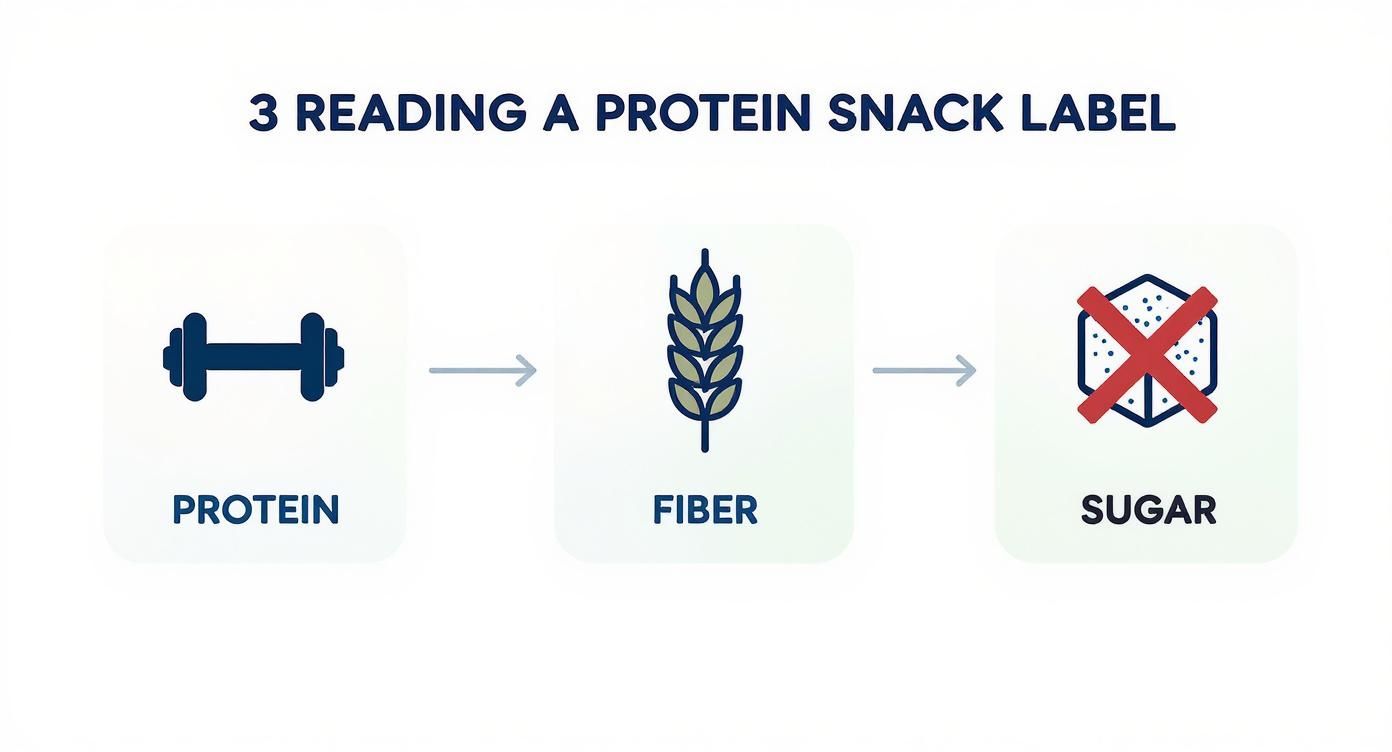
As you can see, the formula is simple: focus on protein and fiber while keeping sugar low. That’s the most reliable recipe for a snack that gives you lasting energy and keeps hunger at bay.
A snack rich in protein and fiber essentially tells your brain, "We've got the fuel we need; you can power down the hunger alerts for a while." This is why a balanced, macro-friendly choice offers sustained energy, not just a temporary fix.
The Impact of Different Protein Types
Here's another layer: not all proteins are created equal when it comes to digestion speed, and that directly affects how long you feel full. It helps to think of it like building a fire.
-
Fast-Absorbing Proteins: Whey protein is the prime example. It’s like kindling—it catches fire fast, flooding your muscles with amino acids almost immediately. This makes it a rockstar for post-workout recovery, but its ability to keep you full can be a bit short-lived.
-
Slow-Digesting Proteins: On the other hand, you have proteins like casein (from dairy) and most plant-based sources, like pea protein. These are your slow-burning logs. They release amino acids into your system gradually, over several hours.
This slow-and-steady release is a huge win for on-the-go snacking. A snack built around a slow-digesting protein provides that prolonged feeling of fullness, making it a powerful tool for crushing hunger between meals and stopping you from mindlessly grazing.
This is exactly why many of the best on the go protein snacks now feature plant-based proteins. They tend to digest more slowly and are often naturally paired with fiber, creating a powerful one-two punch for satiety. Once you understand this science, you can stop just counting grams of protein and start choosing snacks that work smarter to keep you feeling full, energized, and in control all day long.
Choosing Between Plant-Based and Animal-Based Protein
https://www.youtube.com/embed/GoEpGwAJZNA
When you're scanning the snack aisle for a protein boost, you’ll quickly run into a major crossroads: do you stick with traditional animal-based options, or do you venture into the booming world of plant-based protein? Both are fantastic for fueling your body, but they get the job done in slightly different ways. Getting to know these differences is key to picking the on-the-go protein snacks that truly match your fitness goals, dietary needs, and even your personal values.
Animal-based proteins—think whey and casein from dairy, or even collagen—are often hailed as the gold standard, and for good reason. They are complete proteins, which means they pack all nine essential amino acids your body can't make on its own. It's like having a full set of construction tools ready to go; your body has everything it needs to start building and repairing muscle right away.
This makes them incredibly effective, especially for that post-workout window when your muscles are screaming for repair. Whey protein, in particular, is famous for its fast-acting nature, delivering those essential building blocks to your muscles almost instantly.
The Rise of Plant-Based Power
But over on the other side of the aisle, plant-based proteins are having a serious moment. Sourced from powerhouses like peas, soy, nuts, and seeds, these proteins offer a unique set of benefits that extend well beyond just muscle support. One of their biggest advantages is that they almost always come with a key nutrient that animal proteins just don't have: fiber.
This built-in fiber is a total game-changer for feeling full and satisfied. It teams up with the protein to slow down digestion, keep your gut happy, and give you that lasting feeling of fullness. This makes plant-based snacks an amazing tool for crushing hunger pangs and keeping your energy stable all day long.
The market has definitely taken notice. Plant-based options aren't a niche category anymore; they're a dominant force, holding nearly 62.6% of the global protein snacks market share. This huge shift is being driven by people becoming more aware of the health, ethical, and environmental perks of eating more plants.
Debunking the "Incomplete Protein" Myth
One of the oldest criticisms of plant-based protein is that it's "incomplete." While it's true that a single plant source might not have optimal amounts of all nine essential amino acids, this so-called problem is easily solved with a simple strategy called protein combining.
Think of it like building with LEGOs. Maybe one bin has a bunch of long blue pieces (one type of plant protein), and another has all the small red ones (another type). By themselves, neither bin has everything you need to build your masterpiece. But once you combine pieces from both, you’ve got a complete, versatile set to work with.
Modern plant-based snacks, like those made from pea protein, are often formulated to provide a complete and powerful amino acid profile, rivaling their animal-based counterparts in effectiveness for muscle support and recovery.
Many of today's best on-the-go protein snacks use smart blends—like pea and rice protein—to create a complete amino acid profile. You get all the muscle-building power, no compromises needed. If you're going this route, understanding how to balance your daily intake is helpful, and learning about macros for a vegan diet is a great place to begin.
At the end of the day, the choice is yours. Both plant-based and animal-based proteins can absolutely help you crush your goals. To dive deeper, you can learn more about plant-based protein vs animal protein in our detailed guide. Just think about what matters most to you—fast absorption, extra fiber, easy digestion, or environmental impact—and you'll find the perfect fuel for your lifestyle.
Spotting Red Flags on Snack Ingredient Lists
Walking down the snack aisle can feel like a pop quiz you didn't study for. The front of the package is all marketing sizzle—shouting things like "high protein" or "all-natural." But the real truth is always on the back, tucked away in the ingredient list. Learning how to scan that list is the single best skill you can develop for picking best on the go protein snacks that actually help you, not hurt you.
The golden rule is pretty simple: shorter and more recognizable is almost always better. Think of it like this: if you can easily picture the ingredients growing on a plant or coming from a simple source, you're on the right track.
Decoding Hidden Sugars
One of the biggest culprits to watch for is hidden sugar. Food companies have become masters of disguise, using dozens of different names to sneak sugar into products that are supposed to be healthy. Sure, you know to look for "sugar" or "high-fructose corn syrup," but the sneaky ones are harder to spot.
Keep an eye out for sweeteners pretending to be healthy alternatives. These include:
- All Those Syrups: Brown rice syrup, tapioca syrup, and even maple syrup.
- So-Called "Natural" Sugars: Agave nectar, coconut sugar, date paste, and honey.
- The Science-y Names: Dextrose, maltodextrin, fructose, and sucrose.
While some of these sound innocent enough, your body metabolizes most of them just like regular sugar. That means you're still heading for that same old energy spike and subsequent crash. A genuinely good snack will have little to no added sugar of any kind.
The Problem with Fillers and Artificial Additives
Beyond sugar, a lot of snacks are bulked up with unnecessary fillers, artificial ingredients, and preservatives. These are dead giveaways of a low-quality product built for a long shelf life, not for your well-being. If the ingredient list reads like a chemistry textbook, that's a huge red flag.
Another common offender is sugar alcohols—ingredients like maltitol, sorbitol, and xylitol. They're often used to get that "low-sugar" claim on the label, but they're infamous for causing digestive issues like bloating and gas for many people. If you've ever eaten a protein bar and felt awful an hour later, sugar alcohols were likely the reason.
A clean label with whole-food ingredients you can actually picture—like pea protein, nuts, or spices—is the hallmark of a quality snack. A cluttered label full of chemical names and a dozen different syrups is a sign the product is more about food science than real nutrition.
Let’s look at a couple of examples to see what this looks like in the real world.
Cluttered Label Example:
Protein Blend (Soy Protein Isolate, Whey Protein Concentrate), Maltitol Syrup, Polydextrose, Vegetable Glycerin, Palm Kernel Oil, Natural and Artificial Flavors, Rice Flour, Cocoa Powder, Soy Lecithin, Salt, Sucralose.
Clean Label Example:
Pea Protein, Tapioca Fiber, Almonds, Nutritional Yeast, Sea Salt, Onion Powder, Garlic Powder.
The difference is night and day, isn't it? The clean label is made of simple, real-food ingredients. The cluttered one is a laundry list of factory-made components. Once you learn to spot these red flags, you can easily cut through the marketing noise and choose snacks that genuinely fuel your body.
Top Protein Snack Picks for Any Situation
Alright, you've got the theory down. You know what makes a protein snack truly great. Now, let's put that knowledge to work and find the perfect snack for you, right now. The best choice is always the one that fits what your body needs at that moment—whether you're fueling up for a workout, trying to beat that 3 p.m. slump, or just satisfying a craving.
The demand for these kinds of powerful, convenient snacks has absolutely exploded. The market is huge, with North America alone making up 45.2% of global revenue. In the U.S., our desire for products that keep up with an active lifestyle has pushed sales to around USD 2.0 billion. It's clear that how we think about snacking has changed for good. You can see for yourself how much the global protein snacks market has grown if you're curious.
So, let’s get to the good stuff. Here are our favorite picks, broken down by what you might be craving.
For Savory Cravings
Are you completely over snacks that taste like candy bars? Sometimes you just need something salty, crunchy, and genuinely satisfying. When that feeling hits, a sweet bar just isn't going to do the job.
- Savory Plant-Based Snacks: This is where something like Gym Snack really shines. It delivers that cheesy, satisfying crunch you're looking for but with over 15g of plant-based protein and a super clean ingredient list. It's the perfect pre-gym fuel or midday bite that won't leave you with a sugar crash.
- High-Quality Jerky: A classic for a reason. Beef or turkey jerky is a portable protein powerhouse. The trick is to find brands that keep the sugar and nitrates to a minimum, giving you a clean protein source that’s easy to toss in your bag.
- Roasted Edamame or Chickpeas: A fantastic whole-food option that packs a one-two punch of protein and fiber. They have a great crunch and can be seasoned in a million different ways.
These options are a game-changer if you want to up your protein without always reaching for something sweet. For more inspiration, check out our guide to other awesome high protein savory snacks.
For a Sweet Tooth
Let's be real—sometimes you just want something sweet. The key is to satisfy that craving with a snack that still brings high-quality nutrition to the table and doesn't load you up with a mountain of sugar.
A great sweet protein snack should taste like a treat but function like fuel. It satisfies your craving while delivering the protein and nutrients your body needs to perform and recover.
- Clean-Ingredient Protein Bars: The options are endless, but the best ones have simple, recognizable ingredients, a solid 15-20g of protein, and less than 10g of sugar. Look for bars that use whole foods like nuts and dates as their foundation.
- Greek Yogurt Cups: Creamy, delicious, and incredibly protein-dense. A standard single-serving cup can pack 15-17g of protein. Pro tip: go for the plain kind and add your own fresh fruit to keep the sugar in check.
For Shelf-Stable Convenience
For those times when you need a reliable snack that can live in your desk drawer, car, or backpack for weeks without going bad, these are your champions. They’re perfect for hectic schedules and those "hangry" emergencies.
- Nut and Seed Mixes: Ditch the pre-made, sugar-filled trail mixes and make your own! A simple blend of almonds, walnuts, and pumpkin or sunflower seeds gives you a great balance of protein, healthy fats, and fiber.
- Individual Protein Powder Packets: This is portability at its finest. All you need is a shaker bottle and some water or plant-based milk for an instant 20-25g protein boost. It’s the perfect solution for immediate post-workout recovery when you're on the move.
Your Top Protein Snacking Questions, Answered
Even when you've done your homework, a few questions always pop up when you're dialing in your nutrition. Let's tackle some of the most common ones about finding and using the best on-the-go protein snacks.
What's the Best Time to Eat a Protein Snack?
Honestly, the "best" time really hinges on what you want to accomplish that day. There’s no magic, one-size-fits-all answer, but you can definitely be smart about your timing to get the most out of every bite.
Here’s how to think about it:
- For Muscle Repair: The golden window is within about 60 minutes after your workout. Your muscles are like sponges during this period, ready to soak up amino acids to rebuild and get stronger.
- To Keep Hunger in Check: That 3 p.m. slump is real. A protein snack between lunch and dinner can be a lifesaver, stabilizing your blood sugar and stopping you from raiding the pantry later.
- For a Morning Energy Lift: If your breakfast tends to be a bit light on protein, a mid-morning snack is a great way to fuel your focus and keep you going strong until lunch.
How Much Protein Should a Snack Actually Have?
For most of us, the sweet spot is somewhere between 15-25 grams of protein. That’s the magic number for kicking those satiety hormones into gear and giving your muscles what they need without going overboard.
It's tempting to think more is always better, but your body can only use so much protein for muscle building at one time. Anything over 30 grams in one sitting doesn't really add much extra benefit. The real key is consistency throughout the day, not just cramming it all in at once. A snack in that 15-25 gram range hits the mark perfectly.
Think of a great protein snack as a strategic tool. It should be potent enough to fuel recovery and kill cravings, but balanced enough that it complements your main meals instead of replacing them.
Can Protein Snacks Replace a Meal?
While they're incredibly handy, protein snacks are meant to be a supporting player, not the star of the show. They’re designed to supplement your diet, not stand in for a complete meal.
Whole foods—think lean chicken, beans, lentils, and a rainbow of vegetables—offer a huge array of vitamins, minerals, and fiber that a snack just can't match.
Use protein snacks to plug the gaps on a hectic day, power up a workout, or hold you over until your next meal. Just make sure you’re still building your diet on a foundation of balanced, nutrient-dense meals. That’s how you get the targeted protein boost you need and the complete nutrition your body craves.
Ready to level up your snack game with a savory, plant-based option that checks all the boxes? Gym Snack packs over 15g of clean pea protein with a crunch you’ll crave, making it the perfect fuel for any time of day. Find your new go-to snack at https://gymsnack.com.