

When it comes to building serious muscle, the best plant-based options are high-quality pea protein isolate or a thoughtfully formulated plant protein blend. These powerhouses deliver an amino acid profile that can go toe-to-toe with whey, packing the leucine needed to kickstart real muscle growth.
Your Guide to Building Muscle with Plant Protein
Let's clear the air: the idea that you can't build elite-level muscle on a plant-based diet is a complete myth. Thanks to huge leaps in food science, plant-powered athletes are not just competing; they're dominating. The secret isn't just grabbing any plant protein off the shelf. It’s about being smart and choosing the right one based on what actually works for building muscle.
This guide will cut through the marketing fluff and give you a straightforward plan. We’re going to get into the details of what truly matters for muscle protein synthesis—the biological process that repairs workout-damaged fibers and rebuilds them bigger and stronger.
What We Will Cover
To find the best plant protein for your goals, we’ll put the top contenders under the microscope using the same science-backed criteria for each. By the end, you'll know exactly what to look for to match your fitness ambitions. If you're also trying to figure out how to hit your daily targets, our guide on how to increase protein intake is the perfect place to start.
Here’s what we’ll be breaking down:
- Amino Acid Profiles: These are the fundamental building blocks of muscle. We'll look at the essential amino acid (EAA) content for each source.
- Leucine Content: This is the MVP of amino acids. Leucine is the primary trigger that flips the switch for muscle repair and growth after you train.
- Digestibility Scores (PDCAAS & DIAAS): It doesn't matter how much protein is in the scoop if your body can't use it. These scores tell us how well a protein is absorbed and put to work.
- Real-World Application: We'll cover the practical stuff—taste, how well it mixes, cost, and common allergens—so you can find something that actually fits your routine.
Key Takeaway: Don't get caught up in brand hype. The right plant protein comes down to the science: a strong amino acid profile, high leucine content, and excellent digestibility. Get those right, and you’ll get results.
Quick Plant Protein Comparison
This chart gives you a quick, at-a-glance comparison of the most popular players in the plant protein space. We'll dive much deeper into what these numbers and ratings actually mean for you in the following sections.
| Feature | Pea Protein | Soy Protein | Rice Protein | Hemp Protein |
|---|---|---|---|---|
| Leucine Content | High | Moderate-High | Moderate | Low |
| Amino Acid Profile | Nearly Complete | Complete | Incomplete | Complete |
| Digestibility | High | High | Good | Moderate |
| Common Allergens | Low Risk | Common (Soy) | Low Risk | Low Risk |
What Actually Makes Muscles Grow? It's All About Protein.
Before we can crown the best plant protein for building muscle, we need to get into the nuts and bolts of how it actually works. The whole process boils down to something called muscle protein synthesis, or MPS.
When you lift weights, you're creating tiny, microscopic tears in your muscle fibers. This is a good thing! Your body responds by sending protein to patch up that damage, but it doesn't just repair it—it rebuilds the fibers to be bigger and stronger than they were before. This is the essence of muscle growth.
The Building Blocks: Amino Acids
So, where does protein fit in? Think of protein as the raw material for this repair job. More specifically, proteins are made of smaller units called amino acids. There are 20 different amino acids, but nine of them are called essential amino acids (EAAs). The "essential" part is crucial—your body can't make them on its own, so you have to get them from food.
Without these nine EAAs, building new muscle is impossible. Among them, three are especially famous in the fitness world: leucine, isoleucine, and valine. You’ve probably heard of them as branched-chain amino acids (BCAAs). They’re directly involved in fueling your muscles and kickstarting the recovery process after a tough workout.
Leucine: The Master Switch for Muscle Growth
While all the EAAs are important, one stands out from the pack: leucine. Leucine acts as the primary trigger that tells your body to flip the switch and start building muscle. You can eat a ton of protein, but if the leucine content is too low, you won't get the full muscle-building signal.
Most research points to a "leucine threshold" of about 2.5 to 3.0 grams in a single serving to really max out that MPS response. This is probably the single most important number to look for when you're comparing protein powders. A protein can be high in total grams, but if it doesn't hit that leucine number, it's just not going to be as effective for growth.
The Bottom Line: Leucine is the key that starts the muscle-building engine. The other EAAs are the fuel. You can have a full tank of gas, but without turning the key, you're not going anywhere.
Not All Protein is Created Equal: Quality & Absorption
You also have to consider how well your body can actually use the protein you consume. Just because a label says 20 grams of protein doesn't mean your body absorbs and uses all 20 grams. This is where a couple of scientific scoring systems come in handy.
-
PDCAAS (Protein Digestibility Corrected Amino Acid Score): This is the older, more traditional method. It scores a protein based on its amino acid profile and how digestible it is, with 1.0 being a perfect score.
-
DIAAS (Digestible Indispensable Amino Acid Score): This is the new gold standard. It’s a more accurate measure because it looks at amino acid absorption in the small intestine, giving us a much clearer picture of how much of that protein is actually available for muscle building.
These scores help us cut through the marketing fluff and get to what really matters. With this foundation laid, let's dive in and see how the top plant-based proteins stack up against each other.
Comparing the Top Plant-Based Proteins
Now that we've covered the science behind muscle growth, let's put the most popular plant proteins under the microscope. When your main goal is building serious muscle, you quickly learn that not all protein sources are created equal. We're going to break each one down by what really matters: its amino acid profile, leucine content, and digestibility.
This isn't just a list of features. It's a head-to-head comparison to help you look past the marketing hype and choose the protein that actually aligns with your training goals. The small differences between them can make a big difference in your results.
Pea Protein: The Leucine Powerhouse
Pea protein has exploded in popularity within the fitness community, and for good reason. It’s frequently put in the same league as whey for building muscle, mostly thanks to an impressive BCAA content—especially leucine.
A standard 25-gram serving of pea protein isolate packs around 2.0 to 2.2 grams of leucine. That’s right up there, getting very close to the optimal amount needed to kickstart muscle protein synthesis. It's also high in lysine, an essential amino acid that other plant sources, like rice protein, often lack. This makes it a fantastic standalone option.
Because it comes from yellow peas, it’s naturally free of common allergens like soy, dairy, and gluten, making it a safe bet for athletes with dietary restrictions. Modern processing has also made it highly digestible, with quality isolates scoring a PDCAAS of 0.90 or higher.
This potent combination of high leucine and easy digestibility is exactly why we built Gym Snack around pea protein. Each savory, crunchy serving is designed to deliver a real protein punch that directly supports muscle repair and growth, without any junk ingredients.
Soy Protein: The Complete Contender
Soy protein has been a staple for decades, largely because it's one of the few plant sources that provides all nine essential amino acids. In other words, it’s a "complete" protein. Its PDCAAS score is a perfect 1.0, putting it on par with animal proteins like casein and egg, which speaks volumes about its quality.
While soy isolate is a solid performer, its leucine content is a touch lower than pea, coming in at about 1.8 to 2.0 grams per 25-gram serving. It’s still effective, but you might need a slightly larger scoop to confidently hit that 2.5-gram leucine sweet spot for muscle building.
For years, soy has been dogged by myths about phytoestrogens and hormonal effects. However, a mountain of modern research shows that moderate soy protein intake does not hurt testosterone levels in men. For most people, it remains a safe, affordable, and effective choice.
Brown Rice Protein: The Hypoallergenic Ally
Brown rice protein is another great hypoallergenic option, making it a go-to for anyone who doesn't get on well with soy or pea protein. It’s known for being very easy on the stomach.
Its biggest drawback is its amino acid profile. Rice protein is famously low in the essential amino acid lysine, so on its own, it’s not the best choice for maximizing muscle growth. But here’s where it gets interesting: it's rich in methionine and cysteine, two amino acids that pea protein has less of.
This is exactly why you so often see pea and rice protein blended together. That combination creates a complete and powerful amino acid profile that’s more effective than either one alone.
Hemp Protein: The Nutrient-Dense Option
Hemp protein’s main claim to fame is its incredible nutritional profile beyond protein. It’s loaded with fiber, healthy omega-3 and omega-6 fatty acids, and key minerals like iron and magnesium.
But if we're looking at it strictly through a muscle-building lens, hemp doesn't quite measure up. Its protein concentration is lower, and its leucine content is significantly less than pea or soy, typically providing just 1.2 to 1.5 grams per 25-gram serving. That's well below the amount needed to really trigger muscle protein synthesis.
Key Insight: Hemp is a fantastic addition to your diet for overall health and wellness. But if your number one goal is packing on muscle, you'll see better results from a higher-leucine source like pea protein.
Plant Protein Head-to-Head Comparison for Muscle Gain
To make things even clearer, here's a side-by-side look at how these top contenders stack up on the key metrics for muscle building. This table cuts through the noise and shows you the data at a glance.
| Protein Source | Typical Leucine (g per 25g protein) | Amino Acid Profile | Digestibility (PDCAAS) | Best For |
|---|---|---|---|---|
| Pea Protein | 2.0–2.2g | High in BCAAs/Leucine, Lysine. Lower in Methionine. | 0.90+ | Maximizing muscle protein synthesis; individuals with soy/dairy allergies. |
| Soy Protein | 1.8–2.0g | Complete (all 9 EAAs). Balanced profile. | 1.0 | A complete, highly digestible, and affordable all-around option. |
| Rice Protein | ~1.5g | Low in Lysine. High in Methionine/Cysteine. | ~0.6-0.8 | Hypoallergenic needs; best when blended with pea protein to complete the profile. |
| Hemp Protein | 1.2–1.5g | Lower in Leucine/Lysine. Rich in fats and fiber. | ~0.5-0.6 | Overall nutrition and wellness, not optimal for primary muscle gain goals. |
This comparison highlights why pea protein often comes out on top for those focused purely on muscle gain, but soy remains a fantastic complete option. Blends can also be a strategic way to get the best of both worlds.
Comparing Plant and Animal Proteins
Let's be clear: there are differences between plant and animal proteins. A comprehensive review pointed out that the anabolic (muscle-building) response from plant proteins can be lower than from animal sources when consumed in the same amounts. This is usually due to lower levels of key amino acids like lysine and methionine. For instance, studies have shown a 20-25 gram dose of soy stimulated less muscle protein synthesis after a workout compared to an equal dose of whey.
But here’s the crucial takeaway: the same research confirms that with consistent supplementation and resistance training, plant proteins absolutely lead to significant gains in muscle mass and strength over time.
Choosing the right plant protein requires understanding these nuances. For a much deeper dive, you can read our complete guide on plant-based protein vs animal protein.
Ultimately, consistency and hitting your total protein and leucine targets are what truly matter. That brings us to one of the most important strategies for getting the most out of your plant-based diet.
Why Protein Blends Are a Smarter Choice
Relying on a single plant protein just doesn't make sense if your goal is muscle gain. Think of it like trying to build a house with only a hammer—sure, you can get some of the job done, but it’s a seriously inefficient way to build something strong. This is precisely why smart formulations lean on blends. By combining different plant sources, you can patch the holes in each one's profile, creating a far more potent and balanced protein.
The concept behind this is called protein complementarity, and it’s a pretty simple but powerful idea. You take two or more proteins with different strengths and weaknesses and pair them up to create a complete, synergistic profile. It's all about making the final product better than the sum of its parts.
This is, without a doubt, the best way to engineer a plant protein for muscle growth. It ensures every scoop is packed with the full spectrum of amino acids your muscles are crying out for.
Crafting a Complete Amino Acid Profile
The classic example of this in action is the pea and rice protein combo. As we covered, pea protein is loaded with lysine and leucine, but it’s a little light on the sulfur-containing amino acid methionine. Brown rice protein, conveniently, is the exact opposite—low in lysine but packed with methionine.
When you put them together, they perfectly fill in each other's gaps.
- Pea Protein: Brings the high lysine and leucine content needed to kickstart muscle protein synthesis.
- Rice Protein: Plugs the methionine gap, making sure all nine essential amino acids are there in solid amounts.
The result is an amino acid profile that isn't just "complete" but looks surprisingly similar to whey protein, which has long been the gold standard in the fitness world. This simple yet brilliant combination completely dismantles the old "incomplete protein" argument against plant-based diets.
By combining complementary sources like pea and rice, you get a robust, full-spectrum amino acid profile that supports muscle repair and growth just as effectively as high-quality animal proteins.
Maximizing Leucine for Muscle Growth
It’s not just about creating a complete profile, though. The best blends are specifically engineered to maximize leucine content. Smart formulators will use a high-leucine source like pea protein isolate as the foundation of the blend, then add other proteins to round out the full EAA spectrum.
This ensures every serving has all the necessary building blocks and, more importantly, reliably hits that crucial 2.5-gram leucine threshold. Hitting this number is what flips the switch for muscle building after a workout. It’s a small detail, but it’s what separates a generic, off-the-shelf blend from one truly designed for athletes. A good blend is your insurance policy for triggering maximum muscle protein synthesis.
Of course, the debate between plant and animal proteins continues. One major meta-analysis found that while both support muscle gains, animal proteins gave younger adults a slight edge, adding an average of 0.41 kg more lean mass during a resistance training program. But here’s the interesting part: the study also found that when training was consistent, the differences between the two protein sources shrank considerably. You can read the full study on protein sources and muscle strength for all the details.
The takeaway? A high-quality, high-leucine plant blend, combined with hard and consistent training, can absolutely close that gap. The strategic formulation of modern blends makes plant protein more than just a decent alternative—it’s a truly competitive option for anyone serious about building muscle. When you choose a blend, you’re putting food science to work for you.
How To Use Plant Protein For Maximum Results
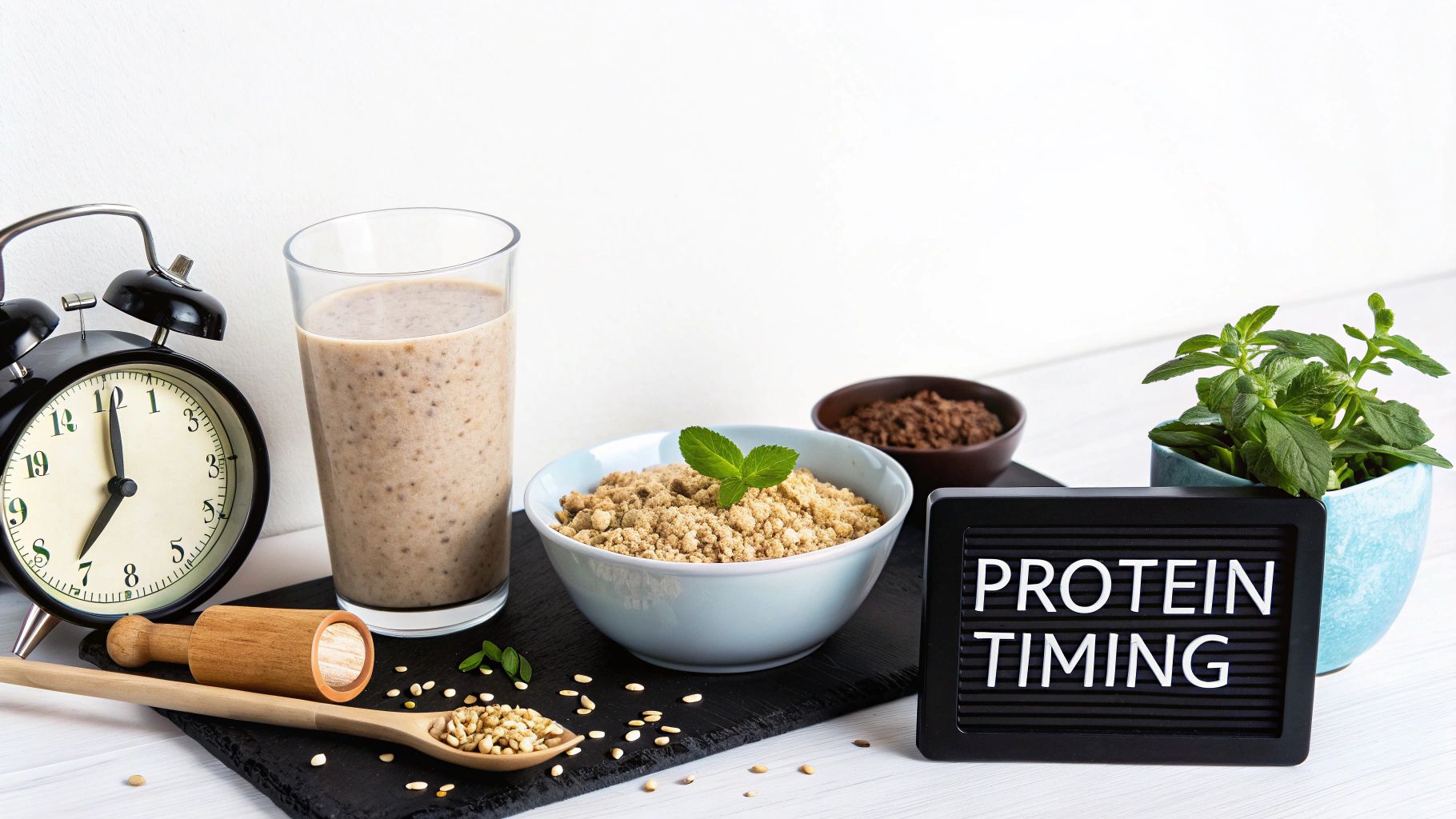
Picking the right plant protein is a great first step, but it’s really only half the battle. If you want to see real results, you need a solid strategy for when and how you’re taking it. Nailing your timing and hitting your daily protein target is what actually translates that powder into noticeable muscle growth.
The key is to think about your protein intake as an all-day priority, not just something you chug after a workout. Spreading your consumption out evenly is far more effective for muscle protein synthesis than cramming it all into one or two meals. This approach gives your muscles a constant supply of the amino acids they need to repair and grow.
Timing Your Protein Intake
You’ve probably heard about the "anabolic window"—that magical 30-minute period post-workout where you have to down a shake. The good news is that modern research shows this window is much more flexible, probably lasting several hours.
That said, consuming protein around your workout is still a powerful move.
- Pre-Workout: Taking 20-30 grams of protein about 60-90 minutes before you train can prime your muscles for the work ahead. It helps reduce muscle breakdown and gives you a head start on recovery.
- Post-Workout: Aim for another 20-40 grams of protein within a couple of hours after you finish. This is when your muscles are most receptive to amino acids, and it’s the perfect time to kickstart the repair process.
While you don't need to sprint to the locker room for a shake the second you finish your last rep, making a protein-rich meal or shake a non-negotiable habit after every single workout is what separates good results from great ones.
Calculating Your Daily Protein Needs
To build muscle, the math is simple: you need to consume more protein than your body breaks down. For most active people, a solid target is 1.6 to 2.2 grams of protein per kilogram of body weight (or roughly 0.7 to 1.0 grams per pound).
Here’s how to figure out your personal range:
- Get your weight in kilograms: Your Weight (lbs) ÷ 2.2 = Your Weight (kg)
- Find your daily protein target: Your Weight (kg) x 1.6 (low end) and Your Weight (kg) x 2.2 (high end)
For example, a 180 lb person is about 82 kg. Their daily protein goal for muscle gain would fall somewhere between 131g and 180g. Hitting this number consistently is what truly matters, far more than any single meal. For more ideas on reaching your daily goals, check out our guide on how to get enough protein on a plant-based diet.
Think Beyond The Shaker Bottle
Let's be honest, relying only on protein shakes gets old, fast. To stay consistent, you have to get a little creative and weave high-protein foods and powders into your everyday meals.
- Boost Your Breakfast: A scoop of unflavored or vanilla protein powder stirred into your morning oatmeal is an easy win.
- Power Up Smoothies: Blend your protein with fruit, spinach, and some plant-based milk for a meal that’s both nutrient-dense and delicious.
- Snack Smarter: You need convenient options to fill the gaps between meals. Gym Snack was created for exactly this purpose—it’s a cheesy, crunchy snack with 15g of pea protein per bag, helping you hit your numbers without another sweet shake.
- Bake It In: Add protein powder to recipes for pancakes, muffins, or energy bites to give them a serious nutritional upgrade.
When you make protein a fundamental part of every meal, hitting your daily goal stops feeling like a chore and just becomes second nature.
Making Your Final Plant Protein Choice
Choosing the best plant protein really boils down to your specific goals, budget, and any dietary quirks you might have. There’s no single "best" powder for everyone, but you can absolutely find the perfect fit for your body by focusing on what matters most for muscle growth.
The good news? The science is on our side. Research is consistently showing that plant proteins can be just as effective as animal proteins for building muscle, as long as you get enough.
One study tracked people on both vegan and omnivorous diets, with both groups eating around 1.1-1.2 grams of protein per kilogram of body weight. The result? No meaningful difference in muscle growth. This just goes to show that a smart plant-based approach delivers the gains you’re working for. You can dive deeper into how plant proteins stack up against animal sources in recent studies.
A Decision Framework for Your Goals
Let's cut through the noise and make this simple. Here’s how to choose based on what you’re trying to achieve.
-
You're All-In on Muscle Growth: If your number one priority is packing on muscle, your best bets are a top-tier pea protein isolate or a well-designed pea and rice protein blend. These consistently offer the highest leucine content, which is exactly what you need to kickstart muscle protein synthesis after a tough workout.
-
You're Navigating Allergies or Sensitivities: If pea protein just doesn't agree with you, a soy protein isolate is a fantastic complete protein alternative. For a truly hypoallergenic option, brown rice protein works, but it really shines when combined with another protein to round out its amino acid profile.
-
You're Focused on Overall Health: If you're looking for more than just muscle—think overall nutrition and wellness—hemp protein is an excellent choice. It's a bit lower in leucine, but its rich fiber content and healthy fats make it a nutritional powerhouse.
Final Recommendation: For any serious lifter or athlete laser-focused on muscle gain, it's hard to beat a pea protein or a pea-rice blend. Their high leucine content is the most direct path to stimulating muscle growth and speeding up recovery.
Whatever you land on, make it a habit to read the label. A quick check ensures you're getting a clean, effective product that will actually help you see results from your hard work in the gym.
Got Questions About Plant Protein and Muscle Gain? Let's Clear Things Up.
Even with solid science backing it up, a few common questions always seem to surface when people think about going plant-based for their protein. Let's tackle these myths and concerns head-on so you can make your choice with complete confidence.
Can You Really Build as Much Muscle with Plant Protein as You Can with Whey?
Short answer? Yes, you absolutely can. The idea that plant protein is somehow "lesser" for muscle growth is outdated.
High-quality plant proteins, especially leucine-heavy hitters like pea protein, have been shown time and again in studies to deliver comparable gains in both muscle size and strength. The key is consistency and hitting the right numbers. While whey might digest a fraction faster, it's the long-term results that count, and the evidence shows plant protein holds its own.
As long as you're getting enough total protein and hitting that all-important 2.5–3.0 gram leucine threshold in your post-workout serving, your muscles will get exactly what they need to repair and grow. It all comes down to choosing the right plant protein—one with a complete and powerful amino acid profile.
So, How Much Plant Protein Do I Actually Need to Build Muscle?
The protein targets don't change just because the source does. For optimal muscle growth, the science-backed recommendation is still 1.6 to 2.2 grams of protein per kilogram of body weight (that's about 0.7 to 1.0 grams per pound).
For a 180-pound person, that works out to somewhere between 131 and 180 grams of protein spread throughout the day.
Key Insight: Total daily protein is only half the battle. How you time it matters. Aim to spread your intake across 4-5 meals and snacks, getting 20-40 grams of protein each time.
This approach keeps a steady stream of amino acids flowing to your muscles, which is far more effective for growth than cramming all your protein into two huge meals.
What About Soy Protein and Hormones? Is That a Real Concern?
This is one of the most stubborn myths out there, but thankfully, modern research has put it to rest. Soy contains natural compounds called isoflavones, which are technically phytoestrogens (plant estrogens). Because their chemical structure looks a bit like human estrogen, a fear arose that they could throw hormones out of whack, especially in men.
However, a massive pile of clinical research, including major meta-analyses that review dozens of studies at once, has found no evidence that soy protein messes with testosterone levels or causes any feminizing effects in men. For the vast majority of people, soy protein isolate is a perfectly safe and effective tool for building muscle when it's part of a balanced diet.
Tired of sweet shakes? When you need a convenient, savory way to hit your protein goals, grab a Gym Snack. Our crunchy, cheesy snacks deliver 30g of high-quality pea protein per bag to keep your muscle-building journey on track. Find your new favorite flavor today.