

You're standing in the snack aisle, trying to solve a very specific problem. You want crunch. You want salt. You want something that feels like a reward after training, or something that gets you through a long afternoon without turning into a mindless binge. Then you look at the shelf and it's the same story: bright boxes, familiar brands, and a “chip variety pack” built for convenience, not performance.
That's why so many people get stuck. Most content around a chip variety pack focuses on what's in the box and where to buy it, but it rarely helps with nutrition, fullness, or diet fit for people trying to manage weight, train consistently, or hit macro targets, as reflected in retail-heavy search results like Walmart's chip variety listings. If you care about protein, ingredients, and how a snack fits your day, the standard advice usually falls short.
The good news is that you don't need to settle for whatever a manufacturer decided should go in a box. A better approach is to build your own pack from scratch. You choose the crunch level, the flavor mix, the portion size, and the nutrition standard.
That changes the whole role of snacks. Instead of being the thing that derails your plan, they become part of it.
Beyond the Vending Machine
The classic vending-machine problem isn't really about willpower. It's about options. Most grab-and-go savory snacks are designed to appeal to the widest group possible, so they lean hard into familiar flavors and easy repeat purchases. That works for retail. It doesn't always work for someone who wants a snack to support training, recovery, appetite control, or a cleaner ingredient standard.
A pre-made chip variety pack usually solves one problem well. It gives you convenience. It does not automatically solve for satiety, protein, ingredient quality, or how you personally snack under stress, after workouts, or during long workdays.
That's where a custom approach wins.
Instead of asking, “Which box should I buy?” ask better questions:
- What kind of craving am I trying to manage? Salty, cheesy, spicy, or pure crunch?
- When do I usually reach for chips? Midday slump, commute, post-gym, late night?
- What makes me overeat? Oversized bags, hyper-palatable flavors, or snacks that never feel filling?
- What ingredients don't sit well with me? Dairy, soy, gluten, heavy oils, or artificial seasoning blends?
Most off-the-shelf snack boxes are built for broad acceptance. Your personal pack should be built for repeat success.
The biggest shift is mental. You stop treating chips like a guilty impulse and start treating them like any other part of your food environment. If a snack is going to show up in your week again and again, it should earn that spot.
The practical version of this looks simple. Keep a home base of savory, higher-quality options. Split them by use case. Build smaller grab-and-go bundles inside your pantry, gym bag, desk drawer, or car console. Once you do that, you stop making stressed decisions in front of a vending machine or checkout line.
Build Your Foundation on Macros Not Hype
A healthy chip variety pack starts with the nutrition label, not the front of the bag. Marketing language is cheap. Ingredients and macros tell you what you're getting.
If you're paying for packaged chips, the snack needs to justify the spot in your routine. The U.S. Bureau of Labor Statistics price series tracked by FRED puts the average consumer price of potato chips per 16 ounces at $6.748 in April 2026, which is a good reminder that convenience snacks aren't bargain food anymore. If the price is premium, the nutrition should be doing more than delivering salt and crunch.
Start with your non-negotiables
For most fitness-focused shoppers, I'd build the first filter around these basics:
- Protein matters: Choose options that contribute to fullness instead of disappearing nutritionally the second you finish the bag.
- Ingredients should be recognizable: The shorter and clearer the list, the easier it is to assess.
- Digestive fit counts: If dairy, soy, or gluten tend to bother you, your snack shelf should reflect that.
- Fat quality matters: A crunchy snack can still fit a solid nutrition plan, but it shouldn't rely on junk ingredients just to taste good.
- Sodium deserves a glance: Especially if you tend to stack salty snacks with deli meat, takeout, or sauces later in the day.
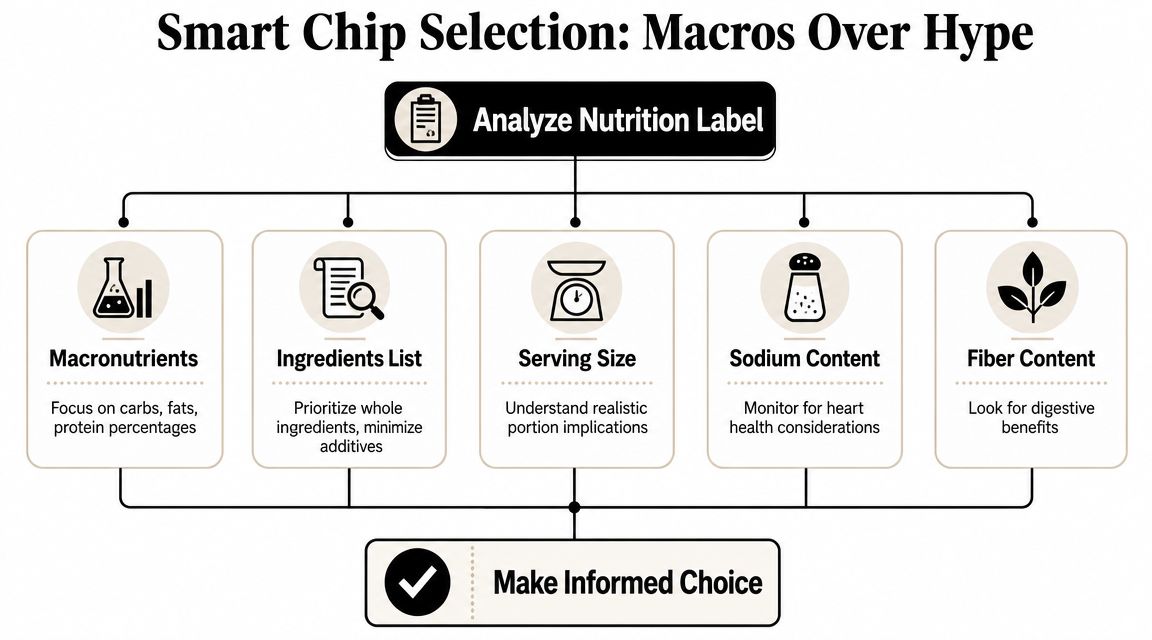
Read labels in the right order
A lot of people look at calories first. I'd rather they start with structure.
- Check serving size first. A label can look reasonable until you realize the serving is smaller than how you typically eat.
- Look at protein and fiber next. Those are the two numbers that usually tell you whether the snack will hold you over.
- Then look at fat and sodium. Neither is automatically a dealbreaker, but both shape how balanced the snack feels in real life.
- Read the ingredient list last. That confirms whether the snack is built from food you want in regular rotation.
If you want a refresher on how to think through protein, carbs, and fats for body composition goals, this guide on understanding macros for weight loss is a useful companion.
Practical rule: If a bag is easy to overeat and hard to remember nutritionally, it probably doesn't belong in your core pack.
Red flags that deserve scrutiny
Watch closely for: long additive-heavy ingredient lists, vague “natural flavor” dependence, snacks that are all refined starch with little protein or fiber, and products that look healthy on the front but collapse under the nutrition panel.
Pea-protein-based savory snacks are worth special attention here because they can bring both crunch and a more useful macro profile. They also tend to work well for people who want plant-based protein and cleaner allergen positioning without defaulting to sweet bars or shakes.
A good custom chip variety pack isn't built around hype words like “better,” “light,” or “protein-packed.” It's built around labels that hold up under a hard look.
Curate Your Flavor and Texture Portfolio
Nutrition gets a snack into your cart. Flavor keeps it in your routine.
Individuals rarely abandon a healthy snack plan because they stopped caring. They abandon it because every option starts tasting the same. If your custom chip variety pack is all one texture and one flavor family, boredom hits fast. Then the old salty, cheesy, ultra-familiar options start calling again.
That's why I like to build a flavor portfolio instead of a pile of lookalike bags.
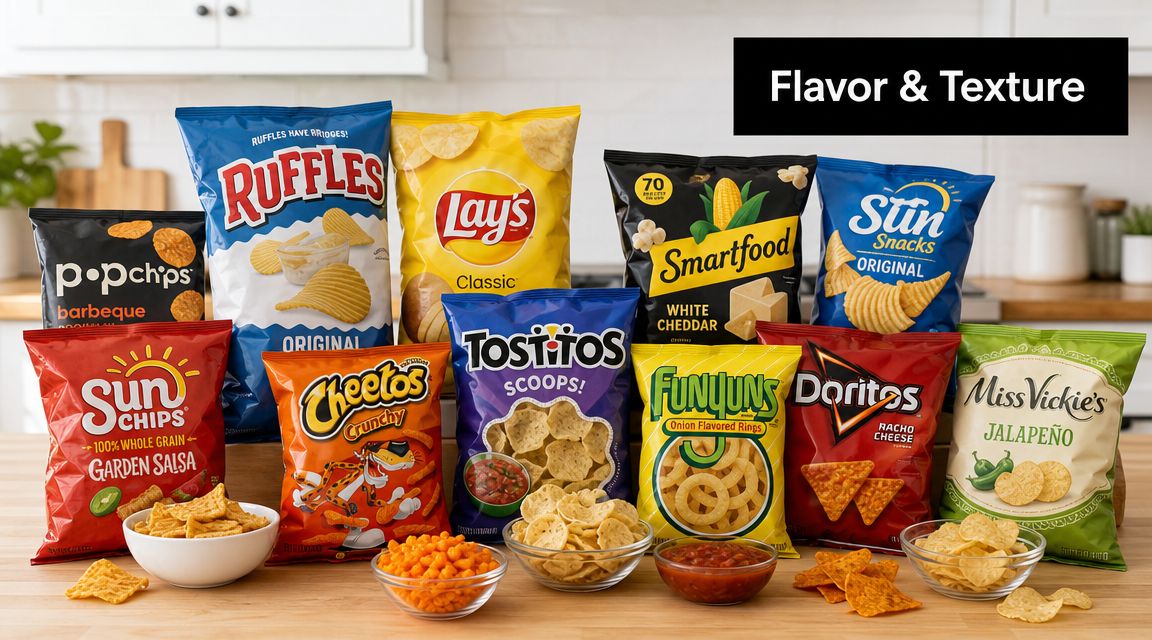
Use craving categories
Start by dividing your snack options into how they satisfy you, not just what they're made from.
- Cheesy and savory: This is your comfort lane. It handles the “I want something indulgent” craving.
- Spicy: Useful when you want more intensity and a slower eating pace.
- Plain salty crunch: The simplest option often works best when you want something clean and predictable.
- Bean or lentil crunch: Often denser and more substantial than standard chips.
- Airy crisp options: Good for people who want volume and crunch without the heavier feel of dense snack foods.
If you enjoy lighter textures, these ideas around air-popped crisps can help you broaden the mix without losing the crunchy experience.
Build contrast on purpose
A good pack usually includes a dependable base flavor, one bolder option, and one backup texture. This structure serves as a useful model.
| Role in the pack | What it does | Best use |
|---|---|---|
| Anchor flavor | Feels familiar and easy to reach for | Daily snacking |
| Bold flavor | Prevents boredom and satisfies stronger cravings | Afternoon slump or evening craving |
| Texture switch | Changes the eating experience | Helps reduce snack fatigue |
Cheddar-style savory flavors often work well as the anchor because they scratch the classic chip itch. Jalapeño-cheddar-style flavors can act as the bold option because they bring enough heat to feel interesting without requiring a giant portion to feel satisfied.
If every bag in your snack drawer tastes nearly the same, you didn't build variety. You built repetition in different packaging.
Avoid the common mix mistake
People often overcorrect and buy only niche flavors because they want novelty. That usually backfires. A successful chip variety pack still needs options you'll reach for on a random Tuesday.
My rule is simple. Keep the majority of your pack in familiar flavor territory, then use a smaller share for experimentation. That keeps the lineup fun without turning snack time into a gamble.
Plan Portions for Every Occasion
The smartest chip variety pack still falls apart if every situation gets the same portion strategy. Pre-workout snacking, office grazing, road trips, and movie night are different jobs. Your pack should reflect that.
One advantage of building your own is flexibility. Mainstream variety packs often come in fixed counts such as 18, 28, or 42, often with 1 oz bags, according to the Frito-Lay variety pack FAQ. That's convenient, but it locks you into the manufacturer's portion logic. A DIY setup lets you size snacks around your real day.
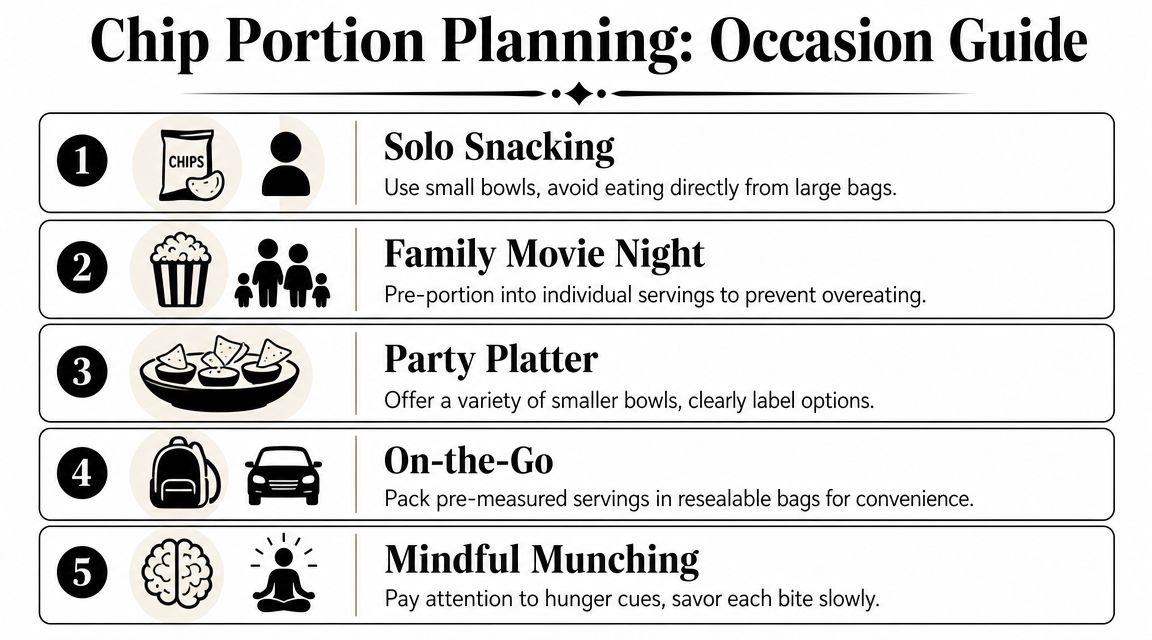
Match the portion to the moment
Here's how to think about common scenarios.
Pre-workout
Keep it light and easy to digest. You want enough food to take the edge off hunger, but not a heavy, greasy hit that sits in your stomach during training.
Good pairings include:
- A smaller chip portion plus fruit
- A lighter crunchy snack plus a simple protein source
- A plain or mildly flavored option when your stomach is sensitive
Post-workout
A more protein-supportive savory snack can make sense. The snack still needs to be enjoyable, but recovery is easier when the choice contributes something useful instead of just replacing burned calories with more appetite later.
A denser, higher-protein bag usually fits better here than an airy, low-substance snack.
The 3 PM slump
This is the danger zone for office workers, students, and anyone who's mentally cooked by mid-afternoon. If you wait until you're starving, you'll usually overeat whatever is easiest.
Use a planned combo:
- One pre-portioned savory snack
- One hydration cue
- One side item with staying power, such as fruit or another simple whole-food add-on
A snack planned at noon works better than a snack negotiated at 3 PM.
Build situation-specific kits
Don't store everything the same way. Break your snack system into use-case packs:
- Desk pack: Stable, not messy, easy to eat between calls
- Gym bag pack: Portable, durable, post-training friendly
- Car pack: Heat-tolerant and not too crumbly
- Home pack: Slightly more variety because you have access to pairings
Portion tools that actually help
You don't need anything fancy. A few habits do the job:
- Use small containers or bags: This removes guesswork.
- Label by purpose: “Work,” “gym,” “travel,” “movie night.”
- Keep stronger flavors in smaller portions: They're more satisfying and easier to control.
- Pair intentionally: Crunch alone can leave you hunting for more food an hour later.
That's the key win with a custom chip variety pack. You're not just choosing snacks. You're choosing when and how they work best.
Assemble Your Custom Pack Blueprints
Most pre-made boxes decide the flavor split for you. A retail variety pack might include a fixed assortment such as 4 Cool Ranch and 5 Nacho Cheese, as shown in Sam's Club's Frito-Lay Variety Pack Snack Mix listing. That's fine if the manufacturer's mix happens to match your taste. It's not great if you want more control.
A custom chip variety pack fixes that. You can shape it around your cravings, schedule, and nutrition priorities instead of someone else's inventory plan.
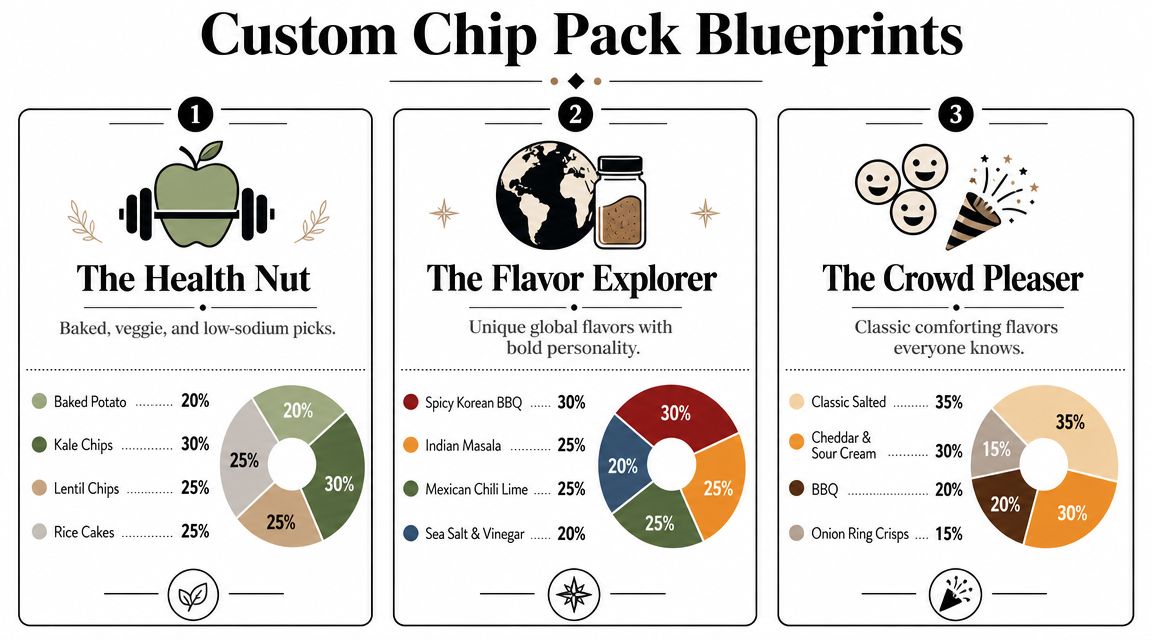
The training week pack
This blueprint is for people who train several times a week and want savory options that don't feel like junk food leftovers.
What goes in it
- A protein-forward savory chip as the core option
- A lighter plain crunchy option for pre-workout days
- A spicy bag for evenings when cravings hit harder
- A bean- or lentil-based crunch for a more substantial feel
Why it works
This mix covers different jobs. You've got something lighter when digestion matters, something more filling after training, and something bold enough to keep the plan from feeling repetitive.
Packing note
Use separate grab bags for gym days versus rest days. That small distinction cuts down on random snacking.
The office defense pack
This one is built for meetings, deadlines, and the late-afternoon hunger wave that sends people to the vending machine.
What goes in it
- A dependable cheesy or savory favorite
- One crisp snack with a cleaner ingredient profile
- A backup plain option for days when flavor fatigue hits
- A small stash of side pairings like fruit or another simple add-on
Why it works
Office snacking fails when every option is either too boring or too hyper-palatable. This blueprint gives you a snack that feels rewarding without making you hunt for a second and third bag right away.
If you want more ideas for combining savory protein snacks into a more useful routine, this article on a protein snack pack is a solid next read.
Coach's note: The best office snack is the one you'll still be happy to eat on a stressful day, not just the one that looks healthy in your cart.
The plant-based flavor tour
This setup is for someone who wants variety, cleaner ingredients, and enough excitement to avoid falling back into old snack habits.
What goes in it
- A cheesy plant-based option
- A jalapeño or chili-lime style option
- A roasted legume crunch
- An airy crisp or veggie-based snack for contrast
Why it works
The mix gives you range. Some days you want dense and savory. Other days you want something sharper, lighter, or more playful. The variety keeps your pantry feeling stocked instead of restrictive.
One simple assembly method
Use this short process every time you rebuild your pack:
- Choose your core snacks first. These should be the bags you trust most.
- Add one bold flavor. This keeps cravings from drifting back to convenience-store chips.
- Add one texture change. Crunch matters as much as taste.
- Portion by environment. Home, work, gym, and travel should not all get the same setup.
- Review after a week. Remove what you ignored and duplicate what you kept reaching for.
That's how a custom chip variety pack becomes sustainable. It stops being a one-time healthy grocery haul and starts becoming a system.
Take Control of Your Cravings
A smart chip variety pack isn't about pretending cravings don't exist. It's about respecting them enough to plan for them well.
When you build your own, you control the variables that matter most. You decide the ingredient standard. You decide whether the pack supports protein goals, digestive comfort, and better portioning. You decide whether the flavor mix keeps you satisfied or pushes you into overeating. That's a very different experience from grabbing a pre-made box built for the average shopper.
The best snack setup usually isn't the strictest one. It's the one that keeps working on busy days, stressful days, gym days, and lazy weekends. If your snacks are enjoyable, practical, and aligned with how you live, you're much more likely to stay consistent.
That's the primary point of building your own chip variety pack. You're not just organizing snacks. You're removing friction between what you crave and what supports your goals.
If you want a savory, protein-first option for building a better snack system, explore Gym Snack. Their plant-based crunchy snacks are built for people who want real flavor, a stronger macro profile, and cleaner ingredients than the usual chip aisle choices. Start with their bundles or build your own custom box to create a chip variety pack that fits your training, workday, and cravings.