

You're standing in the snack aisle after a workout, hungry enough to make a rushed decision and cautious enough not to grab the first glossy bar that looks healthy. That's exactly where dark chocolate protein bars create confusion. They promise dessert-like taste and protein-first convenience, but some are much closer to a real functional snack than others.
The market size helps explain why the shelf feels crowded. The global protein bar market was valued at USD 5.47 billion in 2025 and is projected to reach USD 10.59 billion by 2034, growing at a 7.80% CAGR (Fortune Business Insights). In other words, this isn't a niche fitness product anymore, it's a mainstream snack category with dark chocolate playing a familiar, shelf-friendly role.
The Search for the Perfect Protein Snack
The problem usually starts with a simple goal. You want something portable, filling, and a little indulgent, but you also don't want a snack that behaves like candy in disguise. That tension is why dark chocolate protein bars get both loyal fans and skeptical label readers.
A good way to think about the category is as a spectrum, not a single product type. On one end, there are bars built around protein, fiber, and practical macros. On the other, there are bars that lean heavily on coatings, sweeteners, and dessert cues while still wearing a fitness label. If you want a broader buying framework, the guide on the healthiest protein bar is a useful companion read.
What makes dark chocolate such a durable flavor is simple familiarity. It tastes indulgent, but it still fits in a nutrition aisle without feeling completely off-brand. That's why it's become a bridge flavor in mainstream retail, appealing to people who want a treat without leaving the protein category.
Practical rule: if a bar looks like dessert first and fuel second, treat it like dessert until the label proves otherwise.
Anatomy of a High-Quality Protein Bar
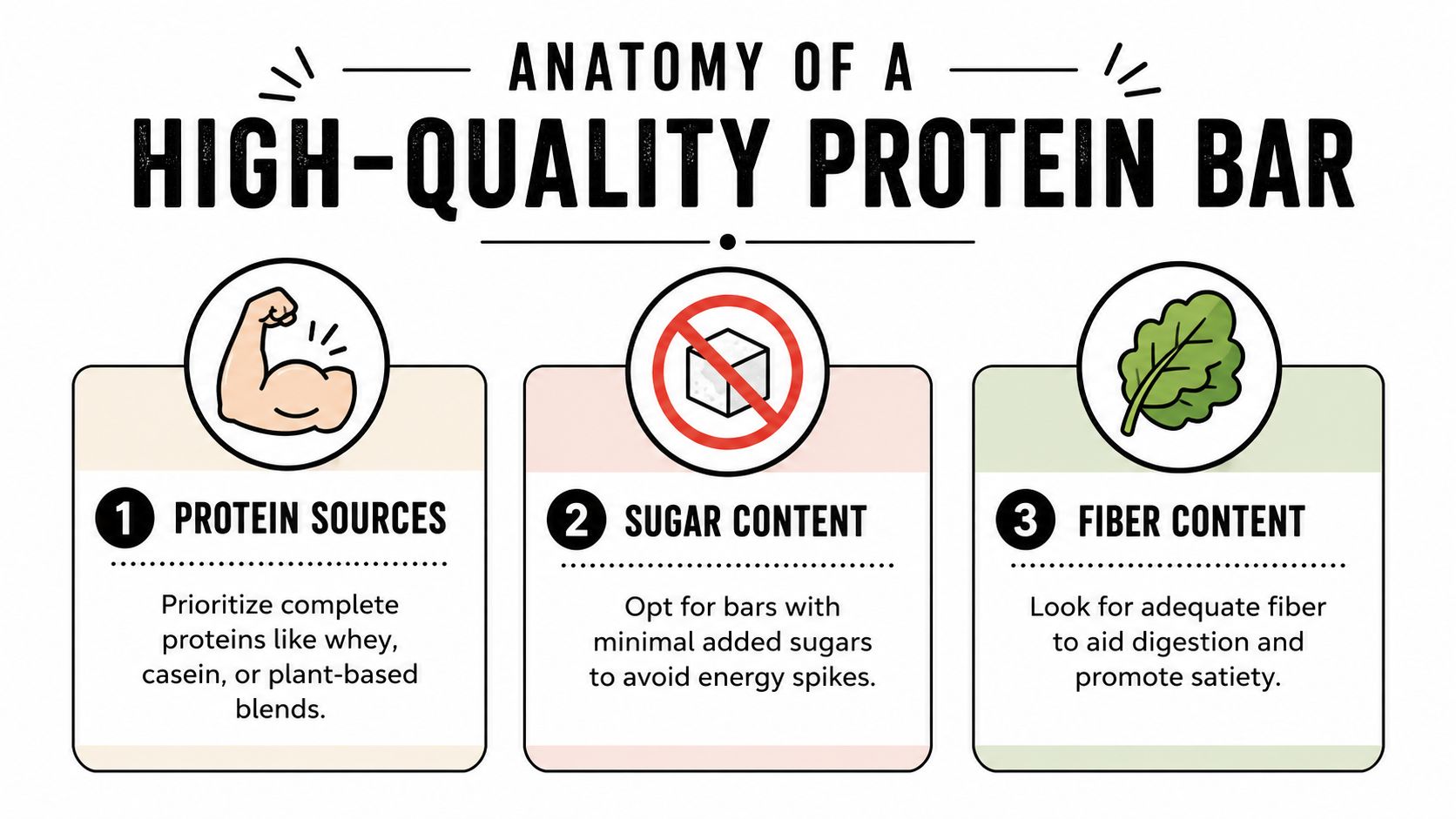
A good bar starts with protein source. Whey and casein are common in dairy-based bars, while pea and soy appear often in plant-based bars. That choice changes more than the nutrition panel. It affects taste, digestibility, allergen exposure, and whether the bar fits the way you eat, not just the numbers you want to hit.
The next checkpoint is sugar and sweeteners. Some bars use a little sugar for taste and texture, while others rely on sugar substitutes or other sweeteners to keep sweetness high without pushing carbs up. Neither approach is automatically better. It depends on whether you want a bar that feels like a quick treat or one that fits a steadier snack pattern. If you are trying to avoid a fast sugar hit, the ingredient list matters as much as the nutrition panel.
What the label is really telling you
A useful habit is to compare bars by the job they are trying to do. One bar may be a lighter snack, another may work more like meal replacement fuel, and another may be closer to a chocolate-coated treat with a protein claim. That range is why the front of the package can be misleading. A dark chocolate protein bar may look similar from the outside while the formula underneath is very different, and protein bar nutrition facts can help you spot those differences faster.
Fiber is the third piece, and it gets overlooked often. A bar with meaningful fiber usually feels more satisfying and has a better chance of behaving like a real snack instead of a sweet bite that disappears fast. Fiber source matters too, because some people tolerate certain fibers better than others, especially if they are sensitive to sugar alcohols or added fibers.
Read the ingredient list before the front-of-pack claim. The front tells you what the brand wants to sell, the back tells you what you are actually eating.
A simple checklist helps keep the label in context:
- Protein first: Look for a bar where protein is a leading feature, not a late addition.
- Sugar in context: Check whether the sweetness comes from a small amount of sugar, sugar alcohols, or a heavily coated formula.
- Fiber with purpose: Favor bars where fiber supports fullness, not just a marketing talking point.
For a closer look at label details, the protein bar nutrition facts guide is worth bookmarking.
Weighing the Benefits and Drawbacks

A dark chocolate protein bar can be a smart snack in the right moment. If you need something that fits in a gym bag, desk drawer, or car console and does not require refrigeration, it solves a real problem. It gives you a way to move toward your protein goal without having to find a full meal right away, and the dark chocolate flavor can make that feel more satisfying than a plain functional bar.
That same sweetness is also where the trade-off starts. Some bars are closer to a candy bar with extra protein than to a true snack built for hunger, which is why consumer guides warn people not to get “fooled by candy bar disguises” (Good Housekeeping). If protein and fiber are only lightly present, the bar may taste like dessert but act like dessert too, leaving you hungry again sooner than you expected.
Portion size and protein density matter just as much as flavor. A lighter bar can make sense between meals, while a denser one may fit better after training or during a longer stretch without food. One product can sit around 190 calories with 10g of protein, while another reaches 270 calories with 29g of protein. That gap changes how the bar functions in your day, especially if you are using it to replace a snack rather than add to one.
Texture is part of the story too. To keep a bar shelf-stable and pleasant to eat, manufacturers often have to do some formula work behind the scenes, including ingredients that help with moisture, chew, or crunch. That is not automatically a bad thing, but it does mean the bar may be a processed snack rather than a simple food. If you are trying to decide whether that matters to you, the question is whether you want convenience first, or a snack that feels closer to whole ingredients.
A useful rule is to separate “healthy enough” from “best choice.” If a dark chocolate protein bar helps you avoid skipping a meal, keep your energy steady, or stay on track during a busy day, it can be a good tool. If you are eating it mainly because you want chocolate, and a plain yogurt, nuts, or even a savory snack would satisfy you better, then the bar is probably serving a craving more than a nutritional need.
Finding the Right Bar for Your Lifestyle
A bar that works for one person can be a poor fit for another. That's why the smartest choice depends on what you need it to do, not just how good it tastes. Dark chocolate protein bars can fit several goals, but they shouldn't be treated as interchangeable.
For fitness-focused eaters
If you train regularly, look for a bar that behaves like recovery fuel rather than dessert. That means checking the protein count, the calorie load, and whether the bar feels substantial enough to bridge a workout and your next meal. The best fit is often the one that supports consistency without making you feel overfull or underfed.
For plant-based and allergen-conscious shoppers
Label reading is paramount. Some bars use pea protein and deliver 20g of protein with 0mg cholesterol and meaningful iron, while others may still include peanuts, soy, and milk even if they're marketed as gluten-free (Julian Bakery). If you avoid dairy or want a simpler ingredient profile, the protein source is not a minor detail, it's the whole decision.
For people focused on fullness
If you're trying to stay satisfied between meals, a high-protein bar with meaningful fiber usually makes more sense than a sweeter, lighter option. The goal isn't just to eat protein, it's to choose a snack that helps you avoid the next impulsive grab for food. That's especially relevant for anyone managing appetite throughout a long workday.
The best bar is the one you can tolerate, digest comfortably, and actually use when hunger shows up.
The Ultimate Choice Buy or DIY It
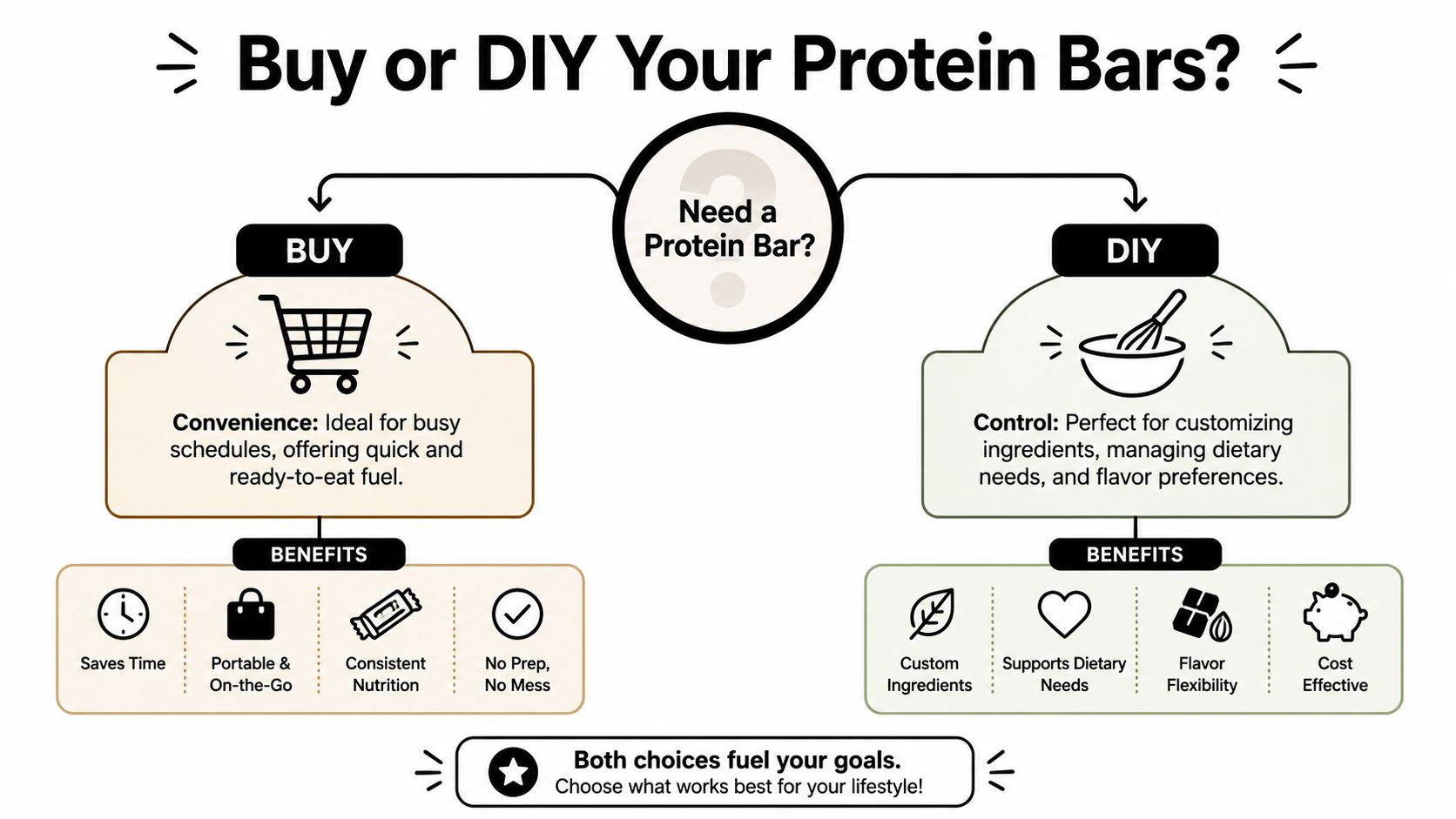
Buying is the better move when your priority is speed. Store-bought bars win on portability, consistency, and shelf life, and commercial formulas are often engineered carefully to keep texture stable over time. One example uses ingredients like glycerin for moisture and soy nuggets for crunch, reaching a protein density of nearly 50% with minimal sugar (Naturitas).
DIY makes more sense when control matters more than convenience. At home, you decide the protein source, the sweetness level, the chocolate quality, and whether you want a softer bite or a firmer one. That's especially useful if you're trying to reduce additives or avoid ingredients that don't agree with you.
A simple no-bake version can be built around protein powder, nut butter, dark chocolate, and a binder like oats or ground nuts. Melt the chocolate gently, mix the dry ingredients with your binder, press the mixture into a lined pan, chill until firm, and slice. If you want the coating to stay smooth, the technique behind temper chocolate at home easily is a helpful reference.
The decision comes down to your day, not your ideals. Buy when you need dependable convenience. DIY when you want ingredient control and don't mind a little hands-on prep.
When You Need Protein Without the Sweetness
Sweet snacks get old fast if they're your only protein option. That's the part many people don't expect at the start. A constant stream of chocolate, vanilla, and cookie-style bars can lead to flavor fatigue, and once that happens, even a good bar starts feeling heavy.
That's where savory options can make a better long-term strategy. A crunchy, seasoned snack can give you the same practical function, portable protein, easy timing, and better appetite support, without leaning on sweetness for appeal. For readers trying to avoid artificial sweeteners, the guide to protein bars without artificial sweeteners is a useful place to compare priorities.
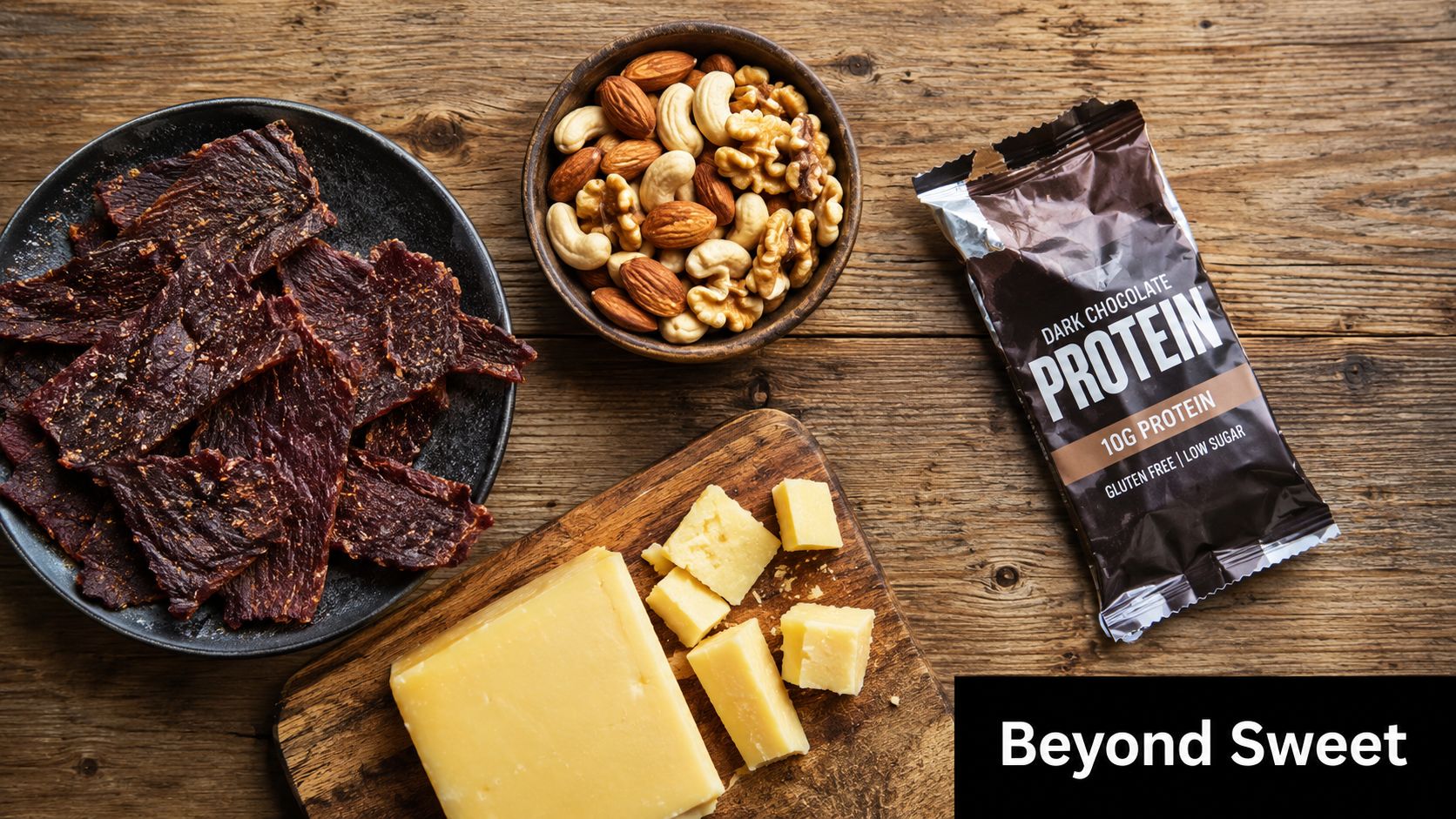
Savory snacks are especially helpful when you want protein but not dessert energy. They can work before training, during an afternoon slump, or as a bridge between meals when chocolate just feels too sweet. That doesn't make dark chocolate protein bars a bad choice, it just puts them in a wider snacking system where different formats solve different problems.
If you want more consistency, rotate your snacks instead of relying on one flavor profile all day. Keep sweet bars for times when you want a treat, and use savory protein snacks when you want fuel without craving more sweetness.
For a smarter, more balanced snack routine, explore Gym Snack at Gym Snack.