

Ever notice how some snacks leave you feeling great, while others send you on a rollercoaster of energy spikes and crashes? The secret to sustained energy lies in the right mix of protein, complex carbohydrates, and healthy fats. This powerful trio works together to give your body a slow, steady stream of fuel.
The Real Science Behind Good Snacks for Energy
If you've ever reached for a candy bar hoping for a quick boost, you know the drill. You get a rush, but an hour later, you feel even more sluggish than before. That’s the classic "spike and crash" cycle, and it’s the exact opposite of what your body needs to perform its best.
Real, lasting energy isn't about getting a quick jolt. It’s about keeping your blood sugar levels stable throughout the day.
Think of your body’s energy system like a campfire. Tossing a piece of paper on the flames—like eating simple sugars—gives you a big, bright flare-up that dies out in seconds. You’re left needing more fuel almost immediately, which often leads to that dreaded afternoon slump.
Building a Better Fire
So, how do you build a fire that burns for hours? You use better fuel. This is where macronutrients become your best friend. The most effective energizing snacks are built with three key components:
- Protein: This is the solid log in your fire. It burns slowly and steadily, providing long-lasting energy.
- Complex Carbohydrates: Think of these as the kindling. They catch easily and provide consistent, accessible fuel without the sudden burst.
- Healthy Fats: These are like the slow-burning embers that keep the fire going, offering reliable, long-term heat.
When you put these three together, you get a snack that digests slowly. The protein and fat act as a brake on the carbohydrates, preventing that rapid blood sugar surge. This synergy is the foundation of smart snacking, and it starts with understanding how to calculate macronutrients for your specific needs.
To see this in action, let's compare what makes a snack truly energizing versus one that just provides empty calories.
Energizing Snacks vs Empty Calorie Snacks
| Attribute | Good Snacks for Energy | Empty Calorie Snacks |
|---|---|---|
| Components | Balanced protein, fiber, healthy fats | Mostly simple sugars, refined carbs |
| Energy Release | Slow, sustained, and stable | Fast spike followed by a hard crash |
| Satiety | Keeps you full and satisfied | Leaves you hungry again quickly |
| Nutrient Value | Rich in vitamins and minerals | Lacks meaningful nutrients |
The difference is clear. One builds a steady fire, while the other just creates a flash in the pan.
The goal of an energizing snack is not to deliver a fast jolt, but to provide a stable bridge of fuel between meals, keeping your mind and body performing at their peak without interruption.
This balanced approach completely changes how you think about energy. It’s no longer about chasing a temporary sugar high but about creating a reliable state of readiness. By building your snacks with this powerful trio, you’re giving your body the tools it needs for lasting vitality, whether you're powering through a tough workout or a demanding workday.
How Protein Acts as Your Energy Anchor
If carbs are the initial spark of energy, protein is the steady, slow-burning log that keeps the fire going for hours. It’s the non-negotiable anchor that prevents your energy from drifting away. Pairing carbs with protein is hands-down the most powerful strategy for creating a truly energizing snack, because it fundamentally changes how your body uses fuel and stops that dreaded spike-and-crash cycle in its tracks.
Think about it this way: eating a piece of fruit by itself gives you a quick rush of energy from its natural sugars. But that energy often disappears just as quickly, leaving you right back where you started—or worse, even more sluggish. Now, imagine eating that same piece of fruit with a handful of almonds or a scoop of Greek yogurt. Everything changes.
That little bit of protein dramatically slows down how quickly your body digests the carbohydrates. It’s like a time-release system for fuel, ensuring the sugars enter your bloodstream gradually and steadily. This simple act stabilizes your blood sugar, giving you a reliable stream of energy that lasts for hours, not minutes.
The Science of Feeling Full and Satisfied
Protein doesn't just manage your energy; it’s a master at managing your hunger, too. It works directly with your body's fullness signals. When you eat protein, it triggers the release of powerful satiety hormones like GLP-1 and peptide YY (PYY).
These hormones are messengers that travel to your brain with a clear signal: "We're full and satisfied down here." This is precisely why a protein-rich snack crushes hunger far more effectively than a carb-only one, helping you sidestep mindless grazing and make better food choices all day long.
By anchoring your snack with protein, you’re not just fueling your body for the next hour—you’re setting yourself up for sustained performance and better appetite control long-term.
This smarter approach to fueling is catching on. Protein-based snacks are now one of the fastest-growing choices for people who need steady energy for their workouts and demanding schedules. The global protein snacks market is on track to hit around $4.8–$5.2 billion in 2025 and could explode to between $8.6 billion and $10.8 billion by 2032–2035. With North America expected to claim 43.6% of those sales in 2025, it’s obvious that everyone from athletes to busy professionals is building high-protein snacks into their daily routine. You can learn more about the growing demand for protein snacks on Future Market Insights.
Making Protein Your Snacking Priority
Getting more protein isn't just a strategy for bodybuilders; it’s a game-changer for anyone who wants to sharpen their focus and optimize their energy. Turning this into a habit is the key to transforming snacking from a random act of hunger management into a deliberate and powerful fueling strategy.
A few simple swaps can make all the difference:
- Instead of plain crackers, add a few slices of cheese or a generous smear of hummus.
- Don't just eat an apple; pair the slices with a tablespoon of almond butter.
- Swap that bag of potato chips for a savory, high-protein option like Gym Snack.
By making protein the hero of your snack, you guarantee every bite is working harder to keep you energized, focused, and satisfied. For more great ideas, check out our guide on how to increase protein intake.
Choosing the Right Carbs and Fats for Fuel
Okay, we've established that protein is the anchor for sustained energy. But what about the actual fuel? That's where carbohydrates and fats come in. Think of them as the gas in your tank. The trick is, not all fuel is created equal. Picking the right kind is what separates a quick, sputtering burst of energy from a steady, reliable power source that lasts for hours.
Let's talk about simple carbs first—the stuff you find in sugary sodas, candy, and white bread. Imagine them as a flash fire. They ignite instantly and give you a huge, immediate flame, but they burn out just as fast. What's left? Ash. This is that all-too-familiar sugar crash we've all experienced.
On the flip side, you have complex carbohydrates. These are more like a slow-burning log in the fireplace. Found in foods like oats, quinoa, sweet potatoes, and whole-grain bread, these carbs are loaded with fiber. It's this fiber that dramatically slows down digestion, letting glucose—your body's energy currency—trickle into your bloodstream at a nice, even pace.
The Power of Slow-Burning Carbs
The secret to getting long-lasting energy from carbs lies in one word: fiber. Fiber is what stands between you and a massive blood sugar spike, preventing the inevitable crash and giving you a smooth, stable energy curve instead.
To get more of these slow-burning carbs, look for things like:
- Whole Grains: Oats, brown rice, and quinoa are fantastic for consistent fuel.
- Fruits and Vegetables: An apple, a handful of berries, or a small sweet potato gives you carbs bundled with essential vitamins and fiber.
- Legumes: Foods like chickpeas and lentils are a double win, packing both complex carbs and plant-based protein.
This gradual release of energy is precisely what keeps you feeling sharp and ready to go, making complex carbs a non-negotiable part of any truly energizing snack. If you want to get into the nitty-gritty of how these nutrients work together, check out our guide on understanding macros for weight loss.
Selecting Healthy Fats for Lasting Fuel
Just like with carbs, not all fats are on your team. Unhealthy trans fats and too much saturated fat can leave you feeling sluggish and weighed down. But the right fats? They're an incredibly dense and powerful energy source that's critical for your overall health. They also play a huge role in absorbing certain vitamins and keeping your hormones in check.
Healthy fats are your body's reserve fuel tank. They provide a concentrated, long-burning energy source that kicks in long after the carbs have been used up.
To round out your energy-boosting snacks, try to work in some of these healthy fats:
- Avocados: They’re creamy, packed with nutrients, and full of great monounsaturated fats.
- Nuts and Seeds: A small handful of almonds, walnuts, chia seeds, or flax seeds delivers healthy fats, fiber, and protein.
- Olive Oil: A drizzle of good-quality olive oil is an easy way to add heart-healthy monounsaturated fats.
When you bring it all together—your protein anchor, slow-burning carbs, and healthy fats—you've created the perfect energy-sustaining trifecta. This powerful combination works in sync to fuel your body and brain for hours, whether you’re about to crush a workout or just trying to survive a packed workday.
How to Snack Smart for Your Life
Knowing the science behind energizing snacks is great, but let's be real—the real trick is making it work with your crazy schedule and specific dietary needs. The "best" snack isn't a one-size-fits-all formula. It’s the one that actually fits into your life.
Whether you're about to crush a workout, survive back-to-back meetings, or stick to a plant-based diet, having a smart strategy is what separates a good day from a draining one. It's all about matching what you eat to what you're about to do. A pre-workout snack needs to deliver quick fuel, but that 3 PM office snack needs to be a slow-burn hero to get you through the afternoon.
Fueling for Fitness
If you're active, what you eat and when you eat it can make or break your performance and recovery. Your body's needs change dramatically before and after exercise, and your snacks should, too.
-
Pre-Workout (30-60 minutes before): The goal here is simple: easily digestible energy. You want a mix of simple and complex carbs for immediate and sustained fuel, plus a little protein to protect your muscles. Think of a small banana with a spoonful of peanut butter or a few dates.
-
Post-Workout (within 60 minutes after): Now it’s all about repair and refueling. Your muscles are screaming for protein to rebuild, and your energy stores need to be restocked. Aim for a snack with roughly a 3:1 or 4:1 ratio of carbohydrates to protein. A smoothie with fruit and protein powder or a bowl of Greek yogurt and berries are perfect for this.
Snacks for the Busy Professional
When you're bouncing between meetings or running errands all day, your snacks need to be two things: portable and convenient. The ideal on-the-go snack has to be mess-free, easy to eat with one hand, and packed with enough good stuff to keep you sharp.
A well-chosen snack can be the difference between a productive afternoon and a mental fog. It’s your secret weapon against the 3 PM slump.
Look for grab-and-go options that combine protein, fiber, and healthy fats. This trio is the key to feeling full and focused for hours. Pre-portioned nuts, savory protein bites like Gym Snack, or individual hummus cups with whole-grain crackers are all fantastic choices.
Plant-Based Power Snacks
Eating plant-based just means you have to be a little more strategic to get complete, energizing protein in your snacks. Luckily, finding great plant-powered options is easier than ever.
In fact, plant-based protein snacks are quickly becoming the new normal, leaving many traditional meat-based options in the dust. By 2025, plant-based products are expected to make up a whopping 62.6% of the entire global protein snacks market. People are linking these snacks to cleaner ingredients and better health, which is a huge deal if you're focused on fitness or weight management. You can dive deeper into the growth of the protein snacks market from Persistence Market Research.
Some killer plant-based combos include:
- Apple slices with almond butter
- Roasted chickpeas for that salty, crunchy fix
- A small bowl of edamame with a sprinkle of sea salt
- A handful of walnuts and a few dried apricots
Satiety-Focused Snacks for Weight Management
If weight management is your goal, your snacks have one main job: keep you feeling full so you don't overeat later. Your best friends in this mission are protein and fiber.
These two nutrients work together to slow down digestion and kickstart the release of fullness hormones like GLP-1. This sends a powerful signal to your brain that says, "Hey, we're good here!" Try snacks like a hard-boiled egg, a small bowl of lentil soup, or celery sticks with a good scoop of Greek yogurt dip. They give you volume and nutrients without a ton of calories, keeping hunger locked away.
Your Blueprint for Building the Perfect Energy Snack
Alright, we’ve covered the "what" and "why" behind protein, carbs, and fats. Now it's time to put that knowledge into practice and actually build a better snack.
The good news? You don't need complicated recipes or a culinary degree. The key to consistently good snacks for energy is a simple, flexible framework you can use anywhere, anytime. Think of it less like a strict recipe and more like your personal mix-and-match guide to killing cravings and boosting focus.
The formula is incredibly simple but so effective: Protein Powerhouse + Smart Carb Source + Healthy Fat Add-on. That’s it. This powerful trio works together to stabilize your blood sugar, keep you feeling full, and deliver a steady, reliable stream of fuel.
The Mix-and-Match Framework
This approach takes all the guesswork out of snacking. Instead of wondering what to eat, you can build dozens of combinations with whatever you have in the kitchen. It’s how you turn nutritional science into an easy daily habit that actually sticks.
Let’s see what this looks like in the real world:
- Greek Yogurt Bowl: Greek yogurt (protein) paired with fresh berries (carb) and a sprinkle of chia seeds (fat).
- Apple & Nut Butter: A crisp apple (carb) with a couple of tablespoons of almond butter (protein and fat).
- Hummus & Veggies: Crunchy baby carrots (carb) dipped in hummus (protein and fat), maybe with a few olives on the side (more fat!).
This simple idea can be adapted for any situation—fueling a workout, surviving a long afternoon at the office, or sticking to a plant-based diet.
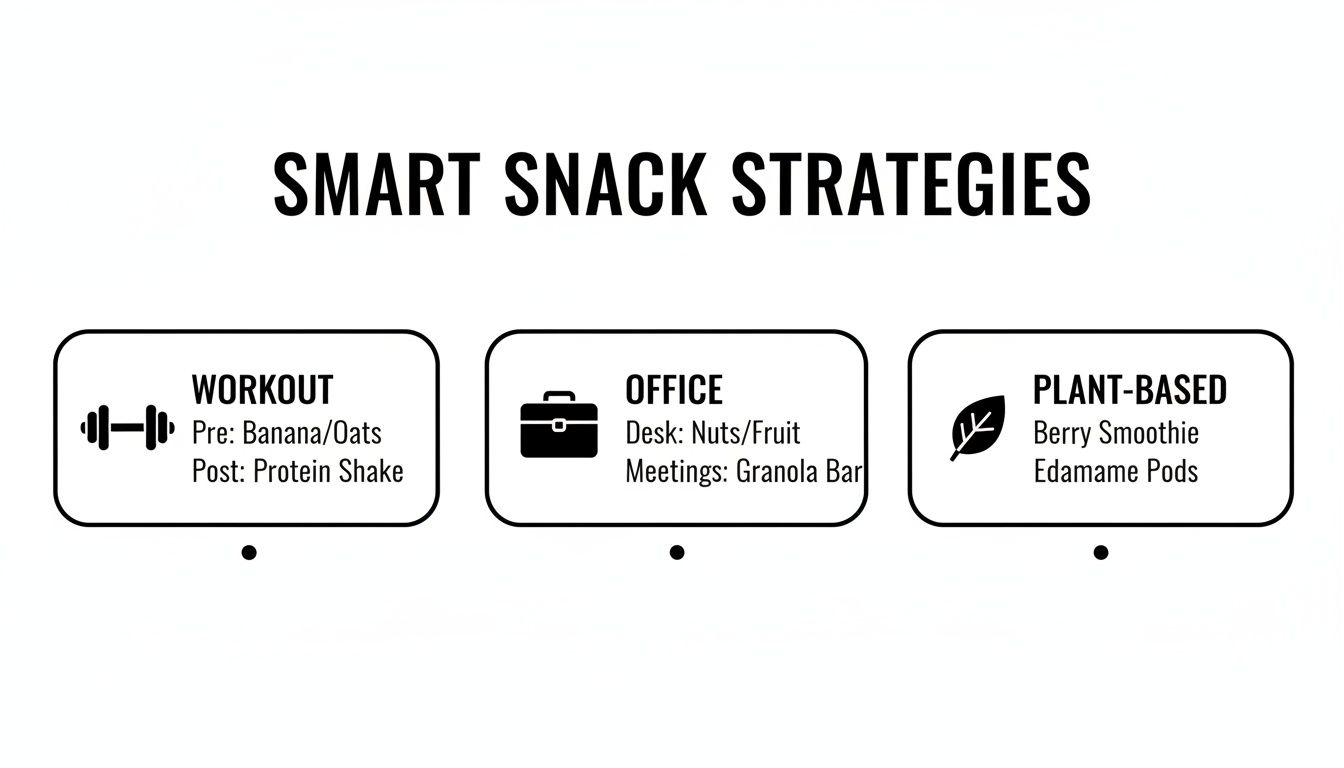
As you can see, the core principle of balancing your macros never changes. You just swap out the ingredients to fit your specific needs and goals.
Build Your Own Perfect Snack
Ready to give it a try? Use the table below as your go-to guide. Keep these categories in mind when you're making your grocery list or prepping snacks for the week ahead.
An energizing snack isn't just about what's in it; it's also about being convenient and tasting good. Once you master this simple framework, you'll always have a smart option ready to go—one that works for you, not against you.
To make it even easier, here's a blueprint to get you started. Just pick one item from each column to create a balanced, satisfying snack that will keep you firing on all cylinders. And if you want to get even more specific with your nutrition, check out our guide to the best macro-friendly snacks.
Your Energizing Snack Building Blueprint
Create dozens of balanced, energy-boosting snacks by picking one item from each column.
| Protein Powerhouse (Choose 1) | Smart Carb Source (Choose 1) | Healthy Fat Add-on (Choose 1) |
|---|---|---|
| Handful of Almonds | Apple Slices | Tablespoon of Chia Seeds |
| Hard-Boiled Egg | Whole-Grain Crackers | 1/4 Avocado |
| Scoop of Greek Yogurt | Handful of Berries | Handful of Walnuts |
| Cottage Cheese | Small Sweet Potato | Drizzle of Olive Oil |
| Serving of Edamame | Banana | Tablespoon of Flax Seeds |
Using this simple method turns every snack into a strategic move toward better energy and focus. Go ahead and bookmark this page—it's your new secret weapon for smarter snacking.
What Else Affects Your Daily Energy Levels?
Even the most perfectly balanced snack can’t do all the heavy lifting if other parts of your life are running on fumes. Choosing the right snacks is a huge piece of the energy puzzle, but it's not the only piece. To really feel your best, you have to look at the whole picture.
Think of your body like a high-performance engine. The food you eat is the premium fuel, sure. But what happens if the oil is low or the battery's dead? You’re not getting very far. Things like hydration, sleep, and how you handle stress are just as critical for keeping that engine humming.
Hydration and Sleep: Your Energy Cornerstones
Dehydration is a classic energy vampire. It often shows up looking a lot like hunger or plain old fatigue, tricking you into reaching for a snack when what you really need is water. Even a small drop in hydration, just 1-2%, can make you feel sluggish and foggy. Next time you feel that afternoon slump, try a big glass of water first.
Sleep is the other non-negotiable. When you don't get enough quality rest, your body's entire energy management system goes haywire, no matter how well you eat. Poor sleep messes with the hormones that control your appetite, which is why you suddenly crave sugary, processed foods that just lead to another crash. It's a vicious cycle. And it's not just about diet; other habits matter, too, like understanding how sauna use can improve sleep can contribute to better rest.
A smart, protein-rich snack can be a secret weapon here. It helps fend off those late-night sugar cravings that can ruin a good night's sleep, while staying hydrated ensures your body can actually use the great fuel you're giving it.
When you nail these fundamentals—fuel, hydration, and rest—you create a powerful, self-reinforcing system that keeps your energy steady all day long.
Answering Your Top Energy Snack Questions
When you start digging into the world of energizing snacks, a lot of questions come up. Let's walk through some of the most common ones and get you the clear, practical answers you need to snack smarter.
What’s the Best Time to Eat for an Energy Boost?
Honestly, the "perfect" time to snack really comes down to your own daily rhythm and when you're most active. If you're looking to beat that classic afternoon energy drain, grabbing a balanced snack between 2 PM and 4 PM can make all the difference.
For those who are active, timing is a bit more specific. If you need fuel for a workout, try a snack that's mostly carbs with a bit of protein about 30–60 minutes before you start. This gives your body fast-acting fuel that won't sit heavy in your stomach.
For Lasting Energy, Should I Go Sweet or Savory?
It's tempting to reach for something sweet for a quick pick-me-up, and a piece of fruit can definitely provide a fast carbohydrate boost. But for energy that lasts, savory snacks usually have the edge.
Why? Because savory options are often built around a solid protein source—think nuts, cheese, or even high-protein bites. That protein acts like an anchor, slowing down digestion and preventing the sharp blood sugar spikes and subsequent crashes that often follow a purely sugary snack. The real goal is always a balanced snack with protein, carbs, and healthy fats, regardless of whether it tastes sweet or savory.
The best energy snacks are less about flavor and more about balance. A savory, protein-first choice will almost always give you more reliable, long-lasting fuel than a simple sugary treat.
How Much Protein Does a Good Energy Snack Actually Need?
If you want a snack to genuinely stabilize your blood sugar and keep hunger away, it needs to have a solid protein count. You'll want to aim for a snack that provides somewhere between 10 and 20 grams of protein.
That amount is the sweet spot—it’s enough to slow down how quickly your body absorbs carbs and helps trigger satiety hormones like GLP-1, leaving you feeling full and focused. A snack with much less protein just won't have the same staying power.
Ready to swap out the crash-and-burn snacks for a savory, high-protein option that delivers real, sustained energy? Give Gym Snack a try! Our crunchy, chef-inspired bites are loaded with 15g of clean plant-based protein in every serving to keep you fueled and on your game. Shop now at gymsnack.com and feel the difference for yourself.