

The most common advice about a gourmet snack is that it should be sweet, indulgent, and small enough to feel harmless. That leaves out the gym-goer who wants real fullness, the plant-based athlete avoiding dairy or soy, and anyone who's tired of another chocolate-flavored protein bar. A savory snack can deliver culinary appeal and useful nutrition without pretending that dessert is a training strategy.
The category deserves a more practical definition. A worthwhile gourmet snack combines ingredient integrity, deliberate flavor craft, and purposeful nutrition. For fitness-minded consumers, that means evaluating protein, texture, digestion, and timing alongside taste. The result should be something you'd genuinely enjoy eating, but also something that earns a place in your gym bag.
Redefining the Gourmet Snack Beyond Hype
“Gourmet” has become an easy label for premium packaging, unusual seasoning, or a higher price. None of those qualities proves that a snack is thoughtfully made. A product can look artisanal while still relying on a long list of fillers, excessive sweetness, or a texture that feels more engineered than edible.
A more useful definition starts with ingredient transparency. Can you identify the protein source, oil, seasoning, and structural ingredients? Does the flavor come from recognizable foods such as roasted garlic, smoked paprika, nutritional yeast, herbs, or fermented seasonings? A clean label doesn't have to mean a short label, but it should make the product's purpose understandable.
The second pillar is culinary craft. A savory gourmet snack should have more going on than salt and artificial cheese flavor. It might open with roasted notes, develop into umami, and finish with a gentle heat or acidity. Texture matters just as much. A crisp bite, a layered chew, or a toasted finish gives the palate a reason to keep paying attention.
The third pillar is functional nutrition. A snack designed for training should contribute meaningful protein, fit the eater's dietary needs, and provide enough satisfaction to bridge the gap between meals. That doesn't make it a replacement for a balanced meal. It makes the snack more useful than an incidental source of calories.
A practical definition: A gourmet snack should satisfy your palate first, then justify its place in your routine through transparent ingredients and purposeful nutrition.
Savory, plant-based formats are especially relevant here. They move beyond the familiar sweet-bar model and give consumers another way to pursue protein, fullness, and convenience. For people avoiding dairy, soy, gluten, or seed oils, the label also needs to answer questions that flavor-forward marketing often ignores.
The broader premium-snack economy supports this shift. The global premium snacks market is estimated at USD 54.62 billion in 2026 and projected to reach USD 67.08 billion by 2031, according to Mordor Intelligence's premium snacks market analysis. Gourmet snacking is no longer limited to gift baskets and specialty counters. It's becoming a format where taste and function can coexist.
What Actually Makes a Snack Gourmet
A gourmet snack earns its name through the eating experience, not through a decorative pouch. Start with texture. Conventional snacks often aim for consistency above all else, while a more carefully developed product may create contrast through expansion, seasoning adhesion, crispness, and the way the bite dissolves.
Plant-based protein makes texture especially important. Research on pea-protein-fortified extrudates found that highly expanded products were perceived as crisp, while products with lower expansion were described as hard, crunchy, and non-crisp by sensory panels, as reported in this controlled study on pea-protein snack texture. That distinction matters in a protein snack because a dense, chalky bite can undermine even an excellent nutrition panel.
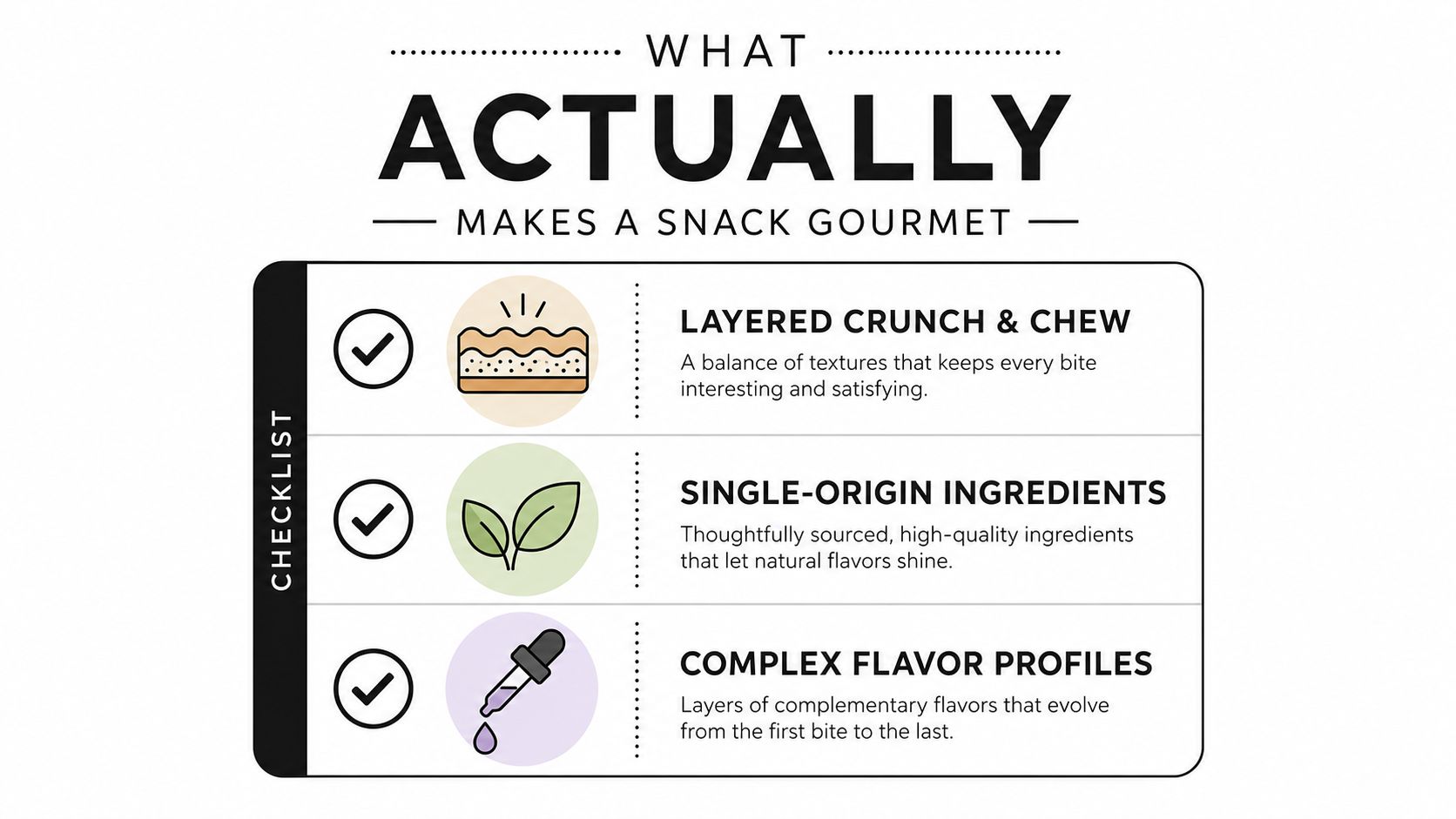
Texture should have a purpose
Look for a bite that feels light but substantial, with enough structure to stay crisp after opening. The seasoning should cling to the surface without creating a powdery coating that overwhelms the mouth. A well-made savory crisp can offer the satisfaction of a chip while bringing more nutritional intent to the occasion.
Flavor needs an arc
Gourmet flavor usually comes from layering rather than increasing sweetness or salt. Consider a cheddar-style profile built from nutritional yeast, onion, garlic, and paprika. The first impression might be toasted and savory, followed by umami, then a mild peppery finish. Jalapeño can add brightness and warmth, while roasted garlic can create depth without turning the snack sugary.
Ingredients should explain the product
Whole-food plant proteins, recognizable seasonings, and transparent sourcing give buyers a way to assess quality. Single-origin ingredients can add traceability, but the broader question is whether the recipe feels purposeful. “Natural” on the front of a package means little if the back panel doesn't show what creates the protein, flavor, and texture.
Use this quick test:
- Read the protein source: Pea, lentil, bean, or seed proteins should appear as meaningful structural ingredients, not just decorative additions.
- Study the seasoning: Garlic, paprika, nutritional yeast, herbs, and spices suggest a flavor strategy you can understand.
- Inspect the portion: A practical serving should be easy to carry and easy to measure, especially when the snack supports a specific training occasion.
Presentation can reinforce craft, but it can't replace it. The benchmark is simple: does the snack taste deliberate, feel satisfying, and make sense for the way you plan to eat it?
Gourmet Snacks Versus Regular Snacks
The difference between gourmet and regular snacks isn't automatically nutritional superiority. A premium price doesn't guarantee better protein density, more fiber, or fewer unnecessary ingredients. Compare the actual product, not the front-of-pack story.
| Criteria | Gourmet Snack | Regular Snack |
|---|---|---|
| Protein density | May be designed around a concentrated plant protein source and a defined training use | Often centers on starch, sweeteners, or fat, with protein playing a smaller role |
| Flavor profile | Uses layered umami, smoke, acid, herbs, or spice | Commonly emphasizes a single salty, sweet, or cheese-like note |
| Texture | May combine expansion, crispness, and seasoning for a deliberate mouthfeel | Often prioritizes uniform crunch or chew |
| Ingredient visibility | Whole-food components and recognizable seasonings are easier to evaluate | Fillers, flavor systems, or highly processed components may dominate |
| Satiety potential | Protein and fiber can make the portion more useful between meals | A low-protein, refined snack may leave you looking for another food soon |
| Dietary fit | Can be formulated without dairy, soy, gluten, or seed oils | Allergen and oil choices vary widely by product |
| Cost per serving | May cost more, but can deliver a more purposeful nutrition role | May be cheaper upfront while contributing less protein or fullness |
Protein density deserves close attention. A snack with moderate calories but little protein may be perfectly enjoyable, yet it won't serve the same role as a protein-forward option. Fiber also matters because it adds physical structure and can slow the pace of eating, although tolerance differs from person to person.
The ingredient list tells a similar story. A snack based on pea protein, spices, and a carefully selected oil gives you a clearer framework than one built around several sweeteners, generic flavoring systems, and multiple texture agents. That doesn't mean every unfamiliar ingredient is harmful. It means the recipe should have a reason for being there.
Cost deserves an honest reading. A gourmet snack may be more expensive per bag because it uses concentrated protein, specialized processing, or chef-inspired seasoning. The better comparison is cost per useful occasion, not cost per package. If one portion replaces an impulsive vending-machine purchase and helps you reach a protein target, its practical value may be higher even when its shelf price isn't the lowest.
Protein, Satiety, and the GLP-1 Connection
Savory protein snacks can support fullness through a mechanism that sweet, carbohydrate-heavy snacks often underdeliver. Protein intake raises appetite-related gut hormones, including GLP-1 and PYY, and controlled human studies have reported greater fullness and satiety signals after higher-protein meals. The same research reported satiety increases ranging from 7% to 19%, depending on protein dose and meal context, in this human study on protein intake and appetite regulation.
GLP-1, or glucagon-like peptide-1, is involved in appetite regulation and gastric emptying. That doesn't mean a snack acts like a GLP-1 medication, and food shouldn't be presented as a substitute for medical treatment. It does mean protein-rich choices can fit logically into a routine where appetite control and meal satisfaction matter.
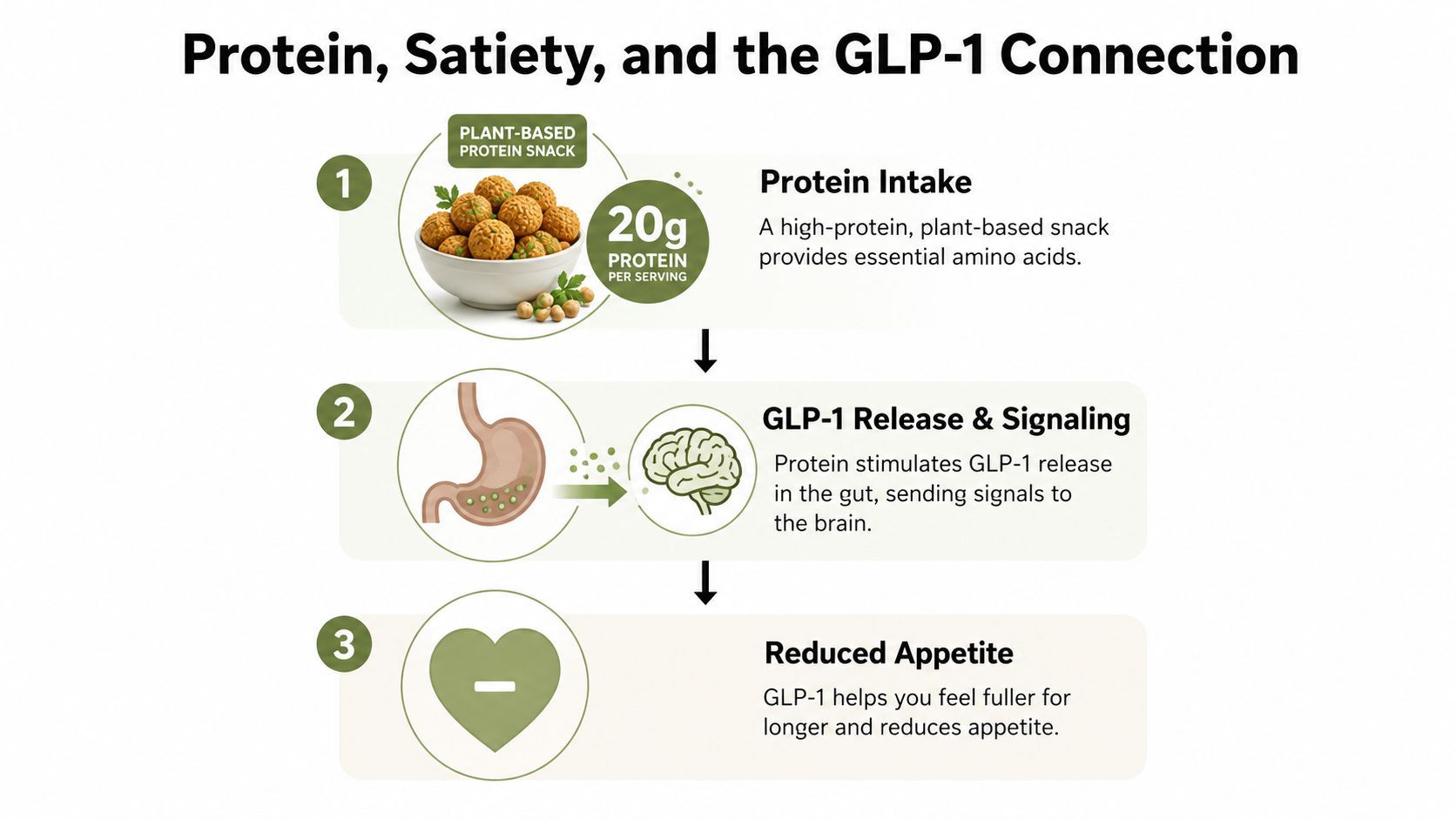
Why the savory format helps
Sweet snacks can be useful around training when carbohydrates are the priority, but they aren't the only option. A savory snack built around pea, lentil, or other plant proteins can provide a more meal-like sensory experience. Salt, umami, spice, and crunch may also feel more satisfying to someone who's tired of dessert flavors.
For gym users, a formulation target of 15 grams or more of protein per serving is a meaningful benchmark for building a protein-centered snack, based on the satiety-focused formulation guidance in the provided research. It still needs to fit the individual's total diet, digestion, training schedule, and medical context.
Plant-based protein quality requires nuance. A snack doesn't need to contain every amino acid in equal amounts by itself, but people following plant-based diets should vary their protein sources across the day and choose products with transparent nutrition information. Readers who want a broader overview can review Yuve protein powder benefits for context on how vegan protein powders can fit into a plant-based routine.
For GLP-1 medication users: Small, protein-forward portions may be easier to plan than large, highly sweet meals, but medication side effects and individual nutrition needs vary. Discuss persistent nausea, appetite changes, or difficulty meeting protein needs with a qualified clinician or dietitian.
Training nutrition also depends on the clock. A snack before lifting should feel comfortable, while a post-workout option can help you build toward your daily protein intake. For a practical guide to distributing protein across a plant-based diet, use this resource on how to get enough protein on a plant-based diet.
Gym Snack as a Savory Plant-Based Case Study
Gym Snack provides a concrete example of how a savory product can combine gourmet cues with training utility. Its line is built around clean pea protein, chef-inspired seasoning, and a crunchy format rather than a dessert-style bar or shake. The available flavor direction includes Cheddar Cheeze and Jalapeño Cheddar Cheeze, with profiles designed around bold, cheesy notes.
The product information supplied for the brand describes 15 grams or more of protein per serving and 30 grams or more per bag, with low saturated fat, no cholesterol, and no seed oils. It also identifies the formula as naturally free of dairy, soy, and gluten, which makes the label relevant to consumers who are navigating common dietary exclusions.
What to inspect in the formula
The case study is useful because each feature answers a practical buying question:
- Protein foundation: Pea protein gives the snack a clear functional role instead of leaving protein as an afterthought.
- Savory flavor: Cheddar-style seasoning and jalapeño offer an alternative to chocolate, caramel, or fruit-forward protein products.
- Texture target: Crunch is central to the experience, which matters because plant-protein processing can otherwise create a dense or chalky bite.
- Dietary positioning: The absence of dairy, soy, and gluten supports allergen-conscious shopping, while individual buyers should still check packaging for current manufacturing and cross-contact information.
Portion design matters in a gym bag. A clearly defined serving helps you decide whether the snack belongs before training, after training, or between meals. The brand also offers bundles and custom packs, which can make it easier to keep a consistent rotation rather than relying on whatever sweet snack happens to be available.
Taste still decides whether a product becomes a habit. Smoked paprika, roasted garlic, and nutritional yeast are useful examples of the broader savory toolkit, even when a particular product uses a different recipe. For more ideas in this category, explore these high-protein savory snacks.
A snack becomes more useful when it fits the whole routine. Someone assembling a compact training space may also benefit from practical guidance on how to build a home gym, especially when convenience determines whether workouts and recovery nutrition happen consistently.
How to Buy, Pair, and Time Gourmet Snacks
A good buying decision starts on the back of the package. Check the protein amount, serving size, fiber, saturated fat, added sugar, allergen statement, and ingredient order. If you follow a plant-based diet, look for a named protein source and consider how the snack fits with the other proteins you eat during the day.
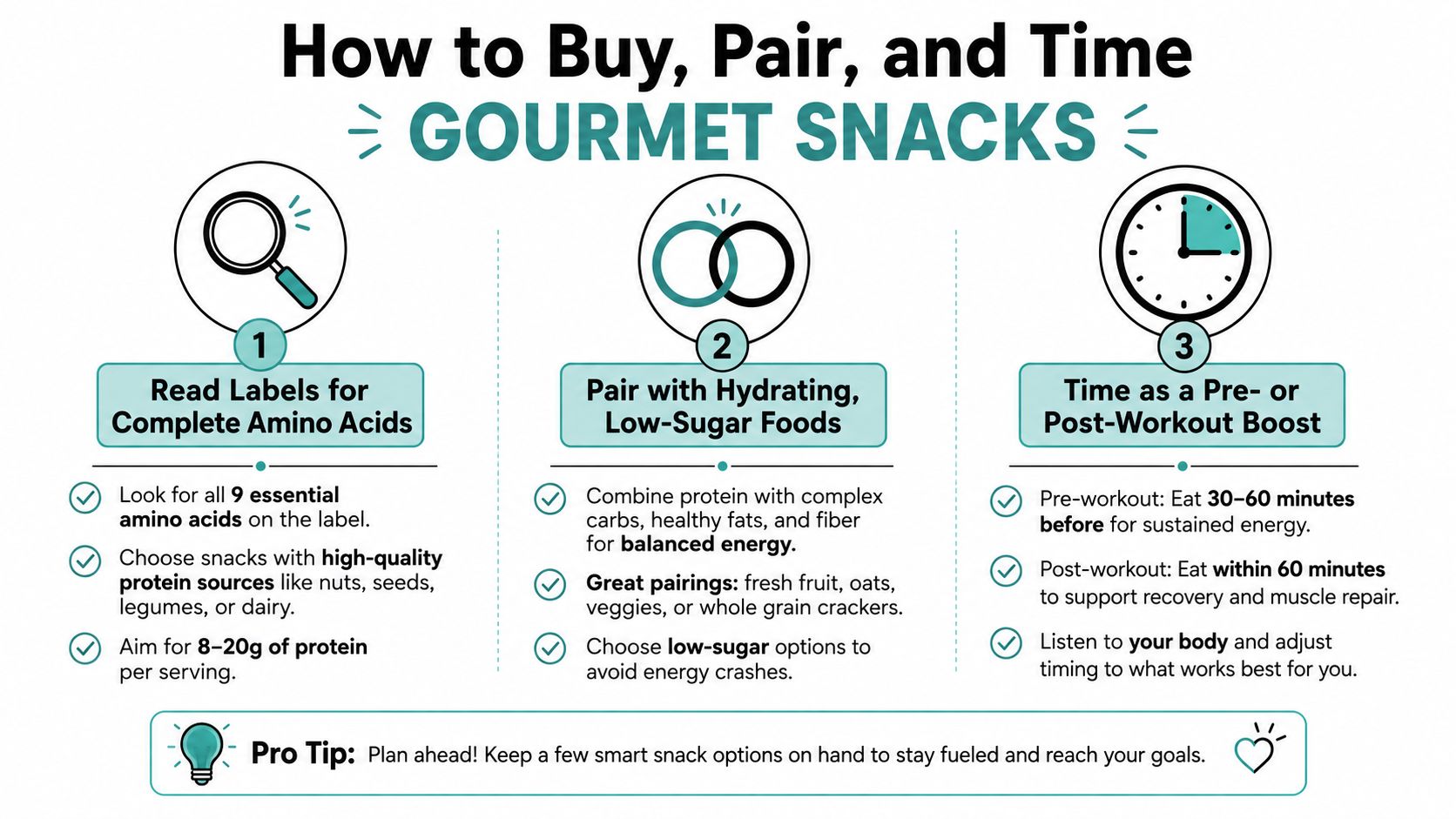
Buy for the occasion
A product with a crisp texture and moderate portion may suit a pre-workout window better than a heavy, high-fiber option. After training, prioritize a snack that helps you move toward your daily protein goal. Between meals, combine protein with enough fiber and volume to make the pause feel intentional rather than like a preview of constant grazing.
Use this label checklist:
- Find the protein first: Confirm the serving size and identify whether the protein comes from peas, lentils, beans, seeds, or a blend.
- Scan for dietary fit: Check dairy, soy, gluten, seed oils, and cross-contact information if those ingredients matter to you.
- Look for flavor substance: A product should name meaningful seasonings instead of leaning entirely on vague “natural flavors.”
- Assess the texture promise: Words such as crisps, puffs, roasted, or baked should match the actual bite after opening.
- Judge the portion accurately: A snack should be easy to measure and appropriate for your appetite, not merely easy to overeat.
Pairing can improve satisfaction without turning the snack into a full meal. Water is usually the starting point, while an unsweetened electrolyte drink may make sense after a sweaty session. If you need more staying power between meals, pair a savory crisp with fruit, hummus, or a small amount of nuts, depending on your digestion and calorie needs.
Timing rule: Eat for the session ahead. Choose easier digestion before training, more complete recovery nutrition afterward, and protein-plus-fiber structure when the goal is to stay satisfied between meals.
For a wider label-reading framework, use this guide to clean-label snacks. Then keep a small rotation: one pre-workout option, one post-workout protein option, and one portable between-meal choice. Variety protects your palate and helps you notice which ingredients your body handles well.
Why Savory Gourmet Snacks Are the Next Frontier
Sweet protein bars have served a useful purpose, but they've also narrowed the public idea of functional snacking. Many athletes and plant-based consumers want protein without another dessert flavor. They want umami, smoke, heat, herbs, and crunch, along with a label that addresses allergens and processing choices directly.
The market signals support a broad opportunity. A broader gourmet snacks forecast estimates the category at USD 68.03 billion in 2025, with a projection of USD 160.17 billion by 2035 and an 8.94% CAGR from 2026 to 2035, according to Towards FnB's gourmet snacks market forecast. The same source identifies Europe as the dominant region in 2025 and Asia-Pacific as the fastest-growing region over the forecast period. Those projections don't guarantee success for every product, but they show that premium snacking has room for new formats.
Savory plant-based snacks can occupy that space by solving several problems at once. They give fitness consumers a break from sweet flavors, offer plant-based protein in a portable format, and create room for allergen-conscious recipes. They also align with the category's move toward more protein, less sugar, bold flavor, and global inspiration, including protein crisps and puffs, as described in the provided industry commentary.
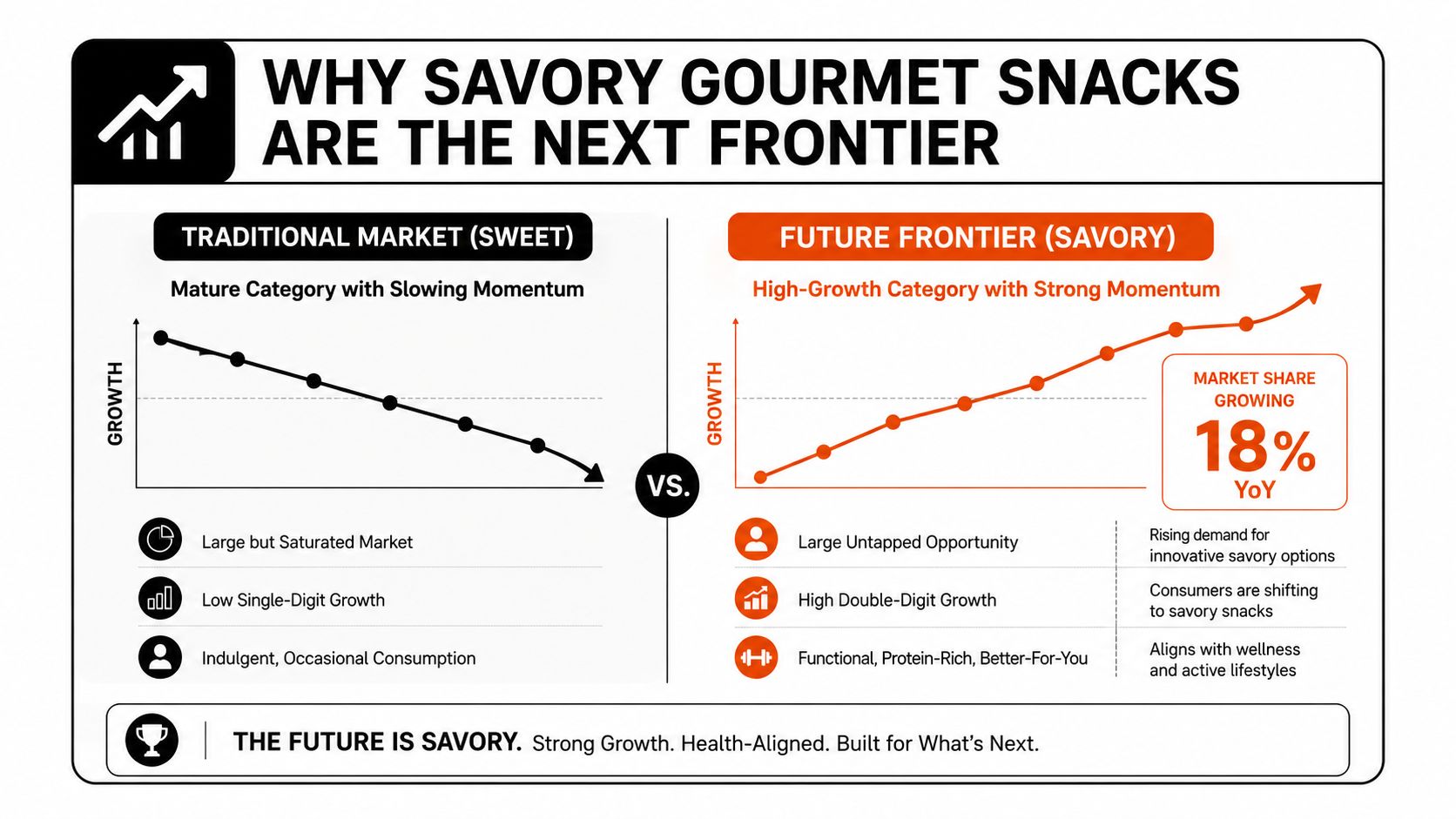
Use four questions to judge any product:
- Ingredient integrity: Can you understand the formula?
- Protein density: Does the snack make a meaningful contribution?
- Texture complexity: Is the crunch enjoyable enough to repeat?
- Functional purpose: Does it fit a real moment in your training or daily schedule?
Audit your current snack rotation this week. Replace one sweet bar with a savory plant-based option, pair it appropriately, and note how its flavor, digestion, and fullness compare with your usual choice.
Gym Snack offers chef-inspired plant-based savory protein snacks with crunchy textures, bold Cheddar Cheeze and Jalapeño Cheddar Cheeze flavors, and formulas free of dairy, soy, and gluten. Visit Gym Snack to explore protein-forward options for your gym bag, between-meal routine, and next training session.