

High-protein, low-calorie snacks are a game-changer for anyone trying to stay full, energized, and hit their fitness goals. Think of them as your smart-snacking safety net. A solid benchmark to aim for is any snack that packs at least 10 grams of protein for under 200 calories per serving.
This isn't just a random set of numbers; it's a powerful combination that crushes hunger and supports muscle growth without blowing your daily calorie budget.
Defining Your Smart Snacking Blueprint
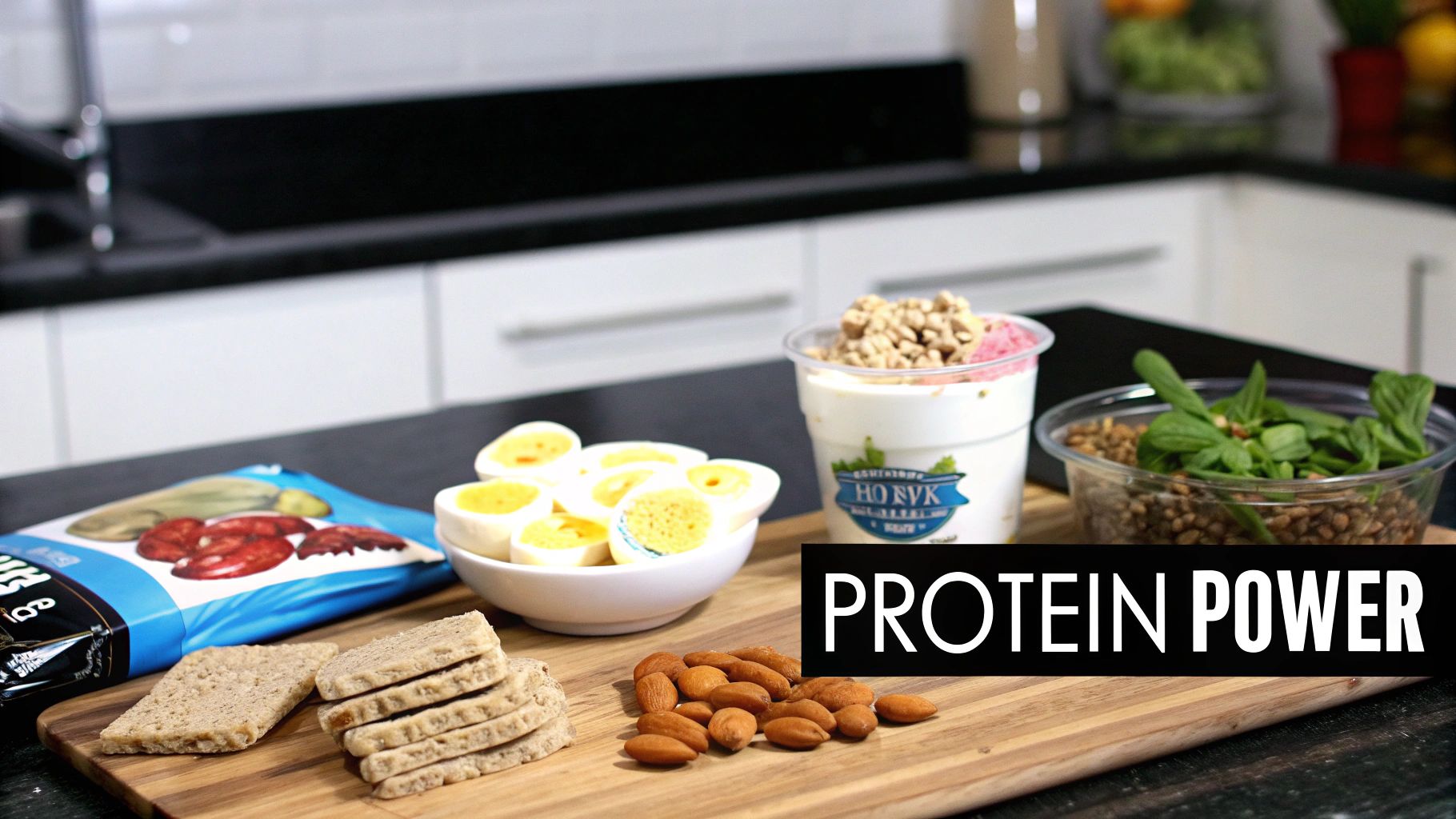
Let's break down what actually makes a high-protein, low-calorie snack effective. Forget complicated formulas—this is about creating a simple mental checklist you can use anywhere, from your kitchen to the grocery store aisle. It’s all about getting the most nutritional bang for your calorie buck.
The goal here isn't just to eat less. It's to eat smarter. When a snack hits this perfect balance, it does more than just fill a temporary void. It supplies the building blocks your body needs while keeping you satisfied for hours, helping you dodge that afternoon energy slump and make better food choices all day long.
The 10 Grams of Protein Rule
So, why 10 grams? A snack with at least this much protein is substantial enough to send satiety signals to your brain, making you feel genuinely full. Your body has to work harder to break down protein compared to carbs, a process that burns more energy and slows down digestion.
This metabolic perk means you stay fuller for longer and are way less likely to go looking for another snack 30 minutes later. For a lot of us, figuring out how to increase protein intake feels like a chore, but focusing on your snacks is a simple, effective strategy. It turns snacking from a mindless habit into a strategic tool for your health.
The 200 Calorie Ceiling
Keeping snacks under 200 calories is what ensures they stay a "snack" and don't accidentally become a fourth meal. This calorie cap gives you enough energy to bridge the gap between meals without derailing your daily nutritional targets. It’s the perfect amount to refuel your body and mind without contributing to unwanted weight gain.
The key is nutrient density. A 200-calorie snack packed with protein, fiber, and essential nutrients is far more valuable than 200 calories of empty carbs and sugar that will leave you hungry and crashing soon after.
Your Quick Guide to Identifying Smart Snacks
Not sure if a snack makes the cut? Use this simple checklist to see if it meets the high-protein, low-calorie criteria for optimal benefits.
| Nutritional Metric | Ideal Target Per Serving | What This Achieves |
|---|---|---|
| Protein Content | 10+ grams | Triggers fullness, supports muscle maintenance, and boosts metabolism. |
| Calorie Count | Under 200 calories | Provides energy without disrupting your overall daily calorie goals. |
| Added Sugar | Under 5 grams | Prevents blood sugar spikes and subsequent energy crashes. |
This table gives you a clear, at-a-glance way to vet any potential snack and ensure it's truly working for you, not against you.
And it’s not just us—the demand for healthier options is reshaping the entire food industry. The healthy snacks market, which includes these types of foods, was valued at USD 101.99 billion and is projected to skyrocket to USD 185.40 billion by 2034. The low-sugar segment alone grabs over 40% of revenue, which really shows a clear consumer shift toward snacks that are both nutritious and clean.
The Science Behind Why These Snacks Work
Ever wonder why a handful of almonds can hold you over for hours, but a sugary granola bar leaves you raiding the pantry again in thirty minutes? It’s not magic—it’s about how your body responds to what you feed it. High-protein, low-calorie snacks tap into your body's natural systems to deliver some serious benefits for how you feel, function, and look.
These aren't just little bites to tide you over. Think of them as strategic tools for mastering hunger, firing up your metabolism, and giving your muscles the fuel they need. Once you get how this works, you'll see why they're so effective for hitting your health goals.
Master Your Hunger Hormones
That feeling of being full and satisfied? That’s satiety, and it's largely driven by hormones. When you eat protein, your body sends out signals—specifically, hormones like Peptide YY (PYY) and GLP-1—that tell your brain, "Hey, we're good here. Stop eating."
This is a complete game-changer for appetite control. Simple carbs, on the other hand, can send your blood sugar on a rollercoaster, leading to a crash that leaves you hungry again. Protein digests much more slowly, giving you a steady stream of energy and keeping those hunger pangs away for a lot longer.
Think of it like this: a carb-heavy snack is like burning newspaper. It flares up fast and dies out just as quickly, leaving you needing more fuel. A protein-rich snack is like a slow-burning log in a fireplace; it provides steady, sustained heat—or in this case, energy and fullness—for hours.
This hormonal edge is what helps you sidestep those mindless cravings. It puts you back in the driver's seat, making it so much easier to stick to your nutrition plan without feeling like you're constantly fighting hunger.
Turn Up Your Metabolic Thermostat
Here’s a cool fact about protein: your body actually burns calories just digesting it. This is called the Thermic Effect of Food (TEF), and protein has the highest TEF of any macronutrient by a long shot.
- Protein: Your body burns 20-30% of protein's calories during digestion.
- Carbohydrates: That number drops to just 5-10% for carbs.
- Fats: Fats are the easiest to process, at only 0-3%.
So, if you eat 100 calories from pure protein, your body uses up to 30 of those calories just breaking it down. While it might seem like a small boost from a single snack, it really adds up over the course of a day. Choosing high-protein snacks is a simple hack to get your metabolism working a little harder for you.
Provide Essential Muscle Fuel
Protein is absolutely essential, whether you're a serious athlete or just trying to stay strong and toned. It’s made up of amino acids, which are the literal building blocks of your muscle tissue. Every time you work out, you create tiny micro-tears in your muscles.
Protein swoops in with the raw materials needed to patch up those tears, which is how your muscles recover, rebuild, and grow stronger. If you don't get enough protein, that recovery process stalls. This is especially important when you're trying to lose weight, as being in a calorie deficit can sometimes lead to muscle loss if you aren't careful.
By timing your high-protein, low-calorie snacks around your workouts, you give your body a constant supply of these critical amino acids. This not only fuels muscle growth and repair but also helps you hold on to the lean muscle you've worked so hard to build. And more muscle means a healthier, more efficient metabolism.
How to Read Nutrition Labels Like an Expert
Ever feel like you need a secret decoder ring to navigate the snack aisle? With all the flashy packaging and bold health claims, it's easy to get lost. If you want to find genuinely great high-protein, low-calorie snacks, you have to learn how to read the nutrition label. Think of it as your roadmap to seeing past the marketing hype and finding snacks that actually work for you.
It's about more than just a quick glance at the calories. A snack might shout "healthy!" from the front of the box, but a closer look at the back can reveal a different story—one full of sneaky sugars or unhealthy fats. Mastering this skill is a game-changer; it helps you tell the true nutritional allies from the imposters.
Start with the Serving Size
This is the first—and most important—place to look. Before your eyes wander to calories or protein, check the serving size and the servings per container. So many people get tripped up right here. Food companies often base their nutrition facts on a tiny portion, which can make the calories and fat look deceptively low.
A bag of protein chips, for example, might seem like a single snack. But the label could tell you it contains two or even three servings. If you eat the whole bag (and let's be honest, we often do), you have to multiply every number on that label—calories, protein, carbs—by the number of servings to know what you really consumed.
The Protein-to-Calorie Ratio
Here’s a fantastic rule of thumb that I use all the time: the protein-to-calorie ratio. This is your quick gut check. A top-tier high-protein, low-calorie snack will typically provide at least 1 gram of protein for every 10-15 calories.
Let’s see it in action:
- Snack A: 150 calories and 15g of protein. (150 calories / 15g protein = 10). This gives you a 10:1 ratio. That's a fantastic choice.
- Snack B: 200 calories and 10g of protein. (200 calories / 10g protein = 20). This is a 20:1 ratio, which isn't nearly as efficient.
This simple bit of math helps you instantly compare two snacks side-by-side and see which one packs a bigger protein punch for your calorie budget. It’s an invaluable tool for making smarter choices on the fly.
Beyond the Big Numbers
Once you’ve nailed down the serving size and checked the protein ratio, it’s time for a quick scan of the other details. A high protein count is great, but don't let it distract you from other ingredients that might be working against your goals.
A truly effective snack isn't just high in protein; it's also low in the things you don't want. Look for minimal added sugars, low saturated fat, and a clean ingredient list you can actually understand.
This next infographic perfectly illustrates the core benefits you get from making the right snack choices.
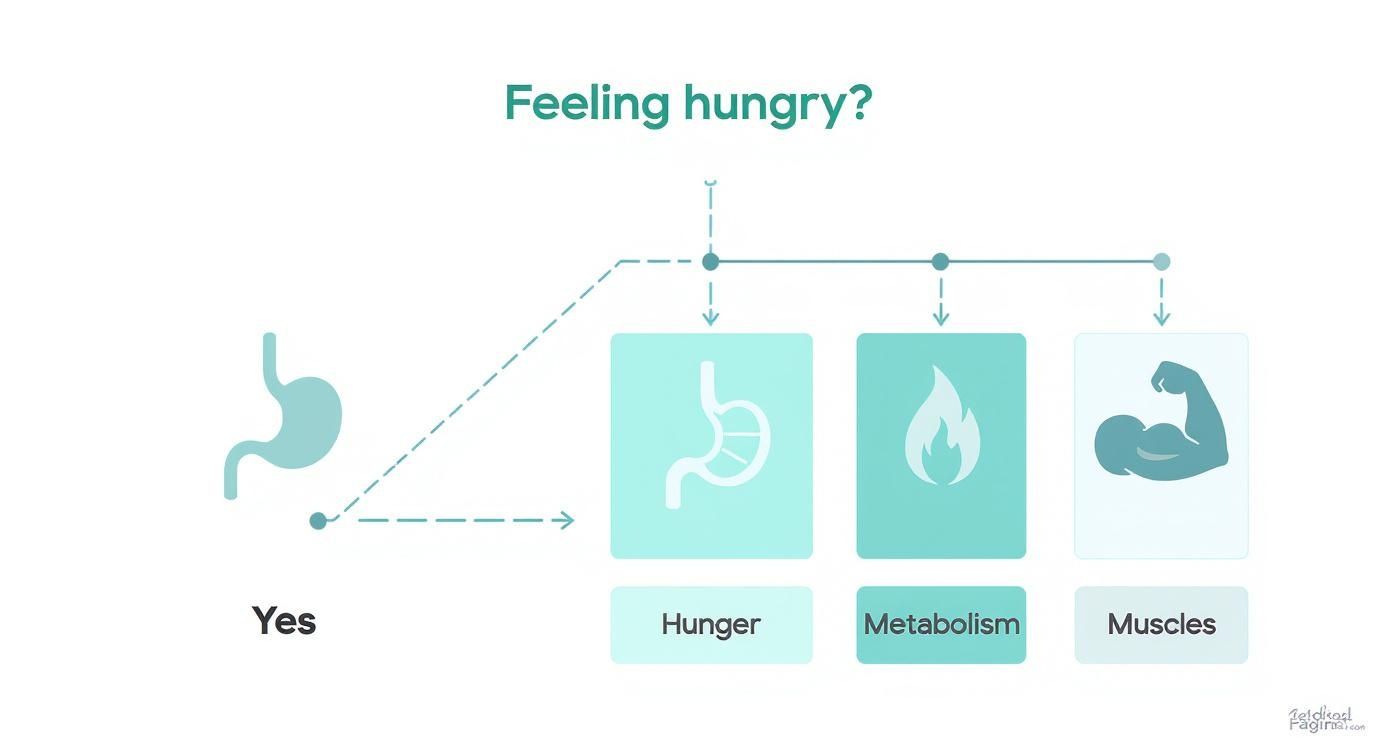
As the visual shows, a single smart snack can have a ripple effect, positively influencing your hunger levels, metabolic rate, and muscle health all at once. This growing understanding is exactly why the global high-protein food market, currently valued at USD 56.69 billion, is projected to nearly double by 2034. You can read more about the booming high-protein food market on towardsfnb.com. By keeping these key benefits in mind, you can ensure your snacking habits are actively supporting your bigger wellness goals.
When to Eat Your Protein Snacks for Best Results
Knowing what to snack on is half the battle. Knowing when to snack is how you win the war.
Proper timing can elevate your high-protein, low-calorie snack from a simple hunger-buster into a serious tool for hitting your fitness goals. When you sync up your snacks with your body’s natural rhythm, you get so much more out of them—whether you're gearing up for a workout, recovering after, or just trying to survive that midday energy crash.
Think of your body like a high-performance engine. You wouldn't just throw any old fuel in it whenever you felt like it, right? You'd use the right fuel at the right time for peak performance. The same goes for your snacks. Let's break down the three most important times to grab a protein snack to keep that engine humming.
Fueling Up Before Your Workout
Eating the right thing before you train can be the difference between just going through the motions and absolutely crushing your workout.
Grabbing a high-protein, low-calorie snack about 30 to 60 minutes before you start gives your muscles a steady supply of amino acids. This little bit of fuel does a big job: it helps prevent your body from turning on itself and breaking down muscle tissue for energy while you're lifting or running.
The key here is to feel energized, not stuffed. You need something that digests easily and won't weigh you down. A small, protein-focused snack is perfect for protecting your hard-earned muscle and giving you that sustained energy to power through one more rep or one more mile.
Pre-Workout Snack Ideas:
- A small pot of Greek yogurt
- A handful of roasted chickpeas
- Half of a low-sugar protein bar
These give you that protein punch without the bloat, setting you up for a great session.
Optimizing Your Post-Workout Recovery
You've probably heard of the "anabolic window"—that magical time right after you finish a workout. It’s a real thing. Your muscles are like sponges, ready and waiting to soak up nutrients to repair all the tiny tears you just created. This is when a protein snack isn't just a good idea; it's essential.
Getting 15 to 25 grams of protein within an hour of finishing your workout kickstarts the repair process, a fancy term for which is muscle protein synthesis. This not only helps you build leaner, stronger muscle over time but also dials down soreness so you can get back to it sooner.
Think of your post-workout snack as a direct investment in your progress. You're giving your body the raw materials it needs to rebuild better and stronger, making sure all that hard work actually pays off.
This is the perfect time for something quick and effective. A savory, crunchy option like a bag of Gym Snack protein puffs can deliver over 15g of plant-based protein to refuel your muscles fast. A ready-to-drink protein shake or a couple of hard-boiled eggs are also fantastic choices.
Conquering the Midday Energy Slump
Ah, the 3 p.m. crash. We all know it. Your focus dissolves, your eyelids feel heavy, and that vending machine starts looking like an oasis in the desert. This slump usually happens when your blood sugar takes a nosedive after a carb-heavy lunch.
A high-protein, low-calorie snack is your secret weapon here.
Protein helps slow down how quickly your body absorbs carbs, which keeps your blood sugar from spiking and then crashing. A well-timed afternoon snack tops off your energy levels and brings your focus back, helping you power through the rest of the day without caving to sugary temptations. It’s a simple trick that can completely change your afternoon productivity and keep you locked in on your goals.
Simple DIY Savory Protein Snacks You'll Actually Make
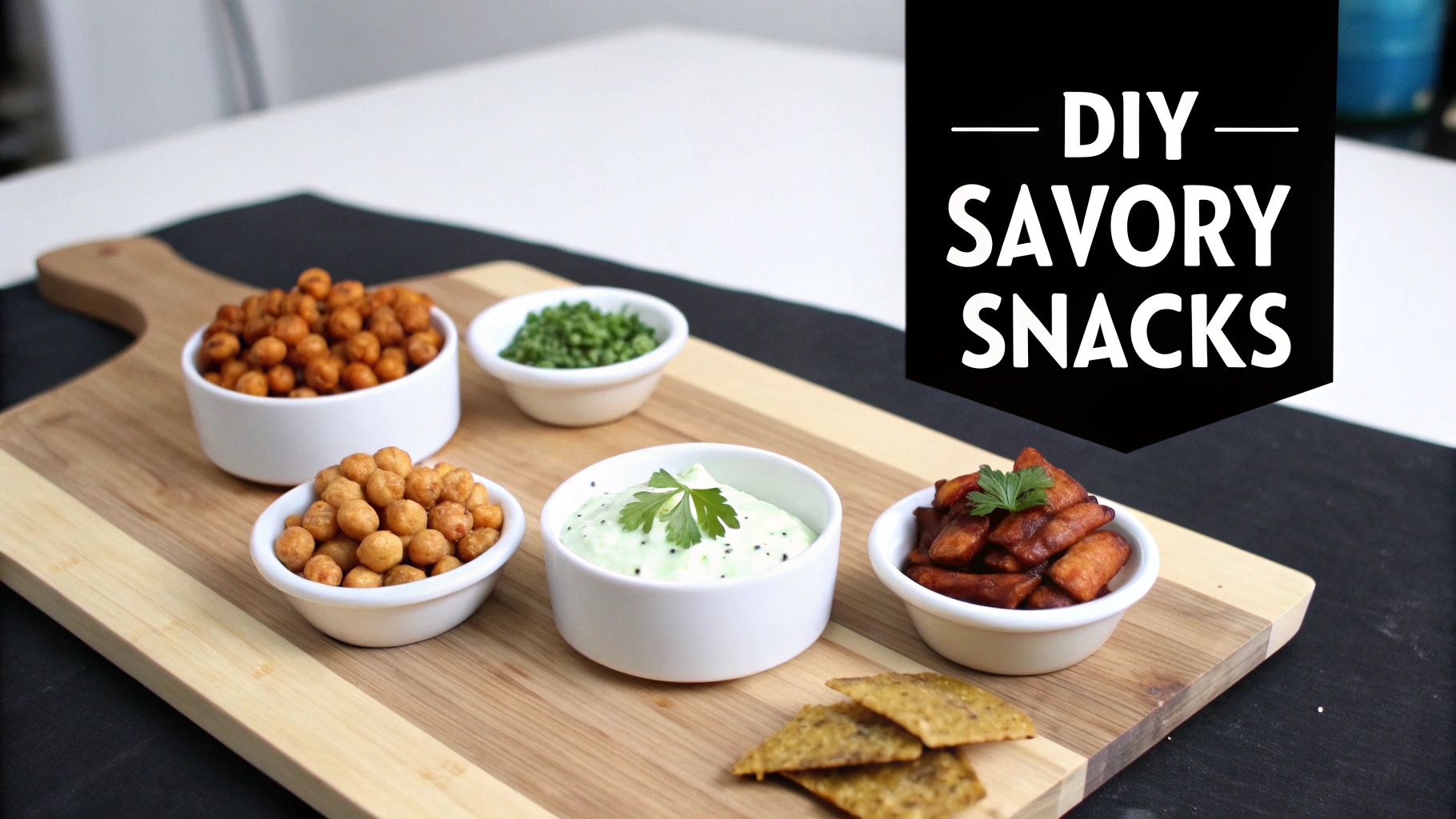
Making your own high-protein snacks is one of the best ways to take full control of your nutrition. It saves money, lets you sidestep questionable ingredients, and honestly, it's way easier than most people think.
While grabbing a pre-made snack is convenient, mastering a few simple recipes is a game-changer. It shows you that fueling your body right doesn’t require a culinary degree. The goal isn't to become a Sunday meal-prep warrior; it's about having a few back-pocket recipes that are quick, delicious, and hit your macros perfectly.
And it’s clear people are catching on. The protein snacks market, once valued at US$ 4,796.3 million, is on track to explode to US$ 8,624.3 million by 2032. This isn't just a trend; it's a fundamental shift in how we approach snacking—not as a guilty pleasure, but as a smart way to manage hunger and hit our fitness goals.
Here are three of my favorite foolproof recipes that prove healthy and homemade can be simple.
Recipe 1: Crispy Roasted Chickpeas
Forget soggy, bland canned beans. With a little oven time, chickpeas transform into a crunchy, salty, and deeply satisfying snack packed with plant-based protein and fiber. They’re the perfect answer when you’re craving chips but need something that actually works for you, not against you.
What You'll Need:
- 1 can (15 ounces) of chickpeas, rinsed and dried very well
- 1 teaspoon olive oil or avocado oil
- 1/2 teaspoon smoked paprika
- 1/4 teaspoon garlic powder
- Salt and pepper to taste
How to Make Them:
- First, crank your oven up to 400°F (200°C). The absolute key to getting these crispy is to make sure the chickpeas are bone dry. Seriously, pat them down with a paper towel until they are.
- Toss the dry chickpeas in a bowl with your oil and seasonings. Mix it all up so every last one is coated.
- Spread them out on a baking sheet in a single layer—don't let them crowd each other.
- Roast for 20-25 minutes, giving the pan a good shake halfway through. You're looking for a deep golden brown and a satisfying crunch. Let them cool completely before you store them, or they'll lose their crisp.
A half-cup serving gives you about 7 grams of protein and 7 grams of fiber for just 150 calories. That protein-fiber combo is the secret sauce for feeling full and satisfied for hours.
Recipe 2: Creamy Herb and Garlic Dip
This dip has a secret weapon: cottage cheese. Blended up, it creates an unbelievably smooth, high-protein base that blows away traditional dips made with sour cream or mayo. It’s amazing with veggie sticks, whole-grain crackers, or even slathered on a turkey wrap.
What You'll Need:
- 1 cup low-fat cottage cheese
- 1 clove of garlic, minced
- 2 tablespoons fresh dill, chopped
- 1 tablespoon fresh chives, chopped
- 1 tablespoon of lemon juice
- Salt and pepper to taste
How to Make It:
- Dump all the ingredients into a blender or food processor.
- Blend on high until it's perfectly smooth and creamy. You might need to stop and scrape down the sides once or twice to get everything incorporated.
- Give it a taste and add more salt, pepper, or lemon juice if it needs it. Serve right away or keep it in the fridge for up to three days.
Recipe 3: Quick Turkey Jerky Bites
Making traditional jerky can be an all-day affair, but these oven-baked "bites" deliver that same chewy, savory goodness in a fraction of the time. Using lean ground turkey keeps the fat low and the protein sky-high, making them one of the best high protein low calorie snacks for when you're on the move.
What You'll Need:
- 1 pound of lean ground turkey (93/7 is perfect)
- 2 tablespoons soy sauce (or tamari for gluten-free)
- 1 tablespoon Worcestershire sauce
- 1 teaspoon onion powder
- 1/2 teaspoon black pepper
How to Make Them:
- Set your oven to its lowest temperature, usually around 175°F (80°C).
- In a big bowl, combine the ground turkey and all the seasonings. Don't be shy—get your hands in there and mix it thoroughly.
- Sandwich the meat mixture between two sheets of parchment paper. Use a rolling pin to flatten it out to about 1/4-inch thickness.
- Peel off the top layer of parchment. Use a pizza cutter or a knife to score the meat into bite-sized strips or squares.
- Slide the parchment paper with the turkey onto a baking sheet. Bake for 2-3 hours, or until the jerky is dry to the touch and firm. The timing really depends on your oven, so keep an eye on it.
Of course, some days even these simple recipes feel like too much effort. For times like those, knowing how to pick a solid store-bought option is a crucial skill. Our complete guide to high-protein savory snacks will help you navigate the grocery store aisles like a pro.
Finding the Best Store-Bought Snack Options
Let’s be real—life gets busy. Sometimes, whipping up a homemade snack from scratch just isn't going to happen. That’s where knowing how to pick a great store-bought option becomes a superpower for staying on track with your fitness goals.
The grocery store aisles are packed with choices, and it's easy to get overwhelmed. But if you know what you're looking for, you can quickly spot the real nutritional gems and sidestep the cleverly marketed candy bars in disguise. Instead of getting hung up on specific brands, let's focus on the categories of snacks that will serve you best. This way, you can walk into any store and make a smart choice.
Navigating the Dairy Aisle
The refrigerated section is practically a treasure chest for high-protein snacks. Single-serving Greek yogurt cups are a classic for a reason, often packing 12-15 grams of protein for around 100-150 calories. Just be sure to grab the plain or low-sugar versions; the flavored ones can be loaded with sugar that will send your energy levels on a rollercoaster. Cottage cheese is another fantastic pick, giving you a similar protein boost with a savory twist.
When you're scanning the labels here, your mission is simple:
- Protein First: Look for at least 10 grams per serving.
- Sugar Check: Aim for less than 5 grams of added sugar.
- Clean Ingredients: The shorter the ingredient list, the better.
Decoding Protein Bars and Jerky
The snack bar aisle is a minefield. So many "protein bars" are just glorified candy bars with a bit of protein thrown in. This is where your label-reading skills are critical. A solid protein bar should hit our key numbers: at least 15g of protein, under 5g of sugar, and a calorie count hovering around 200.
Beef or turkey jerky is another shelf-stable champion. It’s a simple way to get a big protein hit for very few calories. To keep it clean, just look for brands with minimal ingredients and lower sodium.
A truly effective store-bought snack provides convenience without compromise. It should support your energy and fullness, not just fill a momentary craving with empty calories and sugar.
Smart Choices in the Snack Aisle
Beyond the usual suspects, the snack aisle has some great hidden gems. Pre-portioned packs of nuts and seeds offer protein and healthy fats, but watch those serving sizes—the calories can sneak up on you fast. Single-serving packs are your friend here.
Roasted chickpeas and edamame are also popping up everywhere. They give you that satisfying crunch you crave along with a nice dose of plant-based protein and fiber. And don't forget about protein chips or puffs! They can deliver that savory, crunchy satisfaction without blowing up your diet. For a deeper dive, check out our guide on using protein chips for weight loss.
By focusing on these key categories and doing a quick scan of the nutrition label, you can confidently grab a snack that fuels your body and keeps you on track, no matter how hectic your day gets.
Frequently Asked Questions
Got questions about high-protein, low-calorie snacks? You're not alone. Let's clear up some of the most common ones so you can build your snacking strategy like a pro.
How Much Protein Should a Snack Have?
For a snack to really count as "high-protein," you should be looking for at least 10 grams of protein per serving.
Why that number? Because 10 grams is enough to make a real difference. It helps trigger the satiety hormones that signal to your brain that you're full, which is key to keeping those afternoon cravings from derailing your progress. Anything less is fine, but hitting that 10-gram mark is where the magic really starts for crushing hunger.
What Is a Good Protein to Calorie Ratio?
Here’s a simple trick to instantly spot a quality snack: check its protein-to-calorie ratio. The sweet spot is finding something that gives you at least 1 gram of protein for every 10-15 calories.
So, if you pick up a snack that's 150 calories, you'd want it to have around 15 grams of protein. That 10:1 ratio is a fantastic benchmark. This little bit of mental math lets you see past the flashy packaging and know exactly what you’re getting.
Think of this ratio as your secret weapon in the grocery store. It lets you compare products on the fly and find the options that truly deliver the most bang for your calorie buck.
Are High Protein Snacks Good for Rest Days?
Absolutely. In fact, they might be even more important on your days off from the gym. Muscle recovery isn't a one-hour event; it's a process that can last 24 to 48 hours after a tough workout.
Feeding your body a steady supply of protein on rest days provides the amino acids it needs to repair and rebuild muscle tissue. This not only helps you get stronger but also reduces soreness so you're ready to hit your next session hard. Plus, it keeps your metabolism steady and hunger in check, even when you aren't as active.
Can Vegetarians Find Good Snack Options?
Of course! The plant-based world is full of incredible high-protein, low-calorie options. You just have to know where to look.
Here are a few go-to choices:
- Roasted Edamame or Chickpeas: These are crunchy, savory, and loaded with both protein and fiber.
- Greek Yogurt (for vegetarians): A classic for a reason—it's a protein powerhouse.
- Plant-Based Protein Puffs: Brands like Gym Snack are specifically made to deliver high protein without the extra calories.
- Tofu or Tempeh Cubes: When marinated and baked, they become a seriously satisfying and chewy snack.
With options like these, it's easy for anyone following a plant-based diet to nail their protein goals and stay fueled throughout the day.
Ready to stop searching and start snacking smarter? Gym Snack offers the perfect solution with our chef-inspired, plant-based protein puffs. Each bag is loaded with over 30g of clean pea protein to crush cravings and fuel your recovery. Explore our bold flavors and build your custom pack today!