

You know that feeling? It’s 3 PM, your energy has completely tanked, and the siren song of the vending machine is getting louder by the minute. This is where smart snacking isn't just a good idea—it's your secret weapon.
High-protein, low-fat snacks are the perfect tool for crushing hunger, fueling your fitness goals, and keeping your energy steady all day, all without the extra calories from fat.
Why Smart Snacking Is Your Secret Weapon

This guide is designed to cut through all the noise and show you exactly how these powerhouse snacks can work for you. We'll get into why everyone from busy parents to serious athletes is making them a priority and give you a clear roadmap to understanding, choosing, and fitting the best options into your own life.
Forget about confusion and feeling deprived. This is about feeling satisfied and empowered by what you eat.
This isn't just a niche trend, either. The global demand for healthy, convenient foods is exploding. In 2024 alone, the high-protein corner of the healthy snack market pulled in USD 5.3 billion, and it's on track to more than double by 2033. That kind of growth tells you something big is happening in how we think about snacking.
The Power of Protein in Your Daily Routine
Protein is so much more than a buzzword for bodybuilders; it’s a crucial building block for every single one of us. When you make protein a priority in your snacks, you’re doing a lot more than just quieting a rumbling stomach. You're giving your body exactly what it needs to perform its most important jobs.
A well-timed, protein-rich snack isn't just about curbing hunger—it's about providing your body with the essential tools it needs to repair tissue, stabilize blood sugar, and maintain a healthy metabolism throughout the day.
This strategic approach helps you sidestep the notorious energy spikes and crashes that come from sugary, low-nutrient snacks. Instead of a temporary fix that leaves you feeling worse later, you’re fueling up for sustained performance, whether you're at the gym, in the office, or chasing kids around the house.
If you’re looking for simple ways to get more protein in your diet, check out our guide on how to increase protein intake.
Moving Beyond Junk Food
Let's be real—the modern snack aisle is a minefield of "convenient" options packed with empty calories, unhealthy fats, and a shocking amount of hidden sugar. Making a conscious decision to reach for high-protein, low-fat snacks is a powerful step toward better health.
This guide will help you:
- Understand the key benefits for your fitness and weight management goals.
- Learn how to read nutrition labels like a pro to spot the truly healthy options.
- Discover practical and delicious snack ideas that fit any lifestyle.
By the end, you'll have all the knowledge you need to make snacking work for you, not against you.
Understanding Your Nutritional Power Duo
To get the most out of your snacking, you have to know what makes certain foods work for you, not against you. Let's think of your body as a high-performance engine. You wouldn't pour just any old fuel into a race car, right? The same idea applies to the high protein low fat snacks you choose.
This isn’t about getting bogged down in complicated nutrition science. It’s about understanding a simple but incredibly effective partnership between two key players: protein and fat. When you get this balance right, you unlock the secret to steady energy, keeping hunger at bay, and crushing your health goals.
What “High Protein” Actually Means for a Snack
So, what are we really talking about when we say a snack is "high protein"? While there isn't some official, government-stamped definition, a solid rule of thumb is to look for snacks that pack at least 10 grams of protein per serving.
That’s a meaningful amount—enough to make a real difference in how your body feels and functions. Protein is the essential building block for your muscles and tissues, but it's also a total game-changer for satiety, that feeling of being comfortably full and satisfied after you eat.
- Muscle Maintenance: Protein is absolutely vital for repairing muscle fibers after a workout.
- Hunger Control: It helps trigger the release of hormones that signal to your brain that you're full, stopping you from overeating.
- Metabolic Boost: Your body actually burns more calories digesting protein than it does digesting fats or carbs.
A snack with a solid protein punch helps keep your blood sugar stable, which means you can finally say goodbye to that afternoon energy crash you get from sugary, carb-heavy options. If you want to get into the weeds on protein sources, check out our guide comparing plant-based protein vs. animal protein.
Defining “Low Fat” in the Real World
Now for the other half of our power duo: fat. Let's be clear—fat is a crucial nutrient and a great energy source. The trick is managing the amount of it in your snacks. For a snack to be considered "low fat" in a practical sense, aim for one with under 5 grams of total fat per serving.
This number isn't arbitrary. It's a sweet spot that ensures you get all the benefits of a protein-forward snack without packing in extra calories that could derail your progress.
The point isn't to fear fat or cut it out completely. It's about being strategic. By keeping the fat content low, you let the protein do the heavy lifting for satiety and muscle support, all while keeping the snack light on calories.
Take a snack like Gym Snack, for instance. It was designed around this very principle, delivering over 15 grams of high-quality protein with very little fat. This intentional balance makes high protein low fat snacks such an efficient form of fuel. They give your body the tools it needs to recover and thrive without weighing you down, making them perfect for managing your appetite and energy all day long.
How These Snacks Actually Help You Reach Your Goals
Alright, we've covered the "what," but the real magic happens when you understand the "why." High-protein, low-fat snacks aren't just another food trend; they're a smart tool you can use to work with your body, not against it. Whether you're trying to manage your weight, get more out of your workouts, or just stop feeling so drained by 3 PM, this is how they make a real difference.
And it's not just us saying it—people are catching on. In 2024, a whopping 61% of consumers said they're actively trying to eat more protein, a huge jump from just 48% in 2019. This shift isn't an accident; it's because more and more of us are realizing how powerful protein is, as highlighted in this in-depth consumer analysis.
A Powerful Ally for Weight Management
If you're trying to lose or manage your weight, you know the biggest battle is often with hunger. This is where high-protein snacks become your secret weapon. Protein is hands-down the most filling of the three macronutrients (protein, carbs, and fat). It simply keeps you feeling full and satisfied for much longer.
Think of it like building a fire. A sugary, carb-heavy snack is like throwing kindling on the flames—it gives you a quick burst of energy, but it burns out fast and leaves you hungry again in no time. A protein-packed snack is more like a solid oak log. It burns slow and steady, giving you sustained energy and keeping hunger pangs at bay for hours.
This works because protein helps your body release hormones like GLP-1 and PYY, which are the signals that tell your brain, "Hey, we're full now!" This hormonal response puts you back in the driver's seat of your appetite.
Suddenly, you're not constantly fighting off cravings or white-knuckling it until your next meal. You just feel satisfied, which makes it a whole lot easier to stick to your plan without feeling deprived.
Fuel for Fitness and Faster Recovery
For anyone who's active, what you eat around your workouts can make or break your results. Protein is made up of amino acids, which are the literal building blocks your body uses to repair the microscopic tears in your muscles that happen during exercise.
- Pre-Workout Fuel: Grabbing a snack like Gym Snack about an hour before you hit the gym gives your muscles a ready supply of those amino acids. This helps protect them from breaking down for energy while you're training.
- Post-Workout Repair: Having a protein-rich snack after you're done kickstarts the recovery process. It helps reduce soreness and tells your body to get to work rebuilding your muscles stronger than they were before.
This simple habit transforms your snack from just a bite to eat into a crucial part of your fitness strategy, ensuring all that effort you put in actually pays off.
Sustained Energy Without the Crash
Finally, let's talk about that all-too-familiar afternoon slump. Most typical snacks are loaded with sugar and refined carbs, which send your blood sugar on a wild rollercoaster. You get a quick high followed by a massive crash that leaves you feeling foggy and reaching for more caffeine.
High-protein, low-fat snacks offer a totally different experience. By keeping your blood sugar stable, they provide a smooth, steady stream of energy that keeps you sharp and productive for hours. This consistent fuel is the key to staying focused in that late meeting or pushing through the last few reps of your workout.
How to Read Labels Like an Expert
Walking into a grocery store can feel like navigating a minefield. Brightly colored packages all scream "high protein!" and "healthy!", but when you actually flip them over, you often find a totally different story. To find genuinely good high protein low fat snacks, you have to become a bit of a food detective, and the nutrition label is your number one clue.
Once you get the hang of this, you'll be able to sidestep all the marketing fluff and pick products that actually support your goals. It's all about looking past the flashy claims on the front to see what's really going on inside.
Decoding the Nutrition Label
Reading a nutrition label doesn't have to be complicated. You're essentially looking for a few key numbers to tell you if a snack is a good fit. This quick guide will help you spot the winners and avoid the duds.
Quick Guide to Reading a Nutrition Label for High Protein Snacks
| Nutrient | What to Look For (Green Flags) | What to Avoid (Red Flags) |
|---|---|---|
| Serving Size | The first thing you check! Make sure the numbers align with how much you'll actually eat. | Assuming the whole package is one serving. It often isn't! |
| Protein | 10g or more per serving. This is the sweet spot for feeling full and aiding muscle recovery. | Less than 10g. It might not be enough to make a real difference in your hunger levels. |
| Total Fat | 5g or less per serving. Look for low numbers in saturated and trans fats. | High saturated fat content. Any trans fat is an immediate "no." |
| Sugar | Single-digit grams. Check the "Added Sugars" line and aim for as close to zero as possible. | Long lists of sugar aliases (corn syrup, dextrose, fructose) high on the ingredients list. |
| Sodium | Under 200mg per serving. It's easy for sodium to sneak into savory snacks. | Anything creeping up towards 400mg or more is getting too high for a simple snack. |
Think of it like this: you're not just looking for a high score in one category (protein). You're looking for a well-rounded player with good stats across the board. A snack with 20g of protein is great, but not if it also comes with 15g of sugar and 500mg of sodium.
The All-Important Ingredients List
After you've checked the numbers, the final piece of the puzzle is the ingredients list. This tells you about the quality of the snack. A shorter list with ingredients you can actually recognize is almost always a better bet.
The ingredients list is always ordered by weight. The first few ingredients make up most of the product, so you want to see a high-quality protein source—like whey, Greek yogurt, or pea protein—right at the top.
Keep an eye out for these red flags, which usually signal a highly processed product that's more chemistry than food:
- Long, Unpronounceable Ingredients: If you can't say it, you might not want to eat it.
- Multiple Types of Sugar: Fructose, corn syrup, dextrose, and cane juice are all just sugar in disguise.
- Artificial Junk: Colors, flavors, and preservatives don't add any nutritional value. They're just filler.
A snack like Gym Snack, for instance, makes a point of having a clean label. With pea protein as a primary ingredient and no artificial nonsense, it’s easy to see you're getting actual fuel. By using this simple two-step process—check the numbers, then scan the ingredients—you can confidently choose high protein low fat snacks that deliver real results.
Your Ultimate High Protein Snack List
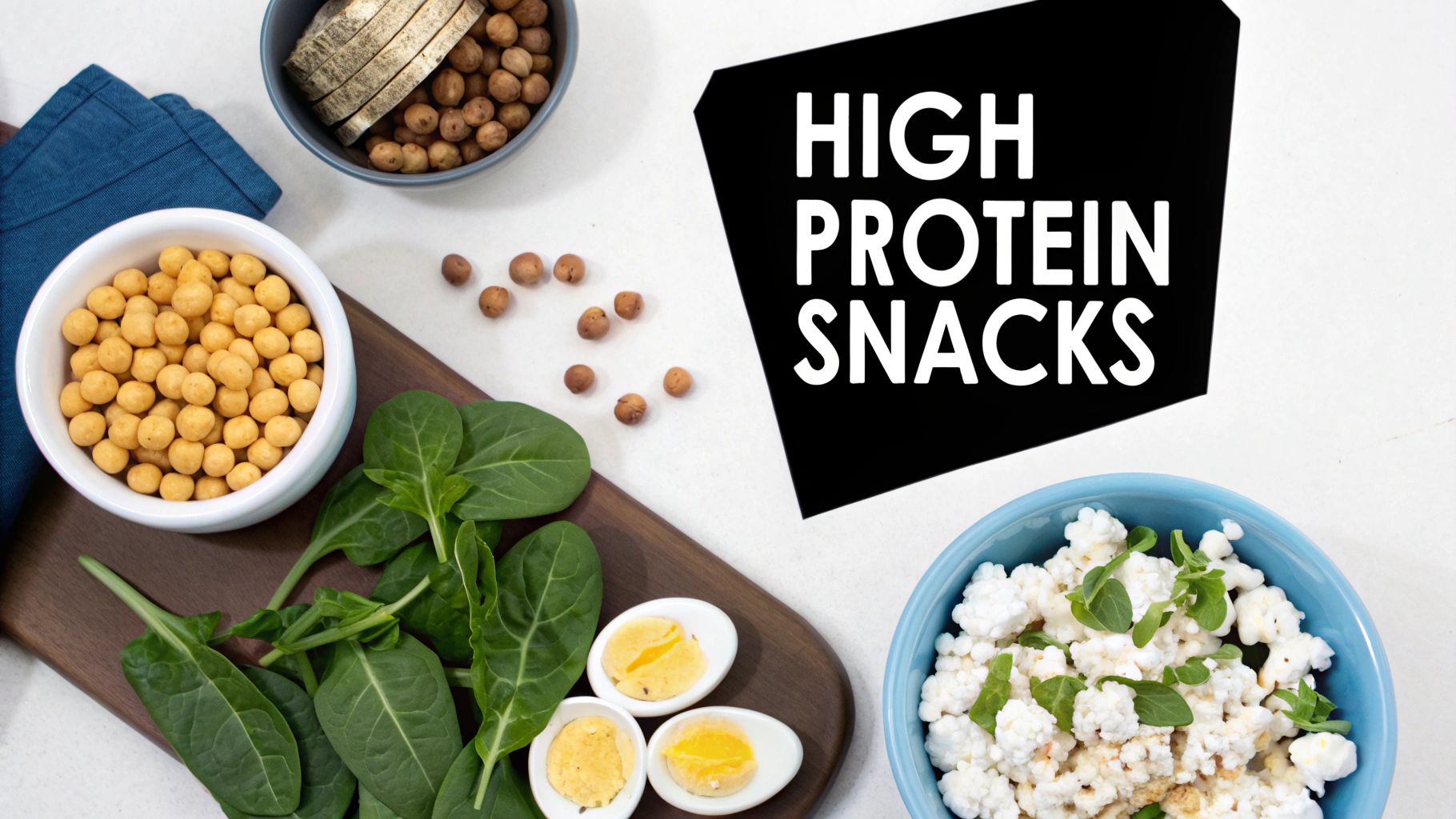
Alright, now that you know how to read a label like a pro, let's get to the good stuff: building your arsenal of go-to high protein, low fat snacks. This isn't just a random list; it's a curated collection designed for real life, whether you need to grab something in a hurry or have five minutes to whip up something fresh.
And you’re not alone in seeking out these options. The global market for protein snacks hit a massive USD 46.49 billion in 2023, and it's expected to more than double by 2032. That’s a whole lot of people realizing that smart snacking is a game-changer.
Let's break down some easy wins to get you started.
Effortless Store-Bought Wins
No time? No problem. These pre-packaged powerhouses are your best friends on busy days. They're proof that you don't have to sacrifice your goals for convenience.
- Greek Yogurt Cups: A single-serving cup is a protein classic for a reason, packing 12-17 grams of protein. Just be sure to grab the plain or low-sugar versions to dodge those sneaky carbs.
- Beef or Turkey Jerky: A one-ounce serving delivers a solid 9-12 grams of protein. My advice? Find a brand with minimal added sugar and sodium to keep it clean.
- Tuna or Salmon Pouches: These are unbelievably convenient. You get 15-20 grams of protein plus healthy omega-3s in a single pouch—perfect for a quick, savory fix.
Keep these stashed in your desk, gym bag, or car, and you'll never be caught off guard by a hunger pang again.
5-Minute Homemade Heroes
When you have just a few minutes to spare, you can create snacks that are not only delicious but also easy on your wallet.
The best snacks are often the simplest. When you use whole-food ingredients, you're in complete control of your macros and can easily skip the processed additives found in so many packaged goods.
Here are a few of my favorite quick-prep ideas:
- Hard-Boiled Eggs: Two large eggs give you about 12.5 grams of complete protein. I like to boil a dozen at the start of the week so they’re always ready to go.
- Cottage Cheese Bowl: Don't sleep on cottage cheese! A single cup of the low-fat kind can deliver a whopping 25 grams of protein. A few berries on top adds a touch of sweetness and fiber.
- Deli Turkey Roll-Ups: It doesn't get easier than this. Roll a few slices of lean deli turkey around a pickle spear or some cucumber slices. Just three ounces of turkey gives you over 11 grams of protein.
Plant-Based Power-Ups
Hitting your protein goals without meat or dairy is easier than ever. These plant-based options are loaded with protein, fiber, and other essential nutrients.
- Roasted Chickpeas: A half-cup serving offers 7-8 grams of protein and a fantastic crunch. Toss them with some paprika and garlic powder before roasting for a serious flavor boost.
- Dry-Roasted Edamame: This is a true plant-protein superstar. You get around 14 grams of protein in just a one-third cup serving.
- Savory Protein Puffs: When you're craving that cheesy crunch, a product like Gym Snack delivers over 15 grams of plant-based protein per serving. If you need more ideas like this, check out our guide to other awesome high protein savory snacks.
Got Questions About High-Protein Snacking? I've Got Answers.
Switching up your snacking habits naturally brings up a few questions. When you start deliberately choosing high protein, low-fat snacks, you'll probably wonder how to best fit them into your day to get the results you're after. Let's tackle some of the most common questions I hear so you can move forward with confidence.
Think of this as a quick, no-nonsense FAQ to reinforce the smart snacking principles we've already covered.
So, How Many High-Protein Snacks Should I Actually Eat a Day?
There's no single magic number here. The right amount for you really depends on your activity level, your overall diet, and what you're trying to achieve. That said, a great starting point for most people is one or two high-protein snacks daily.
It helps to think of them as strategic tools. You can time one before or after a workout to power your performance and recovery. Or, you could place one right in the middle of that notorious mid-afternoon slump when your energy usually tanks. The goal isn't to replace your meals, but to supplement them—keeping you from getting ravenously hungry and overeating later.
Will These Snacks Actually Help Me Lose Weight?
They can be an incredibly powerful tool for managing your weight, but they're one piece of a bigger puzzle. The main advantage is how they help with satiety—that feeling of being full and satisfied. This often leads to a natural, almost effortless, reduction in your overall calorie intake because you just don't feel as hungry.
By keeping hunger in check and helping preserve muscle (which is crucial for a healthy metabolism), these snacks make it much easier to stick to your goals. For lasting weight loss, you'll want to combine this smart snacking approach with a balanced diet, regular exercise, and plenty of water.
Are Plant-Based Protein Snacks as Good as Animal-Based Ones?
Absolutely. You can get fantastic results with plant-based options from sources like peas, lentils, and chickpeas. The key is simply to eat a good variety of different plant sources over time to make sure you're getting all the essential amino acids your body needs.
Many modern plant-based protein snacks are designed to be nutritionally complete and, just as importantly, taste great. At the end of the day, whether you reach for Greek yogurt or roasted edamame, the most important thing is picking snacks you genuinely enjoy. That's what will keep you consistent.
Should I Bother with High-Protein Snacks if I Don't Work Out?
Yes, definitely. The benefits go way beyond the gym. Protein is a foundational nutrient that everyone needs—it supports everything from your immune system to the health of your hair and skin. If you aren't focused on fitness, the biggest wins you'll see are powerful appetite control and much more stable energy levels.
A protein-rich snack helps you sidestep the sharp blood sugar spikes and the inevitable crashes that come from sugary, empty-calorie alternatives. This makes it a smart choice for anyone who just wants to stay sharp, curb unhealthy cravings, and feel good all day long.
Ready to crush your cravings with a snack that’s both delicious and effective? Gym Snack offers crunchy, savory, plant-based puffs packed with over 30g of protein per bag to keep you full and fueled. Build your custom snack pack today!