

For an athlete, the right snack isn't just about quieting a rumbling stomach—it's a strategic move to fuel performance and accelerate recovery. The best high-protein snacks pack a solid 15-25 grams of quality protein into a convenient package. Think of options like Greek yogurt, a good protein bar, or a couple of hard-boiled eggs. These are go-to choices because they deliver the essential amino acids your body is screaming for after a tough workout.
Why Protein Is Your Most Valuable Teammate
Picture your muscles as a dedicated construction crew, always on the job. Every time you train—whether you're lifting heavy, sprinting, or pushing through a long run—you're creating tiny, microscopic tears in the muscle fibers. This isn't a bad thing; it's actually the first step toward getting stronger.
Protein is the raw material for this crew. It’s the bricks, mortar, and steel they need to repair those fibers, building them back bigger and more resilient than before.
This whole repair process is known as muscle protein synthesis. If you don't supply enough protein, you're essentially leaving your construction crew with no materials. Recovery stalls, soreness lingers, performance drops, and you open the door to potential injuries. High-protein snacks are simply the most efficient way to get those crucial building blocks to the job site right when they're needed most.
Let's take a look at the specific ways these snacks support your athletic goals.
Core Benefits of Protein Snacks for Athletic Performance
| Benefit | Impact on Athletes |
|---|---|
| Accelerated Muscle Repair | Speeds up the recovery process after training by providing essential amino acids for rebuilding muscle fibers. |
| Enhanced Muscle Growth | Directly supports muscle protein synthesis, leading to increased strength and lean mass over time. |
| Sustained Energy Levels | Prevents blood sugar spikes and crashes, offering a steady source of fuel for long workouts and competitions. |
| Improved Satiety | Helps you feel fuller for longer, which is crucial for managing weight, controlling cravings, and sticking to a nutrition plan. |
By making protein a priority in your snacking, you're not just eating—you're actively investing in your performance and long-term athletic development.
Fueling More Than Just Muscle
While muscle repair is its headline act, protein’s role doesn't stop there. It's also a powerhouse for managing hunger and regulating energy, two things every athlete has to master.
Protein is fantastic at promoting satiety—that feeling of being full and satisfied. It influences the hormones that tell your brain to stop eating, which is a game-changer for anyone trying to manage their body composition or kick unhealthy cravings to the curb. For athletes who need to bump up their overall protein consumption, this sustained fullness is a huge help. If you're looking for practical ways to do this, check out our guide on how to increase protein intake.
On top of that, protein provides a much steadier source of energy compared to snacks heavy in simple carbs. You avoid the dramatic blood sugar spikes and subsequent crashes that can kill your focus and endurance mid-session. That stable energy is exactly what you need to stay sharp through a long practice or during the final stretch of a competition.
The Rise of Convenient Protein
It's no surprise that the demand for smart, portable nutrition has exploded. Athletes are busy, and they need fuel that fits their lifestyle. Protein bars, in particular, have become a go-to solution, making up about 42.5% of the entire high-protein snacks market. They're just incredibly effective for muscle recovery and a quick energy boost.
Within this market, whey protein still reigns supreme, holding a massive 52.3% share. Why? Because it's a complete protein, meaning it contains all nine essential amino acids needed for your body to do its repair work effectively.
Ultimately, making high-protein snacks a part of your routine isn't just another diet tip. It's a fundamental strategy for unlocking your true athletic potential.
Mastering Your Snack Timing for Peak Performance
Knowing what high-protein snacks to eat is only half the battle. To really get the most out of your training, you have to understand when to eat them. Think of your nutrition as your body's dedicated support crew—timing their arrival perfectly ensures your muscles get exactly what they need, right when they need it most.
Strategically timing your snacks around your workouts can make a huge difference in your energy levels, how quickly you recover, and how fast you build muscle. Let's break down the three most important windows for an athlete's nutrition.
Fueling Up Before Your Workout
The whole point of a pre-workout snack is to top off your energy stores. It provides a steady stream of fuel to prevent that dreaded mid-session crash. Eating a snack 30 to 60 minutes before training gives your body just enough time to start digesting it, so you don't feel heavy or sluggish when you start moving.
Your ideal pre-workout snack should be a smart mix of carbohydrates and a moderate amount of protein. The carbs give you that immediate energy, while the protein helps protect your muscles from breaking down during your session.
A few great go-to combinations are:
- A small Greek yogurt with a handful of berries
- A banana with a tablespoon of almond butter
- A slice of whole-grain toast with some avocado
These choices give you a balanced hit of nutrients to power you through your entire workout without weighing you down or causing any stomach issues.
Optimizing Post-Workout Recovery
Once you’ve finished a tough training session, your muscles are screaming for repair. This is where a high-protein snack becomes your most valuable player. While the old-school idea of a strict 30-minute "anabolic window" has been debated, the core principle is still solid: giving your body protein soon after exercise is crucial for jumpstarting muscle protein synthesis.
Think about it: you train to create tiny micro-tears in your muscle fibers. The magic happens when you repair those fibers, making them grow back even stronger.
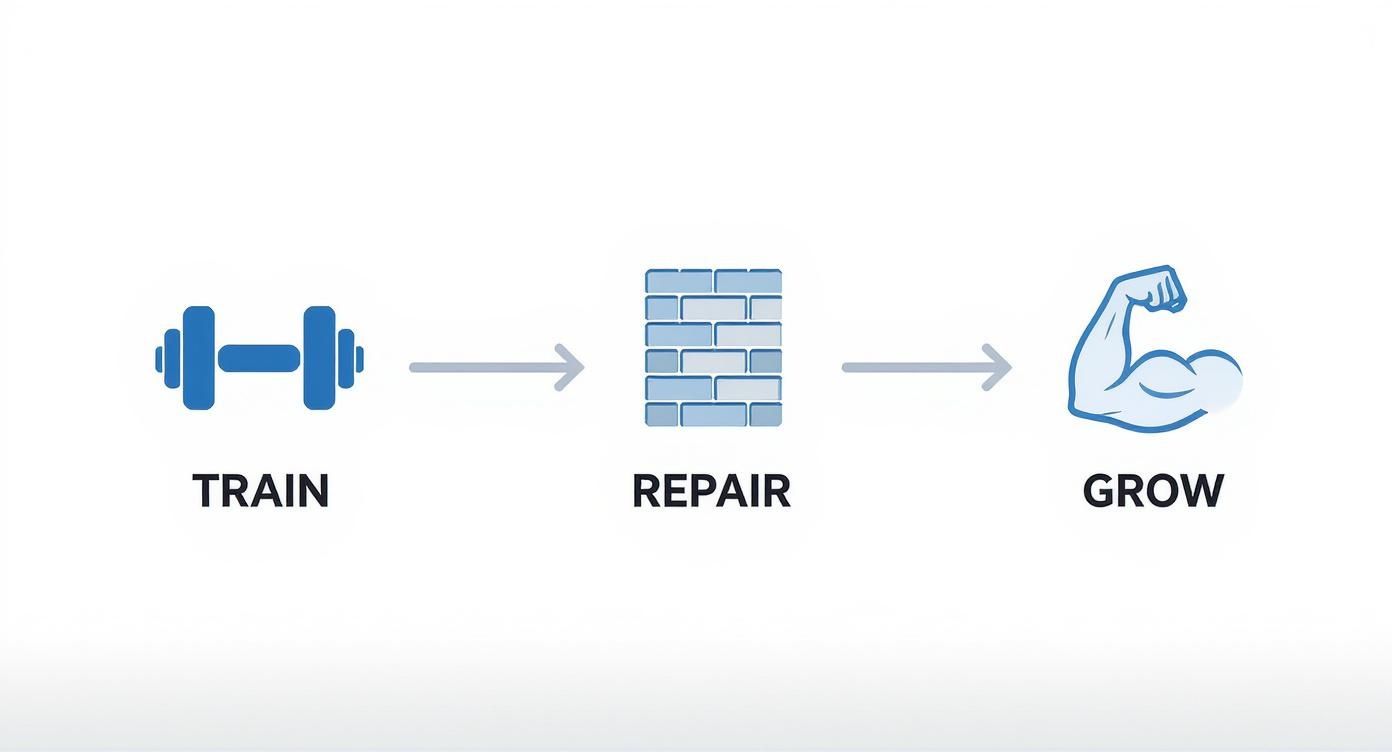
As you can see, training provides the stimulus, but the actual repair and growth depend entirely on the nutritional building blocks you supply afterward. Aim for a snack with 20-25 grams of protein within an hour or two of finishing your workout to kickstart this recovery. A quality protein shake or a convenient, crunchy option like Gym Snack can be perfect here.
Maintaining Muscle Throughout the Day
Your body's need for protein doesn't just stop after your post-workout refuel. Eating high-protein snacks between your main meals is key to preventing muscle catabolism—that's the technical term for when your body starts breaking down your hard-earned muscle tissue for energy.
A consistent supply of protein throughout the day keeps your body in an anabolic, or muscle-building, state. This not only protects your gains but also helps manage hunger and keep your energy levels stable.
Snacking on things like hard-boiled eggs, cottage cheese, or edamame ensures your muscles get a continuous feed of protein. This steady intake supports ongoing recovery and keeps you feeling full, which makes it a lot easier to stick to your nutrition plan and sidestep those unhealthy cravings.
Your Guide to the Best High Protein Snacks
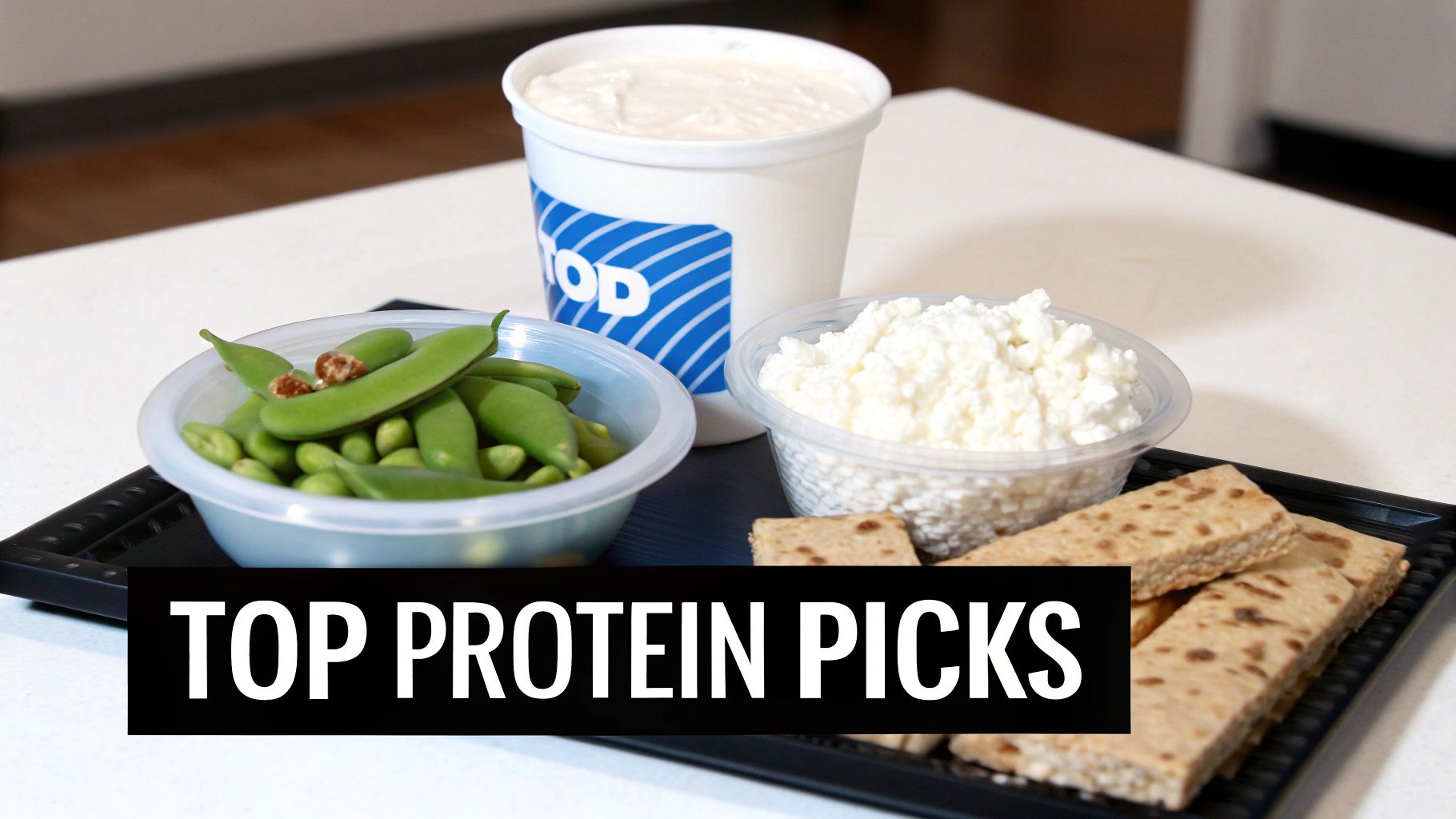
Walking down the snack aisle can feel overwhelming, especially when your performance is on the line. Let's cut through the noise. The best high-protein snacks for athletes really fall into two main buckets: whole foods and convenient, pre-packaged options. Both play a vital role in a smart nutrition plan, and knowing when to reach for each is what separates the pros from the amateurs.
Think of whole foods as the foundation of your nutritional house. These are your minimally processed, nutrient-packed powerhouses that deliver protein alongside a full spectrum of vitamins and minerals. They're reliable and form the core of your diet.
On the other hand, pre-packaged snacks are your grab-and-go specialists. They’re perfect for those jam-packed days, immediate post-workout recovery, and travel when cooking isn't an option.
The Whole Foods Champions
When you're building your snack roster from whole foods, a few key players consistently deliver. They’re versatile, effective, and easy to fit into any athlete’s day.
Here are some of my go-to options:
- Greek Yogurt: This stuff is a beast. A single serving can easily pack 15-20 grams of high-quality protein. Plus, you get the added benefits of probiotics for gut health and calcium for bone strength.
- Cottage Cheese: It’s an old-school classic for a reason. A cup of low-fat cottage cheese delivers a whopping 25 grams of slow-digesting casein protein, which makes it an incredible choice for sustained muscle fuel, especially before bed.
- Hard-Boiled Eggs: Simple, cheap, and effective. Each egg gives you about 6 grams of complete protein. They’re ridiculously portable and one of the easiest grab-and-go snacks you can make.
- Edamame: For my plant-based athletes, edamame is a non-negotiable. A single cup of shelled beans offers around 18 grams of complete protein, not to mention a solid dose of fiber and micronutrients.
Decoding Pre-Packaged Protein Snacks
Let's be real: convenience matters. The market for high-protein snacks is massive, especially in North America, which makes up 43.6% of the global market. This boom is driven by athletes and fitness enthusiasts who need fuel that fits their busy lives.
With endless bars, chips, and shakes to choose from, your best tool is knowing how to read a nutrition label. Think of it as your game plan for picking a winner.
When you're looking at a packaged snack, the goal is simple: get the most protein with the least amount of junk. Look for a clean label with ingredients you can actually pronounce.
Here’s a quick cheat sheet for what to look for and what to run from:
What to Look For:
- At least 15g of protein per serving to make a real impact on muscle repair.
- High-quality protein sources like whey, casein, or plant-based options like pea protein.
- Minimal added sugar—I tell my clients to aim for under 10 grams per serving.
- A short, simple ingredient list that doesn’t read like a science experiment.
What to Avoid:
- Excessive sugar alcohols (like erythritol or sorbitol), which can wreak havoc on your gut.
- Artificial sweeteners and random fillers that add nothing of nutritional value.
- High levels of saturated fat from cheap, unhealthy oils.
To help you visualize your options, let's break down some of the most common high-protein snacks you'll find.
Comparing Popular High-Protein Snack Options
| Snack Type | Avg. Protein (per serving) | Best For (Timing) | Portability | Key Consideration |
|---|---|---|---|---|
| Protein Bars | 15-25g | Post-workout, travel | Excellent | Watch out for high sugar content and fillers. |
| Greek Yogurt | 15-20g | Anytime, pre-bed | Moderate (needs refrigeration) | Choose plain to control sugar intake. |
| Vegan Jerky | 10-15g | Between meals, travel | Excellent | Can be high in sodium; opt for low-sodium versions. |
| Protein Shakes | 20-30g | Post-workout | Excellent (powder form) | Quickest absorption, but lacks fiber of whole foods. |
| Hard-Boiled Eggs | 6-7g (per egg) | Anytime | Good | Very cost-effective and nutrient-dense. |
| Cottage Cheese | 20-25g (per cup) | Pre-bed, anytime | Poor (needs refrigeration) | Slow-digesting casein is great for recovery. |
| Gym Snack | 15g+ | Anytime savory craving | Excellent | Plant-based, clean ingredients, avoids common allergens. |
Choosing the right snack is always a personal decision. It depends on your training goals, your taste, and what your day looks like.
For athletes who are tired of sweet, chalky bars and crave a satisfying crunch, options like Gym Snack are a fantastic find. They’re specifically designed to hit that 15g+ plant-based protein mark with clean ingredients. If you find yourself constantly battling a sweet tooth, exploring some great high-protein savory snacks might just be the thing that keeps your nutrition on track.
Plant-Based Protein Snacks That Actually Deliver
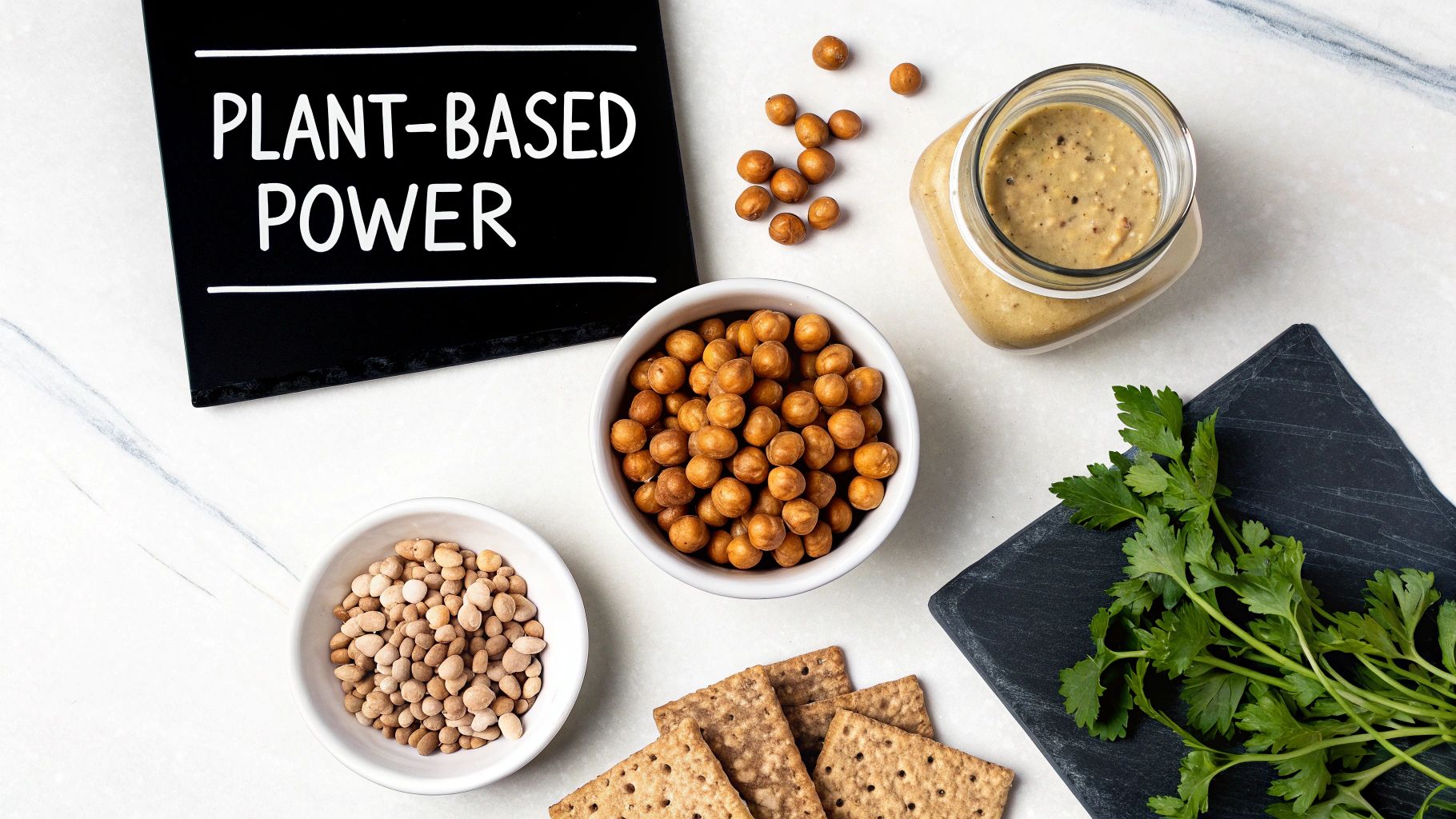
When you're an athlete, you need fuel that works as hard as you do. Going plant-based shouldn't mean compromising on performance, but it does mean getting smart about your protein sources. The good news is, the options are better and more powerful than ever.
We're not just talking about a piece of fruit here. Think about satisfyingly spicy roasted chickpeas, crunchy lentil puffs, or a simple bowl of edamame. These aren't just filler; they pack a serious protein punch to help rebuild muscle and keep you going strong, proving you don't need meat or dairy to hit your goals.
Building a Complete Plant-Based Protein
One of the first things you'll hear about plant-based diets is the "complete protein" question. It’s a valid concern—a complete protein has all nine essential amino acids your body can't make on its own. While some plants like soy and quinoa are complete on their own, many aren’t.
But don't get hung up on this. It's not a deal-breaker, just a simple nutritional puzzle. The solution is to pair different plant foods together throughout your day. Think of it like building a team where each player brings a different strength.
- Legumes (lentils, chickpeas, beans) are rich in some amino acids.
- Grains (rice, whole-wheat bread, oats) have the ones legumes are missing.
- Nuts and Seeds (almonds, sunflower seeds, chia seeds) help round out the profile.
A classic example is hummus (from chickpeas) with whole-grain crackers. That simple, delicious snack gives your muscles all the building blocks they need. If you want to dig deeper into this, our guide on how to get enough protein on a plant-based diet lays out more strategies.
Navigating Allergies Without Compromise
For athletes with common allergies like dairy, gluten, or nuts, finding the right fuel can feel like navigating a minefield. So many go-to protein snacks, especially the convenient bars and shakes, are suddenly off the table. But smart alternatives are out there, so you never have to sacrifice quality.
The rise of allergen-conscious products means athletes now have access to powerful fuel tailored to their specific needs. It's about finding clean, effective options that work for your body, not against it.
This is exactly why products like Gym Snack exist. By using clean pea protein, it delivers 15g+ of protein per serving and is naturally free from dairy, gluten, and soy. This shift is part of a huge consumer trend; the protein crisps market alone is projected to hit USD 2.60 billion by 2030, fueled by people demanding better, more inclusive nutrition.
Here are a few other great allergen-friendly ideas to keep in your rotation:
- Sunflower Seed Butter: A fantastic nut-free swap for peanut butter. Spread it on rice cakes or pair it with an apple for a balanced snack.
- Roasted Fava Beans: These deliver a super satisfying crunch along with a solid dose of protein and fiber.
- Dairy-Free Yogurt: Look for yogurts made from coconut, almond, or soy to get that creamy texture and a welcome protein boost.
Easy High-Protein Snack Recipes for Athletes
https://www.youtube.com/embed/PraKGIwLBa8
Knowing the right macros is one thing, but actually preparing your own snacks? That’s where you take full control of your nutrition. Making your own fuel doesn't have to be a complicated, time-consuming chore.
We've put together three dead-simple recipes that fit right into a packed training schedule. Each one is loaded with the nutrients you need to perform, recover, and stay satisfied, whether you're heading to the gym or winding down.
No-Bake Energy Protein Bites
These are your best friend before a workout. They deliver quick, sustained energy without ever feeling heavy in your stomach. The best part? You can whip up a big batch in minutes and have grab-and-go fuel ready all week.
Ingredients:
- 1 cup rolled oats
- 1/2 cup vanilla or unflavored protein powder
- 1/2 cup peanut butter (or another nut/seed butter)
- 1/3 cup honey or maple syrup
- 1/4 cup dark chocolate chips or dried fruit
- 2 tablespoons chia seeds or ground flaxseed
Instructions:
- Toss everything into a large bowl.
- Mix it all up until a sticky dough forms. It’s that easy.
- Roll the dough into 1-inch balls and set them on a tray lined with parchment paper.
- Pop them in the fridge for at least 30 minutes to let them firm up.
Nutritional Snapshot (per bite): You're looking at around 150 calories, 15g of carbs, 8g of protein, and 7g of fat. It’s that perfect balance of macros to power you through a tough session.
The Ultimate Recovery Smoothie
After you train, your body is screaming for protein and carbs to kickstart the muscle repair process. This smoothie is built for speed, getting those essential nutrients delivered to your muscles right when they're most receptive.
Ingredients:
- 1 scoop chocolate or vanilla whey or pea protein powder
- 1 frozen banana (adds carbs and amazing creaminess)
- 1 cup unsweetened almond milk (or your milk of choice)
- 1 tablespoon almond butter
- 1 handful of spinach (trust me, you won't taste it!)
Instructions:
- Add all the ingredients to your blender.
- Blend on high until it's completely smooth.
- Pour it into a glass and get it down within 30-60 minutes of your workout to maximize recovery.
Savory Roasted Chickpea Trail Mix
Need a break from sweet snacks? This crunchy, savory mix is a game-changer. It’s perfect for throwing in your gym bag for a satisfying snack that won't give you a sugar crash.
The chickpeas offer great plant-based protein and fiber, keeping you full and energized for hours.
Ingredients:
- 1 can (15 oz) chickpeas, rinsed and dried completely
- 1 tablespoon olive oil
- 1 teaspoon smoked paprika
- 1/2 teaspoon garlic powder
- 1/2 cup raw almonds or cashews
- 1/4 cup pumpkin seeds
Instructions:
- Preheat your oven to 400°F (200°C).
- In a bowl, toss the dry chickpeas with olive oil and spices until they're all evenly coated.
- Spread them out on a baking sheet and roast for 20-25 minutes, or until they're golden and crispy.
- Let the chickpeas cool completely before mixing them with the almonds and pumpkin seeds. Store it in an airtight container and you're good to go.
Your Top Protein Snack Questions, Answered
Even with the best game plan, you're bound to have questions when dialing in your nutrition. Getting straight answers from someone who's been there can be the difference-maker. Let's tackle the most common questions athletes have about high-protein snacks so you can move forward with confidence.
Think of this as clearing up the final few hurdles, so you can make the smartest choices for your body and your goals.
How Much Protein Do I Actually Need in a Snack?
For most athletes, the magic number for a protein snack is somewhere between 15-25 grams. This is the sweet spot—enough to kickstart muscle protein synthesis (that’s the process where your body repairs and rebuilds muscle) and keep hunger at bay, but not so much that it sits heavy in your stomach.
Of course, "it depends." A pre-workout snack might lean toward the lower end of that range, especially if you're pairing it with some quick carbs for energy. But for a post-workout recovery snack? You'll want to aim for the higher end to really maximize that repair process. Your own body weight, how hard you’re training, and your overall daily protein goals will help you pinpoint your exact number.
Should I Get My Protein from Food or Supplements?
The real answer? Both. It’s not an either/or situation. A smart athlete knows how to use both whole foods and supplements to their advantage.
Starting with a "food-first" approach is always a solid strategy. Real foods like Greek yogurt, hard-boiled eggs, or a handful of edamame give you high-quality protein plus a ton of other essential nutrients—vitamins, minerals, and fiber—that you just don't get from a powder.
That said, you can't beat the convenience and speed of supplements. A quality protein bar or a quick shake can be a lifesaver right after a tough workout or when you're rushing between the gym and work.
Think of supplements as your backup players—they fill in the gaps and help you hit your numbers when real food just isn't practical.
Can You Actually Eat Too Much Protein?
It's a common concern, but for most healthy athletes, it's pretty hard to overdo it on protein. The science shows that a high protein intake is generally safe for people with healthy kidneys. Issues only tend to pop up at extremely high levels—way beyond the 1.6-2.2 grams per kilogram of body weight that most of us need.
What’s more important is how you eat your protein. Slamming a massive 60-gram shake once a day isn't nearly as effective as spreading your intake out. Your body can only use a certain amount of protein for muscle repair at one time. A much better strategy is to aim for steady, moderate doses like 20-40 grams per meal and snack. This keeps a constant stream of amino acids flowing to your muscles, which is exactly what you want for consistent repair and growth.
If you're looking for a convenient, savory, and plant-based option that nails these protein targets, Gym Snack is a perfect fit. Every crunchy, satisfying bag packs over 30g of clean pea protein to fuel your recovery and crush your hunger. Level up your snack game and see the difference at https://gymsnack.com.