

An organic protein bar is simply a grab-and-go snack made from ingredients grown the old-fashioned way—without synthetic pesticides, artificial fertilizers, or genetically modified organisms (GMOs). Think of it as clean fuel, sourced from farms that work with nature, not against it, to build healthy soil and produce wholesome food.
What an Organic Protein Bar Really Means
When you see "organic" on a protein bar's wrapper, it's not just marketing fluff. It’s a promise backed by a specific set of farming standards.
Picture two farms. One relies on chemical sprays to handle pests and synthetic powders to push plant growth. The other cultivates a thriving ecosystem, using beneficial insects for pest control and rich compost to feed the soil. An organic protein bar comes from that second farm.
This matters because every ingredient in that bar—whether it's almonds, pea protein, or dates—is a product of its environment. By choosing organic, you're sidestepping the synthetic chemical residues often found in and on conventionally grown foods. It’s the first, most basic step toward cleaner eating.
Decoding the USDA Organic Seal
The easiest way to know if a bar is legit is to look for a certification seal. In the U.S., the USDA Organic seal is the one to trust.
The USDA Organic seal is your guarantee that at least 95% of the ingredients in that bar were grown and processed according to strict federal guidelines. This isn't just a claim; it's a regulated standard covering everything from soil quality to pest control.
Spotting that little green and white circle means the product has been through a tough verification process. It takes the guesswork out of it, confirming the brand has put in the work to meet a higher standard.
Why Organic Matters for Your Fuel
For anyone serious about what they put into their body, choosing organic is a foundational step. When you're fueling up for a workout or trying to recover, the purity of those ingredients really counts.
- No GMOs: Organic standards strictly prohibit genetically modified organisms. This is a big deal if you prefer your food as close to its natural state as possible.
- No Synthetic Pesticides: Conventional agriculture often leaves trace amounts of synthetic pesticide residues on food. Organic farming relies on natural alternatives, dramatically reducing your exposure.
- No Artificial Fertilizers: Instead of petroleum-based fertilizers, organic farming builds healthy, nutrient-rich soil using compost, cover crops, and smart rotation.
This commitment to natural methods isn't just good for the planet; it ensures your fuel is as clean as it can be. Starting with an organic bar sets a baseline for quality. From there, we can dig into the other crucial details—like protein sources, sugar content, and healthy fats—to find the perfect bar for your goals.
Decoding the Nutrition Label for Clean Fuel
So you've found a bar that says "organic" on the front. Great start, but the real detective work is just beginning. The front of the package is marketing—it's the story the brand wants you to believe. The real story, the unvarnished truth, is on the back: the nutrition facts panel and the ingredient list.
Think of the ingredient list as the bar's DNA. It tells you exactly what you're eating, from the most prominent ingredient down to the tiniest pinch of salt. And here’s a pro tip: ingredients are always listed by weight. The first few items on that list make up the bulk of the bar. If you see sugar or some kind of syrup at the top of the list, you're probably holding a glorified candy bar, no matter what the "organic" label says.
Before we get into the nitty-gritty of proteins and sugars, let's remember what "organic" actually means.
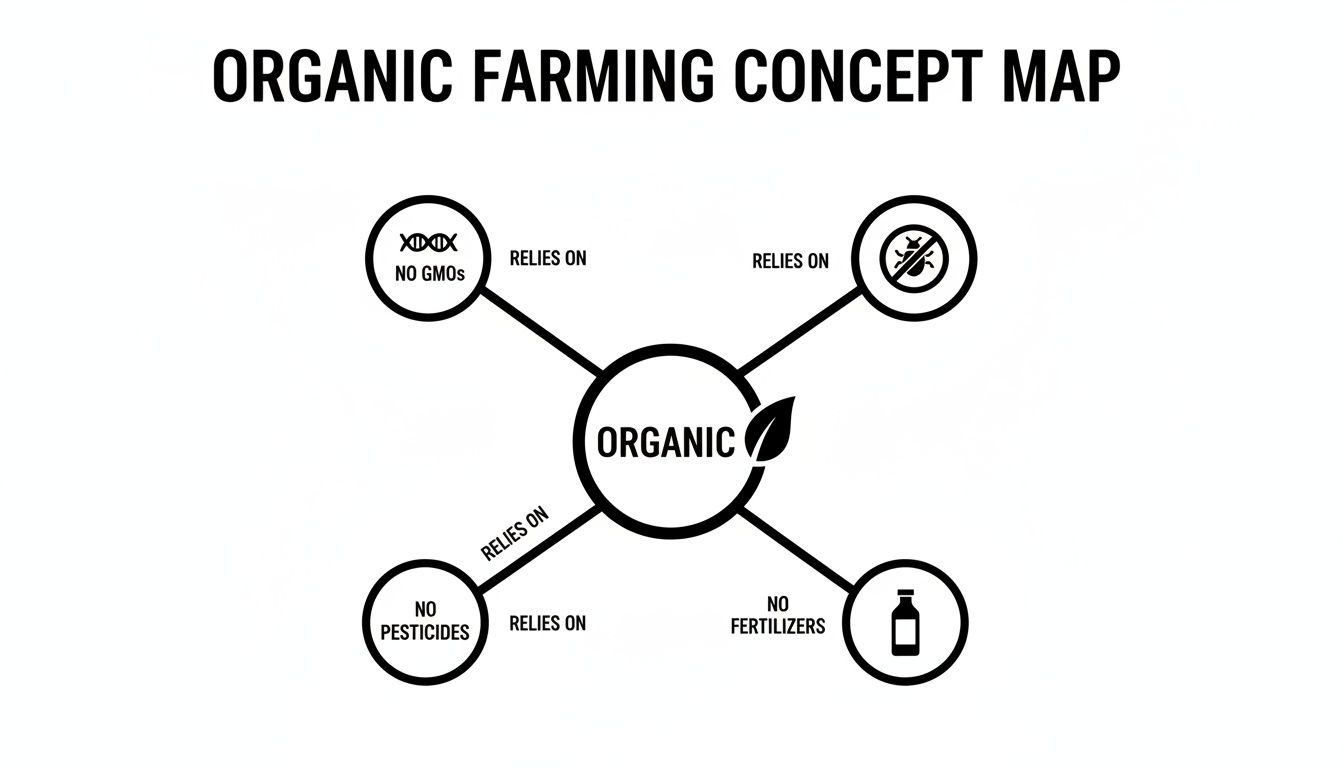
This certification is your baseline guarantee that the ingredients were grown without GMOs, synthetic pesticides, or artificial fertilizers. It’s the foundation for clean fuel. Now, let’s build on that and look at the specifics.
Pinpointing High-Quality Protein Sources
Let's be clear: not all protein is created equal. The source of the protein in your bar has a huge impact on how your body uses it to repair muscle, build strength, and keep you feeling full.
When you scan that ingredient list, you’ll typically find either plant-based or animal-based proteins. Plant sources like pea, hemp, and brown rice protein are fantastic, especially if you have issues with dairy. Pea protein, for example, is loaded with iron and the crucial branched-chain amino acids (BCAAs) your muscles crave after a workout.
On the other hand, you have animal-based proteins like whey and casein, which come from milk. These are "complete" proteins, meaning they have all nine essential amino acids. They’re famous for absorbing quickly, which is why they’re so popular for post-workout recovery. But of course, they’re a no-go if you're avoiding dairy.
Here’s a quick rundown to help you compare the most common organic protein sources you'll find in bars.
Comparing Common Organic Protein Sources
| Protein Source | Key Benefit | Best For |
|---|---|---|
| Organic Pea Protein | Rich in BCAAs & iron, highly digestible | Post-workout recovery, plant-based diets |
| Organic Hemp Protein | Contains omega-3s & fiber, complete amino acid profile | Overall wellness, digestive health |
| Organic Brown Rice | Hypoallergenic, good source of B vitamins | Sensitive stomachs, allergy-friendly snacking |
| Organic Whey Protein | Rapid absorption, complete amino acid profile | Immediate post-workout muscle repair |
Ultimately, the best choice really boils down to your own body and dietary needs. Just remember that a quality organic protein bar will always be built on clean, recognizable protein sources—not overly processed fillers like soy isolates or gelatin.
Spotting Sneaky Sugars and Sweeteners
Sugar is the ultimate saboteur of a healthy snack. Food manufacturers have gotten incredibly clever at disguising it, using dozens of different names to trick you into thinking you're eating something healthy.
Watch out for things like brown rice syrup, agave nectar, coconut sugar, or evaporated cane juice. Yes, they might be organic, but your body treats them all the same: as added sugar. That means a quick blood glucose spike followed by an inevitable energy crash. A truly top-tier bar will keep its total sugar content in the low single digits.
The smartest brands use natural, zero-calorie sweeteners to add a touch of sweetness without the metabolic baggage. Look for ingredients like monk fruit extract or stevia, which won't add to the sugar or carb count.
It's also a good idea to be cautious with sugar alcohols like erythritol or xylitol. While they don't count as sugar, they can cause some serious digestive upset for a lot of people. A quick scan of the label is all it takes to dodge these sugar traps.
Differentiating Good Fats from Bad Oils
Fat isn't the enemy! In fact, healthy fats are crucial for providing sustained energy and helping you feel full and satisfied. But the source of those fats makes all the difference.
You want to see fats coming from whole-food sources. Look for ingredients like:
- Nuts and Seeds: Think almonds, cashews, chia seeds, and flax seeds. These are packed with heart-healthy fats, fiber, and other micronutrients.
- Nut Butters: Organic almond or cashew butter not only adds healthy fats but also provides a creamy texture that holds the bar together.
On the flip side, be on high alert for highly processed, inflammatory oils. Even if they're organic, red flags include palm oil, sunflower oil, or canola oil. These are often used as cheap fillers and offer none of the health benefits of whole-food fats.
Learning to spot the good, the bad, and the ugly on a label is a skill. If you want to become a real pro, check out our guide on how to read nutrition labels. Making sure your bar is filled with clean fats from whole foods ensures your snack is truly working for you, not against you.
Matching Your Protein Bar to Your Fitness Goals
Grabbing any old organic protein bar off the shelf is like wearing running shoes to a powerlifting meet—sure, it’s footwear, but it’s definitely not the right tool for the job. The perfect bar isn’t a one-size-fits-all solution. To get the most out of your snack, you have to align its nutritional profile with what you're asking your body to do.
Think about it: your body's fuel demands are completely different right before a workout versus right after. The same goes for when you're just trying to curb hunger pangs between meals. Choosing the right bar means turning a simple snack into a strategic asset.
Fueling Up for Pre-Workout Energy
Before you train, the goal is simple: top off your energy stores without feeling weighed down. You need fast, accessible fuel that won’t sit like a rock in your stomach mid-squat.
Look for a bar with easily digestible carbohydrates and a moderate amount of protein. Something with around 15-20 grams of carbs from natural sources like dates or fruit will give your muscles the glycogen they need to perform. Pair that with about 10-15 grams of protein—just enough to help with muscle preservation without slowing digestion.
The trick is to steer clear of anything too heavy in fat or fiber right before a session. Those nutrients take longer to break down, which can divert blood flow away from your working muscles. A lighter, carb-forward bar is the perfect move.
Optimizing Post-Workout Recovery
Once you’ve put the weights down, a critical window opens up for muscle repair and growth. Your muscles are like sponges, primed to soak up amino acids to rebuild torn fibers stronger than before. This is where a high-protein bar really earns its keep.
Your post-workout bar should be a protein powerhouse, delivering at least 20 grams of high-quality protein. This robust dose provides the essential building blocks to kickstart the recovery process, reduce soreness, and support lean muscle growth.
A great rule of thumb for recovery is a protein-to-carb ratio of roughly 1:2 or 1:3. The carbs focus on replenishing your energy stores, while the protein gets straight to work on muscle repair.
This one-two punch ensures you’re not just rebuilding but also refueling for your next workout. For a broader look at recovery nutrition, check out a flavourful guide to high protein meals that can support your efforts all day long.
Supporting Weight Management and Satiety
When your goal is managing your weight or just staying full between meals, the mission changes entirely. The focus shifts to maximizing satiety—that feeling of fullness—to shut down cravings and prevent you from raiding the pantry later.
Protein is the most satiating macronutrient, period. It triggers hormones like GLP-1 that send a clear signal to your brain: "I'm full." An organic protein bar with 15+ grams of protein and minimal sugar can effectively silence hunger for hours. If you need help figuring out your personal targets, you can learn how to calculate daily protein needs for your goals.
For anyone focused on weight management, a savory, macro-balanced option can be a total game-changer. Unlike sweet bars that can sometimes trigger more cravings, a savory snack feels more like a satisfying mini-meal. It tackles genuine hunger without activating your sweet tooth, making it a powerful tool for staying on track.
The Rise of Savory Snacks in a Sweet-Dominated Market
Walk down any snack aisle. You’ll be hit with an overwhelming wall of sweetness. Chocolate fudge, cookie dough, birthday cake—the protein bar section feels more like a candy shop. For years, the industry’s unspoken rule was that a protein bar had to masquerade as a dessert.
But something is shifting. A quiet rebellion is brewing against the endless parade of sugary flavors. People are getting tired of it, a feeling now known as flavor fatigue. When every "healthy" snack tastes like a candy bar, it stops feeling like a smart nutritional choice and starts feeling like you're just settling.
This burnout makes perfect sense. To keep sugar counts low, many of these sweet bars are packed with sugar alcohols, which can wreck your digestion. Plus, the constant sweet taste can ironically trigger more sugar cravings, making it that much harder to stay on track with your nutrition goals.
Breaking Free from Flavor Fatigue
The market is finally waking up to what health-conscious people have known all along: we need balance. Not every snack needs to taste like it belongs on a dessert tray. This growing sentiment is fueling a huge demand for savory options that satisfy in a completely different way.
The organic protein bar space is exploding, valued at $182.4 million in 2025 and on track to hit $304.1 million by 2034. That's not just a trend; it's a fundamental change in how we think about convenient fuel. You can read more about the organic protein bar market surge on usdanalytics.com.
But this is about more than just taste—it’s psychological. A savory, crunchy snack hits differently than a sweet, chewy one.
- It feels like real food. A savory option feels more like a mini-meal, tackling genuine hunger instead of just a sweet craving.
- It breaks the craving cycle. It gives your palate a much-needed reset from the sweet flavors that can keep you wanting more sugar.
- It’s a new experience. Bold, savory profiles like cheesy, spicy, or smoky offer a more sophisticated and refreshing alternative.
This move toward savory snacks is a turning point. It's an admission that powerful nutrition doesn't have to be hidden behind a layer of sweetness.
The Benefits of a Savory Protein Snack
Choosing a savory organic protein bar or snack isn't just about switching up the flavor; it's a strategic nutritional move. Savory options bring unique benefits to the table that sweet bars often can't, especially if you're focused on fitness, staying full, and long-term health.
The satisfying crunch and robust flavor of a savory snack can crush hunger without lighting up your sweet tooth. This is a game-changer for anyone managing their weight or using GLP-1 medications, as it helps you feel full and avoids the blood sugar rollercoaster that sweet snacks can trigger.
By opting for savory, you're not just getting protein; you're getting a more complete and satisfying snacking experience. It's about fueling your body with something that feels substantial and nourishing, helping you stay on track with your goals in a more enjoyable way.
This shift means you can hit your protein targets without feeling like you're constantly caving to a dessert-like treat. If you're ready to explore this growing category, you'll find plenty of delicious and effective options. You can discover more in our guide to high-protein savory snacks. It’s a whole new world of flavor that makes hitting your macros easier and more exciting than ever.
Your Simple DIY Organic Protein Snack Recipe
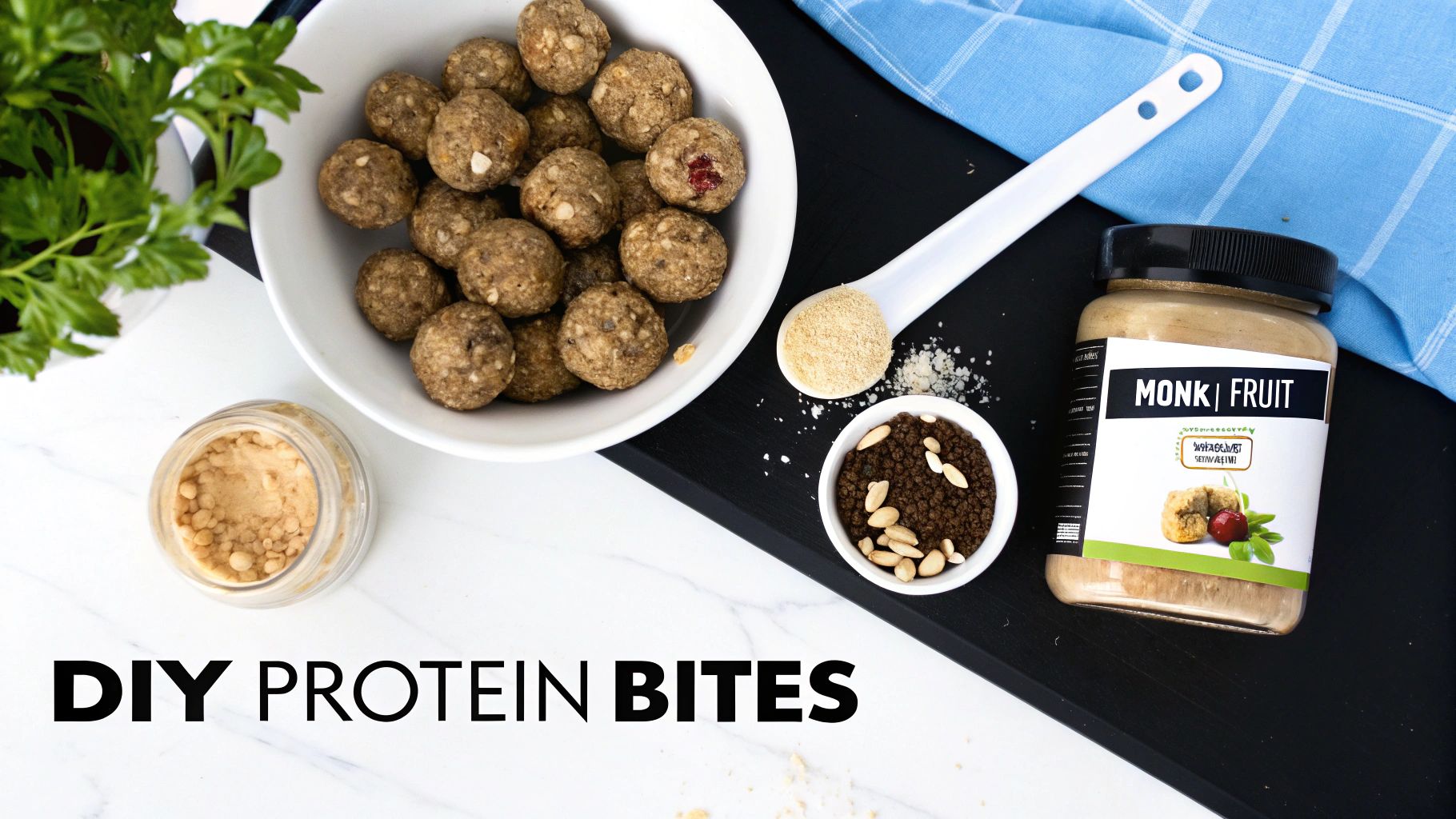
Sometimes, the best way to really get what makes a great organic protein bar is to roll up your sleeves and make one yourself. This incredibly simple, no-bake recipe for protein bites puts you in the driver's seat, letting you control every single thing that goes into them.
Think of it as being the head chef in your own nutrition lab. You get to hand-pick all the good stuff and leave out the questionable fillers. You'll end up with a seriously tasty and healthy snack, but you’ll also walk away with a much clearer sense of what to look for in a quality store-bought bar.
The Core Ingredients You Will Need
This recipe isn't rigid; it's more of a blueprint you can tweak to fit your own tastes and goals. The basic idea is to balance a clean protein source, a healthy binder, a little natural sweetness, and some great texture.
You only need a handful of things to get started:
- Organic Protein Powder: Grab your favorite, whether it's plant-based or whey. A simple vanilla or even an unflavored powder works great as a base.
- Organic Nut Butter: Creamy almond, peanut, or cashew butter is the glue that holds everything together. It also adds a dose of healthy fats and fantastic flavor.
- A Natural Sweetener: A couple of tablespoons of real organic maple syrup or a little monk fruit sweetener adds just the right amount of sweetness without sending you on a sugar rollercoaster.
- Rolled Oats or Almond Flour: This gives the bites some substance and that satisfying chewy texture.
- Mix-ins: Here’s where the fun begins. Get creative with organic chia seeds, a few dark chocolate chips, or some unsweetened shredded coconut.
This straightforward mix ensures every bite is all-killer, no-filler.
A Step-by-Step No-Bake Guide
Ready? The whole process takes about 10 minutes flat, and you don't even have to turn on the oven. It's the perfect way to prep a week's worth of healthy snacks in no time.
- Mix the Dry Stuff: In a medium-sized bowl, toss in 1 cup of rolled oats, 1/2 cup of your organic protein powder, and 2 tablespoons of chia seeds. Give it a good stir to get everything acquainted.
- Add the Binders: Now, add 1/2 cup of organic nut butter and 1/4 cup of maple syrup (or your sweetener of choice). Mix it all together until you get a sticky, dough-like ball.
- Fold in the Goodies: Gently stir in about 1/4 cup of your favorite extras, like mini chocolate chips or some chopped nuts.
- Roll and Chill: Roll the mixture into bite-sized, one-inch balls and line them up on a plate or baking sheet with parchment paper. Pop them in the fridge for at least 30 minutes to let them set.
You can keep these protein bites in an airtight container in the fridge for up to a week. They’re perfect for grabbing before a workout or when that 3 p.m. snack attack hits.
Making your own protein snack really drives home the importance of clean, simple ingredients. It also makes you appreciate the convenience of having a trusted, ready-to-go organic protein bar like Gym Snack for those days when playing chef just isn't in the cards.
Got Questions About Organic Protein Bars? Let's Clear Things Up.
Even after you’ve learned to decode labels and match a bar to your goals, a few questions always seem to come up. It's totally normal. Let's walk through some of the most common ones so you can feel 100% confident in what you're buying.
Are Organic Protein Bars Automatically Healthier?
This is a great question, and the answer is a little more nuanced than a simple "yes" or "no."
Seeing that USDA Organic seal is a fantastic starting point. It's your guarantee that the ingredients were grown without synthetic pesticides, GMOs, or weird artificial fertilizers. It tells you the product is cleaner from the ground up, which is a huge win.
However—and this is a big "however"—"organic" does not automatically mean "healthy." A bar can be loaded with organic cane sugar, organic brown rice syrup, and organic palm oil and still be a total sugar bomb with questionable fats. The organic certification is all about the farming method, not the bar's overall nutritional report card.
Think of it this way: an organic cookie is still a cookie. It's crucial to look past the seal and use the label-reading skills we've already covered. You still need to check for:
- Total Sugar: Is it in the low single digits, or is it basically candy?
- Protein Source: Is it a high-quality source like pea, hemp, or whey isolate?
- Weird Additives: A long list of ingredients you can't pronounce is usually a red flag.
The organic label is the starting line for ingredient quality, not the finish line for your health.
How Often Should I Really Be Eating a Protein Bar?
An organic protein bar is an incredibly convenient tool, but it should be just that—a tool, not your entire toolbox. The smartest approach is to see protein bars as a supplement to a diet that's packed with real, whole foods.
They're perfect for those moments when a real meal just isn't happening:
- Right after a workout to kickstart muscle recovery.
- During a crazy-busy day when you need a quick, filling snack to hold you over.
- While traveling, so you can skip the questionable airport or gas station options.
But they shouldn't become a routine meal replacement. Whole foods provide a complex mix of vitamins, minerals, and fiber that no processed bar can truly replicate. A balanced strategy might mean having a protein bar a few times a week when you need it, rather than making it a daily habit. That way, your diet stays varied and nutrient-dense.
How Much Protein Is Actually Enough?
The right amount of protein in your bar depends entirely on why you're eating it. There’s no single magic number; it’s all about context. The right dose turns your snack from a simple calorie source into a precision tool for your goals.
For general snacking and staying full, a bar with 10-15 grams of protein usually hits the sweet spot. That amount is great for curbing hunger between meals, which is perfect for weight management or just beating that 3 p.m. energy slump. It sends a strong "I'm full" signal to your brain without being overkill.
On the other hand, if you're eating it for post-workout recovery, you need to aim higher. A bar with 20 grams of protein or more is the gold standard here. It delivers the essential amino acids your muscles are screaming for to repair and grow after you've pushed them hard.
Choosing a bar with the right protein content means you’re fueling your body strategically for the job at hand.
Why Do Organic Bars Cost More?
You're not imagining it—organic protein bars almost always have a higher price tag than their conventional cousins. This isn't just a marketing gimmick; it reflects the very real costs that go into making a higher-quality product from farm to wrapper.
For starters, organic farming is just more labor-intensive. Without a chemical arsenal of synthetic pesticides and fertilizers, farmers have to rely on more hands-on methods like crop rotation, cover crops, and natural pest control. These practices are amazing for building healthy soil, but they take more time and work.
On top of that, the certification process itself is both strict and expensive. Farmers and manufacturers have to go through rigorous inspections and maintain meticulous records to earn and keep that USDA Organic seal.
Try to think of the extra cost as an investment. You’re paying for cleaner ingredients, supporting sustainable farming, and getting a product free from a long list of synthetic chemicals. For a lot of us, that peace of mind is well worth the premium.
Tired of the same sweet, chewy bars that taste like candy? Gym Snack offers a savory, plant-based alternative with a satisfying crunch. Our cheesy, high-protein snacks are designed to crush cravings and fuel your fitness without the sugar or junk.
Explore our bold flavors and build your custom pack at Gym Snack today.