

When you're looking for a quick snack that actually moves the needle on your fitness goals, hitting that 30-gram protein mark is a game-changer. It’s not just an arbitrary number; it’s what many athletes and fitness pros consider the sweet spot for really kick-starting muscle repair and keeping you feeling full for hours.
Why Is 30 Grams of Protein Such a Big Deal?
This quest for a 30-gram protein snack isn't just a gym fad—it's backed by the science of how our bodies work. Think of your muscles like a brick wall that gets a little damaged after every workout. Protein provides the amino acids, which are the individual bricks you need to patch things up and build the wall even stronger.
Sending in a shipment of around 30 grams of protein is like sending a full crew of bricklayers to the job site. It’s a strong, clear signal to your body to get to work on muscle protein synthesis, the official term for that rebuilding process. It ensures you have more than enough of the essential amino acid leucine, which basically acts like the foreman on site, shouting, "Alright, let's build!"
For most active people, aiming for 25-30 grams of protein at each meal and snack is a smart strategy. It spreads your intake evenly throughout the day, which is key for maintaining muscle and keeping your metabolism humming.
It's no surprise that this demand for high-protein convenience has created a booming industry. The global protein bar market is absolutely exploding, hitting USD 15.26 billion in 2025 and on track to reach a staggering USD 23.88 billion by 2034. This whole movement is powered by people who get that what you eat is just as important as how you train. You can dig deeper into these numbers in this detailed protein bar market analysis.
But hitting your protein target isn't just for bodybuilders. Protein is also the undisputed champion of satiety—the feeling of being satisfyingly full. It helps regulate the hormones that signal to your brain that you've had enough, which can be a huge help in warding off pesky cravings later.
That’s why a snack delivering 30 grams of protein is such a powerful tool for:
- Post-Workout Recovery: It gives your muscles the raw materials they need to repair and grow.
- Steady Energy: It helps you avoid the dreaded sugar crash you get from carb-heavy snacks.
- Taming Hunger: It keeps you full and focused between meals, making it easier to stick to your nutrition plan.
This guide is all about helping you find those perfect high-protein options, so you can hit your numbers without accidentally loading up on sugar or other junk.
How to Decode the Nutrition Label
Walking down the supplement aisle can feel like a sensory overload. Every bar has flashy packaging and bold claims, all screaming that they're the best fuel for your body. To find a truly great protein bar with 30 grams of protein, you need to learn how to read between the lines on the nutrition label.
It's not just about hitting that magic number. It's about understanding the whole story the nutrition facts are telling you.
Think of it like buying a car. You wouldn't just look at the top speed, right? You'd check the engine's quality, its fuel efficiency, and what’s actually under the hood. The same logic applies here. Let's break down exactly what to look for, so you can confidently pick a bar that actually helps your goals instead of secretly sabotaging them.
Master the Macros
Your first stop on any nutrition label is the macronutrient profile: protein, carbs, and fat. When you're looking for a high-protein bar, the most important metric isn't just the protein count—it's the protein-to-calorie ratio. This simple check tells you how much nutritional "bang for your buck" you're getting.
A bar that packs 30 grams of protein but also hits you with 450 calories might be better classified as a meal replacement than a quick snack. You want a bar where the calories are working hard to build muscle and keep you full, not just piling onto your daily total.
Investigate the Ingredient List
Next up, it’s time to play detective with the ingredient list. Ingredients are always listed by weight, meaning the first few items are what the bar is mostly made of. This is where you separate the high-quality fuel from the glorified candy bars.
A short, simple list of ingredients you can actually pronounce is almost always a good sign. Be on the lookout for:
- High-Quality Protein Sources: You want to see ingredients like pea protein, brown rice protein, or whey isolate near the top of the list. These are excellent, bioavailable sources your body can use effectively.
- Hidden Sugars and Fillers: Be wary of bars loaded with corn syrup, excessive sugar alcohols (like maltitol or erythritol, which can cause digestive issues for many), or cheap, empty fillers.
- Unhealthy Fats: Scan for hydrogenated oils or an over-reliance on certain seed oils.
The demand for high-protein bars is absolutely booming. It’s projected that protein bars will command a massive 54.1% of the entire nutritional bar market by 2025. This surge is driven by everyone from dedicated athletes to GLP-1 users who need filling, macro-friendly options. As the market grows, over 65% of consumers are specifically seeking out clean-label, plant-based bars with transparent, no-cholesterol formulas.
To help you decide what's best for you, this flowchart can guide you toward the right bar based on whether your main goal is muscle repair or just staying full.
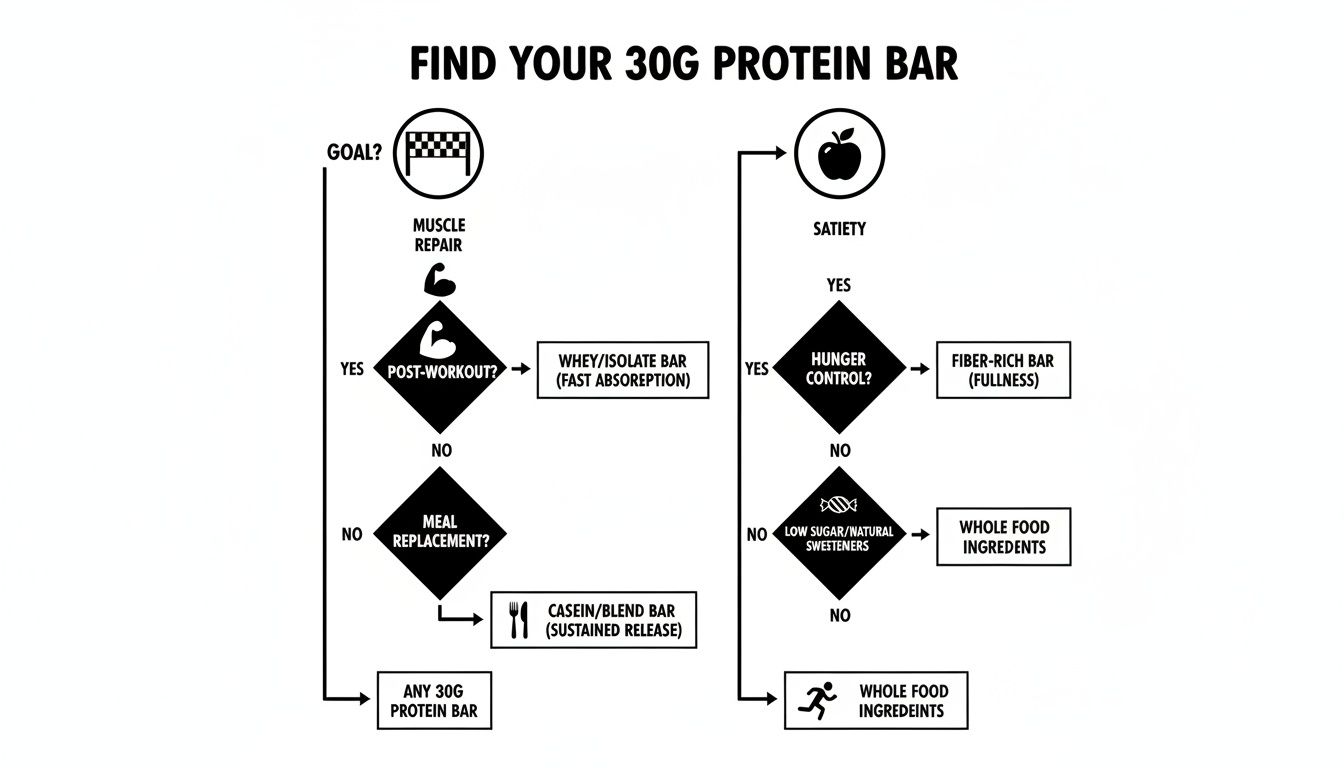
The key takeaway here is simple: your primary goal—building muscle or managing hunger—should shape how you evaluate a bar’s entire nutritional profile, not just its protein content.
To make this even easier, here’s a quick checklist you can use next time you're at the store.
Protein Bar Label Checklist
Use this quick guide to evaluate protein bars at a glance, focusing on the key metrics that matter for a 30-gram protein goal.
| Nutritional Factor | What to Look For | Red Flags to Avoid |
|---|---|---|
| Protein-to-Calorie Ratio | ~1g protein per 10-15 calories. For a 30g bar, this means ~300-450 calories. | High calories (400+) with disproportionately low protein (<25g). |
| Protein Source | High-quality isolates or concentrates (whey, pea, soy) listed first. | Vague "protein blend" without specifics; gelatin or collagen as primary sources. |
| Sugar & Sweeteners | Under 5g of added sugar. Natural sweeteners like monk fruit or stevia. | High-fructose corn syrup, cane sugar, or multiple sugar alcohols high on the list. |
| Fiber Content | At least 5-10g of fiber from whole-food sources like chicory root or oats. | Very low fiber (<3g), which means it won't keep you full for long. |
| Saturated Fat | Under 5g per serving. Fats from nuts, seeds, or cocoa butter are better. | High levels of saturated fat from palm kernel oil or hydrogenated oils. |
| Ingredient List | Short, recognizable, whole-food ingredients. | A long list of chemicals, fillers, and artificial additives you can't pronounce. |
This table serves as a solid starting point for vetting any bar you pick up.
Uncover the Serving Size Trap
Finally, don't fall for one of the oldest tricks in the book: the serving size trap. A package might proudly state it contains 30 grams of protein, but a closer look at the nutrition panel reveals that's for the entire package, which actually contains two servings.
If you eat the whole thing (and let’s be honest, most of us do), you have to double everything else—the calories, the sugar, and the fat. Always check if the numbers on the label apply to one serving or the full pack. It’s the only way to make an honest assessment of what you’re really consuming. If you want to get even better at this, you can learn more about interpreting a protein bar's nutrition facts in our detailed guide.
The Hidden Downsides of High Protein Bars
The hunt for a bar with 30 grams of protein can feel like a win, but it’s easy to get tunnel vision. Hitting that magic number is one thing, but you have to look at what else is packed into that little wrapper. The best bar isn't just about the protein macro; it's about getting that protein in a clean, balanced package.
It's really a nutritional balancing act. Imagine stacking 30 grams of protein on one side of a scale. You have to be careful that the other side isn't being tipped by a mountain of calories, sugar, and questionable fats. A surprising number of popular bars fail this simple test, and those compromises can end up working against your health goals.
The Calorie Bomb Trap
One of the biggest red flags is just how calorie-dense these bars can be. To squeeze in 30 grams of protein while still making something taste halfway decent, manufacturers often load their products with sugars, oils, and other fillers. Before you know it, that "smart" snack is actually a 400-500 calorie bomb. That’s basically a small meal.
This turns a quick protein top-up into a major caloric event. If you aren't carefully tracking your daily intake, those extra calories can completely derail your progress, especially if you’re aiming for lean muscle gain or weight management.
A high-protein bar should support your goals, not secretly become a meal replacement. Always check the protein-to-calorie ratio to ensure you're getting efficient fuel, not just empty calories.
Sugars and Unhealthy Fats
Let's be honest, some protein sources taste chalky and bland. To cover that up, many bars are loaded with sugar, artificial sweeteners, and sugar alcohols. A bar with 15-20 grams of added sugar is pretty much a candy bar in a fitness wrapper, and it'll send you on an energy roller coaster that ends in a crash.
You also need to give the fat sources a hard look. To keep costs low, some brands rely on cheap, highly processed seed oils or palm oil, which can contribute to inflammation. The better options will use fats from whole-food sources like nuts, seeds, or cocoa butter.
Here are a few common red flags to watch for on the ingredients list:
- High-Fructose Corn Syrup: A cheap sweetener with zero nutritional benefit.
- Partially Hydrogenated Oils: These are code for trans fats, which you should always avoid.
- Excessive Sugar Alcohols: Ingredients like maltitol and sorbitol are notorious for causing bloating and digestive issues for a lot of people.
Confusing Proprietary Blends
Finally, be skeptical of anything labeled a "proprietary protein blend." While not always a bad thing, this vague term can be used to hide lower-quality protein sources. A company might create a blend that’s mostly a cheap, less effective protein while adding just enough of the high-quality stuff to legally advertise it on the front of the package.
A transparent brand will tell you exactly what you’re getting—like 100% pea protein or whey protein isolate. A fuzzy label might be hiding ingredients that don't live up to your standards. When in doubt, demand transparency and stick to products with short, easy-to-understand ingredient lists.
Hitting 30 Grams with Plant-Based Protein
It wasn't long ago that finding a genuinely high-protein, plant-based snack felt like a wild goose chase. The prevailing wisdom was that vegan options just couldn't pack the same punch as whey or other dairy-based proteins. Fortunately, that myth has been thoroughly debunked, thanks to a new generation of high-quality plant proteins.
Now, you don’t have to compromise. Hitting your 30-gram protein goal while sticking to a plant-based diet is easier than ever.

Why Pea Protein Is a Top Contender
Leading the charge in this plant-based protein revolution is pea protein. Think of it as a clean, powerful, and allergen-friendly fuel. Unlike many older plant proteins, modern pea protein isolate is a complete protein. That means it delivers all nine essential amino acids your body can't make on its own—the critical building blocks for muscle repair and growth.
Another huge win for pea protein? It’s famously easy on the gut. This makes it an incredible alternative for anyone who struggles with the bloating or digestive upset that can sometimes come with whey or casein. Better digestibility means your body can actually absorb and put that protein to work.
This growing preference for plant-based fuel is driving major change. The high-protein snack market, which was already worth USD 1.65 billion in 2023, is on track to hit USD 2.24 billion by 2029. People want cleaner fuel, and the market is responding with better and better options.
Watching Out for Common Plant Protein Allergens
While pea protein is a fantastic choice, it's not the only plant-based option out there. As you explore bars and snacks, you’ll run into other protein sources, and it’s smart to be aware of potential allergens. This is a key difference when you start comparing whey protein vs plant protein.
Here are a few common ones you'll see on labels:
- Soy Protein: It's a complete protein, but soy is also one of the top eight major food allergens and a known sensitivity for many people.
- Nut-Based Proteins: Proteins from almonds and peanuts are great, but they are also common and sometimes severe allergens.
- Gluten-Based Proteins: Some brands use wheat or other grains for a protein boost, which is a problem for anyone with celiac disease or gluten sensitivity.
Choosing an allergen-conscious option like pea protein just simplifies things. You can fuel up with confidence, without having to worry about an allergic reaction or digestive issues holding you back.
At the end of the day, finding the right plant-based protein comes down to reading the label. By looking for clean, single-source options like pea protein, you can nail your 30-gram goal without the common allergens that trip so many people up. For a deeper dive, check out our guide on how to get enough protein on a plant-based diet.
Smart Ways to Use Your Protein Snacks
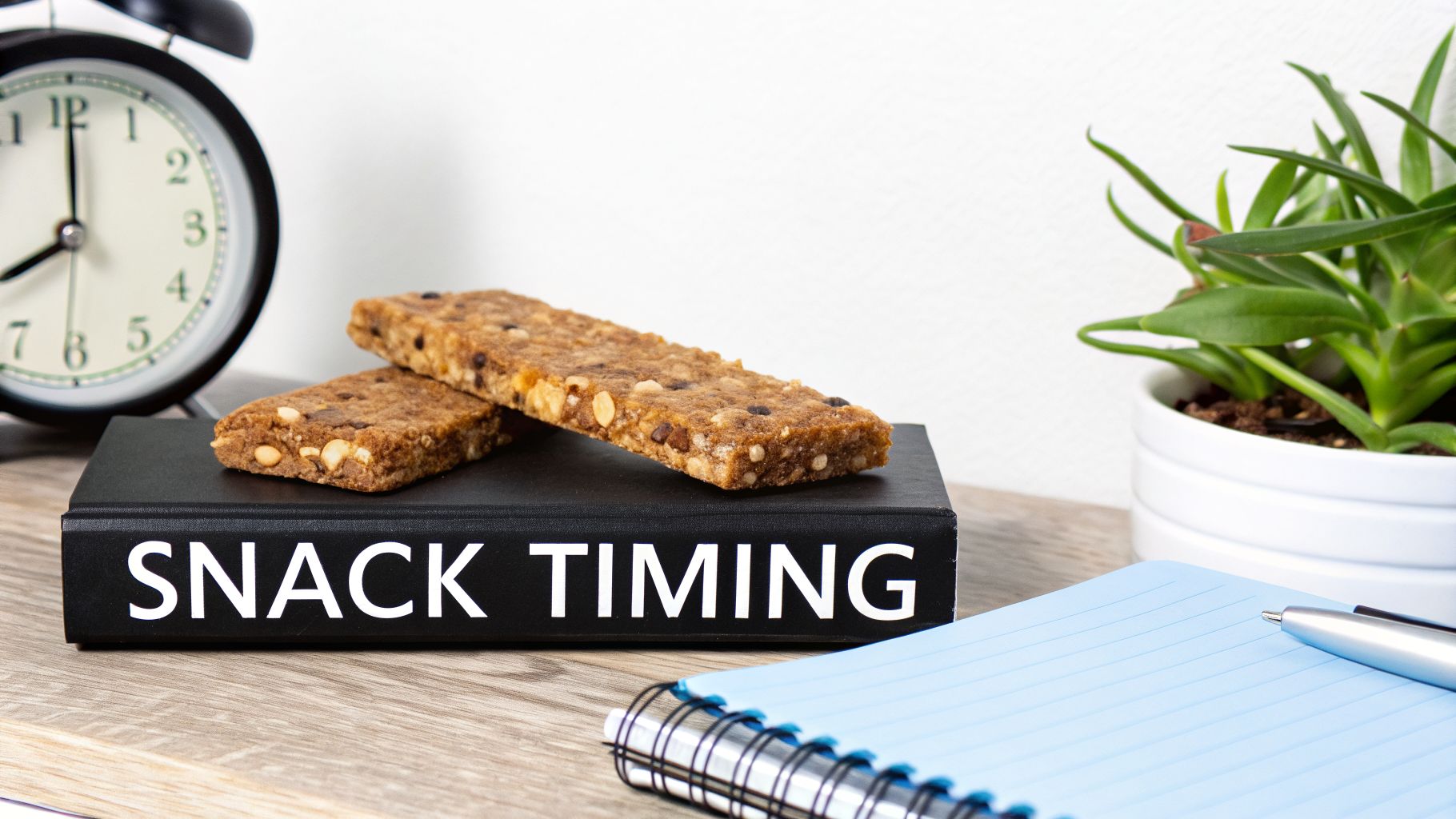
To get the most out of a high-protein snack, it's not just about what you eat, but when you eat it. With a little bit of strategy, you can turn a simple snack from a quick fix into a serious tool for muscle repair, steady energy, and keeping hunger at bay.
Think of it this way: your body needs a consistent supply of protein to keep its muscle-building machinery running smoothly. Spreading your intake throughout the day provides a steady stream of amino acids for repair and maintenance. A well-timed snack ensures that supply never gets too low, especially during key moments. If you're active, understanding how exercise influences nutrient needs is a game-changer for optimizing your performance and recovery.
The Best Times to Fuel Up
So, when is the ideal time to grab a high-protein snack? It really comes down to what you want to achieve that day. Different timings offer unique benefits, allowing you to fine-tune your nutrition to your goals.
Here are the three most effective windows for a protein boost:
- Pre-Workout: Having a protein snack about an hour before you train gives your body a slow-releasing source of amino acids. This helps prevent muscle breakdown during a tough workout and provides sustained energy to power through it.
- Post-Workout: This is the classic window for muscle growth. Consuming protein within a couple of hours after your workout kickstarts the repair process, helping your muscles recover more quickly and grow stronger.
- Between Meals: A protein-rich snack is your best defense against afternoon slumps and cravings. It helps stabilize your blood sugar, keeping you full and focused while steering you away from less healthy choices.
Building Your Way to 30 Grams
Let's be real—finding one single snack that delivers a perfect 30 grams of protein can be tricky. But here’s the secret: you don't have to get it all from one source. A much more practical and flexible approach is to combine smaller snacks to hit your target.
This method gives you way more variety and control. For instance, a single-serving bag of Gym Snack provides a solid 15 grams of high-quality pea protein. To hit your goal, you can simply have the whole bag (which is two servings) for a complete 30 grams. Easy.
Another great move is "protein stacking." You can pair a 15-gram protein snack with another protein-rich food. Think a handful of almonds, a cup of Greek yogurt, or a hard-boiled egg. This not only gets you to that 30-gram mark but also adds a wider range of nutrients to your diet.
This approach turns your snack into a flexible building block for your daily nutrition. If you want more tips on hitting your protein goals consistently, check out our guide on how to increase protein intake. A little bit of planning ensures your body gets the fuel it needs, right when it needs it.
Got Questions About 30-Gram Protein Bars? Let's Clear Things Up.
Even when you have all the info, actually picking a high-protein snack can feel overwhelming. When it comes to fueling your body, you want to be sure you're making the right call. So, let's tackle some of the most common questions about protein bars with 30 grams of protein to help you choose with confidence.
Is It Okay to Eat a 30-Gram Protein Bar Every Day?
For most active people, grabbing a 30-gram protein bar daily can be an incredibly convenient way to hit your protein goals. It’s a lifesaver on chaotic days or as a quick, no-fuss recovery snack after a hard training session.
The trick is to view it as part of your overall diet, not a replacement for real, whole foods. A good bar should complement your meals and fit neatly within your daily calorie and macronutrient targets.
Think of it like a specialized tool in your nutritional toolkit. It’s fantastic for certain jobs, like kickstarting muscle repair post-workout, but you wouldn't build a house with just a hammer. Stick with bars that have clean ingredients, low sugar, and healthy fats to make sure you’re giving your body quality fuel.
Will Eating High-Protein Bars Make Me Bulky?
This is probably one of the biggest myths in fitness, and the short answer is a definite no. Simply eating high-protein foods, including bars, won't magically make you bulky.
Building serious muscle mass is a whole different ballgame. It takes a very specific, intense strength training program paired with a consistent calorie surplus over a long period. Trust me, it doesn't happen by accident just because you ate a protein bar.
For most of us, a protein bar with 30 grams of protein actually does the opposite:
- It helps muscles repair: The protein provides the essential amino acids your body is craving after exercise.
- It keeps you full: Protein is great for satiety, helping you feel satisfied longer, which is a huge win for managing your weight.
- It supports lean muscle: It helps you hold on to the muscle you already have, especially if you’re in a calorie deficit to lose fat.
Think of it as a tool for recovery and hunger control, not an instant muscle-inflator.
Are Savory Protein Snacks a Better Choice Than Sweet Bars?
While flavor is totally up to you, savory protein snacks do have some real advantages. Let’s be honest—a lot of sweet protein bars are just candy bars with a protein halo. They're often loaded with sugar, artificial sweeteners, or sugar alcohols that can cause a nasty energy crash or upset your stomach.
Savory options are a welcome change from the endless parade of sweet shakes and bars, helping you beat "flavor fatigue."
Plus, they satisfy those salty, crunchy cravings in a much smarter way than grabbing a bag of chips. You get that satisfying snack experience and your protein fix without all the unhealthy fats and empty calories. It’s a win-win.
How Do I Choose a Good Plant-Based 30-Gram Protein Bar?
Picking a top-notch plant-based bar is easy once you know what to look for. First, check the protein source. You want to see a complete protein like pea protein, which delivers all nine essential amino acids your body needs for muscle repair.
Next, pay close attention to the serving size. Some products will boast a high protein number on the front, but you have to eat two servings to get there. Make sure you know the total calories, fat, and carbs you'll be taking in if you eat the whole package.
Finally, give the ingredient list a quick scan. Look for common allergens like soy or gluten if you're sensitive, and steer clear of bars packed with artificial junk or excessive seed oils. A short, clean, and easy-to-understand ingredient list is always the best sign of a quality product.
Ready for a savory, crunchy snack that delivers a full 30 grams of clean, plant-based protein per bag? Gym Snack is chef-inspired, allergen-conscious, and made with high-quality pea protein to fuel your goals without the junk. Find your new favorite flavor at gymsnack.com.