

You’re probably in one of two spots right now. You either keep tossing single Quest Bars into your cart and feeling that little sting at checkout, or you’ve already bought a big box once and realized bulk buying only works if you want to eat what you stocked.
That’s the issue with quest bars bulk. It’s not just about finding the cheapest box. It’s about building a protein snack system that saves money, fits your routine, and doesn’t leave you sick of sweet bars halfway through the month.
Your Guide to Buying Quest Bars in Bulk
Buying single bars is convenient, but it’s usually the most expensive way to eat them. Quest has become a huge player in protein snacking, with roughly $1.2 billion in annual revenue projected for 2025 to 2026, and part of that scale comes from making bars widely available across retail and wholesale channels, as covered in this Quest market overview. That same source notes bulk prices can drop to about $1.50 per bar, compared with around $4.96 for a single bar bought individually.
That price gap is why bulk works so well for people who use bars as a routine tool instead of a random convenience buy. If you keep a box at home, a few bars in your work bag, and one in the car for backup, you stop relying on overpriced checkout snacks and gas-station impulse buys.
Here’s the practical way to approach it:
- Use bulk for consistency: Keep bars around for the days your meal plan slips.
- Buy around your habits: If you only eat a bar once in a while, a huge case isn’t smart.
- Treat flavor as strategy: Bulk buying the wrong flavor is how people end up hate-eating expensive bars.
Practical rule: Don’t buy the biggest box first. Buy the flavor you repeatedly reach for, then scale up.
The smartest bulk buyers aren’t chasing the absolute lowest sticker price. They’re matching pack size to real weekly use, then leaving enough room in the budget and pantry for variety.
The True Benefits of a Bulk Protein Supply
The obvious benefit is savings. The less obvious benefit is that a steady stash of bars removes friction from your day.
When protein is already handled, you make fewer bad decisions when hunger hits. That matters more than is often acknowledged. A bar in your backpack, desk drawer, or glove compartment won’t magically fix your diet, but it can stop the “I’ll just grab whatever” spiral that usually ends in a low-protein, high-cost snack.
Why bulk helps training days
Quest bars are useful because the macros are straightforward. According to this Quest bar nutrition breakdown, bars in bulk packs provide 20 to 21g of protein, and that protein can help support muscle protein synthesis after training. The same source notes the bars also contain 14 to 16g of fiber, which supports GLP-1 secretion for prolonged fullness and can help people trying to stay on track with daily protein targets in the 1.6 to 2.2g/kg range.
That combination is why Quest bars work best as a bridge food. Not a treat. Not a meal replacement. A bridge.
Good use cases include:
- After lifting: Easy protein when you can’t get to a full meal quickly.
- Between meetings: Better than waiting too long, then overeating later.
- During travel: Shelf-stable and easy to carry.
- As a backup snack: Useful insurance for chaotic days.
What works and what doesn’t
What works is using bulk bars as a repeatable system. Put some where you need them. Home pantry. Gym bag. Work drawer. Car console if the weather isn’t brutal.
What doesn’t work is pretending bars are exciting forever. They’re tools. Effective tools, yes, but still tools.
A protein bar earns its keep when it saves you from missing protein entirely. It doesn’t need to feel special every time.
There’s also the reality that high-fiber bars don’t sit the same for everyone. Some people do great with them. Some people feel better spacing them out and drinking water alongside them. Bulk buying makes most sense when you already know your own tolerance and routine.
Where to Find the Best Bulk Quest Bar Deals
The best place to buy depends on what you value most. Lowest per-bar cost, easiest reordering, widest flavor selection, or fastest access. Those aren’t always the same thing.
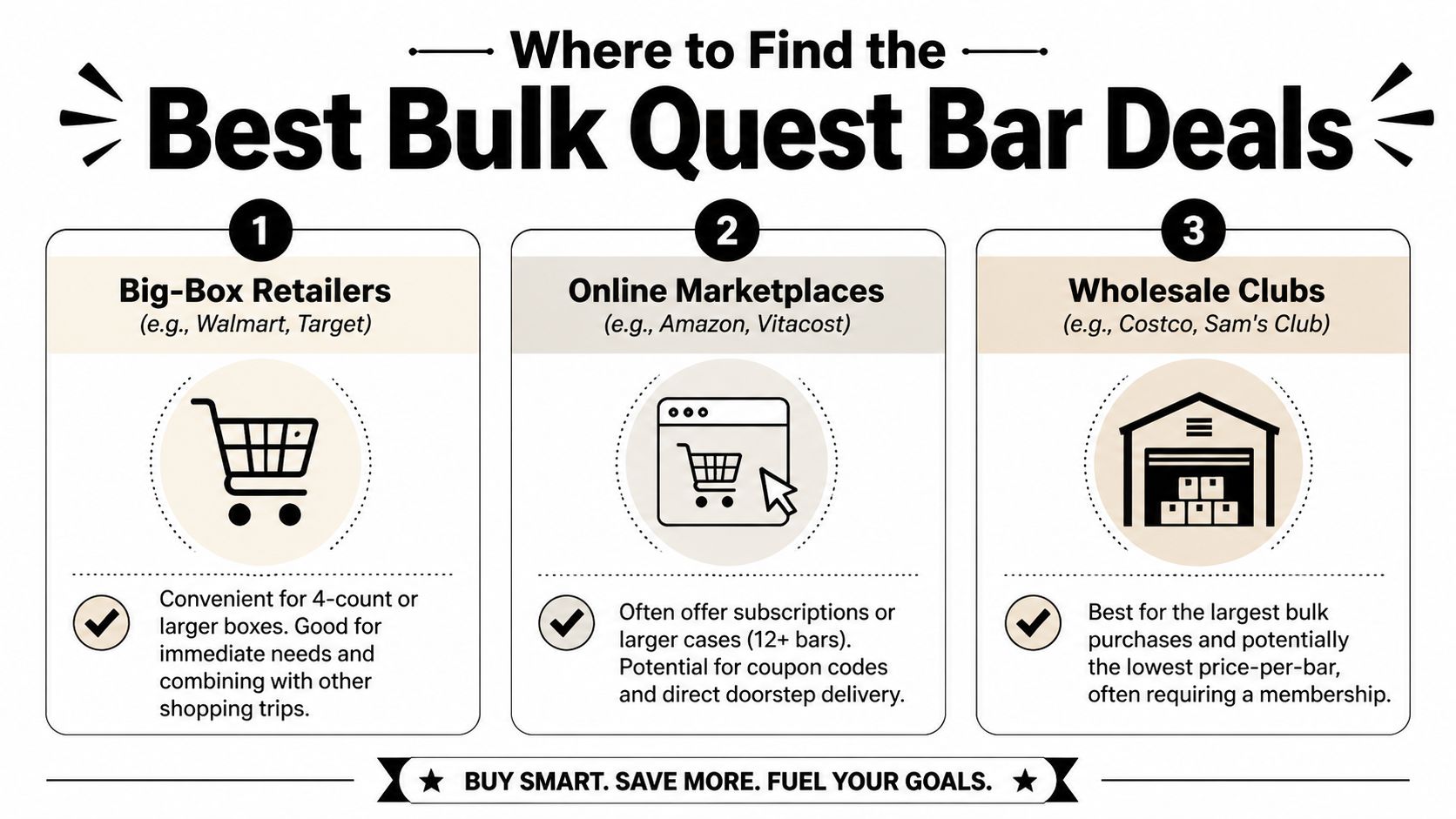
Big-box retailers
Walmart and Target are useful when you want decent availability without joining a warehouse club. You can often grab smaller multipacks or standard boxes while doing normal shopping, which makes them practical for testing flavors before committing to larger quantities.
The trade-off is volatility. A flavor can be available one week and gone the next. Pricing also moves around more than people expect.
A relevant factor is the recent pricing pressure in protein products. This retail market note on Quest bars states that 2025 to 2026 supply chain disruptions have caused 15 to 20% price hikes on protein products due to whey isolate shortages, with popular flavors more prone to stockouts and price swings.
Online marketplaces
Amazon and similar marketplaces are strong if you care about convenience and flavor choice. They’re especially useful for repeat buyers who know exactly what they want and don’t want to hunt from store to store.
The downside is seller variation. One listing may be straightforward, while another comes from a third-party seller with different handling standards, return policies, or shipping times.
If you buy online, check who’s selling the box before you check out. “In stock” doesn’t always mean “good deal.”
Subscriptions can help if you eat bars every week and want to automate the process. They’re less helpful if your intake changes a lot or if you get bored easily.
Wholesale clubs
Sam’s Club and Costco-style retailers are where you usually chase the lowest per-bar price. This channel works best for heavy users, families, shared office snack stashes, or anyone who already has a membership and buys enough to justify larger pack sizes.
The catch is simple. Bulk only saves money if you finish the box and store it properly.
Direct and specialty options
Buying direct can make sense for brand-specific bundles or flavor drops, but it’s rarely my first stop if cost is the main goal. Specialty wholesale sites can also matter if you’re shopping for a gym, office, or small retail setup. If you’re comparing larger-volume options, this guide to wholesale protein bars for businesses and bulk buyers is a useful starting point.
Comparison of Bulk Quest Bar Retailers
| Retail Channel | Typical Pack Size | Price-Per-Bar | Pros | Cons |
|---|---|---|---|---|
| Big-box retailers | Small multipacks to standard boxes | Varies | Easy to add to regular shopping, good for trial buys | Prices fluctuate, favorite flavors can disappear |
| Online marketplaces | Standard boxes and larger cases | Varies | Broad flavor selection, convenient delivery, subscriptions available | Third-party seller risk, shipping and subscription details matter |
| Wholesale clubs | Larger bulk packs | Often lowest | Strong value for regular users, best for stocking up | Membership required, bigger upfront spend, less forgiving if flavor gets old |
My own rule is simple. Test at retail, reorder online if the price is right, and use warehouse clubs when I know I’ll finish the box.
A Complete Cost Analysis for Smart Shoppers
The cheapest-looking box isn’t always the cheapest box. Smart bulk buying starts with all-in cost per bar, not shelf price.
A good calculation includes every friction point tied to the purchase. Membership fees. Shipping. subscription discounts. Sales tax if it changes the comparison. The annoyance cost of getting stuck with a flavor you won’t finish also matters, even if you can’t put a clean number on it.
What to include in your real cost
Use this short checklist before buying:
- Box total: Start with the actual checkout price, not the advertised one if discounts require extra steps.
- Shipping impact: Free shipping helps. Paid shipping can erase a decent deal fast.
- Membership cost: If you’re buying from a warehouse club, spread that fee across how often you’ll use it.
- Subscription terms: Auto-delivery can be great, but only if the timing and quantity match your habits.
- Waste risk: If you get sick of the flavor, your cost per eaten bar goes up.
A lot of people skip that last point. They shouldn’t. A slightly pricier mixed order can be cheaper in practice than a giant bargain case of one flavor you stop wanting after a week.
A simple decision filter
I like to use three questions:
- Will I eat this flavor consistently?
- Will I finish the box before I’m tired of it?
- Does this order still look good after fees and shipping?
If one answer is no, I keep shopping.
For readers who want more options beyond bars, this list of cheap high-protein snacks that actually make sense is helpful when comparing cost against variety.
Here’s a quick walkthrough for visual learners:
The hidden cost most buyers ignore
The hidden cost is monotony. If your plan depends on eating the same bar every day, eventually the low price stops feeling like a win.
That doesn’t mean bulk is bad. It means bulk works best when you buy with some realism. Keep one reliable flavor in rotation, but don’t pretend your taste buds are robots.
Smart Storage to Keep Your Bulk Order Fresh
Quest bars hold up well when you store them like dry pantry food, not like something that can bounce around your car for a week. Heat is the main enemy. It messes with texture, coating, and overall eatability fast.
Where bars keep best
The best spot is a cool, dark, dry cupboard. A pantry shelf works. A cabinet away from the stove works. A closet shelf can work too if the space stays stable and dry.
Avoid these common mistakes:
- Car storage in warm weather: Heat changes texture quickly.
- Gym bag long-term storage: Fine for a day or two, not as a permanent home.
- Windowsills or sunny counters: Direct light and warmth are bad for consistency.
Buy in bulk, then store in smaller grab-and-go groups. The bars stay organized, and you’re less likely to crush the whole box into one overstuffed shelf.
How to manage limited space
If your kitchen is tight, split your order across small bins, drawer organizers, or shelf baskets. People dealing with compact apartments or crowded pantries can borrow ideas from this guide on maximizing freshness in small spaces, especially if your main issue is keeping packaged food neat and protected rather than piled up loosely.
If you rely on bars for travel, work, or emergency desk snacks, it also helps to think in categories. One stash at home. One mobile stash. One backup stash. That keeps you from tearing open the main box every day and losing track of what’s left.
For more portable ideas in the same category, this roundup of non-refrigerated protein snacks is worth bookmarking.
Check the best-by date when you buy, keep boxes sealed until needed, and pay attention to texture. If a bar looks odd, smells off, or feels wrong, don’t force it.
Beyond the Sweet Bar A Case for Savory Protein
Most bulk protein snack shelves have a pattern. Sweet bar. Sweet bar. Another sweet bar pretending to be dessert with extra protein. If you use bars regularly, that gets old.
That’s the part people understate when they talk about quest bars bulk. Bulk buying can solve cost and convenience, but it can create another problem. You stop wanting another chewy sweet bar, even if the macros are still good.

Bar fatigue is real
You can like Chocolate Chip Cookie Dough or Birthday Cake and still hit a wall. That doesn’t mean the product stopped working. It means your appetite wants contrast.
This isn’t just personal preference. Bulk listings across retailers remain heavily centered on sweet, whey-based bars, and this review of Quest bulk offerings points out a gap in savory, plant-based bulk options. That same source notes a 25% YoY increase in searches from people looking for those alternatives, many of whom complain about bar fatigue.
What sweet bars do well and where they fall short
Sweet bars are great when you want something fast, familiar, and shelf-stable. They also fit neatly into post-workout or busy-day routines.
Where they fall short is sensory variety:
- Texture repeats: Chewy gets repetitive.
- Flavor profile repeats: Sweet-on-sweet becomes tiring.
- Craving mismatch: Sometimes you want salty and crunchy, not another dessert-style bite.
That mismatch is why many disciplined eaters end up drifting off plan. Not because they stopped caring about protein, but because they wanted a different eating experience.
When your palate wants savory, forcing another sweet bar usually backfires.
A better way to think about protein snacks
Protein doesn’t need to come in candy-bar form to be useful. Savory options solve a different problem. They fit the moments when you want crunch, salt, and something that feels more like a snack than a backup dessert.
That’s especially relevant for people who rotate snacks often, travel a lot, or don’t tolerate dairy-based products well. In practice, the best setup for many people isn’t all bars or no bars. It’s a mix. Keep bars for convenience. Keep savory options for variety. Use both so neither becomes unbearable.
That’s the primary fix for flavor fatigue. Not more willpower. Better rotation.
Is Buying Quest Bars in Bulk Always the Right Move?
No. It’s the right move for some people, not all people.
Quest bars have a strong macro profile. A standard 60g bar contains 190 calories, 21g of protein, 1g of sugar, and 13 to 14g of fiber, according to this Quest nutrition listing. That same source places the category at $1.98 billion, which helps explain why these bars are so common and easy to find.
But good macros don’t automatically mean bulk is the smart buy for you.
Bulk makes sense when
- You eat bars regularly: They’re already part of your week.
- You have a reliable favorite: You know what you will finish.
- You have room to store them: Pantry clutter is real.
- You value convenience highly: Fewer emergency snack runs matter.
Bulk doesn’t make sense when
If you get bored fast, prefer fresh food most of the time, or only eat bars occasionally, smaller packs are usually smarter. The same goes for anyone still testing brands, flavors, or digestion tolerance.
The best bulk purchase is boring in the best way. You buy it, you use it, and nothing gets wasted.
Frequently Asked Questions
A few practical questions come up again and again with quest bars bulk. Here are the short answers that help most buyers decide faster.
FAQ on Bulk Quest Bar Purchases
| Question | Answer |
|---|---|
| Are warehouse clubs always the cheapest option? | Often, but not automatically. Membership cost and pack size can change the real value. |
| Should I buy one huge box of my favorite flavor? | Only if you’ve eaten that flavor enough times to know you won’t get tired of it. |
| Are Quest bars good for post-workout use? | They can work well when convenience matters and you want a portable protein option. |
| Is online subscription ordering worth it? | Yes, if you eat bars consistently and remember to adjust or skip deliveries when needed. |
| What’s the biggest mistake people make with bulk bars? | Buying too much of one flavor, then getting bored and leaving bars untouched. |
| How should I store a bulk order? | Keep bars in a cool, dry, dark place and avoid leaving them in hot cars or direct sunlight. |
| Are bars enough on their own? | They’re useful, but most people do better using them as part of a wider snack rotation. |
A final rule of thumb. If you’re hesitating between a smaller order and a giant one, start smaller. It’s easier to reorder a winner than grind through a box you regret.
If you’re burned out on sweet bars and want a savory backup that still keeps protein high, take a look at Gym Snack. It’s a different lane from dessert-style bars. Crunchy, plant-based, chef-inspired, and built for people who want another way to hit protein goals without more sweet chewiness.