

You’re in the snack aisle, trying to make a decent choice. One bar promises high protein, low sugar, and a dessert-like flavor. You flip it over, scan the label, and hit a wall of unfamiliar names: milk protein isolate, soluble corn fiber, polydextrose, glycerin, xanthan gum, erythritol, stevia.
That’s usually the moment people ask the same questions. Is this healthy? Are these ingredients there for nutrition, or just food engineering? Why does a Quest bar feel chewy instead of dry like some other protein bars? And why do some people feel great after eating one while others get bloated?
Those are good questions, because quest protein bar ingredients aren’t random. Each one has a job. Some build the protein content. Some hold moisture so the bar doesn’t turn into chalk. Some create sweetness without regular sugar. Some help keep the product shelf-stable for a long time. And some are exactly the ingredients that can make your stomach either happy or annoyed.
A lot of label reading gets stuck at “good” or “bad.” That’s too shallow for a product like this. A Quest bar is a formulated food. To understand it, you have to think like a nutritionist and a food scientist at the same time.
What's Really Inside Your Quest Protein Bar?
The first thing to know is that a Quest bar is designed, not just mixed together. It isn’t built like a homemade snack with oats, nut butter, and honey. It’s built more like a performance product, where each ingredient handles a specific problem.

If you’ve ever eaten a high-protein snack that felt dry, gritty, or oddly hard, you’ve already seen the challenge. Protein by itself usually doesn’t create a pleasant bar. When you pack in a lot of dairy protein, the texture can get dense and crumbly. Brands solve that by adding ingredients that manage moisture, softness, sweetness, and shelf life.
That’s why the ingredient list can look longer than you expect from a “healthy” product. It’s not necessarily a red flag on its own. It’s often a sign that the manufacturer is trying to make a high-protein bar behave like a cookie.
Why labels like this confuse people
Most shoppers recognize peanuts, cocoa, or almonds. Fewer know what to do with words like polydextrose or glycerin. Those names sound chemical, so people assume they must be harmful. Sometimes they’re harmless functional ingredients. Sometimes they’re useful but can cause side effects in certain people. The label rarely tells you which is which.
Here’s the simplest way to read quest protein bar ingredients:
- Protein ingredients build the bar’s main nutrition target.
- Fiber and texture agents keep it chewy and shelf-stable.
- Sweeteners make it taste like a treat without much sugar.
- Minor binders and stabilizers help everything stay mixed and consistent.
A long ingredient list doesn’t automatically make a product unhealthy. It usually means the product has been heavily engineered to deliver a specific nutrition profile and eating experience.
That’s the lens to use throughout the rest of the label. Don’t ask only, “What is this ingredient?” Ask, “What job is this ingredient doing?” Once you do that, the Quest formula starts to make a lot more sense.
The Core Protein Blend Explained
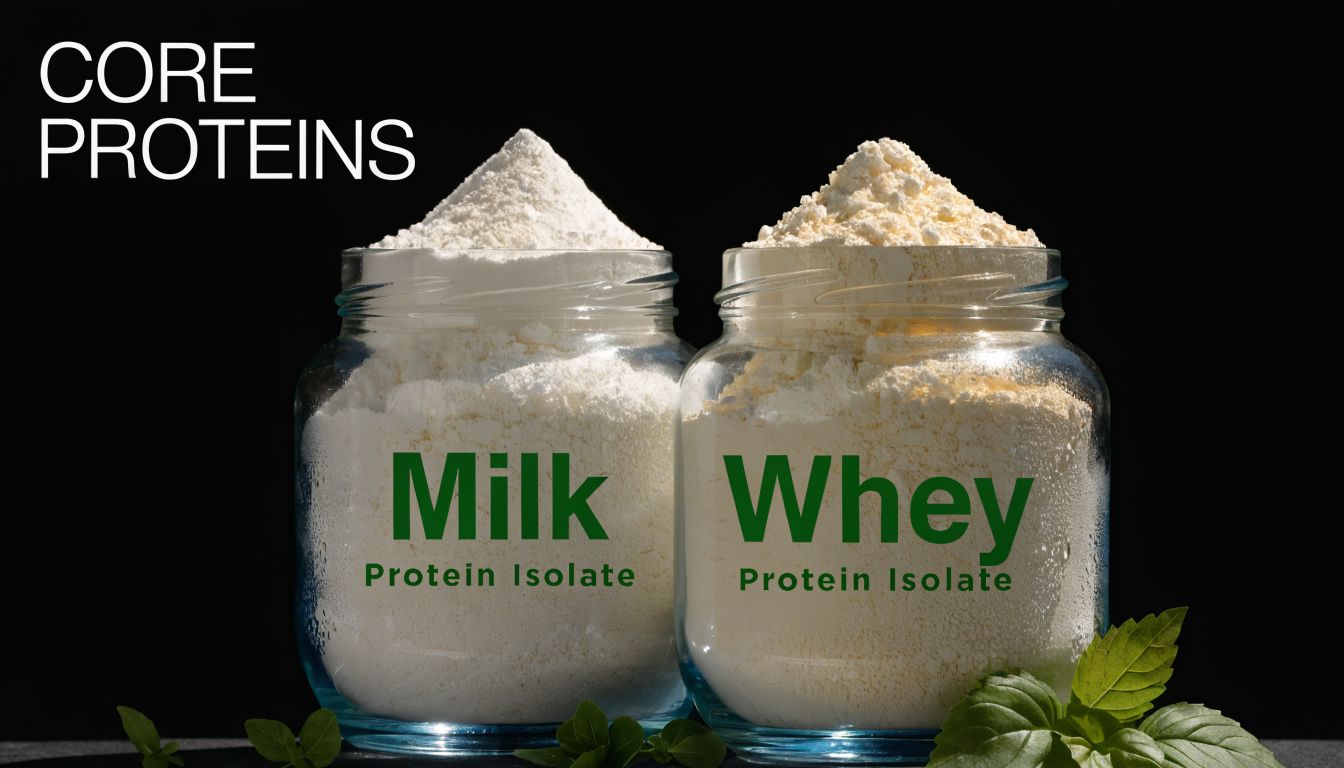
Quest bars are built around dairy protein isolates. That term sounds technical, but the idea is straightforward. Manufacturers start with milk components and remove much of the lactose, fat, and water so the final ingredient delivers a concentrated source of protein in a small space.
What protein isolate means
An isolate is a refined protein ingredient. In practical terms, it lets a bar pack in a lot of protein without bringing along much sugar or fat from the original food source.
Quest commonly uses whey protein isolate and milk protein isolate. The Cleveland Clinic’s guide to protein powder explains that whey is a complete protein, meaning it contains all nine essential amino acids your body must get from food. Milk proteins also qualify as complete proteins, which is one reason dairy-based bars are popular with people focused on recovery, satiety, or preserving muscle during weight loss.
That “complete protein” label matters more than it may sound. Your body does not use protein as one single substance. It breaks protein into amino acids, then uses those building blocks to repair tissue, support immune function, and maintain muscle. A bar made with complete proteins gives your body the full set of raw materials.
Why brands use both whey and milk isolates
Whey protein isolate and milk protein isolate do different jobs in the bar.
Whey protein isolate is rich in amino acids and is known for digesting relatively quickly. Milk protein isolate contains both whey and casein, so it digests more gradually and changes the texture of the finished product. Put them together, and you get a bar that is easier to formulate around than a single protein source alone.
A simple way to picture it is to compare them to two kinds of fuel. Whey burns fast. Casein-rich milk protein burns slower. That does not mean one is “better.” It means the blend can support both product texture and a steadier feeling of fullness for some people.
This is also where function matters more than label appeal. Quest is not using isolates only to raise the protein number on the wrapper. The blend helps determine chew, density, and how the bar holds up over time on a shelf. That is a useful clue for reading the rest of the ingredient list. Once the protein is this concentrated, other ingredients have to step in to keep the bar from turning tough or chalky.
For a quick visual explainer on whey, this video gives useful context:
The strengths and tradeoffs
The main strength is efficiency. You can get a meaningful amount of complete protein in a portable snack that does not need refrigeration and feels more like a treat than a shaker bottle.
The tradeoff is that isolates are highly refined ingredients. That is not automatically a problem, but it does move the product further away from whole-food eating. It also matters for tolerance. These proteins come from dairy, so people with milk protein allergy or dairy sensitivity may still react even if the bar is relatively low in lactose. If that is a concern, Unpacking Dairy Allergies gives helpful background on the difference between allergy, intolerance, and broader sensitivity patterns.
There is also a satiety question worth keeping in mind. Protein can support fullness and may fit well in diets aimed at appetite control, including approaches that try to support GLP-1 signaling naturally. But the protein blend is only one part of that story. A sweet, heavily engineered bar can behave differently from a minimally processed meal with intact protein, fiber, and volume. That distinction becomes important later when comparing Quest to cleaner, savory alternatives like Gym Snack.
| Consideration | What it means in practice |
|---|---|
| Complete amino acids | Useful for muscle repair, fullness, and recovery support |
| Highly refined protein | Convenient and concentrated, but less like eating whole foods |
| Dairy-based source | A poor fit for people who avoid milk proteins |
| Formulation role | The blend supports nutrition goals, but it also creates the need for added texture and sweetness systems |
Practical rule: If you tolerate dairy and want convenient protein, this blend makes sense. If dairy tends to trigger skin, sinus, or digestive issues for you, the protein source deserves a closer look first.
Decoding the Fiber and Texture Agents
A Quest bar would be hard, chalky, and short-lived if it contained little more than protein powder. The ingredients that confuse shoppers most often are the same ones doing the quiet engineering work that makes the bar chewy, stable, and portable.
Why a high-protein bar needs help
Protein isolates are useful for raising protein without adding much sugar or fat, but they are difficult building blocks. On their own, they tend to create a dense paste at first and a tougher texture over time. Food manufacturers solve that by adding a support system of fibers, moisture-holding ingredients, and stabilizers.
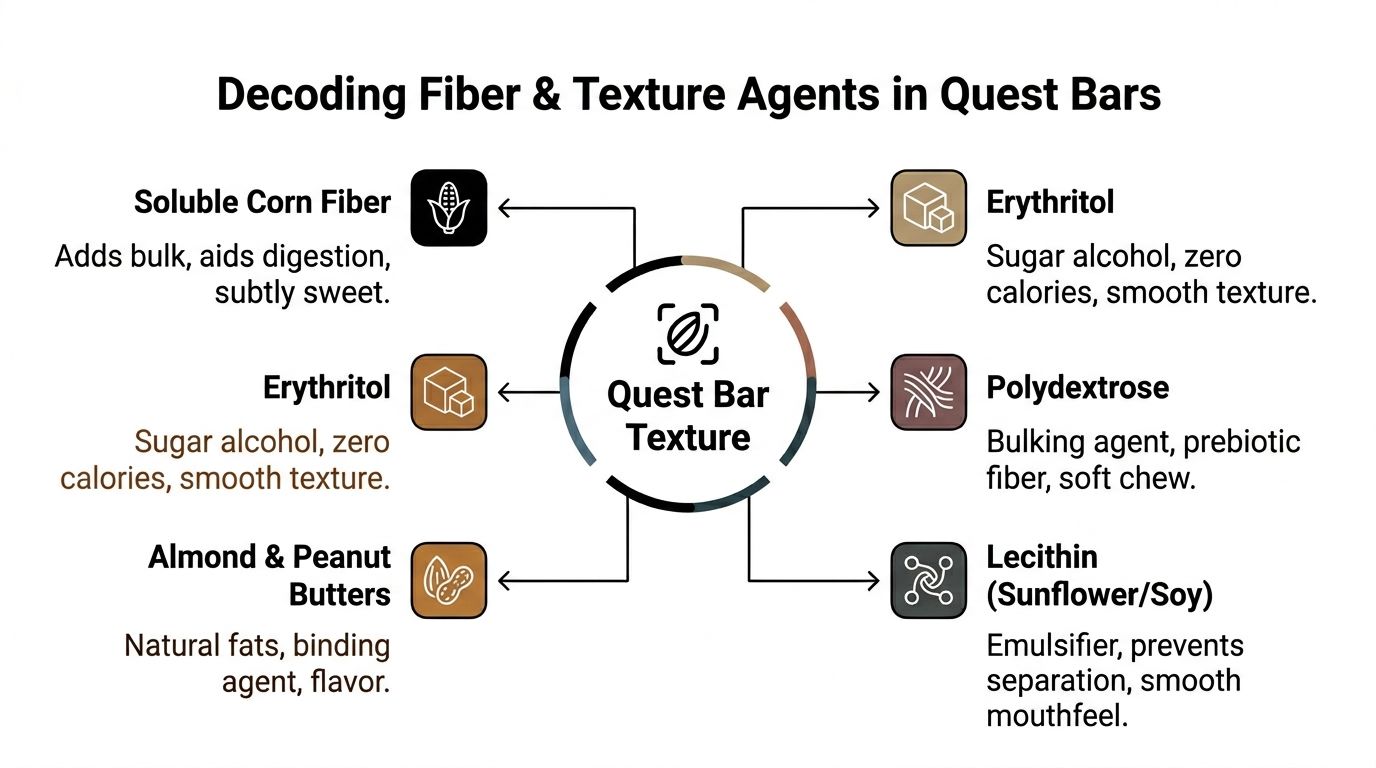
Quest commonly uses polydextrose, glycerin, and xanthan gum for that job. The functional roles line up with how these ingredients are used across packaged foods. The U.S. Food and Drug Administration describes polydextrose as a synthetic polymer of glucose used as a bulking agent and formulation aid in foods. The FDA also lists glycerin as a direct food substance used in food, and manufacturers use it to help retain softness. For xanthan gum, Food Ingredients and Applications by Ziobro and colleagues in the National Library of Medicine explains its value as a hydrocolloid that can thicken and stabilize food systems.
Those terms sound abstract. The physical jobs are easier to grasp if you picture the bar as a small construction project.
What each ingredient is doing
Polydextrose fills space and holds onto water. In a bar, that matters because removing sugar removes bulk as well as sweetness. Polydextrose helps replace some of that missing body, so the bar feels dense and chewy instead of thin or brittle. It also contributes to the fiber total, which looks good on the label, though your gut may have its own opinion about that later.
Glycerin works like moisture insurance. It helps the bar stay pliable instead of turning firm and crumbly on the shelf. If you have ever opened an older protein bar and noticed it bends rather than snaps, glycerin is often part of the reason.
Xanthan gum acts like a structural assistant. It helps keep water, proteins, and fats distributed more evenly through the bar, so the texture stays consistent from one bite to the next.
A plain-language summary helps:
- Polydextrose adds bulk and supports chew.
- Glycerin helps keep the bar soft.
- Xanthan gum improves stability and texture consistency.
- Together, they help a processed bar behave more like a dessert and less like compressed protein powder.
Why texture and digestion are linked
These ingredients do more than improve mouthfeel. They also change how the bar sits in your digestive system.
Polydextrose is often added partly for fiber content, but isolated fibers do not behave exactly like the fiber you get from beans, vegetables, or intact grains. Some people tolerate them well. Others get gas, bloating, or a heavy feeling after eating bars built around fiber concentrates and humectants. That difference matters because a label can make a product look metabolically neat while your stomach gives a different review.
This is one reason ingredient quality matters as much as macros. If you are comparing bars, it helps to look beyond protein grams and read about protein bars without artificial sweeteners, especially if sweet, engineered bars tend to leave you feeling overly full or gassy.
Chewiness in a protein bar usually comes from a designed moisture and fiber system, not from protein itself.
The trade-off behind shelf-stable softness
A homemade high-protein snack changes fast. It dries out, separates, or spoils. A commercial bar has to survive transport, warehouse storage, and weeks in a gym bag while still tasting like a treat.
That is why these ingredients deserve a fair reading. They are functional tools, not random filler. At the same time, they push the product further from a simple whole-food snack and deeper into food engineering. For a health-conscious buyer, that raises the key question. Do you want a sweet bar that stays soft because of carefully chosen additives, or would you rather eat a cleaner savory option built with fewer texture tricks and a more meal-like effect on fullness?
That distinction becomes important once you start judging bars by more than taste. Texture, gut tolerance, and appetite response are connected. Gym Snack’s clean-label savory approach stands out partly because it avoids the dessert-bar formula that makes these support ingredients necessary in the first place.
The Sweetener Profile Sugar Alcohols and Stevia
You bite into a Quest bar expecting "protein snack," but your taste buds get something much closer to a cookie. That gap between expectation and flavor usually comes from the sweetener system.
Quest creates that dessert-like taste with erythritol and stevia rather than relying on much conventional sugar. Each one has a different job. Erythritol adds bulk and a cleaner sweetness curve. Stevia is far more concentrated, so a small amount can push sweetness higher without adding sugar. Together, they help the bar taste indulgent while keeping digestible carbs relatively low, which helps explain the brand's appeal for people following a ketogenic diet.
That "relatively low" part confuses people.
A sweet bar is not just sweet because of one ingredient. Sugar in a traditional snack also gives body, softness, browning, and that familiar syrupy roundness. Once manufacturers remove sugar, they have to rebuild those effects with a combination of sweeteners and structure-building ingredients. It works a bit like replacing wheat flour in gluten-free baking. You are not swapping one thing for one thing. You are recreating a whole system.
Why erythritol shows up so often
Erythritol belongs to the sugar alcohol family. The name sounds more dramatic than the chemistry really is. Sugar alcohols are carbohydrate-based sweeteners that are handled differently by the body than table sugar, so they are often used in products marketed as lower sugar or lower net carb.
Erythritol is especially common because it is less calorie-dense than sugar and usually has less digestive impact than some other sugar alcohols. It also leaves a slight cooling sensation for some people. If a bar ever tastes a little chilly or mint-adjacent even without mint flavor, erythritol is often part of the reason.
Where "net carbs" comes from
Quest bars are often discussed in net carb terms because the label includes carbohydrates that do not act like ordinary sugar. In plain language, net carbs try to estimate the portion of total carbs more likely to affect blood glucose.
That does not make net carbs fake. It makes them a simplified label shortcut.
The catch is that "low net carbs" and "minimally processed" are completely different ideas. A bar can be useful for someone limiting sugar and still be a highly engineered food. If you want a comparison point, this guide to protein bars without artificial sweeteners shows how a different sweetening philosophy changes the ingredient list and the eating experience.
Stevia's role is smaller but powerful
Stevia does not usually provide the bulk of a bar's texture. Its main job is sweetness intensity. That matters because erythritol alone can taste flatter or less rounded than sugar. A small amount of stevia helps fill in the sweetness profile, much like adding a pinch of salt can make chocolate taste more like chocolate.
This is good food formulation, not magic.
It also explains why some people enjoy the taste while others notice an aftertaste right away. Stevia sensitivity is highly individual, and the same is true for sugar alcohol tolerance.
How to read this sweetener combo like a label-savvy buyer
A better set of questions looks like this:
- Do I want a protein snack that tastes like a dessert?
- Do sugar alcohols sit well in my stomach?
- Am I choosing this bar for blood sugar control, convenience, or ingredient simplicity?
- Will intense sweetness make me feel satisfied, or just keep my cravings aimed at sweet foods?
That last question gets overlooked. Sweetness can make a bar more enjoyable, but it can also keep the product in the "treat" category from an appetite standpoint, even if the macros look disciplined on paper.
So the sweetener profile is not just a label detail. It tells you what the bar is trying to be. Quest is designed to mimic a candy-bar experience while fitting lower-sugar goals. Gym Snack's savory, clean-label approach goes in the opposite direction. It skips the dessert-style sweetness arms race altogether and solves a different problem: giving you a protein-forward snack that feels more like food than formulation.
Health Implications for Your Diet
A bar can look perfect at 3 p.m. on the wrapper and feel very different at 4 p.m. in your body. That is the test.
For low-carb and keto eaters
Quest bars were built to keep sugar low while still tasting like a dessert snack. For someone trying to limit digestible carbs, that makes them more compatible than a typical granola bar or candy-style protein bar.
People following a ketogenic diet often choose foods that keep carbs controlled without giving up convenience. Quest fits that goal better than many sweet packaged snacks. The tradeoff is that low sugar does not automatically mean low processing.
That distinction matters. A bar can match your macro target and still miss your comfort, appetite, or ingredient-quality target.
For appetite control and fullness
Protein usually helps a snack feel more meal-like, and fiber can slow the eating experience from your gut’s point of view. Together, they often keep hunger from bouncing back right away. Reviews of higher-protein diets in the American Journal of Clinical Nutrition describe protein as more filling than carbohydrate or fat in many settings, which helps explain why bars like Quest can work as a stopgap between meals rather than a pure treat (AJCN review on protein and satiety).
Fullness is not only about stomach volume. It also involves signaling. Research in Nutrients has discussed how protein and certain fibers may influence hormones involved in appetite regulation, including GLP-1 and PYY, although the effect depends on the full meal context, the dose, and the individual (Nutrients review on satiety hormones and food intake).
So the practical takeaway is simple. Quest may help some people stay steady between meals, but it is still a formulated snack, not a shortcut around overall diet quality. If you want a broader framework for comparing bars beyond front-of-package claims, this guide to how to read protein bar nutrition facts is a useful next step.
For gut comfort
This is the part many shoppers learn the hard way.
Fibers added for texture and sugar replacement can behave differently from the fiber you get from beans, oats, or fruit. Polydextrose, soluble corn fiber, and sugar alcohols help create the soft, chewy structure people expect from modern protein bars, but they can also pull water into the gut or get fermented by gut bacteria. That is why one person calls a bar satisfying and another calls it a stomach ache.
The Cleveland Clinic notes that sugar alcohols can cause bloating, gas, or a laxative effect in some people, especially in larger amounts or in people who already have a sensitive digestive system (Cleveland Clinic guide to sugar alcohols). Monash University also flags some added fibers and polyols as common triggers for people with IBS or FODMAP sensitivity (Monash University on polyols and digestive symptoms).
Tolerance matters more than branding.
A simple decision lens
If you’re deciding whether Quest belongs in your routine, use this filter:
| Your priority | Likely fit |
|---|---|
| Portable protein | Often a good fit |
| Lower-carb convenience | Often a good fit |
| Sweet, dessert-style flavor | Good fit |
| Sensitive digestion | Test carefully |
| Minimal processing | Usually not the best fit |
| Dairy-free eating | Not a fit |
If a bar leaves you bloated or overly full, the issue may be the fiber and sweetener system, not protein bars as a category.
For GLP-1 users and weight-management goals
People using GLP-1 medications or trying to manage appetite often do better with foods that feel steady, protein-forward, and easy to tolerate. Quest checks part of that box. It delivers substantial protein in a compact format, which can be helpful on days when a full meal feels inconvenient.
But there is a second question. Does the bar feel like food, or like a sweet engineered substitute for food?
That question points to the bigger lesson in this article. Quest has real functional strengths, but those strengths come from a system of isolates, fibers, and sweeteners designed to imitate a treat while controlling sugar. For some people, that works well. For others, the sweetness, dairy base, or digestive side effects make it feel less satisfying than the label suggests. That gap is exactly why clean-label savory options such as Gym Snack appeal to a different kind of buyer. They solve the protein problem without relying on the dessert-bar formula.
Buyer's Guide How to Choose a Better Bar
You are standing in the snack aisle, holding two bars that both promise high protein and low sugar. On paper, they look similar. In your body, they may behave very differently.
A better buying question is simple: what is each ingredient doing there?
Bars are built systems. One part supplies protein. Another creates chew. Another keeps the bar soft for months. Another delivers sweetness without much sugar. Once you read labels through that lens, the wrapper starts to matter less and the formula starts to matter more.
Start with the protein source
Protein is the foundation, so read that first. If the bar uses milk protein isolate or whey protein isolate, you are getting a complete dairy-based protein source. That works well for many active people, but it is a poor match if dairy tends to leave you congested, bloated, or just feeling off.
If you prefer plant-based bars, do not stop at the word "plant." Check whether the blend relies on pea, soy, brown rice, or a mix. Different proteins change texture, amino acid profile, and digestion. Protein choice is not just a nutrition decision. It shapes how filling the bar feels and whether it fits your routine.
Next, read the texture ingredients like a food formulator
This is the part many shoppers skip, yet it often explains why one bar feels satisfying and another feels like a science project.
A soft, chewy, shelf-stable bar usually depends on a support system of fibers, syrups, glycerin, gums, or starches. Those ingredients are not automatically bad. They are doing jobs. Fiber can add bulk. Glycerin can hold moisture. Gums can keep the bar from crumbling. The tradeoff is that the same system that improves texture can also make digestion less predictable for some people.
Use this short screen:
- Check the first few ingredients after protein. They often reveal whether the bar is built around whole-food pieces or around isolates and texture agents.
- Look for fiber sources you already tolerate well. Chicory root fiber, soluble corn fiber, and polydextrose can feel very different from person to person.
- Notice how many binders are stacked together. A long list suggests the bar is heavily engineered to mimic a dessert texture.
- Treat your own digestion history as evidence. If a certain fiber blend keeps causing gas or heaviness, believe that pattern.
Reviews collected by the digestive health app Cara Care's guide to sugar alcohol side effects help explain why some bars bother sensitive stomachs. Ingredients such as sugar alcohols and certain added fibers can ferment in the gut or draw water into the intestine, which is one reason tolerance varies so much.
Separate macro performance from food quality
A bar can be useful without being simple.
Those are two different standards, and they often get blurred together in marketing. One bar may be excellent for hitting protein targets after a workout. Another may be better if you care more about shorter ingredient lists, less sweetness, or fewer digestive surprises.
This is a practical way to compare products:
- Protein quality. Is it complete, and does it fit your diet?
- Digestive comfort. Do the fibers and sweeteners work for you?
- Ingredient simplicity. Does the formula rely on many isolates, gums, and flavor systems?
- Satiety. Does it feel like actual food, or like a sweet workaround?
- Use case. Is this for post-workout convenience, a meal bridge, or a daily snack?
For a clearer label-reading framework, this guide to protein bar nutrition facts and what to compare on the label breaks down the numbers and ingredients that matter most.
Choose the bar that matches your goal
If you want a dessert-style protein bar, you may accept more sweeteners and texture agents as part of the deal. If you are trying to support appetite control, especially on a GLP-1 routine, a very sweet bar may not always feel as steady or satisfying as the macros suggest. If your stomach is sensitive, the best bar may be the one with the least complicated fiber and sweetener system, even if the front label looks less impressive.
That is also where a clean-label savory option like Gym Snack stands apart. Instead of recreating a cookie or candy bar with isolates, fibers, and non-sugar sweeteners, it solves the protein problem from a different direction. Less dessert mimicry. More real-food feel.
The best bar is rarely the one with the loudest claims. It is the one whose ingredient system matches your body, your appetite, and the job you need the bar to do.
Quick Answers to Common Quest Bar Questions
Are Quest bars dairy-free
No. The core protein blend comes from milk and whey isolates, so they aren’t appropriate for people avoiding dairy proteins.
Do Quest bars affect blood sugar
They’re designed to have a low net-carb impact compared with many sweet snack bars, which is why low-carb eaters often choose them. Still, individual responses vary, especially depending on the rest of the meal, your metabolism, and your tolerance for sugar alcohols.
Are Quest bars likely to cause bloating
They can for some people. The combination of fiber-heavy ingredients and sugar alcohols is a common reason some users feel fine while others report gas or stomach discomfort.
Are they good for post-workout use
They can be practical after training because they provide a substantial amount of complete protein in a portable form. They’re especially convenient when you need something shelf-stable and don’t have access to a meal.
Are Quest bars gluten-free
People ask this often because “protein bar” doesn’t always mean gluten-free. If that’s your main concern, this guide on whether Quest bars are gluten free is a useful starting point for checking product-specific details and label changes.
Are Quest bars clean eating
That depends on how you define “clean.” They’re functional and purpose-built, but they aren’t a minimally processed whole-food snack. If your standard for clean eating is short ingredient lists and recognizable kitchen ingredients, Quest probably won’t fit that definition.
Are they good for IBS or sensitive digestion
That’s a cautious maybe at best. People with sensitive digestion often react differently to concentrated fibers, dairy proteins, and sugar alcohols. If you already know those ingredients are a problem for you, Quest bars may not be your easiest option.
What’s the biggest takeaway from quest protein bar ingredients
The label makes more sense once you see the bar as a system. The proteins provide the nutrition target. The texture agents keep it soft and shelf-stable. The sweeteners make it taste like dessert without relying on regular sugar. That formula can be useful, but it isn’t ideal for every body or every definition of healthy.
If you want a different kind of protein snack, Gym Snack offers a savory, chef-inspired alternative built around plant-based protein instead of dessert-style bar formulas. It’s a good option for people who want satisfying crunch, clear ingredients, and a break from the usual sweet, heavily engineered protein aisle.