

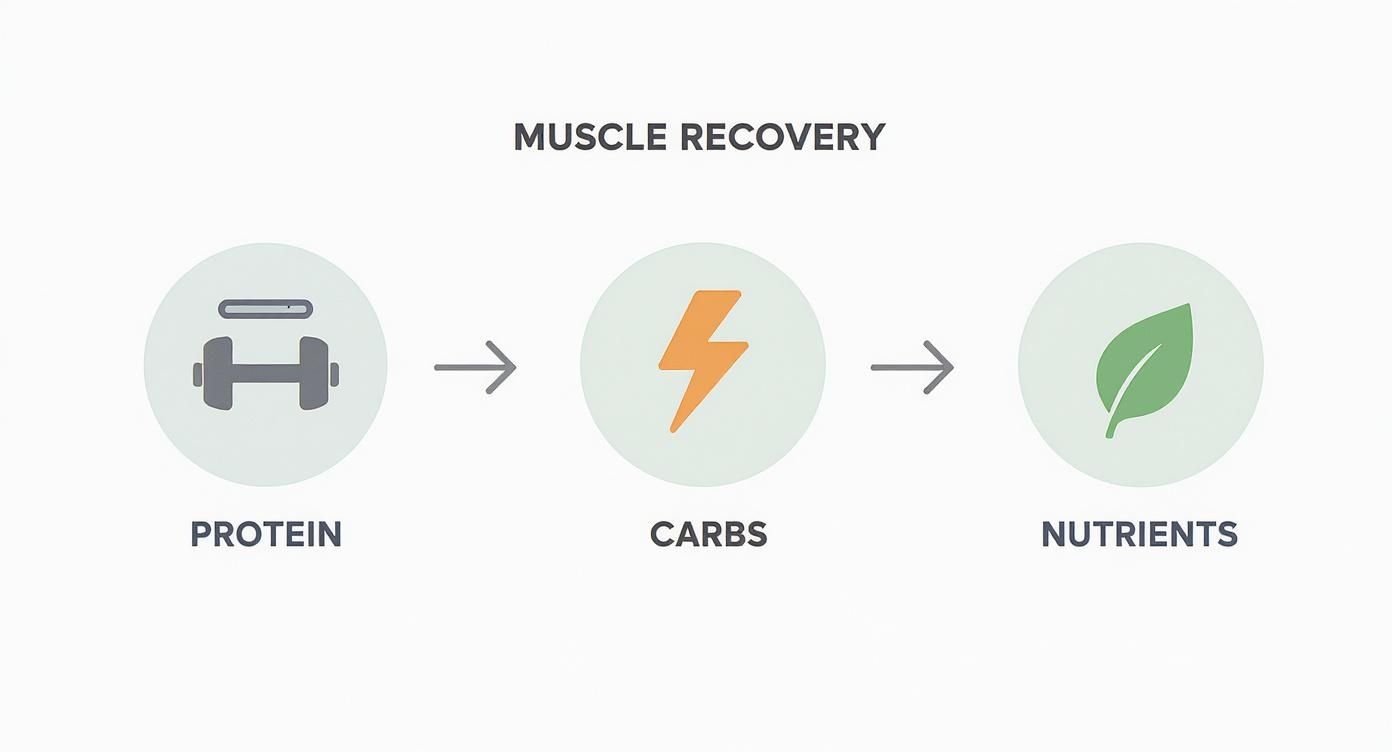
So, what foods actually help your muscles recover? The short answer is a smart mix of high-quality protein, complex carbs, and nutrients that fight inflammation. This trio is your go-to for repairing muscle, reloading your energy tanks, and easing that post-workout ache. It’s basically the nutritional game plan for rebuilding your body even stronger.
Your Blueprint for Faster Muscle Recovery
After you've pushed yourself in a workout, your muscles are essentially in a state of controlled breakdown. You’ve created tiny, microscopic tears in the muscle fibers, which sounds bad, but it’s actually the signal your body needs to start adapting and growing stronger. But to rebuild properly, your body needs the right raw materials—and that's where your diet comes in.
Think of it like a construction crew showing up to repair a building. If they don't have bricks, mortar, and energy to do the work, the project grinds to a halt. The same goes for your muscles.
The Key Nutritional Players
That meal you eat after training isn't just about satisfying your hunger. It's a strategic delivery of the exact nutrients your body is crying out for. Each one has a specific, critical job to do.
- Protein: This is your primary building block. It provides the amino acids necessary to patch up those micro-tears in your muscles, kicking off a process called muscle protein synthesis.
- Carbohydrates: These are the fuel for your internal construction crew. Carbs are crucial for refilling your muscle glycogen stores—the main energy source you just burned through—so you're ready to go for your next workout.
- Micronutrients: Consider these the specialized tools that make the whole job go faster. Nutrients like omega-3 fatty acids and antioxidants help cool down inflammation and fight off cellular stress, which translates to less soreness and a quicker recovery time.
Think of your body as a construction site post-workout. Protein provides the new bricks (amino acids), carbohydrates supply the energy for the construction crew (glycogen replenishment), and micronutrients are the specialized tools that speed up the entire repair job.
Let's quickly break down the essentials. The table below gives you a snapshot of the most important nutrients, what they do, and where to find them.
Key Nutrients for Muscle Recovery at a Glance
| Nutrient Category | Primary Role in Recovery | Top Food Sources |
|---|---|---|
| Protein (Leucine/BCAAs) | Rebuilds and repairs torn muscle fibers (muscle protein synthesis). | Chicken, fish, eggs, Greek yogurt, tofu, lentils, pea protein. |
| Carbohydrates | Replenishes depleted muscle glycogen (your primary fuel source). | Oats, sweet potatoes, quinoa, brown rice, fruits, whole-wheat bread. |
| Omega-3 Fatty Acids | Reduces inflammation and can help alleviate muscle soreness. | Salmon, mackerel, walnuts, flaxseeds, chia seeds, fish oil. |
| Antioxidants | Combats oxidative stress caused by intense exercise. | Berries, dark leafy greens (spinach, kale), beets, cherries. |
| Electrolytes | Regulates muscle contractions, nerve function, and hydration. | Bananas, avocados, coconut water, leafy greens, nuts, seeds. |
Having this framework helps you move past just making a list of "good" foods. It gives you the power to put together meals that actively help your body's natural repair process.
This thoughtful approach to nutrition is what makes the difference between so-so results and real breakthroughs in strength and performance. For a deeper dive into this topic, you can find more science-backed tips on nutrition for muscle recovery and other helpful strategies. In the rest of this guide, we'll get into the specifics of how these nutrients work together, with real food examples and practical advice to help you bounce back faster and crush your next session.
Why Your Muscles Need the Right Fuel to Rebuild
To really get a grip on which foods help with muscle recovery, we first have to peek under the hood at what's happening inside your body after you've pushed it hard. Every tough workout, whether it’s a heavy lifting day or a long-distance run, creates tiny, microscopic tears in your muscle fibers. That might sound bad, but it’s actually a good thing—it's the very signal that kicks off growth and adaptation.
Think of it like a controlled renovation. Before you can build a stronger, more resilient house, you have to tear down some of the old, weaker structures. This intentional stress is what tells your body to get to work on a powerful repair process, ultimately leaving your muscles stronger than they were before.
This whole repair job is a pretty complex biological process, but it all boils down to one key mechanism: muscle protein synthesis (MPS). MPS is simply your body's system for taking the protein you eat and using it to fix muscle damage and weave together new, stronger muscle tissue. What you eat after your workout is the single biggest factor that determines how well this process works.
The Three Phases of Muscle Recovery
Your body doesn't just slap on a patch and call it a day. It follows a very deliberate, three-stage plan to rebuild itself. Once you understand these phases, it becomes obvious why certain nutrients are totally non-negotiable for anyone who’s serious about their fitness.
-
The Inflammatory Phase (The Emergency Crew): Right after you finish your workout, your body dispatches an "emergency crew" to the site of the muscle damage. This initial inflammatory response might sound like something to avoid, but it's a crucial first step. Specialized cells rush in to clear out damaged tissue and cellular junk, paving the way for repairs.
-
The Repair Phase (Laying the New Foundation): This is where your nutrition choices really start to matter. Once the cleanup is done, your body gets down to the real work of rebuilding. It cranks up muscle protein synthesis, pulling in amino acids—the building blocks from protein—to patch up those micro-tears and construct new muscle fibers.
-
The Remodeling Phase (Strengthening the Structure): In the final stage, your body isn't just fixing things; it's upgrading them. It remodels the newly repaired muscle tissue, making it thicker, stronger, and better equipped to handle that same stress next time. This is how you get stronger over time, but it can only happen if you fueled the repair phase properly.
The whole recovery process is a cycle of breaking down and building back up. If you don't provide the right nutritional "bricks and mortar" at the right time, that rebuilding phase stalls out. The result? Poor recovery, nagging soreness, and hitting a plateau.
Fueling the Rebuild Mission
Your body’s demand for resources is at its peak during the repair and remodeling phases, which can last for a full 24 to 48 hours after you’ve left the gym. This is exactly why what you eat on your rest days is just as important as your immediate post-workout meal.
Trying to recover without giving your body the fuel it needs is like asking a construction crew to build a skyscraper without any steel or concrete. The job will either be left half-finished or done poorly. This can lead to a few frustrating outcomes:
- Increased Muscle Soreness: That deep, lingering ache, often called Delayed Onset Muscle Soreness (DOMS), can be a sign that your body is struggling to complete repairs.
- Reduced Performance: If your muscles aren't fully recovered, you simply won't have the same power or endurance for your next session.
- Lack of Progress: You can't build new muscle or hit a new personal best if your body is stuck in a constant state of damage control.
At the end of the day, your food choices directly control the quality of your recovery. A smart approach to your post-workout nutrition gives your body everything it needs to not just fix the damage, but to come back stronger, faster, and ready for whatever you throw at it next.
The Pillars of Post-Workout Nutrition
Now that we’ve pulled back the curtain on how muscles heal, let's zero in on the two most powerful tools in your nutritional toolkit: protein and carbohydrates. These two are the undisputed champions of recovery. Think of them as the foundational pillars holding up the entire rebuilding process, working in tandem to repair damage and reload your energy reserves.
If you’re asking "what foods help muscle recovery?" getting these two right is the single most effective step you can take. They aren't just calories; they're functional fuel with very specific jobs to do.
Protein: The Master Rebuilder
Protein is the non-negotiable raw material for muscle repair. When you eat protein, your body breaks it down into amino acids—the very "bricks" your body uses to patch up those micro-tears in your muscle fibers through a process called muscle protein synthesis (MPS). Without a steady supply, the repair crew essentially runs out of materials and the job grinds to a halt.
But not all protein is created equal. The MVPs of recovery are complete proteins, which pack all nine essential amino acids your body can't make itself. One of these, leucine, is a real standout.
Leucine acts like a master switch that flips on the entire MPS process, directly signaling your muscle cells to start rebuilding. This is why foods loaded with leucine—like whey protein, eggs, chicken, and soy—are so prized for post-workout nutrition. And the science backs this up; a major meta-analysis covering 40 trials found that protein supplementation significantly preserves muscle strength and slashes key markers of muscle damage after exercise. It was especially effective at lowering creatine kinase levels, a major indicator of muscle breakdown, at both 48 and 72 hours post-exercise. You can dig deeper into the findings on protein and muscle recovery.
Carbohydrates: The Essential Refueler
While protein handles the repairs, carbohydrates are all about reloading your energy. During a tough workout, your body burns through its primary fuel source: muscle glycogen. This is just the name for carbohydrates stored in your muscles and liver. A hard session can seriously deplete these stores, which is why you feel so drained and weak afterward.
Eating carbohydrates after your workout is the quickest way to top off your glycogen tanks. This refueling is absolutely critical, not just for having enough gas for your next session, but also for creating the right environment in your body for recovery to happen in the first place.
Aim for complex carbohydrates like sweet potatoes, oats, quinoa, and brown rice. These provide a steady, sustained release of energy that prevents a blood sugar crash and keeps your body fueled for the long repair job ahead. A little bit of simple carbs from fruit right after a workout can also be great for a quick glycogen top-up.
Think of your post-workout state like a car with an empty fuel tank and a dented fender. Carbohydrates are the gasoline needed to get the engine running again, while protein is the bodywork crew that fixes the dents. You need both to get back on the road at full capacity.
The Power of the Protein-Carb Partnership
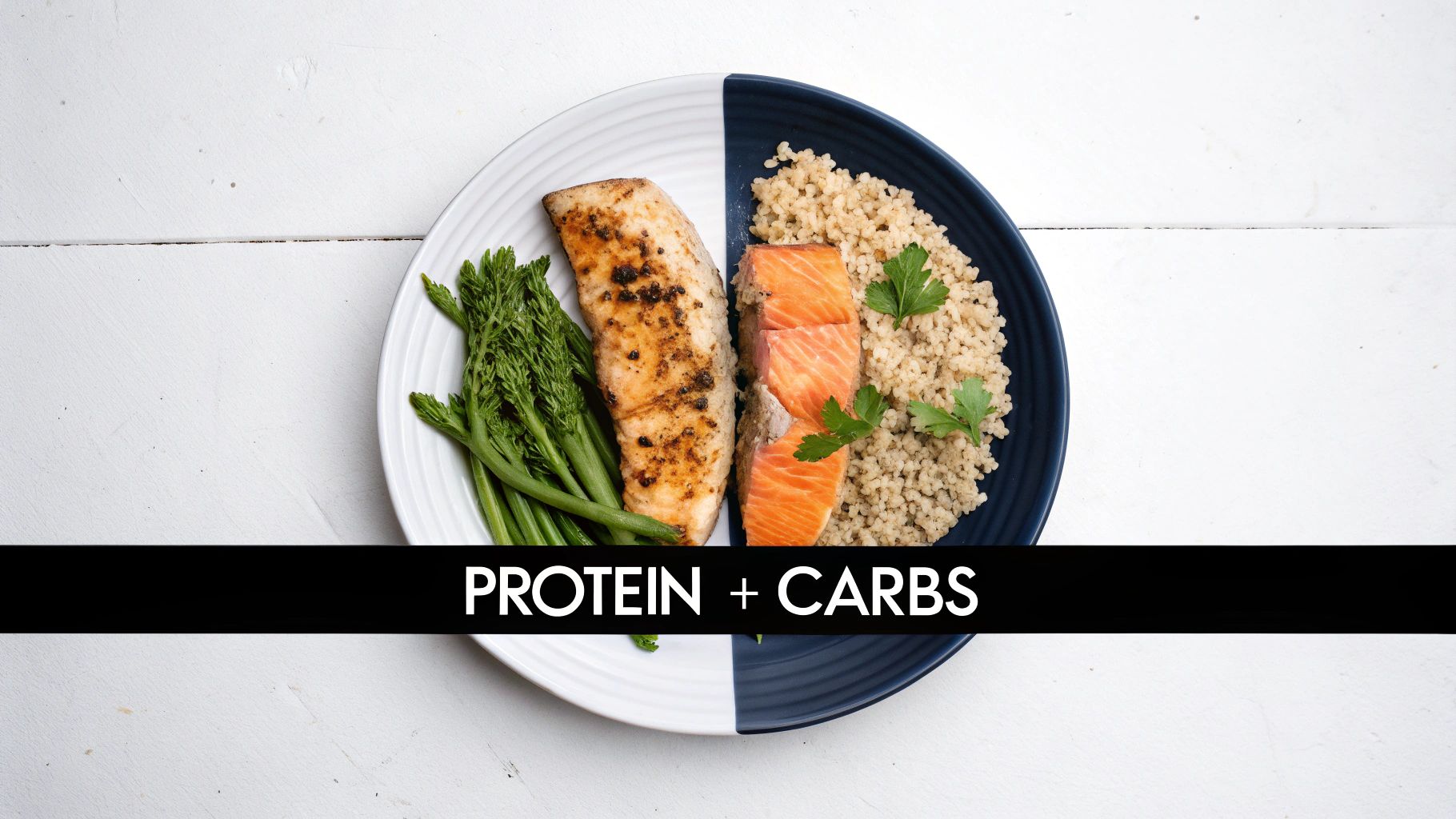
The real magic happens when you bring protein and carbohydrates together in your post-workout meal. This combination creates a powerful synergy that speeds up recovery far more effectively than eating either one on its own.
Here's a simple breakdown of how it works:
- Insulin's Role: When you eat carbs, your body releases the hormone insulin.
- Nutrient Shuttling: Insulin acts like a key, unlocking your muscle cells to let glucose (from the carbs) rush in and be stored as glycogen.
- Amino Acid Delivery: Here's the kicker: insulin also helps shuttle amino acids (from your protein) into your muscle cells much more efficiently.
This supercharged delivery system means the building blocks for repair get exactly where they need to go, faster. It kick-starts the muscle protein synthesis process with greater speed and efficiency. A meal with both macronutrients doesn't just refuel you; it maximizes the anabolic (muscle-building) signals in your body.
This is why the classic post-workout meals almost always feature this duo. Whether it's chicken and rice, a protein shake with a banana, or Greek yogurt with berries, this strategic pairing gives your body everything it needs to flip the switch from breaking down to building back up.
Essential Micronutrients and Compounds for Recovery
Protein and carbs get all the glory, but they don't work alone. Think of them as the lead actors in your recovery story. Behind the scenes, a whole crew of micronutrients and special compounds are making sure the production runs smoothly. Without them, recovery slows to a crawl.
These unsung heroes tackle the messy aftermath of a tough workout, like inflammation and cellular stress. Dialing in your intake of these key players gives your body the specialized tools it needs to repair tissue, reduce soreness, and bounce back faster than ever.
Omega-3s: The Inflammation Fire Department
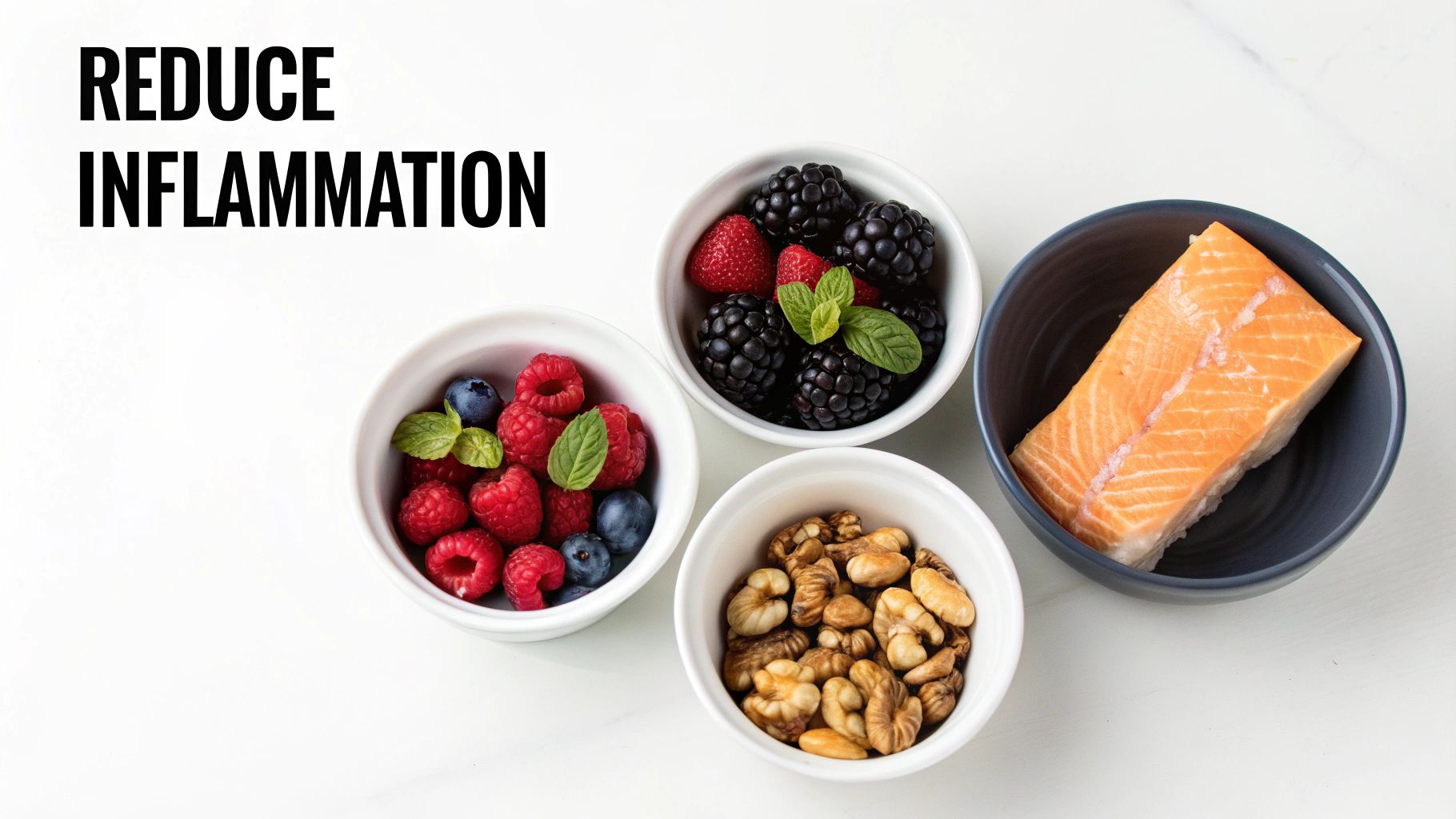
Inflammation isn't all bad. After a workout, it's the alarm bell that tells your body, "Hey, we need repairs over here!" But if that alarm keeps blaring, it gets in the way of actual rebuilding. That’s where omega-3 fatty acids step in, acting like your body's own fire department to calm things down.
Found in fatty fish like salmon, plus plant sources like walnuts and flaxseeds, these healthy fats help keep the inflammatory response in check. They dial down that lingering inflammation that makes you feel sore for days, clearing the way for your muscles to get on with the business of rebuilding.
Antioxidants: Your Cellular Cleanup Crew
Hard exercise is a messy process. It creates unstable molecules called free radicals that can cause oxidative stress, which is essentially damage at the cellular level. This damage can seriously hinder recovery. Your best defense? Antioxidants. They're like a dedicated cleanup crew, neutralizing these troublemakers before they can cause lasting harm.
You'll find these powerful compounds in colorful plant foods:
- Berries: Blueberries, strawberries, and especially tart cherries are full of compounds that studies show can reduce muscle pain.
- Leafy Greens: Spinach and kale are antioxidant powerhouses, loaded with vitamins that keep your cells healthy.
- Beets: These earthy roots are packed with unique antioxidants that help fight off damage and even improve blood flow to your muscles.
Electrolytes: The Body's Electrical Engineers
When you sweat, you're not just losing water. You're also losing crucial minerals called electrolytes—things like potassium, sodium, and magnesium. These guys are the electrical engineers of your body, responsible for everything from muscle contractions to nerve signals. When they're out of balance, you get cramps, fatigue, and poor hydration, all of which kill your recovery.
Topping them off is easy. Bananas and avocados are fantastic for potassium, while a handful of nuts or seeds will give you a good dose of magnesium. Keeping these minerals balanced ensures your internal wiring stays connected and your muscles function properly.
Iron: The Oxygen Delivery Specialist
Last but not least, let’s talk about iron. This mineral is absolutely critical for building hemoglobin, the protein that acts like a fleet of tiny delivery trucks, carrying oxygen in your red blood cells to your muscles. Without enough oxygen, your muscles can't generate energy or repair themselves efficiently.
Low iron is a direct path to fatigue and subpar workouts. While red meat is famous for its iron content, there are plenty of excellent plant-based sources. For a deeper dive, check out this guide on iron-rich plant-based foods to keep your energy levels high.
When you look beyond just protein and carbs, you start building a complete nutritional toolkit for recovery. Foods rich in omega-3s, antioxidants, electrolytes, and iron create a powerful, multi-pronged strategy that tackles inflammation, cell damage, hydration, and oxygen delivery all at once.
Optimizing Your Nutrient Timing and Protein Choices
Knowing what to eat is one thing. But knowing when to eat is how you get a real edge. Translating the science of recovery into an actual eating schedule can make a huge difference in how fast you bounce back and build strength.
For years, the fitness world was obsessed with the so-called "anabolic window." The theory was that you had a tiny, 30-minute window after a workout to chug a protein shake or all your hard work would be for nothing. It was a bit dramatic, but there was a grain of truth to it.
Eating soon after you train absolutely gives you an advantage. The main goals are simple: kick-start muscle repair and restock your energy stores (glycogen). While the "window" is more like a garage door that stays open for a few hours, aiming for a quality meal or snack within 1-2 hours post-workout is a solid game plan.
Decoding the Anabolic Window
Just how urgent is this window? It really depends on your training schedule. If you’re hitting the gym again in less than 24 hours, refueling quickly becomes much more important to make sure your muscles are primed and ready for round two. For most people, though, hitting your total daily nutrition goals consistently is what matters most.
That said, don't let this newfound flexibility make you complacent. Waiting too long to eat after a workout can leave your body in a breakdown state (catabolism) for longer than necessary, which definitely slows down recovery. For a deeper dive into this, you can learn more about optimizing your nutrient timing around workouts.
Choosing Your Protein Powerhouse
When it comes to protein, not all sources are created equal. Different types get absorbed at different speeds, which makes them better suited for specific moments. If you understand these differences, you can start making smarter choices that align with your goals.
Let's break down the most common options:
-
Whey Protein: Think of whey as the fast-acting champion. It’s derived from milk and gets digested and absorbed incredibly quickly, sending a rapid-fire flood of amino acids straight to your muscles. This makes it the perfect go-to for a post-workout shake.
-
Casein Protein: Also from milk, casein is the slow-and-steady hero. It forms a gel-like substance in your stomach, which means it releases amino acids gradually over several hours. This makes it an ideal choice for a pre-bedtime snack to fuel muscle repair while you sleep.
-
Plant-Based Proteins: Don't sleep on plant-based options like soy, pea, and brown rice protein—they’ve become seriously effective. Soy is a complete protein that digests at a moderate pace. Pea protein is loaded with BCAAs and is a fantastic, allergen-friendly choice for refueling after a workout. Getting enough protein on a plant-based diet is easier than ever; you can check out our guide on how to increase protein intake for more ideas.
The type of protein you choose can be just as important as the amount. Fast-acting proteins like whey are perfect for immediate post-workout needs, while slow-release options like casein provide a steady stream of amino acids to prevent muscle breakdown overnight.
Advanced Strategies for an Extra Edge
Once you’ve got your protein source dialed in, you can take your recovery to the next level by strategically combining it with other proven supplements. It turns out that specific combinations can create a powerful synergistic effect.
For instance, research has shown that combining 3 grams of beta-hydroxy-beta-methylbutyrate (HMB) with creatine monohydrate daily over 10 weeks can significantly boost anaerobic performance. This just goes to show that it’s not only about the quantity of protein, but also the quality, timing, and what you pair it with. By fine-tuning these details, you can build a truly effective nutrition plan that perfectly supports your training and recovery.
Your Ultimate Muscle Recovery Food List
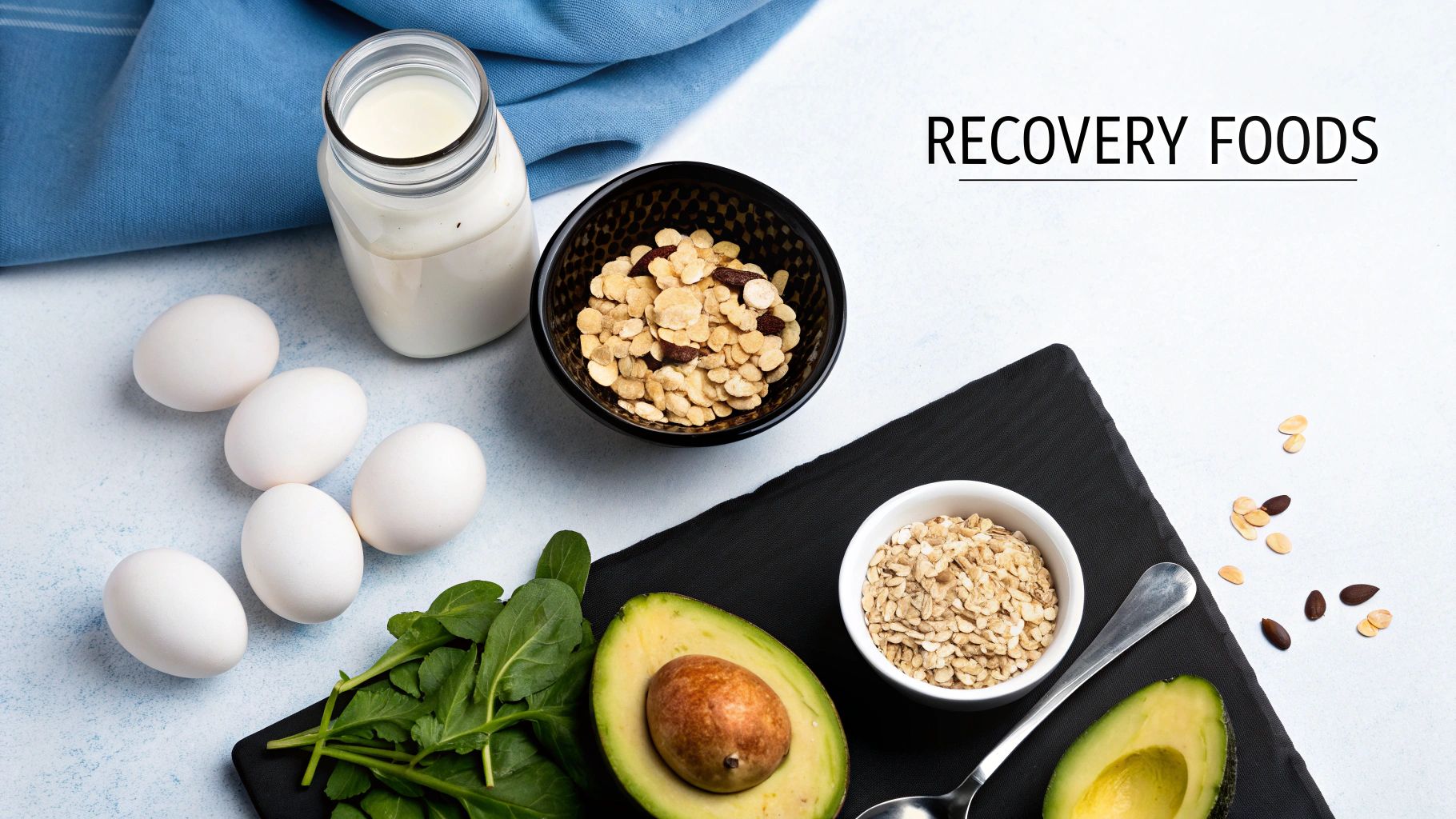
Understanding the science behind muscle repair is one thing, but actually stocking your kitchen with the right fuel is where the magic happens. Think of this as your practical shopping list—a go-to guide for foods that genuinely accelerate recovery, broken down by the specific role they play.
High-Quality Protein Sources
Protein is your body's construction crew, delivering the amino acid "bricks" needed to patch up and rebuild those tiny muscle tears. Prioritizing these foods is non-negotiable for getting stronger.
- Salmon: A true two-for-one deal. It’s loaded with premium protein and is one of the best sources of anti-inflammatory omega-3 fatty acids to help cool down exercise-induced inflammation.
- Greek Yogurt: This is a recovery powerhouse. It contains both fast-acting (whey) and slow-release (casein) proteins, giving your muscles a steady stream of amino acids right when they need it and for hours afterward.
- Eggs: For good reason, they're often called the "perfect protein." Eggs deliver all nine essential amino acids, including a heavy dose of leucine, the main amino acid that flips the switch on muscle growth.
- Chicken Breast: It’s a classic for a reason. As a lean and incredibly versatile protein source, chicken breast gives you a massive protein hit with very little fat, making it an efficient staple for repair.
Complex Carbohydrate Champions
If protein is the construction crew, carbohydrates are the fuel delivery truck. A tough workout drains your muscle glycogen—your body's onboard energy reserves. These foods are your best bet for restocking the tank so you're ready for the next session.
- Sweet Potatoes: These are packed with complex carbs that provide sustained energy, not a quick spike and crash. Plus, they come with a bonus of vitamins and antioxidants.
- Quinoa: This is a true superfood for recovery. It's a rare plant-based source of complete protein while also delivering quality carbohydrates, fiber, and crucial minerals.
- Oats: A simple bowl of oatmeal after training is a time-tested strategy. Oats offer a slow, steady release of energy, ensuring your muscles get refueled gradually.
Your post-workout meal should be a strategic combination. Pair a protein source with a carbohydrate to maximize recovery—the carbs help shuttle the protein's amino acids into your muscle cells more efficiently, accelerating the repair process.
Plant-Based Powerhouses
You absolutely do not need meat or dairy to build a strong, resilient body. The plant kingdom offers incredible options that provide all the protein and nutrients required to repair tissue and fight off soreness.
- Lentils: A fantastic and budget-friendly choice, lentils offer a powerful combination of both protein and carbohydrates in one package.
- Tofu & Edamame: As soy-based products, they provide complete protein to kickstart muscle protein synthesis. Edamame also gives you a nice boost of potassium, a key electrolyte lost in sweat.
- Tart Cherries: While not a protein source, studies show the potent antioxidants in tart cherries can significantly reduce post-exercise muscle soreness and inflammation.
Here's a closer look at some top-tier plant-based options to add to your rotation.
Top Plant-Based Foods for Muscle Recovery
| Food Item | Key Nutrient Profile | Recovery Benefit |
|---|---|---|
| Lentils | Protein, Complex Carbs, Fiber, Iron | Restores glycogen and provides amino acids for muscle repair. |
| Tofu | Complete Protein, Calcium, Iron | Supplies all essential amino acids to rebuild muscle fibers. |
| Quinoa | Complete Protein, Complex Carbs, Magnesium | A dual-action food that refuels energy and provides building blocks. |
| Chickpeas | Protein, Complex Carbs, Fiber | Offers sustained energy release and supports muscle synthesis. |
| Edamame | Complete Protein, Potassium, Magnesium | Rebuilds muscle and helps replenish electrolytes lost during exercise. |
| Pea Protein | High in BCAAs (especially Leucine) | Directly stimulates the muscle protein synthesis pathway for growth. |
| Hemp Seeds | Complete Protein, Omega-3s, Magnesium | Fights inflammation while providing protein and essential minerals. |
Integrating these foods makes plant-based recovery not just possible, but incredibly effective for building strength and reducing downtime.
For more convenient, on-the-go ideas, check out our guide to the best post-workout snacks. By making these foods a regular part of your routine, you’re giving your body the precise tools it needs to come back stronger every single time.
Your Questions on Recovery Nutrition, Answered
Let's tackle some of the most common questions that pop up when talking about what to eat after a workout. Think of this as clearing the fog so you can focus on what really matters.
How Much Does Nutrient Timing Really Matter for Most People?
You’ve probably heard about the “anabolic window”—that magical 30-minute slot after a workout where you must get your protein shake down. For elite athletes, timing can be a big deal, but for the rest of us? It's not something to stress over.
The most important thing is simply getting a solid meal with protein and carbs in within 1-2 hours of finishing your workout. What truly moves the needle is your overall daily nutrition, day in and day out. Just don't leave your body running on empty for hours after a tough session; that's when you can start to slow down the repair process.
Can I Actually Build Muscle on a Vegan Diet?
You absolutely can. With a little bit of planning, a plant-based diet can give your muscles everything they need to repair and grow stronger. The trick is to eat a wide variety of protein sources throughout the day to make sure you're getting all the essential amino acids.
Some of the best plant-based powerhouses include:
- Lentils and chickpeas
- Tofu, tempeh, and edamame
- Quinoa and seitan
- A quality pea or soy protein powder
When you combine different sources—think classic pairings like rice and beans—you create a complete protein package that gives your body all the building blocks it needs.
Remember, your body doesn't stop repairing the moment you walk out of the gym. That muscle-building process continues for a full 24-48 hours, which makes what you eat on your rest days just as important as that first post-workout meal.
Should I Eat Less on My Rest Days?
Definitely not! Think of rest days as "rebuilding days," not "off days." This is when a huge chunk of the actual muscle repair and growth happens, and your body needs fuel to get the job done.
If you slash your calories or protein on rest days, you're essentially short-changing your recovery. You might not need quite as many total calories as on a heavy training day, but keeping your protein intake high is non-negotiable. Give your body the raw materials it needs to come back stronger for the next session.
Tired of chalky shakes and sugary bars? Gym Snack delivers the savory, crunchy protein you've been craving. Our chef-inspired, plant-based snacks pack 30g+ of clean pea protein per bag to fuel your recovery without the junk. Find your new favorite post-workout fuel at the official Gym Snack website.