

The best alternatives to protein shakes aren't just other powders or bars. Think whole-food meals, high-protein snacks like Greek yogurt or hard-boiled eggs, and even savory options like roasted chickpeas.
These choices give you a much better deal nutritionally. You're getting balanced macronutrients, essential vitamins, and fiber that processed powders just can't match. It’s a more satisfying and complete way to fuel your body and support muscle recovery.
Why Ditch the Shaker for Real Food Options

Let's be honest, the daily ritual of scooping powder, shaking it up, chugging it down, and then scrubbing that shaker bottle can get old. Fast. This routine leads to what I call "shake fatigue."
While they’re definitely convenient, protein shakes are a pretty narrow solution for a much broader nutritional need. For a lot of people, they become a repetitive and unsatisfying part of their fitness journey, which is why the search for better alternatives to protein shakes begins.
This isn't about giving up on your goals. It's about upgrading your nutrition game. Stepping away from the shaker cup is a conscious choice to find a more enjoyable, sustainable, and often more effective way to eat. It’s all about listening to your body and giving it the varied, high-quality fuel it's actually asking for.
The Problem with Powders
For years, the fitness world has pushed protein powder as the holy grail for muscle growth and recovery. But that convenience often comes with some real downsides that many of us have experienced firsthand.
Let's break down some of the common issues with protein powders:
- Digestive Discomfort: Whey and casein are notorious for causing bloating, gas, and stomach cramps, especially if you have any lactose sensitivity. And honestly, even some plant-based powders can be tough on the gut.
- Flavor Boredom: How many times can you drink something called "Extreme Chocolate Fudge" or "Vanilla Cookie Dough" before it starts tasting like sweet, chalky monotony? The appeal wears off quickly.
- Artificial Ingredients: Flip over the tub and look at the label. Many popular powders are packed with artificial sweeteners, fillers, and thickeners that add zero nutritional value and can sometimes cause their own side effects.
Here's the bottom line: powders provide isolated nutrients, while whole foods deliver the entire package. Real food gives you protein along with fiber, vitamins, minerals, and phytonutrients that all work together to support your health and ensure you actually absorb what you're eating.
The Craving for Real Food Satisfaction
Beyond the physical stuff, there’s a huge psychological piece to this. Chugging a liquid shake just doesn't hit the same as chewing and enjoying a real meal or snack.
The simple act of eating solid food is far better at triggering your body’s satiety signals, helping you feel genuinely full and satisfied for much longer.
Making the switch to real food does more than just diversify your nutrient intake; it can seriously improve your body's ability to repair itself after a tough workout. You can learn more about effective strategies to recover faster after workouts and boost gains.
By looking for alternatives to protein shakes, you’re not just finding a substitute. You're discovering a more holistic and enjoyable way to nourish your body, fix your relationship with food, and build a truly sustainable path toward your fitness goals.
Building Your Plate with Whole Food Proteins
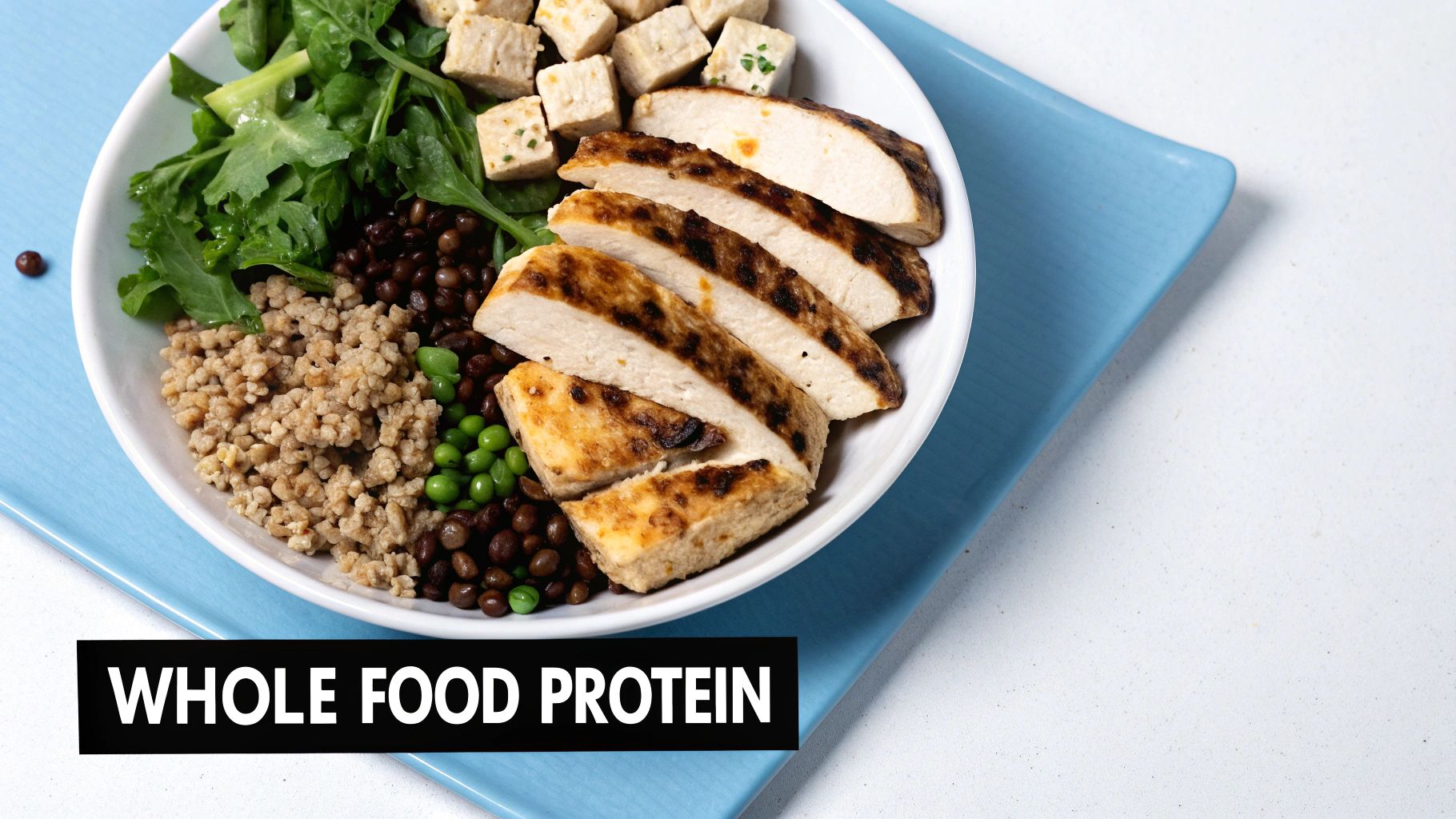
Let's be clear: a food-first approach isn't just about swapping a liquid for a solid. It’s about recognizing that whole foods offer a nutritional complexity that isolated powders can't touch. Think of a protein shake as a great solo musician—it gets the job done. A whole-food meal, on the other hand, is the entire orchestra.
This is what we call nutritional synergy. The fiber, vitamins, antioxidants, and minerals found in real food all work together. This teamwork enhances digestion, improves nutrient absorption, and supports your overall health in a way a single scoop of powder just can't match. Your grocery cart is the best toolkit you have for muscle repair; it's just a matter of learning how to use it.
The market for protein supplements is enormous, projected to hit $27.53 billion by 2025. But people’s habits are changing. While powders are still king, convenience-focused options like protein bars (a $3.41 billion market in 2024) and new savory snacks are gaining ground fast. People want real, satisfying food. For a deeper dive, Precedence Research offers great insights into protein supplement market trends.
Lean Animal-Based Protein Sources
For a lot of us, animal products are the most direct path to getting high-quality, complete protein. These foods contain all nine essential amino acids your body needs to effectively build and repair tissue. The trick is to pick lean options that deliver a serious protein punch without all the saturated fat.
Here are some go-to choices:
- Grilled Chicken or Turkey Breast: A classic for a reason. A 4-ounce serving easily packs around 35 grams of protein.
- Eggs: Truly nature's perfect protein source. One large egg gives you about 6 grams of top-tier protein plus vital nutrients like choline.
- Greek Yogurt: This dairy powerhouse can offer up to 20 grams of protein per cup, and it comes with the added bonus of probiotics for your gut.
- Cottage Cheese: Often forgotten, cottage cheese is a fantastic source of slow-digesting casein protein, making it a smart choice for a pre-bedtime snack.
These aren't just one-off ingredients; they're your meal-prep building blocks. Cook up a batch of chicken breast, and you have an instant protein boost for salads, wraps, or grain bowls all week.
Powerful Plant-Based Protein Sources
You absolutely do not need meat to crush your protein goals. The plant kingdom is loaded with potent protein sources that also deliver a ton of fiber, vitamins, and minerals. Just be sure to mix and match different plant proteins throughout the day to ensure you're getting a complete amino acid profile.
Building a high-protein meal is like constructing a house. You need more than just bricks (protein). You also need mortar (fiber), wiring (vitamins), and plumbing (minerals) for everything to function correctly. Whole foods provide all these components together.
Here are some of the best plant-based options out there:
- Lentils and Chickpeas: These legumes are nutritional workhorses, providing about 18 grams of protein per cooked cup along with plenty of fiber to keep you feeling full.
- Tofu and Tempeh: Both made from soybeans, they offer complete protein. Tofu is a blank canvas for any flavor, while tempeh brings a firmer, nuttier texture to the table.
- Quinoa: This grain is a true standout because it's a complete protein. It delivers around 8 grams per cooked cup, plus complex carbs for energy that lasts.
By building your meals around a variety of these foods, you're setting a strong nutritional foundation. If you need more ideas on how to weave these into your diet, check out our guide on how to increase protein intake with whole foods. This approach makes hitting your macros feel less like a chore and more like a delicious part of your day.
The Rise of Savory High-Protein Snacks
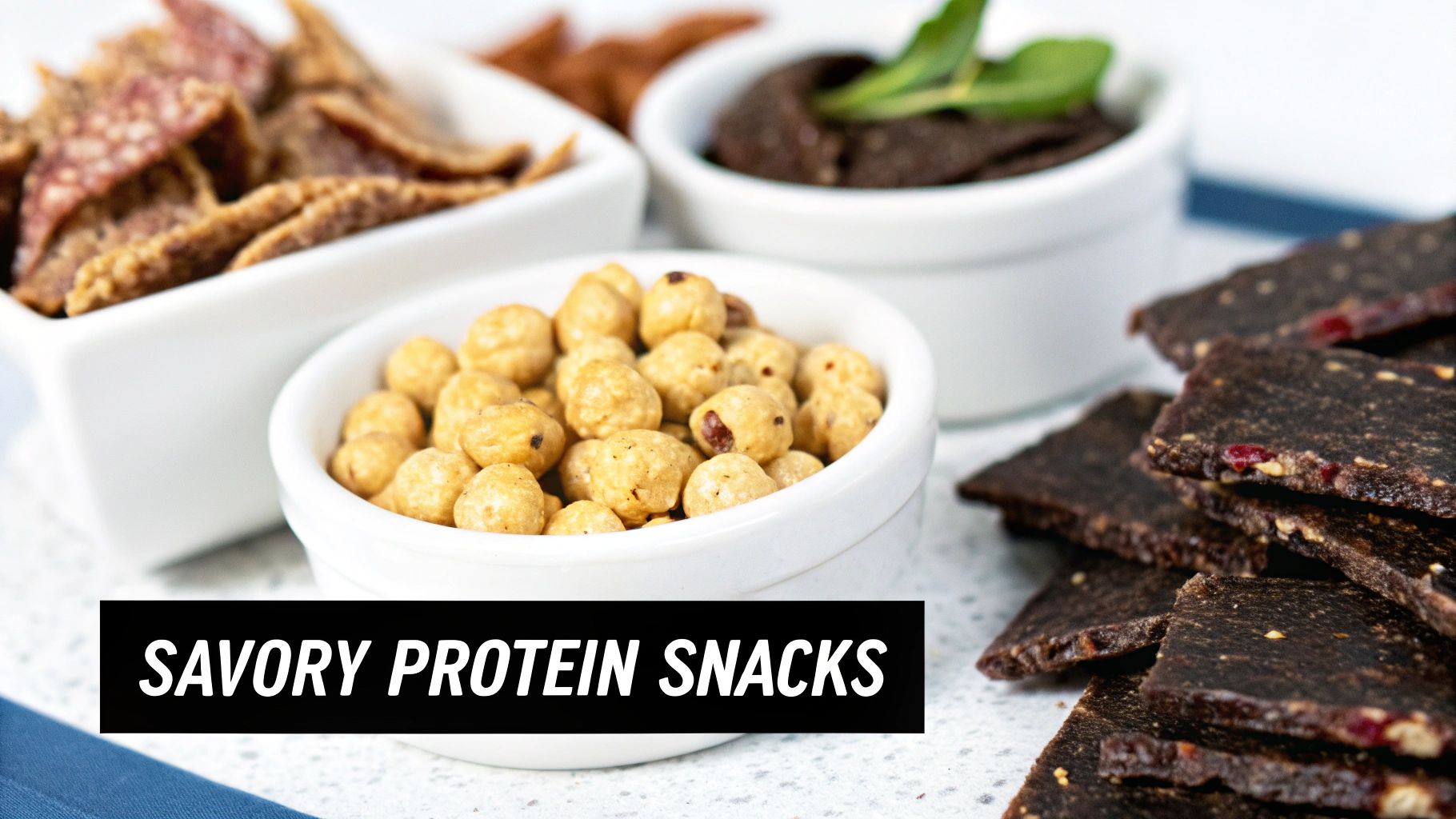
Let's be honest, how many more super-sweet, milky shakes can one person drink? For years, the protein supplement world has been stuck in a dessert-flavored rut. While a chocolate fudge shake or a cookie dough bar has its moments, that constant stream of sweetness can leave you craving something… real. Something savory.
This is where a whole new category of alternatives to protein shakes is stepping up. These snacks tap into our natural craving for satisfying, savory flavors and deliver a solid protein punch without the sugar rush—or the crash that always seems to follow. It’s a shift toward fueling your body for sustained performance, not just a quick sugar fix.
Shakes still lead the pack, with the global market hitting around $15.5 billion last year. But people are clearly looking for solid food options. The protein bar market, for example, grew from $2.93 billion in 2022 to $3.41 billion in 2024. This tells us there's a huge demand for convenient, mess-free fuel that packs a punch without needing a shaker bottle.
Why Savory Just Hits Different
That feeling of satisfaction you get from a savory snack isn't just in your head—it’s backed by science. Protein is widely known as the most satiating macronutrient, meaning it helps you feel fuller for longer. When you eat protein, your body releases key satiety hormones like GLP-1 and PYY.
These hormones are like messengers that tell your brain, "Hey, we're good here," which helps shut down your appetite and prevent overeating. Combine a high-protein food with a savory flavor profile, and you get a powerful defense against hunger. A sugary bar can spike your blood sugar and leave you starving an hour later, but a savory snack provides steady, reliable energy.
Think of it like this: a sweet protein bar is a sprinter—it gives you a quick burst of energy and then it’s over. A savory, high-protein snack is more like a marathon runner, providing sustained fuel that keeps you going for the long haul.
This makes savory options perfect when you need a portable, no-mess protein source between meals, before a workout, or to kill those afternoon hunger pangs.
What to Look For in a Savory Snack
Not all savory snacks are on the same level. To make sure you’re getting something that will actually boost your performance, you need to flip it over and read the label. A quality savory snack should offer a lot more than just a good taste.
Here’s what to keep an eye out for:
- A Real Protein Punch: Look for at least 15 grams of clean protein per serving. That's the sweet spot for stimulating muscle protein synthesis and keeping you full.
- A Satisfying Texture: The crunch factor is a real thing. A snack with a good texture can actually make you feel more satisfied and makes the experience more enjoyable.
- A Clean Ingredient List: Steer clear of snacks loaded with artificial flavors, preservatives, and questionable seed oils. The best options have ingredients you can actually recognize.
- Low in Sugar: This one’s a no-brainer. The whole point is to avoid the sugar crash, so your snack should have minimal to no added sugars.
Finding great options is easier than ever. Think crunchy roasted chickpeas, quality beef jerky, or innovative pea-protein crisps. Products like Gym Snack, for instance, are designed to check all these boxes. They deliver over 15g of plant-based protein per bag with a cheesy flavor and an awesome crunch, making it simple to hit your protein goals without compromise.
If you want to dive deeper, exploring a variety of high-protein savory snacks can open your eyes to a whole new world of delicious and effective ways to fuel your body.
Protein Shake vs Savory Protein Snack Comparison
To really see the difference, it helps to put a typical protein shake side-by-side with a modern savory snack like Gym Snack. The contrast goes beyond just sweet versus savory.
| Feature | Typical Protein Shake | Savory Protein Snack (e.g., Gym Snack) |
|---|---|---|
| Protein Source | Often whey, casein, or soy isolates | Typically plant-based (pea, lentil) or whole food |
| Texture | Liquid, smooth, sometimes chalky | Crunchy, crispy, and satisfyingly solid |
| Flavor Profile | Sweet (chocolate, vanilla, fruit) | Savory (cheesy, spicy, salty) |
| Satiety | Moderate; liquid digests quickly | High; solid food and fiber keep you fuller longer |
| Convenience | Requires a shaker bottle, water, and mixing | Ready-to-eat, no prep needed |
| Sugar Content | Can be high in sugar or artificial sweeteners | Minimal to no added sugar |
| Primary Use | Rapid post-workout recovery | All-day snack, meal replacement, hunger control |
As you can see, each has its place, but for all-day satisfaction and on-the-go convenience without the sugar, a savory snack brings a lot to the table. They’re a practical, enjoyable way to meet your protein needs without feeling like you're constantly having dessert.
Crafting Your Own High-Protein Smoothies
If you love the convenience of a protein shake but not the processed powders and artificial sweeteners, making your own smoothies is a fantastic alternative. It puts you back in the driver's seat, giving you total control over every single ingredient.
Think of it this way: instead of relying on a single, isolated protein scoop, you're blending a team of whole-food ingredients. This means your body gets protein alongside a full spectrum of fiber, healthy fats, vitamins, and antioxidants—a far more complete nutritional package. You can tailor it perfectly to your taste, your goals, and any dietary needs.
The Simple Smoothie Formula
You don’t need a complicated recipe book to make a great smoothie. Once you understand the basic building blocks, you can mix and match to create your perfect blend every single time. Just follow this simple, four-part framework.
- Pick a Whole-Food Protein Base: This is the foundation. Forget the powder and grab a real food source instead. A single serving of Greek yogurt can pack up to 20 grams of protein, and a cup of cottage cheese delivers around 25 grams.
- Add Your Liquid: This is all about getting the right consistency. Dairy milk, unsweetened almond milk, or soy milk are all great choices to get things moving in the blender.
- Mix in Healthy Fats: Fats are essential for hormone production and keep you feeling full and satisfied long after you’re done drinking. A quarter of an avocado, a tablespoon of chia seeds, or a scoop of almond butter will add a creamy texture and lasting energy.
- Finish with Fiber and Flavor: Now for the fun part. This is where you load up on micronutrients and taste. A big handful of spinach is an easy way to sneak in iron and vitamins (you won't even taste it!), while berries add natural sweetness and a powerful antioxidant punch.
This formula is endlessly versatile. Once you’ve got the hang of it, you can start experimenting with all sorts of combinations to dial in your go-to post-workout fuel or meal replacement.
Easy High-Protein Smoothie Recipes
Ready to give it a try? Here are a few simple but effective recipes to get you started. Each one is designed to fuel muscle recovery and provide steady energy, proving you don't need a tub of powder for a powerful protein boost.
The magic of a homemade smoothie is nutritional synergy. The fiber from the spinach slows down the sugar absorption from the fruit, while the fats from the seeds help your body absorb key vitamins. It’s a team effort that a simple protein shake just can't match.
The Green Recovery Machine
This one is loaded with anti-inflammatory ingredients to help your body bounce back.
- Protein Base: 1 cup plain Greek yogurt
- Liquid: 1 cup unsweetened almond milk
- Fats: 1 tablespoon chia seeds
- Fiber & Flavor: 1 large handful of spinach, ½ frozen banana, ½ cup pineapple
- Approximate Nutrition: 350 calories, 25g protein
Chocolate Peanut Butter Powerhouse
It tastes like a dessert but works like a serious muscle-builder. A classic for a reason.
- Protein Base: ½ cup cottage cheese
- Liquid: 1 cup dairy or soy milk
- Fats: 1 tablespoon natural peanut butter
- Flavor: 1 tablespoon unsweetened cocoa powder, ½ frozen banana
- Approximate Nutrition: 400 calories, 30g protein
Berry Antioxidant Blast
A micronutrient heavyweight, this smoothie is perfect for giving your immune system some extra support.
- Protein Base: ½ block of silken tofu (a surprisingly great vegan option)
- Liquid: 1 cup water or coconut water
- Fats: 1 tablespoon hemp seeds
- Fiber & Flavor: 1 cup mixed frozen berries (strawberries, blueberries, raspberries)
- Approximate Nutrition: 320 calories, 22g protein
By blending your own smoothies, you're embracing a whole-foods approach to your nutrition. You get all the convenience of a shake but with infinitely better ingredients and complete control over the finished product.
5. Meal Prep for Grab-And-Go Protein Hits
Let's be real: convenience is king, especially when you have a packed schedule. It's the whole reason protein shakes are so popular. But what if you could make whole foods just as easy to grab?
That's where meal prepping comes in. Think of it as your secret weapon. By dedicating just an hour or so on a Sunday, you can set yourself up with a week's worth of high-quality, ready-to-eat fuel. It's like creating your own healthy "fast food" that's waiting for you in the fridge.
This simple habit ensures you've always got a solid, protein-rich option on hand, saving you from making questionable food choices when you're starving. It’s one of the best alternatives to protein shakes because you get the grab-and-go ease of a powder but with the far superior nutrition of real food.
Your Go-To Prep Ideas
The secret to successful meal prep isn't about slaving over complex recipes. It’s all about simplicity. You want versatile components you can throw together fast. These ideas are designed to be portable, delicious, and loaded with the protein your body needs to recover and grow.
Let's dive into three powerful strategies. This flowchart breaks down the core thinking for putting together easy, on-the-go meals.
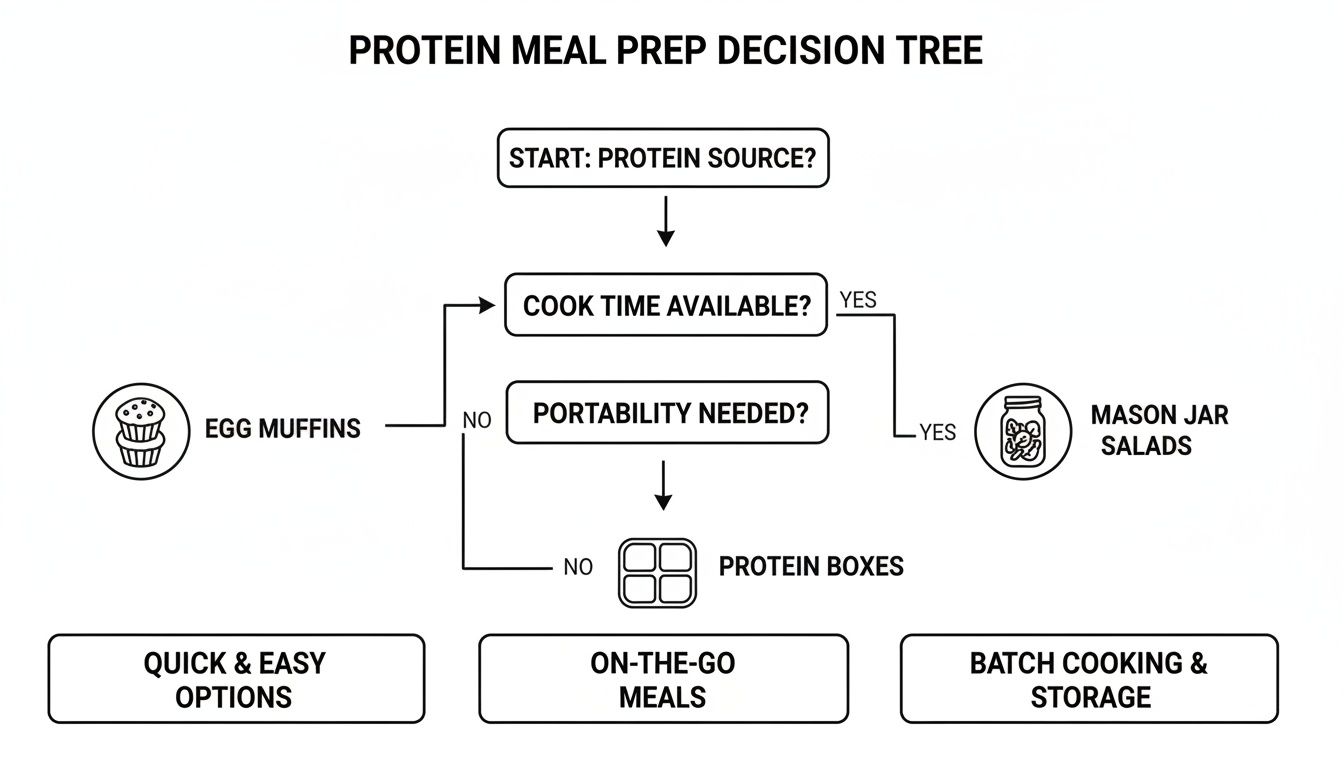
As you can see, you can tailor your prep style based on what you need most—whether that’s an all-in-one box, a pre-built salad, or a batch of snacks you can grab by the handful.
Assemble Portable Protein Boxes
Think of these like adult Lunchables, but with a serious nutritional upgrade. A protein box is just a partitioned container filled with a smart mix of protein, healthy fats, and some fiber. The idea is to combine 3-4 items that require zero cooking right before you eat them.
- How to Build It: Grab a container and combine two hard-boiled eggs (12g protein), a small handful of almonds (6g protein), and some cheese cubes (7g protein). Toss in some baby carrots or apple slices for crunch and fiber.
- Storage Tip: Hard-boiled eggs will last up to a week in the fridge. You can assemble 3-4 of these boxes at once, so they're ready to grab on your way out the door.
Master the Mason Jar Salad
We've all been there—the dreaded soggy, pre-made salad. The mason jar is the brilliant solution. By layering your ingredients strategically, it keeps everything crisp and fresh until you’re actually ready to shake it up and eat. It’s the perfect method for a complete, high-protein lunch.
The beauty of meal prep is that it removes decision fatigue. When you're tired and hungry after a long day or a tough workout, you don't have to think—you just have to reach into the fridge for the healthy meal you already made for yourself.
The trick is to start with the dressing on the bottom, followed by hard ingredients like grilled chicken or chickpeas. Then add your grains, softer veggies, and finally, the leafy greens right at the top. This keeps the delicate stuff away from the moisture. A single jar can easily pack 25-30g of protein. If you want a deeper dive, our guide on how to meal prep for muscle gain lays out more detailed strategies.
Batch-Cook Baked Egg Muffins
Egg muffins are easily one of the most versatile meal-prep items out there. They're basically mini, crustless quiches that you can customize with whatever veggies and protein you have on hand. They store perfectly and are great whether you eat them hot or cold.
- How to Make Them: Just whisk a dozen eggs and pour the mixture into a greased muffin tin. From there, get creative. Add in diced bell peppers, spinach, and some pre-cooked turkey sausage or black beans.
- Protein Content: Each muffin can deliver 6-8g of protein. Grabbing two or three makes for a seriously substantial and satisfying snack that will keep you full for hours.
Choosing the Right Shake Alternative for Your Goal
Alright, let's put this all together and make it work for you. The real trick to finding the best alternatives to protein shakes isn't about discovering one single magic food. It’s about building a toolkit of different options you can pull from depending on what your day looks like.
Your nutritional needs are constantly shifting based on your goals, your schedule, and what your body is telling you.
Think about it like this: you wouldn't wear hiking boots to run a marathon. The same idea applies here. The goal is to pick the right fuel for the specific job at hand, whether that's powering through a workout or recovering from one. This isn't just a list of foods; it's a framework to help you match your nutrition to your goals so you're always getting the best results.
Matching Your Fuel to Your Fitness Goal
What you eat and when you eat it can make a huge difference. A light, easy-to-digest snack is perfect before a run, but you’ll need something much more substantial to help your muscles recover after a heavy lifting session.
Let's walk through a few common situations.
Pre-Workout Fuel (30-60 Minutes Before)
Before a workout, you need quick, accessible energy that won't weigh you down. The focus should be on easily digestible carbs with a little bit of protein, while keeping fat and fiber low since they can slow digestion.
- Your Best Bet: A small bowl of Greek yogurt, a piece of fruit with a smear of nut butter, or a handful of roasted chickpeas.
- Why It Works: These options give you a solid mix of simple carbs for that initial burst of energy and complex carbs to keep you going, plus a small dose of protein to help protect your muscles.
Post-Workout Recovery (Within 1-2 Hours After)
This is the critical window for refueling. Your body is primed for nutrients, and you need to give it high-quality protein to start repairing muscle tissue and carbohydrates to restock your energy stores (glycogen).
- Your Best Bet: A full meal like grilled chicken and quinoa, a prepped "protein box" with hard-boiled eggs and cheese, or a whole-food smoothie made with Greek yogurt and fruit.
- Why It Works: These options easily deliver the 20-30 grams of protein your body needs to maximize muscle protein synthesis. They also provide the carbs necessary for a full and speedy recovery.
Think of your post-workout meal like restocking a busy warehouse. You've just sent out a massive shipment. Now, you have to replace not just the main product (protein for muscles), but also the fuel for the forklifts and the packing materials (carbohydrates for energy). A complete meal does this far more effectively than an isolated shake ever could.
On-the-Go Snacking and Hunger Control
We all have those moments—you're stuck in traffic or between meetings, and hunger hits. Having a smart, portable snack ready is your secret weapon against grabbing junk food. This is where savory, high-protein options are a game-changer.
- Your Best Bet: A bag of crunchy pea-protein snacks like Gym Snack, beef jerky, or a pre-portioned bag of mixed nuts and seeds.
- Why It Works: These are incredibly convenient, and protein is the most satisfying of all the macronutrients. It helps keep your blood sugar stable and crushes hunger for hours. Tossing one of these in your gym bag or desk drawer means you can turn any moment into an opportunity to fuel your body right.
To make this even simpler, here’s a quick-glance table to help you line up your goals with the best food choices.
Which Shake Alternative Is Best for Your Goal?
| Goal / Situation | Best Alternative(s) | Why It Works |
|---|---|---|
| Pre-Workout Fuel | Light snacks: Greek yogurt, fruit, roasted chickpeas. | Provides quick, easily-digestible energy from carbs with a small protein hit. Doesn't sit heavy in your stomach. |
| Post-Workout Recovery | Complete meals: Chicken & quinoa, protein boxes. | Delivers the 20-30g of protein needed for muscle repair, plus carbs to replenish glycogen stores. |
| Quick On-the-Go Snack | Portable options: Gym Snack, jerky, nuts. | High in protein for maximum satiety, keeping you full and preventing poor food choices when you're busy. |
| Replacing a Full Meal | Balanced whole-food meals, meal-prepped bowls. | Offers a complete nutrient profile with protein, carbs, fats, fiber, and micronutrients for overall health. |
Ultimately, having a variety of these options on hand means you’ll never be caught off guard. You can confidently choose the right fuel for the moment, ensuring your nutrition is always supporting your hard work in the gym.
Your Questions, Answered
Let's be honest, figuring out fitness nutrition can feel like a full-time job, especially when you're trying to move beyond the standard protein shake. We get a lot of questions about this, so I’ve put together some straight-to-the-point answers to the most common ones.
How Can I Get Enough Protein Without Powders?
It’s actually more straightforward than you might think. The key is to make protein the star of every meal. Start by building your plate around a solid protein source—think grilled chicken, a hearty lentil stew, eggs, or pan-seared tofu.
Then, you can easily top up your intake with smart snacking. A handful of almonds, a bowl of Greek yogurt, or a savory snack like roasted chickpeas can effortlessly add an extra 10-20 grams of protein to your daily count, bridging the gaps between meals perfectly.
Are Whole Foods As Effective for Muscle Building?
Yes, and in many ways, they're even better. While a shake gives you a quick hit of amino acids, whole foods offer the full nutritional picture. You get high-quality protein bundled with essential fiber, vitamins, minerals, and healthy fats that support your overall health and actually help your body absorb all those good nutrients.
Building muscle (a process called muscle protein synthesis) isn't just a one-ingredient recipe. Your body needs energy from carbs and fats, plus a whole team of micronutrients to properly repair and grow muscle tissue. Whole foods deliver all of this in one complete package.
What Should I Eat Right After a Workout Without a Shake?
Your main goal post-workout is to get a combination of protein and carbs within an hour or two. This duo works together to kickstart muscle repair and restock your energy levels. A shake is just one way to do it, but there are plenty of others.
Here are a few great real-food options that get the job done:
- Chocolate milk: It's an old-school favorite for a reason—it has a near-perfect carb-to-protein ratio for recovery.
- A DIY "protein box": Think of it like a grown-up Lunchable. Pack a couple of hard-boiled eggs, some cheese cubes, and a few whole-grain crackers.
- A quick smoothie: If you still like the convenience of a drink, blend Greek yogurt with your favorite fruit and a bit of milk.
These choices are just as effective as any powder and, let's face it, usually a lot more enjoyable to eat.
Ready to trade your shaker bottle for something with a satisfying, savory crunch? Gym Snack packs over 15g of clean, plant-based protein into every bag, with bold flavors designed to crush your cravings. Fuel your body the delicious way at https://gymsnack.com.