

Before you ever chop a single vegetable or fire up the stove, the real work of meal prepping for muscle gain starts with a calculator. You need a nutritional blueprint. Without one, you're just cooking food; with one, you're building a physique. The first step is figuring out exactly what your body needs.
Laying the Groundwork with Macros and Calories
Think of it like building a house—you wouldn't start without a detailed plan. The same logic applies here. Perfectly cooked chicken and rice are great, but they're useless for your goals if the portions don't match your body's specific energy demands. This initial planning phase, which is all about the numbers, is what separates wishful thinking from strategic results.
First up, you need to find your Total Daily Energy Expenditure (TDEE). This is just a fancy term for how many calories your body burns in a 24-hour period, factoring in everything from your base metabolism to your workouts. There are plenty of reliable TDEE calculators online that will give you a solid starting point based on your age, weight, height, and activity level.
But here’s the key: you don't want to eat at your TDEE. You want to grow. To build new muscle tissue, your body needs extra fuel. This is where a modest caloric surplus comes in. Adding 300-500 calories on top of your TDEE is the sweet spot. It provides just enough energy for muscle synthesis without packing on excessive fat.
Fine-Tuning Your Macronutrient Targets
Once you have that magic calorie number, it's time to break it down into macronutrients: protein, carbohydrates, and fats. Each one has a critical job to do.
- Protein: This is your muscle-building superstar. It’s what your body uses to repair and rebuild the muscle fibers you break down during training. Non-negotiable.
- Carbohydrates: Think of carbs as your high-octane fuel. They power you through intense workouts and replenish your energy stores afterward, setting you up for your next session.
- Fats: Don't fear the fat. Healthy fats are essential for producing key hormones, like testosterone, that play a massive role in muscle development.
Let’s put this into practice. Imagine a 180-pound person with a TDEE of around 2,500 calories. By adding a 500-calorie surplus, their daily goal becomes 3,000 calories. Now, we just need to divvy that up.
Setting Your Protein Intake for Optimal Growth
Protein is the absolute foundation of your muscle-gain diet. For anyone hitting the weights regularly, the standard recommendations just don't cut it. Your goal is to maximize muscle protein synthesis—the biological process of building new muscle.
The research points to a clear target: aim for about 1.6 grams of protein per kilogram of body weight daily. For that same 180-pound (82 kg) person, this works out to roughly 131 grams of protein per day. To keep your body in a constant muscle-building state, it's best to spread this intake across 4-5 meals.
Want to dive deeper into the numbers? Our complete guide shows you how to calculate your daily protein needs.
Did you know? The recommendation of 1.6 grams of protein per kilogram of body weight isn't just a random number. A landmark 2018 meta-analysis confirmed this is the optimal intake to maximize muscle gains from resistance training. You can dig into the science yourself with these protein intake recommendations on PMC.
For an at-a-glance example, here’s how the macro breakdown might look for our 180-pound individual.
Sample Daily Macro Targets for Muscle Gain (180 lbs Person)
This table provides an example macro breakdown for an 180 lb (82 kg) individual aiming for lean muscle gain, illustrating how to apply the principles of a caloric surplus and high-protein diet.
| Metric | Calculation/Goal | Daily Total |
|---|---|---|
| Calories | 2,500 (TDEE) + 500 (Surplus) | 3,000 kcal |
| Protein | 1.6 g per kg of body weight (82 kg) | ~131 g |
| Fat | 25% of total calories | ~83 g |
| Carbohydrates | Remaining calories | ~433 g |
This example gives you a clear, actionable target. From here, you can start building your meal plan around hitting these numbers consistently.
If you’re plant-based, hitting these high protein targets requires a bit more planning, but it's totally achievable. This is where smart, convenient options become a game-changer. For example, a single bag of Gym Snack's Cheddar Cheeze packs over 30g of clean pea protein. Tossing a bag in your gym bag is an incredibly easy and tasty way to boost your daily total without any dairy, soy, or gluten.
Designing Your Weekly Muscle-Building Meal Plan
Alright, you’ve done the math and have your calorie and macro targets. Now for the fun part: turning those numbers into actual food you'll want to eat. This is where a well-designed weekly plan becomes your secret weapon. It’s the roadmap that keeps you on track, prevents you from getting bored, and ensures your muscles are constantly fueled for growth.
Trying to hit specific numbers without a plan is basically just guessing.
The key to a meal plan that actually works is structure with variety. You want a repeatable framework that takes the guesswork out of your day-to-day eating, but with enough wiggle room so you're not stuck with the same bland chicken and broccoli for weeks on end. This approach not only helps you nail your macros but also delivers the wide range of micronutrients your body needs to recover and thrive.
Building Your Meal Template
First things first, let’s sketch out a simple template for your week. Think of it as a plug-and-play system. You establish the structure, and then you can easily swap different foods in and out. This makes grocery shopping and batch cooking a thousand times easier.
A solid day of eating for muscle gain usually looks something like this:
- Three main meals: Breakfast, lunch, and dinner. Each one should be built around a solid serving of protein.
- Two or three snacks: These are crucial. They bridge the gaps between meals, keep your energy levels stable, and help you hit that high protein number.
Eating every 3-4 hours like this helps keep a steady stream of amino acids available for your muscles, which is exactly what you want for maximizing muscle protein synthesis all day long.
Assembling Your Muscle-Building Plates
Now, let's start filling in that template. The foundation of every single meal should be a quality source of lean protein. From there, you’ll add complex carbs for sustained energy and a pile of fibrous veggies for vitamins, minerals, and fiber. I call it the "Protein-Carb-Veggie" formula—it's a foolproof way to build balanced, macro-friendly meals.
Here’s a breakdown of how you can mix and match:
- Lean Proteins (Pick 1-2 per meal): Chicken breast, turkey, lean ground beef, salmon, cod, eggs, Greek yogurt, tofu, tempeh, lentils.
- Complex Carbohydrates (Pick 1 per meal): Quinoa, brown rice, sweet potatoes, oats, whole-wheat pasta, chickpeas.
- Fibrous Vegetables (Add a ton): Broccoli, spinach, bell peppers, asparagus, kale, Brussels sprouts.
- Healthy Fats (Add a little): Avocado, nuts, seeds, olive oil.
For example, a killer lunch could be grilled chicken (protein) with a cup of quinoa (carb) and a big side of roasted broccoli (veggie), finished with a drizzle of olive oil (fat). For dinner, you might have baked salmon with a sweet potato and steamed asparagus. By simply rotating these components, your menu never gets boring.
Integrating Snacks for Maximum Impact
Let's be clear: snacks are not just filler. They are a critical part of your muscle-building strategy. A well-timed snack prevents your body from entering a catabolic (muscle-breakdown) state and gives you another shot at hitting your protein goal. This is a game-changer for anyone with high calorie needs who finds it tough to cram everything into just three meals.
The biggest mistake people make is grabbing convenient snacks that offer zero nutritional value. Your snacks need to be just as intentional as your main meals.
Pro Tip: Treat your snacks like mini-meals. A good snack should pack at least 15-20 grams of protein to keep your body in an anabolic, or muscle-building, state.
This is where having some smart, grab-and-go options on hand is a lifesaver. Hard-boiled eggs and Greek yogurt are great, but sometimes you need something with zero prep. Keeping a high-protein, savory option like Gym Snack in your gym bag or at your desk is an easy win. A single bag delivers over 30g of plant-based protein and a satisfying crunch that kills cravings while pushing you closer to your daily goal.
Putting a plan like this together might feel like a bit of work upfront, but the payoff is huge. You’ll save time during the week, eliminate decision fatigue, and build the consistency you absolutely need for serious results. And remember, smart planning can also save you money. For more on that, check out our guide on clean eating on a budget.
Mastering Your Batch Cooking Workflow
Okay, you've got your meal plan and your macro targets. Now it's time to get into the kitchen and turn those numbers into actual muscle-building fuel. This is where the magic happens, but let’s be honest, nobody wants to spend their entire Sunday chained to the stove.
The secret is to work smarter, not harder. A good batch-cooking session is all about creating a seamless workflow. Think of it as a "cook once, eat for days" philosophy that gets you in and out of the kitchen fast, with a fridge full of delicious, ready-to-go meals.
This simple diagram breaks down the core idea: start with a template, then plug in your proteins, carbs, and veggies. It's a structured but flexible system that takes the guesswork out of prep.
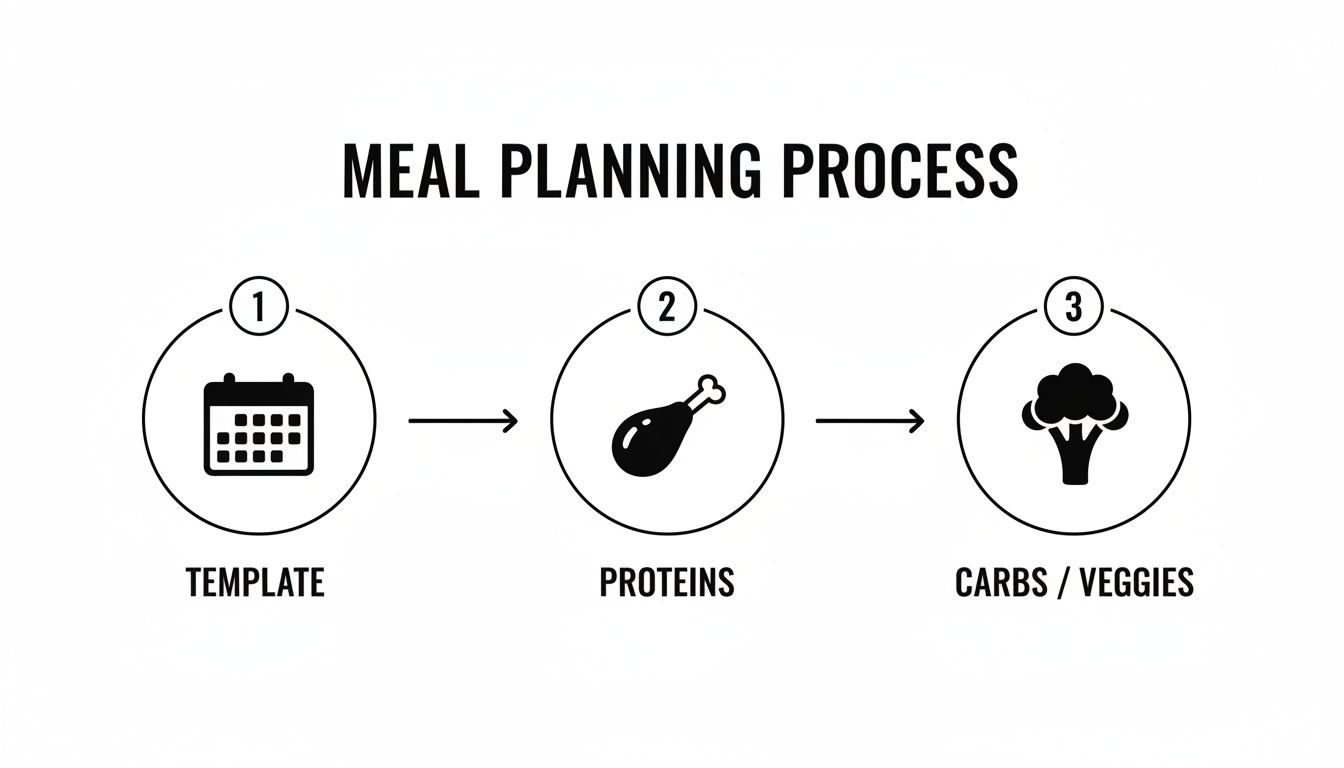
This approach keeps things from getting overwhelming. You’re not reinventing the wheel every week; you’re just swapping out the components.
Your Strategic Cooking Sequence
Efficiency in the kitchen all comes down to the order you do things in. You want to think about what takes the longest and get that started first. Your oven is your best friend here, since it does most of the work for you while you tackle other tasks.
Here’s a workflow I've found really maximizes my time:
-
Fire Up the Oven First: The very first thing I do is preheat the oven. While it's heating up, I'll chop up veggies like broccoli, bell peppers, or sweet potatoes, toss them on a sheet pan with some olive oil and seasoning, and get them roasting. At the same time, I can throw in some chicken breasts or salmon fillets to bake. These items can cook with minimal supervision, which is key.
-
Get Your Grains Simmering: While the oven is doing its thing, I move to the stovetop. This is the perfect time to get complex carbs like quinoa, brown rice, or lentils simmering away. Once they're on, they pretty much take care of themselves.
-
Tackle the Quick-Cook Items: With the long-cook items handled, I can focus on things that need more attention. This is when I’ll sauté lean ground turkey, grill steak strips on a griddle pan, or quickly steam some asparagus. I also use this time to chop up any fresh stuff for salads or assemble my snacks for the week.
When you do it this way, everything tends to finish around the same time. It's a synchronized approach that makes a huge difference.
Treat your batch cooking session like a workout—high intensity and focused. Chef Kevin Curry advises multitasking by cooking, cleaning, and portioning simultaneously, all while blasting some tunes. This approach ensures your macros fuel your gains without adding decision fatigue to your week.
Choosing the Right Cooking Methods
How you cook your food matters. It affects not only the nutritional value but also how well it tastes after a few days in the fridge. You want to stick with methods that hold up well to reheating.
- Baking & Roasting: This is my go-to for proteins like chicken and fish, and for heartier vegetables like sweet potatoes and Brussels sprouts. It requires very little hands-on time and develops some amazing flavor.
- Grilling: Grilling adds a smoky flavor that you just can't get any other way. A simple countertop grill makes this a quick, indoor-friendly option for steak or chicken.
- Steaming: This is one of the best ways to keep the nutrients locked in your vegetables. It's super fast and keeps things like broccoli and green beans from getting mushy.
- Slow Cooking: The ultimate set-it-and-forget-it method. It's perfect for tougher cuts of meat like beef chuck or pork shoulder, making them incredibly tender and easy to shred for tacos or burrito bowls.
A solid goal for your prep is to aim for around 30g of protein per meal. This helps keep your body in an anabolic, or muscle-building, state. Research shows that doses of 20-40g of protein after a workout are what really spark muscle growth, assuming your total daily intake is where it needs to be. For a great example, Men's Health has a 30-minute chicken and couscous prep that packs a whopping 44g of protein per serving. You can find more ideas for crafting high-protein preps on MensHealth.com.
Actionable Muscle-Building Recipes
To get you rolling, here are two of my staple recipes. They're simple, macro-friendly, and perfect for batch cooking.
High-Protein Chicken and Quinoa Bowl
This is a classic for a reason—it’s perfectly balanced, easy to make a huge batch of, and tastes great all week.
- Ingredients: Chicken breast, quinoa, broccoli, bell peppers, olive oil, and your favorite seasonings (I like a mix of paprika, garlic powder, and onion powder).
- Method: Bake the seasoned chicken at 400°F (200°C) for 20-25 minutes. While that’s cooking, roast the chopped broccoli and peppers on another pan. Cook the quinoa on the stovetop as directed. Once everything is cooked and cooled, portion it out into your containers.
Savory Tempeh and Vegetable Stir-Fry
Looking for a plant-based powerhouse? This one is packed with protein and fiber.
- Ingredients: A block of tempeh, brown rice, a bag of frozen stir-fry vegetables, soy sauce (or tamari), fresh ginger, and garlic.
- Method: Press the water out of the tempeh, cube it, and pan-fry it until it's nice and golden. While that's going, get your brown rice cooking. In the last few minutes, toss the frozen veggies and sauce into the pan with the tempeh and stir until everything is heated through. Serve it over the rice.
Smart Storage and Reheating Techniques
You can spend hours crafting the perfect high-protein meals, but if they taste bland and rubbery by Wednesday, what's the point? How you store and reheat your food is just as important as how you cook it. Nailing this part is what makes your effort pay off with delicious, satisfying meals all week long.
The goal is simple: make Thursday's lunch taste just as good as Monday's. It all comes down to having the right gear and knowing a few key techniques.
Choosing Your Meal Prep Containers
The first decision you'll make is often between glass and plastic containers. I've used both over the years, and while each has its place, one is the clear winner for serious meal prep.
- Glass Containers: These are my go-to. Glass is non-porous, so it won’t hold onto stains or that lingering smell of last week’s chili. More importantly, it’s a champ when it comes to reheating—you can pop it straight from the fridge into the microwave or even the oven.
- BPA-Free Plastic Containers: Plastic is a solid budget-friendly and lightweight option, especially when you're just starting out. They’re perfect for cold things like salads or for packing snacks, but they can warp and absorb odors over time.
No matter which material you choose, make sure your containers are airtight and leak-proof. Oxygen is the enemy of freshness, and a quality seal keeps your food protected and your gym bag from becoming a disaster zone.
Best Practices for Fridge and Freezer Storage
Once everything is cooked, don't just shove it all in the fridge. One of the biggest mistakes I see people make is sealing up piping-hot food. This traps steam, creates condensation, and is the fastest way to get soggy, unappetizing meals.
Give your food some time to cool on the counter—usually about 30 to 60 minutes is perfect—before you seal the containers and put them away.
Proper storage isn't just about taste; it's about food safety. Most of your cooked meals will be good for about 3 to 4 days in the fridge. If you're prepping for the whole week, plan on freezing anything you won't eat in that window.
This is where understanding basic food safety temperature control becomes non-negotiable. Keeping your food out of the temperature "danger zone" where bacteria thrive is fundamental.
For anything you'll be eating on day five, six, or seven, the freezer is your best friend.
- What Freezes Well: Soups, stews, chilis, and most cooked meats like baked chicken or ground turkey freeze beautifully.
- What to Avoid Freezing: Stay away from freezing things with high water content, like fresh salads with cucumber or lettuce. Dairy-based cream sauces also tend to separate and get a weird texture when you thaw them.
Always slap a label with the date on your frozen meals. It’s a simple habit that ensures you’re eating the oldest food first.
Reheating for Maximum Flavor and Texture
This is where so many meal preps fall apart. Hitting the "3-minute" button on the microwave and hoping for the best is a recipe for dry chicken and chewy rice. A little extra care makes all the difference.
Here are a few tricks I swear by for bringing meals back to life:
- Create Some Steam: Before you microwave grains or lean proteins, add a splash of water or broth (about a tablespoon). This rehydrates the food as it heats, preventing it from drying out.
- Heat Things Separately: If you can, scoop the rice out and heat it separately from the stir-fry. It’s not always practical, but it gives you more control and leads to a much better texture.
- Lower the Power: Don't just nuke your food on high. Dropping the microwave's power level to 50-70% heats things more gently and evenly, so you don't get lava-hot edges and a cold center.
- Embrace Your Oven: For anything that was originally crispy or roasted—like veggies or baked fish—the oven or toaster oven is your secret weapon. A few minutes at 350°F (175°C) will restore that texture in a way a microwave never can. It’s the single best trick for making your prepped food taste like it was just cooked.
Timing Your Meals Around Your Workouts
You’ve done the hard work of calculating your macros and prepping a fridge full of high-protein meals. That’s a massive step. But to really get the most out of your efforts, when you eat is just as important as what you eat.
Lining up your nutrition with your training schedule is a concept called nutrient timing, and it can make a real difference in your performance, recovery, and ultimately, your muscle growth.
Think of your body like a performance vehicle. You give it high-grade fuel before a race to perform at its peak, and you take it in for service afterward to repair the wear and tear. Your prepped meals are both your fuel and your repair kit.
Fueling Up Before You Train
The main job of your pre-workout meal is simple: give your body a steady stream of energy to power you through every single rep and set. The goal is to top off your muscle glycogen—your body's go-to fuel source—without making you feel heavy or sluggish in the gym.
An ideal pre-workout meal is packed with complex carbohydrates and has a solid dose of protein. The carbs deliver the energy, while the protein gets a head start on delivering amino acids to your muscles, which helps minimize muscle breakdown during your workout. Try to eat this meal about 1-2 hours before you train.
- Great Carb Choices: A bowl of oats, some sweet potatoes, or a piece of fruit.
- Solid Protein Sources: Greek yogurt, a couple of eggs, or a small chicken breast.
But let's be realistic—life gets hectic, and sitting down for a full meal isn’t always in the cards. That’s where a quick, smart snack comes in clutch. You need something that digests easily and gives you the nutrients you need without weighing you down. If you want a deeper dive, you can check out some of the best pre-workout snacks for muscle gain to see what fits your routine.
For those moments when you're really short on time, a savory, plant-based protein snack like Gym Snack is a fantastic choice. It offers clean, easy-to-digest protein for a quick fuel-up, without the sugar crash you get from so many other bars and shakes.
The Critical Post-Workout Recovery Window
Once you finish that last rep, the clock on your recovery starts ticking. Your workout has drained your glycogen stores and created tiny micro-tears in your muscle fibers. Don't worry, this is exactly what you want—it’s the signal for growth. Your post-workout meal provides the raw materials to repair that damage and build your muscles back bigger and stronger.
This period, often called the "anabolic window," is when your body is primed to soak up nutrients. Aim to get a meal full of fast-digesting protein and carbs within 30-60 minutes after you’re done. The protein is what kicks muscle protein synthesis (MPS) into gear, while the carbs work to restock your energy stores and help drive those amino acids straight into your muscle cells.
A huge mistake I see people make is cramming all their protein into one or two meals. Spreading your protein intake out evenly across the day—including your post-workout meal—can boost muscle protein synthesis by up to 25% compared to a lopsided approach. This consistency keeps your body in a muscle-building state, which is key for holding onto your gains.
Putting It All Together
Your meal prep plan should be built around this timing strategy. As you’re portioning out your containers for the week, start thinking about which meals are for pre-workout fuel and which are for post-workout recovery. For instance, that container of chicken and sweet potato is a perfect post-workout meal, ready to go when you are.
Here’s what a typical day might look like:
- Pre-Workout (1-2 hours before): A small bowl of oatmeal with a scoop of protein.
- Post-Workout (within 60 mins): One of your prepped meals, like salmon with quinoa and broccoli.
- Other Meals: Spaced out every 3-4 hours to keep a steady supply of nutrients flowing to your muscles.
By following a structured approach like this, you ensure your muscles always have what they need to grow. When you sync your carefully prepped meals with your training, muscle growth stops being a guessing game—it becomes an expectation.
Common Meal Prep Questions Answered
Even with the best plan laid out, you're going to have questions once you start getting your hands dirty with meal prep. That's totally normal. The good news is that most of the common hurdles have pretty simple fixes. Let's walk through some of the questions I hear all the time so you can stay on track.
Getting the little details right—like how long food actually lasts or how to handle different diets—is what separates a meal prep routine that works from one you'll actually stick with. Nailing this stuff from the get-go saves a ton of time, cuts down on food waste, and makes sure all your hard work in the kitchen actually pays off at the gym.
How Long Do Prepped Meals Last in the Fridge?
This is probably the most important question for both food safety and, let's be honest, making sure your food doesn't taste like old leftovers. As a general rule, most cooked meals will be good for 3 to 5 days in the fridge if they're sealed up in airtight containers. That window perfectly covers a typical Monday-to-Friday work week.
But you have to remember that different ingredients have different shelf lives.
- Cooked Proteins: Chicken, beef, and especially fish taste best and are safest within 4 days. I personally try to eat any fish within 2-3 days.
- Grains and Veggies: Things like cooked rice, quinoa, and roasted vegetables hold up really well and can easily last up to 5 days without getting weird.
- Salads: Want to avoid a soggy, sad salad? Keep your dressing and any "wet" ingredients (like tomatoes or cucumbers) separate until you're ready to eat. This is a game-changer.
If you’re prepping for more than four or five days out, the freezer is your best friend. Meals like chili, stews, and even baked chicken freeze beautifully for up to 3 months. Just do yourself a favor and label everything with the date—your future self will thank you.
Can I Build Muscle on a Plant-Based Meal Prep Plan?
Absolutely, 100%. Building muscle on a plant-based diet just requires a bit of smart planning. The core principles don't change: you still need to be in a calorie surplus and get enough protein. You're just getting that protein from different sources.
The key is variety. You want to mix and match different high-protein plant sources to make sure you’re getting all the essential amino acids your body needs. Focus on staples like tofu, tempeh, lentils, chickpeas, seitan, edamame, and quinoa. If you rotate these throughout the week, you’ll cover all your bases.
Hitting those high protein numbers without meat or dairy takes a little more conscious effort. This is where having great, convenient snacks on hand becomes a non-negotiable part of your plan. They're perfect for filling in the gaps between meals.
For instance, having a clean, savory option can make a huge difference. A single bag of Gym Snack packs over 30g of pea protein, giving you an easy boost without any dairy, soy, or gluten. It's an awesome supplement to your plant-based meals.
What Are the Biggest Meal Prep Mistakes to Avoid?
I see a few common mistakes that trip people up when they're starting out. The biggest one by far is a lack of variety. Seriously, eating the exact same chicken, broccoli, and rice every single day is the fastest way to get bored and quit. Try to rotate your proteins, carbs, and veggies each week to keep things interesting and ensure you're getting a wider range of nutrients.
Another classic mistake is completely forgetting about snacks. Hunger always strikes between meals. If you don't have a healthy, high-protein option ready to go, the office vending machine or corner store starts looking pretty good. Plan for one or two snacks per day, period.
Finally, don't try to get too fancy right away. You don't need to be a gourmet chef. Start with simple meals you actually like to eat. Sticking with the habit is way more important than making everything perfect. You can always add more complex recipes once you've got the routine down.
For a deeper dive into more fitness and nutrition topics, you can find a lot of great articles over on the Titanium Edge Titanium's Blog.
Ready to crush your cravings and hit your protein goals with a savory, satisfying crunch? Gym Snack offers chef-inspired, plant-based protein snacks that are perfect for your muscle-building journey. With over 30g of clean pea protein per bag and zero junk, it's the smart, convenient fuel you've been looking for.