

You're standing in front of a shelf of protein bars, trying to make a fast decision. One wrapper says apple pie. It sounds healthier than a candy bar, more fun than plain vanilla, and more “balanced” than cookies. That's exactly why this flavor sells.
But an Apple Pie Protein Bar can mean very different things. One version acts like a tidy post-workout snack. Another is closer to a meal replacement. Some are built around protein and fiber. Others mostly recreate dessert with a health halo.
If you want a bar that fits fitness goals, plant-based eating, or appetite control, the apple pie flavor deserves a closer look. The label on the front won't tell you much. The ingredients, protein source, sweetness profile, and overall structure will.
The Anatomy of an Apple Pie Protein Bar
An Apple Pie Protein Bar is really three products layered into one. It has a protein base, a binding system, and a flavor system that tries to mimic baked dessert without turning into a sticky mess.
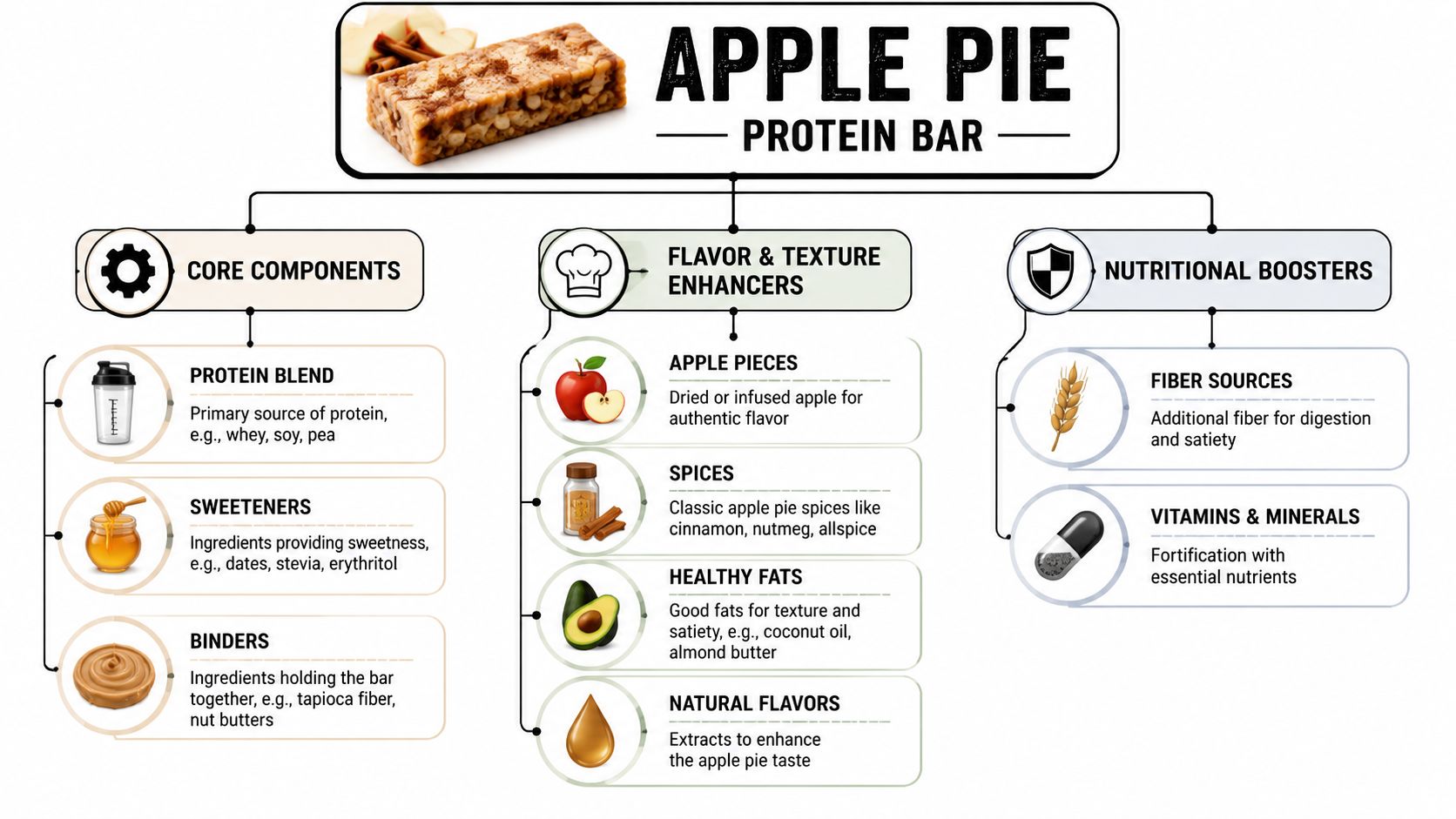
The protein base
Start with the part that gives the bar its purpose. Most products use some combination of whey, milk protein, soy, egg white, or pea protein. That choice affects more than macros.
Whey and milk proteins often create a softer, chewier bite. Plant proteins can taste earthier and may need more flavor support to avoid a dry or chalky texture. Soy can help with structure, but some people actively avoid it. Pea protein works well in cleaner-label products, though brands usually need spices, fats, or fruit to round out the taste.
A good rule is simple. If the bar markets itself as “apple pie,” the protein is rarely what you notice first. You notice texture and sweetness.
The glue that holds it together
A bar also needs something to keep it from crumbling apart. That's where binders and fibers come in. Depending on the formula, that might include syrupy binders, nut or seed butters, soluble fibers, or dense paste-like ingredients that help the bar stay shelf-stable.
These ingredients also shape satiety. Some bars feel filling because they combine protein with a lot of fiber. Others feel heavy because they're dense and sweet, not because they're especially satisfying.
Practical rule: If a bar tastes like dessert first and nutrition second, the binder system is often doing a lot of the work.
How the apple pie flavor is built
The “apple pie” part usually comes from apple pieces, cinnamon, spice blends, sweeteners, and flavoring agents. In homemade and recipe-style formulations, moisture control matters a lot. Amy's Healthy Baking describes a common technique where finely diced apples are sautéed for 4 to 6 minutes and the bars are chilled for at least 3 hours so the protein and fiber network can set properly in the final bar in this apple pie protein bar recipe breakdown.
That detail matters because fruit is tricky in a protein bar. Apples bring flavor, but they also bring water. Too much moisture can wreck texture, shorten shelf life, or make the bar gummy.
Here's the easiest way to think about the flavor system:
- Apple pieces add identity, but they need moisture control.
- Cinnamon and warm spices create the “pie” effect more than the apple itself.
- Sweeteners often push the bar toward dessert territory.
- Fat and fiber help carry flavor and improve mouthfeel.
| Main part | What it does |
|---|---|
| Protein blend | Supports the bar's nutrition goal |
| Binder and fiber | Holds shape, affects fullness and digestion |
| Apple and spices | Deliver the familiar dessert flavor |
| Sweetener system | Determines whether it tastes balanced or candy-like |
A lot of confusion starts here. People assume “apple” means fruit-forward and wholesome. In reality, many bars are engineered to taste like apple pie filling plus frosting notes, with protein added afterward.
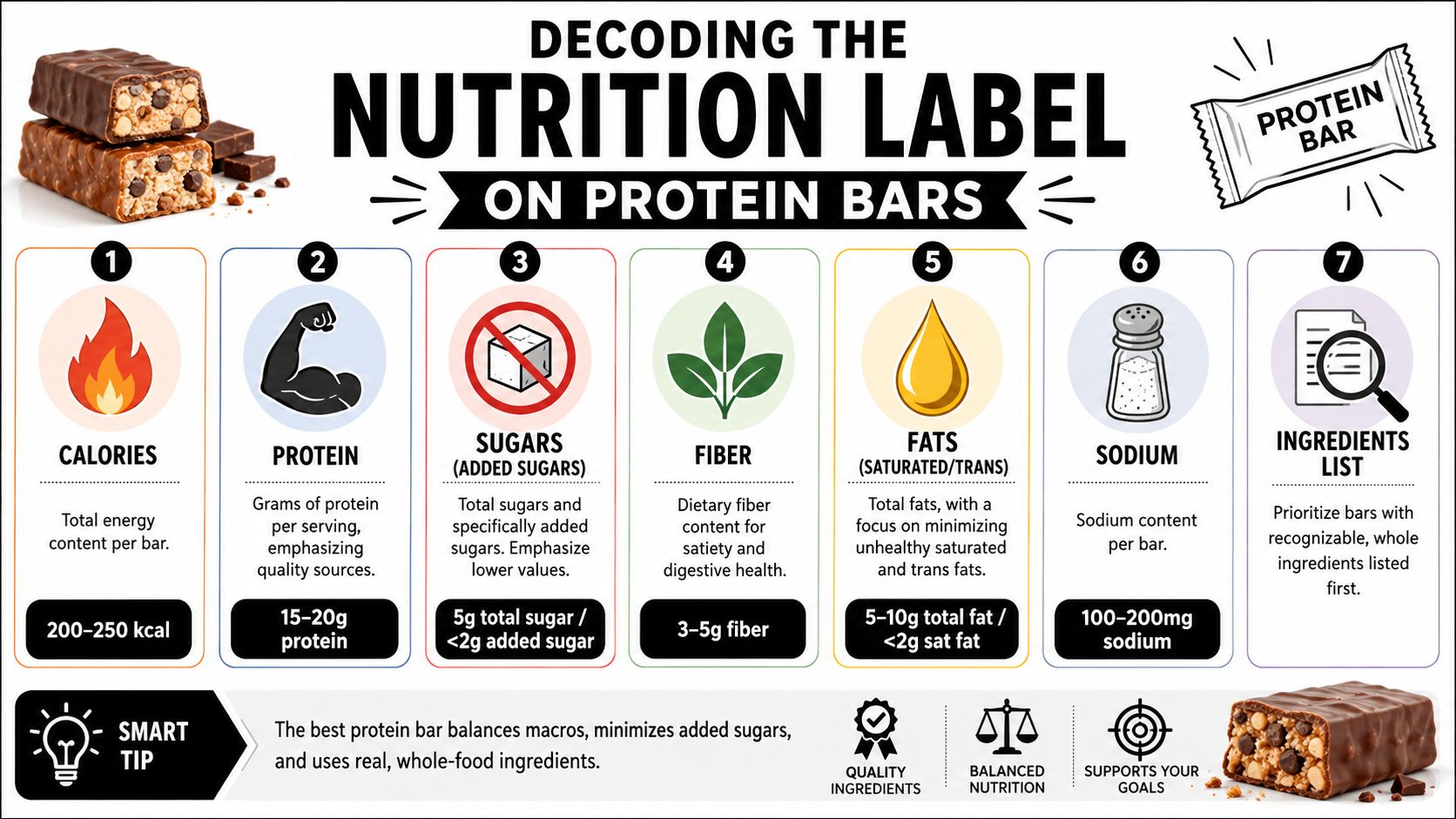
Decoding the Nutrition Label on Protein Bars
The front of the package is marketing. The back is where the truth lives.
When you compare apple pie bars, the fastest way to cut through the noise is to ask one question first: Is this a snack bar or a meal bar? The answer changes how you read every number after that.
Two real examples that show the range
Quest's Apple Pie Protein Bar is a useful benchmark because it sits in the snack category. Eat This Much lists it at 190 calories per 60 g bar, with 20 g protein, 14 g fiber, 23 g carbs, 7 g fat, and 3 g sugar. The same panel lists 5 mg cholesterol, 210 mg sodium, 1 g saturated fat, and 200 mg calcium in this nutrition entry for Quest Apple Pie Protein Bar.
That profile tells you a lot. It's compact, high in protein for its size, and built to feel functional rather than meal-like.
Now compare that with MET-Rx Big 100 Crispy Apple Pie. Metro Market lists it as a 100 g bar with 390 calories and 30 g protein, and describes it as providing 17 vitamins and minerals plus zinc and vitamins A and C on this MET-Rx product listing.
That's not a small snack. That's a much larger, denser format.
What the label is really telling you
When readers get confused, it's usually because they compare bars by protein alone. A bar with more protein isn't automatically the better choice.
Use this quick checklist instead:
- Check serving size first. A 60 g bar and a 100 g bar shouldn't be judged as if they're doing the same job.
- Look at protein in context. Twenty grams in a lighter snack can be more efficient than a heavier bar with only a modest increase in protein.
- Watch the full carb and sweetness picture. Apple pie flavor often encourages syrupy or dessert-like formulations.
- Notice fiber. A bar with meaningful fiber may feel steadier than one that leans mostly on sweetness and bulk.
- Read the ingredient list with the macros. Numbers tell you what's there. Ingredients tell you how the company got there.
If your goal is a quick post-gym snack, a meal-replacement bar can overshoot the job. If your goal is to avoid vending-machine food during a long day, a smaller “clean” bar may undershoot it.
For readers who want to understand how protein products fit into the bigger recovery picture, this comprehensive peptide information from PepFlow gives helpful background on how peptides relate to protein breakdown and function in the body.
It also helps to compare labels side by side with a broader framework. This guide to protein bar nutrition facts is useful if you want a plain-English walkthrough of what matters most on the panel.
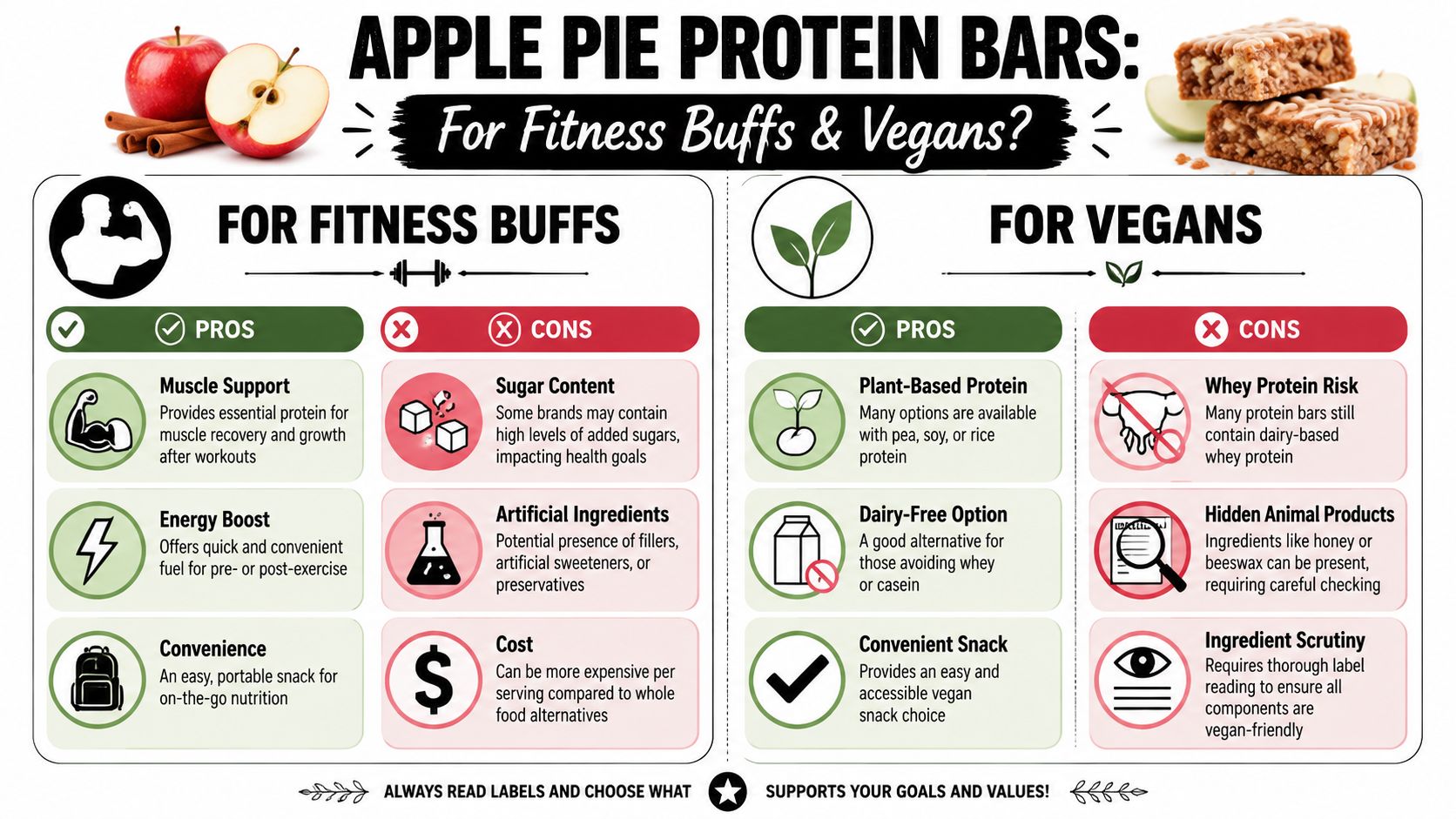
Is It Good for Fitness Buffs or Vegans
An apple pie bar can work well for one person and be a poor fit for another. The gap usually comes down to why you're eating it and what ingredients you're trying to avoid.
For fitness-focused readers
If you lift, run, train after work, or need something portable between sessions, an apple pie protein bar solves a real problem. It's shelf-stable, easy to carry, and usually more protein-focused than the average snack from a coffee shop or gas station.
That said, the flavor profile can work against your goals. A bar that tastes like dessert may make it harder to separate recovery nutrition from treat eating. Some athletes don't mind that. Others notice it leaves them wanting something else soon after.
A simple comparison helps:
| If you want | A dessert-style apple pie bar may be |
|---|---|
| Quick convenience | Helpful |
| Post-workout protein | Often useful |
| Tight appetite control | Less reliable |
| A minimally processed food | Usually not ideal |
If you're doing conditioning work and want a better sense of where your fitness stands, this guide to understanding the beep test is a good companion read because it connects fueling choices to practical performance benchmarks.
For vegans and allergen-conscious eaters
A point of frustration in the category arises. Apple pie sounds like it should be one of the easier flavors to make plant-based, but many bars still rely on milk protein, whey, soy, egg-derived ingredients, or heavy sweetener systems.
For some people, that's only an ethical issue. For others, it's a digestion issue too. A meta-analysis in the Journal of Functional Foods found that 34% of plant-based users report digestive distress from common protein bar ingredients like milk protein, polydextrose, and soy.
That number doesn't mean every person will react badly. It does mean label-reading matters, especially if you already know your stomach doesn't love processed bars.
A “vegan-friendly” snack isn't automatically a “gut-friendly” one.
If you're trying to sort through plant-based performance nutrition more broadly, this resource on plant-based protein for athletes helps frame what to look for beyond the vegan label itself.
The biggest gap in the market isn't just vegan apple pie bars. It's cleaner, less dessert-driven options that don't lean so hard on sweetness to make the formula work.
The Sweet Snack Trap and GLP-1 Management
A lot of people buy an Apple Pie Protein Bar because they want fullness, not just flavor. That's where the product can become confusing.
Protein is often chosen because it supports satiety. But when that protein arrives in a package that tastes close to dessert, the body and brain don't always interpret the experience the way you hoped. You may get the protein, yet still stay in a sweet-snack mindset.
Why sweetness can complicate appetite control
GLP-1 is a fullness-signaling hormone that people now talk about far more often in weight-management conversations. If your goal is steady appetite control, a food's job isn't just to hit protein. It should also help you stop thinking about food for a while.
Dessert-style bars don't always do that well. They can reinforce the expectation that every “healthy” snack should taste like a treat. For some people, that's harmless. For others, it keeps the palate chasing sweetness all day.
A 2025 National Health and Nutrition Survey found that 68% of gym-goers prefer savory snacks to manage appetite. That doesn't prove sweet bars are bad. It does suggest many active people feel more in control when protein comes in a savory format rather than a dessert one.
Where the apple pie flavor fits
Apple pie is a comfort flavor. That's part of its appeal. But comfort flavors can blur the line between hunger management and reward eating.
Here are a few signs your bar may be missing the mark for appetite control:
- You eat it quickly and still want something crunchy or salty after
- It feels more like dessert than fuel
- You rely on it daily but don't feel especially satisfied
- It triggers a second snack instead of delaying one
Sweet protein products can help with convenience while still making appetite regulation harder for some people.
If that sounds familiar, it may be worth exploring lower-sugar and lower-carb options with a less dessert-like profile. This guide on low-carb and sugar protein bars is a useful starting point.
The bigger takeaway is simple. A protein bar can be nutritionally “better” than candy and still be a poor fit for your GLP-1-minded routine, especially if you're trying to reduce cravings rather than dress them up.
How to Choose a High-Quality Protein Bar
A high-quality bar doesn't need a perfect ingredient list. It needs to match your goal without creating a new problem.
That means you're not asking, “Is this healthy?” in the abstract. You're asking, “Is this useful for me, right now?”
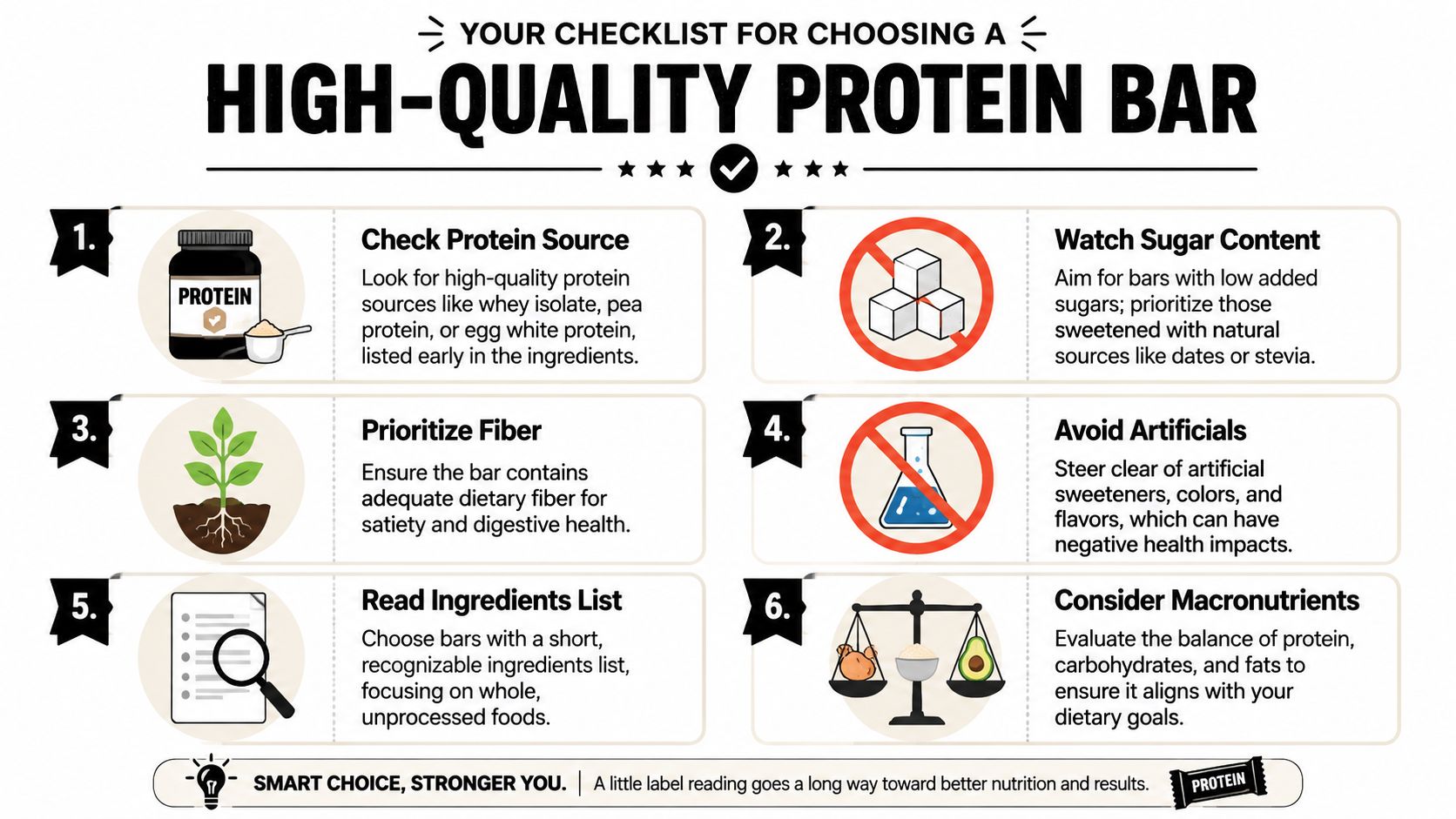
Use this shelf test
When you pick up any apple pie bar, work through these questions in order.
-
What is the protein source?
If you avoid dairy, soy, or eggs, the answer matters immediately. If you tolerate all of them, then texture and digestion become the next filter. -
Does the flavor seem to depend on sweetness?
Apple pie bars often rely heavily on sweet notes. If the ingredient list reads like a dessert formula with protein added, treat it like one. -
Will this bar fit the moment I'm buying it for?
A commute snack, post-lift bite, long workday backup, and meal replacement are not the same use case. -
How much ingredient compromise am I willing to accept for convenience?
This is the honest question most shoppers skip.
Red flags and green flags
You don't need a nutrition degree. You need pattern recognition.
Green flags
- Recognizable protein source you tolerate well
- A clear purpose such as snack, not mystery meal
- Fiber presence that supports fullness
- Flavor built from spices and real food cues, not just sweetness
Red flags
- An ingredient list that reads more like confectionery
- A dessert identity stronger than the protein identity
- A formula that leaves you hungry again quickly
- Allergens or additives you already know don't sit well with you
To make this easier, watch this short video before your next grocery run:
A better decision rule
Don't ask whether the bar is “clean” in a trendy sense. Ask whether it's predictable.
Can you eat it and know how you'll feel after? Energized, comfortably full, and done thinking about snacks is a good result. Bloated, still craving sweets, or rummaging for something salty means the bar didn't solve the problem.
The best protein bar is the one that reduces friction without increasing cravings.
That sounds basic, but it's the standard that matters most.
DIY Clean-Label Apple Pie Protein Bars
If packaged bars keep disappointing you, homemade is the cleanest fix. You control the protein source, sweetness level, texture, and allergens. You also get a version that can taste like apple and cinnamon instead of frosting with spice notes.
A simple formula that works
Use a bowl-and-pan method rather than a complicated baked recipe. That keeps the process manageable and makes it easier to adjust texture.
Try this structure:
-
Protein base
Use a plant-based protein powder if you want a dairy-free option, or another protein powder you already tolerate well. -
Dry base
Rolled oats work well for body and chew. -
Apple pie flavor
Add finely chopped apple, cinnamon, and a pinch of warming spice such as nutmeg if you like it. -
Binder
Use a sticky whole-food ingredient such as date paste or nut butter if it fits your diet. -
Texture support
Add chopped nuts or seeds if you want crunch and can tolerate them.
How to make them
Mix the dry ingredients first so the spice disperses evenly. Then fold in the binder and apple mixture until the texture holds together when pressed.
Press the mixture firmly into a lined pan. Chill until set, then slice into bars.
If you're using fresh apple, moisture control matters. Small pieces work better than large chunks. If the mix feels wet, add more dry ingredients gradually until the bars hold their shape.
Here are a few ways to customize the batch:
| Goal | Adjustment |
|---|---|
| More satiety | Increase fiber-rich ingredients and pair with nuts |
| Less sweetness | Use less sweet binder and more spice |
| Plant-based and dairy-free | Choose pea or similar non-dairy protein |
| Softer texture | Use a little more binder |
| Firmer bar | Chill longer and reduce wet ingredients |
How to eat them without turning them into dessert
Homemade bars can still drift into treat territory if you make them very sweet. Keep the flavor anchored in cinnamon, apple, and texture, not just sweetness.
Good uses include:
- Post-workout snack with water or coffee
- Desk snack when lunch is delayed
- Travel food paired with fruit or nuts
- Crumbled topping over plain yogurt or a plant-based yogurt alternative
A homemade version won't have the shelf life of a factory bar, but it gives you something packaged products often don't. Control.
If you've realized that sweet bars keep missing the point, Gym Snack is worth a look. It takes the opposite approach with chef-inspired, plant-based savory protein snacks built around clean pea protein, bold cheesy flavor, and a crunchier format that fits training, appetite control, and on-the-go eating without leaning on dessert cues.