

Of course. Let's get right to the point: plant-based protein is absolutely effective for athletes. The real keys are getting enough protein to match your training intensity and making sure you're getting a variety of sources. Do that, and you'll fuel muscle repair, recovery, and growth just as well as any animal-based protein can.
Can Athletes Thrive on Plant-Based Protein?

It’s time to put an old myth to rest. The idea that you need meat and dairy to reach your peak as an athlete is simply outdated. Your muscles don't check the source code of the protein you eat; they just need the right building blocks to get the job done.
Think of it this way: protein is made up of smaller units called amino acids. These are the individual Lego bricks your body uses to build and repair muscle tissue. It doesn't matter if those bricks came from a box labeled "chicken" or one labeled "lentils." As long as you have all the different shapes you need, you can build whatever you want.
A Growing Movement in Sports Nutrition
This isn't just a niche theory anymore; it's a full-blown movement that's changing sports nutrition from the ground up. We're seeing more and more elite athletes—from powerhouse weightlifters to iron-willed endurance runners—who credit their plant-based diets for giving them an edge. Many report faster recovery times and less inflammation.
The market is reflecting this shift in a big way. The global plant-based protein market is on track to hit around USD 46.0 billion by 2035, and the sports nutrition part of that pie is growing by about 9.4% every year. This surge is coming from everyday fitness enthusiasts and pro athletes who are looking for powerful, effective alternatives to whey and casein. You can discover more about this plant-based market trend and see just how big this has become.
The question was never whether athletes could survive on plant protein. It's whether they can thrive. The evidence is in, and it's a resounding "yes." Success comes down to smart planning, not the protein's origin story.
This guide is your roadmap. We’ll walk you through exactly how to build muscle, speed up recovery, and fuel your performance on plants, without making any compromises. It’s all about gaining a competitive edge, not making a sacrifice.
The Science of Building Muscle with Plants
To really get why plant-based protein works for athletes, we need to go back to basics. Picture your muscles as a brick wall. After a tough workout, that wall has tiny cracks and gaps. Protein delivers the new "bricks"—called amino acids—that your body's crew uses to patch up the damage, making the wall even stronger than before.
Here's the thing: your body's construction crew doesn't care where the bricks come from. It just needs the right types of bricks, and enough of them, to get the job done right.
Complete vs. Incomplete: A Simple Explanation
You’ve probably heard people talk about "complete" and "incomplete" proteins. A complete protein is simply one that contains all nine essential amino acids—the types of bricks your body absolutely cannot make on its own. While animal proteins usually check this box, most individual plant sources are considered "incomplete," meaning they’re a bit low in one or two of those essential bricks.
But this isn't a deal-breaker. Not even close.
By simply eating a variety of plant foods throughout the day—think beans with rice, or lentils with quinoa—you give your body everything it needs. It’s like getting your red bricks from one hardware store and your blue bricks from another. By the end of the day, the construction crew has a full set and can get to work. We dive deeper into this in our guide on what are complete protein sources.
Leucine: The Ignition Switch for Muscle Growth
Out of all the amino acids, one is the MVP for athletes: leucine. Think of leucine as the foreman on the construction site who blows the whistle to kickstart the whole repair process. In scientific terms, leucine is the main trigger for something called muscle protein synthesis (MPS)—the official name for building muscle.
If a meal doesn't have enough leucine, that signal to build and repair is weak, and your recovery suffers. This is a critical detail for plant-based athletes, as some plant proteins are naturally a bit lower in leucine than, say, whey protein.
Leucine is the non-negotiable spark plug for muscle growth. To maximize recovery and adaptation from your training, hitting your leucine target at each meal is just as important as hitting your total daily protein goal.
This doesn't mean plant protein is inferior, it just means you need to be a little more strategic. To make sure you’re getting enough of this powerhouse amino acid, you can:
- Prioritize Leucine-Rich Sources: Make foods like soy (tofu, tempeh, edamame), lentils, and pumpkin seeds staples in your diet. They pack a solid leucine punch.
- Slightly Increase Serving Sizes: A slightly larger portion of plant protein—like an extra scoop of beans or a bigger block of tofu—can easily close any leucine gap.
- Use Smart Supplementation: A high-quality plant protein powder, especially a pea or soy isolate, is a concentrated and incredibly easy way to hit your leucine target every time.
Of course, protein is only one part of the equation. The muscle-building process relies heavily on the right kind of training stimulus. For a great primer on this, check out this resource on understanding progressive resistance training.
Ultimately, the science is clear: when total protein and essential amino acid needs are met, plant-based diets are just as effective as omnivorous ones for building muscle. For most athletes, that means aiming for 1.4–2.0 grams of protein per kilogram of body weight daily, and making sure your main meals each contain about 2.5–3 grams of leucine to give MPS a powerful kickstart.
A Closer Look at the Top Plant-Based Proteins
When you’re training hard, not just any protein will do. It can feel like a maze trying to figure out which plant-based options actually deliver the goods for muscle repair and growth. But once you understand the unique strengths of each source, you can start building a smart nutrition strategy that works for you. Think of it like assembling a team—you need different players with specialized skills to win.
Let’s break down the heavy hitters in the plant protein world. We'll go beyond the protein grams on the label and look at what really moves the needle for athletes: amino acid profiles, digestibility, and how they fit into your day-to-day.
This quick overview covers the science you need to know when picking a plant protein that truly performs.

The bottom line is simple: you need all the essential amino acids to rebuild muscle effectively, and getting enough leucine is what kicks that process into high gear.
Soy Protein: The All-in-One Powerhouse
For a long time, soy has been the benchmark for plant-based proteins, and for good reason. It’s one of the very few plant sources that qualifies as a complete protein, meaning it delivers all nine essential amino acids your body can't make on its own. This puts its nutritional structure on par with many animal-based proteins.
For an athlete, that’s a huge win. Foods like tofu, tempeh, and edamame aren't just easy to cook with; they pack a serious leucine punch, making them ideal for your post-workout meal. A clean soy protein isolate powder is also a super convenient and effective option for a recovery shake.
Pea Protein: The BCAA Champion
Pea protein has exploded in popularity lately, quickly becoming a go-to for athletes. While it’s just a little low in one amino acid (methionine) to be considered "complete" on its own, it absolutely shines in another key area. Pea protein is loaded with Branched-Chain Amino Acids (BCAAs)—leucine, isoleucine, and valine—which are crucial for kickstarting recovery and dialing down muscle soreness.
Its leucine content is impressive, even holding its own against whey protein, making it a beast for triggering muscle protein synthesis. That's exactly why it's the core ingredient in so many high-performance protein powders and snacks. To see how it stacks up against the dairy king, check out our deep dive: https://gymsnack.com/blogs/gym-alpha/pea-protein-vs-whey-protein.
To give you a clearer picture, here’s a quick comparison of the top contenders.
Top Plant Protein Sources for Athletes at a Glance
This table breaks down the most popular plant protein sources, highlighting what makes each one a valuable tool for fueling performance and recovery.
| Protein Source | Protein per Serving (approx.) | Key Amino Acid Profile | Best For |
|---|---|---|---|
| Soy Protein | 22-25g (isolate) | Complete profile; high in all 9 EAAs | Post-workout recovery; building lean mass |
| Pea Protein | 20-24g (isolate) | Very high in BCAAs, especially leucine | Muscle protein synthesis; post-workout shakes |
| Hemp Protein | 15g | Good EAA profile + omega-3s & fiber | Overall wellness; adding to smoothies/meals |
| Brown Rice Protein | 20g | High in methionine & cysteine | Blending with pea protein; hypoallergenic option |
Looking at them side-by-side makes it easier to see how you can strategically combine sources for maximum benefit.
Hemp and Brown Rice Protein: The Smart Supporting Players
While soy and pea often steal the show, other sources have important roles to play.
- Hemp Protein: This option gives you a solid dose of protein plus a bonus of healthy omega-3 and omega-6 fatty acids and fiber. It’s a fantastic whole-food choice for supporting your overall health, not just muscle.
- Brown Rice Protein: A great hypoallergenic protein that happens to be the perfect partner for pea protein. Because rice is rich in the methionine that pea protein is lower in, blending the two gives you a robust, complete amino acid profile.
Combining different sources, like a pea and rice protein blend, creates a nutritional synergy that’s more powerful than either one alone. This strategy ensures you’re covering all your amino acid bases to fully optimize recovery.
To get more ideas on how to round out your diet, check out a guide to high protein foods that can complement your plant-based choices. Ultimately, the goal is to build a varied and powerful nutrition plan that supports your training from every possible angle.
How to Choose an Effective Plant Protein Supplement
Walking into the supplement aisle can feel like a sensory overload. You're hit with a wall of tubs, all covered in flashy labels and bold promises. So, how do you cut through the noise and find a plant protein powder that actually works? The secret is to ignore the hype and learn to read the ingredient list like a pro.
Think of it like this: you wouldn't fill a high-performance engine with low-grade fuel. Your body is no different. The label is your first and best defense against a shoddy product, giving you the power to pick a supplement that's clean, effective, and truly dialed into your athletic goals.
Concentrates vs. Isolates
One of the first things you'll see on a label are terms like "protein concentrate" and "protein isolate." These aren't just marketing fluff; they tell you exactly how the protein was processed and how pure it is.
- Protein Concentrates: This is your basic form. It's less processed, which means it still contains some of the original plant’s carbohydrates and fats.
- Protein Isolates: For most serious athletes, this is the way to go. The protein has been further filtered to strip out most of the carbs and fats, leaving you with a much purer, more concentrated protein.
That extra refinement step means that gram for gram, a protein isolate packs a bigger protein punch with fewer of the other macros you might not want right after a tough session. This makes it a fantastic tool for lean muscle repair and growth, which is exactly why you see the market shifting so heavily in this direction.
The world of plant-based protein for athletes is moving fast. While soy protein still holds a big piece of the pie—about 30.5% of the market in 2024—the real trend is in the processing. Analysts predict that isolates will make up around 41.2% of all products by 2025 simply because they deliver that high-protein, low-carb profile athletes are looking for. If you're a data nerd, you can explore detailed forecasts on plant-based supplement trends to see where things are headed.
Why Third-Party Testing Is Non-Negotiable
Beyond the type of protein, you absolutely have to consider safety and purity. The supplement industry isn't as tightly regulated as many people think, which means some products can be contaminated with fillers, unwanted additives, or even substances banned in competition. This is where third-party certifications become your best friend.
A third-party seal is your guarantee that what’s printed on the label is actually what’s inside the tub. For an athlete, that verification provides confidence and peace of mind.
Keep an eye out for these logos on the packaging. They're your sign that a product is clean and safe:
- NSF Certified for Sport: This is the gold standard for competitive athletes. It confirms that the product is free from more than 280 substances banned by major athletic organizations.
- Informed-Sport: This program takes it a step further by testing every single batch of a product for banned substances before it ever hits the shelves, offering an incredibly high level of assurance.
When you choose a supplement with one of these certifications, you’re not just buying protein; you're investing in a product that’s been proven to be both effective and safe. It lets you focus on your training without ever having to second-guess what’s in your shaker bottle.
Strategic Protein Timing for Maximum Results
Having the right protein sources is half the battle. Knowing when and how much to eat is what really gives you a strategic edge. For athletes, protein isn't about one big meal a day; it's about creating a steady drip of amino acids to keep your muscles in a constant state of repair and growth.
Think of it like a construction project that never really stops. To keep the crew working, you need a steady delivery of materials—in this case, protein. If the deliveries are too far apart, work grinds to a halt. The whole idea is to avoid those lulls and keep your body building.
How Much Protein Do Athletes Actually Need?
For most athletes and highly active people, the science points to a clear range: 1.4 to 2.0 grams of protein per kilogram of body weight each day. This gives your body more than enough raw material to repair the damage from tough training sessions and, more importantly, to build back stronger.
So, what does that look like? For a 180-pound (82kg) athlete, you're looking at a daily target of about 115 to 164 grams of protein.
But hitting that total number is only part of the equation. Spreading it out is just as important. Instead of trying to cram all that protein into two or three huge meals, a much smarter approach is to distribute it evenly throughout your day.
Aim for 20–40 grams of high-quality plant based protein for athletes every 3 to 4 hours. This consistent rhythm keeps your muscle-building engine humming all day long, maximizing your recovery and helping you get the most out of every workout.
This strategy ensures there’s always a steady stream of amino acids, especially leucine, ready to trigger muscle protein synthesis right when your body needs it.
Nailing Your Pre and Post Workout Nutrition
While that steady daily intake is your foundation, what you eat right around your workouts can give you an extra boost in performance and recovery. The old idea of a strict 30-minute "anabolic window" has pretty much been debunked, but that doesn't mean timing is irrelevant. It still matters.
Pre-Workout Fuel (30-60 minutes before):
A small, easy-to-digest snack with both protein and carbs is perfect here. It tops off your energy stores and provides amino acids that can help reduce muscle breakdown while you train.
- Example: A handful of roasted edamame or a small bowl of soy yogurt.
Post-Workout Recovery (Within 1-2 hours after):
This is your prime time to kickstart the repair process. A high-quality protein source will replenish what you've lost and get your muscles rebuilding immediately.
- Example: A smoothie with pea protein isolate, a banana, and spinach is a classic for a reason. For something savory and quick, a bag of Gym Snack delivers over 30 grams of clean pea protein without any prep.
When you start timing your nutrition like this, it stops being an afterthought and becomes an active part of your training plan.
Building Your High-Performance Plant-Based Plate
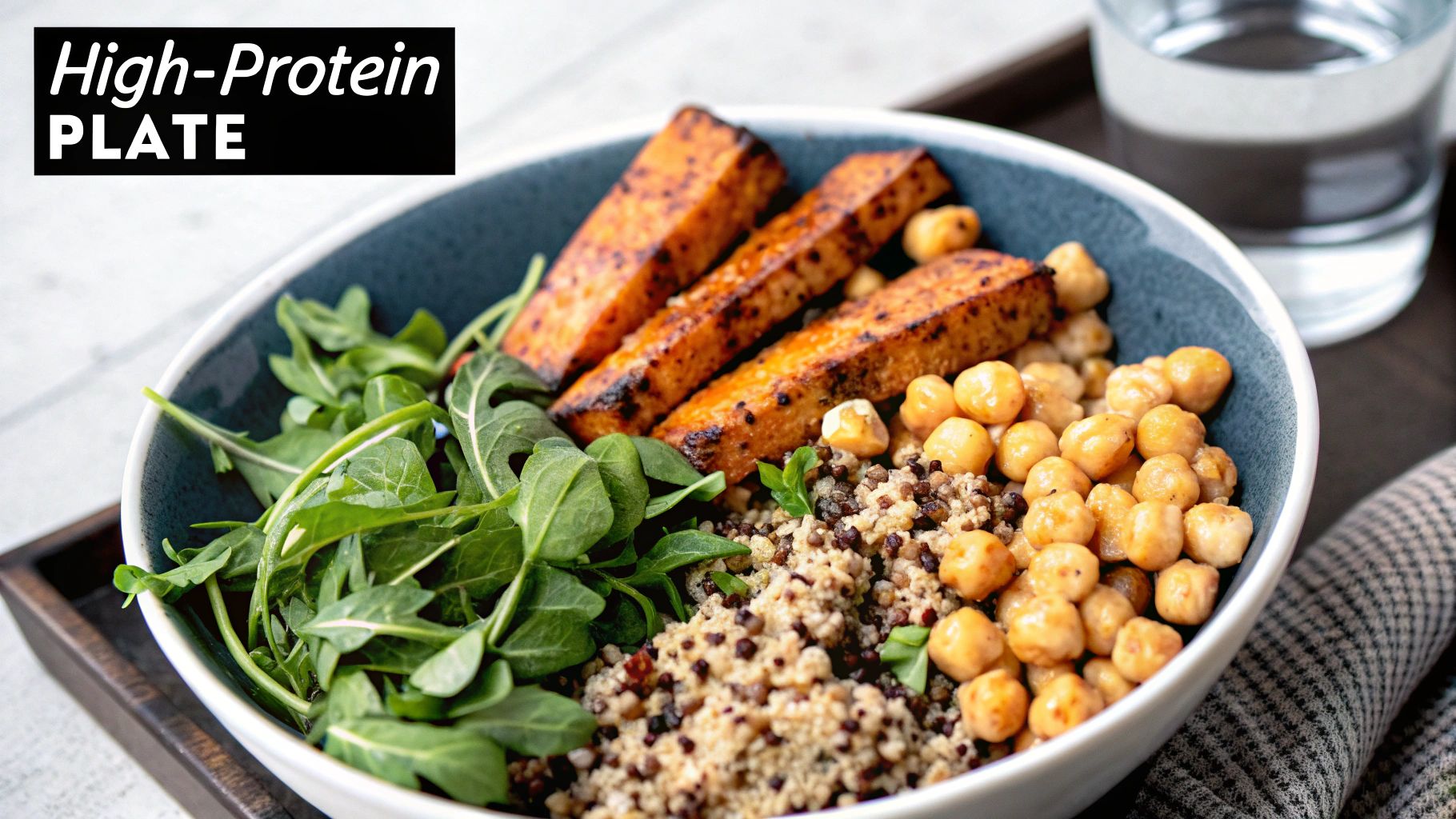
This is where the rubber meets the road—taking all that science and making it work on your plate. A smart meal strategy is what turns good plant protein into actual results. For athletes, this means ditching the sad salads and learning to build meals that are powerful, delicious, and stacked with the protein your body needs to repair and grow.
Think of each meal as a fresh opportunity to give your muscles exactly what they’re crying out for. Having a few go-to, easy-to-make options for every part of your day is key to fueling your body for peak performance and faster recovery.
Powering Your Day from Start to Finish
When you build your meals around protein-rich whole foods, you create a steady drip-feed of amino acids to your muscles. This is absolutely critical for any athlete who's serious about their performance.
Here are a few simple but effective ideas to get you started:
-
Breakfast Power-Up: Kick off the day with a tofu scramble, seasoned with a little nutritional yeast and black salt (for that eggy flavor). You'll easily pack in over 20-25 grams of protein, setting a strong nutritional foundation for whatever the day throws at you.
-
Midday Refuel: A lentil and quinoa power bowl is a perfect athlete's lunch. Just combine a cup of cooked lentils with a cup of quinoa, then load it up with roasted veggies and a creamy tahini dressing. You're getting a complete amino acid profile and somewhere around 25-30 grams of protein.
-
Dinner for Recovery: Finish strong with a couple of homemade black bean burgers on whole-wheat buns. This simple meal can deliver over 20 grams of protein, helping your muscles get to work repairing and rebuilding while you sleep.
Smart and Savory Protein Snacks
Snacking is a secret weapon for hitting your daily protein goals, especially when you're training hard. But it’s easy to get stuck in a rut of sweet shakes and bars. Sometimes you just need something savory and crunchy, and those options can be just as effective.
For athletes, snacks aren't just about killing hunger. They are strategic mini-meals designed to bridge the gap between main meals, keeping your body in a prime state for muscle repair.
When you need a quick protein hit that isn't sweet, try these:
- Roasted Chickpeas: Take a can of chickpeas, toss them with your favorite spices, and roast them until they're nice and crispy. A cup gives you around 15 grams of protein.
- Seasoned Tofu Strips: Marinate some tofu strips in soy sauce, garlic, and ginger, then bake them. They're a fantastic grab-and-go option with a great texture and a serious protein punch.
If you’re looking for more ways to keep your nutrition locked in, digging into a full plant-based diet for athletes guide can give you even more strategies and meal ideas.
Here are some of the questions that always seem to pop up when athletes start exploring plant-based protein. Let's clear the air on these common concerns so you can feel confident in how you're fueling your body.
"Will I Lose Muscle If I Switch to Plant-Based Protein?"
Not a chance. This is probably the number one fear I hear, but it’s completely unfounded. As long as you’re hitting your daily protein target—which for most athletes is somewhere in the 1.4 to 2.0 grams per kilogram of body weight range—you can build and maintain muscle just as effectively.
The trick is simply to eat a good variety of sources. By making things like soy, lentils, and pea protein staples in your diet, you'll easily cover all your essential amino acid bases for muscle repair and growth.
"I've Heard Soy Messes with Your Hormones. Is That True?"
This is one of those myths that just won't die, but the science is crystal clear: it's been thoroughly debunked. Study after study has shown that a normal intake of soy foods and soy protein has no negative effect on testosterone levels in men.
So, don't let the outdated gym-bro chatter scare you off. Soy is a fantastic, high-quality complete protein that’s excellent for recovery.
"How Can I Get Enough Protein Without Overloading on Carbs?"
This comes down to making smart choices. You'll want to lean into protein-dense options like tofu, seitan, and edamame, which pack a serious protein punch without a ton of accompanying carbs.
When you need a super-concentrated protein source, plant protein isolates are your best friend. They’ve been processed to strip out most of the fats and carbs, leaving you with pure, fast-absorbing protein that’s perfect for a post-workout shake without a lot of extra calories.
Ready for a snack that hits your macros without the prep? Gym Snack offers savory, crunchy pea protein snacks with over 30 grams of protein per bag to fuel your recovery. Shop now at GymSnack.com.