

So, you’ve seen them everywhere—in gym bags, at checkout counters, and tucked into office desk drawers. Peanut butter bars have absolutely taken over the snack world. But what are they, really? And why are they so popular?
It’s about more than just a convenient, tasty snack. It’s about what they represent: functional fuel.
What Exactly Is a Peanut Butter Bar, and Why All the Hype?
Peanut butter bars have gone from a niche product for serious athletes to a mainstream staple for anyone looking for a quick, satisfying bite. The appeal isn't just the rich, nostalgic flavor of peanut butter; it’s the smart nutrition packed into a portable format.
Think of a peanut butter bar as a strategically built mini-meal. The foundation is, of course, peanut butter, which provides a solid base of plant-based protein and heart-healthy monounsaturated fats. But from there, things get interesting. Brands build on that base to create a bar designed for a specific purpose, whether that's muscle recovery or just getting you through a 3 p.m. slump.
The Anatomy of a Modern Bar
Most peanut butter bars you'll find today are a blend of a few key ingredient types, each with a specific job to do.
-
Protein Sources: To get the protein content up to the levels you see on the label, most bars add extra protein. This could be whey or casein (from dairy) or plant-based sources like pea, soy, or brown rice protein.
-
Binders and Sweeteners: Something has to hold it all together and make it taste good. Ingredients like dates, honey, tapioca syrup, or brown rice syrup act as the "glue." The type and amount used are huge factors in how healthy the bar actually is.
-
Textural Add-ins: To keep things from being a boring, uniform paste, companies add ingredients like rolled oats, nuts, seeds, or crisps. These also contribute extra fiber, crunch, and valuable micronutrients.
At its best, a great peanut butter bar is more than just a snack—it's a synergy of protein, healthy fats, and fiber working together. That’s the magic combination for crushing hunger and maintaining steady energy levels.
This blend of ingredients is precisely why there's such a massive difference between a top-tier bar and one that's basically a candy bar in a health-food wrapper. Understanding this basic formula is the first step toward figuring out how to choose the healthiest protein bar for your own goals. Once you see them as strategic fuel, you can start to see exactly how they fit into a smart, performance-focused diet.
How to Read a Peanut Butter Bar Nutrition Label
Walking down the snack aisle feels like a pop quiz, doesn't it? Every flashy wrapper promises big things, but the real story is on the back. If you want to find a peanut butter bar that actually supports your fitness goals, learning to read that little white box—the Nutrition Facts panel—is the most powerful tool you have.
Forget just glancing at the calorie count. The numbers that truly matter are the macros: protein, carbs, and fats. They tell you what the bar is built to do.
Match Your Macros to Your Mission
What do you need this bar to do for you right now? The answer changes everything. A pre-workout fuel-up has a totally different job than a post-lift recovery snack or something to simply crush hunger pangs.
-
Protein: For building muscle and staying full, 15 grams is the magic number. Anything less than 10 grams, and you're basically eating a candy bar in disguise. This is your top priority for recovery and satiety.
-
Carbohydrates & Fiber: Carbs give you energy, but you want them to be slow-release. Look for at least 5 grams of fiber. Fiber is what turns a quick sugar rush into steady, sustained energy, keeping you full and focused.
-
Fats: Peanut butter's healthy fats are great, but make sure that’s where they’re coming from. The fats in your bar should be from whole foods like nuts and seeds, not cheap, inflammatory hydrogenated oils.
-
Sugar: This is the big one. Your target is less than 5 grams of added sugar. Natural sweetness from dates or other whole fruits is fine, but if high-fructose corn syrup or plain old sugar is near the top of the list, it's a hard pass.
This flowchart is a great mental shortcut for picking a bar based on your immediate goal, whether you need quick energy or something to keep you full for hours.
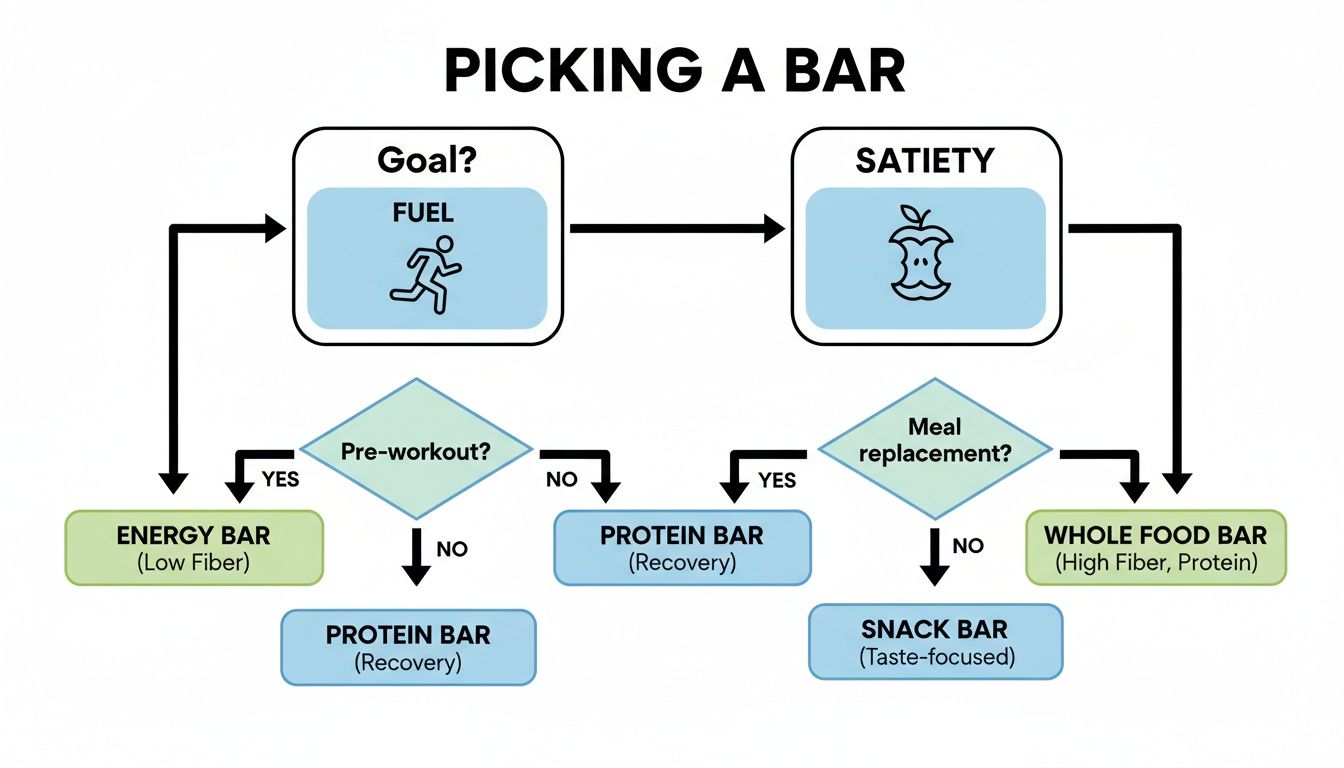
As you can see, if you're trying to stay full, you'll want to prioritize protein and fiber. If you need a quick boost of energy before a workout, a few more carbs can actually be a good thing.
Look Beyond the Numbers at the Ingredients
The ingredient list tells a story that the nutrition facts can’t. A short list you can actually read is almost always a sign of a high-quality bar. If it's a paragraph long and full of words that sound like they came from a chemistry lab, you're looking at a highly processed snack that won't do you any favors.
A simple rule I live by: If sugar, corn syrup, or weird-sounding oils are one of the first three ingredients, I put it back on the shelf. The first ingredient should be something real, like peanuts or a quality protein source.
To help you spot the good from the bad at a glance, here’s a quick cheat sheet for scanning that ingredient list.
Green Flags and Red Flags on Your Ingredient List
| Ingredient Type | Common Examples | What to Look For (Green Flags) | What to Avoid (Red Flags) |
|---|---|---|---|
| Protein Source | Whey, Casein, Soy, Pea, Brown Rice | Whey isolate/hydrolysate, Pea protein isolate, Complete plant protein blends | Soy protein isolate (if not organic), Gelatin, Proprietary "protein blends" |
| Sweeteners | Sugar, Syrups, Alcohols, Fruit | Monk fruit, Stevia, Allulose, Whole dates, Yacon syrup | High-fructose corn syrup, Sucralose, Aspartame, Agave nectar |
| Fats & Oils | Nut butters, Coconut oil, Palm oil | Nut/seed butters, Coconut oil, MCT oil, Avocado oil | Palm kernel oil, Hydrogenated/partially hydrogenated oils, Soybean/Canola oil |
| Binders & Fibers | Soluble corn fiber, Chicory root | Soluble tapioca fiber, Acacia gum, Psyllium husk, Ground flaxseed | Soluble corn fiber (IMO), Polydextrose, Maltodextrin |
| Fillers & Additives | Gums, Flavors, Preservatives | Natural flavors, Sea salt, Sunflower lecithin | Artificial flavors, Artificial colors, Carrageenan, Soy lecithin |
This table isn't about being perfect, but about being informed. The more "Green Flag" ingredients you see, especially at the top of the list, the better the bar is likely to be for your body.
Once you get the hang of checking labels, you can take it a step further by using food tracking apps to see how these snacks fit into your day. And for an even deeper look into the nitty-gritty, our guide on how to read nutrition labels has all the details you need. Arming yourself with this knowledge is the key to making sure every snack you eat is a step toward your goals, not away from them.
Fueling Fitness and Supporting Weight Management
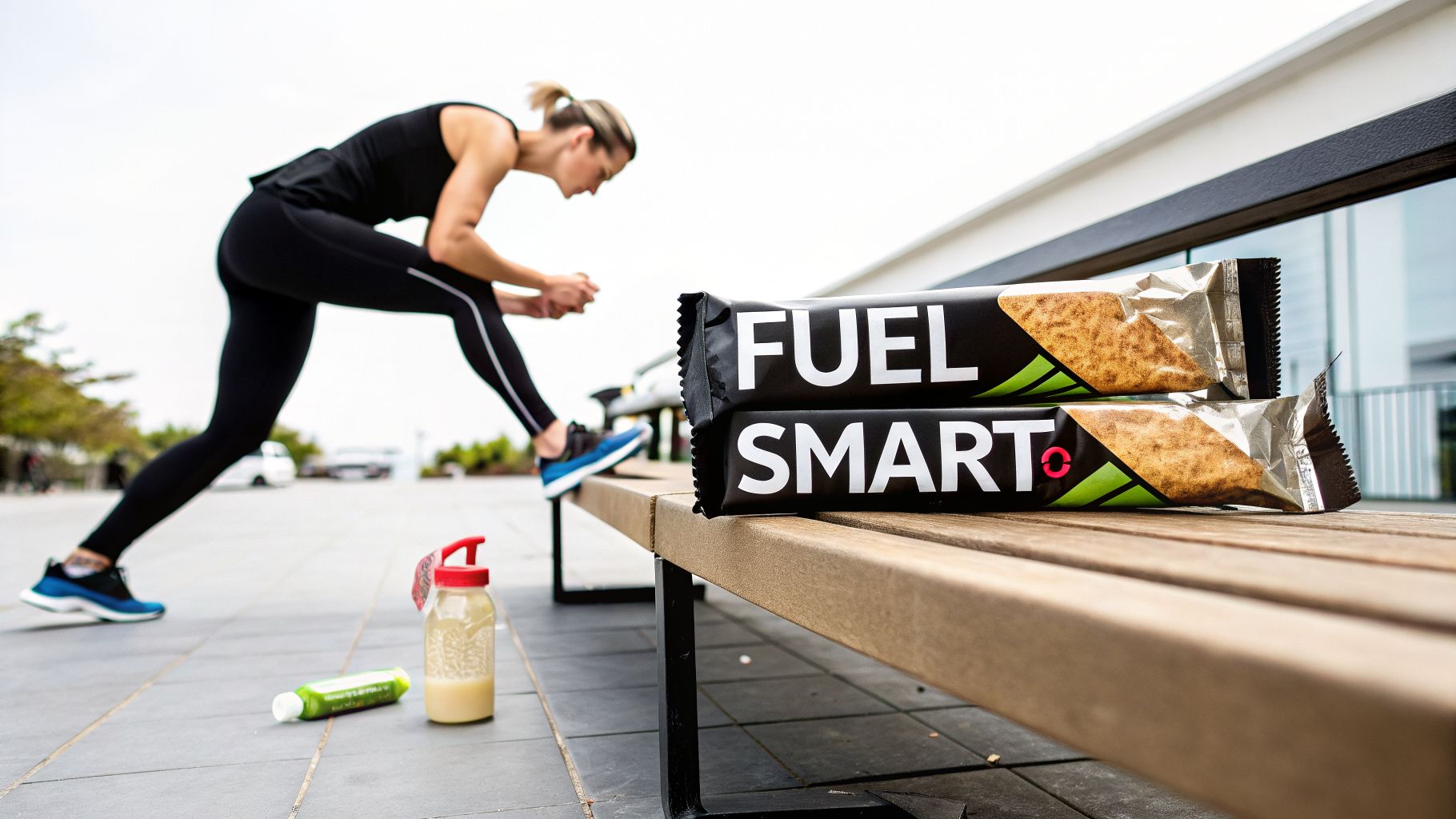
When you pick the right one, a peanut butter bar can be a secret weapon for both building muscle and keeping your weight goals in check. For anyone who hits the gym, it’s a simple way to get the two things your body needs most for performance and recovery: protein and carbs.
Think of a good bar as a portable fuel station. The carbs give you that steady energy to power through a tough workout, and the protein gets to work on muscle repair right after you’re done. Tossing a high-protein bar in your gym bag means you can feed your muscles the building blocks they need the moment your training session ends, which is a game-changer for seeing real progress.
A Smart Choice for Satiety and Weight Goals
Outside of the gym, these bars are also incredibly helpful for managing weight, even for people using GLP-1 medications. It all comes down to their ability to keep you feeling full and satisfied, a feeling we call satiety.
When a bar is packed with protein and fiber, it slows down how quickly your body digests it. This sends a strong signal to your brain that you’re full, which is exactly what you need to shut down cravings for junk food. For anyone trying to manage their appetite and stick to a calorie plan, this is a huge win.
Choosing a savory, high-protein bar over a sweet, dessert-like one is a game-changer. It satisfies hunger without triggering the blood sugar spike and subsequent crash that often leads to more snacking.
This fits perfectly with any weight management plan focused on controlling hunger and making your calories work for you. A solid bar peanut butter snack does just that by giving you lasting energy and fullness.
The Contrast Between Functional Fuel and Candy Bars
Let's be clear: there's a world of difference between a true-performance protein bar and a candy bar in disguise. So many "healthy" bars are just packed with sugar and cheap fillers that give you a quick buzz followed by a hard crash.
You have to know what you’re looking for. Here’s how to choose a bar based on your goal:
- For Pre-Workout Energy: Look for a good balance of complex carbs (like from oats) and at least 10-15 grams of protein. This combo provides fuel to burn without making you feel heavy or bloated.
- For Post-Workout Recovery: This is where protein is king. Aim for a bar with 15 grams or more to kick-start muscle repair. If you're serious about gains, it's worth knowing all your options for the best protein for post-workout muscle growth and recovery.
- For Hunger Control: To stay full between meals, you want to maximize both protein and fiber. A bar with 15+ grams of protein and 5+ grams of fiber will be your best bet for crushing hunger and staying on track.
The Rise of Savory Snacks Beyond Sweet Bars
For a long time, the protein bar world has been stuck in a rut. Walk down any snack aisle, and you’ll see it’s basically a candy store with some extra protein thrown in—chocolate this, cookie dough that. But for those of us who are serious about fitness, this has led to a serious case of flavor fatigue.
This burnout from overly sweet options has started a quiet but powerful shift in the snack industry. People are craving something that feels like real food, not another dessert disguised as a health product. The market is finally catching on, and we're seeing more savory, functional snacks designed to actually kill hunger, not just cater to a sweet tooth.
Let's be honest: many sweet bars, including some bar peanut butter options, are specifically designed to taste like a rich dessert. They’re packed with things like gooey cheesecake fillings and cookie dough layers, which can create a high-sugar bomb that feels more like a cheat meal than a strategic part of your nutrition plan.
Moving from Dessert to Fuel
This move away from sweetness isn't just about what you're in the mood for; it’s about what the snack actually does for your body. A truly functional snack is one that works with your goals, whether that’s fueling a tough workout or keeping you full between meals. This is where savory snacks have a real advantage.
Unlike their sugary cousins that lean heavily on syrups and sweeteners, savory snacks are built differently. They get their robust flavors from actual spices and seasonings, delivering a satisfying taste and crunch without the inevitable sugar crash.
When your goal is sustained energy and lasting fullness, a savory, high-protein snack is often a smarter choice. It satisfies hunger on a physiological level, supporting the very hormones that tell your brain you’re full.
This focus on satiety is a game-changer, especially for anyone managing their weight or using GLP-1 medications. It helps regulate your appetite in a way that dessert-like bars just can't compete with.
Why Savory Wins for Serious Goals
Switching to a savory snack profile completely changes the experience. Instead of getting a short-lived sugar high followed by an energy slump, you get steady, reliable fuel. That makes them a much better tool for a few key moments.
- Pre-Workout Power: You get the energy you need without risking a sugar crash halfway through your lift.
- Post-Workout Recovery: They provide clean protein for your muscles without a load of unnecessary sugar.
- Midday Hunger Buster: They crush those afternoon cravings and keep you feeling full, so you’re not tempted to grab something unhealthy.
This shift toward savory is more than just a fad; it’s an evolution in how we think about performance nutrition. If you’re looking for more from your snacks, you can find some of the best high protein savory snacks that fit this functional approach. It’s about choosing a tool, not just a treat.
DIY Healthy High-Protein Peanut Butter Snacks
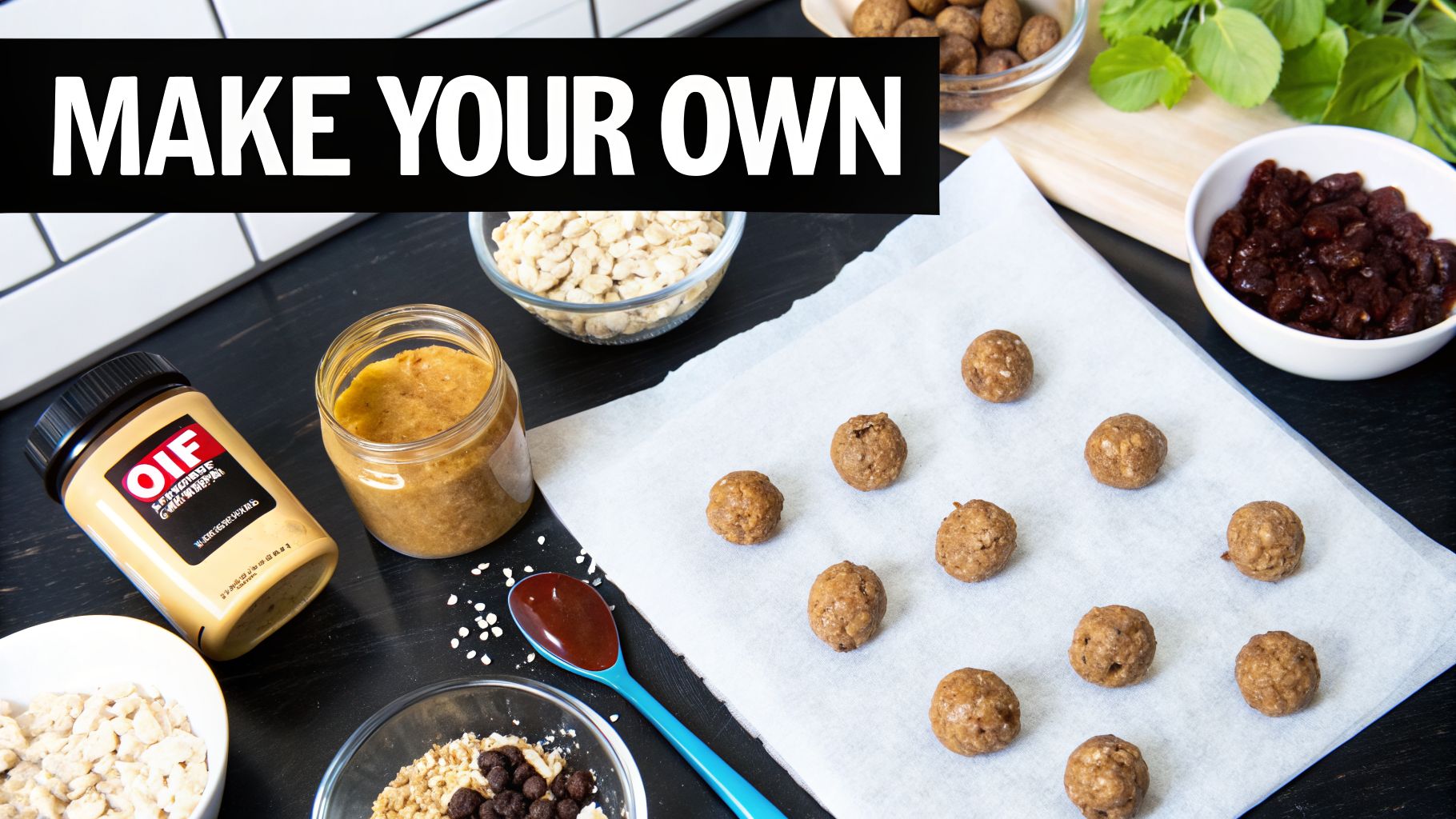
While grabbing a bar off the shelf is easy, there's nothing like making your own snacks at home. When you're the one in the kitchen, you get to call all the shots—the exact amount of protein, the type and level of sweetness, and every last ingredient that fuels your body. It's the best way to craft a snack that hits your macros perfectly.
And you don't need to be a pastry chef to pull these off. My favorite recipes are the no-bake kind because they're fast, simple, and don’t require much more than a bowl and a spoon.
Recipe 1: Classic High-Protein Peanut Butter Energy Balls
These are a go-to for a reason. They're the perfect little bundle of protein, healthy fats, and complex carbs, making them an ideal pre-workout bite or a quick fix for that 3 PM slump.
Ingredients:
- 1 cup old-fashioned rolled oats
- 1/2 cup natural peanut butter (creamy or crunchy works!)
- 1/2 cup vanilla or unflavored protein powder (plant-based or whey)
- 1/3 cup pure maple syrup or honey
- 1/4 cup ground flaxseed
- 2 tbsp chia seeds
- A splash of plant-based milk (if the mix is too dry)
- Optional: 1/4 cup mini dark chocolate chips or chopped walnuts
Instructions:
- Grab a large bowl and mix together all your dry ingredients: the oats, protein powder, flaxseed, and chia seeds.
- Add the peanut butter and maple syrup. Stir everything together until it forms a thick, sticky dough.
- If it feels a little too crumbly, add milk one tablespoon at a time until the dough holds together easily.
- Roll the mixture into 1-inch balls and pop them on a tray lined with parchment paper.
- Let them chill in the fridge for at least 30 minutes so they can firm up. They’ll keep in an airtight container in the fridge for up to a week.
When you make your own snacks, you eliminate the guesswork. There are no hidden sugars or weird fillers to worry about—what you see is exactly what you get. It’s total food transparency.
Recipe 2: Savory Peanut Powder Chickpea Bites
Tired of sweet protein snacks? This recipe is your answer. It delivers a serious crunch and a solid dose of protein, perfect for satisfying savory cravings without any added sugar.
Ingredients:
- 1 can (15 oz) chickpeas, rinsed, drained, and patted completely dry
- 1 tbsp olive or avocado oil
- 3 tbsp peanut powder
- 1/2 tsp garlic powder
- 1/2 tsp smoked paprika
- 1/4 tsp sea salt
Instructions:
- Preheat your oven or air fryer to 400°F (200°C).
- In a bowl, toss the very dry chickpeas with oil until they're all lightly coated.
- Spread them out in a single layer on a baking sheet. Roast for 20-25 minutes (or air fry for 15-20 minutes), giving the pan a good shake halfway through. You're looking for golden brown and crispy.
- While the chickpeas are still hot, toss them in a bowl with the peanut powder, garlic powder, paprika, and salt until they’re evenly coated.
- Let them cool completely before eating—this is key for maximum crunch! Store them in a container with the lid slightly ajar to keep them from getting soft.
Your Peanut Butter Bar Questions, Answered
Once you start digging into the world of functional snacks, a lot of questions naturally pop up. It's easy to get confused by all the different claims and ingredient lists out there. Let's clear up some of the most common questions about peanut butter bars so you can feel confident in your choices.
Are Peanut Butter Bars Actually Good for Weight Loss?
They absolutely can be, but you have to be picky. A bar's ability to help with weight loss comes down to its ingredients and how they work to manage your hunger, not just provide a snack.
For a bar to be a true ally, you need to check the nutrition panel. Look for one that's high in protein (at least 15g) and fiber (at least 5g). At the same time, you want minimal added sugar—ideally under 5g. This combination is the key to satiety, that satisfying feeling of fullness that stops cravings in their tracks and helps you naturally eat fewer calories overall.
When your goal is weight management, a savory, high-protein bar is almost always a better bet than a sweet, dessert-like one. It satisfies real hunger without the sugar crash that leaves you wanting more food just a short while later.
Can I Eat a Peanut Butter Bar Every Day?
You certainly can, as long as the bar you're choosing is high-quality and fits within your total daily nutritional goals. The best way to think of a protein bar is as a convenient supplement to a diet that’s already packed with whole, unprocessed foods.
If your daily go-to is made with clean ingredients and has that great protein-and-fiber balance we talked about, it can be a perfectly healthy part of a busy lifestyle. On the flip side, making a daily habit of bars loaded with sugar, artificial sweeteners, or inflammatory oils is not a winning strategy for your long-term health.
When Is the Best Time to Eat a Peanut Butter Bar?
This really depends on what you're trying to accomplish. Timing is everything, and there are a few key windows where a bar can give you the biggest bang for your buck.
- Pre-Workout Fuel: To power up your workout, grab a bar with a good mix of carbs and protein about 30-60 minutes beforehand. This will give you the sustained energy you need to perform at your best.
- Post-Workout Recovery: To help your muscles repair and rebuild, a high-protein bar is fantastic within an hour after you finish your session. This is when your muscles are primed to absorb nutrients and kick-start the recovery process.
- A Midday Snack: Let's be honest, that 3 PM slump is real. A good bar is perfect for crushing midday hunger pangs and keeping you away from the office vending machine or other less-healthy temptations.
Ready to upgrade your snack game with a savory, high-protein option that crushes cravings and fuels your goals? Discover the satisfying crunch and bold flavor of Gym Snack. Shop now at gymsnack.com