

When you're trying to get a handle on hunger, think about three key players: high-protein foods, fiber-rich options, and foods loaded with water. These aren't just random suggestions; they work together in a powerful way to tell your brain you're full, slow down how quickly you digest your food, and literally take up space in your stomach. It’s a trifecta for keeping hunger in check.
Your Quick Guide to Winning at Appetite Control
Feeling like your appetite is constantly calling the shots can be exhausting. But here’s the good news: you can absolutely take back control, and it’s simpler than you might think. This isn't about white-knuckling it through the day on a restrictive diet. It's about being smart and strategic with your food choices.
The real goal is to fill your plate with foods that are both nutritious and genuinely satisfying. By understanding and embracing some flavorful healthy eating strategies, you're not just eating less—you're eating smarter. You're choosing foods that naturally turn down the volume on hunger pangs and help you sidestep the overeating that often happens when you’re ravenous.
The Three Pillars of Satiety
So, why do some foods keep you full for hours while others leave you raiding the pantry an hour later? It all comes down to a few core principles.
-
Protein Power: Protein is, hands down, your most powerful tool for satiety. It works on a hormonal level, dialing down ghrelin (the "hunger hormone") while simultaneously boosting the hormones that signal fullness. This is exactly why a protein-packed breakfast helps you power through the morning without constantly thinking about lunch.
-
Fiber's Slowing Effect: Think of fiber as the speed bump for your digestive system. Soluble fiber is especially good at this—it forms a gel in your gut that slows down the whole process, making you feel fuller for much longer.
-
Volume from Water: Ever notice how a big salad or a bowl of soup can be so filling? That’s volume at work. Foods with a high water content, like fruits, veggies, and broth-based soups, add bulk to your meals without piling on the calories. This physically stretches your stomach, which sends a strong "I'm full!" message to your brain.
By building your meals around these three pillars, you're setting yourself up for long-term success with appetite management.
The most effective meals combine all three elements. Picture this: grilled chicken (protein) on a massive salad with plenty of leafy greens (fiber and volume), topped with some black beans (even more protein and fiber). That's a plate designed for satisfaction.
To make it even easier, here’s a quick-reference table summarizing the best food categories for managing hunger and exactly how they get the job done.
Top Foods for Appetite Control at a Glance
| Food Category | Primary Mechanism | Top Examples |
|---|---|---|
| High-Protein Foods | Hormonal signaling (reduces ghrelin, boosts satiety hormones) | Lean meats, fish, eggs, Greek yogurt, lentils, beans, tofu |
| Fiber-Rich Foods | Slows digestion, adds bulk | Oats, quinoa, chia seeds, broccoli, apples, berries |
| High-Volume Foods | Physical stomach fill (high water/air content) | Soups, salads, watermelon, cucumbers, leafy greens |
Keep this table handy as a cheat sheet. When you're planning your meals or reaching for a snack, a quick look can remind you which foods will work the hardest to keep you feeling full and satisfied.
The Science Behind Hunger and Fullness
To really get a handle on your appetite, it helps to understand what’s going on inside your body. Those feelings of hunger and fullness aren't just random urges—they're the result of a complex communication network between your gut and your brain, orchestrated by some powerful hormones.
Think of it as your body's own internal Slack channel, constantly sending messages to keep things in balance. The two main players in this conversation are ghrelin and leptin.
Let’s use a simple analogy: driving a car. Ghrelin is your gas pedal. When your stomach is empty, it pumps out ghrelin, which signals your brain that it's time to fuel up. This is what causes that stomach-rumbling, single-minded focus on finding food.
Leptin, on the other hand, is the brake. It’s produced by your fat cells, and its main job is to tell your brain, "Hey, we've got plenty of energy in the tank, you can ease up on the eating." In theory, the more fat cells you have, the more leptin you produce, which should help keep hunger in check.
The Satiety Cascade in Action
Going from hungry to satisfied isn't an instant switch. It’s a multi-stage process called the satiety cascade, where a series of signals build on one another to create that lasting feeling of fullness.
- The Stomach Stretch: The first signal is purely mechanical. As you eat and your stomach physically expands, stretch receptors send a quick, early message to your brain that food is coming in.
- Hormone Release: As food travels into your intestines, your gut releases a whole team of fullness hormones, like cholecystokinin (CCK) and peptide YY (PYY), which amplify the "I'm full" message.
- Blood Sugar Signal: Finally, as nutrients are absorbed into your bloodstream, your blood sugar levels gently rise, telling your brain that the new energy has arrived.
Choosing the best foods for appetite control is all about giving your body the right tools to make this cascade work better. You're working with your biology, not fighting against it.
This intricate hormonal dance is where your food choices become so important. Some foods are simply better at triggering these fullness signals than others. This is also where newer science on hormones like GLP-1 comes in, showing just how deeply what we eat impacts our hunger. You can learn more about how certain nutrients support these natural fullness pathways at https://gymsnack.com/pages/glp-1.
The infographic below breaks down the key elements that work together to send a strong satiety signal to your brain.
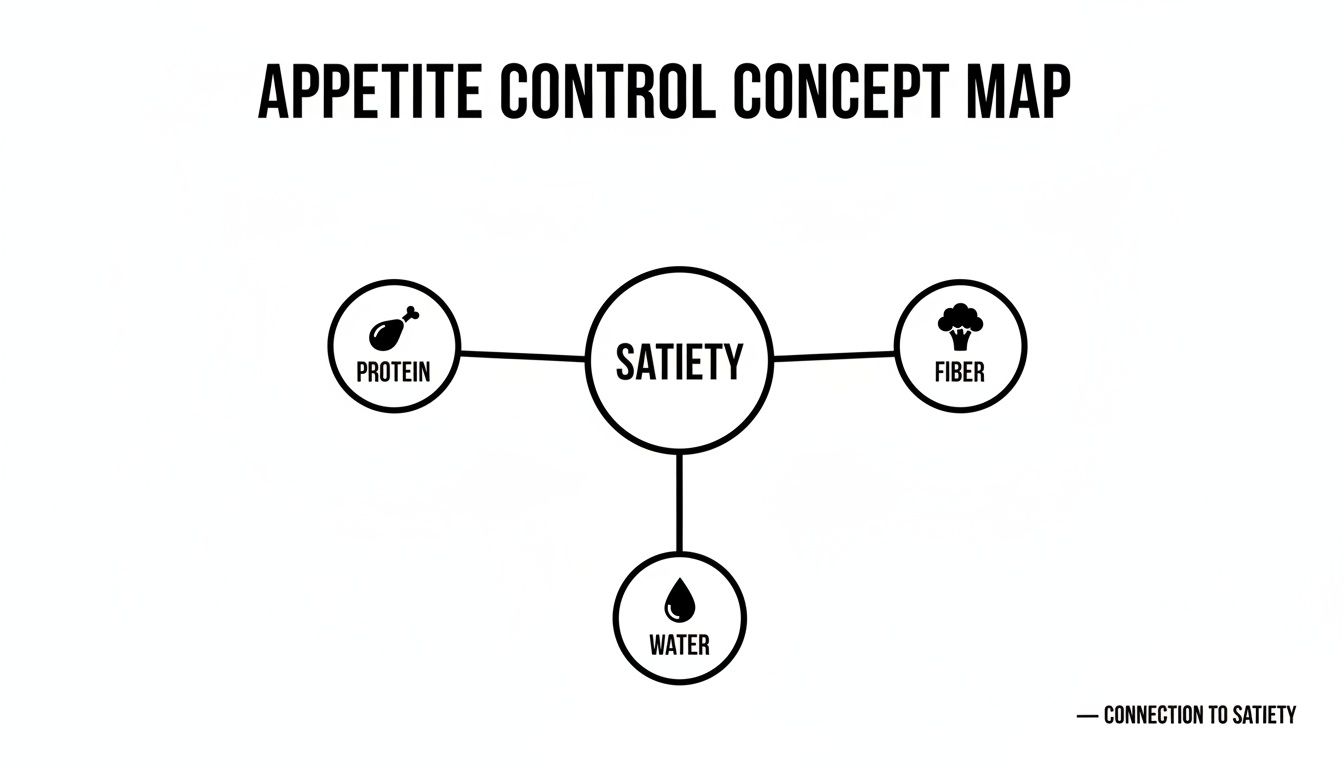
As you can see, true satiety isn't about just one thing. It's a team effort between protein, fiber, and water.
Putting the Science to Work
Once you understand this system, you can start making smarter, more strategic choices. For example, knowing that protein is fantastic at tamping down ghrelin and boosting those helpful satiety hormones explains why a grilled chicken breast keeps you feeling full for hours longer than a handful of crackers.
Similarly, fiber acts like a traffic controller in your digestive system, slowing everything down. This gives those fullness hormones more time to get to your brain and deliver their message. Even what you drink matters; you can dig into the science behind green tea's weight loss benefits to see how certain compounds can support your efforts.
By choosing foods that support your body's natural signaling, you help keep your gas and brake system running smoothly, giving you lasting energy and better control over your appetite.
Why Protein Is Your Strongest Ally
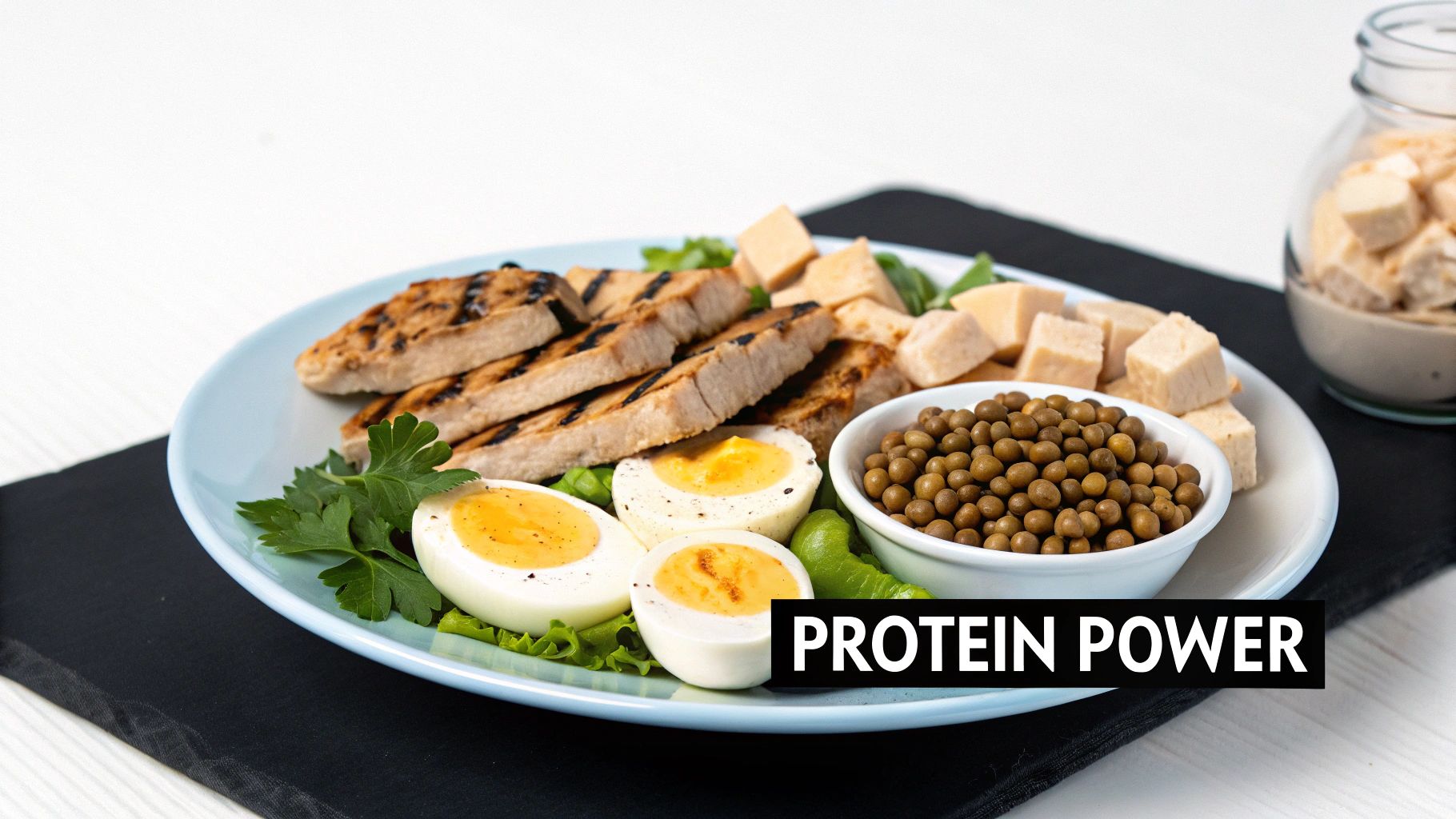
When it comes to controlling your appetite, one nutrient stands head and shoulders above the rest: protein. It does way more than just build muscle. Think of it as a powerful communicator that talks directly to your brain, helping to manage hunger and keep you feeling satisfied.
Making protein a priority is one of the single most effective things you can do to feel fuller for longer. This isn't just a feeling—it’s biochemistry in action. Protein has a knack for telling your hunger hormones what to do. It helps quiet down ghrelin, the hormone that makes your stomach rumble and scream "I'm hungry!"
At the same time, it ramps up the hormones that signal fullness, like peptide YY (PYY) and GLP-1. These are the messengers that tell your brain, "Okay, we're good here, you can stop eating." In a way, protein acts like a diplomat, calming the loud demands of hunger while turning up the volume on the quiet whispers of satiety.
The Thermic Effect and Lasting Fullness
Here’s another cool thing about protein: it has a high thermic effect of food (TEF). This simply means your body has to burn more calories to digest and process it compared to fats or carbs. That extra work your body is doing contributes to that long-lasting feeling of being full.
Ever notice how a carb-heavy breakfast like a pastry leaves you crashing and hungry an hour later? A protein-rich meal, on the other hand, provides a slow, steady stream of energy that keeps you feeling stable and satisfied for hours. This is exactly why eggs or Greek yogurt will carry you through a busy morning so much better.
By making protein the centerpiece of your meals, you’re not just filling your stomach. You're proactively managing your body's entire hunger-regulating system, which is a game-changer for sustainable weight management.
The science backs this up time and time again. Study after study shows that higher-protein diets lead to greater feelings of fullness and can reduce overall calorie intake by a noticeable 10-15%. If you want to nerd out on the details, you can explore the full analysis on protein's effect on satiety.
How Much Protein Is Enough?
So, what's the magic number? For real-deal appetite control, a good target is 25-30 grams of protein with each main meal. This is the sweet spot that seems to really kick those satiety hormones into gear and keep hunger from creeping back in.
Hitting that number consistently can seem tricky at first, but a little planning goes a long way. If you’re looking for some simple ways to boost your intake without overhauling your entire life, our guide on how to increase protein intake has you covered.
Choosing Your Protein Sources
The best protein sources are the ones you’ll actually eat, so variety is your friend. Whether you prefer animal-based or plant-based options, you’ve got plenty of great choices.
-
Animal-Based Proteins: Often called "complete" proteins, these contain all the essential amino acids your body needs.
- Lean Meats: Think chicken breast, turkey, and lean cuts of beef.
- Fish: Salmon and tuna are loaded with protein and healthy omega-3 fats.
- Eggs: An incredibly versatile and affordable powerhouse of nutrition.
- Dairy: Greek yogurt and cottage cheese are packed with casein, a slow-digesting protein that's amazing for keeping you full.
-
Plant-Based Proteins: You can absolutely crush your protein goals and control hunger on a plant-based diet.
- Legumes: Lentils, chickpeas, and black beans deliver a one-two punch of protein and fiber.
- Soy Products: Tofu, tempeh, and edamame are complete proteins that can be used in countless dishes.
- Nuts and Seeds: Almonds, chia seeds, and quinoa are great sources that also provide healthy fats and fiber.
Adopting a protein-first mindset gives your body its most powerful natural tool against overeating and nagging cravings. It makes managing your appetite feel less like a constant battle and more like an intuitive, sustainable way of life.
Using Fiber and Volume to Feel Full
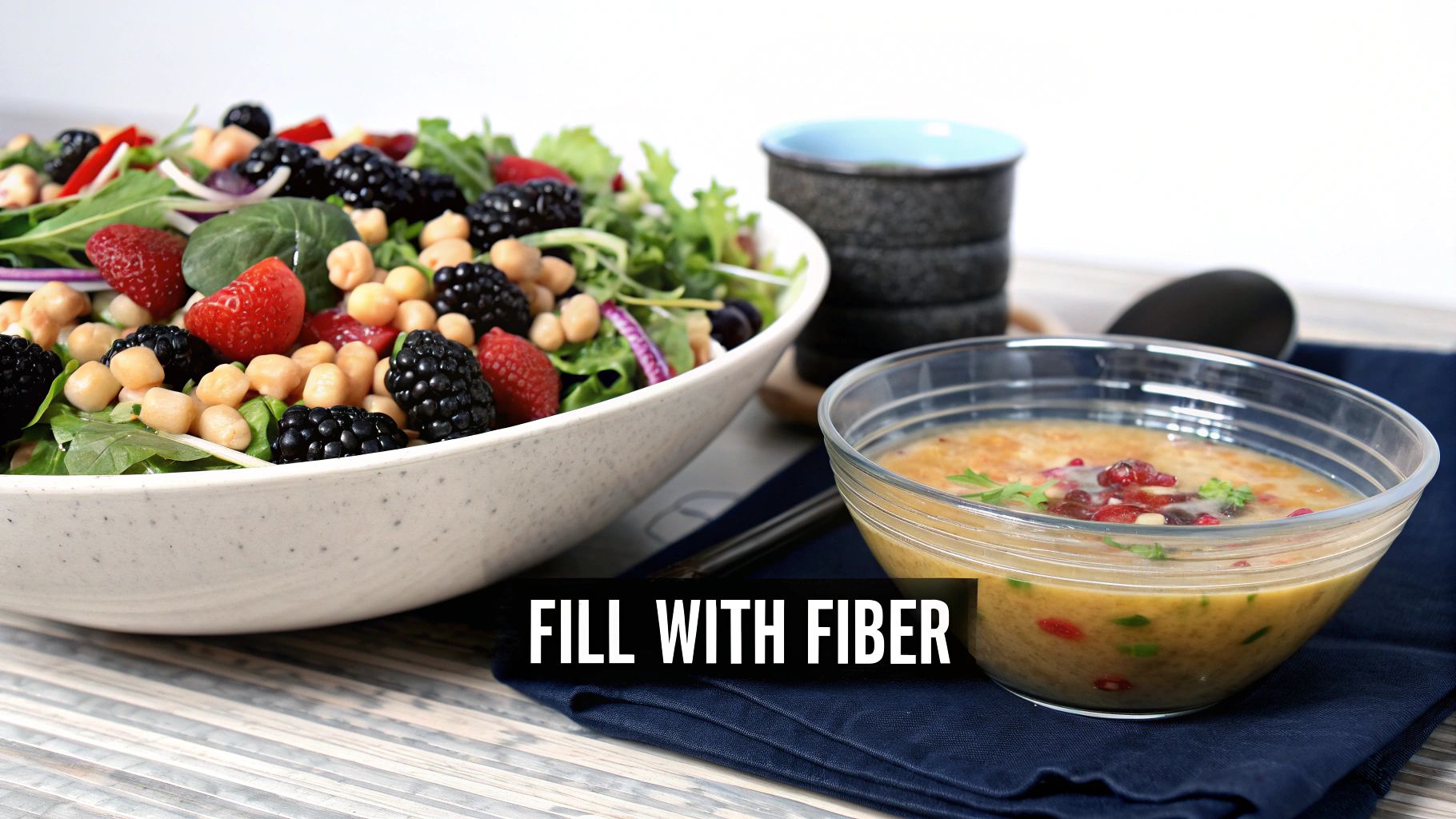
While protein is the MVP for managing hunger hormones, fiber and volume are the dynamic duo that tackles fullness from a purely physical angle. Think of them as your secret weapons for building truly satisfying meals that stop you from overeating without ever feeling like you're on a diet.
One works by slowing everything down, and the other simply takes up more space. Both send powerful "I'm full" signals to your brain, but in different ways. Let's dig into how you can use them to your advantage.
The Power of Soluble Fiber
When it comes to appetite, not all fiber is created equal. The real hero is soluble fiber, which has a unique ability to dissolve in water and form a thick, gel-like substance right in your digestive tract.
Picture a sponge soaking up water and expanding—that's exactly what soluble fiber does in your gut. This gel slows down how quickly your stomach empties, which is an absolute game-changer for staying full long after you've finished eating.
Because digestion is slower, the energy from your meal is released more gradually. This helps you avoid the sharp blood sugar spikes and subsequent crashes that send you running for the snack cabinet. It gives your body's fullness hormones more time to kick in, leading to a much more sustained sense of satiety.
By adding soluble fiber to your meals, you're essentially putting the brakes on digestion. It's a simple move that helps you feel satisfied for hours, making it one of the most reliable strategies for keeping hunger at bay.
You can find this powerhouse nutrient in everyday foods:
- Oats and Barley: Start your day with a hearty bowl that will stick with you until lunch.
- Legumes: Beans, lentils, and chickpeas are fiber-and-protein all-stars.
- Fruits: Apples, citrus fruits, and berries are fantastic, easy-to-grab sources.
- Vegetables: Think Brussels sprouts, broccoli, and carrots.
- Seeds: Chia and flaxseeds are tiny but incredibly mighty sources of soluble fiber.
Mastering the Art of Volume Eating
Our second strategy, volume eating, is an incredibly simple yet effective concept. It’s all about focusing on foods that are naturally high in water and fiber. Why? Because they let you eat a much larger, more visually impressive portion for a surprisingly small number of calories.
This approach works by physically filling your stomach. Your stomach walls have stretch receptors that are a key part of the satiety puzzle. When they sense that the stomach is expanding, they fire off strong "that's enough, I'm full" signals to your brain.
It’s the difference between a small handful of potato chips and a massive, vibrant salad. They might have the same calorie count, but that salad will keep you feeling full and energized for far longer. It's about eating more food, not less—just more of the right kinds.
Building a High-Volume Plate
Putting this into practice is way easier than it sounds. The goal is to bulk up your meals with low-calorie, nutrient-dense foods that take up a ton of space.
- Start with Soup: Kicking off a meal with a broth-based vegetable soup is a proven trick to reduce how much you eat overall. The liquid and fiber fill you up right from the start.
- Build a Better Salad: Forget a few sad lettuce leaves. Grab a big bowl and load it up with leafy greens like spinach or arugula, then pile on cucumbers, bell peppers, and tomatoes for extra bulk.
- Choose High-Water Fruits: Snacks like watermelon, strawberries, and cantaloupe are over 90% water. They're perfect for hydrating your body and satisfying a sweet tooth at the same time.
By combining the slowing power of soluble fiber with the stomach-filling magic of high-volume foods, you create meals that are almost impossible not to feel full from. This two-pronged attack is one of the most effective ways to find the best foods for appetite control and make healthy eating feel completely natural.
Healthy Fats and Food Texture: The Forgotten Keys to Feeling Full
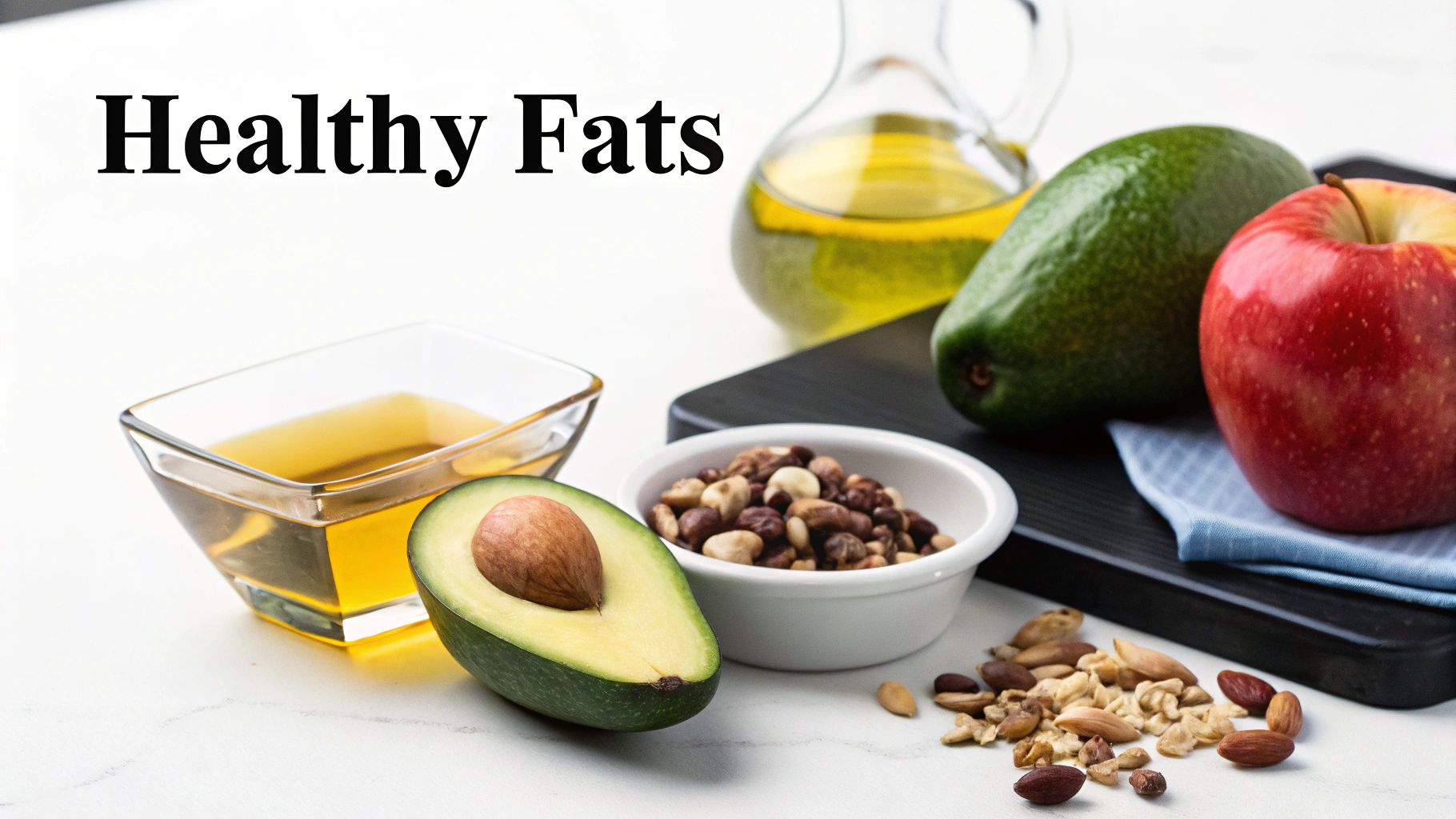
When we talk about managing hunger, protein and fiber usually steal the spotlight. But two other elements often fly under the radar, and they're just as crucial: healthy fats and the actual texture of your food.
Getting a handle on these two can add a whole new dimension to your appetite control strategy, making it much more effective and sustainable.
For a long time, fat was the bad guy on the nutrition block. Thankfully, we've moved past that, and we now know that the right kinds of fats are not only good for us but are fantastic for keeping hunger in check.
Healthy fats, like the ones you find in avocados, nuts, and olive oil, are incredibly energy-dense. Because of this density, they digest very slowly. This slow-burn process keeps them in your stomach longer, delaying the next round of hunger signals and extending that feeling of satisfaction long after you've finished eating.
How Healthy Fats Send the "I'm Full" Signal
It's pretty simple, really. When healthy fats arrive in your small intestine, they trigger the release of key satiety hormones like CCK (cholecystokinin) and GLP-1. These are powerful chemical messengers that basically tell your brain, "Hey, we're good down here, shut off the hunger."
Adding them to your meals is easy:
- Slice some avocado over your whole-grain toast.
- Toss a handful of almonds into your yogurt or salad.
- Drizzle some extra virgin olive oil on your veggies.
Just remember, quality matters. It's smart to focus on whole-food sources and understand how to avoid seed oils that can be inflammatory.
Why Chewing Your Food Actually Matters
It’s not just what you eat, but how you eat it. The physical form of your food makes a huge difference in how full it makes you feel.
Think about an apple versus apple juice. Even if the calories are identical, the whole apple is way more satisfying. Why is that?
First, the act of chewing itself sends early fullness signals to your brain. It gives your brain a head start in recognizing that food is on the way. You don't get that with a liquid you can down in seconds.
Solid foods also stick around in your stomach much longer than liquids. This "residence time" keeps your stomach stretched, which is another powerful signal to the brain that you're full and don't need to eat again just yet.
This isn't just theory; the science backs it up. Research consistently shows that food texture has a real, measurable effect on appetite. In fact, some studies have shown that simply swapping liquid calories for solid ones can lead to people eating ~10–20% fewer calories later on. Choosing foods that you have to chew is a simple but powerful tactic.
By combining healthy fats with foods that have real texture, you're hitting multiple satiety triggers at once. This makes your approach to finding the best foods for appetite control much more complete and, ultimately, more successful.
Building Your Satiety-Focused Meal Plan
Knowing the science behind satiety is one thing. Actually putting it to work on a hectic Tuesday night when you're staring into the fridge? That's a whole different story.
The good news is that you don't need a bunch of complicated recipes or a super-restrictive diet to build meals that genuinely keep you full. The trick is to think in terms of a flexible framework, not a set of rigid, unforgiving rules.
A truly satisfying meal strategically combines our key players—protein, fiber, and healthy fats—all on one plate. This powerful trio works in concert to manage your hunger hormones, slow down digestion, and give you lasting energy. Think of it as your best defense against those classic afternoon slumps and late-night raids on the pantry. The whole point is to make feeling satisfied the default outcome of every meal.
A Simple Template for Satiating Meals
Instead of getting bogged down in the details, use this simple blueprint for breakfast, lunch, and dinner. It’s a foolproof way to hit all the right notes for appetite control without needing to pull out a calculator.
- Start with Protein (The Centerpiece): Aim to make a quality protein source about one-quarter of your plate. This is the foundation that really kicks those fullness signals into gear.
- Add Fiber-Rich Carbs (The Sustainer): Fill another quarter with high-fiber carbs. Think quinoa, sweet potatoes, or beans. These guys provide that slow, steady burn of energy.
- Load Up on Volume (The Filler): Dedicate a full half of your plate to non-starchy vegetables. We're talking leafy greens, broccoli, bell peppers—anything that adds bulk and nutrients for very few calories.
- Include Healthy Fats (The Finisher): Drizzle on some olive oil, add a few slices of avocado, or sprinkle on some seeds. This is the final touch that slows digestion and really enhances that feeling of satisfaction.
This balanced approach doesn't just keep you full; it makes sure your meals are nutritionally complete, supporting both your immediate energy levels and your long-term health goals.
A perfect example of this framework in action? A big salad (volume) topped with grilled chicken (protein), a scoop of chickpeas (fiber), and a creamy avocado-lime dressing (healthy fat). It’s a meal literally engineered for satisfaction.
Smart Snack Strategies
Let's be honest, snacks are often where our best intentions for appetite control go right out the window. A smart snack should actually serve a purpose: to bridge the gap between meals with quality nutrients, not just a rush of empty calories. The key is to pick options that combine at least two of our key satiety elements.
- Protein + Fat: A classic handful of almonds or a simple hard-boiled egg.
- Protein + Fiber: A small bowl of edamame or some apple slices with a smear of peanut butter.
- Fiber + Fat: A bowl of fresh berries with a sprinkle of chia seeds.
One standout snack is Greek yogurt. Population-level evidence actually suggests that fermented dairy like yogurt can lead to greater reductions in hunger and bigger increases in fullness compared to other common snacks. Some longer-term studies even point to better weight management for people who regularly include calcium-rich dairy. You can dive deeper into the research behind dairy and appetite control.
By choosing your snacks as thoughtfully as your meals, you build an all-day strategy that makes finding the best foods for appetite control feel effortless and totally intuitive.
Got Questions About Taming Your Appetite? We Have Answers.
Even when you're armed with the best strategies, a few questions always come up when you're trying to get a handle on hunger. Let's tackle some of the most common ones so you can feel confident in your approach.
How Quickly Will I Feel a Difference With These Foods?
You'll actually feel it in two ways: right away and over time.
Foods high in protein and fiber get to work pretty fast, usually making you feel noticeably fuller within 30 to 60 minutes after you eat. That satisfying feeling can stick around for a few hours, which is exactly what you want to stop mindless grazing between meals.
The real magic, though, happens over the long haul. When you consistently eat this way, you're helping to regulate your body's hunger hormones. Day by day, your appetite becomes more stable, those intense cravings start to fade, and making healthy choices just feels easier and more automatic.
Does Guzzling Water Actually Help?
It absolutely does. Drinking a glass or two of water, especially before a meal, is one of the simplest and most effective tricks in the book. It takes up space in your stomach without adding a single calorie, which sends a "Hey, I'm getting full!" message to your brain.
Just remember that water is a great opening act, but it's not the main event. Protein and fiber are what provide the long-lasting satiety signals that keep you satisfied for hours. Water gives you an immediate, short-term edge, while nutrient-dense food provides the sustained feeling of fullness.
One study found that people who drank two glasses of water right before a meal ate quite a bit less than those who didn't. It's a small habit that delivers a real impact.
Is There a "Best" Protein for Staying Full?
While all protein is great for satiety, some research hints that certain types might be slightly more powerful. Proteins from dairy (like whey and casein found in Greek yogurt), lean meats, and legumes often get top marks for their ability to crush hunger.
But honestly, the most important thing is getting enough protein in the first place. Hitting that 25-30 gram sweet spot at each meal is what really moves the needle for triggering fullness and managing hunger all day long. The best protein is ultimately the one you enjoy and eat consistently.
Should I Just Cut Out All Carbs?
Not at all! It's not about avoiding carbs; it's about choosing the right ones.
The goal is to focus on complex carbs—the kind you find in whole grains, beans, lentils, and vegetables. These are loaded with fiber, which slows everything down, keeps you feeling full, and provides a nice, steady stream of energy without the crash.
The carbs you want to sidestep are the simple, refined ones like sugary drinks, candy, and white bread. They spike your blood sugar and then send it plummeting, which is a surefire recipe for a hunger emergency. Stick with fiber-rich carbs, and they'll be your ally, not your enemy.
Finding the best foods for appetite control is a lot simpler when you have delicious, protein-packed options on hand. For a savory, crunchy snack that delivers over 15g of plant-based protein per serving to keep you full and fueled, check out Gym Snack. Discover our cheesy, satisfying flavors at https://gymsnack.com.