

So you've decided to cut out seed oils. It's a journey that boils down to three core habits: getting really good at reading ingredient labels, swapping out your go-to cooking fats for better options, and learning how to eat out without accidentally derailing your efforts.
Master these three things, and you'll have the foundation for a lifestyle free from these highly processed fats.
Why Bother Avoiding Seed Oils Anyway?
Let’s be real for a moment: seed oils are absolutely everywhere. They’re lurking in restaurant fryers, most packaged snacks, salad dressings, and even things you wouldn't expect. They've become a default ingredient in our modern food system.
So what's the big deal? Why is everyone suddenly talking about them?
At their core, industrial seed oils are fats that have been extracted from plant seeds. The name sounds natural enough, but the process is anything but. Getting oil from a tiny canola or soybean seed isn't like pressing an olive; it's an intense, industrial process involving high heat, chemical solvents (like hexane), and bleaching and deodorizing agents.
The "Hateful Eight" to Watch For
To get started, you just need to familiarize yourself with the main culprits. Most of the seed oils you'll encounter fall into a group of eight that completely dominate the processed food world. Once you know their names, you'll start seeing them on labels everywhere.
- Canola (Rapeseed) Oil
- Corn Oil
- Cottonseed Oil
- Soybean (Soy) Oil
- Sunflower Oil
- Safflower Oil
- Grapeseed Oil
- Rice Bran Oil
A major reason people are cutting back on these is their high concentration of omega-6 polyunsaturated fatty acids (PUFAs). Now, omega-6 isn't inherently bad—it's an essential fatty acid. The problem is the sheer amount we consume today. Our intake has skyrocketed over the past century, throwing our omega-6 to omega-3 ratio completely out of whack, which some research suggests can contribute to chronic inflammation.
This all kicked off back in the early 1900s. Hydrogenated cottonseed oil, a byproduct originally intended for making soap, was brilliantly marketed as a cheap, modern replacement for traditional fats like lard and butter. The food supply has never been the same since.
Ultimately, this isn't about being afraid of fat. It's about being more intentional about the types of fat we eat. Understanding the "why" gives you the motivation to stick with it, but the "how" is where you'll see the real changes. It's all about making informed choices, one meal at a time.
How to Spot Hidden Seed Oils on Ingredient Labels
Your first line of defense against seed oils is at the grocery store. Learning how to read an ingredients label is probably the most powerful skill you can develop on this journey, and it's easier than you think. You just have to learn to ignore the flashy claims on the front of the package and turn it over to the fine print.
That little nutrition panel is where the truth lies. Manufacturers have to list everything, but they have a few tricks up their sleeves. Your job is to become a label detective and scan for the usual suspects, which are often hiding in plain sight.
The 8 Most Wanted Oils and Their Aliases
There are eight main seed oils you'll want to keep an eye out for: canola, corn, cottonseed, soy, sunflower, safflower, grapeseed, and rice bran oil.
But here's the catch: they aren't always listed so clearly. A really common tactic is to lump them all together under a vague, generic name.
If you see "vegetable oil," "vegetable oil blend," or "plant-based oil" on a label without spelling out exactly which oils are used, you should assume it's a mix of the seed oils you're trying to avoid. Don't risk it—just put it back on the shelf.
For example, a bag of tortilla chips might list "vegetable oil (contains one or more of the following: corn, soybean, or sunflower oil)." Or a box of crackers might list "soybean oil" and "vegetable shortening," which is just a solid, hydrogenated form of soybean or cottonseed oil.
A Quick Reference: Common Seed Oils and Where They Hide
To make this easier, I've put together a simple table. It's a quick cheat sheet for the oils to avoid and the foods where they're almost always found.
| Seed Oil to Avoid | Often Found In |
|---|---|
| Canola (Rapeseed) Oil | Salad dressings, mayonnaise, granola bars, baked goods |
| Corn Oil | Tortilla chips, fried foods, margarine, baked goods |
| Cottonseed Oil | Potato chips, shortening, packaged pastries |
| Soybean Oil | Almost everything: sauces, dressings, mayo, baked goods |
| Sunflower Oil | Chips, crackers, coffee creamers, vegan products |
| Safflower Oil | Similar to sunflower oil; found in snacks and creamers |
| Grapeseed Oil | "Healthy" snack foods, some mayonnaise brands |
| Rice Bran Oil | Often in "stir-fry" sauces and some fried snacks |
This isn't an exhaustive list, but it covers the vast majority of products you'll run into. Once you start looking, you'll be amazed at how often these pop up.
Real-World Examples Hiding in Your Pantry
Because they're cheap and don't have much flavor, seed oils have become the default fat for thousands of food products. Let’s look at a few common items where they almost always make an appearance:
- Salad Dressings: Nearly every single shelf-stable dressing, especially creamy ones like ranch or caesar, uses soybean or canola oil as its primary ingredient.
- Coffee Creamers: Many non-dairy creamers use sunflower or safflower oil to achieve that smooth, creamy consistency.
- Packaged Snacks: This is a big one. Crackers, chips, pretzels, granola bars—you name it. Seed oils provide crunch and keep them from going stale. Even seemingly innocent snacks like many processed chocolates use them as cheap fillers or emulsifiers.
- Mayonnaise and Aiolis: Classic mayo is just oil and egg yolks. Unfortunately, the vast majority of brands on the shelf use soybean, canola, or a blend of the two.
- Plant-Based Meats & Dairy: To mimic the fat content and texture of animal products, many vegan cheeses, butters, and meat substitutes rely heavily on seed oil blends.

Finding pre-made snacks that are free from these oils can feel like a real challenge. If you're looking for good alternatives, our guide on gluten-free high-protein snacks is a great place to start.
The sheer scale of seed oil use is staggering. It's predicted that global vegetable oil production will reach 234.5 million tonnes in 2025/26. In the US alone, soybean oil makes up 13.7% and canola oil 10.6% of the world's total food consumption of these fats. They really are everywhere.
It really boils down to this: if it comes in a package, check the label. If you're cooking with high heat, choose a stable fat. Following those two simple rules will help you navigate around most of the hidden seed oils in our food supply.
Restocking Your Kitchen with Healthy Fats
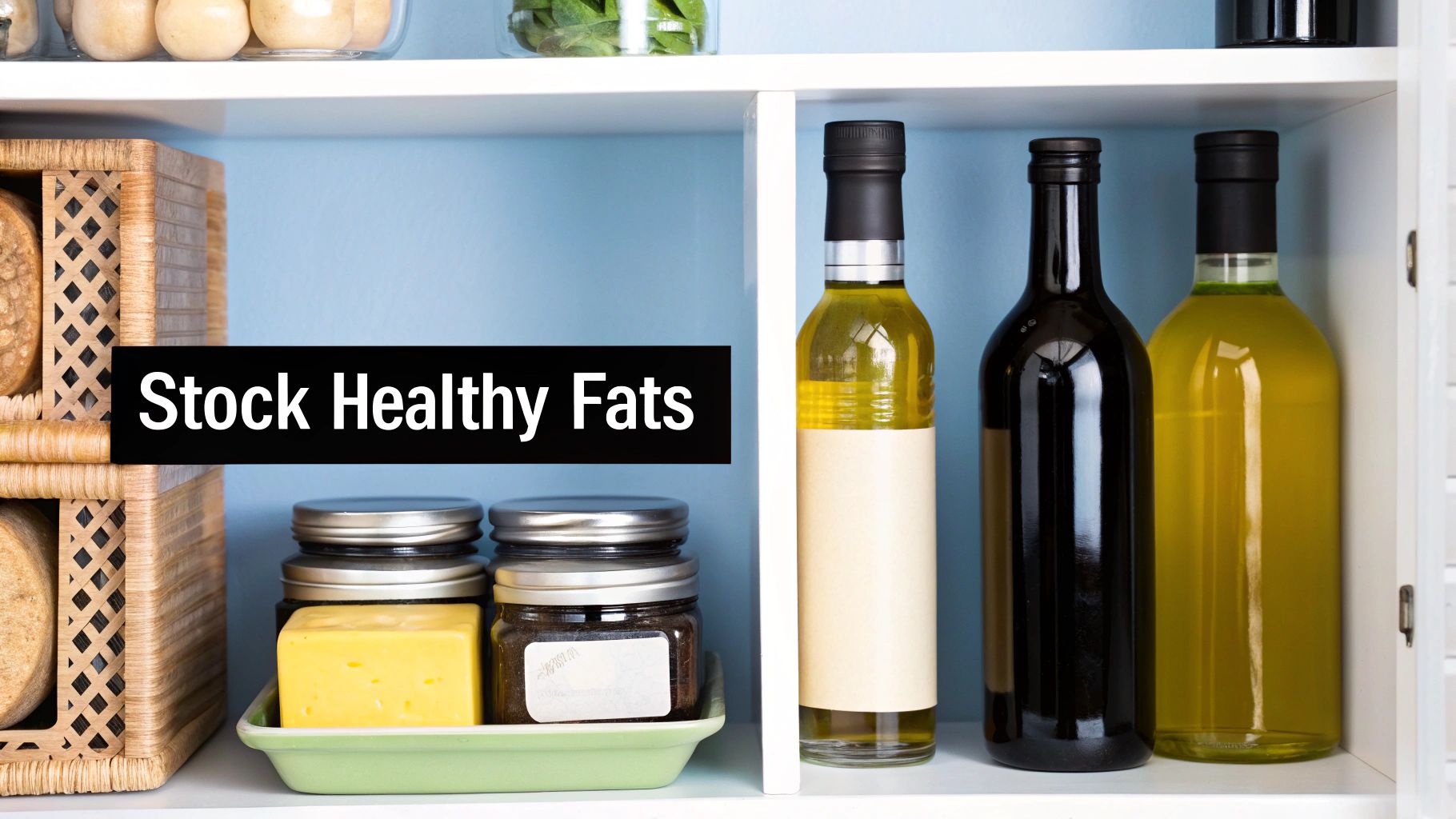
Once you get the hang of reading labels, the fun part begins: overhauling your kitchen. Learning how to avoid seed oils isn't about deprivation. It’s about rediscovering a world of rich, delicious fats that will completely change the way you cook. This is your chance to build a pantry that truly nourishes you.
Think of it as a simple, powerful upgrade. For every bottle of seed oil that leaves your pantry, you’ll bring in a stable, flavorful, and incredibly versatile alternative. It actually makes cooking easier and more enjoyable once you get a feel for which fats work best for different meals.
Choosing Your Go-To Cooking Fats
The secret to cooking with healthy fats is matching the right one to the right cooking method. This mostly comes down to its smoke point—the temperature where an oil starts to break down and smoke. Pushing an oil past its smoke point can create harmful compounds, which is exactly what we’re trying to move away from.
Here’s my simple guide for picking the right fat for the job:
-
For High-Heat Cooking (Searing, Roasting, Frying): You need fats that can handle the heat without breaking down. My top picks are avocado oil, ghee (clarified butter), and tallow. They all have high smoke points and a clean, neutral flavor that lets your food be the star.
-
For Medium-Heat Cooking (Sautéing, Baking): This is where things get more flexible. Butter, coconut oil, and even some refined avocado oils are perfect. They bring a wonderful richness to everything from morning eggs to your favorite baked goods.
-
For No-Heat or Low-Heat Uses (Dressings, Drizzling): Here, it's all about flavor. A fantastic extra virgin olive oil is an absolute must-have for salad dressings and finishing dishes with a pop of flavor. When you restock, making a high-quality Arbequina Olive Oil your go-to is one of the best first steps you can take.
This approach really simplifies things. Instead of a pantry crowded with a dozen different unstable oils, you just need a few trusted staples to cover all your cooking bases.
Building Your Seed-Oil-Free Pantry
Alright, let's get practical. A well-stocked pantry is the key to making this lifestyle feel natural and effortless. Your first shopping trip should focus on swapping out the most common seed-oil-based products for better alternatives.
Pro Tip: You don't have to trash everything at once. That can be overwhelming and expensive. Just replace items as you run out. A gradual transition is much more sustainable for your sanity and your wallet.
Start with these key swaps:
- Cooking Oil: Ditch the giant jugs of canola and "vegetable oil." Replace them with a good bottle of avocado oil for high-heat cooking and a quality extra virgin olive oil for everything else.
- Butter and Spreads: Get rid of margarine and any buttery spreads containing soybean or canola oil. Swap them for real, grass-fed butter or ghee. The taste difference is night and day.
- Baking Fats: Replace that tub of vegetable shortening with butter, coconut oil, or even tallow for unbelievably flaky savory pie crusts. The texture and flavor are simply superior.
- Mayonnaise and Dressings: This is a huge one. Most store-bought versions are loaded with seed oils. Look for brands made with avocado or olive oil, or better yet, make your own. Homemade mayo with an immersion blender takes less than two minutes, seriously.
This shift does more than just help you avoid certain ingredients; it encourages you to focus on whole, nutrient-dense foods. By consciously choosing healthy fats, you're naturally paying more attention to your macronutrient balance—a fundamental concept we dive into in our guide to understanding macros for weight loss.
The movement away from these industrial oils is picking up steam. While the global market for cheap vegetable oils is still massive, traditional fats are making a major comeback. Global production of coconut oil is projected to be 3.824 million metric tons and olive oil 2.507 million metric tons for 2024/25, proving that people are actively seeking out these healthier, high-quality alternatives.
Navigating Grocery Aisles for Seed Oil-Free Finds
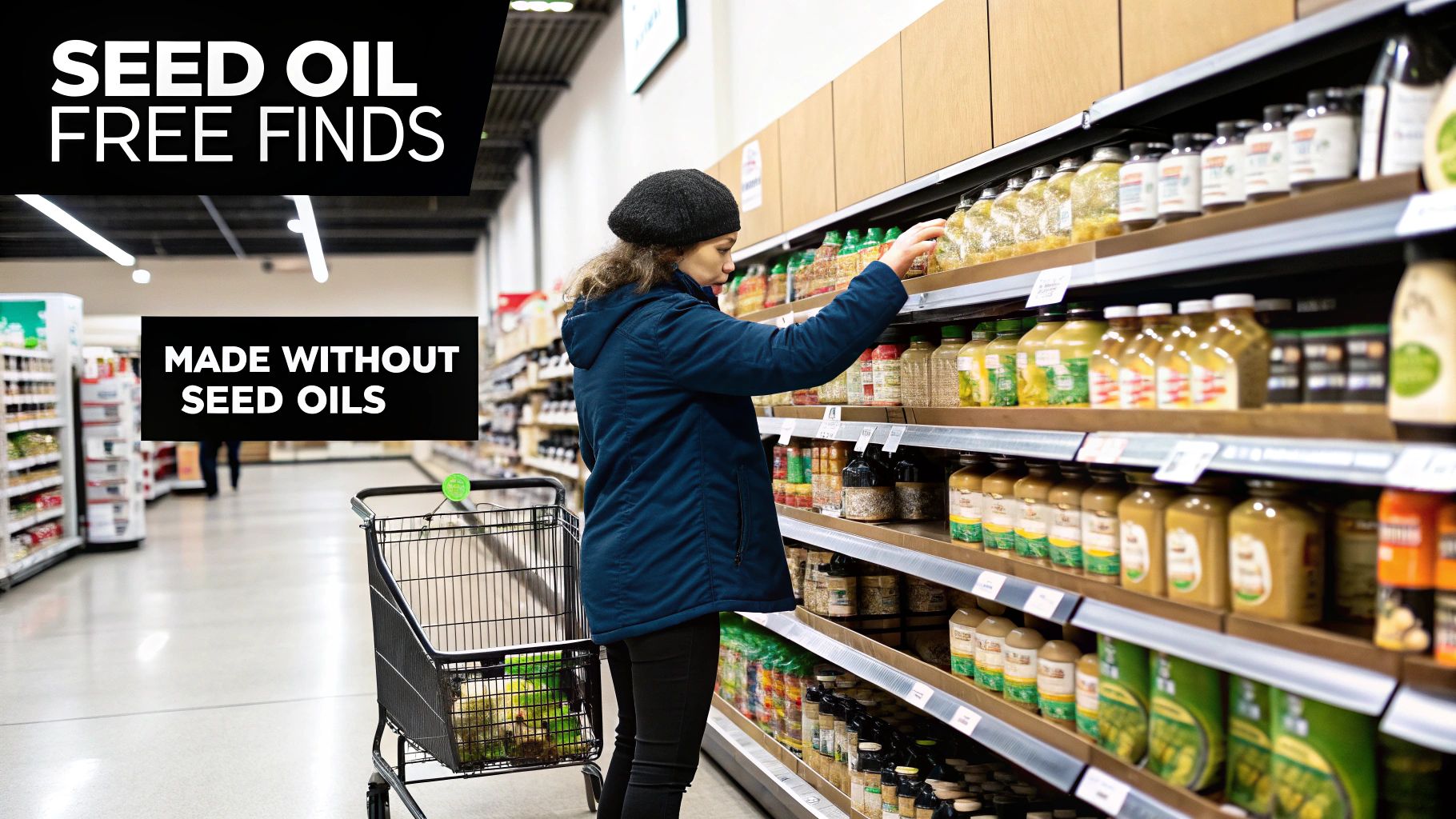
Once you step away from the cooking oil aisle, your new label-reading skills really get to prove their worth. Packaged foods are easily the biggest source of hidden seed oils, but you'll find plenty of fantastic options once you know what to look for. Think of this as your strategic shopping guide.
The goal here isn't to make you prepare every single thing from scratch—who has time for that? It's about finding convenient, ready-made choices that make this way of eating feel sustainable. Having a handful of go-to brands you trust makes all the difference.
The Snack Aisle Strategy
Let's be real: the snack aisle can feel like a minefield. Potato chips, crackers, pretzels… nearly everything is fried in or formulated with cheap seed oils to get that perfect crispy texture. The good news is, a growing number of brands are catching on and switching to better fats.
As you're scanning the shelves, here’s what to look for:
- Potato Chips: Hunt for brands that proudly advertise being fried in avocado oil, coconut oil, or even olive oil. The kettle-cooked section is often a great place to start your search.
- Tortilla Chips: You can actually find a lot of authentic-style brands that use traditional fats like tallow or lard—these are excellent. Others are popping up that use avocado oil.
- Crackers & Pretzels: This category is a bit tougher, but not impossible. You’ll need to put your label-reading skills to the test and look for brands made with butter or olive oil.
Finding snacks that are both convenient and satisfying is a huge part of sticking with this long-term. If you need some more ideas, check out our list of the best on-the-go protein snacks, which has great options that fit right in.
Conquering Condiments and Sauces
Condiments are another sneaky spot where seed oils are almost always the default. Just take a walk down the salad dressing or mayo aisle, and you’ll see a wall of soybean and canola oil.
The secret to finding seed-oil-free condiments is to seek out smaller, health-focused brands. They often build their entire identity around using high-quality fats like avocado and extra virgin olive oil.
Your mission is to find solid replacements for the basics. Brands like Primal Kitchen and Sir Kensington's (specifically their avocado oil line) have become household names for this very reason. You can find everything from avocado oil mayo to olive oil-based dressings and marinades, making it easy to stock your fridge without compromise.
Frozen Foods and Ready-Made Meals
The frozen section can be a lifesaver on busy nights, but it's also ground zero for highly processed foods. The same rule applies here: ignore the flashy health claims on the front of the box and flip it over to read the ingredients.
- Frozen Fries & Veggies: Always check what they’re fried or coated in. Many "roasted" vegetable medleys are secretly tossed in soybean oil. Look for options with no added oils at all.
- Prepared Meals: Your best bet is to find brands that are dedicated to clean, simple ingredients. Things like frozen burger patties are often a safe bet, as they’re usually just ground meat and salt.
- Pizza: This one's tricky. Most frozen pizza crusts are loaded with seed oils. A better move is often to buy a seed-oil-free crust and just add your own toppings.
Getting the hang of this just takes a little practice. At first, you’ll definitely spend more time reading labels. But before you know it, you'll have a mental catalog of your trusted brands and products, making your weekly shopping trips fast, efficient, and totally stress-free.
How to Dine Out Confidently and Avoid Seed Oils
Eating at restaurants can feel like navigating a minefield when you're committed to avoiding seed oils. This is where your best intentions meet the real world, but don’t worry—with a simple strategy, you can absolutely enjoy a meal out without feeling stressed or deprived.
The key is a little bit of prep and some polite communication. Before you even leave the house, a quick look at the restaurant's menu online can give you major clues. If you see a lot of items described as "crispy," "fried," or "golden brown," you’re probably in for a challenge.
Developing Your Script
Asking about cooking oils doesn't have to be awkward. I’ve found that keeping it simple, friendly, and direct works best.
When your server comes to the table, you can try one of these approaches:
- The Direct Question: "Hi, I have a quick question about the menu. What kind of oil do you use for cooking, especially for things like searing fish or sautéing vegetables?"
- The Allergy Angle: "I have a sensitivity to certain vegetable oils like soybean and canola. Could you please tell me what you cook with? Would it be possible to have my dish cooked in butter or olive oil instead?"
- The Positive Frame: "I'm trying to stick to just olive oil or butter. Which dishes on the menu are prepared with those?"
Keep in mind that many people in the food industry might not share your concerns. A 2025 consumer survey found that 53% of people believe seed oils are safe, and 45% even think they're beneficial. This perspective often extends to restaurant kitchens, so a friendly, non-demanding tone goes a long way. If you're interested, you can learn more about these consumer views in the full survey report.
Choosing Safer Cuisines and Dishes
Some types of restaurants are just naturally more aligned with a seed-oil-free lifestyle. By choosing your cuisine wisely, you can dramatically increase your chances of finding a safe and delicious meal.
Generally Safer Bets:
- Authentic Italian: Traditionally relies on high-quality extra virgin olive oil. Stick to grilled meats, simple pasta with olive oil-based sauces, and fresh salads.
- Greek & Mediterranean: Similar to Italian, olive oil is the star of the show. Grilled kebabs, salads, and roasted vegetables are all excellent choices here.
- Steakhouses: They often cook steaks in butter or on a dry grill. You just have to be careful and ask about the sides—roasted potatoes or veggies are sometimes tossed in seed oil before hitting the oven.
The most important rule when dining out: If it's deep-fried, it's almost certainly cooked in seed oil. This includes french fries, onion rings, tempura, and fried chicken. Restaurant fryers are universally filled with cheap, high-heat seed oils.
When in doubt, stick to the simplest preparations on the menu. Anything grilled, steamed, poached, or raw is going to be your safest option. A grilled steak with a side of steamed vegetables or a fresh salad with olive oil and vinegar on the side is a fantastic choice nearly anywhere.
Remember, progress—not perfection—is the goal here. It's about enjoying your social life while still staying on track.
Common Questions About a Seed Oil Free Lifestyle
Whenever you start a new way of eating, questions are bound to pop up. Making the switch away from seed oils is no different, and it's totally normal to hit a few snags while you're getting the hang of it. Let's tackle some of the most common sticking points so you can feel confident moving forward.
Is It Expensive to Avoid Seed Oils?
I get it—at first glance, it can definitely seem that way. A bottle of good avocado oil or extra virgin olive oil is certainly pricier than that giant, generic jug of "vegetable oil." But the real story is a bit more nuanced, and the costs tend to balance out.
Most people find that cutting out seed oils naturally pushes them to cook more at home. That simple shift saves a ton of money compared to eating out or grabbing processed meals. You can also be strategic about it:
- Buy in bulk: You can often find larger tins or bottles of quality fats that are cheaper per ounce.
- Shop the sales: Keep an eye out for discounts on your favorite brands and stock up.
- Prioritize your swaps: Start by replacing the one or two oils you use most often. You don't have to overhaul your entire pantry overnight.
The upfront cost for better ingredients is really an investment that gets offset by the move toward more whole, home-cooked foods.
It's really about a shift in perspective. Instead of seeing it as an extra cost, think of it as reallocating your food budget toward ingredients that give you way more in terms of both flavor and nutrition.
What if I Accidentally Eat Seed Oils?
It's going to happen. And that is completely okay. The whole point of learning how to avoid seed oils is about making consistent, better choices over the long haul—it’s not about being perfect.
Life happens. You'll go to a friend's house for dinner, or find yourself at a restaurant with limited options. Don't let one meal throw you off course or stress you out. Just acknowledge it and get right back to your routine with your next meal. One slip-up isn't going to undo all your progress. The real goal is to drastically lower your overall consumption, not to maintain some unrealistic, flawless record.
Are All Vegetable Oils Bad?
This is a great question, and it's where a lot of the confusion comes from. The term "vegetable oil" itself is a bit of a trap. Technically speaking, oils that come from fruits—like olive, avocado, and coconut oil—are also vegetable oils. And those are the healthy ones we want!
The problem is what you see on an ingredient label. When a package just says "vegetable oil," consider it a red flag. It's almost always a generic, highly-processed blend of the exact seed oils you're trying to avoid, like soybean, corn, or canola. Food manufacturers use this vague term because it allows them to swap out whatever oil is cheapest at the moment.
So, my rule of thumb is this: when you're reading a label, look for a specific oil. If all it says is "vegetable oil," put it back on the shelf.
Finding snacks that fit this lifestyle can be a challenge, but at Gym Snack, we make it simple. Our savory protein snacks are crafted without any seed oils, giving you a delicious, crunchy, and convenient option to fuel your day.