

What you eat before you hit the gym can make or break your workout. The best approach is to combine easily digestible carbohydrates for quick energy with a moderate amount of protein to get your muscles ready for action. Think of a banana with a scoop of almond butter or a small bowl of oatmeal with berries—these are classics for a reason, fueling your body effectively without weighing you down.
Fueling Your Workout the Right Way
Ever feel like you’re running on empty mid-set? Or maybe you’ve hit that dreaded wall long before your workout is supposed to be over. If that sounds familiar, you're not alone. The secret to consistent energy isn't just about showing up; it's about showing up properly fueled. This guide is here to cut through the noise and show you exactly what to eat and when.
We’ll break down how the right mix of energizing carbs and muscle-prepping protein can completely change your performance. Forget the guesswork. This is a clear, practical roadmap with real-world meal ideas, whether you're a seasoned athlete or just getting started on your fitness journey.
The goal is simple: supply your body with the right fuel at the right time. This ensures you have the power for intense work while preventing the digestive discomfort that can derail a great session.
Get ready to see how a few simple nutritional tweaks can unlock your best performance yet.
The Growing Demand for Smart Fuel
Paying close attention to pre-workout nutrition is way more than a passing trend—it's become a global movement. People who are serious about fitness understand more than ever that what they eat has a direct line to their results.
This awareness is fueling massive growth in the pre-workout supplement market, which absolutely includes protein-packed snacks. Projections show the market soaring from USD 21.7 billion in 2025 to a massive USD 44.7 billion by 2035. This boom isn't just about hype; it reflects a genuine demand for clean carbs and quality protein to power better workouts.
While our focus here is on what to eat before the gym, smart nutrition is also critical for sustained performance during a long event. For a deep dive into that side of things, check out these great tips on how to fuel during a marathon.
Your Pre-Workout Macronutrient Blueprint
Think of your body like a high-performance engine getting ready for race day. You wouldn't just toss any old fuel in the tank and expect to win, right? The same goes for your pre-workout meal. Your body's fuel comes from three main sources—carbohydrates, protein, and fat—and getting the right mix is what separates a good workout from a great one.
Each of these macronutrients has a very specific job to do. To really nail your pre-gym nutrition, the formula is surprisingly simple: go high in carbohydrates, moderate in protein, and low in fat. This combo gives you that sustained energy you need without weighing you down or causing digestive issues mid-set.
Carbohydrates: Your High-Octane Fuel
Carbs are, without a doubt, the star of the show. They are your body's go-to, most efficient energy source. When you eat them, they break down into glucose, which is the immediate fuel your muscles crave for every single contraction. Think of carbs as the premium gasoline that powers every lift, sprint, and push.
Not all carbs are created equal, though. Here’s a quick breakdown:
- Simple Carbs: These are your fast-acting fuel, found in things like fruit. They digest quickly, giving you a rapid energy spike. Perfect if you only have 30-60 minutes before your session and need a quick boost.
- Complex Carbs: Found in oats, brown rice, and sweet potatoes, these guys are the slow-burners. They provide a steady, reliable stream of energy, making them the ideal foundation for a meal eaten 2-3 hours before you hit the gym.
Protein: The Muscle Repair Crew
While carbs are busy fueling the work, protein is playing a critical supporting role. Picture protein as the maintenance crew that’s on-site before the work even starts. Having a moderate amount of protein before your workout supplies your bloodstream with amino acids, which essentially preps your muscles for the stress they're about to face.
This pre-emptive protein helps protect your muscles from breaking down during exercise and kicks off the recovery process much faster once you're done. It's about making sure the repair work can start the second your final rep is finished. If you're looking for ways to hit your protein goals, our guide on how to increase protein intake has some great, easy-to-implement tips.
The goal isn't just to fuel the effort; it's to protect the muscle you've worked so hard to build. A little pre-workout protein is like an insurance policy against muscle damage.
Fat: The Long-Haul Reserve Tank
Fats are absolutely vital for overall health, but they need to take a backseat right before you train. Why? Because fat takes a long, long time to digest.
Eating a fatty meal too close to your workout can cause a real problem. Your body has to divert blood and energy to your digestive system instead of sending it to your muscles where you actually need it. This often leads to that sluggish, heavy feeling—or worse, cramps.
Think of fat as your body's reserve fuel tank. It’s fantastic for low-intensity, long-duration activities, but it’s not what you want for immediate, explosive power. It’s best to save your healthy fats for other meals, well away from your gym time, to let your body focus on performance.
How to Time Your Pre-Gym Meal for Maximum Energy
Knowing what to eat before the gym is a great start, but knowing when to eat it is what truly separates a good workout from a great one. Think of it like this: you wouldn't fill up your car's gas tank right as you're merging onto the highway. The timing is everything.
Eat too far in advance, and you might feel your energy fading halfway through your first set. Eat too close to your workout, and you'll likely feel sluggish, bloated, or even nauseous as your body tries to pull double duty—digesting food while also trying to power your muscles.
The secret is learning to match your food choices to your timeline. A larger meal needs a few hours to break down into usable fuel, while a simple snack can give you a quick energy jolt right when you need it most. Get this timing right, and you'll step into the gym feeling light, powerful, and ready for whatever your workout throws at you.
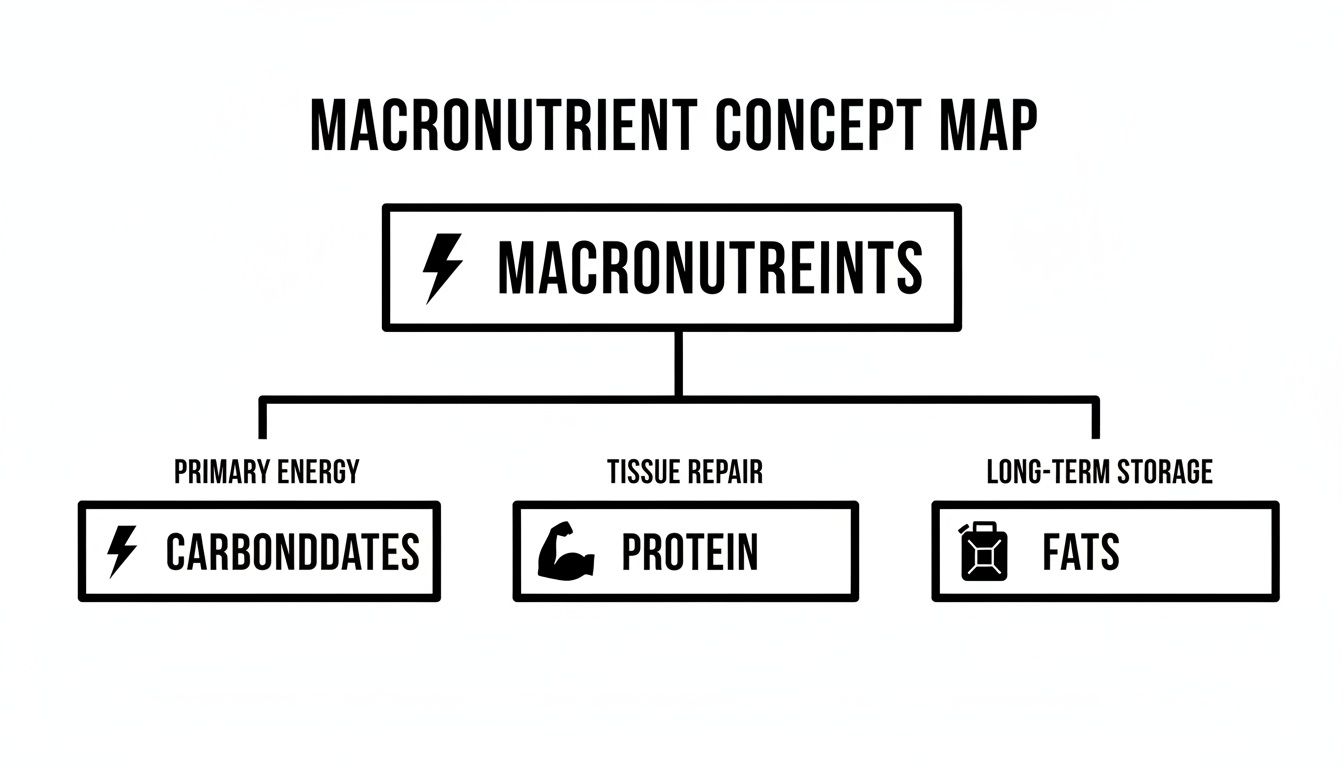
As you can see, carbohydrates are your go-to for immediate energy, protein gets your muscles ready for action and helps with repair, and fats provide a slower, more sustained fuel source. The trick is choosing the right mix based on how much time you have.
To make things simple, here’s a quick-reference guide for timing your pre-workout fuel perfectly.
Pre-Workout Nutrition Timing Guide
| Time Before Workout | What to Eat | Example Foods |
|---|---|---|
| 2-3 Hours | A balanced meal with complex carbs, lean protein, and a small amount of healthy fat for sustained energy. | Grilled chicken with brown rice and broccoli; tofu scramble. |
| 60-90 Minutes | A moderate snack focused on easily digestible carbs with a little protein to top off energy stores. | Greek yogurt with berries; oatmeal; a whole-wheat toast. |
| 30 Minutes or Less | A small, fast-acting carbohydrate source for a quick energy boost without digestive upset. | A banana; a handful of dried fruit; a convenient Gym Snack bar. |
This table gives you a solid starting point, but let’s dig a little deeper into what’s happening in each of these windows.
The 2-3 Hour Window: The Full Meal
Got a couple of hours to spare? Perfect. This is your prime opportunity to sit down for a complete, well-rounded meal. You have enough time to properly digest a solid combination of complex carbohydrates and a decent serving of lean protein without any issues.
This window allows your body to fully process those nutrients, converting the carbs into glycogen—the premium fuel your muscles run on. The protein starts supplying a steady stream of amino acids, prepping your muscles for the upcoming work and kicking off the recovery process before you even start.
- What to Eat: Aim for a meal with roughly 40-60 grams of complex carbs and 20-30 grams of protein. Keep the fat content low to avoid slowing down digestion.
- Why It Works: You're essentially filling your muscle glycogen stores to the brim for long-lasting energy while giving your body the building blocks it needs for performance and repair.
The 60-90 Minute Window: The Smart Snack
If you only have about an hour and a half, a full meal is definitely out. Trying to lift heavy after a big plate of food is a recipe for disaster. Instead, this is the ideal time for a substantial but easily digestible snack.
Think of this as topping off the tank, not filling it from empty. You're bridging the gap to make sure you have enough immediate fuel to power through your entire session without hitting a wall.
Your goal here is something smaller than a meal, with a focus on carbs and just a touch of protein. Great choices include a small bowl of oatmeal, a piece of fruit with a handful of almonds, or Greek yogurt with some berries.
The 30-Minute Express Lane: The Quick Boost
Life gets busy, and sometimes you're just scrambling to squeeze in a workout. When you have 30 minutes or less, your strategy has to be laser-focused: quick, simple, and all about fast-acting carbs.
Forget about protein and fat at this stage—they take too long to digest and will just weigh you down. What you need is a shot of simple sugar that your body can absorb almost instantly to give you that immediate burst of energy.
- What to Eat: A small banana, a few dates or other dried fruit, or a single serving of a sports gel.
- Why It Works: These foods provide a rapid spike in blood glucose for immediate fuel, giving you that last-minute push you need to get going without any digestive drag.
Your Go-To List of Pre-Workout Meals and Snacks
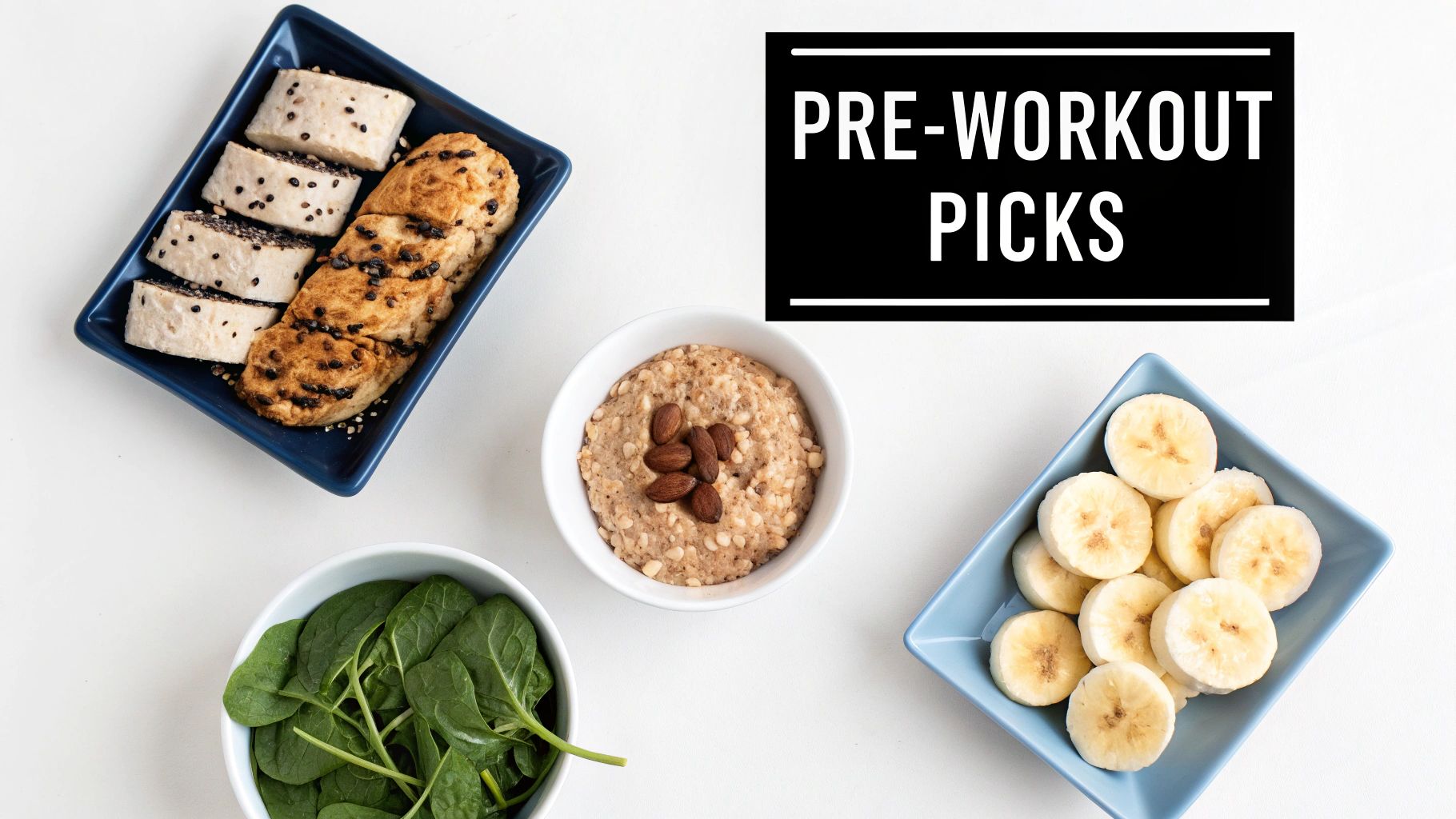
Knowing the science is great, but let's be honest—what you really need is a list of simple, effective foods you can actually eat. So, let’s move from theory to practice with some of the best foods to eat before hitting the gym.
I've broken these down into omnivore and plant-based ideas so there's something for everyone. Whether you've got an hour for a full meal or just a few minutes to grab a quick snack, these options are designed to give you that sustained energy you need to perform your best.
Omnivore Pre-Workout Options
If you eat animal products, getting a solid mix of lean protein and quality carbs is pretty straightforward. These meal and snack ideas are designed to digest well and fuel you through even the most grueling workout.
A tried-and-true classic is grilled chicken with sweet potato. If you can eat this about two hours before your workout, the slow-release energy from the complex carbs and the steady stream of amino acids from the lean protein will set you up for a killer session.
Here are a few more fantastic omnivore ideas:
- Greek Yogurt with Berries: This is the perfect snack for that 60-90 minute window. The yogurt gives you a great protein kick, while the berries offer up quick-digesting carbs and a dose of antioxidants.
- Eggs with Whole-Wheat Toast: An ideal choice for a morning workout, as long as you have a couple of hours to let it settle. You get high-quality protein and sustained energy.
- A Turkey and Avocado Wrap: Use a whole-wheat tortilla for a well-rounded mix of protein, carbs, and healthy fats. Aim to eat this at least two hours before you train.
And if you're ever stuck for ideas, especially for those morning sessions, checking out some delicious high-protein breakfast recipes can give you some fresh inspiration.
Plant-Based Pre-Workout Power
Powering your workouts on a plant-based diet is all about making smart choices. The goal is exactly the same: combine easily digestible carbs with quality protein to get the job done.
You can't go wrong with a bowl of oatmeal mixed with a scoop of plant-based protein powder and a sliced banana. This is perfect about 90 minutes before a workout, giving you both complex and simple carbs for steady, accessible fuel.
Fueling on a plant-based diet isn't about restriction; it's about choosing smart, powerful combinations that deliver the clean energy your body needs to perform at its peak.
Here are some other powerful plant-based choices:
- A Banana with Almond Butter: It’s a classic for a reason! This is the ultimate grab-and-go snack for 30-60 minutes pre-workout, giving you simple carbs for a quick boost and a little protein and fat to make it last.
- Tofu Scramble with Spinach: If you have more time, a tofu scramble is a phenomenal protein-heavy meal to prep your muscles for hard work. Just add a side of toast for your carbs.
- A Protein Smoothie: Blend some plant-based protein powder, a frozen banana, a handful of spinach, and almond milk. You get a quick, nutrient-packed option that's super easy on the stomach.
The Rise of Convenient, Savory Snacks
Let's face it, the market for pre-workout fuel is exploding. It was valued at USD 15.32 billion in 2024 and is expected to climb to USD 28.15 billion by 2032. While powders are still king, people are increasingly looking for convenient, ready-to-eat options that just work.
This is where savory, high-protein snacks are completely changing the game. Something like Gym Snack offers a much-needed break from the endless cycle of sugary bars and sweet shakes. It packs over 15g of clean pea protein per serving, giving you a macro-friendly profile and a satisfying crunch that delivers energy without the sugar crash.
For anyone who is just tired of sweet-tasting fuel, a savory option provides the same powerful benefits in a format you'll actually look forward to eating. If you’re curious about other options, check out our complete guide to the best pre-workout snacks for muscle gain and find your new go-to.
Common Pre-Workout Foods You Should Avoid
Knowing what to eat before you train is only half the battle. Just as crucial is knowing what not to eat, because the wrong choice can absolutely torpedo your workout before you even touch a weight.
Some foods are notorious for causing bloating, cramps, and that heavy, sluggish feeling that makes you want to lie down instead of lift. The main culprits are usually loaded with fat, fiber, or spice. These all slow down digestion and pull blood flow away from your muscles, setting you up for some serious discomfort.
Let’s get into what you should steer clear of to make sure your fuel is actually working for you.
High-Fat Foods
Healthy fats are essential to a good diet, but they become your worst enemy right before a workout. Things like fried foods, rich creamy sauces, or a fatty cut of meat take ages for your body to break down.
This sluggish digestion ties up a ton of energy and blood flow in your stomach—exactly what your muscles are screaming for when you're trying to perform. The end result? You feel heavy and lethargic, and your motivation tanks. It’s also smart to be picky about your cooking fats; we get into the details in our guide on how to avoid seed oils.
High-Fiber Foods
Fiber is another one of those things that’s great for you in general, but a real problem pre-gym. High-fiber foods like beans, lentils, and cruciferous veggies (think broccoli and cauliflower) are famous for causing gas and bloating.
Once you start moving, that mild digestive grumble can turn into full-blown, distracting cramps. Nobody wants to be mid-set and suddenly feel the urgent need to find a bathroom.
The pre-workout nutrition market is booming, projected to hit USD 27.97 billion by 2030. This explosion in popularity shows how many people are looking for convenient, ready-to-go options that fuel performance without the digestive drama of a poorly timed meal. You can find more insights on these pre-workout supplement trends on Research and Markets.
Spicy Foods
Spicy food is a recipe for disaster before a workout. Hot peppers and other spicy ingredients can easily trigger heartburn and acid reflux, especially once your body is in motion.
Trust me, the last thing you want to feel during a heavy squat is a burning sensation crawling up your chest. Keep the heat for your post-workout victory meal when your stomach can handle it.
Answering Your Biggest Pre-Workout Nutrition Questions
Let’s be honest, figuring out what to eat before you work out can feel like a maze. But once you get the hang of a few core principles, it all starts to click. I'm going to walk you through some of the most common questions I hear, giving you clear, no-nonsense answers to help you build a smarter fueling strategy.
Getting this right is the key to having a great session every time. You’ll feel stronger, last longer, and be ready to give it your all.
Is It Okay to Work Out on an Empty Stomach?
This is a big one. While you might hear about "fasted cardio," it's rarely a good idea for anything intense like heavy lifting or a HIIT class. For that kind of work, your body absolutely needs readily available energy, and that comes from carbohydrates.
Think of it like this: carbs are your high-octane fuel. Without them, your body has to scramble for energy, which can lead to hitting a wall early, feeling dizzy, or even breaking down hard-earned muscle. For a light walk? You’ll probably be fine. But for a serious workout, a small, carb-focused snack beforehand will protect your muscle and dramatically improve your performance.
How Much Water Should I Drink Before a Workout?
Hydration is non-negotiable. It's that simple. Even a slight dip in your fluid levels can tank your strength, cut your endurance short, and mess with your focus. The trick isn't to chug a huge bottle right as you walk into the gym—that just leaves you feeling sloshy. The real goal is to hydrate steadily beforehand.
Here’s a simple timeline that works wonders:
- 2-3 hours before your workout: Drink about 16-20 ounces (500-600 ml) of water.
- 30 minutes before you start: Have another 8 ounces (240 ml) to top things off.
This approach ensures your body is properly hydrated and ready to go without making you feel uncomfortable.
Can I Just Have a Protein Shake Before the Gym?
A protein shake is a great start, but it's only one piece of the puzzle. Protein is fantastic for getting your muscles ready for the work ahead and jump-starting the recovery process, but it’s not what your body uses for quick, explosive energy. That's a job for carbs.
A pure protein shake won't provide the quick energy burst you need for a demanding session. It's like bringing all your tools to a job site but forgetting to turn on the power.
You’ll get far better results by adding a source of carbs to that shake, like a banana or some ground oats. Or, even better, grab a balanced snack that delivers both.
Does Coffee Count as Good Pre-Workout Fuel?
Coffee is a fantastic performance enhancer, but it isn't fuel. Caffeine works by firing up your central nervous system, which can help you feel more focused and make the workout feel a little easier. But it contains zero calories and gives your muscles none of the actual glucose they need to do the work.
Think of coffee as the key in the ignition—it starts the engine, but it won't run without gas in the tank. A cup of black coffee 30-60 minutes before you train can be a great addition, but it should never be a replacement for a real pre-workout meal or snack.
Finding a savory, high-protein snack that's also plant-based can be a real challenge. That's where Gym Snack comes in. It offers a crunchy, delicious solution with over 15g of clean pea protein, perfect for fueling your workouts without the sugar. Check out our cheesy, satisfying flavors and build your custom pack today!