

It's 3 PM. Your energy is dipping, your stomach is getting loud, and you need something that helps, not a snack that turns into a calorie dump with no staying power. That's where most “low-fat” advice falls apart. It gives you dry crackers, plain fruit, or sweet yogurts that don't match what active people want to eat.
The best low fat snacks do more than trim fat grams. They need to hold you over, fit your macros, travel well, and still taste like real food. That matters even more if you train regularly, prefer savory snacks, or follow a plant-based approach and feel stuck with the same sweet options on repeat.
There's a reason this matters beyond preference. A general guideline for low-calorie snacking is 200 calories or fewer, and snacks with fiber, protein, and healthy fats tend to keep people full longer than less nutrient-dense options, according to GoodRx's low-calorie snack guide. In practice, that means “low fat” works best when it's paired with protein, fiber, and portion control.
Here are 7 low-fat snacks that earn their spot.
1. Gym Snack
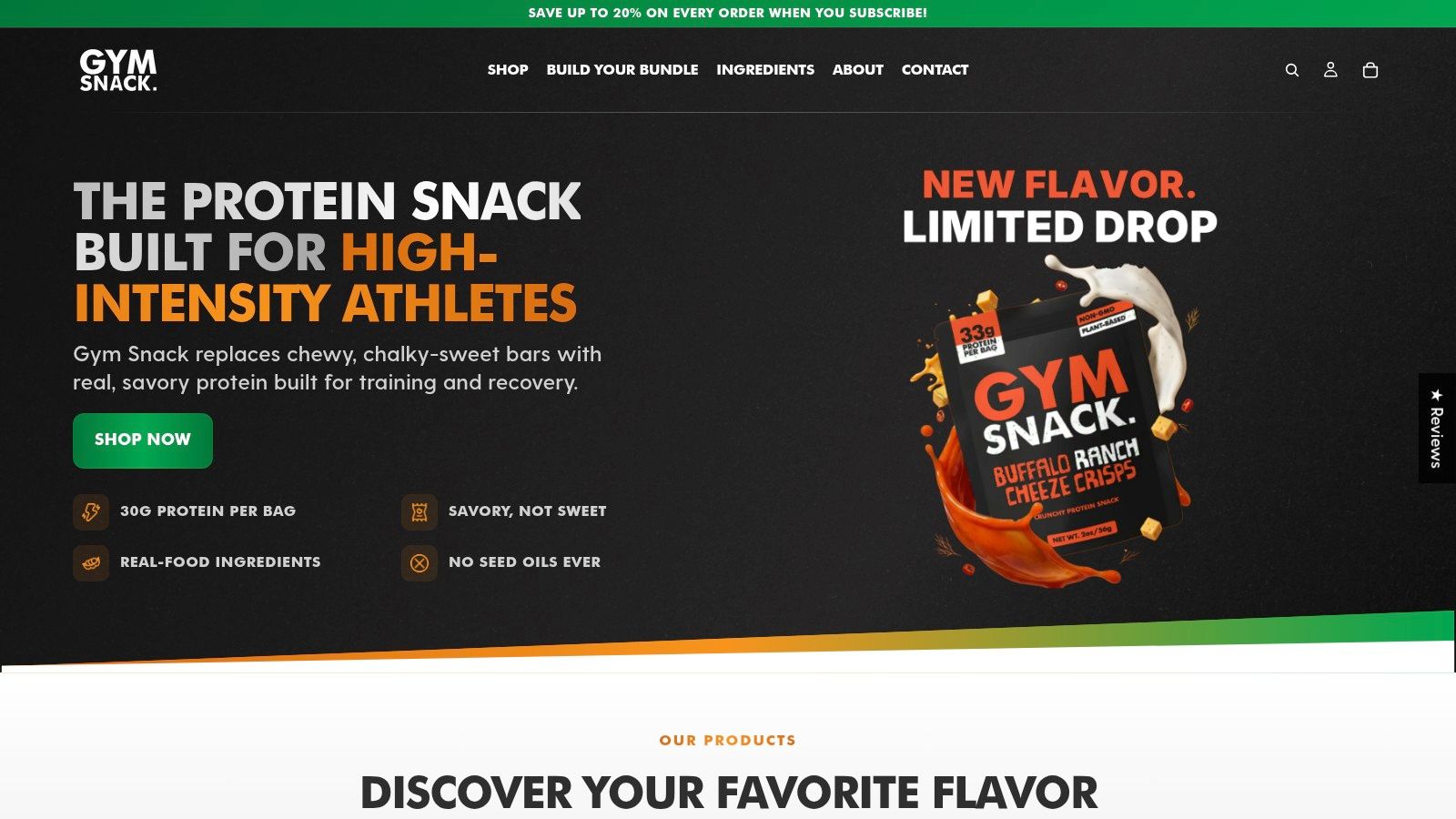
Gym Snack is the one I'd hand to someone who's burned out on sweet bars, tired of chalky shakes, and wants a savory option that still fits a performance-focused diet. It's a crunchy, plant-based protein snack built around pea protein, with bold flavors like Cheddar Cheeze, Jalapeño Cheddar Cheeze, and Everything Bagel.
What separates it from most “healthy” snack aisle options is purpose. This isn't trying to be a dessert in disguise. It's trying to replace the role chips, crackers, or cheese puffs usually play, while still giving you a protein-first profile that makes sense for training, recovery, or appetite control.
Why it works for active eaters
Each bag delivers about 30 g of protein, with roughly 14 g carbs, around 13 g fat, and about 290 to 320 calories. That gives it more real staying power than the typical low-fat snack built mostly around starch. If you want a deeper breakdown of savory macro-friendly options, Gym Snack also has a useful guide to high-protein low-fat snacks.
It also checks a lot of boxes that matter in everyday life. It's vegan, dairy-free, soy-free, gluten-free, seed-oil free, and avoids sugar alcohols and artificial sweeteners. For people who get digestive blowback from heavily engineered bars, that's a meaningful difference.
Practical rule: If a snack is low in fat but low in protein too, it usually won't hold you for long. Gym Snack works because it's low in saturated fat and still built around protein, not because it strips everything out.
Trade-offs to know before buying
This isn't the cheapest option on the list. Individual bags retail around $5.99, a 10-pack is listed around $49.90, a 21-bag pack around $124.99, and the subscription option advertises up to 20% off. If your benchmark is a standard bag of pretzels, the price will feel high.
The other trade-off is portioning. The bag format is satisfying, but it's also easy to eat the whole thing in one sitting. That's not automatically a problem if it fits your day. Just treat it like a planned snack or mini meal, not random desk grazing.
For busy schedules, it's a stronger fit than many refrigerated options, and it makes more sense than sweet bars if you want a savory crunch. It's also a better match for people looking for sustaining meals for busy professionals and snacks that don't feel like an afterthought.
2. FAGE Total 0%
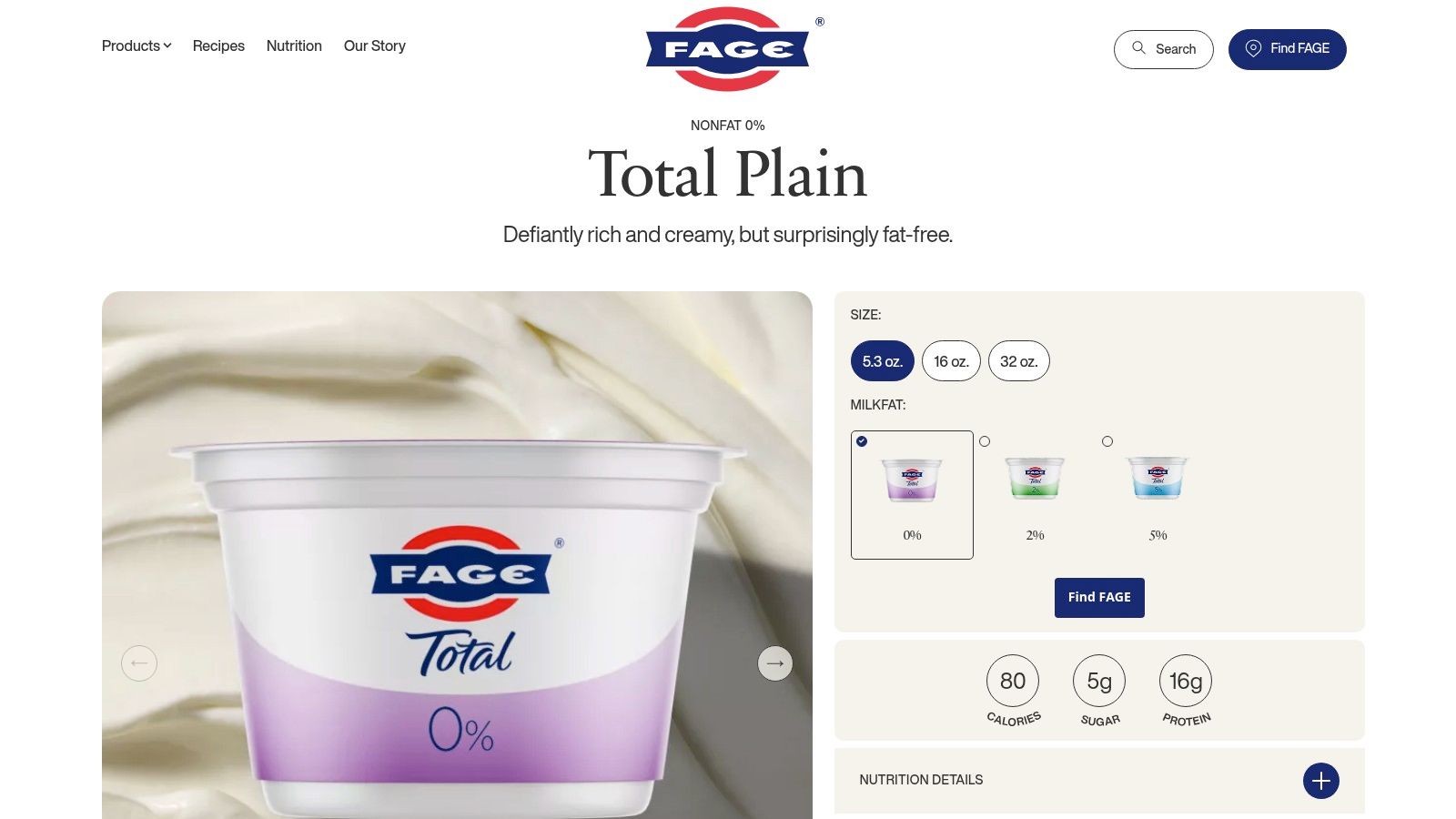
If you want one of the easiest fridge staples for a low-fat, high-protein snack, plain Greek yogurt still deserves its place. FAGE Total 0% is the version I recommend most often because it stays simple. No dessert-like flavoring, no extra fat, and enough thickness that it can work as food, not just a side note.
A 150 g cup has about 16 g of protein and 0 g total and saturated fat. That makes it useful for post-workout snacking, evening hunger, or turning a weak snack into a stronger one with very little effort.
Best use cases
FAGE Total 0% works in two modes. The obvious one is sweet. Add berries, cinnamon, or a little fruit if that's your lane. The better overlooked use is savory. Stir in ranch seasoning, salsa, herbs, or everything bagel seasoning and use it as a dip or sour cream swap.
Harvard's nutrition guidance emphasizes that the most satiating snacks combine macronutrients, with examples like yogurt with berries or carrots with hummus in its Healthy Snacks guidance. That's exactly how I'd use this. Pair it, don't just spoon through it plain unless you enjoy that.
- Best for recovery: A solid fridge snack when you want protein without much prep.
- Best for flexibility: Works as breakfast add-on, dip base, or fast evening snack.
- Best for appetite control: Thick texture usually feels more satisfying than thinner yogurts.
The downside is portability. Without a cooler bag or office fridge, it's not the best option for long days out. Plain flavor is also a hurdle for some people, so if you hate unsweetened yogurt, don't force it. Dress it up and make it useful.
3. StarKist Tuna Creations
You finish a workout, get stuck in traffic, and realize the next real meal is still hours away. That is the kind of gap a tuna pouch handles well.
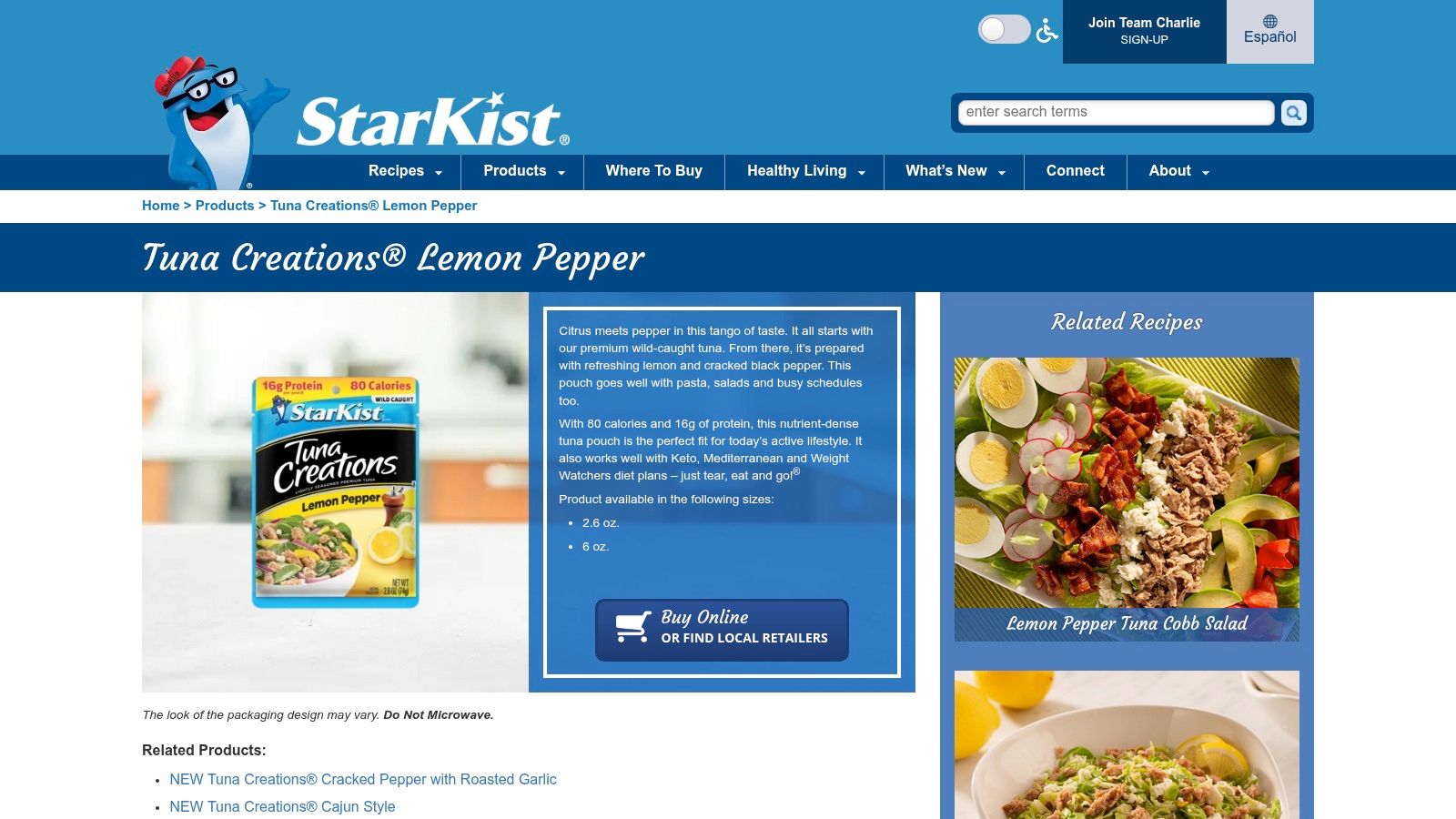
StarKist Tuna Creations gives you a portable, low-fat protein option that feels like food. It works well for lifters, busy professionals, and anyone who gets tired of sweet snack bars pretending to solve hunger. Tear it open and eat it straight, or pair it with crackers, rice cakes, or sliced cucumber if you want more volume.
Most varieties are high in protein and stay fairly low in fat, which is the main reason they make this list. The bigger advantage is practicality. No can opener, no draining, no cooler for the unopened pouch. For gym bags, desk drawers, and travel days, that matters more than people admit.
Best use cases
This is one of the better low-fat snacks for appetite control when you want savory food, not another yogurt cup or protein bar. It also fits well after training if you need protein fast and do not have access to a full meal yet. If you want more options in that same category, Gym Snack has a useful roundup of high-protein savory snacks.
There are trade-offs. Flavored pouches can be more convenient, but some versions add extra sodium, sugar, or thicker sauce systems that do nothing for performance or fullness. Plain or simpler flavor profiles usually give you more control. If you want to build a better snack, add your own mustard, hot sauce, relish, or chopped pickles.
Keep one in the place where your routine usually breaks down. That is often the snack that gets eaten.
This is not the right pick for everyone. Plant-based eaters will need a different protein source, and some people do not want tuna at work or in the car. Sustainability and mercury are also reasonable concerns if tuna is showing up often in your week. The FDA and EPA advice on eating fish is a good reference for choosing seafood more thoughtfully.
Still, for omnivores who want a shelf-stable snack with a clear job, StarKist Tuna Creations earns its spot. It is one of the few low-fat snacks that can hold you over instead of just taking the edge off.
4. Lundberg Organic Brown Rice Cakes Lightly Salted
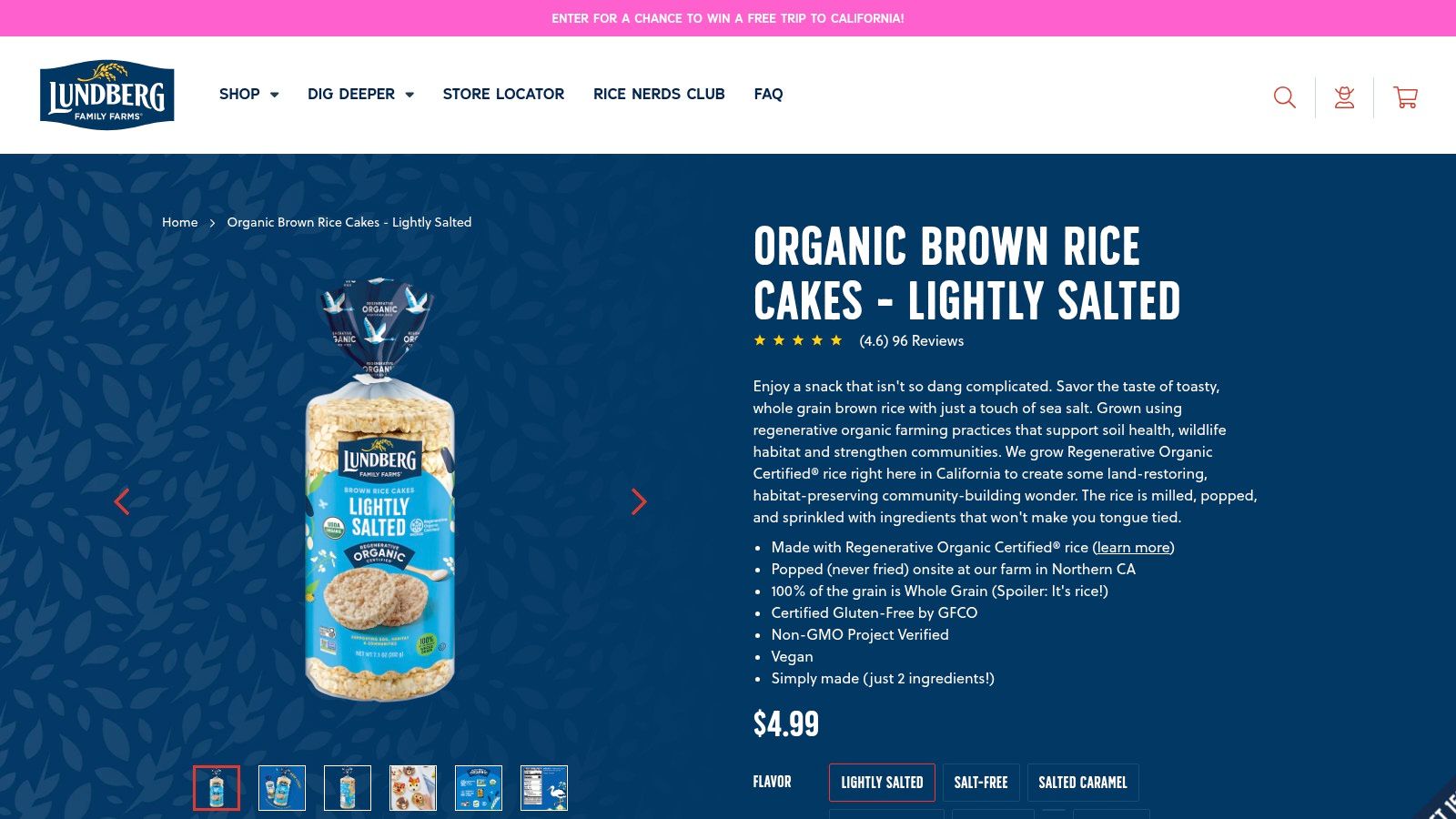
Rice cakes get mocked a lot, and sometimes deservedly so. Eaten plain, they can feel like edible packing material. But used properly, they're still one of the best low fat snacks because they give you a clean, crunchy base that's easy to build on.
Lundberg's lightly salted brown rice cakes keep the ingredient list straightforward. Each cake has about 0.5 g fat and around 70 calories, which gives you a lot of room to add lean protein or another low-fat topping without wrecking your numbers.
Don't eat them naked
The mistake people make is expecting rice cakes to do the whole job alone. They're a platform, not a finished snack. Think of them like toast for people who want a lighter, crunchier option.
Good combinations include:
- Greek yogurt spread: Adds creaminess and protein without much fat.
- Tuna or chicken topping: Turns a light snack into something much more filling.
- Salsa and cottage cheese: Messy, but effective if you're eating at home.
Coach's note: A low-fat snack with crunch can work well, but it still needs either protein or fiber to stop the endless snacking loop.
The portability is great, but freshness matters. If the bag isn't sealed well, rice cakes lose their texture fast, and once they go stale they're hard to rescue. They're also weak on their own if you need real post-workout recovery.
For people who like building snacks instead of buying fully finished products, though, they're useful. Think of Lundberg rice cakes as structure. The satiety comes from what you put on them.
5. Orville Redenbacher's SmartPop!
You get home at night, dinner is done, and you still want something salty while answering emails or watching a show. That is the job SmartPop! handles well. It gives you a larger serving experience than chips or crackers without pushing fat intake up fast.
SmartPop! works best for appetite management, not recovery nutrition. If a client tells me they want a snack that lasts more than five minutes and keeps their hands busy, popcorn is usually one of the first low-fat options I bring up. It is easy to portion, easy to store, and familiar enough that people keep buying it.
Where it fits best
Popcorn earns its spot because the volume is high for the calories, which helps during the part of the day when cravings are more about crunch and habit than true hunger.
Good use cases include:
- Evening snack: Better suited to TV-time snacking than calorie-dense chips.
- Workday volume food: Useful when you want something to pick at without turning a snack break into a second meal.
- Travel or pantry backup: Microwave popcorn is easy to keep on hand when fresh low-fat options are not available.
If you like lighter crunchy snacks in general, this guide to air-popped crisps for macro-conscious snack planning is a practical next read.
The trade-off is straightforward. SmartPop! does very little for protein intake, so it will not carry you far after a hard workout or a long gap between meals. In those situations, I would pair it with a lean protein source or choose something else entirely.
Flavor also matters more than people think. Some versions stay fairly simple. Others pile on extra sodium and seasoning. Check the label, then match it to the situation. For craving control, SmartPop! is a solid pick. For muscle recovery, it needs backup.
6. Snyder's of Hanover Mini Pretzels
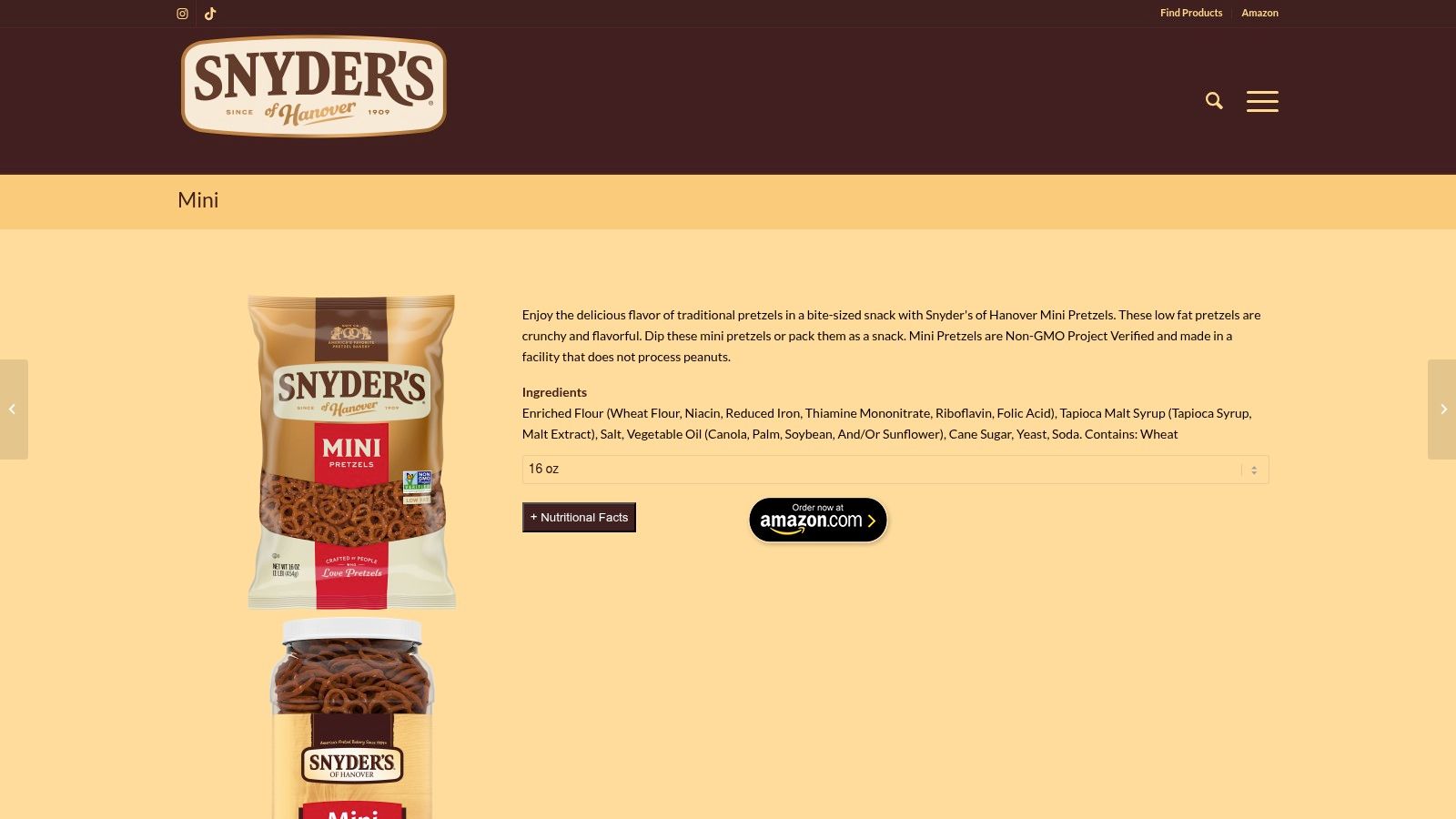
Pretzels have been part of the low-fat snack playbook for years because they're simple, crunchy, and usually very low in fat. Snyder's of Hanover Mini Pretzels are a straightforward example. A typical serving has around 0.5 g fat, and they're easy to find in both larger bags and portioned snack packs.
This is one of those snacks that works best when you stop expecting it to do more than it can. Pretzels aren't a complete snack for most active adults. They're mainly refined carbs with crunch. That's useful before training for quick fuel, or as a vehicle for something more filling.
Best way to use them
ABC News highlighted how reduced-fat mainstream snacks often won by staying familiar and measurable, including examples such as Ritz Reduced Fat crackers at 70 calories and 2 g of fat per serving, Triscuit Reduced Fat Crackers at 140 calories and 3 g of fat, and a reduced-fat cheddar option at 90 calories with 6 g of fat in its snack comparison report. Pretzels fit that same old-school logic. Familiar taste, easy portioning, lower fat.
Here's where Snyder's mini pretzels make sense:
- Pre-workout nibble: Fast carbs if you need something light before training.
- Pairing snack: Better with Greek yogurt dip, mustard, cottage cheese dip, or tuna.
- Budget option: Usually cheaper than specialty fitness snacks.
The weak point is fullness. If you eat them straight from the bag, it's easy to keep going and still feel hungry. Sodium can also climb quickly if you're not paying attention.
If you want the classic low-fat crunch, they're reliable. If you want serious satiety, pair them with protein or choose one of the more purpose-built options higher on this list.
7. gimMe Organic Roasted Seaweed Snacks Sea Salt
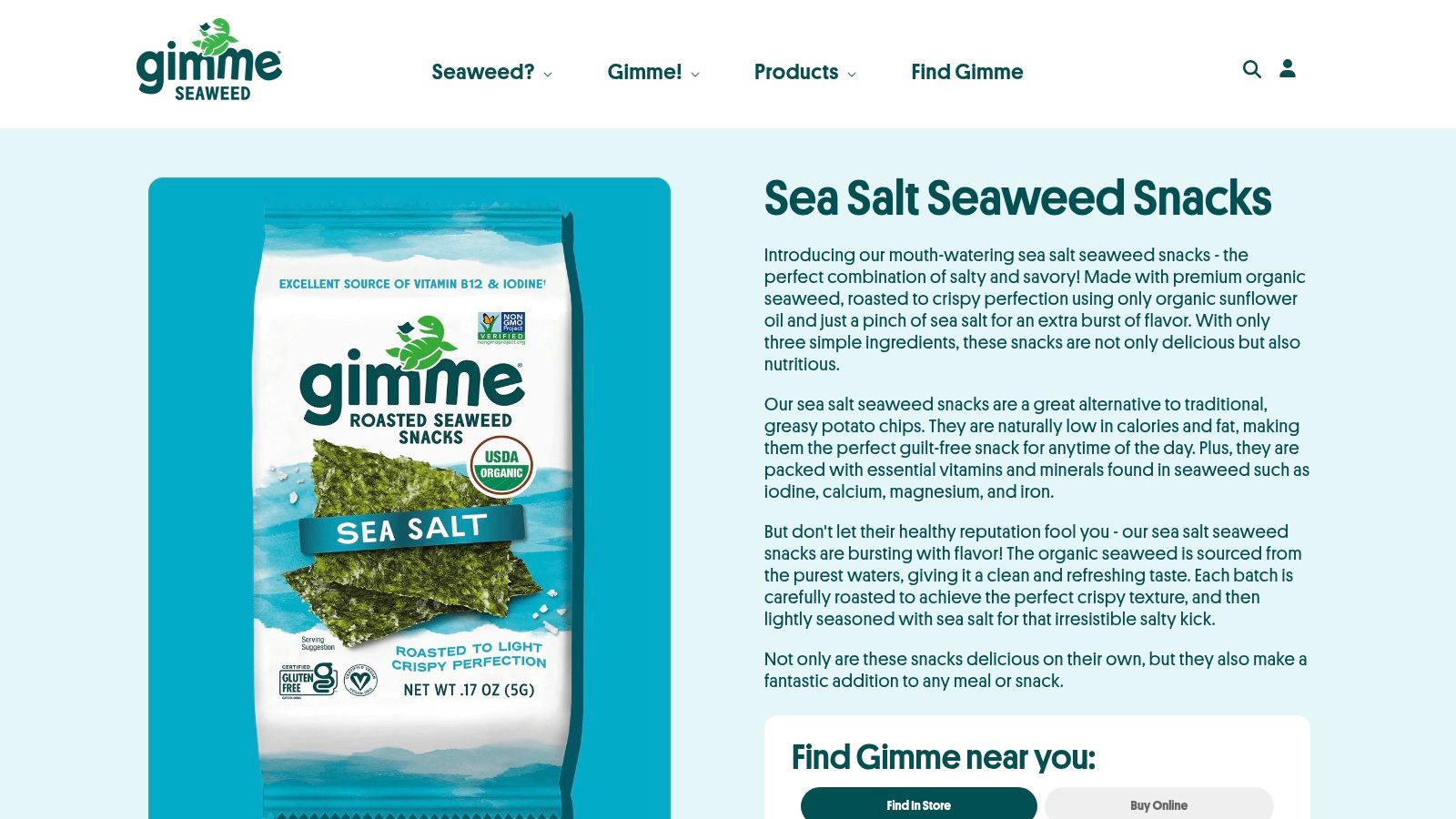
Seaweed snacks solve a very specific problem. You want something salty and crisp, but you don't want the heavy feeling that often comes with chips. gimMe Organic Roasted Seaweed Snacks Sea Salt handles that well.
The single-serve packs are around 25 calories and about 2 g fat. They're vegan, gluten-free, portable, and easy to stash in a bag or desk drawer. If you like that light roasted texture, they can scratch the “I need crunch now” itch quickly.
Best as part of a combo
On their own, seaweed snacks are more craving management than true fuel. That doesn't make them bad. It just means you should use them correctly. Superpower's discussion of low-fat snacks that actually taste good points to a broader issue in the category. Many low-fat snack ideas still lean sweet or dairy-heavy, while people often want savory options with stronger satiety.
That's where seaweed has a limit. It's savory and light, but not especially filling by itself.
- Good pairing: Rice cakes, fruit, or a higher-protein side.
- Good moment: Afternoon craving, commuting, lunchbox add-on.
- Less useful: Post-workout or long gaps between meals.
If a snack disappears in two minutes and leaves you hunting for more food right away, it's probably a craving tool, not a recovery tool.
Seaweed snacks also crumble easily. If they get crushed in your bag, the experience gets a lot less satisfying. Still, for plant-based eaters who want a low-fat savory option that isn't sweet or dairy-based, they're a smart rotation item.
Top 7 Low-Fat Snacks Comparison
| Item | Preparation / Complexity (🔄) | Storage / Resource Needs (⚡) | Expected Outcomes (📊) | Ideal Use Cases (💡) | Key Advantages (⭐) |
|---|---|---|---|---|---|
| Gym Snack | Ready‑to‑eat; low prep; two‑servings per bag may require portion control. | Shelf‑stable; no refrigeration; moderate cost (~$5.99/bag; bulk discounts available). | High protein (~30 g/bag), balanced macros for recovery and satiety. | Pre/post‑workout, recovery, on‑the‑go, macro‑focused snacking. | Savory, plant‑based, allergen‑conscious, performance‑driven. |
| FAGE Total 0% | Spoonable; no prep but may be mixed with add‑ins. | Requires refrigeration; limited time after opening. | ~16 g protein per 150 g cup; very low fat; contains live cultures. | Post‑workout, dip/sour‑cream substitute, meal prep. | High protein per calorie, simple ingredient list, versatile. |
| StarKist Tuna Creations | Tear‑and‑eat pouches; zero prep. | Shelf‑stable and highly portable; may contain dressings (check label). | ~14–17 g protein per pouch; low fat; source of EPA/DHA. | Travel, quick meals, savory protein boost, emergency pantry. | High protein, portable, wide flavor variety. |
| Lundberg Brown Rice Cakes | Ready to eat; no prep; ideal for topping. | Shelf‑stable, long shelf life, low cost. | Very low fat (~0.5 g/cake) and low protein, best with added protein. | Base for low‑fat toppings, light snack, portion control. | Whole‑grain, gluten‑free, neutral base for macros. |
| Orville SmartPop! | Simple microwave prep (few minutes). | Pantry staple; requires microwave; widely available. | High volume for fullness, ~100 kcal/serving; low fat but variable sodium. | High‑volume snacking, movie nights, quick low‑fat option. | Filling per calorie, convenient, widely distributed. |
| Snyder's Mini Pretzels | No prep; ready to eat; portion packs available. | Shelf‑stable and budget‑friendly. | Low fat, modest calories, low protein; sodium can be high. | Kid snacks, paired with low‑fat dips or protein toppings. | Affordable, shelf‑stable, kid‑friendly. |
| gimMe Roasted Seaweed Snacks | No prep; single‑serve sheets. | Shelf‑stable, very portable; fragile packaging. | Very low calories ( |
Low‑calorie crunchy alternative, lunchbox add‑on, vegan snack. | Organic, vegan, savory chip alternative with minimal oil. |
Your Go-To Guide for Low-Fat Snacking
The best low fat snacks aren't the ones with the lowest fat number on the label. They're the ones that match the job. Some snacks need to hold you over between meetings. Some need to support recovery after training. Some just need to stop you from tearing through a bag of chips at night.
That's why protein, fiber, and format matter so much. Broad healthy-snack demand keeps growing, with the market valued at USD 95.61 billion in 2023 and projected to grow at a 6.2% CAGR through 2030, according to Grand View Research's healthy snack market analysis. Buyers aren't just looking for “diet food.” They're looking for snacks that fit real health goals, clear labels, and everyday convenience.
From a practical coaching standpoint, I'd split this list into roles. Gym Snack and FAGE Total 0% are the strongest picks when protein is the priority. StarKist Tuna Creations is the easiest no-fridge savory option for omnivores. Popcorn is the volume play. Rice cakes, pretzels, and seaweed are support players that work best when you pair them well.
There's also a bigger shift happening in the category. The dedicated low-calorie snack segment is projected to expand substantially through 2030 and beyond, with one market estimate putting it at USD 9.588 billion in 2022 and projecting USD 25.13 billion by 2030 at a 12.8% CAGR in Data Bridge's low-calorie snacks market report. That doesn't mean every low-fat snack is good. It means more products will compete for your attention, and the ones worth buying will be the ones that solve the old problem of bland texture and weak satisfaction.
So keep it simple. Stock a few options that cover different situations. Use high-protein snacks when you need real staying power. Use high-volume snacks when you want to munch without going off the rails. And if you're tired of low-fat snacks that feel like punishment, build your rotation around savory, satisfying foods you'll want to eat again tomorrow.
If you want a savory, macro-friendly option that feels more like real food than a dessert-style protein bar, Gym Snack is worth trying. It gives you a crunchy plant-based format, strong protein, and flavors that make low-fat snacking feel satisfying instead of restrictive.