

Most advice about the best protein bar for weight loss starts with flavor rankings, “clean” branding, or a simple protein total. That's backwards. A bar can post a respectable protein number and still work against appetite control if it leans too hard on sugar, saturated fat, or a dessert-style formula that keeps your sweet cravings alive.
The better question isn't “Which bar has the most protein?” It's “Which snack helps you eat less later without feeling deprived?” That shifts the focus from marketing to physiology. Satiety, blood glucose stability, and the hormonal signals that tell your brain you've eaten enough matter more than a glossy wrapper with “high protein” on the front.
Here's a quick screen before we go deeper.
| Feature | Better choice for weight loss | Red flag |
|---|---|---|
| Calories | Falls in the snack-friendly range commonly recommended for weight loss bars | So high that it starts behaving like a meal without meal-level fullness |
| Protein density | High protein relative to calories | Modest protein packed into a calorie-dense bar |
| Added sugar | Low added sugar | Dessert-style sweetness or syrup-heavy formulas |
| Fiber | Meaningful fiber for fullness | Little to no fiber |
| Flavor profile | Satisfying without pushing more sweet cravings | Candy-bar mimicry sold as “fitness nutrition” |
Why Most Protein Bars Sabotage Weight Loss
The protein bar aisle looks diet-friendly because it borrows the language of nutrition and the sensory design of dessert. That combination sells. It does not reliably control hunger.
The problem is not that bars contain protein. The problem is that many are engineered around palatability first, then patched with protein isolate, syrups, and flavor systems that keep the product tasting like a brownie or candy bar. A bar can clear a protein threshold and still do a poor job of limiting later intake if it is low in fiber, highly sweet, and easy to eat fast.
As noted earlier, a practical screen for weight-loss bars is straightforward: keep added sugar low, keep saturated fat in check, and look for enough protein and fiber to support fuller-for-longer eating. Many products fail on one of those variables, and some fail on several at once.
The health halo is doing a lot of work
Front-of-pack claims such as “keto,” “plant-based,” “gluten-free,” or “made with real ingredients” say almost nothing about satiety. They describe a dietary identity, not an appetite outcome. A bar can be compatible with a trend and still behave like a compact dessert.
That matters because fullness is not just a calorie issue. It is a signaling issue. Foods that combine meaningful protein with fiber tend to support the hormonal environment associated with stronger satiety, including GLP-1 and PYY. Foods built around sweetness and fast reward can pull in the opposite direction by encouraging continued appetite even after the bar is gone. If you want a broader framework for how to stay full longer, focus on what slows eating, extends digestion, and reduces the urge to keep snacking.
Where the sabotage usually happens
Several label patterns show up again and again:
- Protein without enough satiety support. A bar may include protein but very little fiber, so it digests more like a sweet snack than a hunger-management tool.
- Dessert-style sweetness. Recreating cookies, caramel, or brownie flavors can keep sweet preference active instead of settling appetite.
- Calories that climb faster than fullness. Nuts, oils, chocolate coatings, and added fats can push energy up quickly without producing the same return in satiety.
- “Healthy” positioning that distracts from the formula. The buyer sees a fitness product. The body still gets a sweet, energy-dense snack.
One underappreciated clue is flavor direction. Sweet bars often train the snack to function like a treat. Savory options, or at least bars that do not mimic confectionery, tend to create less sensory spillover into more cravings later. That is the same reason many people find whole-food protein snacks more settling than dessert-like bars, much as minimally processed choices such as eggs for weight loss often outperform packaged “diet” foods in real-world appetite control.
The result is easy to misread. You eat a bar, feel responsible, and then start looking for something else an hour later. That is not a motivation problem. It is a product design problem.
The Science of Satiety What Really Curbs Hunger
A protein bar does not control appetite because the wrapper says “20g protein.” It controls appetite if its formula changes what happens after you eat it: slower gastric emptying, stronger fullness signaling, and less rebound interest in sweet food an hour later. That is a different standard from the usual calorie-and-macros checklist.
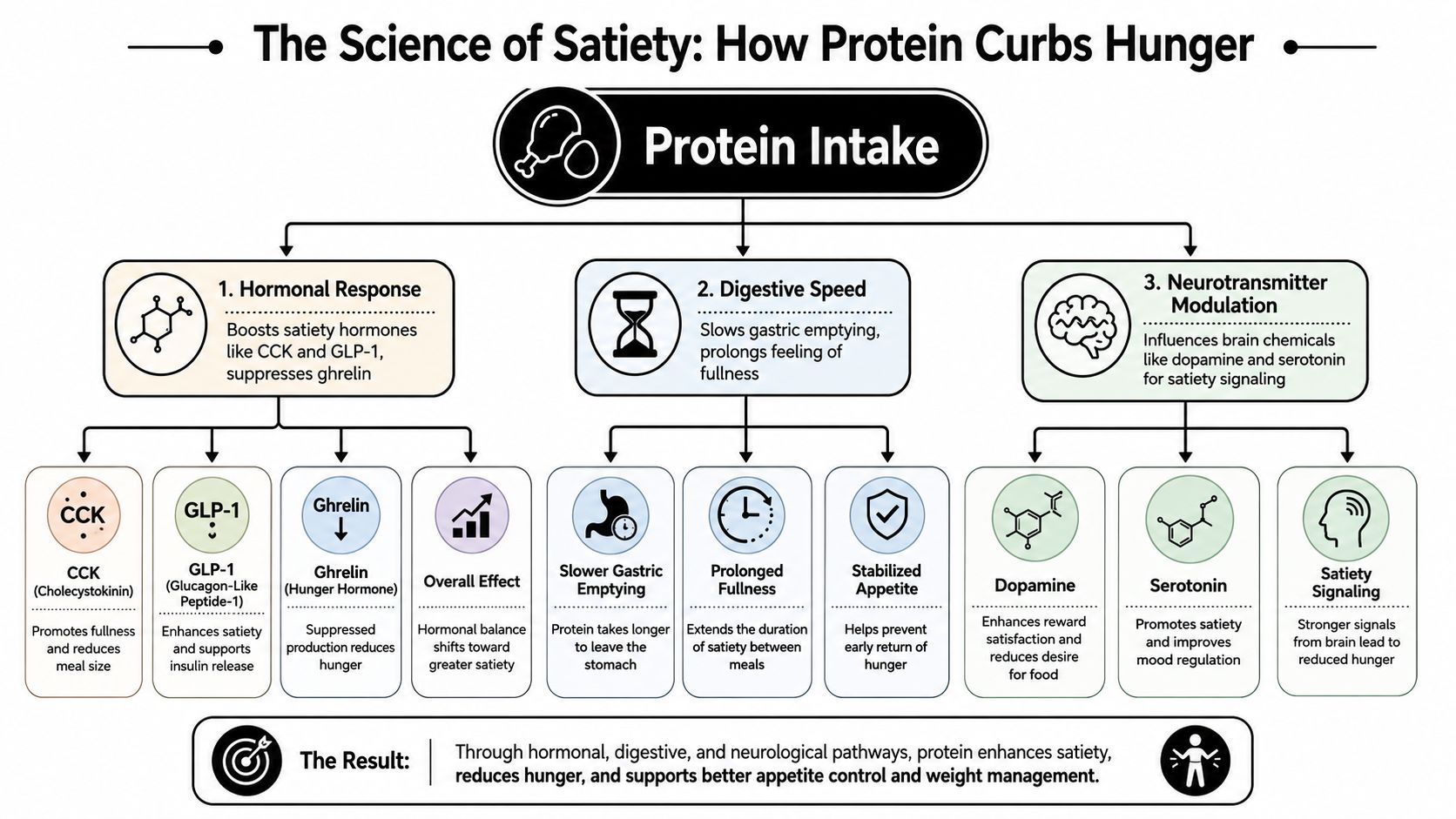
Protein's primary job is signaling, not branding
Protein affects appetite through more than total grams. It helps stimulate gut hormones involved in satiety, including GLP-1 and PYY, which is one reason higher-protein foods often feel more stabilizing during a calorie deficit. A bar with meaningful protein can therefore do more than “fit your macros.” It can make restraint easier.
That benefit gets overstated in marketing because protein alone is not enough. A bar can deliver a solid protein number and still behave like a sweet snack if the rest of the formula is built around syrups, coatings, and confection-style flavoring. Satiety comes from the package as a whole, not from one headline claim.
A useful screen, as noted earlier in the article, is simple: enough protein to matter, enough fiber to slow digestion, and limited added sugar so the bar does not function like dessert with protein added.
Fiber changes the appetite equation
Fiber often determines whether fullness lasts. It adds bulk, slows digestion, and helps extend the appetite benefit of protein instead of letting the bar digest quickly and disappear. This is one reason bars with similar calories can perform very differently in real life.
That same logic explains why minimally engineered foods remain a strong benchmark. Whole-food options like eggs for weight loss tend to satisfy without the sensory spillover created by candy-like snack design.
Readers who want a broader framework for appetite control can also review this guide on how to stay full longer, which focuses on fullness mechanics rather than front-of-package claims.
Sugar changes the hormonal story
Sugar is not a problem because it is “bad.” It is a problem when it shifts the bar away from satiety and toward palatability. A very sweet bar can weaken the practical benefit of protein by keeping sweet preference activated, which may increase the odds that one snack turns into continued grazing.
The savory versus sweet distinction is particularly helpful. Sweet bars often try to recreate cookies, caramel, or brownie batter. Savory protein snacks, or bars that do not mimic dessert, usually create less sensory momentum. For weight management, that matters. The best choice is often the product that ends the eating episode cleanly, not the one that tastes most like a cheat meal.
Use this framework:
- Protein helps stimulate satiety hormones such as GLP-1 and PYY.
- Fiber slows digestion and extends fullness across more time.
- Lower added sugar reduces dessert-like rebound appetite for some people.
- Less sweetness often means fewer follow-on cravings, which is one reason savory options deserve more attention in weight-loss planning.
Practical rule: Judge a bar by what happens after you finish it. Stable appetite beats impressive macros.
Your 5-Point Checklist to Find the Best Bar
A long ranking of bars is less useful than a screening method. Weight-loss success usually depends on whether a bar reduces the chance of eating again an hour later, not whether it looks impressive on the wrapper.
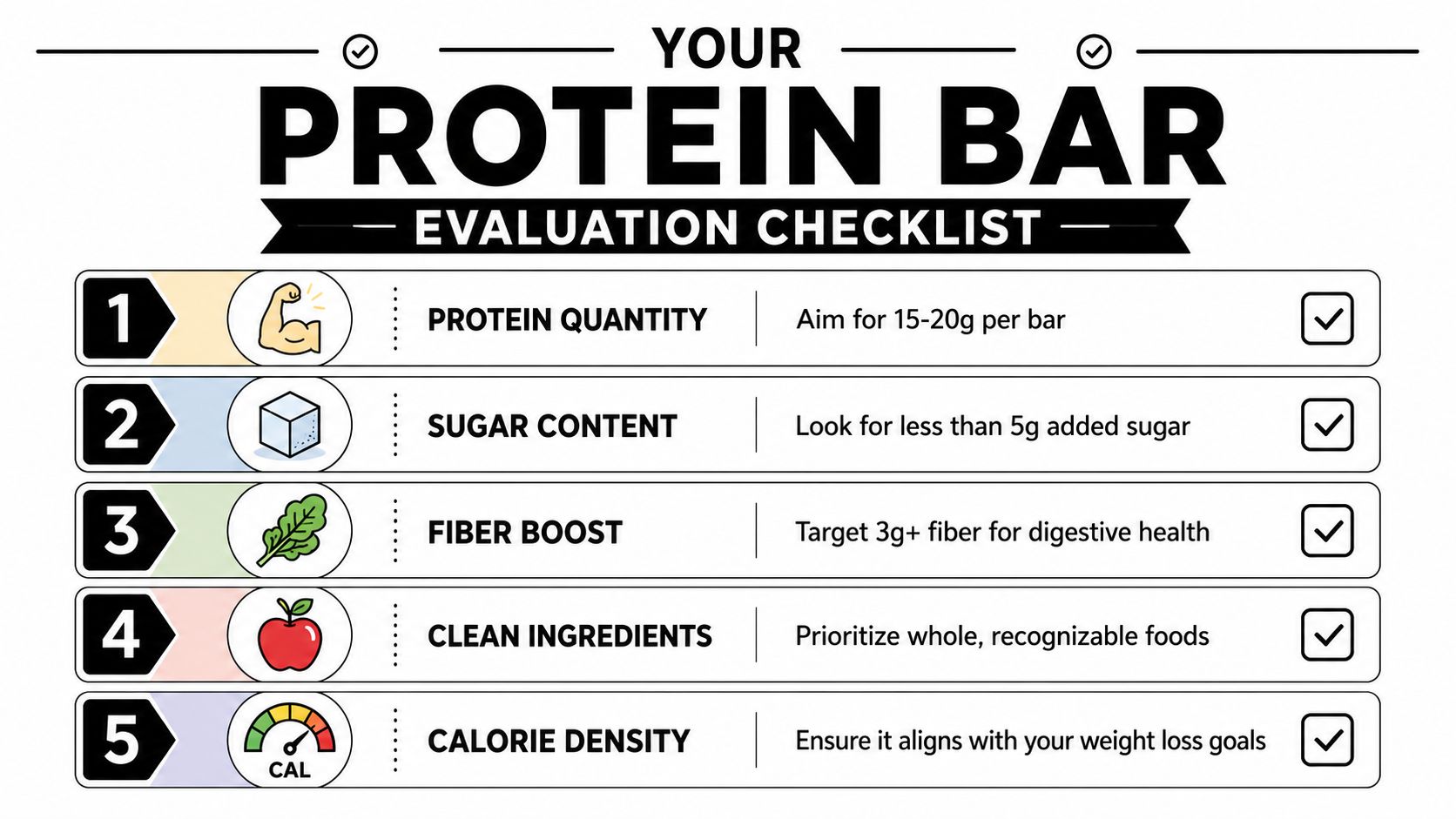
1. Check calorie range first
Calories set the ceiling. If a bar sits in meal territory, it has to deliver meal-level fullness to justify the tradeoff.
Independent analysis summarized by David Protein's guide to weight-loss bars recommends a 150 to 250 calorie range for weight loss and fat management, and notes that a bar with 28 grams of protein for 150 calories delivers about 75% Calories from Protein, while 20 grams of protein at 150 calories reaches about 53% CFP.
That comparison matters because equal calories do not produce equal satiety. Two bars can share the same calorie number while creating very different hormonal responses and very different odds of rebound hunger.
2. Look at protein per calorie, not protein alone
“High protein” is often a marketing shortcut. The better question is how much protein you get before calories, sweeteners, and fats start crowding the formula.
Protein is the main driver here because it helps stimulate satiety hormones such as GLP-1 and PYY. A bar with stronger protein density has a better chance of acting like an appetite-control tool instead of a compact dessert. This is one reason many people do better with high-protein savory snacks for appetite control than with bars designed to mimic candy.
3. Keep added sugar controlled
Sugar matters for more than calories. It can also change the behavior of the snack.
A sweeter bar may still fit your macros, but it can keep dessert preference switched on. For fat loss, that is a poor trade if the snack leaves you wanting another sweet taste soon after. Lower added sugar usually signals that the product is built around fullness, not flavor nostalgia.
4. Demand real fiber
Fiber extends the effect of protein by slowing digestion and increasing the staying power of the snack. Without it, a bar often becomes a fast, tidy calorie delivery system.
A practical screen is simple. If the fiber number is trivial, the bar has fewer tools to support stable appetite across the next few hours.
A quick visual summary helps when you're shopping fast:
5. Read ingredients like a skeptic
Ingredient lists reveal what the macros hide. A bar can post decent numbers while relying on a long chain of syrups, coatings, and texture agents to imitate a candy bar experience.
A shorter ingredient list does not guarantee better weight-loss results. It does, however, often indicate that the product needs less sensory engineering to make you want another bite. That distinction gets overlooked.
Use this order when comparing products:
- Check calories and keep the bar in snack range.
- Calculate protein density instead of stopping at total grams.
- Review added sugar to see whether the formula is pushing sweetness.
- Confirm fiber so the bar has some staying power.
- Read ingredients last to test whether the product is built for satiety or for dessert imitation.
The Sweet Trap Versus The Savory Solution
The protein bar aisle has a clear bias. Most products try to recreate dessert. Chocolate brownie. Cookie dough. Peanut butter cup. Mint fudge. Even when the macros look disciplined, the sensory message is the same: this is candy with better PR.
That matters more than many buyers realize. Weight management isn't just about calories in isolation. It's also about whether a food reduces craving momentum or feeds it.
The sweet trap
“No added sugar” and “naturally sweetened” sound reassuring, but they don't answer the main question: does the product support fat loss and appetite control? According to Noom's review of weight-loss protein bars, many “clean” bars use natural sweeteners like coconut sugar, yet there is no data proving they support weight loss. The same review notes emerging studies indicating that even these natural syrups can blunt fat-burning, which is especially relevant for people managing weight and for GLP-1 users.
That creates a useful distinction. A sweetener can be natural and still not be strategically helpful.
Common issues with sweet-style bars include:
- Dessert mimicry that keeps your taste preference anchored to candy-like snacks
- Sweetness without true fullness when fiber or protein density is mediocre
- “Natural” sugar framing that sounds cleaner than it functions
Why savory deserves more attention
Savory protein snacks shift the eating experience in a way macros alone can't capture. They don't ask your brain to process a cookie-like reward signal every time you need convenience. They can also feel more like actual food, which matters when your goal is appetite control rather than a permitted indulgence.
That's the overlooked advantage behind the growing interest in high-protein savory snacks. The category changes the question from “How can we make a protein snack taste like dessert?” to “How can we make a protein snack satisfying enough that dessert stops sounding urgent?”
A savory snack won't automatically cause weight loss. But it often removes the constant sweet cue that makes restraint harder.
The smarter comparison
Sweet and savory protein snacks aren't just different flavors. They can create different behavioral outcomes.
| Dimension | Sweet-style protein bar | Savory protein snack |
|---|---|---|
| Taste cue | Dessert-adjacent | Meal-adjacent |
| Craving effect | May sustain a preference for sweet snacks | May reduce dependence on sweet snack rituals |
| Satiety perception | Often soft, candy-like, easy to eat quickly | Often crunchier and slower to eat |
| Weight-loss fit | Depends heavily on sugar, fiber, and density | Often better aligned with appetite control if ingredients are clean |
Many “best protein bar for weight loss” lists miss the point. They compare sweet bars against other sweet bars. They rarely ask whether the whole category is solving the wrong problem.
Decoding the Labels of Popular Protein Bars
Front-of-pack claims hide the part that matters. A bar can look disciplined on the wrapper and still be built like a compact dessert, which is a poor fit for appetite control.
Popular Protein Bar Breakdown
| Metric | Ideal standard | Popular Bar A | Popular Bar B | Gym Snack |
|---|---|---|---|---|
| Calories | Snack-level, not meal-like | Often rises once dates, nut butters, and syrups do the heavy lifting | Can stay moderate but still leave hunger unresolved | Designed as a snack format rather than a candy-style bar |
| Protein density | High relative to calories | Protein total may sound respectable, but grams per 100 calories are often mediocre | Higher protein on paper, yet diluted by coatings, fats, or fillers | Protein-forward savory format |
| Added sugar | Low enough to avoid a dessert pattern | “No refined sugar” can still mean a large sweet load | Sweeteners and chocolate coatings keep the palate in dessert mode | Savory profile avoids dessert-style sweetness |
| Fiber | Enough to slow digestion and support fullness signals | Often too low to materially help satiety hormones | Sometimes added, but not always in a way that changes how filling the bar feels | Crunchy savory format can feel more substantial |
| Ingredient logic | Built to support satiety, not just taste compliance | Built around sweetness first, protein second | Built for convenience and flavor mimicry | Built around a savory protein-snack concept |
A better reading of the label starts with ratios, not slogans. Protein grams matter, but protein relative to calories matters more if the goal is weight loss. Fiber deserves the same treatment because it can support GLP-1 and PYY release, slow gastric emptying, and make a small snack behave more like a meaningful interruption to hunger.
That is why a date-based bar often underperforms for fat loss even when the ingredient list looks clean. It may avoid artificial sweeteners and still deliver a sweetness load that keeps the bar in the energy-snack category rather than the satiety category.
Coated high-protein bars create a different problem. Their protein number may be stronger, yet the eating experience is often soft, fast, and hyperpalatable. That combination can reduce the practical benefit of the macros because the bar disappears quickly and does little to slow the pace of eating.
For a closer look at how to read serving size, sugar alcohols, fiber totals, and protein quality on-pack, this guide to protein bar nutrition facts is a useful companion.
What label readers often miss
Some bars now add ingredients marketed for focus or recovery, including MCTs and lion's mane. Those products are often positioned around performance or longevity rather than weight control, as noted in Men's Health's roundup of protein bars. The useful question is not whether those extras sound advanced. It is whether they sit inside a formula that still drives sweetness, fast consumption, and weak fullness.
A label should be read as a satiety system. Protein helps. Fiber helps. Excess sweetness can work against both by keeping the snack reward-driven. Savory products are not automatically superior, but they more often avoid the mismatch between a weight-loss goal and a dessert-like delivery format.
If you need something closer to a meal than a snack, compare bars cautiously with other formats. XO's guide to meal replacement solutions is useful for understanding where bars stop making sense and more complete options start.
Your Protein Snack Strategy for Every Scenario
The best protein bar for weight loss depends on what job the snack needs to do. A bar that works after training might be a poor choice for controlling late-afternoon cravings. A portable snack for travel isn't necessarily a good meal replacement. Matching the product to the moment matters.
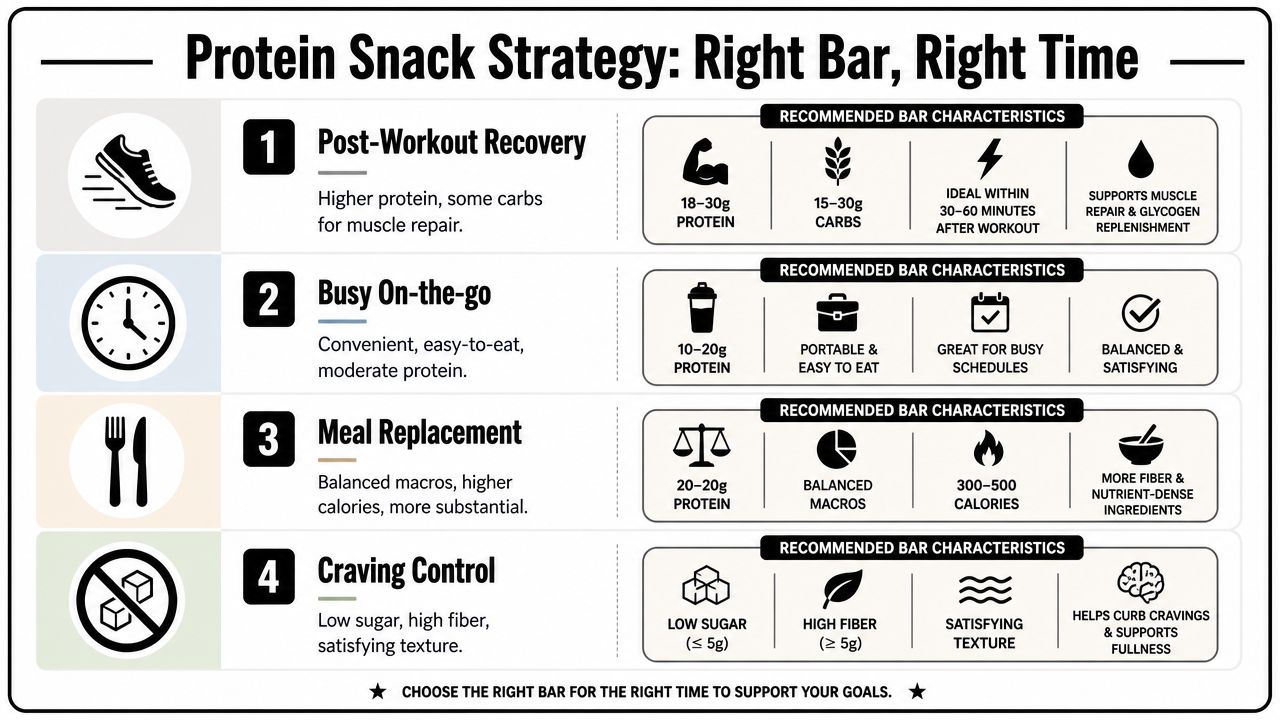
For post-workout recovery
After training, convenience matters, but appetite does too. A higher-protein option can make sense here, especially if your next full meal isn't immediate. This is one of the few scenarios where a more conventional protein bar can fit well, provided it doesn't turn recovery into dessert.
For the busy workday
It is common for individuals to make poor snack decisions. They choose a sweet bar because it feels controlled compared with a pastry. Often it is better than a pastry. But for productivity and hunger control, a savory protein snack is often the cleaner choice because it avoids the dessert cue and may feel more meal-like.
For a true meal replacement
Most bars are weak meal replacements. They're too small, too engineered, or too one-dimensional. If you need something to stand in for a meal, a more complete solution makes more sense than pretending a bar can do that job. For readers comparing formats, XO's guide to meal replacement solutions is a useful reference because it frames when a shake or meal replacement may be more appropriate than a compact snack.
For craving control
This is the scenario most “best bar” guides misunderstand. When cravings hit, sweetness can backfire even if the macros look acceptable. A low-sugar, higher-fiber, savory option often works better because it interrupts the desire for dessert rather than accommodating it.
A simple decision framework works well:
- Need recovery after exercise? Choose a protein-forward option that doesn't rely on candy-like appeal.
- Need desk-drawer convenience? Favor savory snacks that don't intensify sweet cravings.
- Need a meal stand-in? Use an actual meal replacement instead of a bar pretending to be one.
- Need appetite control between meals? Prioritize low sugar, fiber, and a texture that slows eating.
The real-world takeaway
You don't need one perfect product. You need fewer bad defaults. Sweet bars are often overused in situations where savory, less dessert-like options would control hunger better and create less rebound snacking later.
Frequently Asked Questions
Are sugar alcohols okay for weight loss
Sugar alcohols can lower listed sugar without improving appetite control. The practical question is whether the bar still delivers a sweet, reward-style eating experience that keeps the palate primed for more. For some people, they also cause bloating or GI discomfort, which makes daily use harder to sustain.
Can I eat a protein bar every day
Daily use is reasonable if the bar helps you stay full, fits the rest of your diet, and does not reinforce constant sweet-snack behavior. That last point matters more than many labels suggest. A savory bar or snack often creates a cleaner stopping point than a dessert-style bar with added protein.
Is a protein bar better than a protein shake
Chewing usually improves perceived fullness because eating takes longer and gives the gut more time to generate satiety signals such as GLP-1 and PYY. A shake can still be useful for convenience, but fast consumption often makes it easier to overshoot energy intake later. Texture, eating speed, and sweetness all influence the result, not just protein grams.
What protein-to-calorie ratio should I look for
A practical screen is a bar that delivers more than 10 grams of protein per 100 calories, according to dietitians cited in The Nourished Path's guide to weight-loss bars. The same guide uses a bar with 8 grams of protein at 210 calories as an example of a weak ratio for fullness, because too little of the bar's energy comes from protein.
If you're tired of dessert-style bars pretending to be diet food, Gym Snack offers a different approach. Its chef-inspired, plant-based savory protein snacks focus on clean pea protein, satisfying crunch, and bold cheesy flavors instead of candy-bar mimicry, making them a smart option for people who want convenient protein without the sugar-first trap.