

If you've ever wondered how to stay full longer, the secret isn't just about eating more—it's about eating smarter. The goal is to maximize satiety, that feeling of being completely satisfied after a meal. This comes down to building your plates with a powerful trio: protein, fiber, and healthy fats. These three work together to slow digestion and tell your brain, loud and clear, that you're full.
The Science Behind Feeling Full

Think about it: a giant bowl of sugary cereal might leave you raiding the pantry an hour later, but a smaller serving of Greek yogurt with berries can easily hold you over until lunch. This isn't your imagination. It's a complex conversation happening between your gut and your brain, driven by hormones. Getting a handle on this process is the first real step to mastering your appetite for good.
At the heart of it all are two key hormones: ghrelin and leptin. Ghrelin is basically the "go" signal for hunger. When your stomach is empty, it shouts, "Time to eat!" Leptin, on the other hand, is the "stop" signal. It's released from your fat cells to let your brain know you have plenty of energy on board and can put the fork down.
How Food Choices Tip the Hormonal Scales
What you put on your plate directly influences which hormone gets the microphone. Every macronutrient—protein, fat, and carbs—sends a different message.
- Protein: This is, without a doubt, the heavyweight champion of satiety. Eating protein dials down ghrelin levels while boosting other hormones that signal fullness, like PYY and GLP-1.
- Fiber: Found in everything from veggies and beans to whole grains, fiber adds physical bulk to your meals. It also slows down the speed at which food exits your stomach, helping you feel physically fuller for much longer.
- Fats: Healthy fats, like those in avocado or nuts, also pump the brakes on digestion. They provide a steady, sustained release of energy, which helps you avoid the blood sugar roller coaster that often triggers a hunger panic.
On the flip side, simple carbs like white bread and sugary snacks are digested in a flash. They give you a quick energy spike, but the crash that follows sends ghrelin roaring back, making you feel hungry again way too soon. For a deeper look at what to add to your grocery list, check out our guide on the best foods for appetite control.
It's not just about the volume of food. A meal packed with empty calories can leave you feeling hungry much faster than a smaller, nutrient-dense one because it fails to trigger the right hormonal "I'm full" signals.
By choosing foods that cooperate with your body's natural appetite system, you can learn how to stay full longer and keep your energy levels stable all day. This isn't about deprivation—it's about making strategic choices that work for you, not against you.
Building a Satiety-Focused Plate
Knowing the science is great, but what does this actually look like on your plate? This is where we move from theory to the kitchen table. Building meals that keep you full isn’t about eating less; it’s about eating smarter. We're talking about creating delicious, satisfying plates that work with your body’s hunger signals, not against them.
The secret lies in the synergy between the big three of satiety: lean protein, high-fiber carbohydrates, and healthy fats. Each one has a specific job, but when they team up, they create a meal that digests slowly, keeps your blood sugar stable, and leaves you feeling genuinely satisfied for hours. This is how you stop thinking about your next meal all the time.
The Foundation: Protein and Fiber
Let's start with the non-negotiables. Think of protein as the anchor of your meal. It's hands-down the most satiating macronutrient, and it does a fantastic job of suppressing ghrelin, the hormone that screams, "I'm hungry!" Making sure you have a solid source of protein at every meal is the most important first step you can take.
You can even get creative with it. Things like adding a scoop of protein powder for cooking to your morning oatmeal or a creamy soup is a simple hack to effortlessly boost your intake.
Next up is fiber, which provides the bulk. Soluble fiber (think oats, beans, and apples) creates a thick, gel-like consistency in your stomach, which physically slows everything down. Then you have insoluble fiber from vegetables, which adds sheer volume to your meal, helping you feel full on fewer calories.
Here's a simple visual to keep in mind for your plate:
- 1/4 of your plate: A lean protein source (grilled chicken, baked tofu, lentils).
- 1/4 of your plate: A high-fiber carbohydrate (quinoa, sweet potato, brown rice).
- 1/2 of your plate: Non-starchy veggies (broccoli, spinach, bell peppers).
This simple framework guarantees you're getting a powerful one-two punch of protein and fiber. If you need more practical ways to hit your goals, our guide on how to increase protein intake is packed with ideas.
Add Healthy Fats for Staying Power
Okay, so protein and fiber give you that initial "I'm full" feeling. But what keeps you feeling that way three or four hours later? That's where healthy fats come in.
Fats are the final piece of the puzzle. They slow down gastric emptying even more, meaning food literally stays in your stomach longer, providing a slow, steady release of energy. A meal without fat might hold you over for an hour, but adding a little fat can easily get you through the entire afternoon without a single hunger pang.
Key Takeaway: Think of healthy fats as the "long-tail" of satiety. They are energy-dense, so you don't need much. A sprinkle of chia seeds on your yogurt, a few slices of avocado on your toast, or a drizzle of olive oil on your salad can make a world of difference.
This whole approach is backed by research on the Satiety Quotient (SQ), a metric that measures how full a food makes you feel per calorie. It’s no surprise that foods rich in protein and fiber score the highest. For instance, a meal built around oats or lentils can suppress hunger 30-50% more effectively than one based on simple carbs.
Building a Satiety-Focused Meal Plate
Let's pull all this together. This isn't about complicated recipes; it's about smart assembly. Understanding the role each food group plays is the key to building meals that work for you, not against you.
| Macronutrient | Role in Satiety | Excellent Food Sources |
|---|---|---|
| Protein | Reduces hunger hormones, increases fullness signals, and requires more energy to digest. | Chicken breast, fish, eggs, Greek yogurt, lentils, tofu, chickpeas, and savory protein snacks like Gym Snack. |
| Fiber | Adds physical bulk to meals and slows down the rate of digestion, keeping you physically full. | Broccoli, berries, avocado, oats, quinoa, chia seeds, black beans, and leafy greens. |
| Healthy Fats | Slows stomach emptying, leading to a prolonged feeling of fullness and sustained energy release. | Avocado, nuts, seeds, olive oil, and fatty fish like salmon. |
So, what does this look like in the real world? A perfect breakfast could be scrambled eggs (protein) with spinach (fiber) and a side of avocado (fat). For lunch, you could have a big salad with grilled chicken (protein), chickpeas (fiber), and an olive oil vinaigrette (fat). See? It's not complicated, just incredibly effective.
Why The Crunch Factor Is A Game-Changer
We spend so much time thinking about what we eat—counting macros, tracking fiber—that we often forget how we eat it matters just as much. The physical texture of your food is a surprisingly powerful tool for managing hunger.
Think about the difference between eating a whole apple versus drinking apple juice. It's the same food, right? Not to your body. Your system processes solid, semi-solid, and liquid calories in dramatically different ways, and that has a direct impact on your hunger cues.
When you eat solid food, you have to chew. This simple action does more than just break down food; it's the first signal to your brain that a real meal is on its way. Chewing thoroughly forces you to slow down, giving your satiety hormones time to catch up and tell you when you're full.
How Solid Foods Keep You Fuller, Longer
The real work begins in your stomach. Solid foods take up more space and demand more from your digestive system. They empty from your stomach much more slowly than liquids do, which is why you feel physically full for a longer period. This slow-and-steady digestion provides a gradual release of energy, keeping your blood sugar stable and cravings under control.
Liquids, on the other hand, are a fast pass through your system. That nutrient-packed smoothie is great, but your body digests it so quickly that you'll probably feel that familiar hunger pang much sooner than if you'd eaten all those fruits and veggies whole.
It's like the difference between a hearty, thick stew that sticks to your ribs for hours and a thin, watery soup that's gone in a flash. The density and texture are what create that lasting satisfaction.
Research backs this up. Studies show that solid foods slow down gastric emptying and trigger a stronger release of appetite-regulating hormones. This simple swap from liquid to solid can help you stay full for up to 3-6 hours longer.
This simple visual breaks down how to build a plate specifically designed to keep you satisfied.
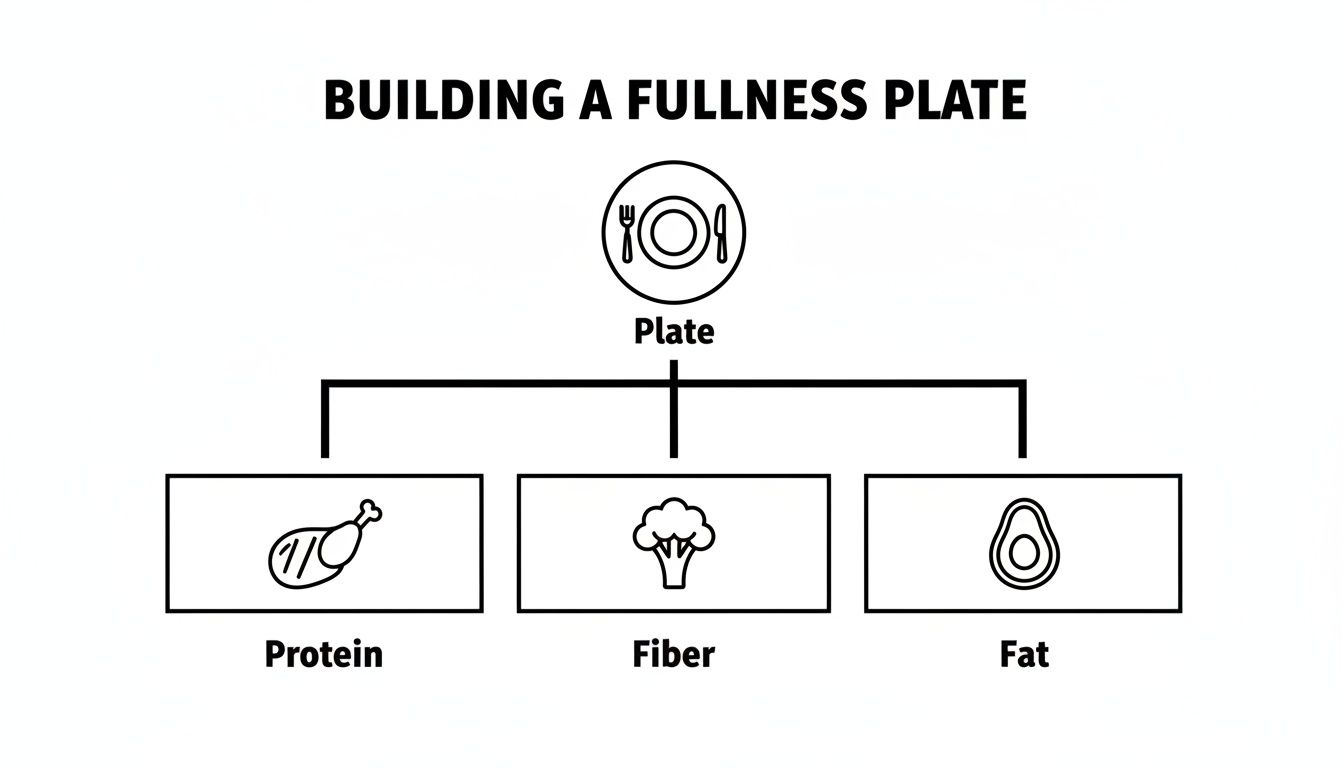
As you can see, making protein, fiber, and healthy fats the stars of your meal is the blueprint for both immediate and long-term fullness.
Putting It Into Practice
Making this work for you is pretty simple. When you need energy that lasts, just reach for the more solid option.
- Grab a whole orange instead of pouring a glass of OJ.
- Eat a handful of almonds and berries instead of blending them into a smoothie.
- Choose a savory, crunchy protein snack instead of a quick protein shake.
This focus on texture and chewiness is exactly why satisfying, crunchy high-protein snacks are so effective at beating back hunger between meals. You’re working with your body's natural appetite controls, not against them.
Lifestyle Habits That Secretly Drive Hunger
Figuring out how to stay full longer isn't just about what's on your plate. It turns out, your daily routines are just as important. A lot of common habits can quietly sabotage your best efforts, cranking up your hunger signals even when your body doesn’t actually need more food.
Recognizing these triggers is the first real step toward getting a handle on your appetite.
A classic example? Dehydration. The part of your brain that controls appetite and thirst—the hypothalamus—can sometimes get its wires crossed. You might think you’re hungry when all your body really needs is a glass of water.
Next time you feel a snack attack coming on, try this: drink a big glass of water and wait 15 minutes. You'd be surprised how often that "hunger" just vanishes.
The Sleep and Stress Connection
Not getting enough sleep is a surefire way to send your appetite hormones into a tailspin. When you fall short of the recommended 7-9 hours of quality rest, your body ramps up production of ghrelin, the "I'm hungry" hormone. At the same time, it puts the brakes on leptin, the hormone that tells you, "I'm full."
This hormonal mess creates the perfect storm for intense cravings and overeating. Suddenly, you're not just a little peckish—you're desperately craving sugary, fatty foods because your tired brain is screaming for a quick energy fix. Making sleep a non-negotiable part of your routine is one of the most powerful things you can do for appetite control.
Chronic stress does something similar. It floods your system with cortisol, a hormone that can rev up your appetite, especially for those "comfort foods" we all know and love. High cortisol levels can also make it harder for your body to recognize when it's actually full.
Getting a grip on stress is key to keeping those hormonally-driven hunger pangs from taking over.
Practical Steps for a Satiety-Friendly Lifestyle
The goal here isn't a massive overhaul, but rather a series of small, consistent tweaks to your daily life. It’s all about creating an environment that lets your body's natural hunger and fullness cues do their job properly.
Here are a few things you can start doing today:
- Hydrate Mindfully: Keep a water bottle with you all day. It’s a simple visual reminder. If you're still forgetting, set a few alarms on your phone to build the habit.
- Create a Sleep Routine: Try to go to bed and wake up around the same time every day, even on the weekends. A relaxing wind-down ritual, like reading a book or taking a warm bath, can signal to your brain that it's time to shut down.
- Build in Stress Reduction: You don't need a full hour. Just 10 minutes of mindfulness, meditation, or even gentle stretching can make a real difference in your cortisol levels. Find an activity that feels good to you and stick with it.
To really see how these changes affect you, consider exploring the best food tracking app options. Logging your food and habits can reveal surprising patterns, showing you the direct link between your lifestyle and your hunger levels. By tackling these hidden factors, you're building a solid foundation for feeling full and satisfied for good.
Strategic Snacking and Meal Timing
Let's be clear: timing your meals and snacks isn't about following a strict, clock-watching regimen. It's really about learning to listen to what your body is telling you and planning just enough to avoid that desperate, ravenous feeling that always leads to bad decisions. The real goal is to create an eating rhythm that gives you steady energy and keeps you in charge of your hunger, not the other way around.
And please, forget that old myth about needing to eat every two hours to "stoke your metabolism." For most of us, three balanced meals and maybe one or two well-placed snacks are more than enough to feel satisfied and energized throughout the day. The trick is building those main meals for longevity, just like we’ve been talking about, so you aren't rummaging through the pantry an hour after you eat.
Plan Your Snacks With Purpose
A snack should be a bridge, not a detour. Its only job is to get you from one meal to the next without your energy crashing or your hunger taking over. This means a snack needs to be intentional, not just a mindless reaction to boredom or a sudden craving for something sweet.
So, what makes a snack smart versus one that just leaves you wanting more? It all comes down to its makeup. A truly purposeful snack combines protein and fiber to give you that lasting feeling of fullness.
- Satiating Snack: Think a handful of almonds with a pear. You get protein and healthy fats from the nuts, plus fiber and a touch of natural sweetness from the fruit.
- Unsatisfying Snack: A bag of pretzels. This is just a blast of simple carbs that will spike your blood sugar and then send it crashing, leaving you even hungrier than before.
Another fantastic choice is a savory, crunchy protein snack like Gym Snack. It packs a serious plant-based protein punch that stabilizes blood sugar and effectively crushes cravings. It’s the perfect weapon against that dreaded 3 PM slump.
Timing Based on Your Schedule
There’s no magic one-size-fits-all schedule here. Your best meal timing is completely unique to your daily routine. The underlying principle, however, is always the same: eat when you're actually hungry and try to anticipate when you’ll need an energy boost.
For instance, if you know you have a tough workout scheduled right after work, having a protein-focused snack around 3:30 PM is a game-changer. It prevents you from showing up to the gym on an empty tank or getting home so starving that you inhale everything in sight before dinner is even ready.
How your own body processes meals is also a huge factor. Research has shown that for some people, the feeling of fullness from a high-carb meal can disappear pretty quickly, sometimes dropping off around the 150-minute mark. By simply pairing those carbs with protein and fiber, you can stretch that satiety well beyond three hours, which dramatically cuts down on the urge to snack constantly.
You can read the full research about these metabolic differences to get a better handle on your own hunger patterns. This kind of self-awareness is absolutely key to figuring out how to stay full longer.
Got Questions About Staying Full? Let's Get Them Answered
Even when you're armed with the best advice, you're bound to run into a few specific questions. It's totally normal. Let's walk through some of the most common ones I hear, so you can tweak your approach and get past any roadblocks.
Getting these little details right can be the thing that makes all the difference.
How Much Protein Do I Actually Need to Feel Full?
There's no single magic number here, but a solid rule of thumb is to shoot for 0.7 to 1 gram of protein per pound of your target body weight. So, if your goal is 150 pounds, you're looking at a range of 105-150 grams of protein spread throughout your day.
The real secret isn't just the total number, but how you distribute it. Don't save it all for a massive steak at dinner. A much better strategy is to get at least 25-30 grams of protein at each of your main meals. This keeps those "I'm satisfied" signals firing consistently, which is key to avoiding those energy crashes that have you reaching for the cookie jar.
Does Drinking Water Before a Meal Genuinely Work?
Absolutely, and it's one of the simplest yet most effective tricks in the book. Chugging a big glass of water about 20-30 minutes before you sit down to eat does two things. First, it physically takes up some room in your stomach, which sends a very early "Hey, I'm starting to get full" message to your brain.
Second, it helps you figure out if you're actually hungry or just thirsty. Our brains can get those signals crossed more often than you'd think. Hydrating first ensures you’re eating because of true hunger, not just because your body needs fluids.
The goal isn't to feel uncomfortably stuffed before you even start; it's about giving your body a head start on satiety. It's probably the easiest way to naturally manage your portions without feeling like you're missing out.
What Are Some High-Fiber Foods That Won't Make Me Bloated?
Ah, the fiber paradox. You need it to feel full, but going from zero to sixty can leave you feeling bloated and uncomfortable. The key is to be strategic: choose gentle sources of fiber and, most importantly, increase your intake slowly.
Here are a few of my go-to, bloat-friendly options to get you started:
- Chia Seeds: These are fantastic because they form a gel when you add liquid, which is incredibly easy on your digestive system.
- Berries: Think raspberries and blackberries. They're loaded with fiber but are usually very well-tolerated.
- Oats: A classic for a reason! Oats provide soluble fiber, which is known for being gentle on the gut.
- Avocado: You get the double-win of healthy fats and a good amount of fiber, all in one package.
My advice? Just add one of these to a single meal each day for a week. This gives your body time to adjust, so you get all the amazing hunger-crushing benefits of fiber without any of the downsides.
Looking for a satisfying, high-protein snack that hits the spot without the bloat? You've got to check out the delicious, crunchy options from Gym Snack. Our plant-based savory snacks are specifically designed to keep you feeling full and fueled. Explore our flavors at gymsnack.com.