

When people think "vegan," they often worry about protein. But the truth is, plant-based powerhouses like lentils, pea protein, chickpeas, tofu, tempeh, and quinoa make it easy. These aren't just protein sources; they're packed with fiber and micronutrients that help you build a strong, healthy body from the ground up.
Your Guide to the Best Vegan Protein Sources
Getting enough high-quality protein on a vegan diet is a lot easier than you might think. I like to think of it like building a house: protein is your bricks, and the plant kingdom is a massive, diverse quarry full of them. The trick isn't to find one "perfect" food, but to pull from all over that quarry—mixing and matching ingredients to create a solid foundation.
This variety-first approach ensures you're not just getting protein, but a full spectrum of amino acids and other critical nutrients. And more people are catching on; recent stats show that nearly 25.8 million people globally have taken on vegan challenges, which points to a huge shift in how we eat. You can read more about this growing movement and its worldwide impact.
Dispelling the Protein Myth
Let's clear the air on one of the biggest myths out there: that vegan diets are naturally protein-deficient. That's simply not the case. With a bit of know-how, you can easily hit—and even surpass—your protein goals.
The secret to a high-protein vegan diet that actually works is variety. When you consistently mix different plant foods—legumes with grains, nuts with seeds—you're building a complete nutritional profile that supports everything from muscle repair after a workout to a healthy immune system.
This chart breaks down the protein you'll find in some of the most common and affordable vegan staples.
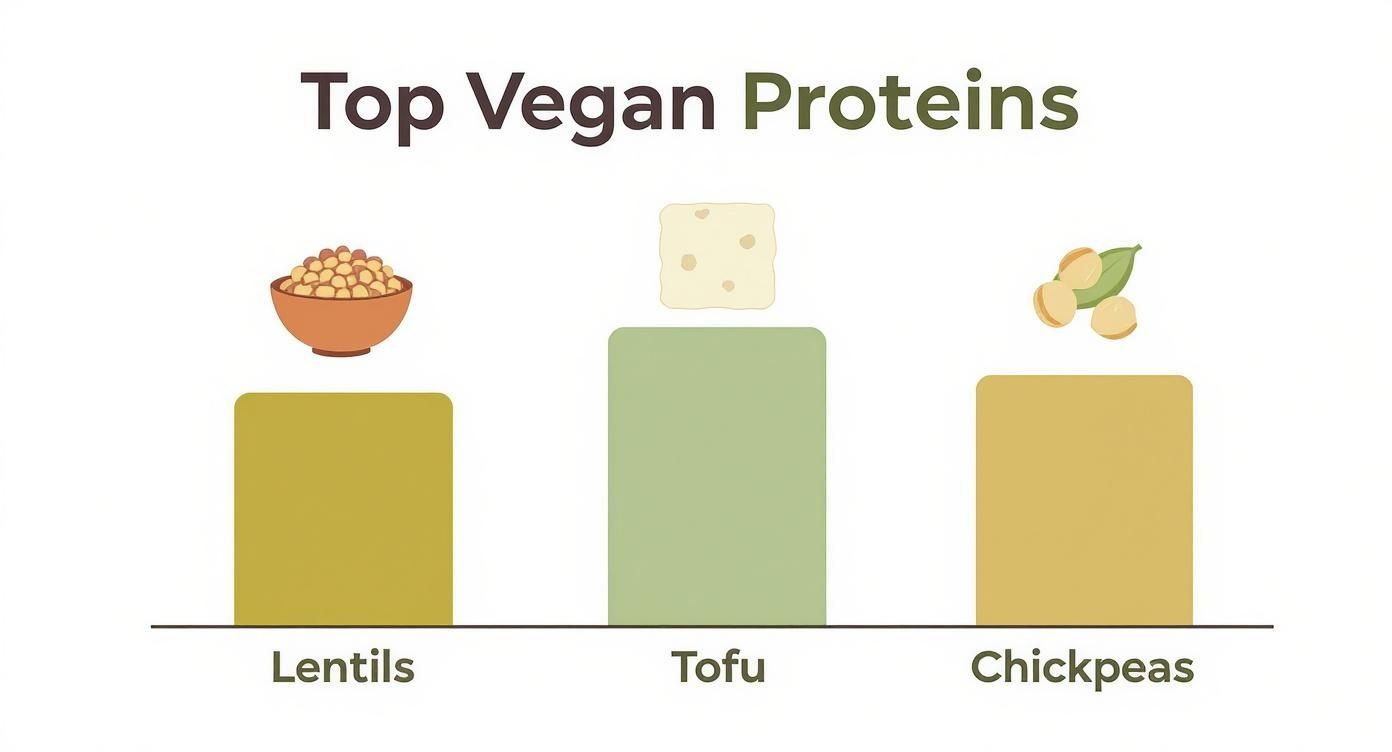
As you can see, everyday foods like lentils and tofu are incredibly protein-dense, holding their own against many animal-based options.
Top Vegan Protein Sources at a Glance
To make this super practical, here’s a quick-reference table that shows how much protein you get from standard servings of top plant-based sources. Think of this as your cheat sheet for meal planning and hitting your daily targets.
| Protein Source | Serving Size | Protein (grams) |
|---|---|---|
| Tofu (firm) | 1/2 cup (126g) | 22g |
| Lentils | 1 cup, cooked | 18g |
| Chickpeas | 1 cup, cooked | 15g |
| Tempeh | 3 oz (85g) | 17g |
| Edamame | 1 cup, shelled | 18g |
| Seitan | 3 oz (85g) | 21g |
| Quinoa | 1 cup, cooked | 8g |
These foods are the building blocks of a truly powerful vegan diet. They provide the high-quality fuel you need for an active lifestyle, muscle growth, and all-around wellness.
Building a Strong Foundation with Plant Protein
Before we jump into the best vegan protein sources, let’s quickly cover what protein actually is. Think of it as a long chain made up of smaller links called amino acids. Your body uses 20 different amino acids to build everything from muscle to hormones, but nine of them are special.
These are the essential amino acids (or EAAs), and "essential" is the key word here. It means your body can't make them—you have to get them from your diet. This simple fact is where the whole "complete" vs. "incomplete" protein conversation begins, a topic that often trips people up when they first go plant-based.
Complete vs. Incomplete Proteins Explained
A "complete" protein is any food that contains all nine of those essential amino acids in roughly the right amounts. Most animal products fall into this category, but so do plenty of plant-based powerhouses like soy (think tofu and tempeh), quinoa, and hemp seeds.
An "incomplete" protein is simply a food that's a bit low in one or two of those EAAs. For instance, beans are a little light on the amino acid methionine, while grains like rice are lower in lysine. This isn't a problem, it's just the natural makeup of the food.
It's like building with LEGOs. To build a specific car, you need all the right pieces. One kit might have plenty of wheels but no steering wheels, while another kit has steering wheels but no tires. You don't throw out the kits; you just pull the pieces you need from both.
This is exactly how we approach plant protein, through a simple strategy called protein combining.
The Myth of Meal-by-Meal Combining
For a long time, the advice was to meticulously pair these "incomplete" proteins at every single meal—the classic rice and beans combo is a perfect example. While that’s certainly a delicious and effective pairing, we now know it's not strictly necessary.
Thankfully, our bodies are much more efficient than we thought. They maintain a reserve pool of amino acids to pull from as needed throughout the day. So, you don’t need to stress about creating a "complete" protein in every bite you take.
As long as you’re eating a varied diet of different plant proteins over the course of the day, your body will have all the building blocks it needs to get the job done. It’s a much more flexible and realistic approach.
For example, your day could look something like this:
- Breakfast: A bowl of oatmeal (a grain).
- Lunch: A big salad topped with chickpeas (a legume).
- Snack: A handful of almonds (nuts/seeds).
- Dinner: A lentil and brown rice stir-fry (a legume and a grain).
See how easy that is? You're naturally getting everything you need without overthinking it. A well-rounded plant-based diet makes this practically automatic. If you want to explore this further, our guide on how to get enough protein on a plant-based diet has even more actionable strategies.
The main takeaway here is simple: getting all your essential amino acids on a vegan diet is incredibly straightforward. Just focus on variety—legumes, grains, nuts, and seeds—and your body will handle the rest. This lets you build a solid nutritional foundation without the stress, so you can focus on hitting your goals.
Beans, Lentils, and Peas: The Unsung Heroes of Plant-Based Protein
If you're serious about getting enough protein on a vegan diet, your pantry should be loaded with legumes. This family—which covers everything from beans and lentils to peas—is the absolute foundation of a strong, plant-powered eating plan.
They are the true workhorses. They’re cheap, you can find them anywhere, and they’re incredibly versatile. Forget the fancy powders for a moment; this is where consistent, real-food muscle-building starts.
More Than Just Protein
What makes legumes so great is that they aren't a one-trick pony. Sure, the protein is fantastic, but they're also packed with complex carbs for steady energy, tons of fiber to keep you full and your gut happy, and crucial minerals like iron. It’s a powerful combination that supports both performance and overall health.
Take lentils. A single cooked cup gives you a massive 18 grams of protein. On top of that, you get more than half of your daily fiber. That fiber is key—it slows digestion, keeping you feeling satisfied long after you eat, which is a huge plus if you're managing your weight or just trying to avoid that 3 p.m. energy crash.
Meet the Legume All-Stars
While pretty much any legume is a great choice, a few really shine when it comes to protein content and ease of use. Getting these into your rotation is one of the easiest ways to hit your daily protein targets without even trying.
Here are a few of my go-to's:
- Lentils: Brown and green lentils are my staples for hearty stews and shepherd's pie. Red lentils are a bit different; they cook down super fast and get creamy, which makes them perfect for quick curries and dals.
- Chickpeas (Garbanzo Beans): These are a true kitchen superstar. Hummus and falafel are the obvious choices, but I love roasting them with some spices for a crunchy snack. They're also an easy way to add 15 grams of protein per cup to any salad or grain bowl.
- Black Beans: With their rich, earthy flavor, black beans are a must for veggie burgers that actually hold together. They also make any burrito or chili feel substantial and satisfying. One cup gives you about 15 grams of protein.
- Edamame: These young soybeans are a game-changer because they're a complete protein, meaning they have all nine essential amino acids your body can't make. A cup of shelled edamame delivers a solid 18 grams of protein. I keep a bag in the freezer for a quick post-workout snack or to toss into stir-fries.
It's clear people are catching on. The plant-based protein market was recently valued at USD 18.7 billion and is expected to soar to USD 43.07 billion by 2034. This boom is being driven by people just like us who are prioritizing health, fitness, and sustainable food choices. You can dig deeper into the growth of the plant-based protein market to see where things are headed.
Think of legumes as the perfect example of nutrient synergy. The protein builds muscle, the fiber manages appetite, and the iron helps get oxygen to your muscles during a tough workout. It’s a complete performance package in one humble bean.
How to Actually Eat More Legumes
The best part about legumes is that you don't need to reinvent your entire diet. The real trick is to simply add them to the meals you're already making.
Here are some dead-simple ways to get started:
- Beef Up Soups and Chilis: Got a can of vegetable soup? Make it a meal by tossing in a can of chickpeas or lentils. It instantly becomes more filling and protein-rich.
- Make Better Burgers and Tacos: Mash up some black beans or lentils with your favorite spices. It creates a fantastic, hearty base for veggie burgers or a killer filling for tacos.
- Upgrade Your Snacks: Ditch the chips. Keep a bowl of steamed and salted edamame in the fridge for a quick bite, or roast chickpeas with paprika until they're crispy.
- Whip Up Dips and Spreads: Blend chickpeas for a classic hummus, or try mashing white beans with garlic and herbs for a creamy dip that’s perfect with raw veggies.
Making legumes a regular habit is about more than just hitting a protein number. It's about building a solid foundation of whole-food nutrition that fuels your workouts, stabilizes your energy, and supports your long-term health. Hands down, they are one of the best and most accessible protein sources out there for vegans.
Diving Into Soy and Wheat Proteins
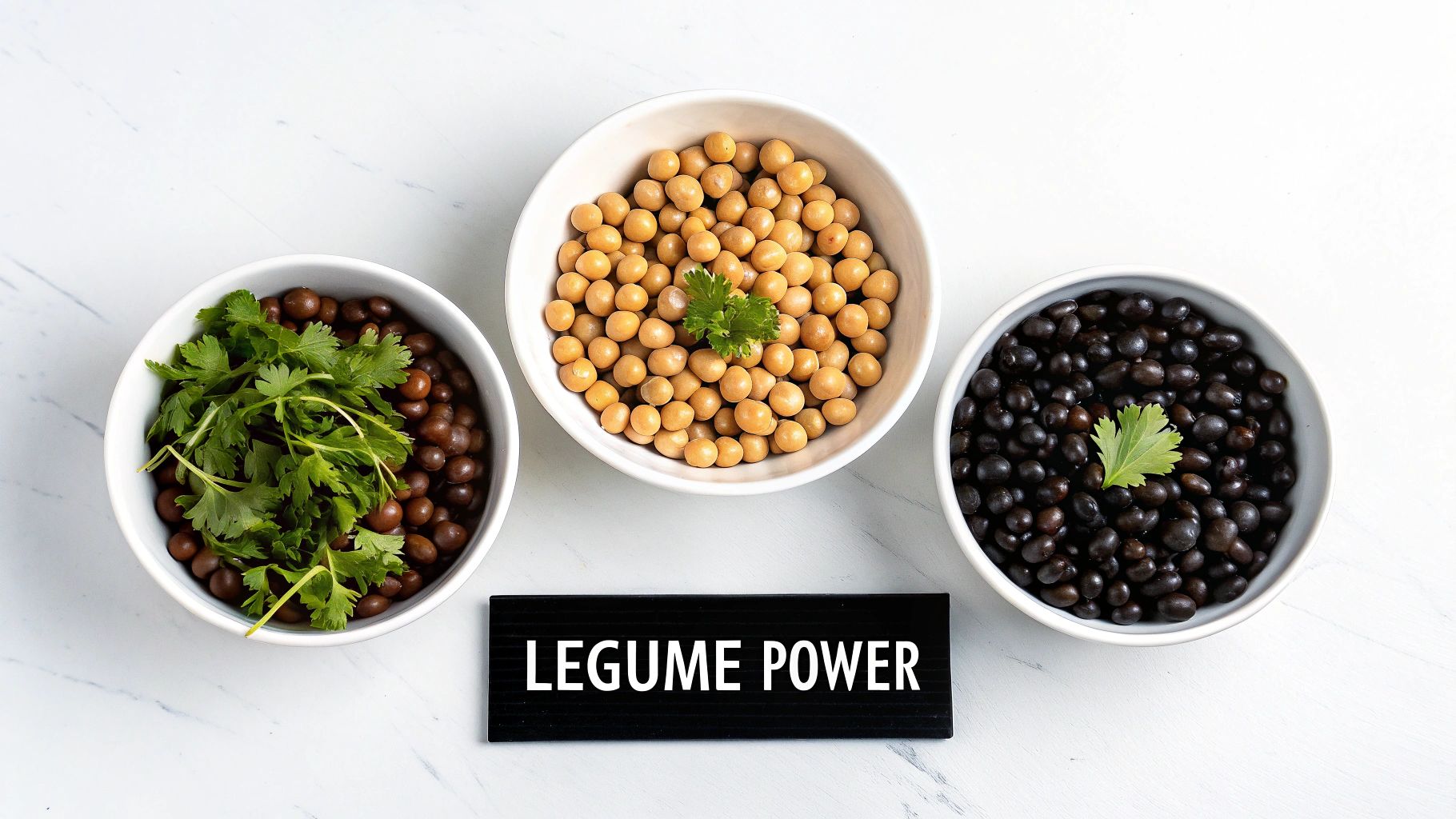
If legumes are the dependable foundation of a plant-based diet, then soy and wheat proteins are the undisputed heavyweights. These are the true culinary chameleons, ready to transform into anything from a crispy stir-fry ingredient to a hearty, meat-like main course.
Let's talk about soy. For years, it’s been tangled up in myths and bad press. Thankfully, modern research tells a much different, and frankly better, story. Whole and minimally processed soy foods like tofu, tempeh, and edamame aren't just safe—they’re nutritional powerhouses.
Best of all, soy is one of the few plant-based foods that deliver a complete protein. This means it contains all nine essential amino acids your body needs, making it an incredibly efficient fuel for muscle repair and general health.
Getting the Most Out of Tofu
Tofu, made from condensed soy milk, is probably the most well-known soy product out there. Its mild flavor is a blank slate, but the secret to unlocking its real potential is all in the prep work. The number one rule? You have to press it.
Pressing a block of firm or extra-firm tofu squeezes out the excess water. This simple step is a game-changer, allowing it to soak up marinades and achieve a fantastic crispy texture when you cook it. A dedicated tofu press is great, but you can get the same effect by wrapping the block in paper towels and setting something heavy on top for about 30 minutes.
- Firm/Extra-Firm Tofu: This is your go-to for baking, frying, and grilling. It holds its shape beautifully, making it perfect for crispy nuggets or kebabs. A half-cup serving gives you a massive 22 grams of protein.
- Silken/Soft Tofu: Creamy and delicate, this is the one type you don't press. Instead, blend it into smoothies for a protein kick or use it as a base for rich sauces, dressings, and even vegan desserts.
The Power of Tempeh and Edamame
If you haven't tried tempeh, you're missing out. It's made from fermented soybeans pressed into a firm cake, giving it a nutty, savory flavor and a satisfyingly chewy texture that many people actually prefer over tofu.
Because it’s fermented, tempeh is often easier to digest and is a good source of prebiotics for gut health. Just a three-ounce serving provides a solid 17 grams of protein. Try crumbling it into a pan for a hearty taco filling or slicing it into strips to make a smoky vegan "bacon."
And don't forget edamame! These are just young, green soybeans, usually found in the freezer aisle. They're another fantastic complete protein, offering about 18 grams of protein per cup. I always keep a bag on hand for a quick, satisfying snack—just steam and sprinkle with a little sea salt.
Soy's incredible versatility is what makes it a staple. From firm tofu that fries up perfectly to savory tempeh that soaks up any marinade, it delivers a texture and protein punch for just about any dish you can dream up.
Meet Seitan: The "Wheat Meat"
While soy often grabs the spotlight, there's another superstar that absolutely deserves a place in your rotation: seitan. Pronounced "say-tan," this powerhouse is made from vital wheat gluten, which is the main protein found in wheat.
There's a reason people call it "wheat meat." Seitan has a dense, chewy texture that’s remarkably similar to meat, making it an incredible substitute in dishes like stews, sandwiches, and roasts.
But what really makes seitan stand out is its jaw-dropping protein content. A small three-ounce serving can pack over 21 grams of protein, often with very little fat. This makes it one of the most protein-dense plant foods you can find.
Since it's pure gluten, seitan is obviously not for anyone with celiac disease or a gluten sensitivity. For everyone else, though, it's an amazing tool for building muscle and crafting incredibly satisfying meals. You can find pre-made seitan in most grocery stores or try making your own at home to save some money. If you're serious about your fitness goals, understanding how to use ingredients like this is key. To learn more, check out our complete guide to the best plant protein for muscle gain.
Don't Forget About Nuts, Grains, and Seeds
While beans and soy products are the heavy hitters, some of the most powerful vegan protein sources come in small packages. Nuts, seeds, and certain whole grains are the secret weapons that can quietly take your daily protein from "good enough" to "truly great."
Think of them as nutritional finishers. They add texture, flavor, and a surprising protein punch to just about anything you eat. Layering these foods into your meals throughout the day is a simple but incredibly effective strategy for consistently giving your body the building blocks it needs.
The Mighty Seed Trio
Seeds are tiny dynamos, packing an impressive amount of protein into a very small serving. Three, in particular, are must-haves for their versatility and powerful nutritional profiles.
- Hemp Seeds: With about 10 grams of protein in just three tablespoons, hemp seeds are a true powerhouse. They’re also a rare complete protein, delivering all nine essential amino acids. Their mild, nutty flavor is easy to sprinkle over oatmeal, blend into smoothies, or toss on a salad.
- Chia Seeds: Famous for their gelling ability, these tiny seeds are also nutritional giants. Two tablespoons offer around 5 grams of protein plus a serious dose of fiber and inflammation-fighting omega-3 fatty acids.
- Flaxseeds: Like chia, flaxseeds are a fantastic source of omega-3s and provide about 5 grams of protein per two tablespoons. Quick tip: always use ground flax. Your body can’t effectively break down the whole seeds to get to the good stuff inside.
The real beauty of seeds is how easy they are to use. I like to make a "protein sprinkle" jar with hemp, chia, and pumpkin seeds. I keep it on the counter and add a tablespoon or two to everything from avocado toast to pasta sauce for a no-effort protein and nutrient boost.
Grains That Do More Than Carbs
When it comes to protein, not all grains are created equal. A few ancient grains stand far above the rest, providing a solid protein base for any meal.
Quinoa is the undisputed champion here. A single cooked cup delivers 8 grams of complete protein, making it an invaluable plant-based staple. Its fluffy texture and slightly nutty taste make it an amazing substitute for rice in grain bowls, salads, or even as a warm breakfast porridge.
Other great high-protein grains include amaranth (9 grams per cooked cup) and buckwheat (6 grams per cooked cup). Both are also gluten-free, adding variety and robust nutrition to your diet.
Nuts and Nutritional Yeast: The Finishing Touches
Rounding out this group are nuts and a unique food called nutritional yeast. Nuts like almonds and peanuts are perfect protein-dense snacks, giving you 6-9 grams of protein per handful along with healthy fats.
Nutritional yeast, or "nooch" as it's affectionately called, is a deactivated yeast with a savory, cheesy flavor that's a staple in the vegan community for good reason. Just two tablespoons can provide 5-8 grams of protein and a significant hit of B vitamins, which are critical for energy. Sprinkle it on popcorn, stir it into scrambled tofu, or use it to make incredible vegan cheese sauces.
Before we move on, let's look at how some of these plant-based powerhouses stack up when it comes to other essential nutrients.
Essential Nutrients in Plant-Based Proteins
This table compares several key protein sources and their contributions to your daily Iron, Calcium, and Omega-3 needs.
| Protein Source (100g) | Protein (g) | Iron (mg) | Calcium (mg) | Omega-3s (g) |
|---|---|---|---|---|
| Hemp Seeds | 31.6 | 8.0 | 70 | 9.4 |
| Chia Seeds | 16.5 | 7.7 | 631 | 17.8 |
| Flaxseeds | 18.3 | 5.7 | 255 | 22.8 |
| Almonds | 21.2 | 3.7 | 269 | 0.0 |
| Quinoa (Cooked) | 4.4 | 1.5 | 17 | 0.1 |
As you can see, foods like chia and hemp seeds don't just add protein—they are nutritional multi-taskers, delivering impressive amounts of other vital minerals and healthy fats. This is why a varied diet is so important; you cover all your bases without even trying too hard.
Putting It All Together: Sample Vegan Meal Plans
It’s one thing to know what to eat, but it’s another to see how it all fits into a day. Let's move from theory to reality.
Think of these meal plans less like strict rules and more like a flexible framework. They're here to show you how easily you can structure your day to hit your protein targets, whether you're just staying active or seriously training. These examples turn the numbers into real, satisfying meals you can actually look forward to. The goal is to spread your protein intake out to keep your energy steady and help your muscles recover.
Plan 1: The Active Wellness Blueprint
This setup is ideal for anyone who exercises regularly and wants to make sure they're getting enough protein for general health and solid recovery. It’s built around whole foods that pack a nutritional punch and keep you feeling full.
- Breakfast (8 AM): Tofu Scramble. Crumble up a half-block of firm tofu, and cook it with a sprinkle of nutritional yeast and turmeric for that cheesy, eggy vibe. Serve it alongside whole-grain toast and a few slices of avocado.
- Lunch (12 PM): Big Lentil Salad. This isn't your average sad desk salad. It’s a hearty mix of cooked green lentils, quinoa, chopped cucumber, and bell peppers, all tossed in a creamy lemon-tahini dressing.
- Snack (4 PM): Greek-Style Soy Yogurt with Hemp Seeds. A quick, protein-packed snack to get you through that afternoon slump.
- Dinner (7 PM): Black Bean Burgers. Two homemade patties on whole-wheat buns, with a side of baked sweet potato fries.
Daily Protein Total: Approximately 95-105 grams.
See how easy that was? This plan meets the needs of an active person by layering different protein sources—soy, legumes, grains, and seeds—at every single meal. You get sustained energy without feeling weighed down.
Plan 2: The Athlete's Performance Blueprint
Okay, for all the athletes and gym-goers focused on building muscle, this one’s for you. This plan seriously cranks up the protein to fuel intense workouts and maximize recovery. It’s more strategic, using concentrated protein sources where they count.
- Breakfast (7 AM): High-Protein Oatmeal. Start with your usual oats, but stir in a scoop of your favorite vegan protein powder. Top it off with a spoonful of peanut butter and a sprinkle of chia seeds.
- Lunch (12 PM): Tempeh and Brown Rice Bowl. Pan-fry some tempeh strips until they're golden and crispy. Serve them over a bed of brown rice with steamed broccoli and a drizzle of soy-ginger sauce.
- Pre-Workout Snack (4 PM): Apple Slices with Almond Butter. The perfect combo of simple carbs for quick energy and a hit of protein and fat to sustain you.
- Post-Workout (6 PM): Protein Shake. Keep it simple. A scoop of plant-based protein powder mixed with either water or soy milk to kickstart muscle repair.
- Dinner (7:30 PM): Seitan Stir-Fry. Slice up some seitan and toss it in a hot wok with a colorful mix of your favorite veggies. Serve it all over a bed of fluffy quinoa.
Daily Protein Total: Approximately 140-150 grams.
This plan is all about performance. It leans on heavy hitters like protein powder and seitan to help you reach those higher targets without having to eat a mountain of food. If you're looking for more ways to hit these bigger numbers, checking out tips on how to increase protein intake can give you even more ideas.
A little bit of planning makes all the difference. As you can see, hitting your protein goals on a vegan diet is not only doable, but it can also be delicious and full of variety. Use these plans as a starting point, and don't be afraid to swap ingredients to build a routine that you truly enjoy.
Common Questions About Vegan Protein
Diving into plant-based eating, especially with fitness in mind, naturally brings up some questions. It's totally normal to wonder if you're doing it right. So, let's clear up a few of the most common concerns to help you build your plan with confidence.
How Much Protein Do I Actually Need?
There's no magic number here—your protein needs are unique to you and your lifestyle. For a generally sedentary adult, the standard recommendation is about 0.8 grams of protein per kilogram of body weight. So, if you weigh around 68kg (150lbs), you'd be looking at roughly 54 grams a day.
But if you're active and training regularly, that baseline just won't cut it. To properly fuel muscle repair and growth, most athletes and gym-goers need somewhere between 1.2 to 2.0 grams of protein per kilogram. That same 68kg person would need to bump their intake up to a more substantial 82-136 grams daily.
Think of your daily protein intake like a personalized budget. A casual walker has different fuel needs than a marathon runner. Calculate your baseline and adjust based on your activity level to ensure you're giving your body what it needs to thrive.
Can I Get All Essential Amino Acids Daily?
Yes, absolutely. And thankfully, it’s much simpler than people used to believe.
The old idea that you had to meticulously pair certain foods, like rice and beans, in the very same meal is officially outdated. Your body is way smarter than that; it keeps a reserve of amino acids on hand that it can pull from as needed throughout the day.
Just focus on eating a variety of good protein sources—legumes, whole grains, nuts, and seeds. As long as you're mixing it up over the course of the day, you'll have no trouble getting all nine essential amino acids.
Are Vegan Protein Powders a Good Idea?
They can be a fantastic tool, as long as you remember they're a supplement, not a substitute for whole foods.
Protein powders are incredibly convenient, especially if you have high protein targets or a schedule that's always on the go. A post-workout shake, for example, is a great way to get a quick, easily digestible shot of protein right when your muscles are primed for recovery. Just make sure the foundation of your diet is still built on real, whole foods.
What About Nutrients Like Iron and B12?
Great question. Protein is important, but it's not the only piece of the puzzle.
You can find plenty of iron in plant-based foods like lentils, tofu, and spinach. The trick is to help your body absorb it efficiently. Pairing your iron-rich foods with a source of Vitamin C—like squeezing lemon over your spinach or adding bell peppers to a lentil stew—can make a huge difference.
For Vitamin B12, it’s non-negotiable: you need a supplement. It simply isn't found in plant foods. And don't forget your omega-3s! You can get these healthy fats from flaxseeds, chia seeds, and walnuts to keep your brain and heart happy.
Ready to fuel your workouts the right way? Gym Snack offers savory, plant-based protein snacks packed with 30g+ of pea protein per bag. Ditch the sugary bars and grab a crunchy, satisfying snack that supports your goals. Explore our delicious flavors and build your custom pack today!