

The secret to a great run isn't just about the miles you put in; it's about the fuel you put into your body. The best snacks for runners strike a perfect balance between clean carbohydrates for that initial burst of energy, quality protein for muscle repair, and a touch of healthy fat for long-haul endurance.
These days, more and more athletes are skipping the super-sweet bars and gels. They’re reaching for savory, plant-based options instead to get the power they need without the dreaded sugar crash.
Your Complete Runner's Snacking Strategy
Think of your body like a finely tuned engine. You wouldn't put just any fuel in a high-performance car, right? The same goes for running. It's not about just cramming in calories; it's about giving your body the right kind of fuel at exactly the right time. That’s what separates a personal best from hitting that wall halfway through.
A smart fueling plan really boils down to three key moments: before, during, and after your run. Each one has a totally different goal, and your snack choices need to line up with that. Getting this right is a cornerstone of sports nutrition for endurance athletes, and it can make all the difference in your performance and recovery.
Timing Your Fuel for Peak Performance
The basic idea is simple. Before you head out, the goal is to top off your energy tanks—what experts call glycogen stores—with some easy-to-digest carbs. If you're out for a long one, you'll need to refuel mid-run to keep those levels up. And afterward? It’s all about repair, which calls for a tag team of protein and carbohydrates.
This timeline gives you a great visual of how a runner's snacking strategy flows from one phase to the next.
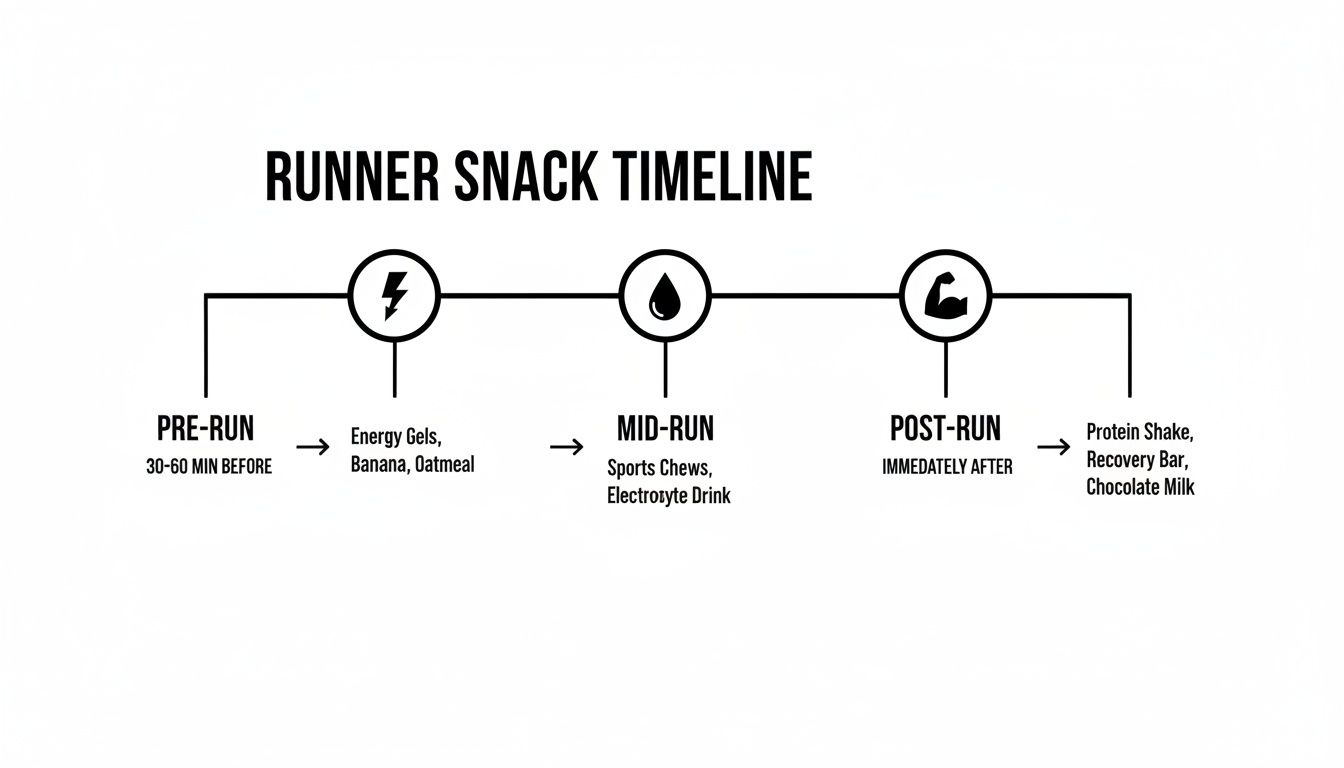
As you can see, the focus shifts from loading up on energy before you start, to maintaining it while you're moving, and finally, to rebuilding your muscles once you're done.
To make this even simpler, here's a quick cheat sheet for what to focus on and when.
Runner's Quick Snack Guide: Timing and Goals
| Running Phase | Primary Goal | Key Nutrients |
|---|---|---|
| Pre-Run | Top off energy stores | Easily digestible carbohydrates |
| Mid-Run | Maintain energy, prevent fatigue | Quick-release carbohydrates, electrolytes |
| Post-Run | Repair muscle, replenish glycogen | Protein and carbohydrates |
This table neatly summarizes how your nutritional needs change throughout your run, helping you make smarter snack choices every step of the way.
The Shift Toward Savory, Plant-Based Snacking
The way runners think about fuel is definitely changing. After years of sugary gels and dessert-like bars, a lot of us are dealing with "flavor fatigue." That craving for something different has sparked a huge global move toward savory, high-protein, and plant-based snacks.
The plant-based snack market is set to more than double, exploding from USD 16.02 billion in 2024 to an estimated USD 36.91 billion by 2034. And what’s leading the charge? Savory options like protein crisps and roasted beans, which are expected to grab over half the market share.
This isn't just a trend; it's a game-changer for runners. Savory snacks give you the macros you need without the sugar spike, making them perfect for pre-run fuel and post-run recovery. Finding a convenient, plant-based protein snack means you can get everything your body needs while satisfying that craving for something crunchy and genuinely tasty.
The Runner’s High-Performance Fueling Playbook
Think of your body like a high-performance engine. You wouldn't just pour any old fuel in and expect to win a race, right? To get the most out of every run, you need the right fuel at the right time. Nail that, and you'll unlock a new level of performance.
This isn't about getting bogged down in complicated science or starting some restrictive diet. It’s much simpler: we're just matching the right tool to the right job. Carbohydrates are your go-fast fuel for immediate power. Protein is your expert repair crew, rebuilding muscles after a tough workout. And healthy fats? They’re your long-haul reserve tank for endurance.
Carbohydrates: The Primary Energy Source
When it comes to running fuel, carbohydrates are king. There’s no debate. When you eat carbs, your body breaks them down into glucose and stores it in your muscles and liver as glycogen. This is your most readily available energy source, the stuff that powers everything from a quick neighborhood sprint to the first few miles of a marathon.
But not all carbs are created equal. They generally fall into two camps:
-
Simple Carbohydrates: These are your fast-acting fuels. Think of the natural sugars in fruit, a drizzle of honey, or what you find in an energy gel. They digest quickly and give you a rapid energy spike, which is perfect for that mid-run boost when your legs start feeling heavy.
-
Complex Carbohydrates: Found in foods like oats, sweet potatoes, and whole grains, these are built differently. They take longer to break down, giving you a slow, steady release of energy that keeps you going for the long haul. Think of them as the slow-burning log on a fire.
For consistent performance, you'll want your daily diet to be built on complex carbs, saving the simple carbs for strategic use right before or during a big effort.
Protein: The Muscle Repair Crew
If carbs are the fuel, protein is the team of mechanics that shows up after the race to fix everything. Every time your foot hits the pavement, you create tiny micro-tears in your muscle fibers. That’s normal! Protein provides the amino acids—the essential building blocks—needed to patch up that damage, making your muscles stronger than before.
This is exactly why what you eat after a run is so important. Getting some protein in post-workout kicks off the muscle repair process, helps cut down on soreness, and gets you ready to go again for your next run.
A huge mistake I see runners make is obsessing over carbs while forgetting about protein. Without enough protein to handle repairs, you’re just breaking your body down without building it back up, which is a fast track to injury and burnout.
Clean, plant-based proteins can be a fantastic choice for runners. Pea protein, for instance, is easy on the gut and highly digestible, so you’re less likely to run into the stomach trouble that some people get from dairy-based proteins like whey. This makes it a great ingredient in some of the best snacks for runners, especially for recovery. To learn more, check out this guide on high-protein snacks for athletes.
Healthy Fats and Hydration: The Support System
Carbs might get all the glory, but healthy fats and proper hydration are the essential support crew working behind the scenes to keep the whole operation running smoothly.
Healthy Fats: The Endurance Fuel
On those longer, steadier runs, your body starts tapping into its fat stores for a more sustained energy source. Healthy fats from foods like avocados, nuts, and seeds are incredibly energy-dense, giving you fuel to burn when your glycogen tank starts running low. They also play a critical role in reducing inflammation and helping your body absorb certain vitamins.
Hydration and Electrolytes: The Coolant
Think of water as the coolant for your engine. Getting even slightly dehydrated can lead to fatigue, cramps, and a major drop in performance. But staying hydrated is about more than just H₂O; it’s also about electrolytes.
Electrolytes are key minerals like sodium, potassium, and magnesium that you lose in your sweat. They are absolutely vital for:
- Keeping your fluids properly balanced
- Making sure your nerves fire correctly
- Preventing those dreaded muscle cramps
If you’re running long or in the heat, replacing these electrolytes during and after your run isn't just a good idea—it’s non-negotiable for staying strong and feeling good.
How to Maximize Your Energy Before a Run
The secret to a strong, energized run often begins long before you even lace up your shoes. Think of your pre-run snack as the final, crucial step in topping off your glycogen stores—your body's most accessible fuel tank. Nail this, and you'll feel powerful from the very first mile to the last.
The goal isn't to sit down for a full meal. Instead, you're giving your body just enough easily accessible energy to perform, without causing any digestive drama. It's like adding that last bit of premium fuel to your car's engine right before a big race. You want the tank full, but not so full that it weighs you down.
The Art of Timing Your Pre-Run Snack
When it comes to pre-run fuel, timing is everything. What you eat and when you eat it are directly connected, because your body needs time to digest the food and turn it into energy you can actually use. Generally, there are two main windows to think about.
-
2-3 Hours Before a Run: This is the perfect time for a small, balanced meal. It gives your body plenty of time to digest, absorb nutrients, and get your blood sugar levels stable. Your focus here should be on complex carbohydrates with a moderate amount of protein.
-
30-60 Minutes Before a Run: If you're short on time or just need a quick boost, this window is for a small, simple snack. The goal here is almost entirely fast-digesting carbohydrates that won’t sit like a rock in your stomach.
Getting the timing right helps you dodge that dreaded side stitch or the sluggish, heavy feeling that can completely derail a run. For most of us, a small snack about an hour before heading out is the sweet spot.
Building the Perfect Pre-Run Snack
So, what does the ideal pre-run snack look like? It’s surprisingly simple: it should be dominated by easily digestible carbohydrates with just a little bit of protein. Carbs provide the quick-release glucose your muscles crave for power, while that small touch of protein can help you feel satisfied and prevent a sudden energy crash later.
Runners have relied on these classics for years for a reason:
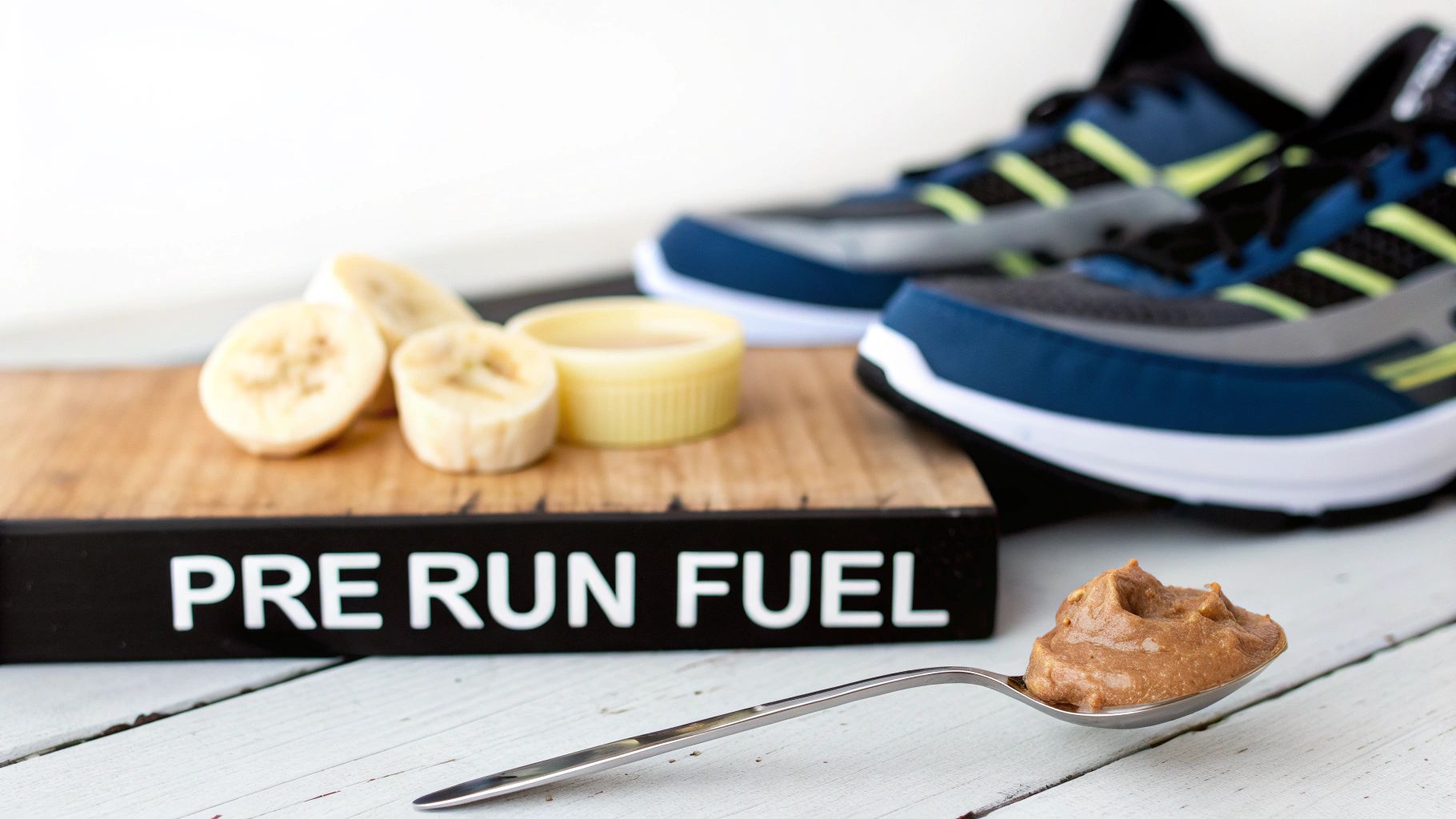
- A medium banana with a spoonful of almond butter.
- A small bowl of oatmeal topped with a few berries.
- A slice of whole-wheat toast with a thin layer of jam.
These options work because they stick to the golden rule: high in carbs, low in fat, and low in fiber. This combo guarantees quick digestion and makes energy immediately available. If you want more ideas, our guide on the best pre-workout snacks for muscle gain has some great insights that apply here, too.
Modern Savory Options for Sustained Power
While those sweet standbys are great, sometimes you just get tired of the same old flavors. A savory, crunchy snack can be just as effective, as long as it fits the right nutritional profile.
For example, a half-serving of a high-protein, plant-based snack like Gym Snack about an hour before you head out can be a fantastic alternative. The pea protein offers a bit of sustained energy release, and the satisfying crunch can be a welcome change. This helps you avoid the sugar crash that sometimes follows overly sweet pre-run fuels.
The key is portion control. You don't need a full serving of a high-protein snack right before a run. A smaller amount gives you that perfect blend of carbs and protein to power your effort without weighing you down.
Common Pre-Run Fueling Mistakes to Avoid
Knowing what not to eat is just as important as knowing what to eat. The wrong foods can easily sabotage your run by causing digestive chaos or just making you feel heavy and slow.
Steer clear of these foods in the 2-3 hours before you run:
| Food Type | Why to Avoid It | Example |
|---|---|---|
| High-Fat Foods | Fat slows digestion way down, which can lead to stomach cramps and that heavy, sluggish feeling. | Fried foods, cheesy dishes, or large handfuls of nuts. |
| High-Fiber Foods | Fiber is great for your overall health, but right before a run it can cause gas and bloating. | Big salads, cruciferous veggies like broccoli, or super high-fiber cereals. |
| Spicy Foods | For many people, these can trigger heartburn or other gut issues once you start moving intensely. | Anything with hot peppers or loaded with heavy spices. |
By sticking to a simple, carb-focused snack and avoiding these common pitfalls, you’re setting yourself up for a great, comfortable run every single time.
Fueling Mid-Run to Avoid Hitting the Wall
For shorter jogs, that pre-run snack you had is probably all you need. But once you start pushing past the 60- to 90-minute mark, things change. Your body begins to empty its glycogen tank—the easily accessible fuel stored in your muscles. This is where you risk hitting the dreaded "wall," that sudden, crushing wave of fatigue that every long-distance runner fears. We call it bonking.
To sidestep that energy crash, you have to be smart about fueling during your run. The idea is to drip-feed your system with small, steady doses of energy. It’s like adding small logs to a fire to keep it burning bright, rather than waiting for the flames to die down before frantically trying to relight it.
The Science of Mid-Run Snacking
When you're deep into a long effort, your body has one priority: quick energy. This isn’t the time for complex carbs, protein, or fats that take a lot of work to break down. Your focus needs to shift entirely to simple, fast-acting carbohydrates. These are the best snacks for runners on the move because your body can convert them into usable glucose almost instantly.
This is exactly why most mid-run fuels—gels, chews, and the like—are designed for rapid absorption. They shoot a concentrated dose of sugar straight into your bloodstream, replacing what your muscles are burning through. The trick is finding something that's easy to carry, easy to eat, and most importantly, easy for your gut to handle while you're bouncing around.
Choosing Your Mid-Run Fuel Source
Whatever you choose, it has to be portable and mess-free. While there's a whole industry built around engineered running fuel, plenty of whole-food options work just as well, as long as they digest quickly.
Popular Mid-Run Snack Options
- Energy Gels: The classic go-to. They offer a concentrated shot of simple carbs in a tiny, convenient packet, built for pure efficiency.
- Energy Chews: Think of them as gummy bears for athletes. They offer a similar punch to gels but give you a bit more texture and let you meter out your intake more easily.
- Dates: These are nature's energy bombs. A couple of pitted dates are loaded with natural sugar and are incredibly easy to stash in a pocket.
- Homemade Energy Balls: You can easily make your own by rolling up simple ingredients like dates, a little bit of oats, and a touch of maple syrup into bite-sized fuel.
Ultimately, the best option is the one that works for your stomach. What feels great for one runner can be a recipe for digestive disaster for another.
The cardinal rule of mid-run fueling is to never try anything new on race day. Your long training runs are your dress rehearsals. Use them to experiment with different snacks and timing to figure out exactly what your body needs.
How Much and How Often to Fuel
For any run that stretches over an hour, a solid rule of thumb is to aim for 30-60 grams of carbohydrates per hour. This is the sweet spot—enough to stave off fatigue without overloading your digestive system.
Let's break that down into real food:
- A typical energy gel has about 20-25 grams of carbs.
- Two large Medjool dates pack roughly 35 grams of carbs.
Based on this, you might plan on taking one gel every 45-60 minutes or popping a couple of dates every hour to stay in that target zone. Always start on the lower end of that range and see how you feel. As your gut gets more accustomed to it during training, you can gradually increase the amount. Remember, consistent, small doses are way more effective than waiting until you feel yourself fading. By then, it’s often too late to catch up.
Mastering Post-Run Recovery for Faster Results
The moment you stop your watch, another critical clock starts ticking. That 30-60 minute window right after your run is what many call the "anabolic window," and it’s your golden opportunity to kickstart recovery. During this time, your muscles are like sponges, primed to soak up nutrients to repair damage and restock your energy stores.

Think of it this way: a tough run creates tiny micro-tears in your muscle fibers and drains your glycogen tanks. By refueling quickly with the right stuff, you're handing your body the exact building blocks it needs to not only patch things up but to rebuild even stronger. This is where the best snacks for runners really make a difference, turning a good run into great progress.
The Golden Ratio for Muscle Repair
To make the most of this recovery window, you need to be strategic. The science points to a sweet spot: a carbohydrate-to-protein ratio of about 3:1 or 4:1. This combo is the perfect one-two punch for recovery. The carbs get to work immediately, refilling your depleted glycogen stores, while the protein delivers the amino acids necessary for muscle protein synthesis—the technical term for rebuilding and strengthening your muscles.
Nailing this ratio does more than just fix muscles. It helps dial down soreness, boosts how well your body adapts to training, and gets you back on your feet faster for your next run. Skipping post-run fuel is like finishing a huge construction project but telling the repair crew to go home. For more ideas on getting it right, check out our comprehensive list of the best post-workout snacks.
Rethinking Recovery Fuel: Savory Over Sweet
For years, the default recovery fuel has been a sugary protein shake or a candy-bar-like snack. While they can get the job done, a lot of runners are catching on to a more satisfying and effective alternative: savory, high-protein snacks. A crunchy, plant-based option can provide the ideal macros without the sugar rush, artificial fillers, or common allergens.
For runners, snacks that combine high protein, complex carbs, and low junk ingredients are increasingly recognized as some of the best options for performance and recovery. Many sports dietitians recommend that post‑run snacks provide roughly 15–30 g of protein plus carbohydrates to support muscle protein synthesis and glycogen replenishment.
A single bag of a savory pea-protein snack packing 30 g+ of protein hits this target perfectly. It does so without relying on dairy or soy, which can be tough on some athletes' stomachs. This shift away from sugar is part of a bigger trend, where clean, allergen-conscious ingredients like pea protein are gaining serious traction in functional foods.
Going savory has some real advantages. First, it feels more like a real mini-meal, which can help you feel full and keep you from grabbing less healthy options later. It also helps you steer clear of "flavor fatigue"—that feeling when you just can't stomach another sweet gel, chew, or bar.
Post-Run Snack Comparison: Savory Protein vs. Sweet Bar
It's helpful to see how these two approaches stack up side-by-side. While both aim to deliver protein, their overall impact on your body and taste buds can be quite different.
| Feature | Savory Plant-Based Protein Snack | Typical Sweet Protein Bar |
|---|---|---|
| Protein Source | Clean, allergen-conscious pea protein | Often whey, soy, or milk protein blends |
| Sugar Content | Typically very low or zero added sugar | Often high in added sugars or sugar alcohols |
| Flavor Profile | Satisfying savory flavors (e.g., cheesy) | Dessert-like (e.g., chocolate, cookie dough) |
| Digestibility | Gentle on the gut, free of common allergens | Can cause digestive issues for some runners |
| Satiety | Promotes fullness and curbs cravings | Can trigger a sugar crash and more sweet cravings |
As you can see, choosing a modern savory option can offer a cleaner, more satisfying way to refuel.
Ultimately, mastering your post-run recovery is just as crucial as the run itself. It's an essential piece of a smart, holistic training plan. Beyond nutrition, don't forget about physical recovery. Integrating practices like sports massage therapy can work wonders for muscle tightness and injury prevention. When you combine intelligent fueling with proper physical care, you create a powerful system for continuous improvement.
Your Running Nutrition Questions Answered

Even after you've nailed down the basics, running nutrition isn't always straightforward. Real-world running brings up specific questions, from fueling for weight loss to figuring out why your stomach rebels on some runs but not others.
Think of this as your practical, no-nonsense troubleshooting guide. We’re diving into those common "what if" scenarios to help you fine-tune your personal snacking strategy and run with confidence.
What Are the Best Snacks for Runners Trying to Lose Weight?
When you’re running to lose weight, your snacks have to do two jobs at once: fuel your effort and support a calorie deficit. It’s all about choosing nutrient-dense foods that keep you feeling full so you don't overeat later.
The key players here are protein and fiber. These two are incredible at promoting satiety and keeping hunger at bay. Instead of reaching for empty carbs, you want snacks that give you a serious nutritional bang for your buck.
A few smart choices include:
- A high-protein, low-sugar savory snack with 15g or more of protein to crush your appetite and help maintain muscle.
- A small pot of plain Greek yogurt for a creamy, protein-packed option.
- A simple hard-boiled egg—it’s portable, effective, and gets the job done.
This isn't about restriction. It's about being strategic. The right snack will fuel your workout and jumpstart recovery without derailing your progress.
How Do I Avoid Stomach Cramps from Snacks While Running?
We've all been there—that dreaded side stitch or gut-wrenching cramp that derails an otherwise great run. This problem, often called "runner's gut," almost always comes down to eating the wrong thing at the wrong time.
To keep your stomach happy, you need to avoid foods that are slow to digest in the 2-3 hours before you head out the door. The main culprits are snacks high in fat, fiber, or dairy. These demand a lot of digestive effort, which is the last thing you want when your body is trying to send blood to your working muscles.
The golden rule is to experiment on your training runs—never on race day. Think of your training sessions as a food lab to figure out what your stomach can handle while in motion.
Hydration is a big piece of the puzzle, too. Gulping down a huge amount of water right before a run can lead to uncomfortable sloshing. Instead, sip water consistently throughout the day and in the hour leading up to your run. When in doubt, stick with simple, easily digestible carbs for pre-run fuel.
Are Savory Snacks as Effective as Sweet Snacks for Runners?
Absolutely. A snack's power comes from its macronutrient profile—its mix of carbs, protein, and fats—not its flavor. Many runners get "flavor fatigue" from relying on sugary gels, chews, and bars for too long. A savory option can be a welcome and equally powerful change of pace.
Your body doesn't care if it's salty or sweet; it just needs the right fuel. For post-run recovery, for instance, the goal is to get protein and carbs. A savory, high-protein snack can deliver those just as well as a sweet protein shake.
In fact, savory snacks can sometimes have an edge. They often feel more like a real meal, which can be more satisfying and make it easier to stick to your nutrition plan without reaching for junk food later. Ultimately, the best snack is one that meets your nutritional needs and that you actually enjoy eating.
Can I Use a High-Protein Snack Before a Run?
You can, but the secret is all in the timing and portion size. While carbs should always be the main event before a run, a small amount of protein—around 5-10 grams—can actually be beneficial. It helps with satiety to prevent mid-run hunger and can contribute to a more steady release of energy.
The mistake is eating a large, protein-heavy snack right before you start. Protein digests more slowly than carbs, and too much will just sit in your stomach, making you feel sluggish and uncomfortable.
Here’s the right way to do it:
- Timing: Eat your snack about 60-90 minutes before you run.
- Portion: Keep it small. For example, try just one-third of a bag of a high-protein snack.
This approach gives you the benefits of protein without weighing you down. Save the full serving for after your run, when your body is primed and ready for muscle repair.
Ready to upgrade your snacking game with a savory, high-protein option that’s both delicious and effective? Gym Snack offers crunchy, chef-inspired snacks packed with over 30g of clean pea protein per bag, perfect for post-run recovery without the sugar. Explore our cheesy, plant-based flavors and build your custom pack today!