

You're probably here because you've had the same experience most gym-goers have. You grab a bag that promises high protein, low guilt, and “bold flavor,” then take one bite and get a dry, chalky crunch that feels more like flavored insulation than food.
That gap between good macros and good eating experience is why protein chips can be so frustrating. A snack can look perfect on the front of the bag and still fail where it matters most: the first bite, the second bite, and the aftertaste that hangs around afterward.
The good news is that the best tasting protein chips aren't random. They follow patterns. Once you understand what creates a satisfying crunch, a clean flavor, and a snack that still fits your goals, you can shop with much more confidence.
Tired of Protein Snacks That Taste Like Cardboard
You finish a workout, want something salty, and don't want another sweet bar or shake. Protein chips sound like the answer. They're portable, savory, and easy to toss into a gym bag or desk drawer.
Then reality hits. Some bags taste dusty. Some are oddly rubbery. Others shatter well enough but leave a lingering protein aftertaste that makes the whole snack feel unfinished.
That happens because protein is hard to turn into a great chip. Traditional potato chips get a lot of help from starch, oil, and frying. Protein chips often try to build that same pleasure with a very different blueprint. If the formula is off, the result can be dense, dry, or aggressively artificial.
The disappointing part isn't just bad flavor. It's buying a snack that looks functional on paper but doesn't feel satisfying in real life.
A lot of people assume the answer is simple: just pick the bag with the highest protein number. That's not how taste works. The best tasting protein chips usually succeed because the brand balances three things at once:
- A workable protein base that doesn't taste too bitter or milky
- A crisp structure that breaks cleanly instead of chewing like a cracker
- A seasoning system that delivers flavor early and leaves a clean finish
You don't need a food science degree to judge those things. You just need to know what to notice.
That's where smart shopping starts. Not with hype words on the package, but with a better feel for what makes a savory high-protein snack enjoyable.
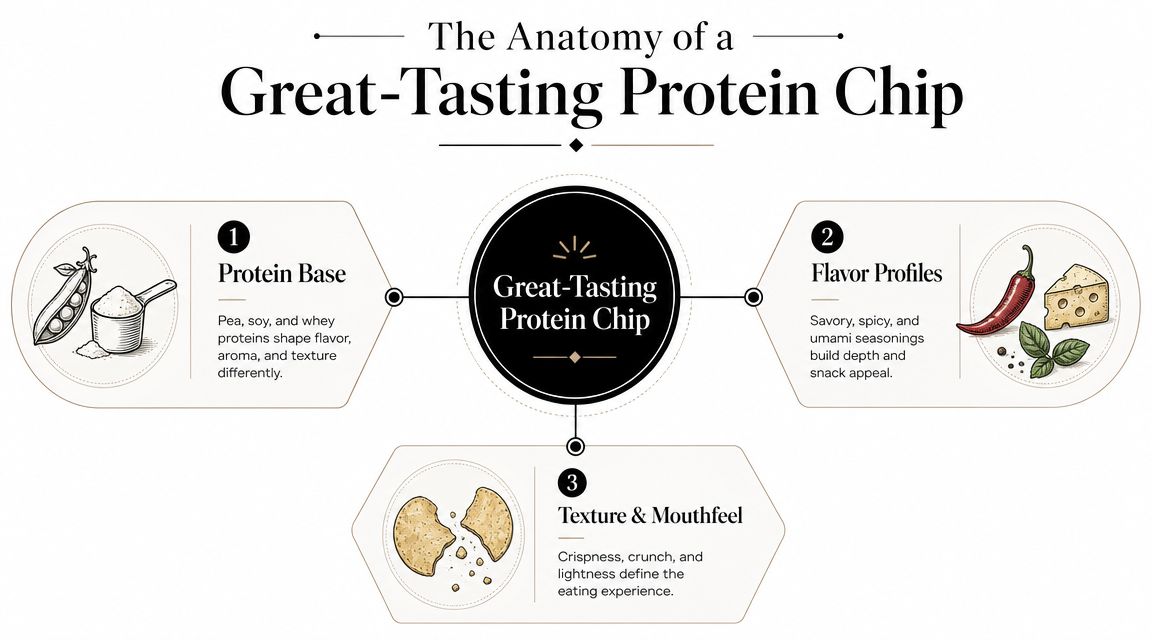
The Anatomy of a Great-Tasting Protein Chip
A great protein chip works like a well-built house. The foundation has to be stable, the frame has to hold its shape, and the finishing details have to make the whole thing pleasant to live in.
For chips, those three jobs are handled by the protein base, the crunch architecture, and the flavor delivery system.
Protein Base Matters More Than Most People Think
The protein source sets the tone for everything that follows. Some proteins are more neutral. Others bring a distinct dairy, bean-like, or earthy note that seasoning has to cover.
That's why two chips with similar macros can taste completely different. One starts with a cleaner base and needs only light flavor support. The other has to pile on more seasoning to mask the underlying taste, which can create a louder but less balanced snack.
If you've ever noticed a chip that tastes fine on the first second and then turns chalky or oddly tangy, the base is often the reason. Protein isn't invisible. It has a flavor footprint.
Here's a simple way to think about common bases:
| Protein base | Typical taste impact | Texture impact |
|---|---|---|
| Whey or milk-based proteins | Can taste creamy or slightly dairy-forward | Often helps create a light, structured bite |
| Cheese-based formats | Naturally savory and salty | Can create a brittle, crisp snap |
| Pea or other plant proteins | Can be neutral or earthy depending on processing | Often needs careful formulation to avoid dryness |
The cleanest formulas usually don't fight their own ingredients. They work with them.
Crunch Is Architecture
Texture is where many protein chips win or lose. People say they want “crunch,” but crunch has layers. The best chips have an audible snap, a quick break, and a dry finish that doesn't stick to your teeth.
Think of a chip like a tiny roof truss. If the structure is too dense, it bends instead of breaking. If it's too thin or fragile, it crumbles before it feels satisfying. Good crunch comes from a controlled, low-moisture structure with enough internal air pockets to shatter cleanly.
That's one reason cheese-crisp styles often perform so well. In BarBend's best protein chips ranking, Whisps Cheese Crisps were selected as the best-tasting protein chips. That makes sense from a food science perspective because a cheese-protein matrix can deliver a stronger salty, umami-forward flavor and a more brittle crunch than many dough-based protein chips.
Practical rule: If a protein chip feels tough instead of crisp, the formula is usually asking protein to do a starch job.
Baking, popping, and drying methods all change that structure. So do binders, fibers, and starches. None of those ingredients are automatically bad. They're tools. The question is whether they help the chip break like a chip, not chew like a biscuit.
Flavor Has to Land Fast and Finish Clean
Seasoning does more than add taste. It also shapes the order in which the snack is experienced. Your tongue notices salt, acid, spice, and cheese powders quickly. Then the base notes show up. Then the finish tells you whether the chip was pleasant or exhausting.
The best tasting protein chips usually have a clear flavor arc:
- First hit brings salt, tang, spice, or cheese
- Middle bite lets the chip base and texture support that flavor
- Finish fades without a bitter or dusty aftertaste
That's why savory, umami-rich flavors often work better than delicate ones in high-protein formats. They have enough force to stay noticeable without seeming fake.
A good chip doesn't need to taste “healthy.” It needs to taste coherent. When the base, structure, and seasoning all point in the same direction, the result feels like food instead of a nutrition project.
How to Decode Nutrition Labels and Ingredient Lists
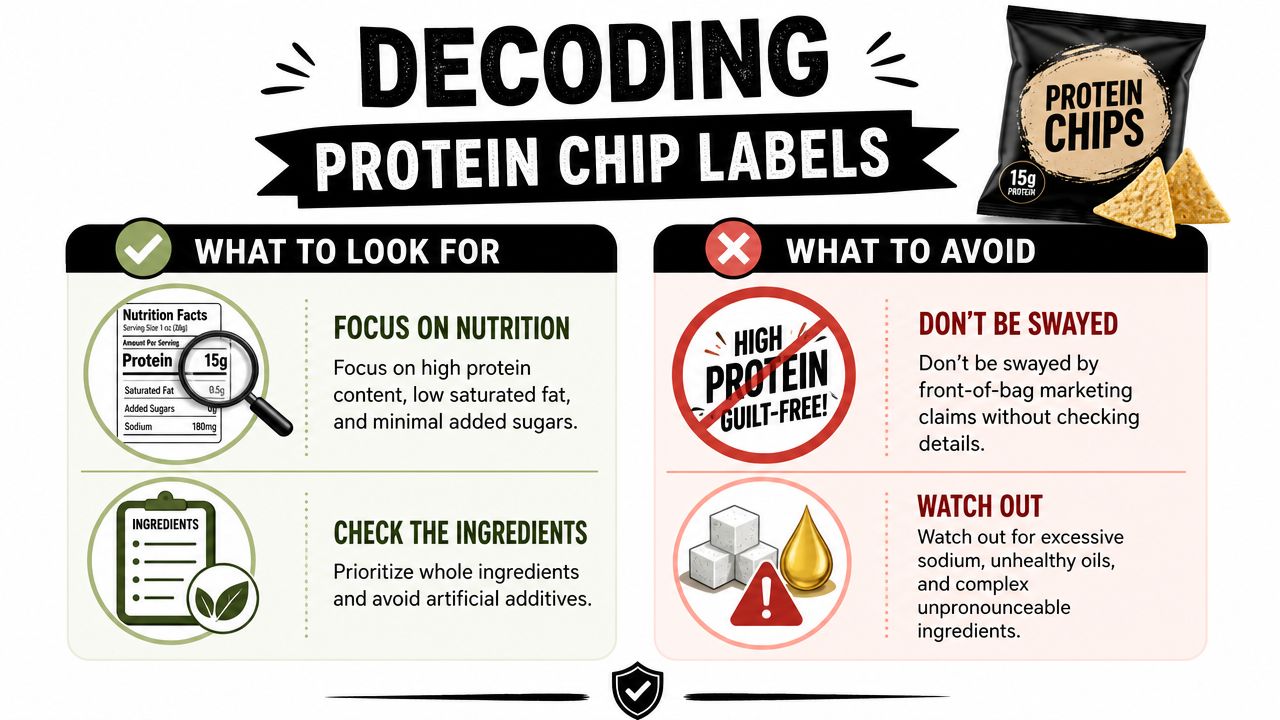
The front of the bag is marketing. The back of the bag is where the full story lives.
If you want to find protein chips that are satisfying instead of disappointing, read the label in two passes. First, look at the nutrition panel. Then scan the ingredient list to see how the brand got there.
Start With Protein in Context
A high protein number means less if calories climb with it. What you want is a snack where protein is doing real work, not just appearing on the package while fat and starch carry most of the load.
A useful real-world example comes from Caliber Strong's review of Quest Protein Chips. The reviewed bag contains 21 g protein, 2 g fat, 5 g carbs, and 120 calories per 32 g bag, with protein isolate listed first in the ingredient deck. That's a strong sign of a protein-first formulation rather than a conventional chip with a little extra protein added.
When you compare bags, ask yourself:
- Is protein one of the main reasons for the calories?
- Does the fat stay modest enough that the chip still feels purpose-built?
- Does the serving size look realistic for how you typically eat?
If you want a broader primer on label reading, Gym Snack's guide on how to read nutrition labels is a helpful companion for shopping the aisle.
Then Read the Ingredient Deck Like a Builder
Ingredients are listed in descending order by weight, so the first few items tell you what the chip is mostly made of. That matters because ingredient order often predicts texture and aftertaste.
A short checklist helps:
- Protein near the top: That usually signals a product designed around protein, not around starch with a protein sprinkle.
- Seasonings you recognize: Cheese powders, spices, herbs, onion, and garlic often point to a more straightforward savory profile.
- Support ingredients with a purpose: Starches, fibers, and binders can help structure. The issue isn't their existence. It's whether the final chip eats well.
And a few caution signs are worth noticing:
- Too many masking cues: If the formula looks like it needs lots of sweeteners or heavy flavor systems, the base may be hard to cover.
- Very long ingredient lists: Length alone doesn't make a product bad, but highly engineered formulas can signal more taste trade-offs.
- Mismatch between claim and composition: A “protein chip” should look protein-led when you inspect the back panel.
A label can't tell you whether a chip is delicious, but it can tell you whether the bag has a fair shot.
Use Labels to Predict Experience
Nutrition and ingredients don't replace taste testing. They help you avoid obvious misses.
A protein-forward chip with a clear ingredient deck often gives you a better chance of getting what you want: salty crunch, enough staying power, and fewer surprises after the bag is empty. The more the formula looks like a deliberate food product rather than a compromise, the better your odds.
Your Guide to Taste-Testing Protein Chips
A label tells you what's on paper. Your mouth tells you what matters.
You can judge almost any bag with three simple checks. They don't require fancy vocabulary. You're just paying attention to sound, flavor sequence, and how the snack sits with you afterward.
The Snap Test
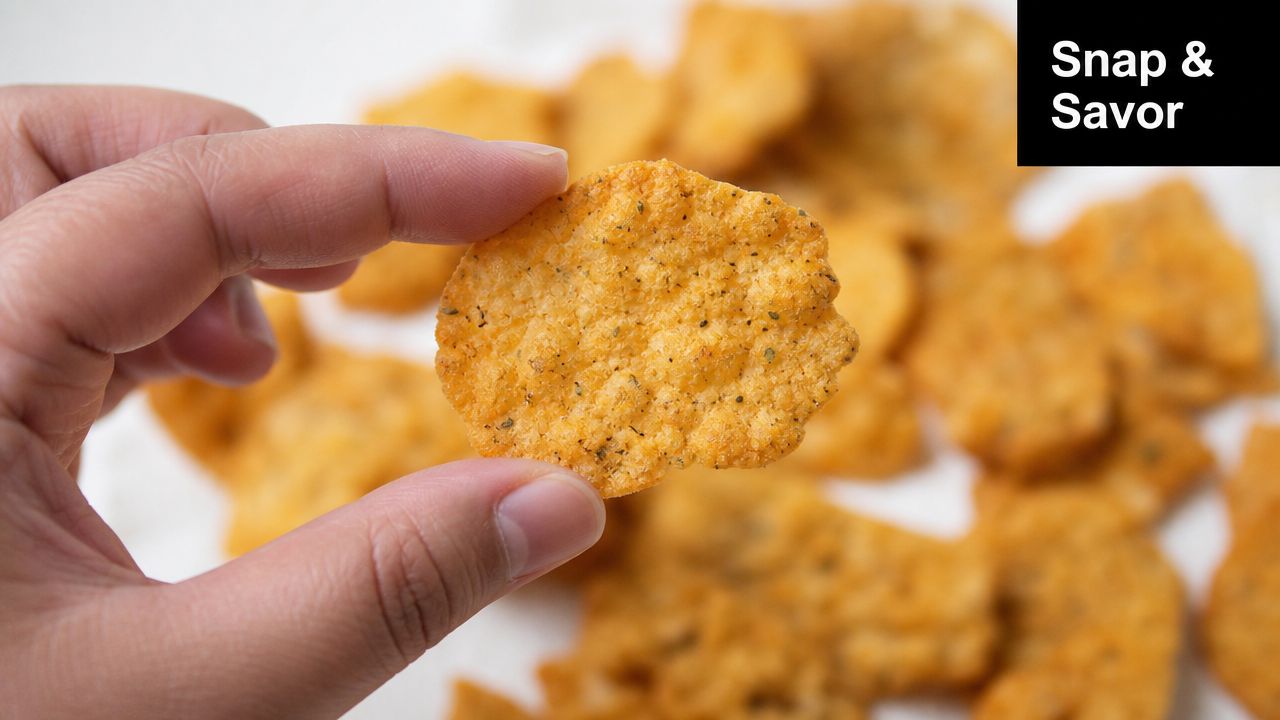
Take one chip and bite it cleanly. Listen for a crisp break.
A good result sounds sharp and quick. A bad result feels dense, leathery, or oddly squeaky. You shouldn't have to work through it. Great crunch feels like a thin branch snapping, not like chewing on a stale cracker.
Plant-based options can do well here too. In Hone Health's dietitian-led review of protein chips, Kibo Chickpea Protein Chips were identified as the “best-tasting protein chip.” That same review notes that protein chips usually fall in the 120-170 calorie range per serving, and reports Kibo at 120 calories with 6 grams of protein. That's a useful reminder that taste leaders don't always have the highest protein count.
The Flavor Arc
Don't just judge the first second. Follow the whole bite.
Ask yourself three questions:
- What do I taste immediately? Salt, cheese, spice, vinegar, smoke?
- What shows up in the middle? Is the protein base neutral, nutty, milky, or dusty?
- What stays after I swallow? Clean finish, lingering bitterness, powdery dryness?
This is where many chips reveal their weak point. A bag can nail the opening and still lose you on the finish.
If you like experimenting, making a batch yourself is a fast way to understand these trade-offs. A homemade protein chips recipe lets you feel how moisture, seasoning, and protein choice change the outcome.
After you've tested a few brands, a quick visual walkthrough can sharpen what to look for in texture and overall chip structure.
The Satiety Check
Then wait a bit and notice the aftermath. Not just the taste. The usefulness.
Some chips feel satisfying and steady. Others vanish fast and leave you hunting for another snack. That's an important distinction if you're using protein chips between meals, around training, or as a substitute for more calorie-dense salty snacks.
If a bag tastes good but leaves you unsatisfied soon after, it may be acting more like a novelty snack than a functional one.
The best tasting protein chips don't only win in the mouth. They make the whole snack break feel worthwhile.
Matching the Right Chip to Your Health Goals
Not every good protein chip is good for the same moment. The right choice depends on what job you need the snack to do.
Some bags fit better before training. Others make more sense after lifting. Some are less about performance timing and more about getting through an afternoon without raiding the vending machine.
For Pre-Workout Fuel
Before training, many people do better with a lighter savory snack that doesn't feel greasy or overly heavy. You want something easy to eat, easy to pack, and not so rich that it sits in your stomach.
Texture and digestibility matter as much as flavor. A lighter chip with a clean seasoning profile often feels better than one that's very fatty or intensely dense. If you train soon after eating, that difference can matter.
A practical approach is to choose chips that taste good enough to finish but don't feel like a cheat meal in disguise.
For Post-Workout Recovery
After training, protein becomes the obvious priority. That doesn't mean every highest-protein bag is automatically the best option, but it does mean you may want a stronger protein payoff.
A common benchmark in the category is Quest. A 2025 review of Quest Tortilla Protein Chips lists them at approximately 140 calories, 19 grams of protein, and about 1 gram of fiber per bag in Cheat Day Design's Quest review and flavor ranking. That makes Quest a useful reference point when you're comparing recovery-oriented savory snacks.
If you want a cleaner plant-based route, Gym Snack uses pea protein and is described by the publisher as delivering 15g+ protein per serving and 30g+ per bag, with no dairy, soy, gluten, or seed oils. That profile can appeal to people who want a savory post-workout option without relying on dairy-based protein snacks.
For All-Day Hunger Control
Now, the conversation gets more interesting. A snack isn't just fuel. It's also a tool for managing appetite and staying consistent.
Savory protein snacks can help because protein tends to feel more substantial than airy, refined-carb snack foods. Texture helps too. Crunch slows eating down a bit and makes the snack feel more deliberate.
A few signs a chip is better suited for hunger control:
- Savory flavor that feels meal-adjacent: Cheese, jalapeño, barbecue, and other umami-heavy profiles often scratch the “real food” itch better than sweet snacks.
- Enough protein to make the snack count: You want more than a salty distraction.
- A finish that doesn't trigger more cravings: Overly sweet or hyper-flavored products can make some people want more, not less.
If you're comparing options for appetite management, broader roundups like Nutrition Geeks' guide to high protein snacks for fat loss can help place protein chips in context with jerky, yogurt, shakes, and other snack formats.
People who are actively trying to manage calorie intake may also want a strategy for where protein chips fit in the day. Gym Snack's article on protein chips for weight loss is useful for that planning angle.
A smart snack isn't just “healthy.” It solves a real problem at the hour you tend to drift off plan.
That's the key match to make. Don't ask only, “Which chip has the best label?” Ask, “Which chip makes sense for the moment I'm going to eat it?”
Your Smart Shopper Checklist for 2026
By this point, the aisle should look different. Not simpler, exactly. Just easier to read.
You don't need a top-ten list memorized. You need a filter. The best tasting protein chips usually reveal themselves when you combine label reading with a little texture awareness and honest taste testing.
Use This Checklist in the Store
- Check the protein base: Dairy, cheese, pea, and other plant proteins all behave differently. Pick the one whose flavor style fits your preferences.
- Think about crunch, not just macros: A great chip should snap cleanly, not chew heavily.
- Read the first few ingredients: They tell you whether the snack is protein-led or mostly built on fillers and starch.
- Judge the finish: Good seasoning should land fast and fade cleanly.
- Match the bag to the job: Lighter for pre-workout, stronger protein for recovery, more satisfying savory profiles for appetite control.
- Don't let the front of pack do all the talking: The back panel is where quality usually becomes obvious.
What Smart Buyers Usually Learn
The best tasting protein chips aren't always the loudest-branded or the most extreme on macros. They're the ones that respect the eating experience.
That means a stable base, a chip-like structure, and flavor that doesn't need to hide a flawed formula. Once you start noticing those details, you stop buying bags based on hope.
And that's the upgrade. You become the person who can spot a better protein snack before the first bite.
If you want a savory, plant-based option to compare against the usual dairy-heavy chip aisle, Gym Snack is worth a look. The brand focuses on pea-protein crunchy snacks with cheesy flavors, transparent ingredients, and bundle options that make it easy to test what fits your routine.