

When you're on the hunt for a great vegan protein snack, it's all about that sweet spot: high protein from quality, whole-food sources. The best ones typically pack 10-20 grams of protein per serving from things like peas, soy, or different nut blends, all while keeping added sugars to a minimum and fiber content high for energy that actually lasts. Think roasted edamame, well-made protein bars, or even those savory pea protein crisps.
Your Guide to Finding the Best Vegan Protein Snacks
Walking down the snack aisle can feel overwhelming. With so many options screaming for your attention, how do you tell the difference between a genuinely good-for-you snack and a candy bar in disguise? This guide is here to help you cut through all that noise.
We want to give you a simple framework for judging any vegan protein snack based on what truly matters. Whether you're trying to build muscle, manage your weight, or just need a healthy, grab-and-go option for your crazy schedule, the "best" snack is always the one that works for you. We'll dig into how to assess not just the numbers on the label but also the taste, texture, and overall quality of the ingredients.
Why Your Snack Choice Matters
The demand for high-quality vegan options has absolutely exploded. This isn't just a small trend anymore; it's a massive shift in how people think about health, wellness, and sustainability.
In fact, the global vegan snacks market was valued at around USD 51.14 billion and is expected to nearly double by 2035, hitting an estimated USD 109.89 billion. That incredible growth shows just how many people are realizing that plant-based eating can be a powerful tool for reaching their goals. You can read more about the growth of the vegan snacks market to see the full picture.
Think of this guide as your go-to resource for making snacking decisions you can feel good about. Our goal is to empower you to pick products that actually fuel your body and fit your health ambitions.
Once you get a handle on a few key principles, you'll be able to confidently choose the right vegan protein snack for any situation. It's about shifting from being a confused consumer to an expert in your own nutrition. Let's get started.
How to Read a Vegan Protein Snack Label Like a Pro
Walking down the snack aisle can feel overwhelming. Every package seems to scream "healthy," "high-protein," and "plant-based," but how do you know what you're really getting? The secret isn't on the front of the box—it's on the back.
Learning to read the nutrition label is the single most powerful skill you can have. It lets you cut through the marketing fluff and see the truth. Think of it as your personal decoder ring, helping you find the snacks that genuinely support your goals instead of those that are just candy bars in disguise.
First, Check the Macros for Your Goal
Before you look at anything else, find the big three: protein, carbs, and fats. The right balance of these macronutrients is completely dependent on why you're eating the snack. Are you refueling after a tough workout, or just trying to survive a long afternoon of meetings?
Your goal dictates what a "good" macro profile looks like.
If you just finished a workout, for example, your muscles are screaming for repair. A snack with 15-20 grams of protein and a solid dose of carbohydrates is perfect for recovery. But if you need sustained energy to power through the 3 p.m. slump, you’ll want a more balanced snack with protein, healthy fats, and plenty of fiber to keep you full and focused.
A great vegan protein snack isn't just about a high protein number. It's about having the right balance of nutrients for what your body needs in that moment.
Next, Scan the Ingredients List
Once you've checked the macros, flip over to the ingredients list. This is where the truth comes out. My rule of thumb is simple: if you can't pronounce it or picture it growing in a field, you should probably be skeptical.
Whole foods should dominate the top of the list.
- Look For: Ingredients you recognize, like nuts, seeds, legumes (peas, chickpeas, lentils), and whole grains. These give you more than just protein—they deliver fiber, vitamins, and minerals your body actually needs.
- Watch Out For: A novel-length list of artificial fillers, strange preservatives, and, most importantly, sneaky sugars. These things can easily cancel out any of the snack's benefits.
Added sugar is the biggest offender. It hides under dozens of names, like high-fructose corn syrup, dextrose, or cane juice. If a snack has more than 8-10 grams of added sugar, it’s likely to send you on an energy roller coaster.
On the flip side, fiber is your best friend for staying full. Look for at least 3-5 grams of fiber per serving. And if you have specific dietary needs, it's always good to check for potential allergens. We've got a great list of options in our guide to gluten-free high protein snacks.
Putting It All Together: A Real-World Comparison
Seeing the difference side-by-side makes it click. Let's compare two fictional snack labels to see how these principles play out in the real world.
Comparing Vegan Protein Snack Labels
| Nutrient/Ingredient | Snack A (Ideal Choice) | Snack B (Common Pitfalls) |
|---|---|---|
| Protein | 15g (from pea & brown rice protein) | 15g (from soy protein isolate) |
| Total Carbs | 20g | 35g |
| - Fiber | 7g | 2g |
| - Added Sugars | 4g (from maple syrup) | 18g (from corn syrup, dextrose) |
| Fat | 8g (from almond butter, chia seeds) | 12g (from palm oil, sunflower oil) |
| Top 3 Ingredients | Almonds, Pea Protein, Dates | Fructose Syrup, Soy Isolate, Palm Oil |
Notice how both snacks have the same amount of protein, but Snack A delivers it with whole-food ingredients, healthy fats, and high fiber. Snack B, on the other hand, is basically a protein-fortified sugar bomb that will leave you hungry again in an hour. This is why looking beyond the protein number is so critical.
What to Look For in Plant-Based Protein Sources
To find the best vegan protein snacks, you first need to know what you’re looking at on the ingredient list. Not all plant proteins are built the same; each one brings its own unique strengths to the table, helping you hit your health and fitness goals. Let's break down the powerhouse ingredients that make a great vegan snack.
Think of amino acids as the individual LEGO bricks your body uses to build and repair things, especially muscle. Your body needs a full set of different "bricks" for just about everything it does. Some plant sources are "complete," meaning they have all the essential types, while others might only have a few.
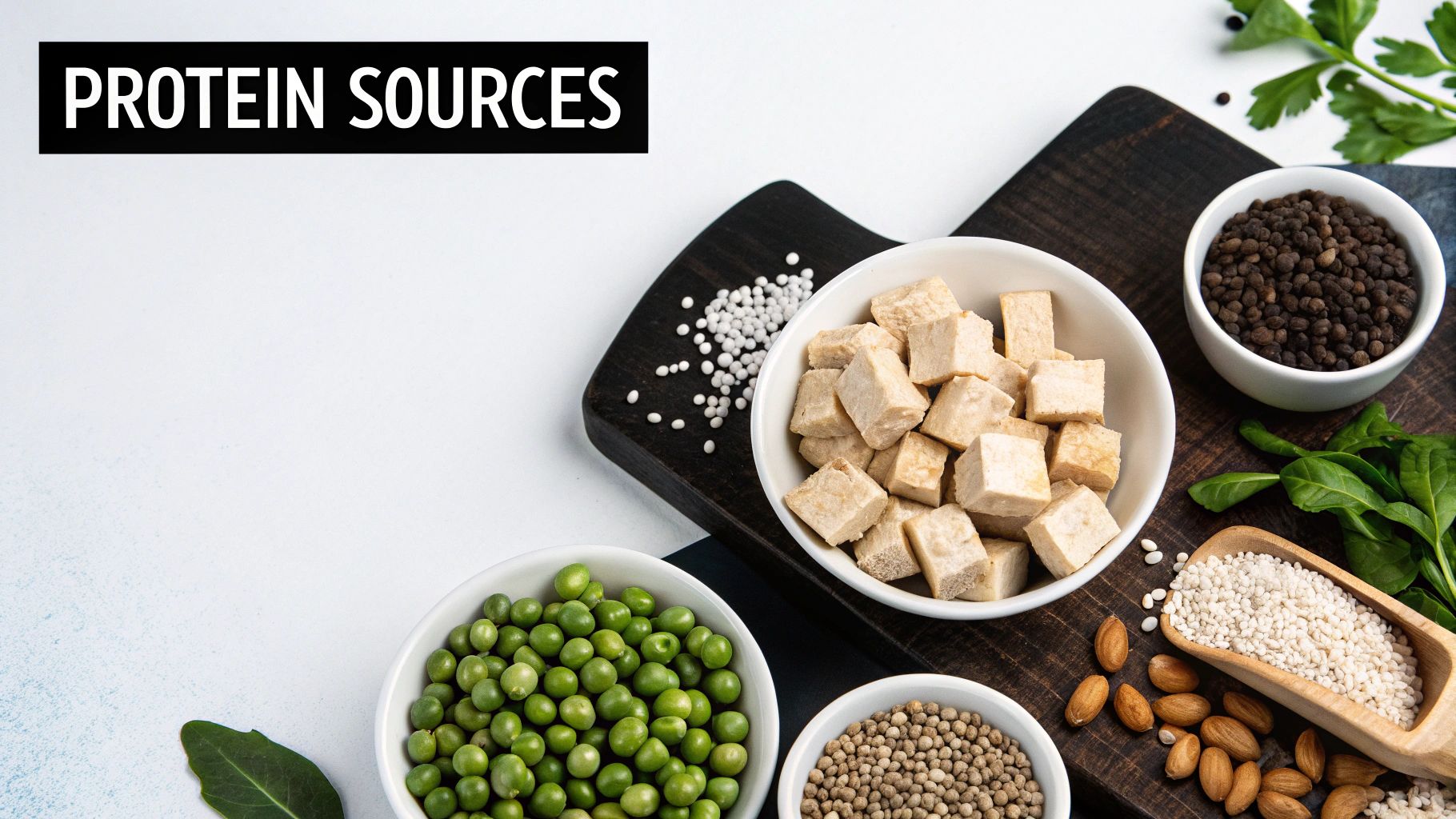
This is exactly why knowing the most common sources is your first step to making a smart choice.
The Most Common Vegan Proteins
You'll notice that the highest-quality snacks often use a blend of different proteins. This is a deliberate strategy to create a more powerful nutritional profile, ensuring you get the full spectrum of those "bricks" your body is craving.
Here are some of the key players you'll see on labels:
- Soy Protein: This one comes from soybeans and is a true powerhouse. It's one of the few plant sources that's a "complete protein," containing all nine essential amino acids. That makes it a fantastic, well-rounded option for building and repairing muscle.
- Pea Protein: Made from yellow split peas, this protein is packed with iron and branched-chain amino acids (BCAAs), which are crucial for muscle recovery. It’s also naturally hypoallergenic, making it a go-to for anyone with soy or dairy sensitivities.
- Hemp Protein: Sourced from hemp seeds, this option gives you more than just protein. It delivers a solid dose of healthy omega-3 and omega-6 fatty acids, plus fiber. It has a bit of an earthy taste and is known for being easy on the stomach.
- Nuts and Seeds: Don't underestimate these! Almonds, pumpkin seeds, and chia seeds are nutritional dynamos. They provide a good protein punch along with healthy fats, fiber, and important micronutrients that help keep you feeling full and satisfied.
The best vegan protein snacks often pull from a variety of plant sources to make sure you’re getting high-quality, complete protein. For example, by blending pea and brown rice protein, you get a complete amino acid profile that's actually more effective than what either one could offer on its own.
Why Protein Variety Is Your Secret Weapon
Different sources offer different amounts of protein. Legumes like black beans and lentils give you about 7 to 9 grams of protein per half-cup, while a soy-based option like edamame packs 10 to 15 grams into a 100-gram serving. While some early studies suggested vegan diets might be lower in protein, they also found that people eating plant-based maintained comparable muscle mass just fine.
When you pick snacks that mix these ingredients, you're doing more than just upping your protein intake—you're getting a wider array of nutrients. A snack bar with both pea protein and almond butter, for instance, gives you the muscle-repairing power of pea protein plus the healthy fats and vitamin E from the almonds.
Check out this comprehensive high-protein vegan foods list to see how different sources compare. Ultimately, this mix-and-match strategy ensures your snack is working much harder for your overall health.
Matching the Right Snack to Your Goal
Let's be real—the idea of a single "best" vegan protein snack is a complete myth. The perfect snack is a moving target, and it all comes down to what you're trying to accomplish at that moment.
Think of it like having a toolbox. You wouldn't use a hammer to turn a screw, right? In the same way, the snack that powers you through a tough workout is worlds apart from the one designed to crush an afternoon slump. When you start matching your snack's nutrition to your specific goal, you turn simple food into strategic fuel. Every bite starts working for you.
Pre-Workout Energy Boost
Before you hit the gym, your body is screaming for one thing: quick, easy energy. The goal isn't to feel full; it's to top off your glucose stores for immediate power while getting in a little protein to protect your muscles. Anything heavy, high-fat, or packed with fiber will just sit in your stomach and slow you down.
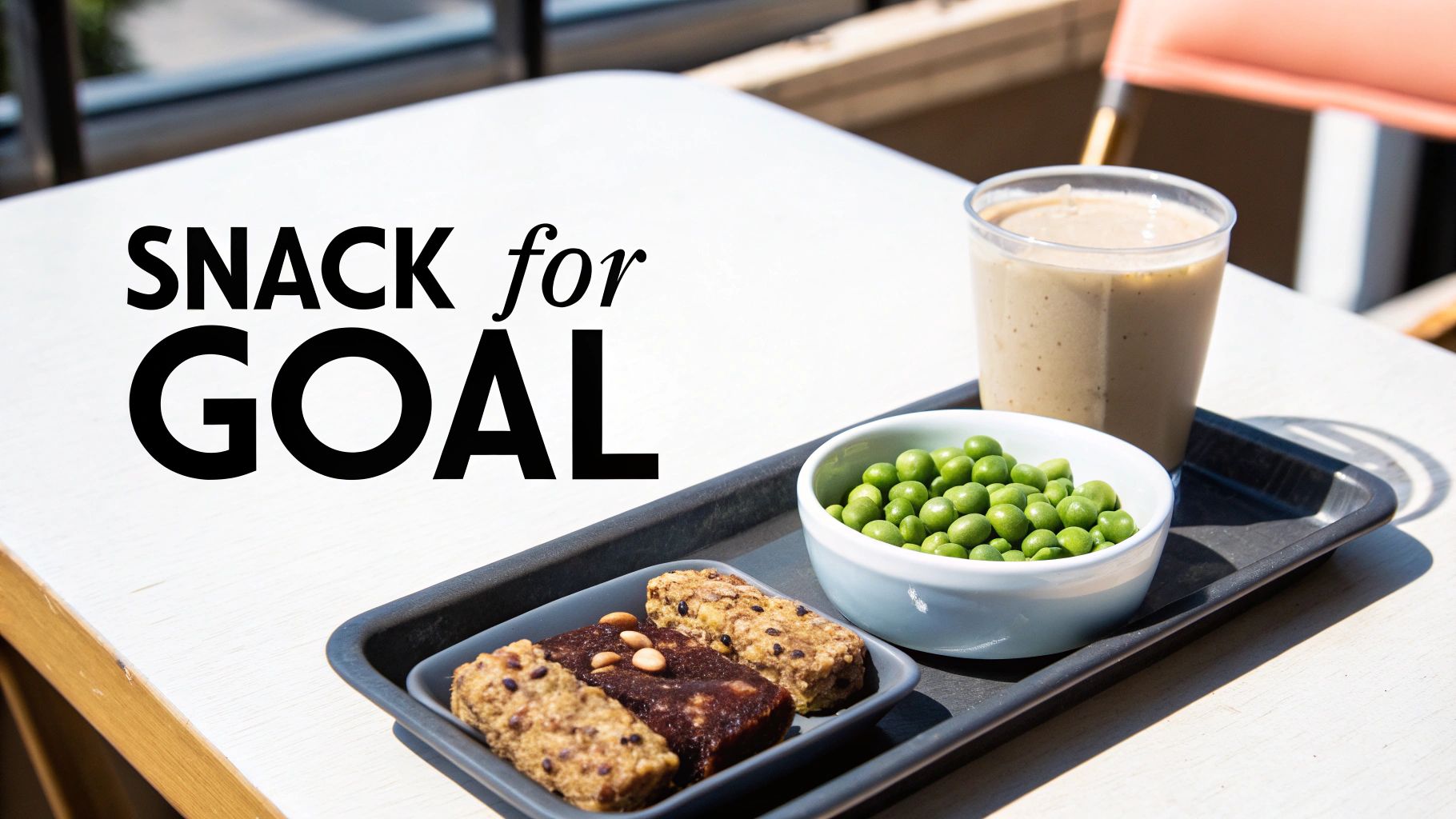
What you really want are easily digestible carbs paired with a modest amount of protein. A classic date and nut bar is a perfect example. The dates give you that fast lift from simple sugars, and the nuts provide a small protein hit without weighing you down.
- Focus On: Simple carbs with 5-10g of protein.
- Avoid: High-fat foods and too much fiber.
- Great Examples: A small banana with a spoonful of almond butter or a simple fruit-based energy bar.
Post-Workout Muscle Repair
After your workout, the game completely changes. Your muscles are like a construction site that’s just been cleared and is ready to be rebuilt, stronger than before. This is where protein takes center stage, delivering the essential amino acids your body needs for repair and growth.
Your ideal post-workout snack should pack 15-20 grams of high-quality protein. Pairing it with some carbohydrates is also a smart move, as this helps restock your muscle glycogen (your body's energy reserves) that you just burned through. Roasted edamame is a fantastic choice here—it offers a serious protein punch in a simple, whole-food package. For a deeper dive, our guide on the best plant protein for muscle gain has you covered.
I always think of post-workout nutrition as a critical 30- to 60-minute window. Getting protein and carbs in during this time can make a huge difference in how quickly you recover and how sore you feel the next day.
Midday Hunger and Weight Management
When that 3 PM slump hits or you're focused on weight management, your mission is all about satiety. You need a snack that will make you feel full and satisfied, stopping you from derailing your day with junk food. For this job, there's no better duo than protein and fiber.
Protein is a powerhouse for promoting fullness by working with your hunger hormones. Fiber, on the other hand, slows down digestion, which gives you a steady stream of energy and prevents those dreaded blood sugar spikes and crashes. A handful of pumpkin seeds or a crunchy, savory snack made from pea protein will deliver on both fronts. They provide sustained energy to get you through a busy afternoon and keep you on track with your goals.
The Rise of Plant-Based Snacking
If you're hunting for the best vegan protein snacks, you're not just looking for a quick bite—you're part of a massive shift in how we eat. This isn't just another fad. It's a genuine movement, one fueled by a growing understanding of our health, our planet, and ethical food choices.
People everywhere are demanding more from their food. We want snacks that do more than just fill a gap; we want them to align with our values. This groundswell of consumer interest has kickstarted a wave of real innovation, leaving the dry, tasteless "health food" of yesterday in the dust.
Often, this shift toward plant-based eating goes hand-in-hand with a broader desire for sustainable living, like finding ways of reducing plastic waste in our everyday lives.
A Market Driven by Conscious Consumers
This isn't just talk; conscious consumers are completely reshaping the snack aisle, and the numbers back it up. Between 2014 and 2024, the share of U.S. consumers who identify as vegan shot up by a staggering 500%, moving from just 1% to 6% of the population.
It's predicted that by 2025, plant-based options will command a massive 62.6% share of the entire global protein snacks market. That’s a market worth nearly USD 4.8 billion.
This kind of explosive growth is proof that plant-based eating has firmly hit the mainstream. When you pick up a high-quality vegan protein snack, you’re doing more than just making a smart choice for your body. You're casting a vote for a more thoughtful and sustainable food system, and you're in very good company.
Answering Your Top Questions About Vegan Snacks
Even with the best guide in hand, there are always a few lingering questions when it's time to actually pick a vegan protein snack. Let's clear up some of the most common ones so you can feel 100% confident next time you're in the snack aisle.
Do I Really Need a "Complete Protein" in Every Single Snack?
This is a huge one, and the short answer is no, you don't. It's a common worry, but thankfully, our bodies are smarter than that.
While it's great that many modern snacks now combine proteins like pea and brown rice to create a complete amino acid profile right in the bag, it’s not a requirement for every bite you take. Think of your daily protein intake like building a puzzle over 24 hours. As long as you're eating a good mix of different plant foods throughout the day—things like beans, nuts, seeds, and whole grains—your body pools those amino acids and gets all the "pieces" it needs.
So, relax a little. Focus on variety in your overall diet, not on making every single snack "perfect."
How Much Protein Should I Look for in a Vegan Snack?
This really boils down to what you need that snack to do for you. Are you just trying to tide yourself over until dinner, or are you trying to kickstart muscle recovery after a killer workout? The context is everything.
- For beating back afternoon hunger: A snack with 5-10 grams of protein is often the sweet spot. It’s enough to trigger those fullness signals and keep you satisfied until your next meal.
- For post-workout recovery: This is where you want to aim higher. To give your muscles the building blocks they need to repair and grow, shoot for 15-20 grams of protein.
And a pro tip: always double-check the serving size on the label. Sometimes that impressive protein number is for the whole bag, not the handful you were planning on eating.
The word 'vegan' isn't a magic wand that automatically makes a food healthy. A lot of packaged plant-based snacks are loaded with added sugars, refined oils, and artificial junk. Learning to read and understand the nutrition label is your single most important skill.
Are All Vegan Protein Snacks Actually Healthy?
Definitely not. This is probably the biggest myth out there. Just because it says "plant-based" on the front doesn't mean it's good for you. The market is flooded with ultra-processed vegan snacks that are high in refined carbs, sugar, and unhealthy fats.
The trick is to ignore the flashy marketing claims on the front of the package and turn it over. Go straight to the ingredient list. Your best bet is always a snack made with simple, recognizable, whole-food ingredients. The shorter and more understandable that list is, the better.
Ready for a savory, crunchy snack that meets all the right criteria? Gym Snack delivers over 15g of clean pea protein per serving with zero junk—no gluten, soy, or seed oils. Fuel your goals with something delicious you can feel great about. Discover the satisfying crunch of Gym Snack today!