

You finish a workout, your appetite is loud, and you want something that tastes like a treat without undoing the effort you just put in. A birthday cake protein bar feels like the perfect answer. It promises sprinkles, frosting-like sweetness, and enough protein to make the choice feel responsible.
That's exactly why this category deserves a harder look.
Dessert-flavored bars sit in a gray zone between sports nutrition and convenience candy. Some are useful tools. Some are mostly clever flavor engineering with a protein halo. If you care about body composition, training recovery, satiety, or digestion, the label matters more than the confetti branding on the wrapper.
The Allure of the Birthday Cake Protein Bar
The appeal is easy to understand. Most active people don't crave plain chicken breast after training. They crave sweet, soft, satisfying foods that feel rewarding. A birthday cake protein bar meets that emotional need while still fitting the identity of “I'm eating for my goals.”
That's why this flavor has lasted. It doesn't just sell protein. It sells permission.
Why this flavor works so well
Birthday cake isn't a real whole-food flavor in the way peanut butter or cocoa is. It's a dessert cue. It signals vanilla frosting, cake batter, sweetness, and celebration. For someone trying to stay consistent, that can be powerful because the bar feels like a break from restriction.
But the useful question isn't whether the flavor is enjoyable. It's whether the bar is helping you hit a real nutrition target or just making a processed snack easier to justify.
Practical rule: If a bar's main selling point is that it tastes like dessert, read it like dessert first and sports nutrition second.
A lot of gym-goers make one of two mistakes here:
- They dismiss all sweet bars as junk. That's too simplistic. Some bars do deliver meaningful protein with controlled sugar.
- They trust the protein claim and stop there. That's also a mistake. Protein alone doesn't tell you how filling, digestible, or useful the bar will be.
What actually matters
When I evaluate a birthday cake protein bar, I care about four things more than the front label:
-
Protein density
Does the bar deliver enough protein relative to its calories to justify the slot in your day? -
Sweetener strategy
Is the sweetness coming with sugar alcohols or a long list of texture-building additives that might not sit well? -
Satiety value
Will it keep you steady between meals, or will it just scratch the dessert itch for a short window? -
Ingredient purpose
Are the ingredients there to nourish you, or mostly to imitate cake while keeping the macros marketable?
That framework doesn't just apply to birthday cake bars. It works for cookies-and-cream bars, brownie bars, donut-flavored bars, and most dessert-style “fitness” snacks.
Deconstructing the Birthday Cake Flavor Profile
“Birthday cake” is less a single flavor than a carefully built sensory package. The point is to remind you of cake batter and frosting, not to taste like a basic vanilla bar.
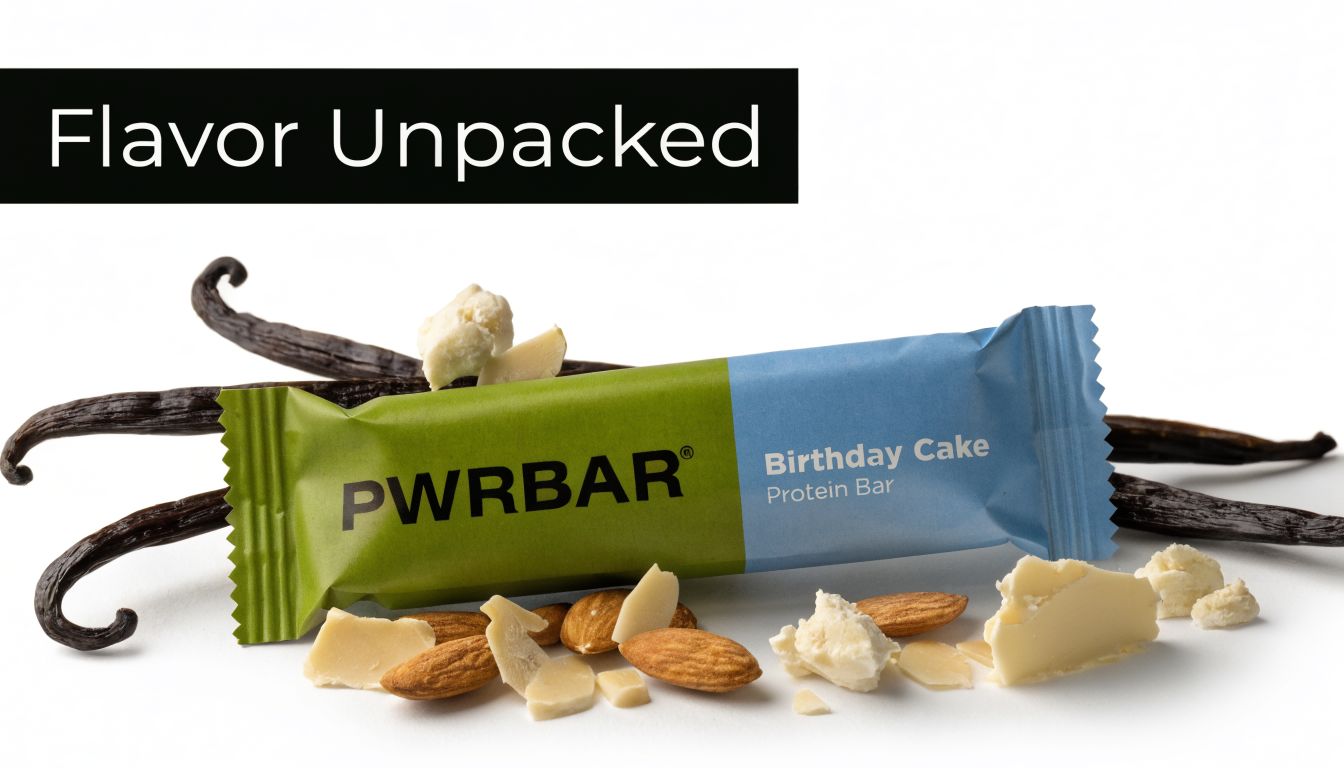
What your brain reads as birthday cake
Most birthday cake bars lean on a few familiar signals:
- Vanilla-forward sweetness that mimics frosting or cake batter
- Buttery or creamy notes that suggest richness even when the bar is relatively lean
- Color and sprinkles that cue celebration before you even take a bite
- Coating or soft texture that stands in for icing
Flavor changes behavior. A savory protein snack usually tells your appetite, “meal-adjacent fuel.” A birthday cake bar often tells your appetite, “treat.”
That doesn't automatically make it a bad choice. It does mean you should be honest about why you're reaching for it.
The same name can mean very different products
The category looks consistent from the shelf. Under the wrapper, it isn't. As noted on Quest's Birthday Cake product page, the core question is whether the birthday cake protein bar is a real protein snack or a candy-bar-style dessert. Brands like Quest, Pure Protein, and ONE all offer around 20 g of protein, but fiber, sugar, and net carb strategies vary enough that two bars with the same flavor can function very differently.
Here's the issue in plain terms:
| Product example | What stands out |
|---|---|
| Quest Birthday Cake | High protein, very low sugar, higher fiber |
| Pure Protein Birthday Cake | High protein, low sugar, uses sugar alcohols in the carb strategy |
| ONE Birthday Cake | High protein, very low sugar, but the overall formulation approach differs again |
A lot of content stops at “tastes like cake and has protein.” That misses the fundamental point. The flavor label tells you almost nothing about fullness, digestibility, or whether the bar fits your training day.
If two bars both say “birthday cake” and “20 grams of protein,” you still need to ask what's creating the sweetness, what's creating the texture, and how your body handles both.
That's the lens worth keeping. Once you understand that birthday cake is a manufactured flavor system, you stop evaluating the snack by branding and start evaluating it by function.
The Nutritional Reality Behind the Wrapper
A birthday cake protein bar earns its place or loses it on one question: does the formula support training and appetite control, or does it just mimic dessert with added protein?
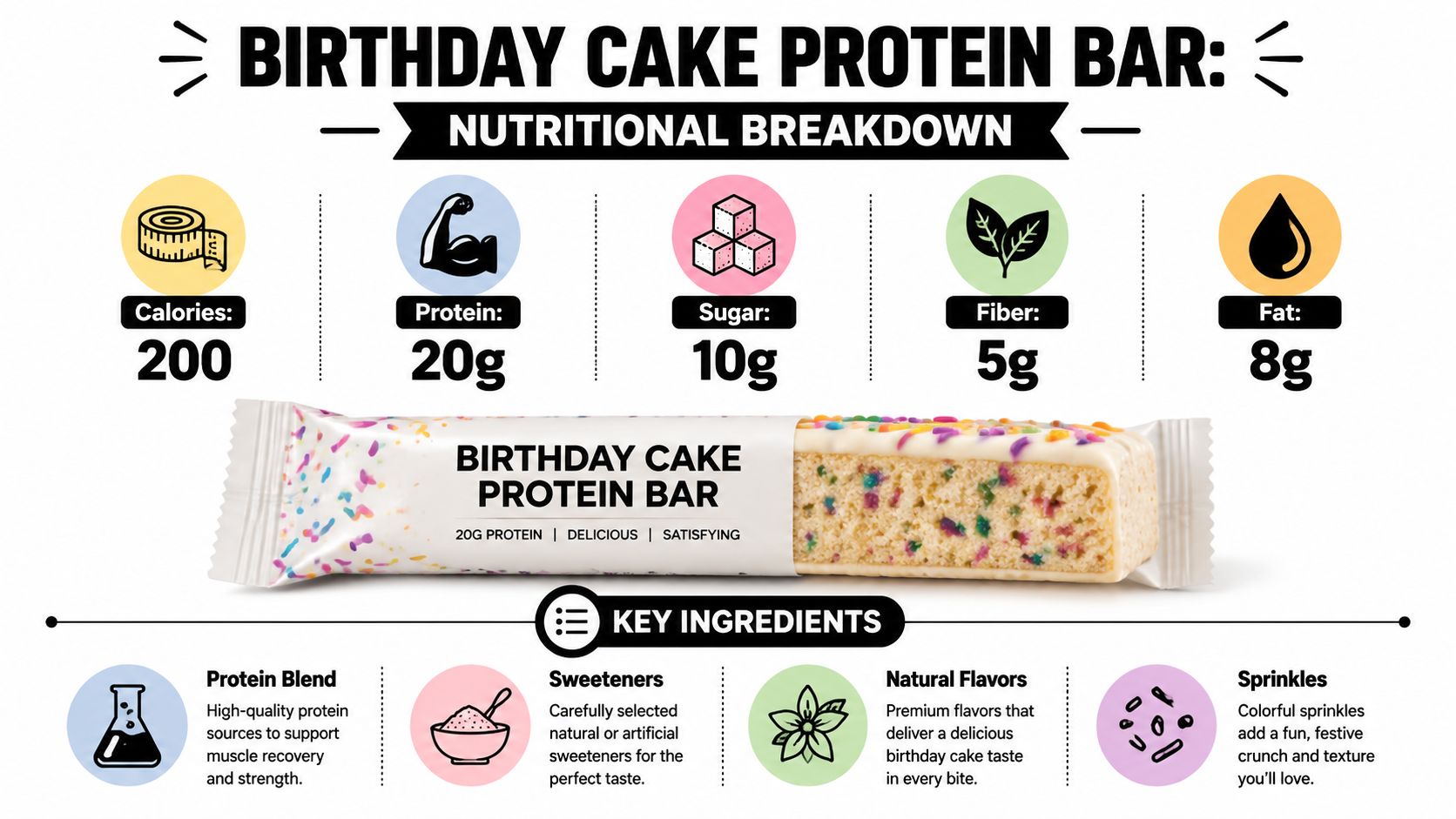
Strong macros can still come with trade-offs
Some birthday cake bars do look good on paper. A typical example in this category offers high protein, low sugar, and enough fiber to improve satiety compared with a standard candy bar. That profile explains why dessert-flavored bars became popular with lifters and busy gym-goers who wanted something sweet without blowing up their daily intake.
But macros are only the first screen.
I tell clients to judge these bars the same way I'd judge any dessert-flavored snack: by what happens after you eat it. If the bar keeps you full, sits well in your stomach, and helps you hit protein targets, it can be useful. If it causes bloating, keeps cravings rolling, or leaves you hungry an hour later, the label did not tell the full story.
Where the formula often breaks down
Spoonful's listing for a birthday cake protein bar shows a pattern that comes up often in this category: multiple dairy proteins, soy protein isolates, maltitol syrup, glycerin, and sucralose. Spoonful also flags that product as not low FODMAP, based on the ingredient mix shown in this ingredient review of a birthday cake protein bar.
That matters more than many shoppers realize. Sugar alcohols and dense protein blends can help a bar keep sugar low and texture soft, but they can also create gas, urgency, or stomach discomfort in people with sensitive digestion. That is the trade-off behind many dessert-style bars. The sweeter and more candy-like the experience, the more often the formula relies on ingredients that do not work well for everyone.
This is also where the bigger lesson comes in. Birthday cake is not just one flavor. It is a case study in how the snack industry turns a dessert cue into a "fitness" product. Once you learn to spot the pattern here, it gets easier to evaluate cookies-and-cream, donut, churro, and other indulgent bars with the same filter.
What deserves your attention on the label
If the goal is better performance, steadier appetite, and fewer surprises, screen the bar in this order:
-
Protein source
Whey, milk protein, soy, and pea protein can all fit. The best option is the one you digest well and can use consistently. -
Sweetener strategy
Maltitol-heavy formulas often look impressive on the sugar line and feel much less impressive in your gut. -
Fiber type, not just fiber total
A high number is not automatically a win if the bar leaves you uncomfortable before training or during a long workday. -
Ingredient density
Long lists packed with syrups, coatings, texture agents, and high-intensity sweeteners usually signal a product designed to imitate dessert first and fuel second.
Understanding the broader differences between dairy-based bars and plant-based options is also useful. This overview of vegan protein powder benefits gives helpful context for readers who want a cleaner plant-forward protein approach.
For a stronger label-reading framework, Gym Snack's guide to protein bar nutrition facts is worth reviewing before you buy.
For serious fitness goals, I usually see better long-term results from simpler, savory protein options because they satisfy hunger without keeping dessert cravings in the driver's seat.
A low-sugar claim does not tell you how the bar will digest, how filling it will be, or whether it supports your goals better than a cleaner, less candy-like alternative.
Are Birthday Cake Bars Right for Your Goals?
The honest answer is that they can be. They're just not right for everyone, and they're not all useful in the same way.

For muscle gain and hard training
If your priority is convenience and you tolerate sweeteners well, a birthday cake bar can make sense. Pure Protein's Birthday Cake bar at H-E-B is listed at 200 calories, 20 g of protein, and 3 g of sugar, with 5 g of total fat, 18 g of total carbohydrate, 13 g of sugar alcohol, 160 mg of sodium, and 0 g of fiber. That's a mass-market sports nutrition formula built to keep sugar low while preserving sweetness.
For some athletes, that works fine. For others, the polyols are the problem.
For weight management and appetite control
A bar with solid protein can help when it replaces a less satisfying snack. But if the flavor profile keeps you mentally stuck in dessert mode, it may not help as much as you hoped. Some people feel satisfied by sweet bars. Others find that intensely sweet products keep cravings active.
That's why I don't judge these bars only by macros. I judge them by what happens next. Do you feel fed, or do you feel like you had a diet dessert and now want more food?
Some people need a sweet bridge that keeps them on plan. Others do better when snacks stop mimicking dessert altogether.
For sensitive digestion or plant-based eating
Birthday cake bars often lose points on this front. Many rely on dairy proteins, soy isolates, and sugar alcohols, which can be a poor fit if your gut is reactive. If you already know you don't tolerate these ingredients well, believe your experience and stop trying to “adjust” to a bar that doesn't work for you.
If digestion is the issue, tightening up the rest of your snack planning helps. For people managing IBS-style symptoms, this guide to find gut-safe fruits for meal planning is a useful companion resource.
A birthday cake protein bar is best treated as an option, not a staple. It belongs in the “use strategically” category.
How to Choose a Genuinely Healthier Protein Bar
You're standing in front of a shelf of bars that all promise high protein, low sugar, and better choices. The birthday cake one looks harmless because the macros sound disciplined. That is exactly why label reading matters.
A better bar earns its place by doing a job well. It should help you hit protein, keep you reasonably full, travel well, and sit comfortably in your gut. If it mainly delivers dessert flavor with a little protein attached, it belongs in the treat category, even if the wrapper says “fit.”
Start with the bar's actual job
I tell clients to decide the use case before they compare brands. A post-lift backup snack has different demands than a mid-afternoon office snack or an emergency option in a gym bag.
For many individuals, a stronger bar has a clear protein base, a calorie total that makes sense for the occasion, and an ingredient list that does not depend on multiple forms of sweetener to create the whole experience. Dessert-flavored bars can still fit. They just need to function like food first and flavored candy second.
Use this label-reading checklist
-
Read the first few ingredients
The beginning of the list tells you what the bar is really made of. A protein source plus nuts, seeds, oats, or other recognizable binders usually beats a formula built around syrups and fillers. -
Check how the sweetness is created
Some bars keep sugar low by stacking sweeteners, fibers, and sugar alcohols. That can look efficient on paper and feel terrible in real life if your digestion is sensitive. -
Look for a structure that supports satiety
Protein helps, but texture and ingredient quality matter too. Bars built with a more substantial base often satisfy better than soft, frosting-style bars that disappear in a few bites. -
Match the bar to your training and appetite patterns
If you already eat plenty of sweet foods, another dessert-style bar may keep that loop going. If your goal is steadier appetite control, a simpler flavor profile often works better.
If you want to sharpen this skill, Gym Snack's guide on how to read nutrition labels is a practical place to start.
A simple decision filter
Ask these three questions before you buy:
- Would this still appeal to me without the birthday cake branding?
- Do I usually digest this type of sweetener blend well?
- Will this help me stay on plan, or am I using fitness language to justify a dessert snack?
That third question usually clears things up fast.
Birthday cake bars make a useful case study because they expose what matters in every dessert-flavored snack category. If the product supports protein intake, satiety, convenience, and digestion, it can be a solid tool. If the flavor is doing most of the selling, a cleaner savory option is often the better call.
Smarter Swaps Savory Protein Alternatives
If you're serious about satiety, steadier energy, and fewer digestive surprises, the smartest move may be stepping away from dessert-style protein snacks altogether.
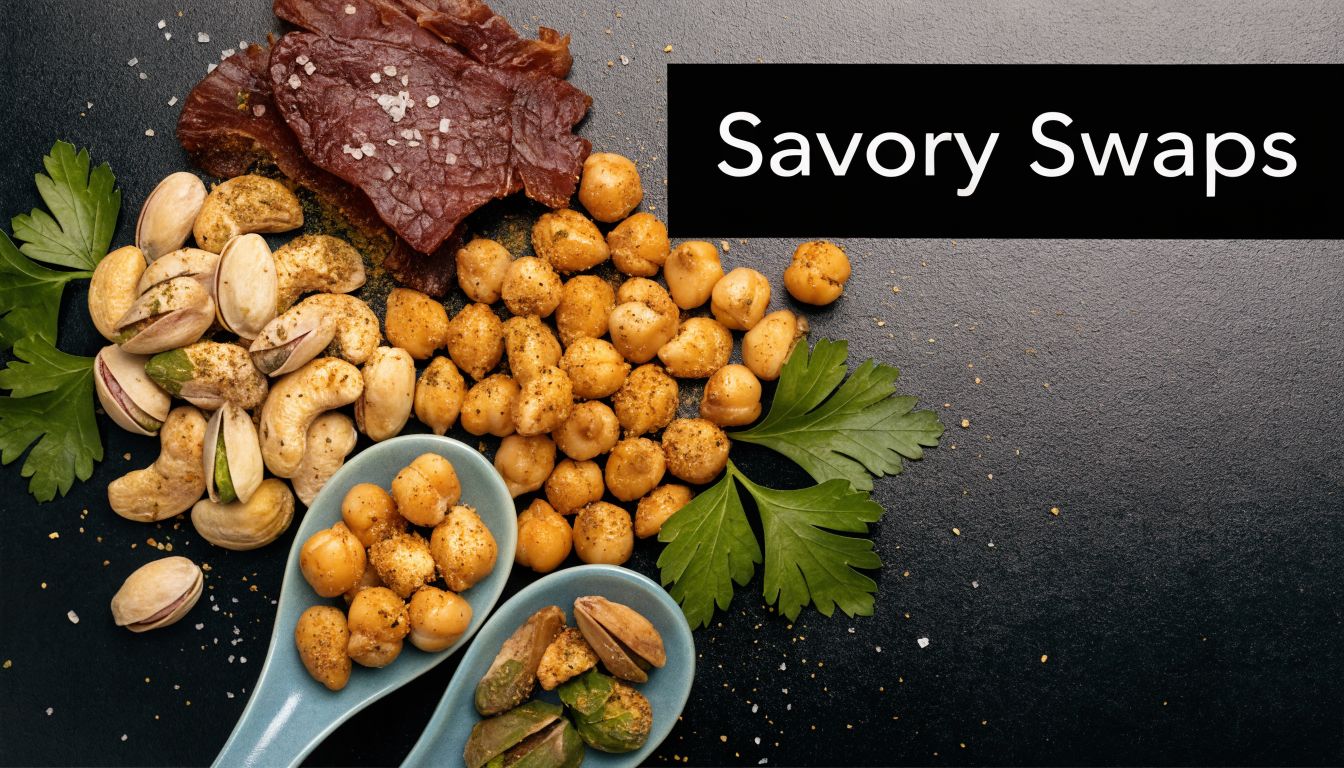
Savory protein snacks tend to create a different eating experience. They usually feel more like food and less like a workaround. That matters when your real goal is staying full, hitting protein, and keeping cravings from running the day.
Why savory often works better
A savory snack doesn't need to imitate frosting. It can focus on texture, salt, crunch, and straightforward ingredients. For many people, that leads to a cleaner stop signal. You eat it, you move on, and your brain doesn't keep chasing dessert.
Good savory options include:
- Roasted chickpeas or broad beans with a clear seasoning profile
- Jerky or meat sticks if they fit your diet and ingredient standards
- Edamame, nuts, and seeds paired to raise protein and staying power
- Crunchy plant-based protein snacks built more like food than candy
If you want ideas beyond sweet bars, Gym Snack has a practical roundup of high-protein savory snacks.
A simple homemade option
One easy move is a savory chickpea and seed mix. Roast chickpeas until crisp, toss with pumpkin seeds, nutritional yeast, salt, and your preferred spices, then portion it into grab-and-go servings. You won't mistake it for cake, which is exactly the point.
Here's a useful visual for savory inspiration and prep ideas:
The bigger takeaway is simple. If a birthday cake protein bar helps you stay consistent and your body handles it well, it can have a place. But if you want a more functional default, savory usually wins on appetite control, ingredient simplicity, and day-to-day usefulness.
If you're ready to move past dessert-in-disguise snacks, Gym Snack offers chef-inspired, plant-based savory protein options built for real training support, clean ingredients, and satisfying crunch without the candy-bar feel.