

Hunting for cheap high protein snacks that don't taste like cardboard is a lot easier than you might think. The real secret is knowing what to look for, and spoiler alert: it's usually the simple stuff you walk past every day in the grocery store. We're talking about staples like Greek yogurt, eggs, lentils, and canned tuna.
Why Protein Is Your Best Friend on a Budget
Think of protein as your body's dedicated repair crew. When you work out, you're essentially creating tiny, productive tears in your muscle fibers. Protein rushes in with the necessary amino acids—the literal building blocks—to patch things up, making your muscles stronger and more resilient than before. Skimp on protein, and you slow down your recovery, which means you're not getting the full payoff from all that hard work.
But protein does more than just build muscle. It's a powerhouse for keeping you full and satisfied. Because it takes your body longer to digest, it helps regulate the hormones that control hunger. A protein-packed snack is your best defense against those mid-afternoon cravings for sugary junk, helping you manage your overall calorie intake and avoid those dreaded energy crashes.
The Heavy Hitters of Affordable Protein
You don't need to shell out big bucks on fancy, niche products to fuel your body right. Some of the most effective and powerful protein sources happen to be the most affordable. These are the workhorses that should form the foundation of any smart, budget-friendly meal plan.
Here are a few of the all-stars to add to your grocery list:
- Eggs: Often called nature's multivitamin, a single large egg packs about 6 grams of top-tier protein for just a few cents.
- Greek Yogurt: This stuff is a game-changer. A single serving can deliver a whopping 15-20 grams of protein, making it an incredibly versatile and creamy base for snacks.
- Legumes: Lentils, chickpeas, and beans are the unsung heroes of the plant-based world. They're loaded with protein and fiber and cost next to nothing.
- Canned Tuna: A fantastic source of lean protein, canned tuna is a pantry staple that's ready to go whenever you need a quick, no-fuss snack.
To make it even easier, here’s a quick rundown of some of the best budget-friendly protein sources you can find.
Your Quick Guide to Budget-Friendly Protein Powerhouses
This table breaks down some of the most cost-effective snack bases, giving you a clear picture of what you get for your money.
| Protein Source | Typical Protein Per Serving | Average Cost Per Gram of Protein | Best For |
|---|---|---|---|
| Eggs | 6g per large egg | Very Low | Quick breakfasts, hard-boiled snacks |
| Greek Yogurt | 15-20g per cup | Low | Creamy snacks, smoothie bases, dip substitute |
| Lentils | 9g per ½ cup (cooked) | Very Low | Soups, salads, homemade dips |
| Canned Tuna | 20g per 3 oz can | Low | Quick salads, sandwiches, cracker toppings |
Keeping these staples on hand means you're always just a few minutes away from a satisfying, protein-rich snack that keeps you on track with your goals.
The real secret to a fitness journey that actually lasts? Finding nutrition that backs up your goals without wrecking your budget. By focusing on these cost-effective whole foods, you ensure you’re always nourished and ready to tackle whatever your next workout throws at you.
Of course, beyond whole foods, you can always supplement your intake with things like protein shakes and supplements to hit your daily targets without much fuss or expense. Once you get these basics down, building a snacking strategy that's both effective and delicious becomes second nature.
The Smart Shopper's Guide to Maximizing Protein Per Dollar
Finding high-protein snacks on a budget isn't just about grabbing the cheapest thing on the shelf. It’s about becoming a savvy shopper who knows how to spot true value. You have to look past the sticker price and start thinking about what you're really paying for: the protein.
The single most powerful tool you have is calculating the cost per gram of protein. This simple math cuts through all the marketing fluff and shows you where the real bargains are. Just divide the item's total price by the total grams of protein it delivers. You’ll quickly find that a big tub of Greek yogurt, which might seem pricey at first, often gives you far more protein for your money than a flashy, single-serving protein bar.
A Cost-Per-Protein Smackdown of Common Snack Options
Let's put this idea into practice. It’s easy to assume which snacks are "cheap" and which are "expensive," but when you break it down by the amount of protein you actually get, the results can be surprising.
| Snack Type | Average Price | Protein (grams) | Cost Per Gram of Protein | Verdict |
|---|---|---|---|---|
| Greek Yogurt (Large Tub) | $5.00 | 90g | $0.056 | Excellent value. A clear winner for bulk protein. |
| Dozen Eggs | $3.50 | 72g | $0.049 | Unbeatable. The gold standard for cheap, high-quality protein. |
| Protein Bar (Single) | $2.50 | 20g | $0.125 | Convenient but costly. You're paying a premium for the grab-and-go format. |
| Beef Jerky (3 oz bag) | $6.00 | 27g | $0.222 | Very expensive. A tasty treat, but not an efficient way to hit your protein goals. |
| Cottage Cheese (16 oz) | $3.00 | 52g | $0.058 | Top-tier value. Almost as cost-effective as eggs and yogurt. |
| Gym Snack (2 oz bag when bundled) | $3.75 | 20g | $0.187 | Mid-range. A specialized, savory option that fits a niche but isn't a bulk staple. |
As you can see, the whole foods like eggs, yogurt, and cottage cheese deliver an incredible amount of protein for just pennies per gram. The more processed and convenient the snack, the more you pay for that protein.
Unlocking True Value at the Grocery Store
Once you start thinking in terms of protein value, a few smart shopping habits will become second nature. These are the strategies I use to keep my pantry stocked without breaking the bank.
- Buy in Bulk: This is a no-brainer. Bigger containers of oats, nuts, seeds, and especially protein powders almost always offer a lower cost per serving. You can also source your protein ingredients from bulk supplement providers, where student discounts can really stretch your dollar.
- Embrace Store Brands: Don't pay for fancy packaging. Generic or store-brand versions of cottage cheese, yogurt, and canned tuna often have the exact same nutritional profile as their big-name competitors but for way less.
- Shop Seasonally and Watch for Sales: Get familiar with your grocery store's weekly flyer. When protein staples like chicken breast, eggs, or ground turkey go on sale, that's your cue to stock up.
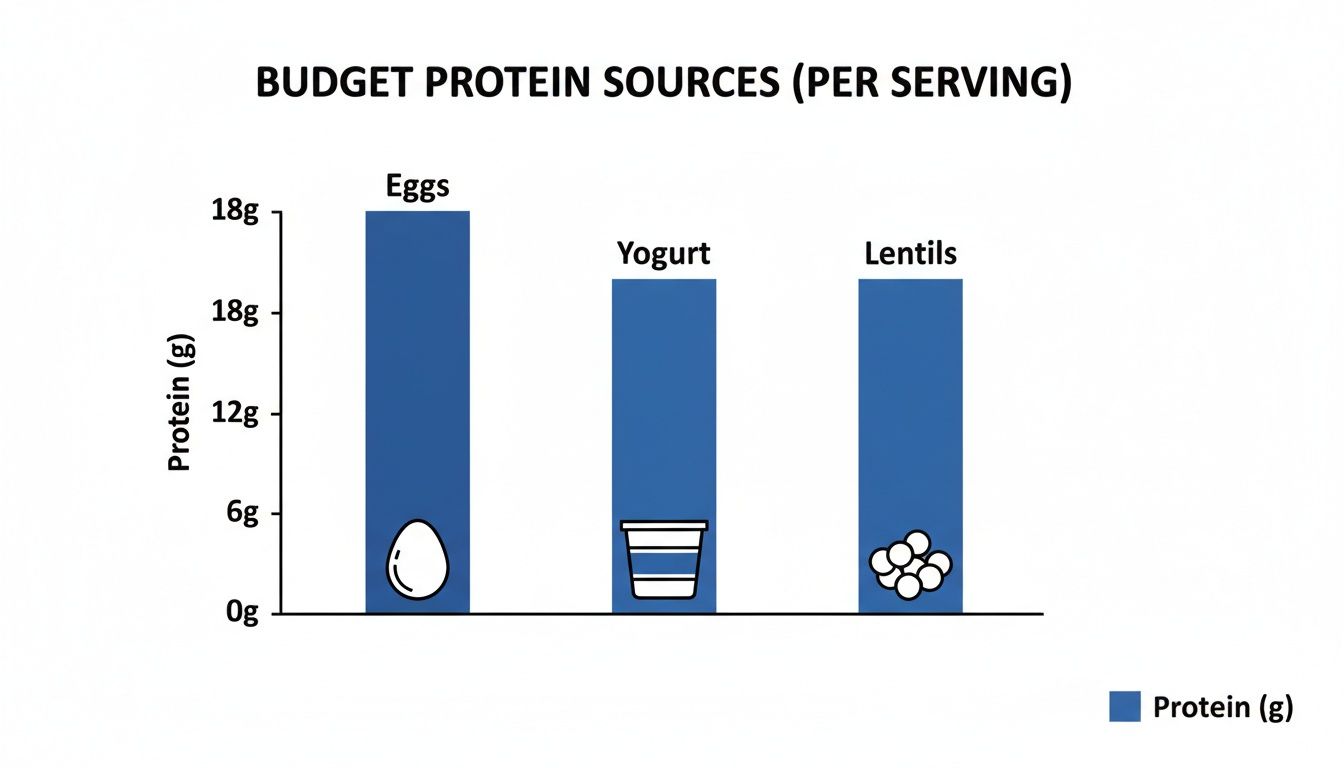
As this chart shows, you don't need fancy products to get a solid protein hit. Foundational foods are often your best bet.
The smartest shoppers don't just buy what's on sale; they understand the nutritional return on their investment. Calculating cost per gram of protein turns every grocery trip into an opportunity to maximize your gains and your savings.
By combining these simple tactics, you can build a sustainable, affordable approach to fueling your body. For even more ideas on making your food budget work for you, check out our full guide on clean eating on a budget.
Why Plant-Based Options Are Winning the Budget Protein Game
When you start hunting for cheap high-protein snacks, you might be surprised where the trail leads you: straight to the plant-based aisle. For years, the fitness world was all about whey and casein, but things are definitely changing. Plant proteins from sources like lentils, chickpeas, and peas are quickly becoming the first choice for smart shoppers who want to fuel up without emptying their bank accounts.
What’s behind this shift? It really boils down to simple economics. It's often way more efficient and sustainable to produce protein from plants than it is from animals. That lower cost of production means a more affordable price tag on the shelf, which lets you get more protein for every dollar you spend.
The Power of Plant Synergy
One of the oldest myths floating around is that plant protein is somehow "incomplete." While it’s true that a single plant source might not have the full spectrum of essential amino acids, modern food science has that completely figured out. Smart brands now combine different plant proteins—a classic example is pea and rice protein—to create a powerful, synergistic blend.
This approach gives you a complete amino acid profile that’s just as effective for muscle repair and growth as any animal-based option. Think about it: what rice protein might be low on in the amino acid lysine, pea protein has plenty of. Put them together, and you've got a powerhouse duo ready to support your fitness goals.
It's kind of like building with LEGOs. You wouldn't use only one type of brick to build a solid wall. By combining different shapes and sizes (different plant proteins), you create a structure that's far stronger and more complete than any single piece on its own.
This clever blending is why you now see plant-based snacks confidently packing over 30g of protein into a single serving. On top of that, these options are often naturally free from common allergens like dairy and soy, making them a cleaner, gut-friendly choice that works for more people. If you want to dive deeper, our guide on how to get enough protein on a plant-based diet has even more insights.
Market Trends Confirm the Plant Takeover
This isn't just some niche trend, either—it’s a full-blown market movement. Plant-based protein snacks are absolutely dominating the budget-friendly scene, capturing over 62.8% of the global market share in 2024.
As more people look for clean, allergen-free, and sustainable choices, the entire industry is expected to balloon to USD 10.5 billion by 2034. This growth is being driven by a huge increase in veganism and just general health-conscious eating, proving that plant power is officially here to stay. You can check out more insights about this growing market on market.us.
Quick and Easy DIY High Protein Snacks
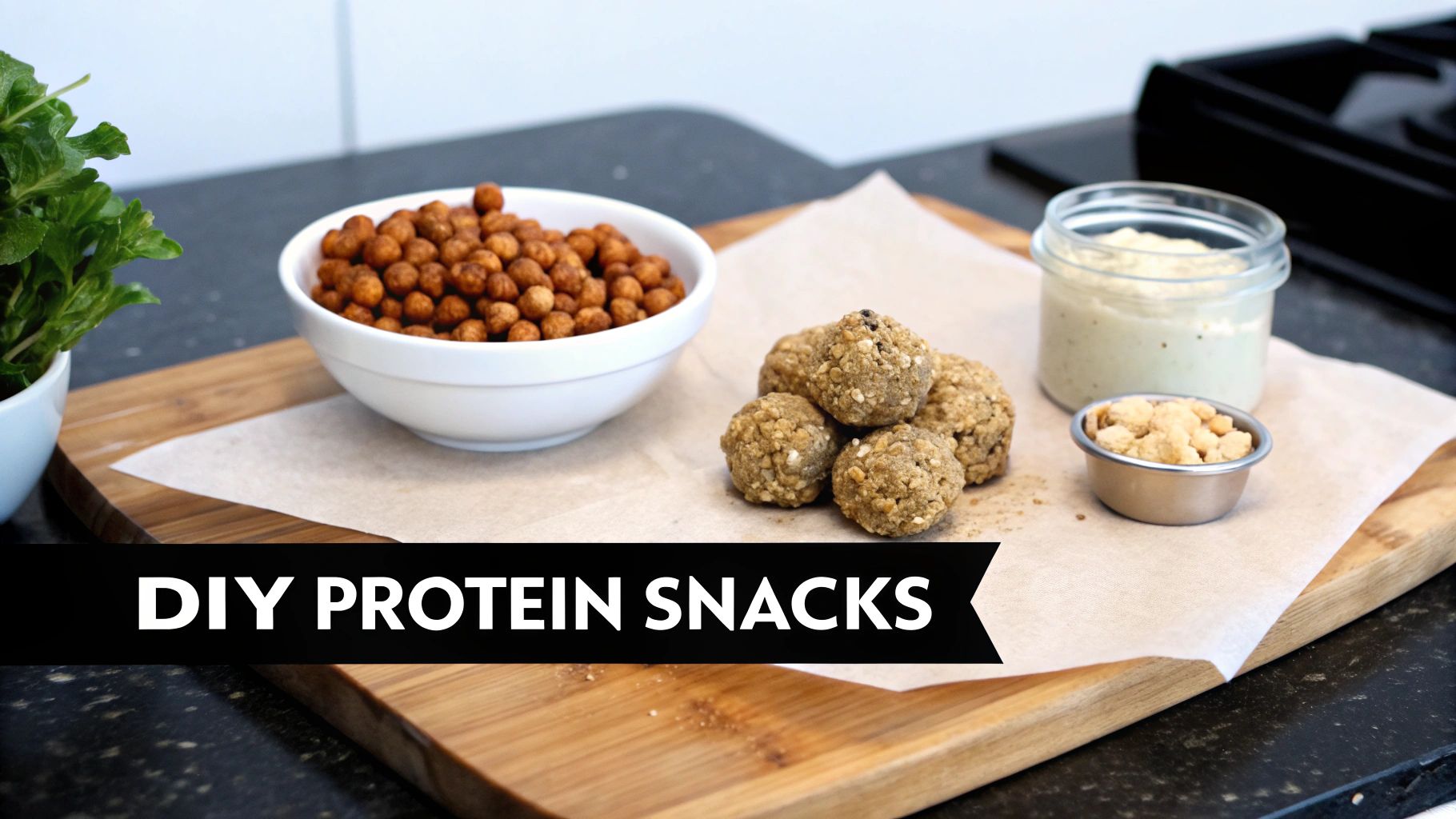
Let's be real: for total control over your ingredients and your wallet, nothing beats making your own snacks. When you prep them at home, you get to skip all the weird additives and hidden sugars that sneak into store-bought options. Plus, you can rely on simple, cheap pantry staples you already have.
And the best part? It doesn't have to be some big, time-consuming ordeal.
These recipes are built for speed and simplicity. They take minimal effort but deliver a huge nutritional payoff. Seriously, in less than 10 minutes, you can have a whole batch of tasty snacks ready to fuel you for the week.
Spicy Roasted Chickpeas
Think canned chickpeas are bland? Think again. With a little heat, you can turn them into a crunchy, savory snack that will make you forget all about potato chips. This recipe is super cheap and you can tweak the spices however you like.
- Prep: Crank your oven up to 400°F (200°C). Drain a can of chickpeas, give them a good rinse, and then pat them completely dry. I'm not kidding—this is the secret to getting them nice and crispy.
- Season: Toss the dry chickpeas with a splash of olive oil and your go-to seasonings. A simple mix of paprika, garlic powder, chili powder, and a pinch of salt works wonders.
- Roast: Spread them out on a baking sheet and pop them in the oven for about 20 minutes. Give the pan a shake halfway through so they get golden and crunchy on all sides.
A single can of chickpeas costs next to nothing and packs around 12-15 grams of plant-based protein. It’s the perfect example of a cheap high protein snack that actually tastes good. If you're looking for more plant-powered ideas, check out our other favorite high-protein vegan snack recipes.
Versatile Greek Yogurt Protein Dip
Plain Greek yogurt is already a protein powerhouse, and this dip just takes it to the next level. Use it for dipping veggies, spreading on a sandwich, or even as a topping for a baked potato. It’s incredibly versatile.
- Ingredients: Start with one cup of plain Greek yogurt, which gives you about 20 grams of protein right off the bat. To really up the ante, mix in a scoop of unflavored protein powder.
- Flavoring: Stir in some fresh herbs like dill or chives, a squeeze of lemon juice, a little garlic powder, and salt and pepper. Taste as you go!
- Serving: It’s fantastic with carrot sticks, cucumber slices, or some whole-wheat crackers for a snack that will actually fill you up.
No-Bake Peanut Butter Protein Balls
When you’re craving something sweet, these protein balls are a lifesaver. They taste like a treat but are loaded with good stuff to keep your energy steady.
These little guys are a meal prepper's dream. You can whip up a big batch in 10 minutes on a Sunday, and suddenly you have a healthy, grab-and-go option for the entire week. It’s the perfect way to stop yourself from grabbing something less-than-ideal when you're in a rush.
Here’s all you have to do:
- Combine: In a big bowl, mix 1 cup of rolled oats, ½ cup of peanut butter, ⅓ cup of honey (or maple syrup), and 2 scoops of your favorite protein powder.
- Add-Ins: Throw in a tablespoon of chia seeds or flax seeds for a little extra fiber and healthy fats.
- Roll: Shape the mixture into bite-sized balls and stick them in the fridge. Each ball gives you a solid 5-7 grams of protein, making them a perfect pre- or post-workout bite.
The Best Grab-and-Go Options for Busy Lifestyles
Let’s be real—making every snack from scratch sounds great, but life often gets in the way. For those days when you're running on empty and meal prep is a distant memory, having a solid pre-packaged option is a lifesaver.
The trick is knowing what to look for when you're staring at a wall of snack options. It’s easy to get lost in the clever packaging and health claims. Your mission is simple: find something with a solid macro profile, clean ingredients, and a taste that actually makes you feel good. A truly great on-the-go snack should give you a decent protein boost—I always aim for 15 grams or more—without a ton of sugar, weird fats, or artificial junk.
Sweet vs. Savory: Finding Your Perfect Match
When it comes to high-protein snacks, you're usually choosing between two main teams: sweet and savory. Knowing which one you're in the mood for can be the key to crushing a craving and staying on track. Mixing it up also helps you avoid that dreaded snack fatigue.
-
Sweet Options: This is the land of protein bars, pre-made shakes, and those protein-packed yogurts. They're perfect for killing a sweet tooth after a workout or beating that 3 p.m. slump. My tip? Look for ones sweetened with natural stuff like monk fruit or stevia to sidestep the inevitable sugar crash.
-
Savory Options: If you're someone who craves salt and crunch, you're in luck. The savory aisle has gotten so much better, with things like quality turkey jerky, roasted edamame, and even new savory snacks like Gym Snack. These are amazing for keeping hunger at bay between meals and offer a welcome break from the endless sea of chocolate peanut butter everything.
Picking the right convenient snack isn't just about hitting a protein number. It's about finding something you genuinely enjoy eating. After all, the best snack is the one you’ll actually stick with because it satisfies your cravings and helps you reach your goals.
What to Look for on the Label
To really nail your choice, you have to become a bit of a label detective. Once you've checked the protein count, there are a couple of other things to scope out. A clean ingredient list is a huge one. My rule of thumb is if I can't pronounce half the ingredients, I'll probably put it back on the shelf.
Also, take a peek at where the protein is coming from. Snacks using clean, plant-based sources like pea protein can be much easier on the stomach and often skip common allergens like dairy and soy. This is a game-changer if you have a sensitive gut or are trying to avoid certain ingredients. Finding a snack that’s both macro-friendly and allergen-conscious means you're giving your body fuel it can actually use, keeping you energized no matter what your day throws at you.
How to Time Your Snacks for Maximum Results
Knowing which cheap high-protein snacks to buy is a great start, but it's only half the battle. To really make your efforts count, you have to think about when you're eating them. This idea is called nutrient timing, and it's all about giving your body the right fuel when it needs it most.
It’s a bit like putting gas in your car. You wouldn't wait until the engine is sputtering on the on-ramp to refuel for a long road trip, right? In the same way, giving your body protein at just the right moments ensures you have everything you need to perform well and recover like a champ.
Pre-Workout Fuel for Sustained Energy
Grabbing a high-protein snack about 30 to 60 minutes before you exercise can make a huge difference in your performance. This gives your body a steady supply of amino acids, which helps protect your muscle tissue and provides sustained energy so you don't hit a wall halfway through your workout.
Your pre-workout snack doesn't need to be massive. Just a small, smart choice can help you start strong and, more importantly, finish even stronger.
Post-Workout Repair for Faster Recovery
That window of time right after you finish a workout is absolutely critical. Getting some protein in your system within an hour of your last rep helps kickstart what’s known as muscle protein synthesis—the process your body uses to repair those tiny muscle tears and rebuild them stronger than before.
- The Goal: Quickly restock your body's amino acid supply.
- The Payoff: Less muscle soreness and a much faster overall recovery time.
Think of your post-workout snack as the first-response team rushing to the scene after a tough training session. The sooner you get those protein building blocks to your muscles, the more efficient the whole repair process is, setting you up for success in your next workout.
Finally, don't forget the power of a savory, high-protein snack between meals. It’s a fantastic way to crush cravings and keep hunger from taking over. It helps keep your blood sugar stable and makes you feel full, which can stop you from overeating later and keep you perfectly on track with your nutrition goals all day long.
Your Questions Answered: Budget Protein Snacks
Let's tackle some of the common questions that pop up when you're trying to find affordable, high-protein snacks. Getting these answers straight will help you build a smarter nutrition plan that actually works for your body and your bank account.
How Much Protein Should a Good Snack Actually Have?
You'll want to aim for a snack that packs between 15-25 grams of protein. That's the sweet spot.
Anything in that range is hefty enough to kickstart muscle repair and, just as importantly, crush your hunger until your next real meal. It’s a solid contribution to your daily protein target without piling on a ton of extra calories, which is perfect whether you're building muscle or managing your weight.
Are Plant-Based Proteins Just as Good as Animal-Based Ones?
They definitely are. A lot of modern plant-based snacks are incredibly well-designed, often blending different sources like pea and rice protein. This creates a "complete" amino acid profile, giving you everything you need for muscle growth and recovery.
On top of that, many people find plant-based options are easier on the stomach, more sustainable, and sidestep common allergens like dairy. That makes them a great pick for pretty much anyone wanting a clean protein boost.
Can I Just Eat Snacks to Hit My Daily Protein Goal?
High-protein snacks are fantastic tools, but they shouldn't be your entire strategy. Think of them as supplements to a diet built on solid, whole-food meals.
Use snacks to bridge the gap between breakfast, lunch, and dinner, fuel a workout, or manage those mid-afternoon hunger pangs. They're there to fill in the gaps, not replace the foundation. This approach ensures you’re getting the full spectrum of nutrients your body needs to thrive.
Ready to upgrade your snack game with a savory, crunchy, and allergen-conscious option? Try Gym Snack for a clean, plant-based protein boost you'll actually crave. Shop now at GymSnack.com.