

Eating clean on a budget isn't just possible—it's a skill. And like any skill, you get better with practice. It’s not about hunting down expensive specialty foods; it's about mastering the art of simple, whole-food cooking and making every dollar count.
Why Clean Eating Feels Expensive (And How To Fix It)
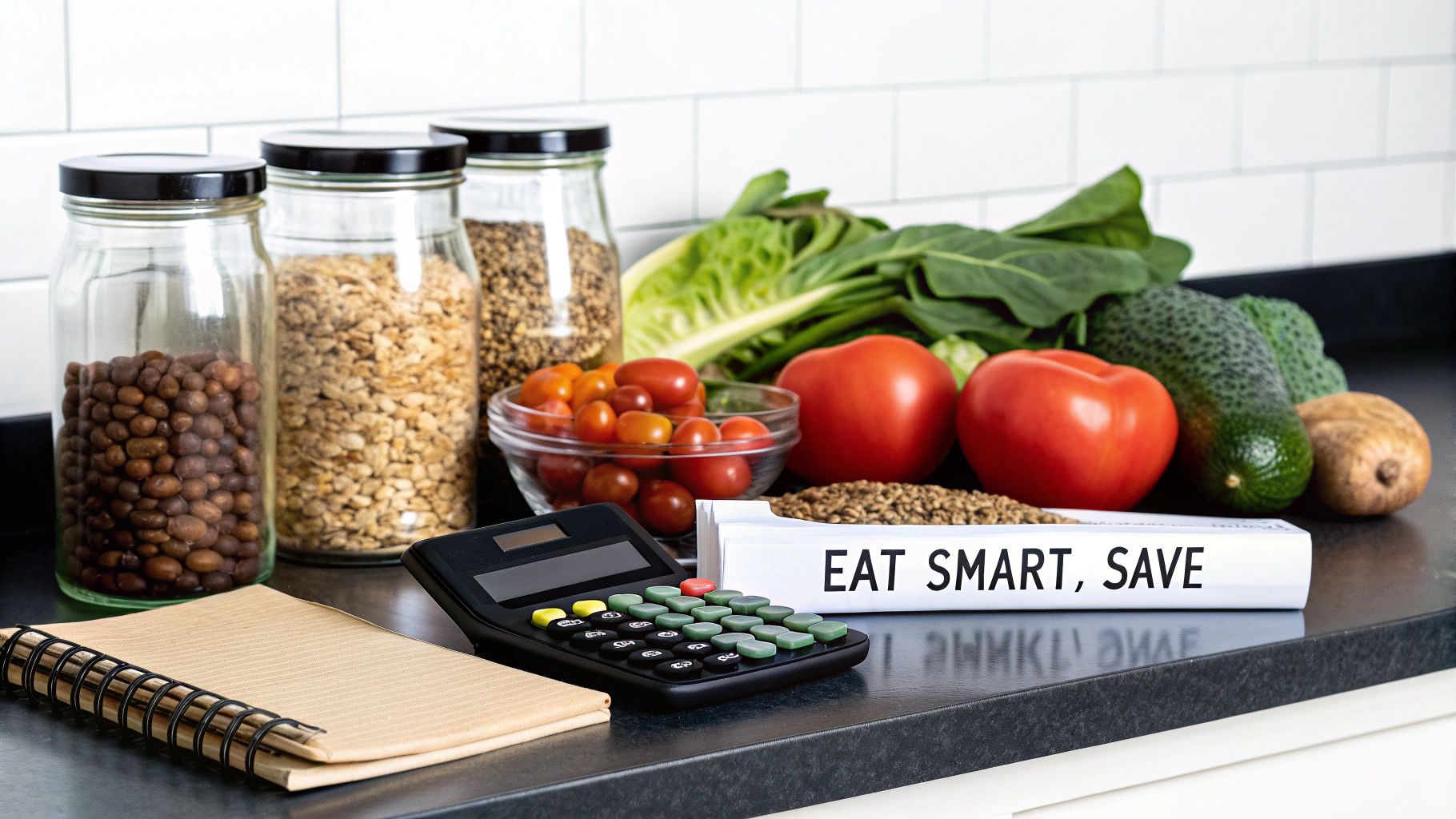
Let's face it, the sticker shock in the "healthy" aisles is a real thing. When you're surrounded by organic everything, grass-fed meats, and fancy superfood powders, it’s easy to think clean eating is only for the wealthy. And that perception has some truth to it.
On a global scale, a healthy diet costs an average of $4.46 per person per day, a price tag that's out of reach for roughly 2.6 billion people. This happens because fresh fruits, vegetables, and lean proteins can cost more per calorie than the processed, calorie-dense stuff.
But that global average doesn't have to be your reality. With a solid game plan, you can eat incredibly well without draining your bank account.
Shifting Your Mindset And Your Strategy
The secret isn’t about extreme couponing or depriving yourself. It's about building a few powerful habits that put you in the driver's seat of your grocery budget. Ditch the complicated rules and just focus on these fundamentals:
- Plan Your Meals: This is non-negotiable. Know what you’re eating for the week before you go to the store. This one habit slashes impulse buys and ensures every single ingredient gets used.
- Shop Smarter: This means buying produce that’s in season (it’s cheaper and tastes better), paying attention to unit prices, and grabbing versatile pantry staples when they go on sale.
- Cook Efficiently: Get comfortable with batch cooking and meal prepping. Cooking at home is hands-down the best way to lower your food costs and know exactly what you're putting in your body.
A big part of this is focusing on nutrient-dense foods that actually keep you full. When you prioritize protein and fiber, you manage hunger better, which means less mindless snacking and less money spent.
Even tiny, strategic changes can add up to huge savings over time. Try swapping just one or two meat-based dinners a week for a hearty lentil soup or some black bean burgers. You’ll be surprised how much you can cut costs without ever feeling like you’re missing out on protein. For more ideas on this, check out our guide on how to stay full longer.
Master Your Grocery Store Like A Pro
Having a shopping list is one thing, but how you navigate the actual store is where the real money is saved. It's time to stop wandering the aisles and start shopping with a purpose. A few smart tactics can completely transform your grocery game and your budget.
The simplest trick in the book? Shop the perimeter of the store first. This is where you'll find the real, whole foods—fresh produce, lean meats, dairy, and eggs. The inner aisles are a minefield of processed, packaged goods that are not only more expensive but can easily derail your health goals. Stick to the outside track.
Decode Prices And Hunt For Deals
Once you're in the right section, train your eyes to find the unit price on the shelf tag. This tiny number is your secret weapon. It breaks down the cost per ounce or pound, letting you see if that giant "family size" bag of quinoa is actually a better deal than the smaller one. It's the only way to make a true apples-to-apples comparison.
You should also get familiar with your store’s markdown schedule. Most grocers have to discount items like meat and produce as they get close to their "sell-by" date. Don't be shy—ask an employee when they typically mark things down. It’s usually early in the morning or late at night. You can also keep an eye out for the best clearance deals online to slash your food costs even further.
A quick tip: The "sell-by" date is for the store, not for you. It's not an expiration date. These discounted foods are perfectly good, especially if you plan to cook or freeze them right away.
Embrace The Power Of Frozen And Seasonal
Let's bust a common myth: fresh isn't always superior. When it comes to getting the most bang for your buck, both nutritionally and financially, the freezer aisle is your best friend. Frozen fruits and vegetables are picked at their peak and flash-frozen, which locks in all their valuable nutrients.
This is a huge deal, especially since rising costs make healthy eating a challenge for about seven out of ten Americans. The great news is that frozen produce can be 20–50% cheaper than its fresh counterpart, making it an incredible tool for eating clean on a tight budget.
When you are buying fresh, the key is to shop with the seasons. A carton of strawberries in the dead of winter will cost a fortune compared to what you'll pay for them in June. Planning your meals around what's currently in season means you get better flavor for a much lower price.
Here’s a quick cheat sheet to get you started:
- Spring: Asparagus, peas, radishes, spinach
- Summer: Berries, corn, tomatoes, zucchini
- Fall: Apples, broccoli, pumpkin, sweet potatoes
- Winter: Citrus fruits, kale, potatoes, winter squash
Combining these strategies will help you walk out of the store with higher-quality food for less money. And remember, hitting your protein targets is essential for feeling full and avoiding those pricey impulse buys at the checkout counter. For more on that, read our guide on how to increase your protein intake.
Building A Budget-Friendly Pantry
Let's be real: a well-stocked pantry is your secret weapon for eating clean without breaking the bank. It's what stands between you and that expensive last-minute takeout order. Think of it as your own personal, low-cost grocery store, filled with the building blocks for countless healthy meals.
By focusing on versatile, long-lasting staples, you turn a single shopping trip into weeks of potential. This isn't about hoarding; it's about smart, strategic purchasing that makes healthy eating your default setting.
Grains and Legumes: The Unsung Heroes
Your first stop? The bulk bins. This is where you’ll find the real workhorses of a budget-friendly kitchen. Whole grains and legumes are incredibly cheap, loaded with fiber and protein, and last for ages.
I always recommend starting with these essentials:
- Rolled Oats: So much more than just breakfast. They’re great for overnight oats, baked oatmeal cups, or even blitzed into a flour for healthier pancakes.
- Brown Rice and Quinoa: These are the perfect, versatile bases for everything from vibrant grain bowls and stir-fries to simple side dishes.
- Lentils (Brown, Green, and Red): I love lentils because they cook up fast—no soaking required! They’re fantastic for thickening soups, bulking up stews, or making hearty salads.
- Dried Beans (Black, Chickpea, Kidney): A big bag of dried beans costs pennies per serving compared to the canned version. It just takes a little planning to soak them, but the savings are huge.
These ingredients form the backbone of so many satisfying meals. A simple bowl of rice and beans, for example, isn't just cheap—it's a complete protein that provides incredible nutritional value.
A smart pantry isn't just full—it's functional. I learned this the hard way. Keep your staples in clear, airtight containers. Not only does it keep things fresh, but you can see what you have at a glance, which stops you from buying duplicates and ultimately reduces food waste.
This chart really drives home how simple choices—like buying produce in season or leaning on the freezer aisle—can add up to serious savings over time.
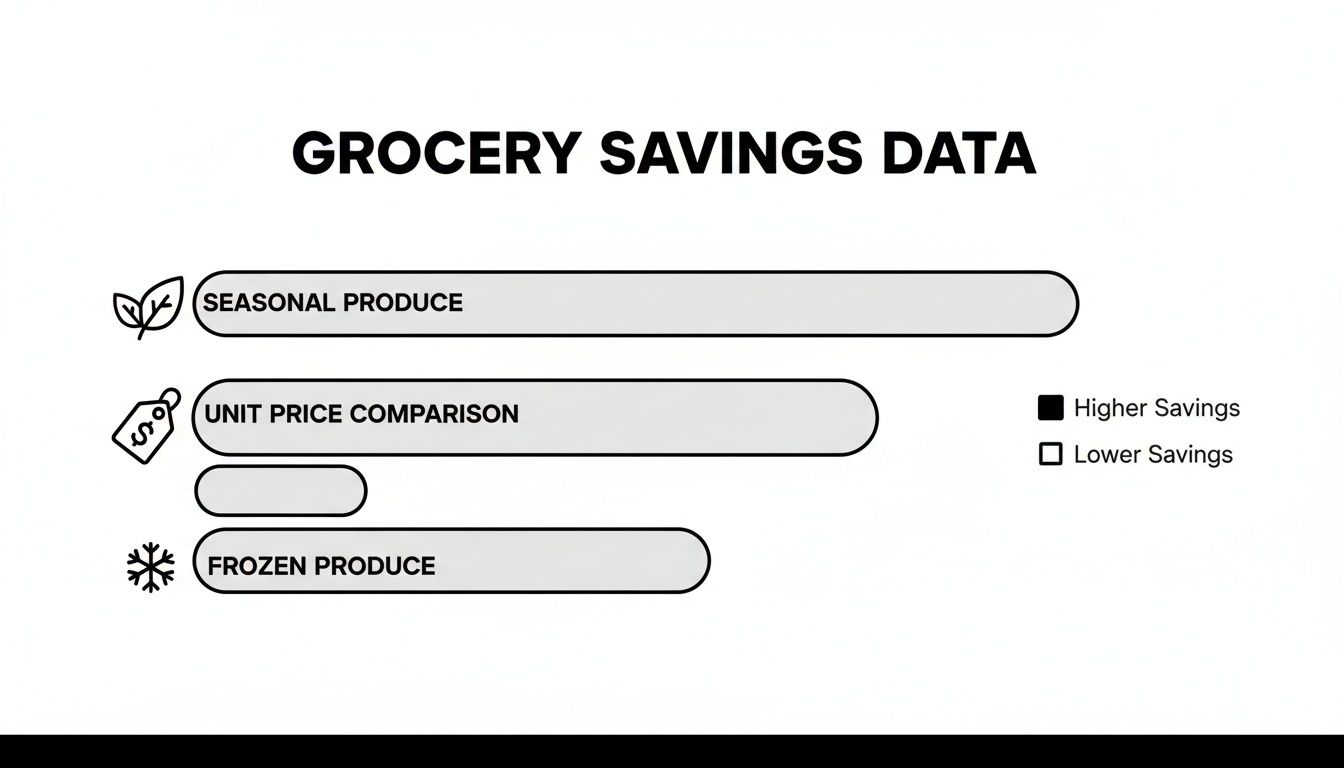
As you can see, just paying attention to unit price and embracing frozen options are two of the most powerful moves you can make to stretch that grocery budget.
High-Protein Swaps For A Leaner Budget
Protein is usually the most expensive macro on the plate, but it absolutely doesn't have to be. One of the biggest game-changers for my own food budget was shifting more toward plant-based proteins. Doing this can dramatically lower your grocery bill while still making it easy to hit your macro goals.
Take a look at how some of these sources stack up financially.
High-Protein Swaps For A Leaner Budget
| Protein Source | Approximate Cost per Serving | Protein per Serving (g) | Cost per Gram of Protein |
|---|---|---|---|
| Chicken Breast | $2.50 | 25g | $0.10 |
| Ground Beef | $2.75 | 22g | $0.13 |
| Lentils (Cooked) | $0.30 | 9g | $0.03 |
| Black Beans (Cooked) | $0.25 | 8g | $0.03 |
| Tofu (Firm) | $0.75 | 10g | $0.08 |
The numbers speak for themselves—the savings are substantial. For anyone wanting to explore this further, our guide on the best protein sources for vegans is packed with more ideas and detailed nutritional info.
Flavor Foundations: Spices and Healthy Fats
Finally, let’s talk flavor. Bland food is the fastest way to get bored and give up on your clean eating goals. A pantry stocked with key spices, vinegars, and healthy fats is what lets you turn those basic grains and legumes into meals you actually look forward to eating.
You don't need a hundred different bottles. Just start with the basics:
- Spices: Garlic powder, onion powder, smoked paprika, cumin, and dried oregano can create a huge range of flavor profiles.
- Acids: Apple cider vinegar and balsamic vinegar are perfect for whipping up quick dressings and marinades.
- Fats & Texture: A good olive oil for cooking is a must, and having some nuts or seeds on hand is an easy way to add healthy fats and a satisfying crunch to any dish.
The Meal Prep Method That Saves Time and Money
If there's one habit that makes clean eating on a budget stick, it's meal prep. Seriously. This isn't just about spending a few hours in the kitchen on a Sunday; it's about setting your entire week up for success. It’s your secret weapon against the 6 PM scramble that so often ends in expensive takeout.
The most immediate financial win? You’ll slash your food waste. Think about it—when every vegetable and protein has a plan, nothing gets forgotten in the back of the crisper drawer. Considering that household food waste can make up an average of 29% of diet costs, cutting that down is a huge deal. Just halving your waste could free up nearly 14% of your grocery budget. That’s a massive saving just for planning ahead.
Smart Meal Prep Approaches For Real Life
Look, effective meal prep doesn't mean you're stuck eating the same bland chicken and broccoli for five days straight. The trick is finding a system that actually works for your life.
Here are a few ways I like to approach it:
- Batch Cooking Ingredients: Instead of assembling five identical meals, I cook the building blocks. I'll make a big pot of quinoa, roast a sheet pan of sweet potatoes and bell peppers, and grill a pack of chicken. This gives me a "menu" of ready-made components to mix and match all week long.
- Assembling Grab-and-Go Meals: This is my go-to for lunches. Think salads in a jar (dressing on the bottom, greens on top to stay crisp), pre-portioned grain bowls, or little snack packs with nuts and fruit. It completely removes the temptation to buy an overpriced, mediocre sandwich when I'm busy.
- Freezer-Focused Prep: I live by the "cook once, eat twice" rule. If I'm making a big batch of lentil soup or black bean burgers, I always double it and freeze half. Over time, you build an amazing stash of healthy, homemade meals for those nights you have zero energy to cook.
Meal prep is your best defense against decision fatigue. After a long day, the last thing you want to do is figure out what to cook. Having a healthy, pre-made meal waiting for you makes the right choice the easy choice.
Your First Week Meal Prep Plan
Ready to jump in? This simple plan uses versatile, affordable ingredients to get you started.
Weekend Prep Session (Set aside 1-2 hours):
- Cook 2 cups of dry quinoa (this will yield about 6 cups cooked).
- Chop up and roast 1 large head of broccoli and 2 bell peppers.
- Bake or pan-sear 4 chicken breasts with your favorite simple seasonings.
- Hard-boil 6 eggs.
- Wash and chop 1 head of romaine lettuce.
- Mix a simple vinaigrette (I just shake up some olive oil, lemon juice, salt, and pepper in a jar).
How to Use Your Prepped Ingredients:
- Lunch: Assemble a hearty grain bowl using the quinoa, roasted veggies, and sliced chicken. Drizzle with your homemade dressing right before eating.
- Dinner: A quick reheat of the chicken and veggies makes for a super-fast, high-protein meal.
- Snacks: A hard-boiled egg is one of the best, most filling snacks you can have.
- On-the-go Protein: For those truly hectic days, I always keep a few macro-friendly, plant-based options like a Gym Snack in my bag. It’s an effortless protein boost with zero prep required.
And a pro tip: investing in a non-toxic slow cooker can be a total game-changer. It’s perfect for making huge batches of chili, soups, or shredded chicken with almost no hands-on time.
Simple Recipes That Taste Anything But Cheap
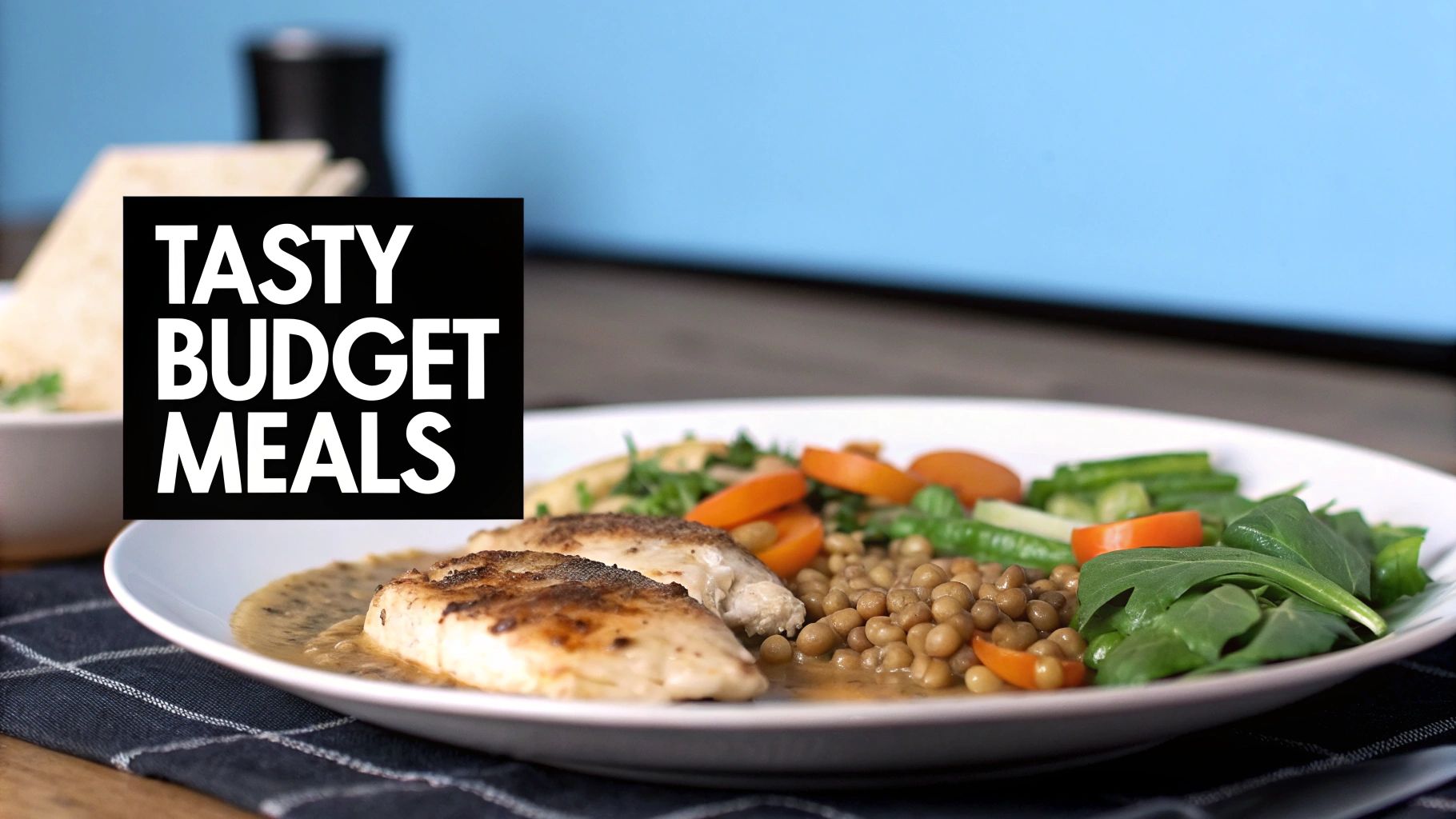
Alright, you’ve mastered the art of stocking your kitchen with smart, affordable buys. Now for the fun part: turning those ingredients into meals you’ll actually look forward to eating.
Let’s bust a myth right now: affordable does not mean bland. Some of the most flavorful food I’ve ever had comes from simple, whole ingredients. Armed with the pantry staples we talked about, you're ready to create some seriously delicious meals.
Here are a few of my go-to recipes that prove just how good budget-friendly can taste.
Hearty One-Pot Lentil Soup
This soup is pure comfort in a bowl. It’s packed with plant-based protein and fiber, it’s incredibly forgiving, and it honestly tastes even better the next day. A true meal-prep champion.
- You'll need: 1 tbsp olive oil, 1 chopped onion, 2 diced carrots, 2 minced garlic cloves, 1 cup brown or green lentils (rinsed), 6 cups vegetable broth, 1 tsp cumin, 1 tsp smoked paprika, plus salt and pepper.
- How to make it: In a large pot, sauté the onion and carrots in olive oil until they soften up. Add the garlic and cook for another minute until you can smell it. Stir in your rinsed lentils, broth, and spices. Bring it all to a boil, then turn the heat down and let it simmer for 25-30 minutes until the lentils are nice and tender. Season to your liking.
- Estimated Cost Per Serving: Around $1.25
This is a classic "cook once, eat twice" meal. I always make a double batch and freeze half. It’s a lifesaver on a busy night when you need something healthy and fast.
Sheet-Pan Chicken And Veggies
The sheet pan is your best friend on a busy weeknight. This is my favorite way to get a perfectly balanced meal with lean protein and veggies on the table with almost zero cleanup.
- You'll need: 2 boneless, skinless chicken breasts (cubed), 1 head of broccoli (cut into florets), 1 sweet potato (cubed), 1 tbsp olive oil, 1 tsp garlic powder, 1 tsp dried oregano, salt, and pepper.
- How to make it: Preheat your oven to 400°F (200°C). Dump everything into a large bowl and toss it all together until it's evenly coated with oil and seasonings. Spread it out in a single layer on a baking sheet and bake for 20-25 minutes. You'll know it's done when the chicken is cooked through and the veggies are tender.
- Estimated Cost Per Serving: Approximately $3.50
Flavorful Black Bean Burgers
Seriously, skip the pricey store-bought veggie burgers and make these instead. They’re bursting with flavor, they hold together without any fuss, and they’re a fantastic source of plant protein.
- You'll need: 1 can (15 oz) black beans (rinsed and drained), ½ cup breadcrumbs, 1 chopped small onion, 1 tsp cumin, ½ tsp garlic powder, salt, and pepper.
- How to make it: In a bowl, mash the black beans with a fork until they're mostly smooth (a few chunks are fine). Mix in the breadcrumbs, onion, and spices. Form the mixture into patties. Pan-fry them in a lightly oiled skillet for 3-4 minutes per side until golden brown and delicious.
- Estimated Cost Per Serving: About $0.75 per patty
Got Questions About Eating Clean on a Budget? Let’s Clear Things Up.
Even when you've got a solid game plan, real life has a way of throwing curveballs at your budget and clean eating goals. It’s easy to stick to the script in your own kitchen, but what happens when you step out the door? Let's dig into some of the most common questions I hear.
How Do I Handle Eating Out Without Blowing My Budget?
This is a big one. Social gatherings, dinners out with friends—they can feel like a minefield for both your wallet and your diet. My best advice? Go in with a strategy.
Check out the restaurant's menu online before you even leave the house. This takes the pressure off and lets you find a healthy, affordable option ahead of time. You won’t be caught off-guard or tempted by impulse decisions when the server arrives.
Look for the simple stuff. Almost every restaurant has a grilled chicken or fish dish with a side of steamed or roasted veggies. It's a clean, classic choice that keeps you on track. Another pro tip: have a small, protein-packed snack before you go so you aren't starving when you get there. You'll be far less likely to over-order.
Do I Really Need to Buy Everything Organic?
The organic debate comes up constantly. Is it a must for clean eating? Honestly, especially when you're watching your spending, the answer is no. While organic has its benefits, the absolute most important thing is simply eating more fruits and vegetables. Period.
Don't let the higher price tag on organic produce scare you away from the produce aisle entirely. Conventional fruits and veggies are still loaded with the vitamins and nutrients your body needs.
If you do want to be a bit more selective, a good approach is to use the "Dirty Dozen" list as your guide. You can focus your organic dollars on the produce known to have higher pesticide residues and stick with conventional for the rest.
Remember, the goal is progress, not perfection. A conventional apple is always a better choice than a bag of chips. Don't let the quest for the "perfect" diet stop you from making genuinely good choices.
What If I Get Bored of Eating the Same Meals?
Ah, food fatigue. It’s a real motivation killer. Eating chicken, rice, and broccoli on repeat will make anyone want to give up. The trick is to build in small, inexpensive variations to keep your taste buds from getting bored.
- Play with spices. Swapping your usual taco seasoning for Italian herbs can completely change the vibe of a simple meal.
- Master a new sauce. A homemade peanut sauce or a simple Greek yogurt tzatziki can bring a dull grain bowl back to life.
- Rotate your staples. If you've been on a brown rice kick, try quinoa, farro, or whole-wheat couscous for a week.
Making these small adjustments keeps things interesting without forcing you to buy a cart full of expensive new ingredients. The more you enjoy your food, the easier it becomes to make clean eating a sustainable, long-term habit.
When you need a quick, high-protein boost that fits right into your clean eating plan, Gym Snack has you covered. Grab a bag of our savory, plant-based protein snacks to stay fueled on the go without compromising on quality ingredients or great taste. Explore our delicious options today.