

Let's be honest, who doesn't love the taste of raw cookie dough? It's the ultimate forbidden treat. Cookie dough protein bars take that nostalgic flavor you crave and pack it into a snack designed to fuel your body, not wreck your diet. It's the promise of indulgence without the guilt, and that's exactly why they’ve become a staple for so many of us trying to stay on track.
Why We Crave Cookie Dough Protein Bars
The pull of a cookie dough protein bar is about more than just taste; it's smart psychology. Think back to being a kid and sneaking a spoonful of cookie dough from the bowl—it felt like a delicious secret. These bars capture that exact feeling, giving you a "permissible" way to enjoy a flavor that’s usually off-limits when you're focused on your health.
This simple trick turns a boring post-workout refuel into a genuine reward. Instead of choking down another chalky, bland bar, you get something that feels like a dessert. It satisfies your brain's call for sweetness and comfort, making it so much easier to stick with your nutrition plan. You get to have your "cookie dough" and build muscle, too.
For anyone serious about fitness, this isn't just a snack; it's a strategic tool. It keeps you from reaching for high-sugar, empty-calorie desserts that could undo your hard work, giving you a mental win and a physical boost.
The explosion of dessert-inspired protein snacks is no accident. It’s a direct answer to a huge demand for convenient, high-protein foods that actually taste good. As more people build their lives around fitness, they need grab-and-go options that support their goals without feeling like a sacrifice.
The numbers back this up. The global protein bar market was valued at $5.46 billion in 2025 and is expected to climb to $8.01 billion by 2030. This incredible growth is driven by people just like you and me, looking for snacks that deliver real protein without tasting like cardboard. You can find more details on this market growth from The Business Research Company.
So, let's pull back the wrapper and see what's really inside these bars. We'll dig into whether your favorite cookie dough protein bar is a true fitness ally or just another candy bar playing dress-up.
Decoding the Ingredient Label
It’s easy to get drawn in by flashy wrappers and claims of "cookie dough" flavor. But the real truth about any protein bar is found on the back, in the fine print of the ingredient list. Learning how to read that label is the single most important skill you can develop to tell a genuinely healthy snack from a candy bar in disguise.
Think of it this way: every ingredient is a player on a team. Your job as the coach is to pick a bar with a roster of star athletes, not one filled with benchwarmers who will only drag down your performance.
Let's break down what you'll find on a typical label. The table below covers the most common ingredients, what they do, and what to watch out for.
Common Ingredients Found in Cookie Dough Protein Bars
| Ingredient Category | Examples | Purpose in the Bar | Potential Red Flags |
|---|---|---|---|
| Protein Sources | Whey, Casein, Pea, Soy, Hemp | The core of the bar; provides amino acids for muscle repair and satiety. | Low-quality blends; listed far down the ingredient list. |
| Binders & Fibers | Soluble Corn Fiber, Inulin, Tapioca | Holds the bar together; adds fiber to improve texture and satiety. | High amounts can cause digestive upset (gas, bloating) in sensitive individuals. |
| Sweeteners | Sugar Alcohols (Erythritol, Sorbitol), Stevia, Sucralose, Corn Syrup, Honey | Adds sweetness without (or with) calories. | High-fructose corn syrup; multiple sugars listed; artificial sweeteners you want to avoid. |
| Fats | Almond Butter, Cashew Butter, Palm Oil, Sunflower Oil | Provides flavor, a creamy texture, and a source of energy. | Hydrogenated or partially hydrogenated oils (trans fats). |
| Flavor & Texture | Chocolate Chips, Natural Flavors, Salt, Cocoa Powder | Creates the "cookie dough" experience. | "Artificial flavors"; high sugar content in add-ins like chocolate chips. |
Understanding these categories is the first step. Now, let’s get into the specifics of what makes a great protein bar and what you should avoid.
The A-Team: Protein Sources
First things first, look for the protein. This is what you’re paying for—the ingredient that helps with muscle repair and keeps you feeling full. The most common players fall into two camps:
- Dairy-Based Proteins: Whey and casein are the classics. They're complete proteins, containing all nine essential amino acids your body can't make on its own. Whey is famous for its fast absorption, which is great right after a workout.
- Plant-Based Proteins: Options like pea, soy, brown rice, and hemp protein are becoming incredibly popular. These are fantastic for anyone following a vegan diet or dealing with dairy sensitivities. If you're going this route, it's worth knowing the best vegan protein sources to ensure you're getting a complete amino acid profile.
The demand for plant-based snacks is absolutely booming, with the market for protein cookie blends growing at a 6.17% CAGR worldwide. This is great news for consumers, as it means more dairy-free, soy-free, and gluten-free options are hitting the shelves.
Expert Tip: Ingredients are listed by weight. Make sure a high-quality protein source is the first or second ingredient on the list. If it’s buried below a bunch of sugars and fillers, put the bar back.
The Benchwarmers: Hidden Red Flags
After you've identified the protein, your next job is to scan for the ingredients that can work against your health goals. These are the additives that can cause digestive issues or pack in empty calories, completely negating the benefits of the protein.
Be especially wary of sugar alcohols like erythritol, sorbitol, and xylitol. They're used to lower the sugar on the nutrition panel, but for many people, they come at the cost of bloating, gas, and an upset stomach. Likewise, artificial sweeteners like sucralose and aspartame are markers of a highly processed product.
Here are the biggest red flags to watch for:
- Sneaky Sugars: If you see sugar, corn syrup, or fructose near the top of the list, it's a hard pass. That’s a candy bar, plain and simple.
- Hydrogenated Oils: These are also known as trans fats. They're used to extend shelf life but are terrible for your heart health. Avoid them at all costs.
- Vague Additives: Terms like "artificial flavors" or "artificial colors" are a sign that the bar relies on chemicals, not real food, for its taste and appearance.
Getting comfortable spotting these good and bad ingredients will make you a much smarter shopper. For a more detailed walkthrough, check out our complete guide on how to read a protein bar nutrition facts label.
Weighing the Nutritional Pros and Cons
So, are cookie dough protein bars a genius hack for your fitness goals, or are they just candy bars in a clever disguise? The truth is, it's rarely a simple yes or no. It really comes down to weighing the genuine benefits against some pretty common drawbacks.
Let's start with the good stuff. The biggest win is, without a doubt, the sheer convenience. When you're running between the gym, work, and everything else, having a protein-packed snack ready to go is a lifesaver. No cooking, no mess—just a quick way to crush those post-workout recovery needs or silence a rumbling stomach mid-afternoon.
And when they're made well, these bars absolutely deliver on the protein promise. That protein provides the amino acids your body needs to repair the micro-tears in your muscles after a tough workout, helping you rebuild and get stronger. A good bar can be a seriously effective part of your recovery routine.
The Power of Satiety
One of the most overlooked benefits of a protein-heavy snack is how full it keeps you. This feeling of fullness, or satiety, is your secret weapon for staying on track. Protein is simply more satisfying than carbs or fats, and it works by telling your body to release hormones like GLP-1 and PYY, which are the signals that tell your brain, "Okay, we're good for now."
This is huge for anyone trying to manage their weight. By keeping you feeling satisfied for longer, a solid protein bar helps you sidestep the temptation to grab a bag of chips or other empty-calorie snacks. It makes sticking to a calorie deficit feel less like a constant battle with hunger.
But it's not all sunshine and muscle gains. For many people, the downside of these bars shows up in their gut.
- Sugar Alcohols: Watch out for ingredients like erythritol and sorbitol on the label. They're notorious for causing gas, bloating, and general stomach grumbles, especially if you have a sensitive system.
- Excess Fiber: Fiber is great, but some bars are absolutely loaded with it—often synthetic types like soluble corn fiber. Too much, too fast, can lead to the same digestive distress.
The Hidden Sugar Problem
Here’s the biggest trap I see people fall into: the sugar content. To nail that perfect, sweet cookie-dough flavor, many brands pack their bars with added sugars, corn syrup, and other sweeteners. A bar that contains 15-20 grams of sugar has crossed the line from a health food into dessert territory, no matter how much protein is in it.
That hidden sugar rush might give you a quick burst of energy, but the inevitable crash that follows will leave you feeling worse than before. It also tends to feed more sugar cravings, making it that much harder to maintain your healthy eating habits long-term.
Ultimately, whether a cookie dough protein bar is a friend or a foe really depends on the ingredients inside and how your own body reacts. If you find a bar with a clean label that sits well with you, it can be an incredible tool. But if it's loaded with sugar or leaves your stomach in knots, you're far better off finding another option.
How to Choose a Genuinely Healthy Protein Bar
Walking down the snack aisle can feel overwhelming. Every cookie dough protein bar screams about high performance and amazing flavor, but how do you know which ones are actually good for you? The trick is to ignore the hype on the front of the box and learn to decode the nutrition label on the back.
Once you know the few key things to look for, you'll be able to spot a quality snack and sidestep the candy bars in disguise. It’s a skill that makes choosing the right bar almost second nature.
Master the Protein-to-Calorie Ratio
First things first, let's talk about the protein-to-calorie ratio. At the end of the day, you're eating a protein bar for the protein. If you're getting a mountain of calories for just a molehill of protein, you might as well grab a regular granola bar.
A solid rule of thumb is to look for at least 1 gram of protein for every 10-15 calories.
- A good buy: A 200-calorie bar with 20g of protein hits a 10:1 ratio. That’s an efficient, effective snack.
- A bad buy: A 350-calorie bar with only 15g of protein gives you a 23:1 ratio. This is less of a protein boost and more of a calorie-dense treat.
This quick math is your best tool for cutting through the marketing fluff. A lopsided ratio is often a red flag that the bar is loaded with extra fats and sugars just to make it taste better.
Scrutinize Sugar and Fiber Content
Next up: sugar. This is the pitfall for so many dessert-flavored bars. A protein bar shouldn't send you on a sugar-fueled rollercoaster.
Aim for bars with less than 5 grams of total sugar. Also, keep an eye out for high amounts of sugar alcohols, which often end in "-ol" (like erythritol or sorbitol). While they cut down on sugar, they're notorious for causing bloating and digestive issues in a lot of people.
Fiber is another crucial piece of the puzzle, but where it comes from matters. It’s what helps keep you full and supports a healthy gut.
You want to see natural, whole-food fiber sources on the ingredient list—think nuts, seeds, or whole oats. If the main fiber is a synthetic additive like "soluble corn fiber" or "inulin," you're looking at a highly processed product that might not agree with your stomach.
This flowchart can help you decide if a bar is truly helping you reach your goals or if it’s just a cleverly marketed trap.
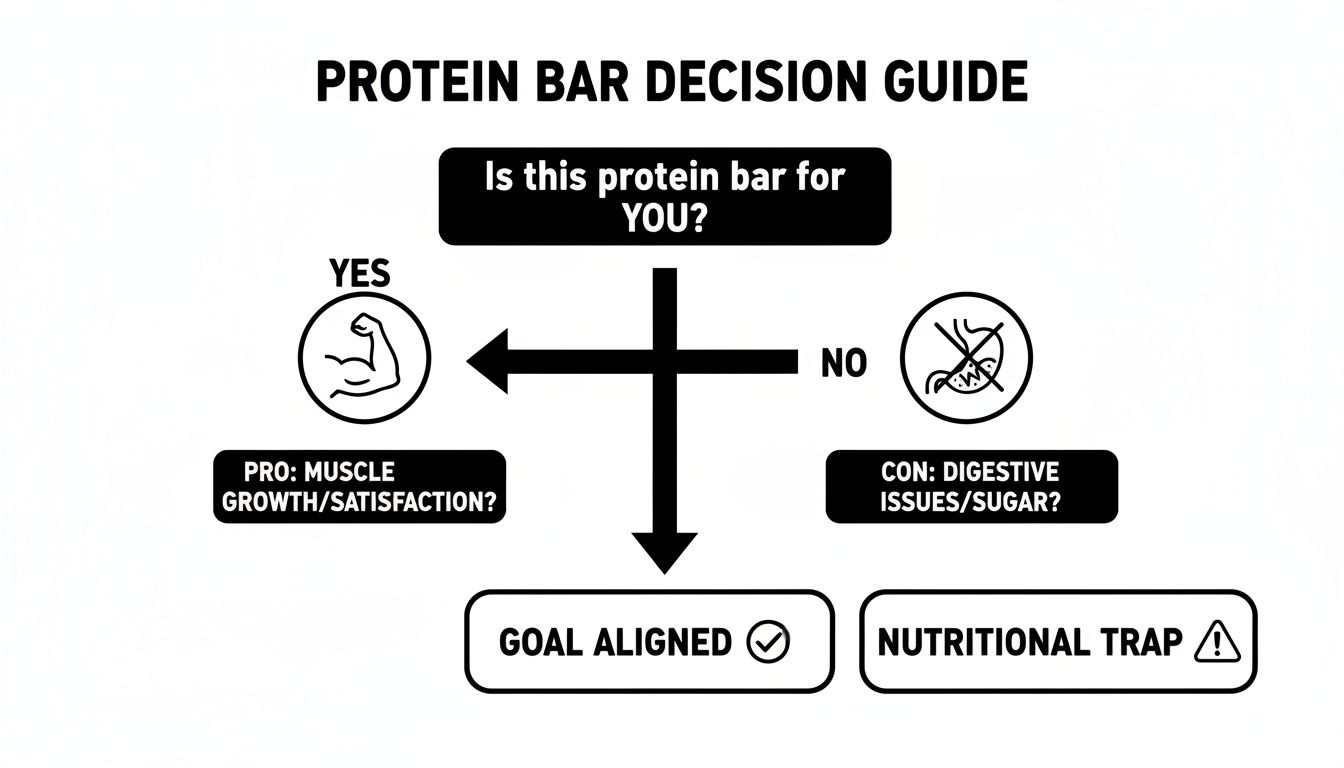
As you can see, the right choice always starts with what your body needs and what you're trying to achieve, whether that's building muscle or just finding a snack that doesn't upset your stomach.
Ultimately, the best bars have short ingredient lists filled with whole foods you can actually pronounce. If it reads more like a science experiment, it's probably best to put it back. If you want to dig even deeper, check out our full guide on finding the healthiest protein bar for you. For those looking to expand their knowledge on functional foods, exploring broader guides on the best supplements can also provide valuable insights.
When to Choose a Savory Protein Snack Instead
Let's be honest, a sweet cookie dough protein bar can hit the spot. It feels like a treat. But if you find yourself always reaching for that sugary fix, you might be stuck in a craving cycle without even realizing it. Over time, you can even develop flavor fatigue—that moment when your go-to sweet snack just doesn't taste as good anymore.
That’s your cue to switch things up and think about a different kind of snack. A savory one.
Instead of quieting a sweet tooth, a savory snack answers a totally different call. It's for when you're craving something salty, crunchy, and genuinely satisfying. Think of it like this: sometimes you want a piece of cake, but other times, only a hearty bowl of soup will do. Both give you energy, but they scratch a completely different itch.
Breaking the Sugar Cycle
The biggest reason to make the switch? To break free from the hold sugar has on your snacking habits. A savory protein snack can act like a reset button for your taste buds, helping to dial down those constant cravings for something sweet. This is a game-changer for keeping your energy levels steady throughout the day.
Choosing a savory snack has some real advantages:
- Sustained Energy: You get to skip the sugars that cause that all-too-familiar energy spike and subsequent crash. This means more stable, reliable fuel to power you through your day.
- Fewer Cravings: When you step away from sweet flavors, you start to train your brain not to expect a sugar hit every few hours. This makes sticking to your nutrition goals so much easier.
- Happier Gut: Many savory options, like Gym Snack, are made without the sugar alcohols and heaps of fiber that can cause bloating and digestive issues for a lot of people.
So, when you need a pre-workout boost or a solid afternoon snack to get you to dinner, a savory option is often the smarter play. It delivers the protein you need without the dessert-like profile, keeping your energy stable and your mind sharp.
A savory protein snack isn't just about dodging sugar. It’s about giving your body a different kind of fuel that supports lasting performance and keeps you full without feeding a cycle of sweet cravings.
To help you decide what's right for your immediate needs, let's break down how a typical sweet bar stacks up against a savory protein crunch.
Cookie Dough Bar vs. Savory Protein Crunch
This table compares the two snack types to help you choose the best fit for your craving and nutritional goals.
| Feature | Cookie Dough Protein Bar | Savory Protein Crunch |
|---|---|---|
| Primary Flavor | Sweet, dessert-like (e.g., vanilla, chocolate) | Salty, umami (e.g., smoky, cheesy, zesty) |
| Typical Texture | Soft, chewy, dense | Crunchy, airy, crisp |
| Best For | Satisfying a sweet tooth, post-workout treat | Pre-workout fuel, mid-day energy, sugar reset |
| Energy Profile | Can cause a quick spike and crash if high in sugar | Provides steady, sustained energy release |
| Common Additives | Sugar alcohols, artificial sweeteners, high fiber | Minimal additives, often uses natural spices for flavor |
Ultimately, both have their place, but being mindful of why you're reaching for a snack can make all the difference in how you feel afterward.
The market for protein snacks is exploding and is on track to be worth an estimated $83.12 billion by 2030, according to research from Fortune Business Insights. This growth is a direct result of more people like you wanting better options.
For anyone serious about their nutrition, exploring different options is key. Our guide on savory high-protein snacks can open your eyes to a whole new world of fuel. These alternatives are built with clean ingredients like pea protein and are often free from common allergens, making them a fantastic choice for hitting your macros without compromise. Choosing savory means you get your protein with bold flavors and a satisfying crunch that a soft cookie dough bar just can't match.
Create Your Own Healthy Cookie Dough Protein Bites
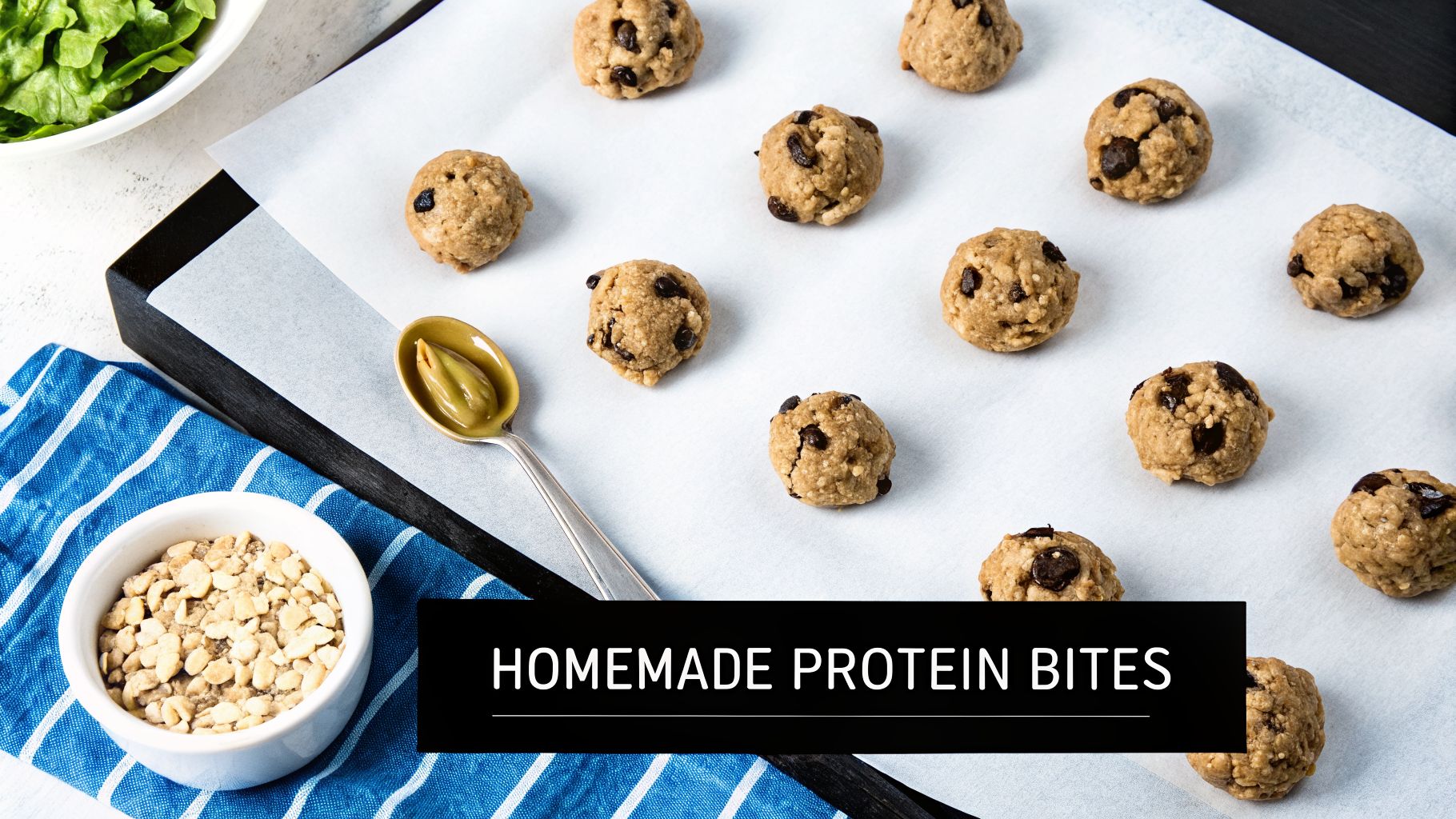
If you're tired of squinting at ingredient lists and feeling disappointed by what you find, I get it. The simplest solution is often the best one: make your own. The absolute best cookie dough protein bar might just come from your own kitchen, where you have total control.
Making your own no-bake protein bites is easier than you think, and it puts you in the driver’s seat. You get to decide on the macros, the flavors, and, most importantly, you know exactly what’s going into your body. This is how you get that nostalgic cookie dough taste using whole foods, without any of the questionable additives.
The Ultimate No-Bake Protein Bite Recipe
This recipe is my go-to starting point. It's incredibly flexible and takes just a few minutes to throw together, no oven required.
Core Ingredients:
- Oats or Oat Flour (1 cup): This is your base for complex carbs and fiber, giving you steady energy.
- Protein Powder (1/2 cup): Pick your favorite—vanilla or unflavored whey, casein, or a plant-based blend all work great here.
- Nut Butter (1/2 cup): Creamy peanut, almond, or cashew butter is the glue that holds everything together while adding healthy fats.
- Natural Sweetener (2-3 tbsp): Maple syrup or honey are easy choices. For a lower-sugar version, try blending a few Medjool dates with your liquid.
- Liquid (2-4 tbsp): Just a splash of milk or water will help everything combine into that perfect doughy texture.
- Mix-Ins (1/4 cup): For that authentic cookie dough experience, mini dark chocolate chips are a must.
Just toss all the ingredients into a bowl and mix until a firm dough comes together. If it feels a bit dry, add more liquid one tablespoon at a time until it's right. Then, simply roll the dough into bite-sized balls and pop them in the fridge for a perfect grab-and-go snack.
Making your own bites isn't just about avoiding bad ingredients; it’s about intentionally adding good ones. You can boost the nutritional value with additions like chia seeds for omega-3s or flax seeds for extra fiber.
Other Healthy Sweet Swaps
Don't have time to roll out a whole batch? You can still hit that sweet spot with a quick, high-protein fix.
My favorite hack is to stir a scoop of vanilla protein powder into a serving of plain Greek yogurt. Top it with a few dark chocolate chips, and you have a creamy treat that tastes shockingly similar to cookie dough cheesecake batter. These little swaps are built on the same principle: getting what you crave from clean, simple ingredients.
Your Questions, Answered
Got a few lingering questions about cookie dough protein bars? Don't worry, that's normal. Let's clear up some of the common points of confusion so you can choose a bar that actually helps you hit your goals.
Are They Actually Good for Weight Loss?
This is a classic "it depends" situation. On one hand, a bar packed with protein can be a great ally. Protein triggers the release of hormones like GLP-1 and PYY that tell your brain you're full, which can seriously help curb those afternoon cravings for less-healthy snacks.
The catch? Many of these bars are loaded with calories. Here’s the simple math: if you swap a 500-calorie slice of cake for a 200-calorie protein bar, you're creating a calorie deficit. That's a win. But if you're just adding that bar on top of your usual meals, those extra calories can easily stall your progress.
Can I Eat a Protein Bar Every Single Day?
You technically can, but I wouldn't recommend it. Think of your diet like a team—you want a variety of players. Relying on the same bar every day means you’re likely missing out on the wide range of vitamins, minerals, and antioxidants you'd get from whole foods like fruits, vegetables, and lean meats.
Plus, many bars are high in sugar alcohols or specific fibers that can cause bloating and digestive upset if you eat them constantly. It's all about balance.
The smartest way to use protein bars is to treat them as a tool for specific situations—like a quick refuel after a tough workout or a lifesaver on a chaotic travel day—not as an everyday staple.
What’s Better: Plant-Based or Whey Protein?
Honestly, one isn't universally "better" than the other. It really comes down to your body and your lifestyle.
Whey protein is a complete protein source, meaning it has all the essential amino acids, and your body absorbs it super fast. This makes it a go-to for many people looking to kickstart muscle recovery right after a workout.
On the other hand, plant-based proteins (from sources like peas, soy, or brown rice) are fantastic for anyone who is vegan, lactose intolerant, or simply finds that dairy doesn't sit well with them. For many, they're just plain easier on the digestive system. The best choice is the one that works for your dietary needs and makes you feel good.
Tired of the endless cycle of sweet snacks? Gym Snack offers a savory, satisfying crunch with over 15g of plant-based protein in every bag. It's designed to crush cravings and keep you genuinely full. It’s time to fuel your body with something that works. Explore our bold, cheesy flavors at gymsnack.com.