

Let's be honest, how many more sweet, chalky protein bars can you really stomach? If you're tired of snacks that taste like candy but still need that protein kick, it's time to look at the savory side of things. Savory high protein snacks are a game-changer, giving you real, lasting energy and crushing hunger without the dreaded sugar crash.
They're the perfect solution for anyone serious about fueling their body, helping muscles recover, and managing weight in a way that feels natural and satisfying.
Why Savory High Protein Snacks Are a Must-Have
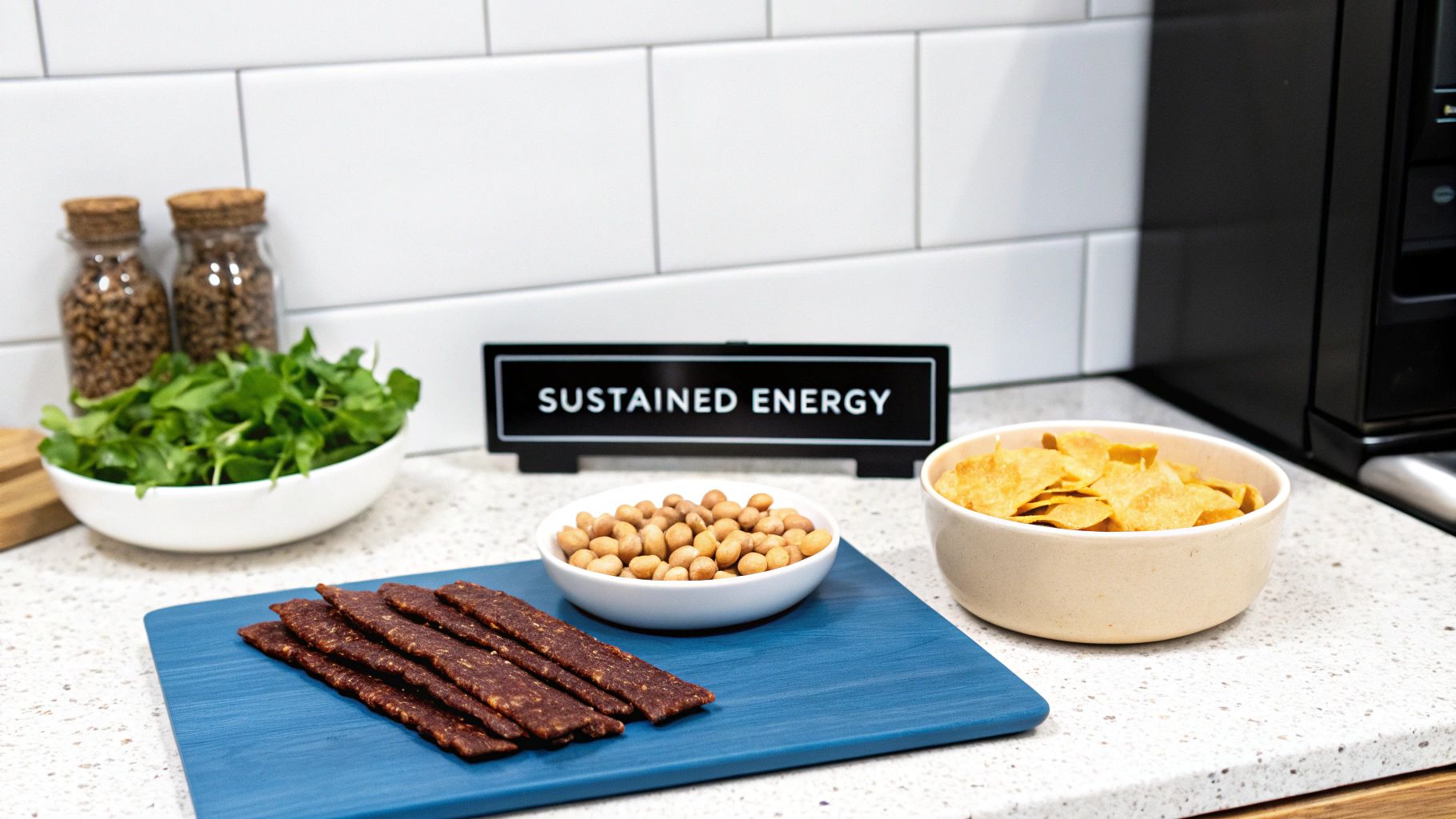
For a long time, the snack aisle was a sea of sweetness. Protein bars were basically candy bars in disguise, and shakes were just, well, milkshakes. Sure, they packed in protein, but they often brought along a ton of sugar, artificial sweeteners, and empty calories. This left a huge void for those of us who just wanted something salty, crunchy, or savory to get us through the day.
This shift toward savory snacks isn't just about what tastes good; it's about smarter nutrition. Sugary snacks and simple carbs give you a quick burst of energy followed by a hard crash. Protein, however, digests slowly, releasing energy steadily over time. That means you stay sharp, focused, and energized for hours, not minutes.
The Feeling of Fullness: Satiety and Lasting Energy
Imagine your hunger is a campfire. A sugary snack is like throwing a handful of dry leaves on it—you get a big flash of flame that’s gone in an instant, leaving you colder (and hungrier) than before. A savory, high-protein snack is like adding a solid oak log. It burns slow and steady, keeping you warm and satisfied for the long haul.
That feeling of being comfortably full is called satiety, and it's protein's superpower.
It's no surprise that people are catching on. The global market for savory snacks is exploding, projected to hit around $359.71 billion by 2034. A huge part of that growth comes from people demanding healthier, protein-packed options that actually help with weight management and wellness. If you're curious, you can explore more about these market trends and their drivers to see just how big this movement has become.
When you grab a snack that's high in protein, you're doing more than just silencing a growling stomach. You’re giving your body the essential building blocks for repairing muscle, supporting your immune system, and keeping your metabolism humming.
To put it simply, here’s a snapshot of the key advantages you get when choosing savory snacks packed with protein.
Quick Guide to Savory High Protein Snack Benefits
| Benefit | Why It Matters for You |
|---|---|
| Sustained Energy Release | No more 3 PM slump. You get steady fuel to power through your day without the sugar rollercoaster. |
| Increased Satiety | Feel fuller for longer, which helps you avoid mindless grazing and overeating between meals. |
| Muscle Repair & Growth | Provides the amino acids your muscles need to recover after a workout or just a long day. |
| Blood Sugar Control | Helps prevent the sharp spikes and crashes associated with high-carb and sugary foods. |
| Better Craving Management | By helping to regulate hunger hormones, it makes you less likely to reach for unhealthy junk food. |
Ultimately, choosing a savory high protein snack is a conscious decision to fuel your body intelligently.
More Than Just for the Gym
While protein is famous for its muscle-building prowess, its benefits reach far beyond your post-workout window. Weaving savory protein snacks into your daily routine helps you nail your bigger health goals.
- Stable Blood Sugar: By avoiding those carb-induced energy swings, you’ll find your mood is more stable and your focus is sharper throughout the day.
- Craving Control: Protein is a beast at taming hunger hormones. This means you’re naturally less tempted by the office donuts or late-night junk food.
- Metabolic Support: Your metabolism is closely tied to your muscle mass. Getting enough protein is crucial for preserving that muscle, which keeps your metabolic engine running strong.
In the end, it’s about making a smarter choice. It’s about giving your body what it truly needs to thrive, whether you're an athlete in training or just trying to win the battle against the afternoon slump.
How Protein Actually Fuels Your Body
To really get why a savory high-protein snack is such a game-changer, we have to look past the taste and texture. Let's break down what protein actually does for you, without getting bogged down in complicated science.
Picture your body as a massive, high-performance construction site. Carbs and fats? They're the gasoline for the machinery—quick-burning fuel that provides the immediate energy to get things done right now.
Protein, on the other hand, plays a totally different and arguably more important role. It isn't just fuel; it's the actual building material. Protein provides the bricks, mortar, and steel beams your body uses to build, repair, and maintain every single thing—from your muscles and bones to your skin and hair. When you eat protein, you're handing the construction crew top-shelf materials to build a strong, resilient structure.
The Science of Staying Full
Ever wonder why a bag of chips leaves you hunting for more, but a protein-heavy snack can keep you satisfied for hours? That’s not your imagination. It's a biological response called satiety. Protein is just a more complex molecule than carbs or fats, which means your body has to work a lot harder and take more time to break it down.
This slower digestive process gives you two huge wins:
- Steady Energy Release: You get a gradual, sustained stream of energy. This means no more of those sharp energy spikes and miserable crashes that come from sugary snacks.
- Hormonal Signals: It actively triggers the release of gut hormones, like PYY and GLP-1, that send powerful "I'm full" signals straight to your brain.
This one-two punch is incredibly effective at shutting down cravings and helping you feel in control of your appetite, making it a powerful tool for anyone focused on weight management.
By choosing a snack that puts protein first, you’re doing more than just eating. You’re sending a direct message to your brain to curb hunger and keep your energy stable for hours.
This understanding is completely changing how people approach food. Health-conscious trends are now a major force in the savory snack world, and the demand for high-protein options is climbing fast. The market for these snacks is growing at an estimated CAGR of 6.5% annually, all driven by this shift toward satiety and wellness. You can read more about the savory snacks market on foodnhotelasia.com to see how things are evolving.
Building and Repairing Muscle
For anyone who hits the gym, goes for a run, or just lives an active life, protein’s most famous job is muscle protein synthesis. Every time you work out, you’re creating tiny micro-tears in your muscle fibers. Don’t worry—this is a normal and essential part of getting stronger.
Think of it like renovating a house. First, you have to tear out the old, weak drywall (the micro-tears). Then, you bring in new, stronger materials to build it back better. The amino acids from the protein you eat are those superior building materials.
If you don't have enough protein handy, your body can't properly repair those micro-tears. This doesn't just stall muscle growth; it can also lead to more soreness and a much slower recovery time. Grabbing a savory high protein snack after a workout gives your body the exact resources it needs to get the repair process started immediately, helping you bounce back faster and grow stronger. If you're looking for ways to up your daily total, check out our guide on how to increase protein intake.
The Blood Sugar Stabilizer
Finally, let’s talk about your energy levels. High-carb snacks, especially the sugary kind, send your blood glucose on a rocket ship ride. Your body then dumps a flood of insulin to bring it back down, which almost always leads to a "crash." Suddenly you're tired, irritable, and—you guessed it—craving more sugar. It's a vicious cycle.
Protein is the ultimate stabilizer here. Because it digests so slowly, it slows down the absorption of any carbs you eat with it. This blunts that sharp spike in blood sugar and gives you a much more stable, controlled energy curve all day long. What does that feel like? More consistent focus, a better mood, and no more of that dreaded 3 PM slump. By choosing protein, you’re choosing balanced, dependable energy that works with your body, not against it.
How to Actually Read a Snack’s Nutrition Label
Let's be honest, choosing the right snack can feel like a guessing game. The front of the bag is all marketing—flashy claims like "all-natural" or "keto-friendly" designed to catch your eye. But the real story, the unfiltered truth, is always on the back.
Learning to decode that nutrition label is the single most powerful skill you can have for picking a genuinely healthy, savory high-protein snack. Think of it as the snack's resume. It can't lie about its qualifications. Here’s how to quickly scan it and decide if it's the right hire for your health goals.
First Glance: Serving Size and Calories
Before you look at anything else, find the serving size. This number is everything. It's often deceptively small, and it dictates every other value on that label. A bag you might easily finish in one sitting could actually be listed as two or even three servings, instantly tripling the calories, fat, and sugar you thought you were consuming.
Next, check the calories per serving. For a high-protein snack, a great rule of thumb is to look for a healthy protein-to-calorie ratio. You want at least 1 gram of protein for every 10-15 calories. So, if you're looking at a 150-calorie snack, it should pack at least 10-15 grams of protein.
This simple ratio cuts right through the marketing fluff. It tells you immediately if you're getting a snack that's truly protein-focused or just a calorie bomb with a little protein sprinkled in for show.
The Big Three: Protein, Carbs, and Fat
After calories, your eyes should jump to the main macros. These three numbers tell you exactly how the snack will fuel your body and, just as importantly, how full it will make you feel.
-
Protein: This is what you came for. For a snack to truly earn the "high protein" title, it needs to deliver at least 10-15 grams per serving. This is the key to feeling satisfied and giving your muscles what they need to repair and grow.
-
Total Carbs: Carbs aren't the enemy, but you have to be smart about them. Look at the breakdown to see how much comes from Dietary Fiber versus Total Sugars. High fiber is a massive win—it helps with digestion and makes you feel fuller for longer.
-
Total Fat: Pay close attention to the type of fat. A little healthy fat is great, but you want to keep Saturated Fat as low as possible. A good benchmark is less than 10% of your daily value per serving. A snack loaded with saturated or trans fats is actively working against your health goals.
When you're trying to figure out what a good snack looks like on paper, it helps to have a quick reference.
This "cheat sheet" gives you a clear set of targets to aim for.
Ideal Nutrition Profile for a High-Protein Snack
Use this cheat sheet to evaluate if a savory high-protein snack is a smart choice.
| Nutrient | Target Range Per Serving | Why It's Important |
|---|---|---|
| Protein | 10-15+ grams | Essential for muscle repair, satiety, and metabolism. The higher, the better. |
| Calories | 100-250 | Enough to provide energy and curb hunger without derailing your daily intake. |
| Dietary Fiber | 3+ grams | Promotes fullness, supports digestive health, and helps stabilize blood sugar. |
| Added Sugars | 0-2 grams | Savory snacks shouldn't be a hidden source of sugar. Keep this as close to zero as possible. |
| Saturated Fat | < 3 grams | Limiting saturated fat is crucial for heart health and overall wellness. |
| Sodium | < 400mg | Keeps bloating and blood pressure in check while still delivering on savory flavor. |
Keep these numbers in mind, and you'll be able to spot a winner on the shelf in seconds.
The Undercover Culprits: Sugar and Sodium
This is where many "healthy" savory snacks fall apart. They often hide shocking amounts of sugar and salt, which can completely undermine your good intentions.
Hunting for Hidden Sugar:
Sugar has dozens of aliases. When you scan the ingredients, look for words ending in "-ose" (like dextrose, fructose, maltose) or phrases like corn syrup, agave nectar, and cane juice. If any of these are near the top of the list, that’s a major red flag. For a savory snack, the "Added Sugars" line should be as close to zero grams as you can get.
The Sodium Situation:
Savory snacks are, well, savory. But there's a big difference between flavorful and a salt overload. Too much sodium can lead to bloating and other health issues. A solid guideline is to stick to snacks with less than 400mg of sodium per serving. Here's a quick check: if the sodium number is higher than the calorie count, it's probably too salty for a regular habit.
Ingredients and Allergens: The Final Check
Lastly, take a quick scan of the ingredient list and any allergen statements. This is non-negotiable for anyone with dietary restrictions, but it's also a fantastic indicator of quality for everyone else.
The best ingredient lists are short and made up of words you can actually pronounce. If you see things like pea protein, spices, and sunflower oil at the top, you're on the right track. Long lists full of chemical-sounding names and artificial additives are a sign of a heavily processed product that offers little real nutritional value.
For those with sensitivities, look for clear declarations like "Contains: Wheat, Soy" or "May contain traces of nuts." Better yet, look for official certifications that offer an extra layer of trust:
- Certified Gluten-Free: This seal means the product has been independently tested to meet strict gluten-free standards.
- Dairy-Free / Soy-Free: While these claims are helpful, a third-party certification gives you the highest level of assurance.
Once you master these simple steps, you can walk down any snack aisle with total confidence. You'll know exactly how to pick out the savory, high-protein snacks that will genuinely fuel your body and move you closer to your goals.
Finding Your Perfect Savory Protein Snack
Gone are the days when "savory protein snack" just meant a handful of salted nuts. The options have exploded, making it easier than ever to find something that hits the spot and aligns with your health goals. Let's break down the main players to help you find your next go-to fuel source.
Meat-Based Classics
For many of us, meat snacks are the original high-protein option. They deliver a serious punch of complete protein, which means they contain all the essential amino acids your body needs to repair muscle and keep everything running smoothly.
- Beef Jerky & Biltong: These are lean, mean, portable protein machines. Jerky is usually marinated and dehydrated for a chewier texture, while biltong is air-dried, giving it a softer, more tender bite.
- Turkey & Chicken Sticks: If you prefer something a bit softer than jerky, these are a great choice. They're often lower in fat with a milder flavor, perfect for a quick and satisfying bite.
Just a heads-up: always read the label on meat snacks. Keep an eye out for sky-high sodium levels or added nitrates and sugars, which can quickly derail an otherwise healthy choice.
The Rise of Plant-Based Heroes
The plant-based snack aisle isn't just growing; it's absolutely booming. People are more focused on health and sustainability, and the food industry has responded with some incredible options.
This isn't just a small trend. The protein snacks market, valued at around USD 4.8 billion in 2025, is on track to nearly double to USD 8.62 billion by 2032. And plant-based snacks are leading the way, projected to grab a massive market share of almost 62.6%.
The explosive growth in plant-based options means you no longer have to compromise on taste or texture to get high-quality protein from a non-animal source.
These plant-powered snacks are quickly becoming staples for everyone from serious athletes to everyday health-conscious folks.
- Roasted Chickpeas & Edamame: These are fantastic whole-food options packed with both protein and fiber. They give you that satisfying crunch and can be seasoned in endless ways, from smoky paprika to spicy chili lime.
- Pea Protein Puffs & Crisps: This is where modern food science really shines. Brands like Gym Snack are using innovative ingredients like pea protein isolate to create crunchy, cheesy-tasting puffs that feel like a treat but pack over 15 grams of protein per serving.
When you're comparing snacks, this chart breaks down what really matters.
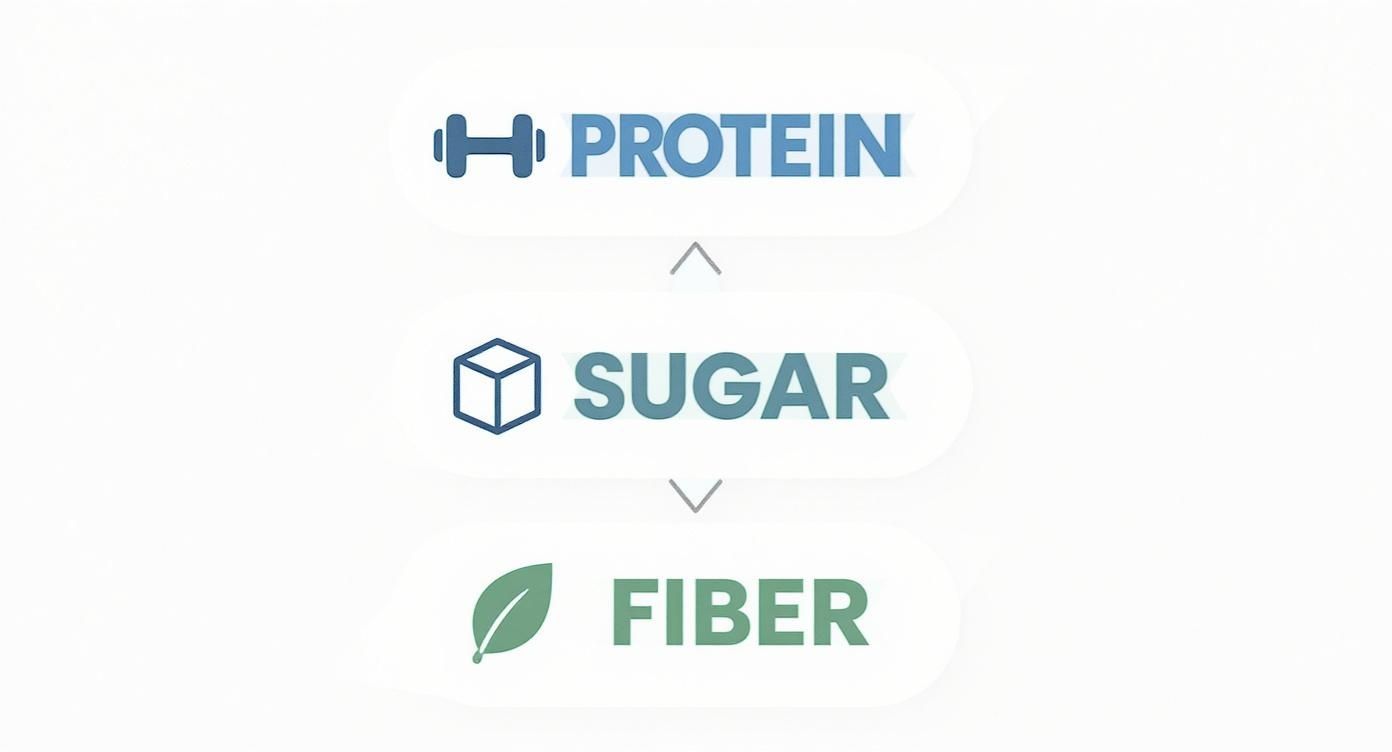
The takeaway is simple: look for snacks where protein is the star of the show. You also want to see low sugar and a good dose of fiber to keep you feeling full and satisfied.
Dairy, Nuts, and Seeds
This category is full of old-school favorites and some newer, clever innovations. They offer a great mix of protein, healthy fats, and other essential nutrients.
- Cheese Crisps: Made simply by baking cheese until it's perfectly crispy, these snacks are naturally low in carbs and high in protein and calcium. They're perfect for satisfying those intense savory cravings.
- Nut & Seed Mixes: A classic for a reason. Almonds, walnuts, and pumpkin seeds are nutrient powerhouses. The only trick is portion control, as their healthy fats make them pretty calorie-dense.
Sometimes, how you prepare a snack can make all the difference. For instance, an air fryer can whip up some incredible textures, like in this tasty air fryer bagel recipe.
Finding the right fit is all about experimenting. For more inspiration, check out our guide to the best on-the-go protein snacks. Whether you're a fan of classic jerky or the modern crunch of pea protein puffs, your perfect savory snack is out there.
When and How to Eat Protein Snacks
Knowing what to eat is a great start, but knowing when to eat it is how you truly make your nutrition work for you. Timing your savory high protein snacks isn't about following a strict stopwatch. It's about listening to what your body is telling you and giving it the right fuel at the right time.
Think of your body's energy levels like a phone battery. Different activities drain it at different rates, and a quick, strategic charge can keep you from hitting that dreaded low-power mode. A protein snack is that perfectly timed charge, keeping your energy steady and reliable.
Post-Workout Muscle Repair
This is the classic protein window everyone talks about, and for good reason. After you’ve pushed your limits in the gym, your muscles are filled with tiny micro-tears that are primed for repair.
Grabbing a high-protein snack within 30 to 60 minutes after your workout is like dispatching a rapid-response repair crew to a construction site. The amino acids get straight to work patching up those muscle fibers, which helps them grow back stronger and can even cut down on next-day soreness.
Pre-Workout Sustainable Energy
Carbs usually get all the attention for pre-workout fuel, but protein is the unsung hero that provides real staying power. Eating a savory protein snack about an hour before you start training gives your body a slow, steady stream of amino acids.
This drip-feed of energy helps prevent your body from breaking down muscle tissue for fuel during a tough session. It gives you sustained energy, helping you avoid the quick spike and crash you can get from sugary, simple carbs alone. For more on this, check out our guide to the best pre-workout snacks for muscle gain.
A well-timed snack before exercise is like putting a slow-burning log on the fire. It ensures you have a consistent source of heat to power you through every set and every rep without burning out too quickly.
Beating the Afternoon Slump
We’ve all been there. It hits 3 PM, your brain feels fuzzy, and that bag of chips in the vending machine starts looking really good. This is where your snack choice matters most. That afternoon crash is often a direct result of your blood sugar taking a nosedive after a carb-heavy lunch.
A savory, high-protein snack is the perfect fix. It stabilizes your blood sugar, sends a steady supply of energy to your brain, and keeps you feeling full. Making this one simple switch can keep you focused and prevent you from overeating later at dinner.
Smarter Snacking on the Go
Life moves fast, and it’s easy for your nutrition to get thrown off track when you're running errands or traveling. Keeping a portable, non-perishable protein snack with you is a game-changer. It's your best defense against the temptations of fast food and gas station junk.
A bag of protein puffs or jerky can live in your gym bag, your car's glove box, or your desk drawer. It’s an easy way to make sure you always have a smart, satisfying option ready to go.
Simple Pairings for a Balanced Boost
While a high-protein snack is fantastic on its own, you can easily turn it into a more complete mini-meal by pairing it with other foods. The goal is to add a source of fiber, complex carbs, or healthy fats for even more staying power.
- Protein Puffs with Avocado: Mash up half an avocado with a squeeze of lime and a dash of salt for a creamy, nutrient-packed dip.
- Beef Jerky with an Apple: The crisp sweetness of the apple is a perfect contrast to the salty, savory jerky, and the added fiber makes it even more filling.
- Cheese Crisps with a Handful of Almonds: This combo is a powerhouse of protein and healthy fats, ideal for when you need to silence some serious hunger.
A Smart Shopper's Guide to Protein Snacks
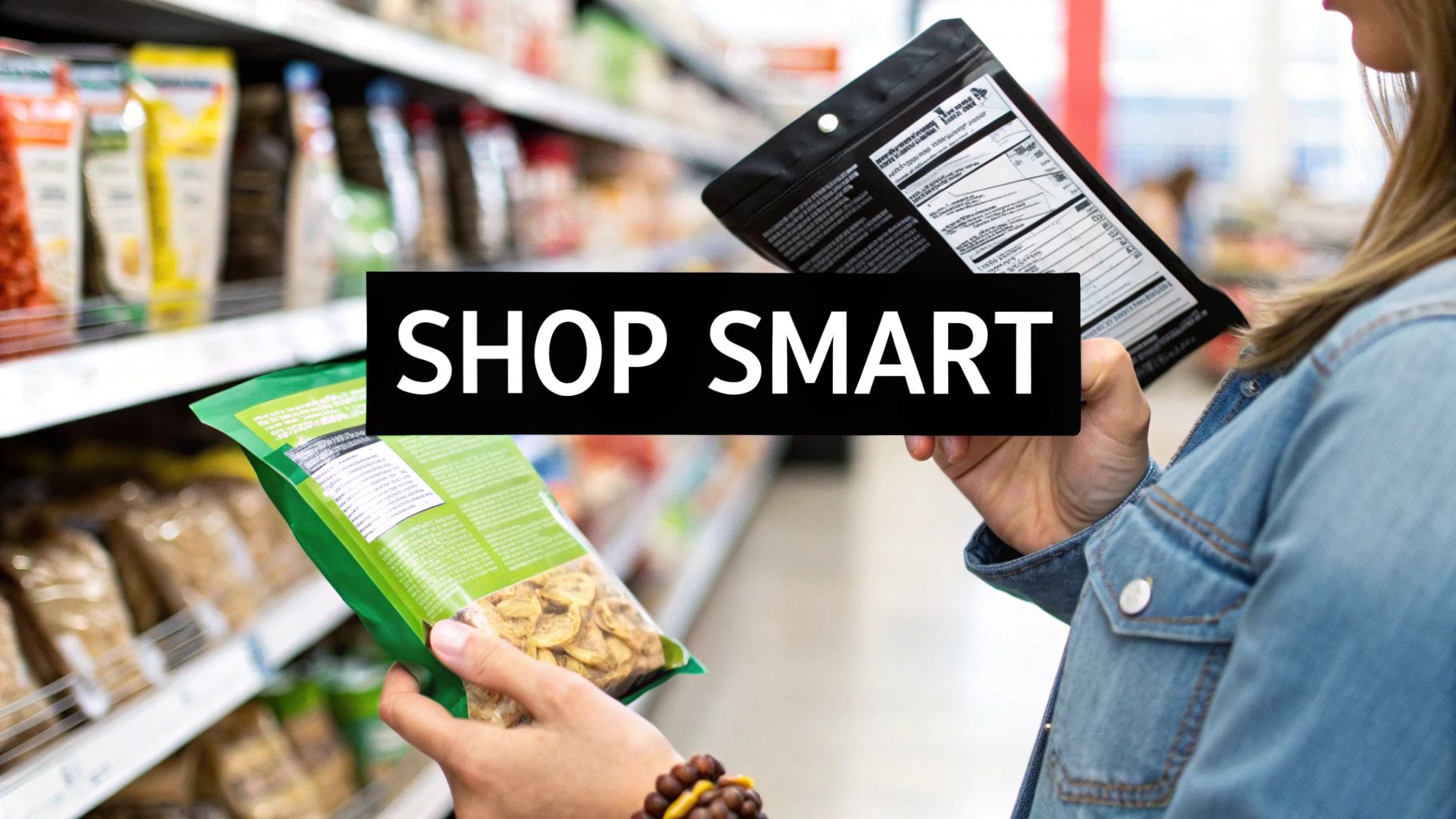
Let's be honest: navigating the snack aisle to find something that's actually healthy can feel like a full-time job. But it doesn't have to be. With a few simple tricks up your sleeve, you can cut through the marketing fluff and fill your cart with savory, high-protein snacks that truly back up your health goals.
The first rule of thumb? Flip the package over and read the ingredient list. Always. Look for snacks with short lists full of things you recognize, like pea protein, chickpeas, or lean meats, right at the top. If you see a laundry list of chemical-sounding names or several types of sugar, that's your cue to put it back on the shelf.
Bulk Buying Versus Single Servings
One of the classic grocery store dilemmas is whether to buy a big bag or grab those convenient single-serving packs. There’s no single right answer—it really comes down to your lifestyle, budget, and a little self-awareness.
-
Buying in Bulk: This is almost always the winner for your wallet, significantly lowering the cost per serving. It's a fantastic strategy for snacks you know you love and eat regularly. The only catch? You have to be disciplined enough to portion them out yourself to avoid mindless munching.
-
Single-Serving Packs: You can't beat these for grab-and-go convenience. They offer perfect, built-in portion control, which makes them ideal for tossing in a gym bag, a suitcase, or your work desk. You’ll pay a bit more for the convenience, but they take all the guesswork out of sticking to your plan.
For those moments when you're caught unprepared, it's also worth noting that options like healthy food vending machines are making it easier than ever to find nutritious snacks on the fly.
Pro Tip: Don't let your bulk-buy snacks go stale! To keep things fresh and crunchy, transfer items like roasted chickpeas or jerky into airtight containers. Store them in a cool, dark place like your pantry to lock in that just-opened flavor and texture.
Putting It All Together: A Real-World Example
So, what does this look like in practice? Let's take a product like Gym Snack and see how it stacks up against our checklist.
Right away, you’ll notice its ingredient list is clean and simple. It’s led by pea protein, a top-tier, plant-based source that's easy to digest. There are no mysterious additives or fillers—just straightforward, functional ingredients.
Looking at the nutrition panel, it nails the key metrics we've been talking about. With over 15 grams of protein and minimal saturated fat, it's a perfect fit. Plus, it's specifically made without common allergens like dairy, soy, or gluten, making it a reliable choice for almost anyone.
By focusing on a protein-first formula with whole-food ingredients, Gym Snack is a great example of what modern, intelligent snacking should be. It delivers on both performance and taste without compromise.
Got Questions About Savory High Protein Snacks? We've Got Answers.
Stepping into the world of high-protein snacking can feel like a new frontier. It’s smart to have questions, so let’s clear up a few common ones. This way, you can snack confidently and crush your health goals.
Can You Overdo It With Protein Snacks?
It’s a fair question. While protein is a powerhouse nutrient, more isn't always better. For most of us, adding savory high protein snacks to a well-rounded diet is completely fine and beneficial. The concern comes from consistently eating far more protein than your body needs, which can be tough on your kidneys long-term.
A solid rule of thumb for active people is to aim for 1.2 to 2.0 grams of protein per kilogram of body weight each day. Think of your snacks as a smart supplement to your main meals, not a replacement for them. They're there to fill the gaps and keep you fueled.
Are Plant-Based Snacks Actually Good for Building Muscle?
You bet they are. Plant-based protein snacks can go toe-to-toe with animal-based ones, provided they contain a complete amino acid profile. These days, many are smartly formulated to give your body all the essential building blocks it needs for muscle repair and growth.
For example, you'll often see snacks using a blend of pea and rice protein. This combination creates a "complete protein," ensuring you get the full spectrum of amino acids needed for effective recovery. It's always a good idea to check the label to see what you're getting.
Will Savory High Protein Snacks Make Me Gain Weight?
It's actually quite the opposite. These snacks are a secret weapon for managing your weight. Why? Protein is fantastic at promoting satiety—that feeling of being comfortably full and satisfied. This helps you curb cravings and avoid reaching for empty-calorie junk food, which naturally lowers your overall calorie intake.
Of course, the key is still being mindful of your portions and total daily calories. When you fit them into a balanced diet, these snacks are brilliant for helping you hold onto lean muscle mass, which keeps your metabolism humming.
Ready to fuel your goals with a snack that’s both delicious and effective? Gym Snack delivers over 15g of plant-based protein per serving with a satisfying crunch and zero junk. Shop now at gymsnack.com and taste the difference.