

Any cracker works with cheese. That's the popular advice, and it's wrong. A flimsy wafer under a soft cheese breaks before it reaches your mouth, a heavily seasoned cracker can flatten the flavor of aged cheddar, and a huge pile of plain carbs can turn a thoughtful board into a snack that leaves you hungry again.
The right cracker does three jobs: it supports the cheese, shapes the flavor, and adds a deliberate texture. It can also do more than carry cheese. With the right ingredients, crackers become a practical vehicle for protein, seeds, fiber, and satisfying crunch instead of a forgettable carb sidekick.
Why the Right Cracker Changes Everything
Cheese boards fail without warning. The cheese may be excellent, the fruit may look colorful, and the jam may be perfectly placed, but the wrong cracker makes every bite feel unbalanced. Soft cheese slides off a brittle wafer. A dense cracker overwhelms a delicate chèvre. A salty, strongly flavored square competes with an expressive washed rind instead of giving it room.
Treat the cracker as part of the pairing, not disposable packaging.
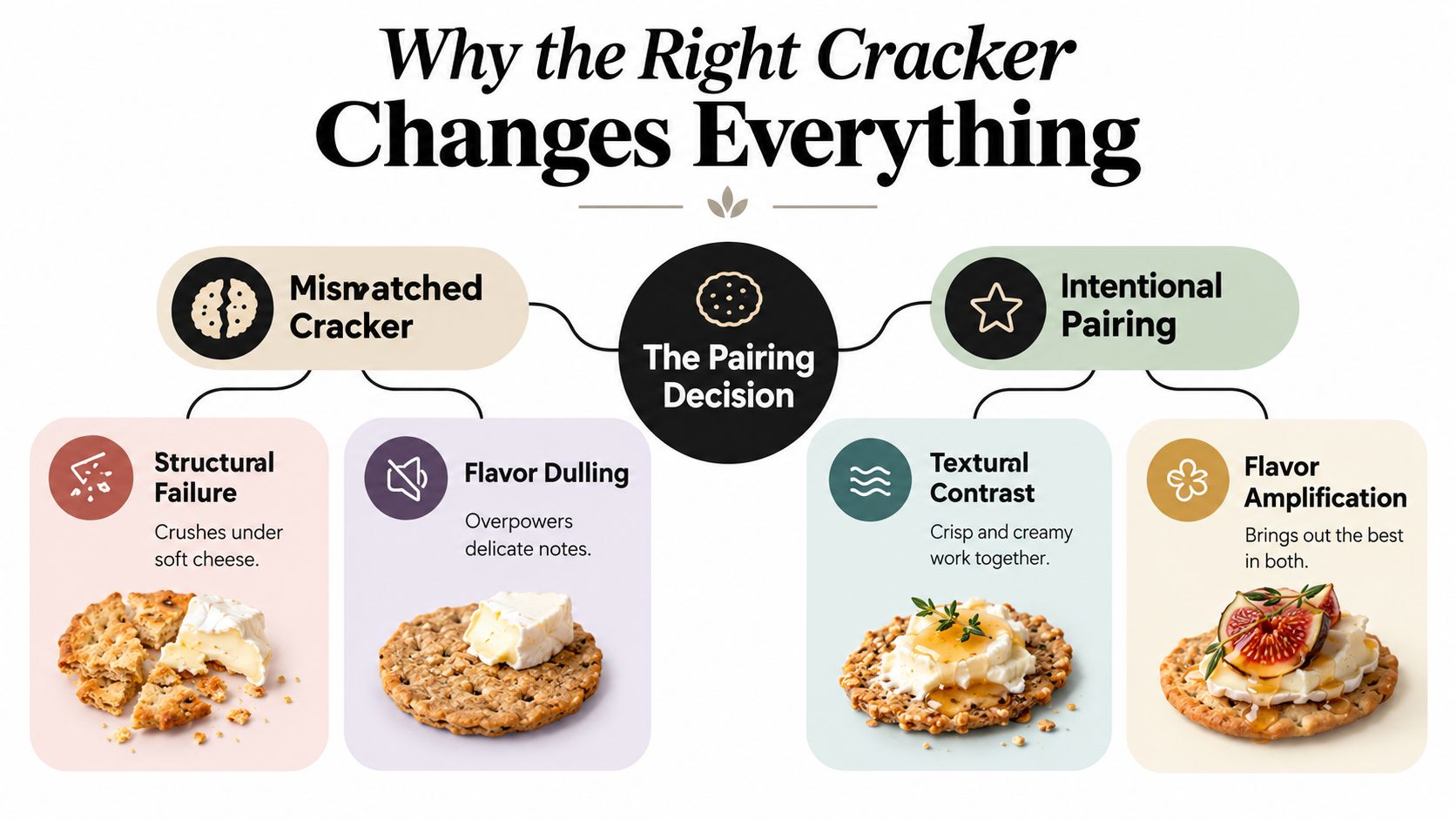
The three jobs of a good cracker
Structural support comes first. The cracker needs enough strength to carry the cheese without snapping or folding. That matters most with soft, wet cheeses, generous spreads, and toppings such as honey or chutney.
Flavor direction comes next. A neutral cracker lets pungent cheese lead. A nutty, herbed, seeded, or fruit-studded cracker can either echo a cheese's character or create a useful contrast.
Textural contrast finishes the bite. Creamy cheese needs crunch. A crumbly hard cheese benefits from a cracker with a firm snap or rustic chew. Without that contrast, the whole board can feel soft and monotonous.
A thin water cracker is a sensible partner for triple-cream Brie because it stays quiet and gives the cheese's butteriness the spotlight. A seeded multigrain cracker has more personality and a sturdier bite, so it makes better sense with aged Gouda, where toasted grain and seed notes can support the cheese's deeper flavor.
Practical rule: Choose the cracker for the bite you want, not the shape you want in a photograph.
The protein-forward approach starts here. If the cracker is one part of a filling snack, choose a base with seeds, legumes, nuts, or another useful ingredient profile. The goal isn't to make the cracker carry the entire nutrition plan. It's to stop wasting that space on a bland vehicle that adds little beyond crunch.
Matching Cracker Texture to Cheese Texture
Start with the cheese in front of you. Ask whether it's soft and moist, springy and semi-soft, firm and sliceable, or hard and crumbly. Then choose a cracker that either mirrors its density or creates enough contrast to keep the bite stable.
The simple rule is useful: the wetter or softer the cheese, the denser and more structural the cracker should be. A delicate cracker can work with soft cheese when the portion is small, but it becomes frustrating when the cheese is spread thickly.
| Cheese Texture | Examples | Cracker Texture to Use | Why It Works |
|---|---|---|---|
| Soft and spreadable | Brie, chèvre, ricotta | Thin crispbread, wafer, or firm seeded crisp | Gives creamy cheese a clean snap and resists light spreading |
| Semi-soft | Havarti, young Gouda | Medium-snap wheat, oat, rice, or seed cracker | Supports slices without overpowering mild flavor |
| Firm | Cheddar, Manchego | Sturdy multigrain, nut, or seeded cracker | Handles dense wedges and adds toasted contrast |
| Hard and crumbly | Parmesan, aged Pecorino | Thick rustic shard or robust crispbread | Holds crumbs and provides a substantial bite |
Soft and spreadable cheeses
Brie, fresh goat cheese, and ricotta need a cracker that stays intact under pressure. Use a crisp wafer for a restrained bite, or choose a denser seed cracker when you're adding honey, herbs, or roasted vegetables. For chèvre, a plain cracker keeps the tang sharp. For ricotta, an oat or lightly salted crisp can add enough toastiness without covering its freshness.
Semi-soft cheeses
Havarti and young Gouda sit in the middle. They don't need a plank-like cracker, but a tissue-thin wafer can disappear under a generous slice. Choose a cracker with a medium snap and enough surface area to keep the cheese stable. A lightly toasted oat cracker works well when the cheese is mild, while a seeded version adds useful contrast to a creamier slice.
People who want more crunch in a training-day snack can also use a structured base alongside ideas from this guide to crunchy high-protein snacks, then add cheese as one component rather than the entire topping.
Firm and hard cheeses
Aged cheddar and Manchego can handle more assertive crackers. Try a seedy multigrain with cheddar, or a nut cracker with Manchego. Hard cheeses such as Parmesan and aged Pecorino produce crumbs, so thick rustic shards or firm crispbreads make better platforms than fragile wafers. Break large crackers into irregular pieces so the cheese sits securely rather than balancing on a narrow edge.
Flavor Pairings That Actually Work
Texture tells you whether a pairing functions. Flavor tells you whether you'll reach for another bite.
Use three strategies. Mirror the cheese, cut through its richness, or create contrast. Don't pile several loud flavors together and hope they become complex. Identify the cheese's dominant note first, then decide whether the cracker should reinforce it or interrupt it.
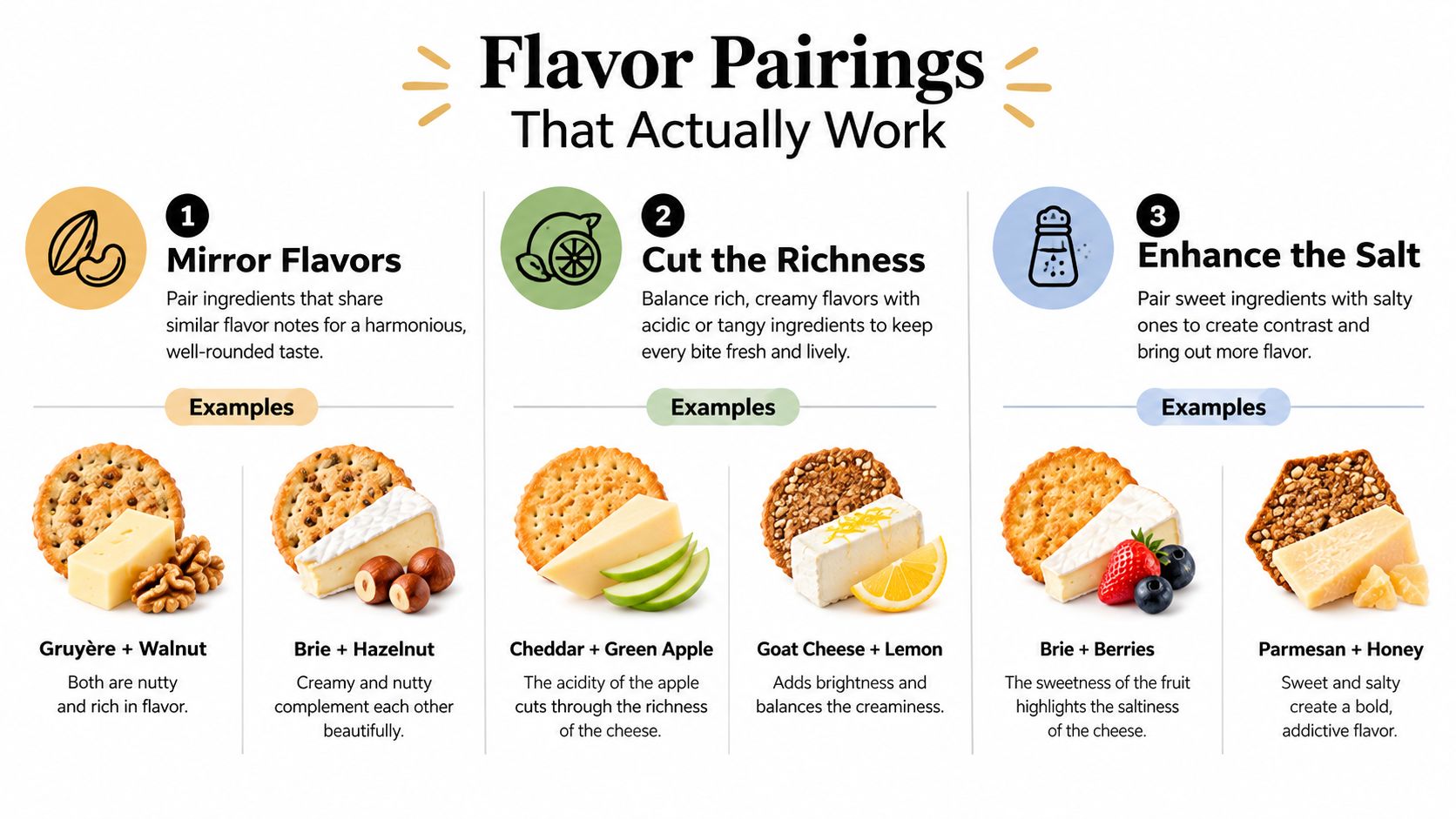
Mirror the dominant note
Nutty cheese usually welcomes a nutty cracker. Gruyère with walnut crackers is a reliable example because the toasted walnut echoes the cheese's savory depth without introducing a strange new direction. Manchego and almond crackers work for the same reason, especially when the cracker is lightly seasoned.
Aged cheddar with rosemary and olive oil crackers is another strong match. The herb sharpens the cheese's savory edge, while olive oil adds a rounded background note. Keep the rosemary controlled. Too much turns the pairing medicinal.
Cut richness with freshness
Fatty, creamy cheese benefits from a cracker with acidity, herbs, or a clean grain flavor. A plain crispbread can reset the palate between bites of triple-cream cheese. An oat cracker with a restrained savory seasoning gives Brie a toasted counterpoint without competing with its aroma.
You can also use toppings to supply the contrast. Creamy Brie with honey and oat crackers creates a simple sweet and savory combination. The cracker should remain mild so the honey doesn't have to compete with garlic, chili, or an aggressive seed blend.
For a special occasion, the cracker decision can sit alongside the drink decision. A local wine club, such as Kunde Winery's Sonoma Valley wine club, can provide a useful starting point for choosing bottles that won't overpower the cheese and cracker combination.
Enhance salt with sweetness
Salty blue cheese needs a balancing note. A fig cracker, fruit-and-nut crisp, or lightly sweet oat biscuit can soften the impact while preserving the cheese's character. Don't add a heavily salted cracker to an already salty blue unless you want the pairing to feel blunt.
The same logic applies to washed rinds and pungent cheeses. Start with a neutral water cracker when the cheese has funky, meaty, or fermented notes. The carrier should give those flavors space instead of adding another competing aroma.
For more ideas on savory flavor construction, compare the techniques used in cheese-flavored crackers. The useful lesson isn't to make every cracker taste like cheese. It's to decide which flavor should lead each bite.
Swaps for Vegan, Gluten-Free, and High-Protein Needs
Dietary restrictions change how you choose the cracker. Start with crunch, structural strength, and a clear flavor role, then check the ingredient list and allergen panel before serving. A cracker should carry cheese, hummus, or a plant-based spread without crumbling under pressure.
Protein also gives the board a practical purpose. Coverage of current snack preferences reports that 61% of consumers want snacks high in protein and 64% want snacks that provide an energy boost (FoodNavigator). The same source reports that high-protein snacks grew 7% over the past three years. Build the board around satisfying vehicles and measured portions, not a pile of empty crunch.
Vegan swaps
Seed-based crackers are the strongest starting point for a vegan board. Pumpkin, sunflower, sesame, and flax seeds provide texture, while their savory flavor suits plant-based Brie-style cheese, hummus, roasted vegetables, and bean spreads. Mary's Gone Crackers and Simple Mills Almond Flour Crackers are options to investigate, but the package still decides whether a product fits your guest list.
Chickpea- and rice-flour crispbreads offer a lighter bite. Chickpea versions bring more substance and work well with dense spreads. Rice versions stay cleaner and more neutral, making them useful when the plant-based cheese already has a strong flavor.
For allergen-conscious bases that still deliver crunch, explore these gluten-free vegan snack ideas for pairings with plant-based cheeses. Check each package for dairy, egg, soy, sesame, and shared-equipment statements. “Vegan” does not automatically mean free from every allergen your guests avoid.
Coconut flour crisps suit a delicate bite, but they can break under a heavy topping. Serve them with firm slices, a thin spread, or a small spoonful of dip. For a butter-style finish, use a thin layer of Miyoko's or Flora Plant butter on a neutral cracker, then add herbs, roasted vegetables, or a plant-based cheese slice.
Gluten-free swaps
Schär, Crunchmaster, and Trader Joe's gluten-free range provide practical starting points. Brand familiarity does not replace label reading. Check for wheat ingredients and shared-line warnings, especially for anyone with celiac disease or a serious allergy.
Rice cakes, crisped corn tortillas, and seed crackers are naturally gluten-free options, but they behave differently on a board. Rice cakes are airy and soften quickly under wet toppings, so serve them immediately. Corn crisps offer more strength and pair with aged cheddar-style alternatives, beans, salsa, and smoked ingredients. Almond flour crackers add richness, though tree-nut restrictions make them unsuitable for some guests.
High-protein options
Greek yogurt crisps, lupin bean crackers, and paneer crisps make the cracker itself contribute more substance. Use thin-sliced deli turkey rolled around cheese as a separate component. It is not a cracker, but it solves the same vehicle problem and gives guests a protein-forward alternative to a crunchy bite.
Do not estimate macros from memory. Product recipes and serving sizes vary, so use the package label when the board needs to meet a protein target. Check protein, calories, carbohydrates, sodium, and serving size together.
| Dietary Need | Recommended Cracker | Best Cheese Match | Notes/Macros |
|---|---|---|---|
| Vegan | Seed cracker, chickpea crisp, coconut flour crisp | Plant-based Brie-style cheese, hummus, almond cheese | Check for dairy, soy, and shared-equipment statements |
| Gluten-free | Rice crisp, corn tortilla crisp, almond flour cracker | Cheddar, chèvre, Manchego | Confirm the package suits the guest's level of avoidance |
| High-protein | Lupin cracker, Greek yogurt crisp, paneer crisp | Firm cheese or a high-protein dip | Read protein, calories, carbohydrates, sodium, and serving size |
| Overlapping needs | Seed-based or legume-based cracker | Vegan cheese, hummus, or a clearly labeled dairy option | Use separate utensils and label each component |
One trend dataset cited by Glanbia Nutritionals reports interest in protein crackers increasing from 18% to 26% (Glanbia Nutritionals). A protein-forward cracker belongs on a functional snack board, especially when paired with a high-protein dip or firm cheese.
Label each cluster plainly: vegan, contains dairy, gluten-free, contains nuts, or check package for shared-line information. Clear labels protect guests and keep the board easy to use.
DIY Cracker Ideas You Can Make Tonight
Homemade crackers don't need to look uniform. The best versions come from rolling the dough or mixture thin, watching the edges, and accepting that rustic shards often work better on a board than perfect squares.
Start with the seeded crispbread when you want the fastest route to a substantial crunch. Combine mixed pumpkin, sunflower, sesame, and flax seeds with olive oil, egg white or aquafaba, and a pinch of salt. Press the mixture thinly on parchment and bake at 325°F for 12 to 15 minutes, watching the edges closely. Let it cool fully before breaking it into pieces.
The egg-white version isn't vegan, but aquafaba makes the same idea suitable for a plant-based board. The finished crispbread is naturally gluten-free and sturdy enough for chèvre, hummus, or a plant-based spread.
A sweet-leaning almond option
For Brie, blue cheese, or a salty aged cheese, make an almond flour shortbread. Mix almond flour with butter or vegan butter and honey, shape it into a thin log, chill it until firm, then slice and bake until lightly colored. Keep the slices thin. This recipe is richer and more tender than a seed crisp, so it belongs beside firm cheese or a small portion of soft cheese rather than under a heavy topping.
Almond flour makes this naturally gluten-free, but it isn't suitable for guests avoiding tree nuts. Use a separate tray and storage container if the board includes people with nut allergies.
Chickpea crisps for a savory board
Drain chickpeas and blend them with olive oil, rosemary, and sea salt. Spread the mixture as thinly as you can on parchment, then bake until the surface is dry and the edges are shatter-crisp. Thinner areas will finish first, so rotate or break off the crisp pieces as they're ready rather than waiting for every section to brown identically.
The home-kitchen rhythm is straightforward. Pull out a sheet pan, blend the chickpea mixture, and let the crackers bake while you slice cheese and pour a glass of wine. Cool everything before assembling, then store extras in a tin once they're completely dry.
The seeded and chickpea versions can fit gluten-free boards, and the aquafaba crispbread is vegan-friendly. None automatically delivers a known protein amount per serving, so compare the finished recipe with the packaged options if nutrition targets matter.
Building a Board That Hits Your Macros
A macro-aware cheese board needs an anchor. Cheese contributes flavor and some protein, but relying on cheese alone can push the board toward richness without giving you the balance you want. Add a clearly defined protein component, then use the crackers to provide crunch and controlled carbohydrate content.
A practical starting point is the 1-2-3 rule:
- 1 ounce of cheese per person
- 2 ounces of protein boost per person
- 3 ounces of cracker or carbohydrate base per person
For a group of four, that means 4 ounces of cheese, 8 ounces of protein, and 12 ounces of crackers or another carbohydrate base. Treat this as a planning framework, not a medical prescription. Package labels and individual needs still decide the final nutrition.
Choose the protein anchor first
Prosciutto, salami, smoked salmon, marinated feta, Greek yogurt dip, and roasted almonds all change the board's character. Pick one or two, not everything at once. Smoked salmon suits plain crisps and soft cheese. Roasted almonds make a sturdy seed cracker feel intentional. Greek yogurt dip gives a fresh, tangy counterpoint to salty crackers.
Gym Snack offers plant-based Cheddar Cheeze Crisps and Jalapeño Cheddar Cheeze Crisps, with 15g or more of protein per serving according to the publisher's product information. Use a product like that as one labeled savory protein component, then pair it with cheese and a separate cracker if you want a broader range of textures.
Cut cheese into pieces that are easy to lift and top. A small cube or narrow wedge is more useful than a large slab that forces guests to saw through it with a knife.
Assemble for access, not decoration
Cluster crackers in small piles, leaving gaps so guests can grab one without demolishing the layout. Piles of 3, 5, or 7 create variation without making the board look rigid. Leave about 1 inch between cheese and cracker groups, and more room around jams or honey so sticky utensils don't cross into dry components.
Keep perishable protein cold with ice packs or a chilled serving surface. Take cheese out well before serving so its aroma and texture can develop, but don't leave protein sitting warm for an extended period.
The assembly order is simple: cheese, then protein, then crackers, then jam or honey, then herbs for color.
Your Crackers for Cheese Cheat Sheet
Use this checklist at the store or beside the board. It takes less time than buying three attractive crackers and discovering that none of them works.
1. Start with the cheese
Identify each cheese's texture and richness. Soft, moist cheese needs a cracker with structural strength. Aged, hard cheese can handle a heavier, seedier, or nut-based base.
2. Check the cracker weight
Thin and crisp suits soft, high-moisture cheese when the topping is restrained. Sturdy seed, nut, or multigrain crackers make better partners for aged wedges and dense spreads.
3. Assess the flavor intensity
Use a simple one-to-five intensity scale. Mild chèvre can sit comfortably on a plain water cracker. Blue cheese needs rye, fruit-and-nut, or another cracker with enough flavor to balance its salt and pungency.
4. Apply the dietary filter
For dairy-free boards, look at vegan coconut, seed, or cashew crisps. For wheat-free boards, consider rice, corn, or almond flour crackers after checking the label. For protein-focused boards, look for seed crackers, roasted chickpea thins, lupin crackers, or another option with a meaningful protein entry on the nutrition panel.
5. Taste before you plate
Put a small amount of cheese on the cracker and take one complete bite. If the cracker breaks, dominates, or leaves the cheese tasting flat, replace it. A product guide such as Everti's Monte Carlo biscuits guide can also help when you're comparing biscuit-style options, but the final test is always the bite itself.
For portions, plan roughly 3 to 4 crackers per person per cheese and about 1 ounce of cheese per guest, then adjust for the other foods on the table. The cracker is the vehicle, not the main event. Choose one that adds texture and, when possible, seeds, legumes, or protein instead of filling the board with empty crunch.
Build your next board around one cheese, one structurally reliable cracker, and one protein-forward component instead of buying a random assortment. Gym Snack makes plant-based savory crisps in Cheddar Cheeze and Jalapeño Cheddar Cheeze flavors, so visit Gym Snack to explore a crunchy option that fits the functional-snacking angle.