

You grab a protein bar because you want something easy, filling, and at least a little enjoyable. Then you bite into it and get one of two disappointments. It's either a dense, chewy brick that sticks to your teeth, or it's a candy bar wearing gym clothes.
That's why crispy protein bars get so much attention. Crunch changes the eating experience. It can make a high-protein snack feel lighter, more satisfying, and less like a compromise.
But crunch can also hide problems. Some bars create that texture with extra fats, sugars, puffed fillers, or processing tricks that make the nutrition look better on the front of the package than it feels in real life. Others raise safety questions for people who need to watch allergens closely.
A good crispy protein bar should do two jobs at once. It should deliver a clean, appealing crunch, and it should still hold up nutritionally. If you understand how that crunch is made, it gets much easier to spot the difference between a smart snack and a glorified treat.
What Defines a Crispy Protein Bar
Consumers know what they don't want. They don't want chalky. They don't want sticky. They don't want a bar that tastes like frosting but eats like putty.
A crispy protein bar is different because texture leads the format. Instead of relying on a dense dough or soft baked base, it uses crisp inclusions or puffed protein pieces to create audible crunch and a lighter bite. That can come from extruded protein crisps, puffed grains, or layered structures that trap air inside the bar.
More than a chewy bar with bits in it
A chewy protein bar is usually built around a sticky binder and a dense protein mass. A crispy one depends on small crunchy structures that stay intact after mixing and setting. Think of the difference between peanut butter and granola. Both can contain similar ingredients, but the eating experience is completely different.
That difference matters because texture shapes satiety, enjoyment, and pace of eating. Crunch tends to feel more snack-like and less medicinal. For many people, that makes it easier to stick with a higher-protein routine instead of drifting back to chips, cookies, or sweet bars.
Here's a simple way to separate the category:
| Format | Usual texture | Common structure |
|---|---|---|
| Chewy protein bar | Dense, tacky, soft | Protein paste plus binder |
| Baked protein bar | Cake-like or soft | Batter baked into a bar |
| Crispy protein bar | Light, crunchy, layered | Protein crisps, puffed pieces, or airy matrix |
| Meat snack | Firm, fibrous | Dried meat protein |
Why the category keeps growing
This isn't a tiny niche. The global protein crisps market was estimated at USD 1.61 billion in 2024 and is projected to reach USD 2.60 billion by 2030, growing at a CAGR of 8.4%, while the broader protein bar market is projected to grow at 6.1% according to Grand View Research's protein crisps market report.
That gap tells you something important. People aren't only asking for more protein. They're asking for better texture.
Practical rule: If a bar calls itself crispy but mainly eats like a soft bar with a few crunchy bits, it's using crunch as a garnish, not as the core design.
What makes a good one
The best crispy bars balance three things:
- Real crunch: You should hear and feel crispness, not just firmness.
- Structural balance: The bar shouldn't shatter into crumbs or turn hard as a rock.
- Nutritional honesty: The texture shouldn't come from a pile of sweeteners, oils, or low-value fillers.
That last point is where many shoppers get tripped up. Crunch feels healthy because it reminds people of toasted grains or light snacks. But in this category, texture can be carefully engineered. Sometimes that's useful. Sometimes it's a distraction.
The Food Science Behind the Perfect Crunch
Crunch doesn't happen by accident. Food manufacturers build it.
The easiest analogy is popcorn. A small amount of water inside the kernel heats up, turns to steam, and expands. The structure opens up and you get that airy bite. Crispy protein bars use a more controlled version of the same basic idea.
How protein crisps are made
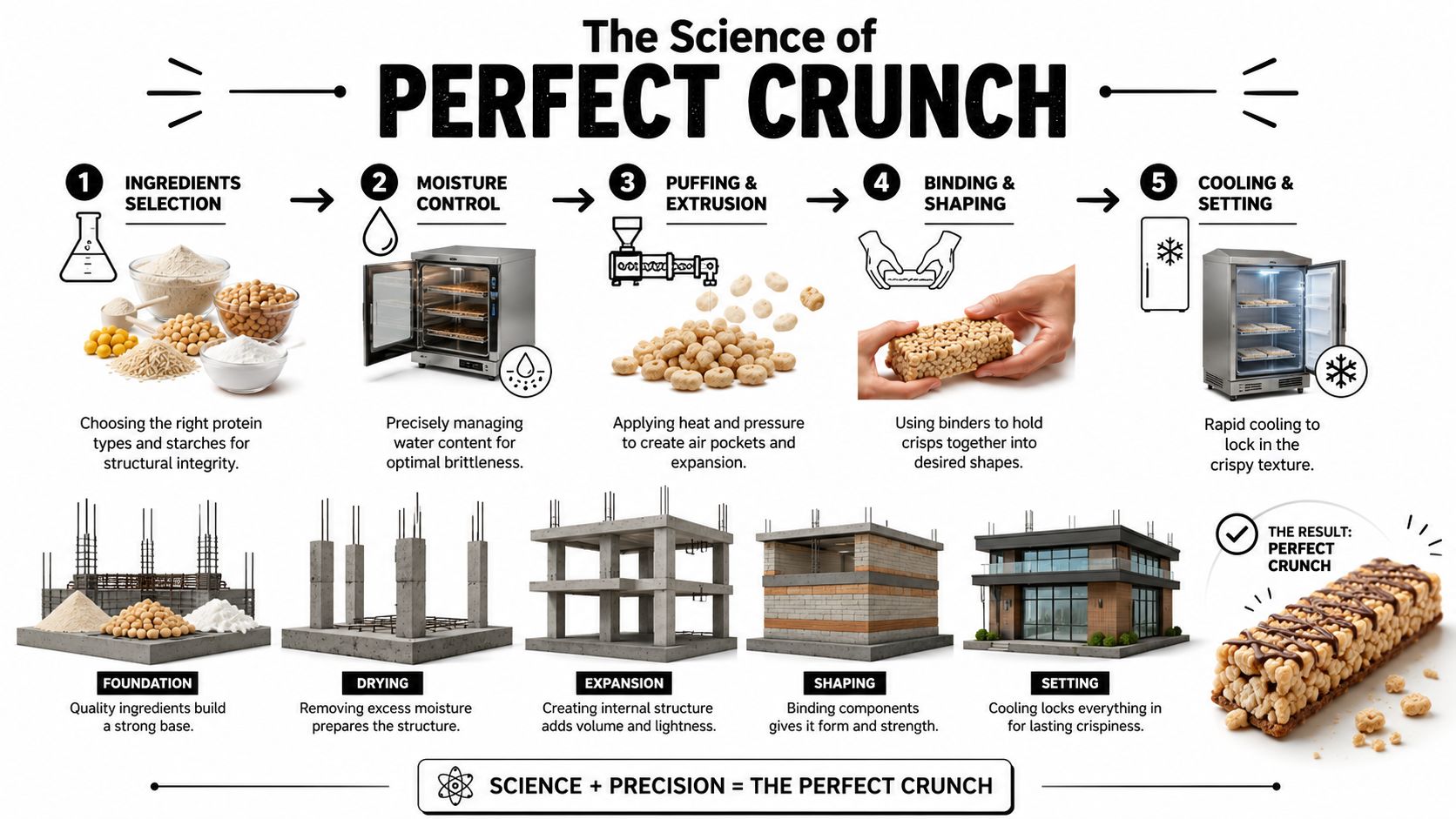
To create a crispy texture, manufacturers extrude a protein dough at high temperatures of 140 to 160°C with low moisture below 10%. That process causes rapid water vaporization and forms an airy matrix with a density of 0.2 to 0.4 g/cm³, which gives the final product its crunch, as described by Prinsen Berning's crunchy protein bar technology page.
If that sounds technical, picture a tiny pressure cooker followed by an instant puff. The dough goes in compact. Heat and pressure build. When it exits, water flashes into steam and leaves behind little air pockets. Those pockets are what your teeth break when you hear that crisp snap.
Why some proteins crunch better than others
Not every protein behaves the same way in the machine.
Whey tends to expand more easily. Pea protein is trickier. Plant proteins often resist expansion because they behave differently under heat and shear. That means the manufacturer has to work harder to create a good bite without ending up with a dry or gritty result.
A few variables control the final texture:
- Moisture: Too much water and the crisp won't puff well.
- Heat: Too little and you won't get enough expansion.
- Protein type: Some proteins form better air cells than others.
- Binders: Syrups, fibers, or starches hold the crisp pieces together later.
For people who want a visual walkthrough of puffed snacks and airy textures, Gym Snack's guide to air-popped crisps is a helpful companion.
A bar can be high in protein and still fail on texture if the protein matrix hardens too much after processing.
Good crunch versus fake crunch
Good crunch comes from structure. Fake crunch often comes from add-ons.
A well-made crisp has internal air pockets, so it feels light and shatters cleanly. A less thoughtful product may lean on sugary coatings, oily coatings, or a large amount of puffed starch pieces that create initial crispness but don't deliver much nutritional value.
That's why two bars can sound similar on the first bite but feel very different after a few chews. One stays crisp and clean. The other turns pasty, greasy, or oddly hard.
Analyzing Nutrition in Crispy Protein Bars
Crunch gets attention. The nutrition panel tells the story.
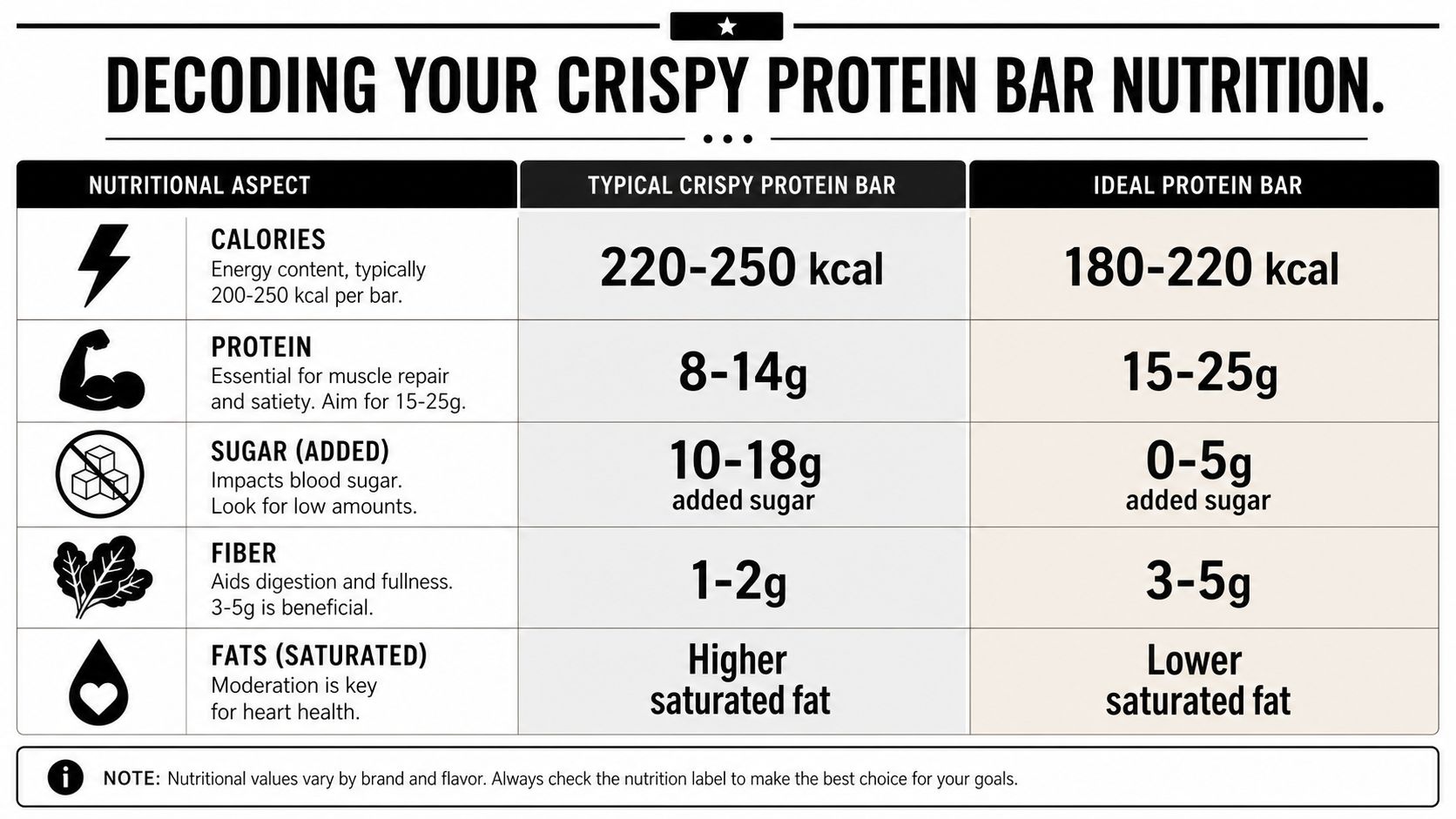
When you pick up crispy protein bars, start by asking a simple question. Is the crunch supporting the protein, or is the protein supporting a snack that's mostly there for texture and flavor? A lot of confusion comes from the fact that crispiness makes a bar feel lighter than it really is.
Start with the protein source
The protein source affects both nutrition and texture. Whey often gives manufacturers an easier path to expansion and a familiar creamy flavor. Plant proteins can be excellent too, but they're harder to engineer into a crisp product.
With pea protein, the challenge is mechanical as much as nutritional. Achieving 15g or more of protein per 30g serving with pea protein requires a shear rate of 150 to 200 s⁻¹ during extrusion to create the necessary crispness, according to the BioTechUSA Crispy Protein Bar product information.
That matters because a bar made with plant protein isn't automatically better or worse. It has a narrower technical runway. If the product team doesn't handle processing well, you get dryness, a sandy mouthfeel, or a bar that hardens too fast on the shelf.
Fiber can help, but context matters
That same source notes that formulations often include around 18g of fiber to lower glycemic impact and enhance the GLP-1 satiating response. GLP-1 is one of the body's “I'm getting full” signals. You don't need to memorize the hormone name to use the idea. Think of it as part of your internal appetite braking system.
Protein and fiber together usually help that system work better than a low-protein snack does. But there's a catch. Fiber is only useful if your gut tolerates the source well and the rest of the formula isn't overloaded with sweeteners or fats.
Here's a simple way to think about the label:
| Label area | What to look for | Why it matters |
|---|---|---|
| Protein | A meaningful amount from a clear source | Supports muscle repair and fullness |
| Fiber | Helpful amount from tolerable ingredients | Slows digestion and supports satiety |
| Sugar alcohols | Keep an eye on them if you're sensitive | Can cause digestive discomfort |
| Saturated fat | Lower is usually easier to fit into a daily routine | Some formulas use fat to improve texture |
| Ingredient list | Recognizable ingredients near the top | Helps you judge how the crunch was built |
A short video can also help if you want to compare labels visually and understand how macro tradeoffs show up in real products.
What clean label should mean here
“Clean label” gets used loosely, so it helps to define it in practical terms. In crispy bars, it should mean the texture wasn't created by piling on ingredients that work against your goal.
Look for these signs:
- Clear protein identity: Pea, whey, soy, or another named protein source.
- Texture with purpose: Crisps or puffed components that fit the formula instead of dominating it.
- Digestive realism: Fiber and sweeteners that your body can handle.
- Fat used carefully: Enough to keep texture pleasant, not so much that the bar becomes dessert with extra protein.
A good crispy bar should eat light without hiding heavy tradeoffs.
Key Benefits for Fitness and Weight Management
For gym-goers, the biggest advantage of a well-formulated crispy bar is compliance. You're more likely to eat the snack that tastes good and feels satisfying. That matters more than people admit.
After training, protein helps support muscle repair. A crunchy format can also feel easier to eat than a thick shake or sticky bar when you're tired, hot, or not in the mood for something sweet. The best option is the one that fits your routine without becoming a chore.
Why crunch can help with satiety
Texture changes how a snack feels in the brain and in the mouth. Crunch often slows eating slightly and makes the snack feel more substantial. Add protein and fiber, and you've got a combination that can keep hunger steadier between meals.
GLP-1 is part of that picture. In plain language, it's one of the signals involved in fullness. Protein and fiber tend to support that signaling better than a refined snack does, which is why a smart protein snack usually holds you longer than crackers or a candy bar.
Coach's shortcut: If a snack leaves you hunting for more food twenty minutes later, the macros and structure probably weren't doing much work.
Better use cases than people expect
Crispy bars aren't only for post-workout use. They can fit several moments in the day:
- Between meetings: Crunch can feel more like a real snack than a shake.
- Before training: A lighter-feeling option may sit better for some people than a dense bar.
- After lifting: Convenient protein is still useful when you can't get a full meal right away.
- During calorie control: A snack that feels satisfying can make it easier to avoid random grazing.
Recovery isn't just about protein, either. Training stress, soreness, hydration, and total routine all matter. If you want a broader view of what supports recovery outside the snack aisle, MEDISTIK's athlete recovery guide is a useful resource.
The main point is simple. A crispy protein snack earns its place when it helps you hit your nutrition target without feeling like punishment.
Navigating Allergens and Gut Health
A lot of shoppers see “gluten-free” or “plant-based” and assume the product is automatically safe for sensitive eaters. That's not enough.
Crispy formats often use multiple components. Crisp pieces, coatings, binders, seasonings, and inclusions may all come from different production streams. Every added crunchy element is another chance for cross-contact, hidden ingredients, or digestive trouble.
The recall that shows the risk
A 2025 recall of SimplyProtein Crispy Bars due to undeclared trace cashews highlighted a serious blind spot in this category, as reported by the Miami Herald recall coverage. That matters because the mechanical process of creating crisp textures can increase allergen cross-contact risk compared with dense, chewy bars.
In other words, crunch can complicate safety.
If a product contains puffed grains, nut-derived inclusions, or shared equipment components, a clean-looking front label might not tell the whole story. For someone with a severe allergy, that gap isn't a minor issue.
Gut comfort matters too
Digestive tolerance is a separate question from allergen safety, but people often mix them together.
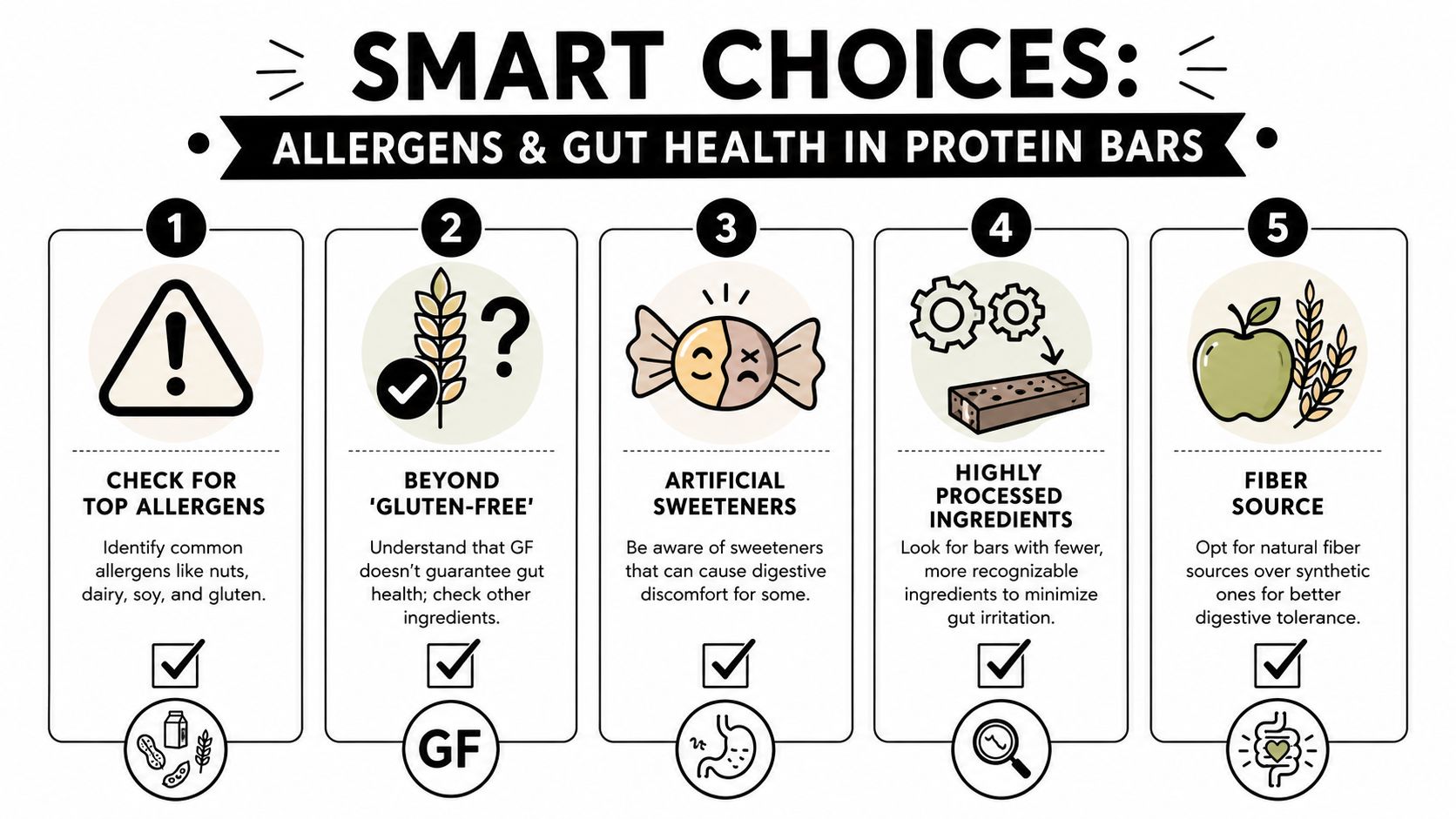
A bar can be free from your top allergen and still make your stomach miserable. Common reasons include sugar alcohols, certain fibers, dairy ingredients, or long ingredient lists loaded with texturizers and flavor systems.
Use this quick check before you buy:
- Look past the front claim: “High protein” and “crispy” say nothing about allergen controls.
- Read the advisory language: Shared equipment statements can matter as much as the main ingredient list.
- Notice the sweetener system: Some bars create a “low sugar” look by leaning hard on sugar alcohols.
- Check the fiber source: Some people do better with simpler, food-based fibers than with heavily engineered blends.
If you have a serious allergy, texture is never the first filter. Manufacturing transparency is.
What to look for in a safer option
The safest brands usually make life easier for the shopper. They name allergens clearly, keep formulas tighter, and avoid vague ingredient language where possible.
Signs that help:
| Question | What helps |
|---|---|
| Is it allergy-aware? | Clear allergen statements and transparent manufacturing notes |
| Is it likely to be gut-friendly? | Simpler sweetener system and fewer hard-to-digest additives |
| Is the crunch worth it? | Crisp texture from purposeful formulation, not from cluttered extras |
That doesn't guarantee perfect tolerance for everyone. It does improve your odds of choosing a product that matches your body, not just the marketing.
How to Read Labels and Choose a Healthy Bar
The front of the wrapper is advertising. The back is where the truth lives.
Recent lab tests found that many protein bars contain more fat, carbs, and sugar alcohols than listed on their labels, and textural additives such as rice crisps can contribute hidden calories that aren't always transparently accounted for, according to Nutrition Insight's report on protein bar labeling concerns.
Read in this order
Often, the initial focus is on calories. That's understandable, but it's not the best first move. Start with the ingredient list and the protein line.
-
Protein source first
If the protein source is clearly named, you can judge whether it fits your goals and tolerances. If the formula hides behind vague blends, be more skeptical. -
Ingredient list second
The first several ingredients tell you what the bar really is. If syrups, coatings, and crisped starches dominate, the crunch may be coming from filler architecture more than protein design. -
Sweeteners third
“No added sugar” can still mean a heavy use of sugar alcohols or sweet fibers. That may be fine for some people, but not for others. -
Fats and texture helpers next
Some fat is practical in crispy bars. Too much can mean the product needs lubrication to mask a weak texture base.
If you want a strong general framework for this process, Gym Snack's nutrition label reading guide gives a good shopping checklist.
Red flags that deserve a pause
Not every long ingredient list is bad. Not every short one is good. But these patterns should make you slow down:
- Crunch with no explanation: A “crispy” claim without obvious crisp ingredients or texture components.
- Multiple sweetener layers: The product may be trying to solve flavor and mouthfeel problems at once.
- Heavy coating language: Chocolatey, frosted, drizzled, or candy-style finishes can turn a protein bar into a dessert product.
- Allergen ambiguity: If you need a clean allergen profile, vague language is a problem.
Label habit: Ask, “What is creating the crunch?” If the answer seems to be sugar, oil, or a long list of engineered extras, keep looking.
A simple store test
You don't need to be a food scientist in the snack aisle. Use this practical filter:
| Keep considering it if... | Put it back if... |
|---|---|
| Protein source is clear | The ingredient list hides the protein architecture |
| Texture ingredients make sense | Crunch seems driven by candy-like additions |
| The formula matches your gut tolerance | Sweeteners or fibers have burned you before |
| Allergen information is easy to find | Safety language is missing or confusing |
A healthy crispy bar should feel like a smart convenience food. Not a puzzle.
The Rise of Savory Crisps Like Gym Snack
One reason many people burn out on protein bars is simple. They're tired of dessert pretending to be fuel. Cookie dough, brownie batter, birthday cake, frosted donut. Those flavors can work, but they don't always match what someone wants after a workout or in the middle of a workday.
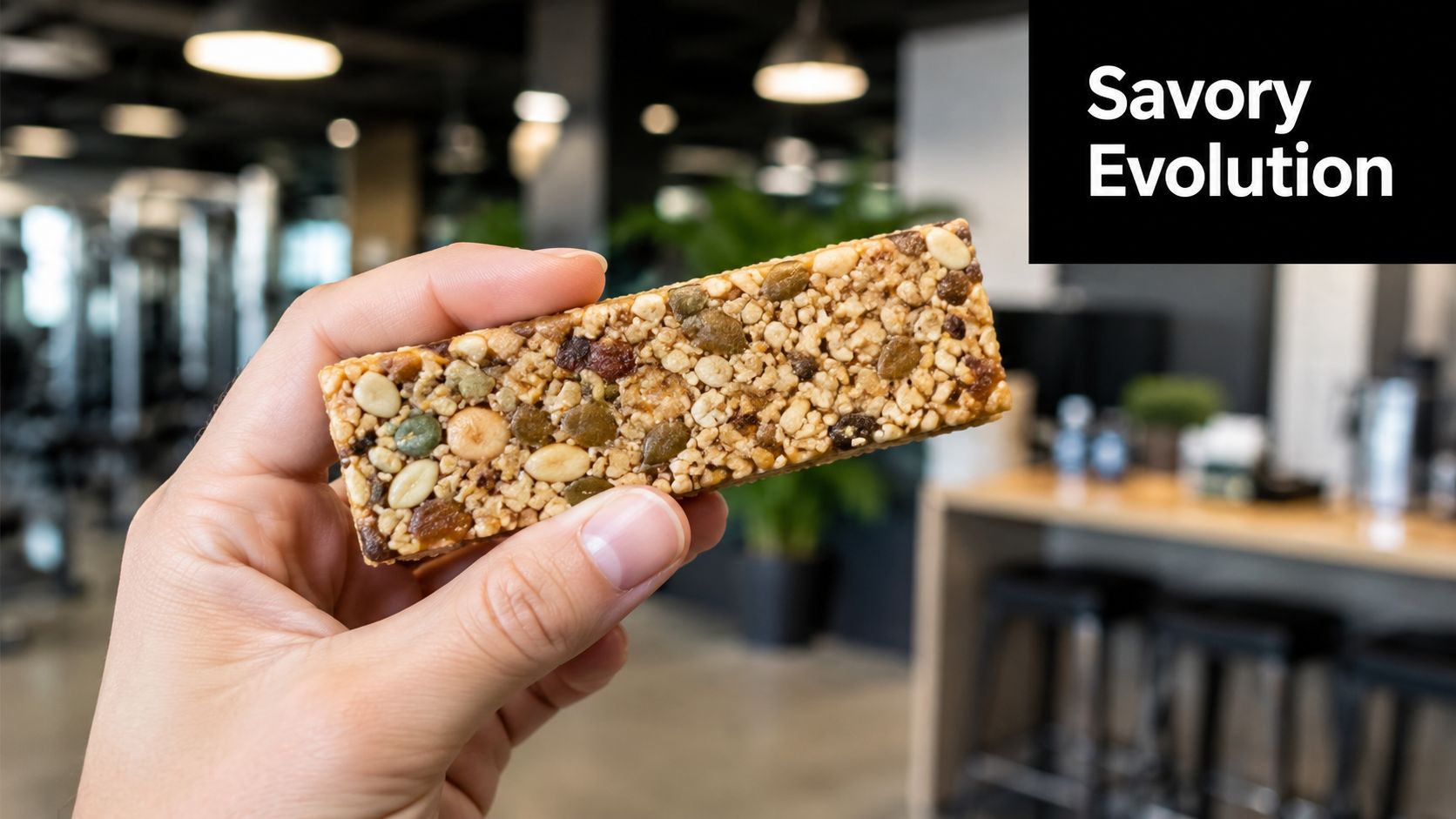
Savory protein crisps answer a different need. They aim for the satisfaction people usually chase in chips or crackers, while keeping protein at the center. That shift matters because it solves flavor fatigue and changes the role of the product. Instead of replacing candy with slightly more protein, it gives people a different category altogether.
Why savory makes sense
Savory formats line up well with what many active people crave. Salt, crunch, cheese-style notes, spice, and a lighter feel can be easier to enjoy than another sweet bar, especially if you already drink sweet shakes or use flavored supplements.
They also open up more ways to eat the product. A savory crisp can work as a snack on its own, but it can also behave more like a pantry ingredient.
Examples that work well:
- Post-workout snack: Easier for some people than a dense sweet bar.
- Desk drawer backup: Crunchy, portable, and less monotonous than sweet options.
- Soup or salad topper: Adds texture and protein in the same move.
- Road trip snack: Closer to the savory experience people often miss when eating “healthy.”
For people comparing lighter-format protein snacks, Rip Van's ultimate guide is a useful read because it shows how shoppers think about portion, convenience, and satiety in this part of the category.
What makes this subcategory compelling
Savory crisps pull together many of the points that matter most. They can be plant-based. They can be allergen-conscious. They can deliver a true crunch without relying on a dessert-style identity.
If you're curious about where this category fits in a broader eating pattern, Gym Snack's overview of savory snacks offers a helpful look at why salty, protein-forward options appeal to so many active eaters.
The bigger idea is that crispy protein products don't have to imitate candy bars forever. Savory crisps show what happens when a product is designed around function, texture, and actual snack satisfaction instead of frosting and nostalgia.
If you want a crunchy, plant-based option built around savory flavor instead of dessert-style overload, take a look at Gym Snack. It's a simple way to get satisfying protein with a clean crunch that fits training, busy days, and everything in between.