

You grab a snack on the way to the gym, expecting a quick boost. Instead, your stomach feels full, your energy drops, and the first set becomes a negotiation with bloating. The same problem can appear during a busy workday, after starting a GLP-1 medication, or when you're trying to eat more protein without relying on dairy-based shakes and dessert-style bars.
The phrase easy to digest snacks sounds simple, but digestion depends on more than an ingredient list. Food form, processing, protein structure, fat content, fiber type, portion size, and timing all influence how comfortably a snack moves through your digestive system. The right choice should provide useful nourishment without leaving you sluggish or overfull.
Understanding Digestibility in Snacks
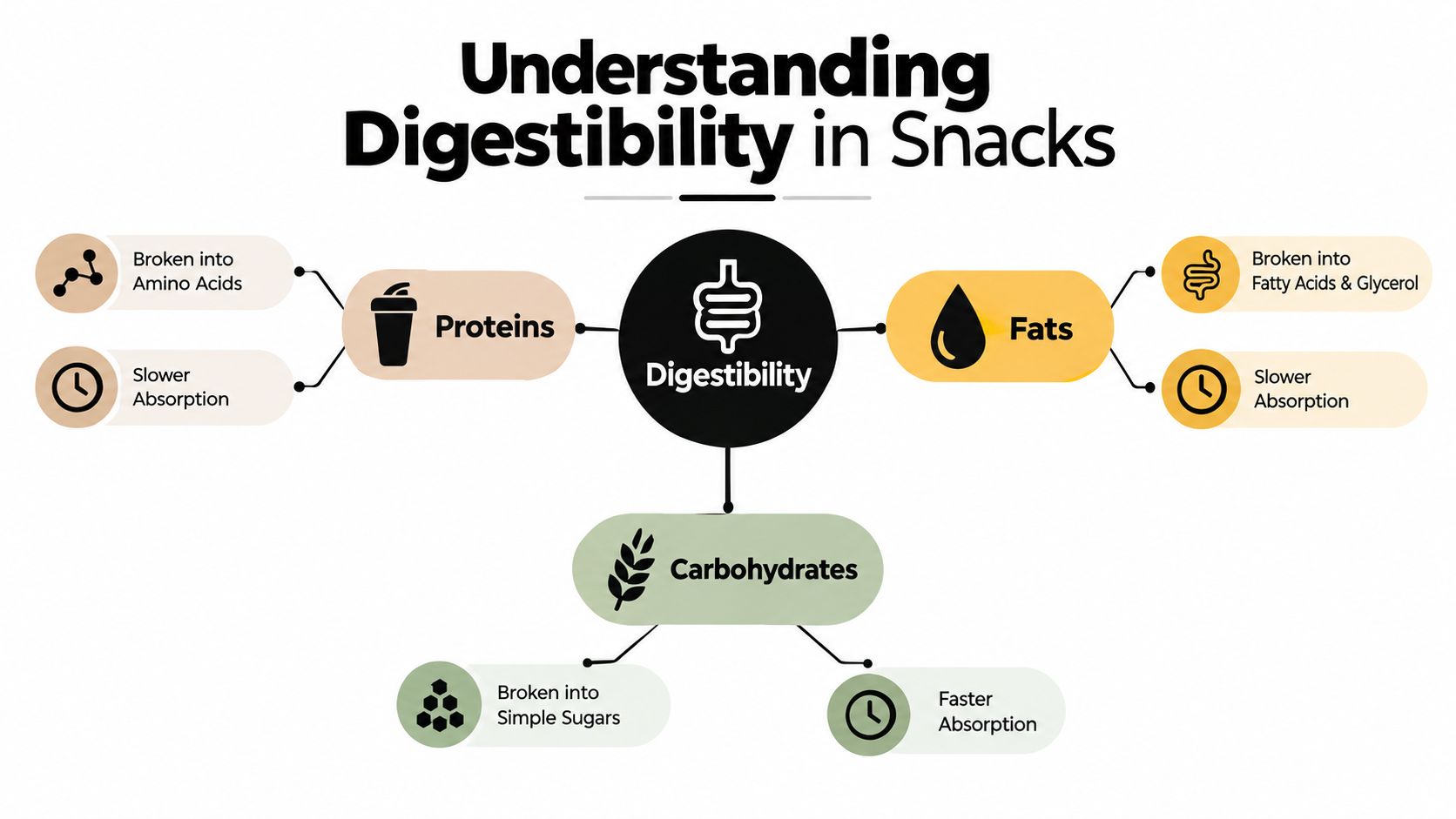
Digestibility describes how effectively your body breaks food down and makes its nutrients available for absorption. Think of your digestive system as a series of roads. A light, smooth snack creates less traffic, while a dense, fatty, heavily textured food can slow the entire route.
Protein is broken into amino acids, carbohydrates into simpler sugars, and fats into fatty acids and related compounds. These nutrients don't move through the body at the same speed, and the physical form of a snack changes how quickly digestive enzymes can reach them. A blended drink, a soft pudding, and a crunchy protein bite may contain similar nutrients, yet they can feel very different in the stomach.
Food form changes the digestive traffic
Processing can remove some of the structural barriers found in whole foods. Isolation concentrates protein, while cooking softens plant structure. Hydrolysis breaks proteins into smaller chains, which may make them easier for digestive enzymes to handle. These changes don't automatically make a product gentle, but they can alter the route from eating to absorption.
A recent digestion study illustrates why food form matters. Plant-based milk received a digestibility score of 83.45 ± 13.35, compared with 71.80 ± 20.88 for a vegetable burger and 69.48 ± 7.95 for a breadstick, according to the research on protein digestibility across plant-based food forms. The comparison doesn't mean every milk is easier than every burger. It shows that the finished food structure can influence nutrient availability.
A snack can also be high in protein yet feel heavy if it contains a dense matrix, large amounts of fat, or poorly tolerated fibers. Whole-plant proteins may be less digestible when intact plant structures and antinutrients limit access, while isolated pea or soy proteins can be processed into a more accessible form.
Practical rule: Judge a snack by its complete formulation and texture, not by its protein source alone.
For broader ideas about ingredients that support comfortable eating, explore these foods for gut health. If digestive symptoms persist, a clinician or registered dietitian can help distinguish ordinary food intolerance from a condition that needs medical attention.
Identifying Common Digestive Triggers
A snack may cause discomfort because of what it contains, how it was processed, or how much you eat at once. Individual tolerance varies, so a food that works for one person may cause symptoms for another. Keeping a short food-and-symptom record can help you spot patterns instead of blaming every digestive reaction on protein.
Fat and dense ingredients
High-fat snacks often feel slow because fat can delay stomach emptying. Fried bites, rich nut-based mixtures, and products coated in oily seasoning may leave you feeling sluggish or overly full, especially before exercise. Look for a greasy surface, several oil ingredients near the top of the label, or a snack that feels unusually heavy for its size.
Fiber that arrives too aggressively
Fiber supports regularity, but a sudden large serving of insoluble fiber can create bulk, gas, or cramping. Bran-heavy crackers, raw vegetable combinations, and snacks built around intact hulls may be difficult before training. Cooking, blending, or choosing a smaller portion can make the same general food category more comfortable.
Added sugars and sweeteners
Sugary coatings can make a snack taste light while delivering a concentrated carbohydrate load. Some people also react to sugar alcohols and other sweeteners, which may draw water into the digestive tract or ferment in the gut. Check the ingredient list for multiple sweeteners rather than relying only on front-of-package language.
Antinutrients and intact plant structure
Whole grains, legumes, and seeds contain compounds that can interfere with nutrient access for some people. Soaking, cooking, fermenting, grinding, or isolating the protein changes that structure. “Plant-based” doesn't identify digestibility by itself. The processing method often matters just as much.
Additives and personal triggers
Emulsifiers, gums, intense spices, and flavor systems may bother sensitive stomachs, although reactions differ widely. If coffee seems to aggravate your morning routine, choosing a gentler option such as Cumbre Coffee low-acid roasts may be worth testing alongside changes to food timing and portion size.
Research across snack trials shows that food form and macronutrient profile can change appetite and later intake, with high-protein savory snacks showing stronger fullness effects than higher-carbohydrate or higher-fat options, as described in this review of protein snacks and satiety. For a related troubleshooting guide, see why protein shakes upset your stomach.
Balancing Nutrients for Smooth Digestion
A comfortable snack needs enough protein to satisfy you without becoming a dense meal. Research on protein-forward snacks commonly uses 20 to 30 grams of protein per snack, and controlled trials found that protein snacks extended satiety by about 17 to 18 minutes compared with carbohydrate control snacks, according to this review of protein and snack satiety.
That range isn't a mandatory prescription. It gives you a useful shopping benchmark. Someone eating shortly before a workout may prefer a smaller serving, while someone replacing a missed meal may need a more substantial combination.
A practical label framework
| Macronutrient | Recommended Amount | Digestive Benefit |
|---|---|---|
| Protein | 20 to 30 g | Supports fullness without relying on a large snack volume |
| Fiber | Moderate amount, adjusted to tolerance | Adds structure and may support steadier energy without excessive bulk |
| Saturated fat | Keep low | Reduces the chance that the snack feels dense or slow |
| Refined sugars | Minimize | Helps avoid a sharp, concentrated carbohydrate load |
Pairing protein with fiber can also improve the way your body handles carbohydrate. A recent study found that consuming protein and/or fiber before carbohydrate reduced post-meal glucose excursions, especially during the first 120 minutes, with the strongest effect when protein and fiber were combined, according to this study on protein, fiber, and post-meal glucose.
Read beyond the front label
Look for ingredients such as pea protein isolate or soy protein isolate when you want a concentrated plant-based source. Isolates have had much of the original food structure separated from the protein, which can make them more practical than a large serving of intact legumes before training.
Fiber needs a personal approach. Inulin and other added fibers may work well for some people but cause gas for others. If your stomach is sensitive, test a modest portion instead of choosing the snack with the highest fiber claim.
Also scan the oil blend. Products built around palm oil or several seed oils may feel richer than expected, particularly when the snack is fried or heavily coated. A shorter ingredient list won't guarantee comfort, but it makes potential triggers easier to identify.
Timing Snacks Around Workouts and GLP-1 Regimens
Digestibility depends on timing because your body has different demands before, during, and after exercise. A large snack eaten immediately before training has less time to settle than a smaller portion eaten earlier. The same principle applies to people following GLP-1-style eating, where early fullness or nausea can make volume harder to manage.

Before exercise
If you're eating roughly 30 to 60 minutes before a workout, choose a modest serving with protein, a manageable amount of carbohydrate, and limited fat. Soft, blended, or airy textures may feel more comfortable than a dense bar or a large handful of nuts. Eat slowly, then adjust the portion based on your own training response.
For longer lead time, you can tolerate a more complete snack. A protein crisp with a small rice cake, or a blended pea-protein drink with a light fruit portion, gives you more flexibility without requiring a heavy meal.
After exercise
Post-workout eating should be practical rather than theatrical. Protein supports recovery, but you don't need to force a large serving when your appetite is low. A split snack can work well: eat part soon after training and finish the rest later if your stomach prefers smaller amounts.
Small portions can be strategic, not inadequate. Comfort makes it easier to eat consistently, especially when appetite is limited.
GLP-1-style eating
People using GLP-1 medications should follow the guidance of their prescribing clinician. For those dealing with early fullness or nausea, a smaller protein-first snack may be easier to manage than a high-volume meal. Plant protein isolates such as pea or soy can reach true ileal digestibility of 92 to 97%, according to this guide to protein snacks for GLP-1-style eating.
You can also dilute a shake with water, choose a softer texture, or divide one serving into separate eating occasions. More practical ideas appear in this guide to GLP-1 protein snacks.
Use the video below for a simple movement break that can pair with a calmer pre-training routine.
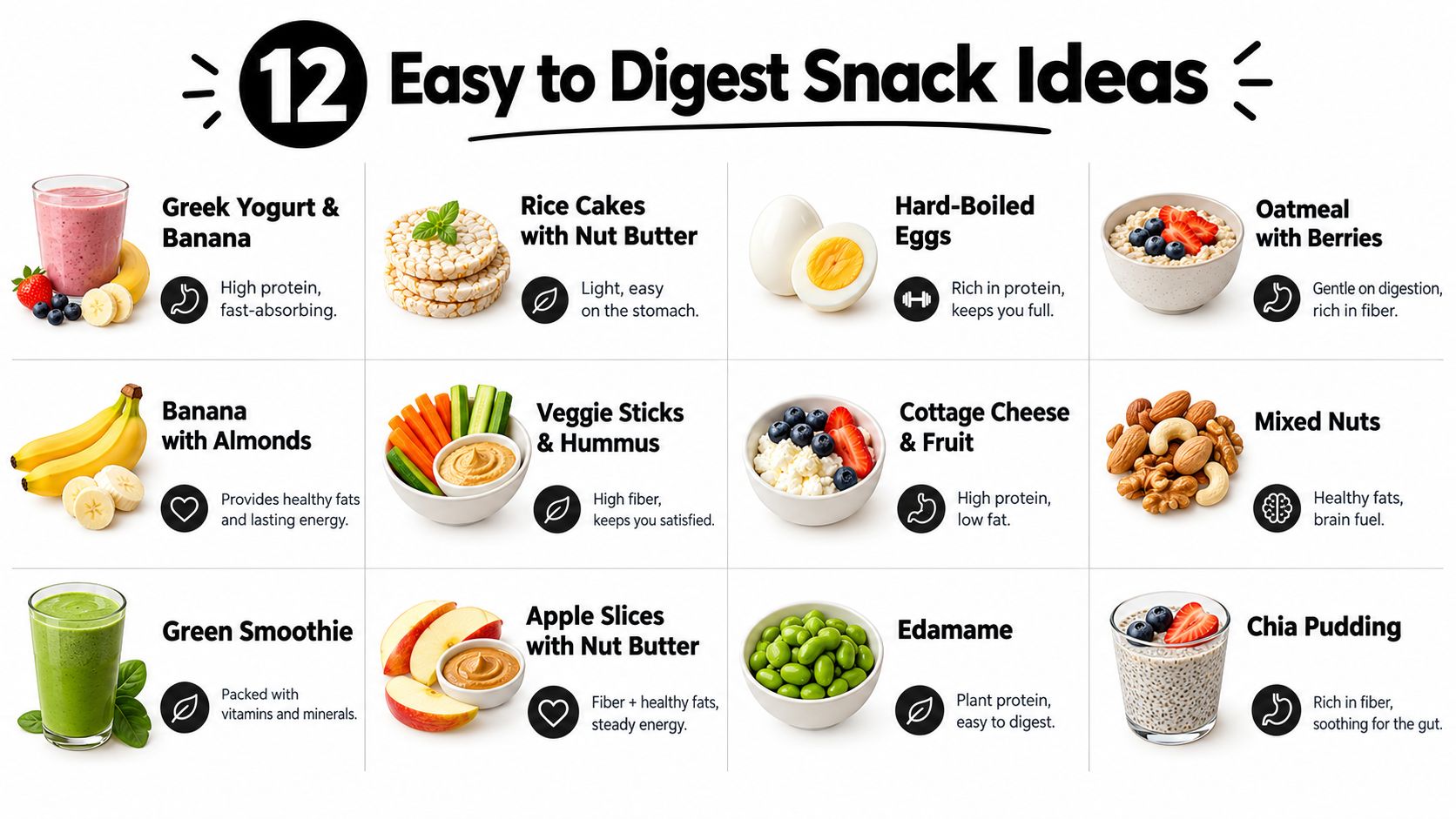
12 Easy to Digest Snack Ideas and Combos
The best snack is the one you can tolerate, prepare, and repeat. These combinations emphasize protein-forward ingredients, moderate portions, and lighter textures. Adjust seasonings and serving sizes if you have a diagnosed digestive condition, food allergy, or medication-related dietary restriction.
- Plant-protein crisps with cucumber: Choose a savory pea-protein crisp and pair it with peeled cucumber slices. The crisp supplies concentrated protein, while the cucumber adds moisture without making the snack dense.
- Blended pea-protein smoothie: Blend pea protein isolate with water and a small banana portion. Keeping the drink simple reduces the number of ingredients you need to troubleshoot if your stomach reacts.
- Rice cake with smooth nut butter: Spread a thin layer of peanut or almond butter on a rice cake. If fat feels heavy before exercise, use less nut butter and add a small protein serving separately.
- Tofu herb bites: Use soft tofu with mild herbs and a little salt. Choose baked or gently warmed tofu rather than a heavily fried preparation if greasy foods cause discomfort.
- Greek yogurt and banana: For people who tolerate dairy, combine plain Greek yogurt with banana. A dairy-free yogurt can replace it, but check whether the alternative contains fibers or sweeteners that you already know bother you.
- Egg whites with toast: Scrambled egg whites and a small piece of toast offer a soft texture and a straightforward ingredient list. Use gluten-free toast if wheat is a personal trigger.
- Protein pudding: A higher-protein pudding can provide a soft format when crunchy foods feel unappealing. Choose a flavor with minimal added sweeteners if you tend to react to sugar alcohols.
- Savory lentil dip with a thin cracker: Keep the dip portion modest and choose a smooth preparation. If whole legumes cause gas, this may not be your pre-workout option, even though the texture is softer.
- Plant milk with a simple protein bite: A glass of plant-based milk paired with a small savory protein snack creates a light combination. Select an unsweetened milk and test one base at a time, since formulations vary.
- Oatmeal with protein isolate: Stir a small amount of pea or soy isolate into cooked oatmeal after it cools slightly. This approach softens the grain structure and lets you control sweetness.
- Savory protein snack with cooked carrots: Pair a crunchy protein bite with tender cooked carrots. Cooking changes the vegetable texture, which may be more comfortable than a raw vegetable side.
- Whey-protein snack for dairy-tolerant eaters: A whey-based option can be useful when dairy works for you. In one trial, a 24 g whey-protein snack improved morning appetite ratings and reduced lunch energy intake compared with water, as reported in this controlled study of whey protein and appetite.
Seasoning doesn't have to mean digestive chaos. Try herbs, nutritional yeast, or a mild cheesy flavor before reaching for intense heat. If training leaves you sore as well as hungry, these quick muscle pain relief tips can complement a recovery routine without changing your snack plan.
Conclusion and Next Steps
Easy digestion starts with the whole snack, not one magic ingredient. Choose a suitable food form, keep fat and personal triggers in check, pair protein with tolerable fiber, and time portions around your workout or appetite. Savory plant-based options can add variety when dairy, shakes, or sweet bars don't suit you.
Try Gym Snack's chef-inspired savory pea-protein snacks when you want a crunchy, dairy-free, soy-free, gluten-free option with bold flavor and protein-focused nutrition. Visit Gym Snack to explore the available flavors and choose a convenient snack for your next workout, workday, or smaller appetite.