

Certain foods just have a special knack for keeping you full and energized. They're typically packed with protein, fiber, and volume. These power-packed foods work by slowing down your digestion, keeping your blood sugar from spiking and crashing, and physically filling up your stomach. It all adds up to sending powerful "I'm satisfied" signals to your brain, which is your best defense against cravings.
The Science of Staying Full
Ever notice how a hearty bowl of oatmeal can keep you going until lunch, but a donut leaves you scouting for snacks an hour later? That’s not a failure of willpower; it’s pure food science. The feeling we call "fullness"—or satiety, if you want to get technical—is a complex conversation between your gut and your brain. Cracking that code is the first real step toward getting a handle on hunger.
Lasting satisfaction really boils down to three core components: protein, fiber, and volume. You can think of these as the three legs of a stool that supports your body’s fullness signals. Each one has a unique job in telling your brain, "Okay, we're good here," and keeping that feeling going for hours.
This diagram gives a great overview of how these factors work together.
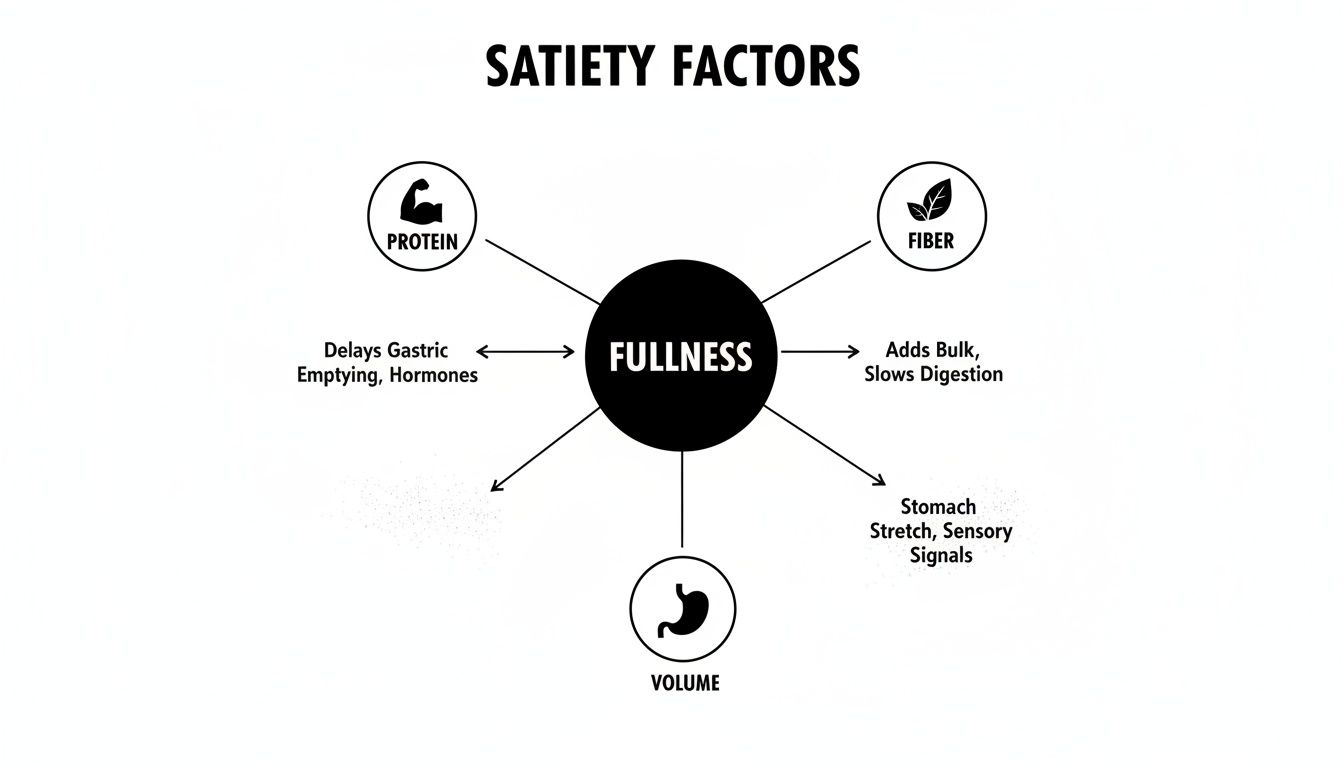
As you can see, true fullness isn't about just one thing. It's a team effort, and it all comes down to how different food properties signal your body.
Decoding Your Body’s Fullness Signals
Your body has two main ways of telling you it's had enough: physical cues and chemical messengers.
When you eat, your stomach literally stretches, sending a direct signal to your brain. This is where volume is a game-changer. Foods with high water or air content, like big salads, soups, or fruits, can fill your stomach and trigger this "stretch" response without piling on the calories.
At the same time, the nutrients in your food are kicking off a chemical cascade by releasing specific hormones that slam the brakes on your appetite. This is where protein and fiber are the undisputed champions.
Satiety is a conversation between your gut and your brain. Protein and fiber are the most fluent speakers, sending clear messages that you're satisfied, while refined carbs and sugars barely whisper.
These hormones are the real MVPs in that gut-brain conversation:
- Cholecystokinin (CCK): Released when you eat protein and fat. It slows down how quickly your stomach empties and sends a strong "I'm full" message upstairs.
- Peptide YY (PYY): Both protein and fiber trigger this gut hormone, which travels to the brain to significantly dial down your appetite.
- GLP-1: Another one released after a meal. It promotes that feeling of fullness and has the added benefit of helping to keep blood sugar stable.
So, choosing foods that keep you full longer is really about picking ingredients that are superstars at triggering these physical and hormonal responses. When you build your meals around protein, fiber, and volume, you’re not just eating—you’re working with your body’s natural hunger-control system. It's a simple strategy that creates lasting energy and helps you break free from the frustrating cycle of cravings.
How Protein Shuts Down Hunger
When it comes to feeling full and satisfied, protein is in a league of its own. It's not just one thing—protein tackles hunger from multiple angles, making it the MVP of satiety.
It all starts with digestion. Your body has to work harder to break down protein compared to fats or carbohydrates. This extra work is called the Thermic Effect of Food (TEF), and it means you're burning more calories just by digesting. This subtle metabolic boost is one of the reasons a protein-rich meal leaves you feeling satisfied for hours.
The Hormonal Heavy-Hitter
But the real magic of protein is how it speaks directly to your brain through your hormones. Eating protein triggers your gut to release powerful appetite-suppressing hormones, most notably Peptide YY (PYY) and GLP-1.
Think of these hormones as messengers that travel straight to your brain's control center and flip the "off" switch on hunger. This is why a high-protein meal can feel so much more substantial and keep cravings away far longer than a meal high in simple carbs.
Let's look at a classic breakfast showdown:
- Breakfast A (Carb-Heavy): A bagel with cream cheese. Sure, it tastes good, but you'll get a quick spike of energy followed by a crash. By 10 AM, your stomach is rumbling, and you’re probably eyeing the vending machine.
- Breakfast B (Protein-Rich): Two scrambled eggs and a scoop of Greek yogurt. This meal provides a slow, steady stream of energy. The protein gets those fullness hormones working, keeping you locked in and focused straight through to lunch.
It’s a simple comparison, but it perfectly shows how making protein a priority can completely transform your day by managing your hunger from the inside out.
Don't Forget Plant-Based Power
And no, you don't have to eat chicken breast all day to get these benefits. Plant-based proteins, especially from pulses like peas, beans, and lentils, are incredibly effective at promoting fullness.
One major review of studies found that people felt 31% fuller after a meal containing pulses (like chickpeas or lentils) compared to a meal that didn't. That’s a massive difference, and it comes down to how these foods help sustain the release of those powerful fullness hormones.
This is exactly why clean plant proteins, like the pea protein we use in Gym Snack, are such a fantastic tool for lasting satiety. Whether you’re an athlete who needs to stay fueled for performance or just someone trying to crush that 3 PM slump at the office, a high-impact protein snack is a game-changer. Looking for more ways to pack it in? Check out our guide on how to increase your protein intake.
Why Fiber and Volume Are Your Secret Weapons
Protein is a big deal when it comes to feeling full, but it’s not the only player on the field. Think of fiber and volume as the secret weapons in your arsenal. They team up to physically take up space in your stomach and put the brakes on digestion, keeping that satisfied feeling around for much longer.
How Fiber Keeps You Satisfied
You can think of fiber as your digestive system's traffic cop. It comes in two main flavors, and both are crucial for fullness.
First, there’s soluble fiber. You'll find it in foods like oatmeal, apples, and beans. When it hits your stomach, it mixes with water and forms a thick, gel-like substance. This gel literally slows down the rate at which your stomach empties, which is a game-changer for preventing those sudden blood sugar spikes and the inevitable energy crash that follows.
Then you have insoluble fiber, the kind you get from whole grains and most vegetables. This type doesn't dissolve. Instead, it acts like a sponge, adding bulk as it moves through your system. That physical bulk stretches the walls of your stomach and intestines, which sends powerful "I'm full, stop eating!" signals straight to your brain.
The Power of Eating for Volume
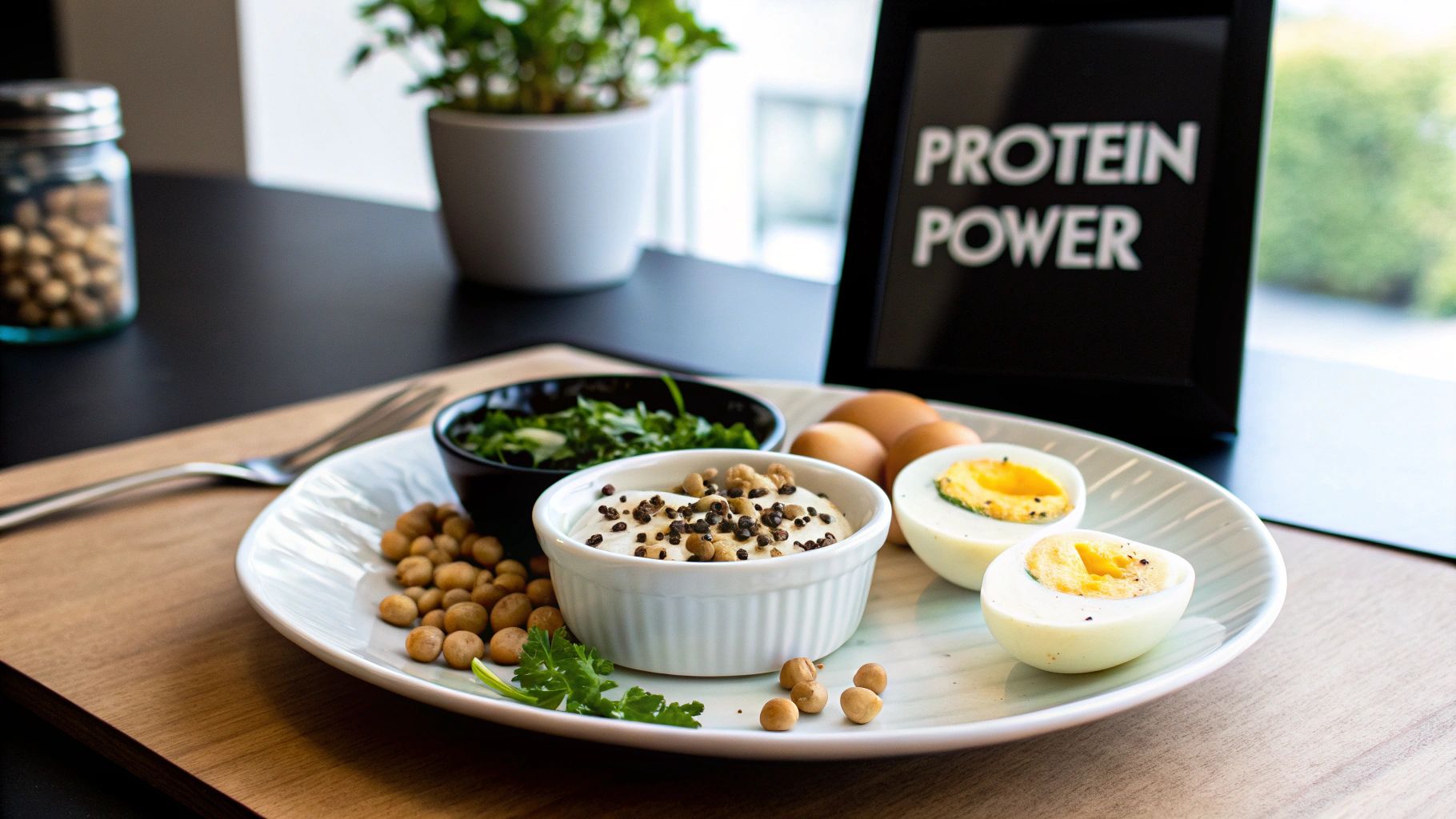
Volume might be the easiest fullness factor to wrap your head around. It's simple: foods with a lot of water or air take up more room in your stomach without costing you a ton of calories. This physical stretching is one of the clearest signals your stomach can send to your brain to tell it you're done.
Here’s a perfect example. Picture 100 calories of raisins next to 100 calories of fresh grapes. The grapes take up way more space, right? That’s why they feel like a much more substantial and satisfying snack. This is the core idea behind "volume eating"—getting the most physical bang for your caloric buck.
Scientists even created something called the Satiety Index to measure this. It ranks foods based on how well a 240-calorie serving satisfies hunger compared to plain white bread (which gets a baseline score of 100%). Unsurprisingly, foods high in volume and fiber consistently crush it on this scale.
Getting the most out of your high-fiber diet also means supporting your digestive system. It’s worth exploring tips for improving gut health with fiber-rich foods to make sure your body is making the best use of everything you eat.
Want to add some high-volume heavy hitters to your plate? Start here:
- Leafy Greens: Spinach, kale, and lettuce are packed with water and fiber.
- Cruciferous Veggies: Think broccoli, cauliflower, and Brussels sprouts for serious bulk.
- Berries: Loaded with water and fiber, they’re perfect for crushing a sweet craving.
- Oatmeal: That soluble fiber creates a thick, hearty meal that sticks with you.
The Best Foods Proven to Keep Hunger Away
Knowing the science behind why certain foods fill you up is one thing, but actually putting it to work means having the right stuff in your kitchen. The good news? You don't need weird, exotic ingredients. The world is full of delicious, powerful foods that leverage protein, fiber, and volume to keep you feeling satisfied for hours.
Let's dig into the evidence-backed champions of lasting fullness.
The Unlikely King of Fullness
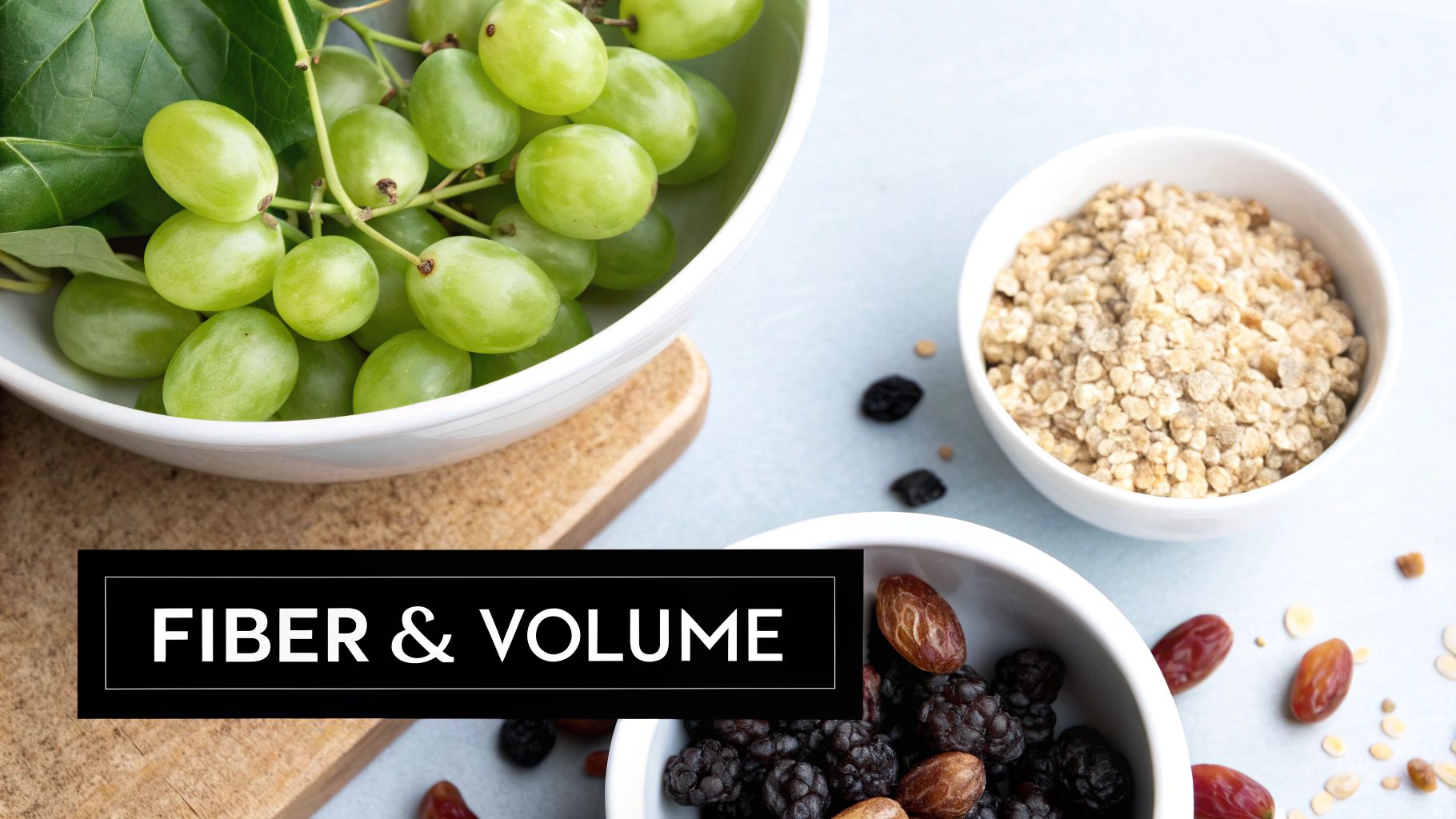
If I asked you to name the most filling food, calorie-for-calorie, what would you guess? Maybe a chicken breast or a bowl of oatmeal? While both are solid choices, the surprising winner is the humble boiled potato.
Believe it or not, the potato sits at the very top of the Satiety Index, a scale designed to measure how well different foods crush hunger.
One landmark study revealed that boiled potatoes scored an incredible 323% on the index. To put that in perspective, they're about seven times more filling than a croissant. This is all thanks to their high water content, a good dose of fiber, and a special type called resistant starch that slows everything down in your digestive system.
The proof is in the pudding (or, in this case, the potato): participants who ate boiled potatoes naturally ate fewer calories at their next meal. It's a testament to the potato's impressive appetite-taming power.
Protein and Fiber Powerhouses
Beyond the potato, a few other food groups are absolute all-stars for keeping hunger in check and your energy levels on an even keel. Think of these as the foundation for building satisfying meals.
- Legumes: Lentils, chickpeas, black beans, and peas are the perfect one-two punch of plant-based protein and slow-digesting fiber. Their complex carbs give you that steady-burn energy, not a quick spike and crash.
- Eggs: A classic for a reason. Eggs are packed with high-quality, complete protein that has a major impact on fullness. It's why an egg-based breakfast is so effective at warding off those mid-morning snack attacks.
- High-Protein Dairy: Greek yogurt and cottage cheese are fantastic because they deliver both casein and whey protein. Casein is the slow-releaser, digesting over several hours to keep you feeling full and fueled.
Building your meals around these foods is a simple, effective strategy. If you're hungry for more ideas, we've put together a complete list of the best foods for appetite control.
A simple but powerful strategy is to combine these food groups. For instance, a big salad topped with grilled chicken (protein), a scoop of chickpeas (fiber), and a sprinkle of almonds (healthy fat) creates a trifecta of satiety that will easily carry you through the afternoon.
Nuts, Seeds, and Lean Meats
Last but not least, don't underestimate the impact of healthy fats and lean, dense protein sources.
Nuts like almonds and walnuts, plus seeds like chia and flax, offer a satisfying trio of protein, fiber, and healthy fats. This combination physically slows down how quickly your stomach empties, which is a game-changer for staying full.
Likewise, lean meats and fish are incredibly effective. A simple chicken breast or a piece of salmon is almost pure protein, which has the most powerful effect on those satiety hormones we talked about. For a deeper dive into how your food choices can prevent those dreaded energy slumps, check out this excellent guide on foods that stabilize blood sugar.
Your Guide to Satiating Foods
To make it even easier, here's a quick-reference table to help you build meals that truly last. Think of it as your cheat sheet for crushing hunger.
| Food Group | Key Satiety Nutrients | Easy Ways to Eat |
|---|---|---|
| Legumes | Fiber, Plant-Based Protein | Add chickpeas to salads, make lentil soup, or whip up black bean burgers. |
| Lean Protein | Protein (All Types) | Top salads with grilled chicken, snack on boiled eggs, or bake a filet of fish for dinner. |
| High-Protein Dairy | Casein & Whey Protein | Start your day with Greek yogurt, or have cottage cheese with fruit for a snack. |
| Vegetables | Fiber, Water (Volume) | Snack on raw carrots and bell peppers, add spinach to smoothies, or roast broccoli. |
| Whole Grains | Complex Carbs, Fiber | Enjoy a bowl of oatmeal for breakfast, or choose quinoa as a side for dinner. |
| Nuts & Seeds | Healthy Fats, Protein, Fiber | Sprinkle chia seeds on yogurt, snack on a handful of almonds, or add walnuts to a salad. |
Keeping these options in mind when you plan your meals or grab a snack is the single best way to stay ahead of hunger and keep your energy steady all day long.
Snacking Smarter for Lasting Energy
Let's be honest, snacking is often where a good day of eating takes a nosedive. We reach for something quick, get a brief sugar-fueled lift, and then an hour later, the energy crash hits—and we're even hungrier than before.
But smart snacking isn’t about willpower or ignoring your hunger. It's about choosing foods that work with your body to keep you feeling full and energized. The trick is to build your snacks around the power trio we’ve been talking about: protein, fiber, and a bit of healthy fat. This combination is the ultimate formula for slowing digestion, keeping your blood sugar steady, and shutting down those distracting hunger pangs until your next proper meal.
The Protein-First Snacking Strategy
When you’re building a snack that's truly designed to fill you up, make protein the star of the show. It has the biggest impact on satiety hormones, making it your most valuable player for crushing cravings and stopping you from overeating later.
This is exactly why a savory, high-protein option like Gym Snack works so well. A lot of protein snacks are basically candy bars in disguise, loaded with sugar. Gym Snack gives you that satisfying crunch without the sugar crash, fitting perfectly into a fullness-focused eating plan.
Each bag comes packed with 15g+ of clean pea protein, which is a powerful signal to your body to release those "I'm full" hormones like PYY and GLP-1.
But it’s not just about what’s inside. The experience of eating matters, too. The physical act of chewing something with a real crunch sends its own signals to your brain that you're getting full, making the food even more satisfying.
Research confirms that high-protein plant-based snacks are fantastic for enhancing satiety. And it turns out that even just chewing more can give fullness hormones like GLP-1 a boost. Gym Snack's crunchy, protein-first formula is built on this science, using its powerful protein content and satisfying texture to help you stay full and energized. You can dive deeper into the science behind how protein and chewing impact fullness.
Building the Perfect Satiating Snack
By being a little more intentional with your snack choices, you can easily bridge the gap between meals without feeling like you've sabotaged your day. Start with a solid protein base, then add some fiber or healthy fats to create a snack that delivers both immediate satisfaction and long-term energy.
Here are a few powerhouse snack ideas to get you started:
- A bag of Gym Snack: A no-brainer for a savory, crunchy, high-protein fix.
- Apple slices with almond butter: You get fiber from the apple plus protein and healthy fats from the almond butter. A classic for a reason.
- Greek yogurt with berries: The yogurt provides slow-digesting casein protein, and the berries add a hit of fiber and antioxidants.
- Hard-boiled eggs with carrot sticks: High-quality protein from the eggs meets the high-volume crunch and fiber of the carrots.
Need more ideas? Check out our full guide on delicious and filling high-protein savory snacks.
Putting It All Together: Your Satiety-Focused Meal Plan
Knowing what keeps you full is one thing; putting that knowledge into practice day in and day out is where the magic really happens. This isn't about a rigid, restrictive diet. It’s about creating a flexible game plan that uses protein, fiber, and sheer food volume to your advantage, keeping you fueled and satisfied.
Think of it like building a house. You wouldn't start without a solid blueprint, right? Each meal is a cornerstone, and if you build it right, the whole structure—your entire day—will be solid and free from those late-afternoon "craving collapses."
Sample Meal Blueprints
So, what does this look like in the real world? Here are a couple of templates you can borrow from and tweak to fit your own life, whether you’re rushing between meetings or recovering from a killer workout.
-
For the Busy Professional: Kickstart your day with a protein-packed breakfast, like Greek yogurt topped with berries and a sprinkle of nuts. This will help you power through morning meetings without your stomach rumbling. For lunch, think big: a huge salad loaded with grilled chicken and chickpeas gives you both protein and volume. To crush that 3 p.m. slump, have a savory, high-protein snack ready to go.
-
For Post-Workout Recovery: After you've pushed your body, it's crying out for protein to repair muscle and quality carbs to restock energy stores. A quick fix is a smoothie made with protein powder, a banana, and some spinach. If you have time for a proper meal, something like baked salmon with a side of quinoa and roasted broccoli is perfect.
Here’s a pro tip: front-load your protein. Research consistently shows that a protein-heavy breakfast dramatically improves appetite control for the rest of the day and can even curb those pesky evening cravings. Aim for 20-30g of protein in your first meal to set the tone.
A little prep goes a long way. Spend an hour on Sunday boiling some eggs, cooking a batch of quinoa, and chopping up raw veggies. Suddenly, throwing together a satisfying meal during a hectic week becomes incredibly simple. When you plan ahead, you’re not just eating—you’re strategically taking control of your hunger and energy.
Ready to conquer your cravings with a snack that’s built for fullness? Gym Snack delivers over 15g of clean pea protein in every savory, crunchy bag. Discover the freedom that comes from controlling your hunger at https://gymsnack.com.