

You're standing in front of the cooler with five minutes until you're back on the highway. You want something that won't wreck your macros, leave you hungry an hour later, or turn a simple snack stop into a fast-food detour. The row of bottled shakes looks like an easy answer.
Sometimes it is. Sometimes it's just a dessert drink wearing activewear.
That's why gas station protein shakes confuse so many people. The label says protein, the front of the bottle says lean or fit or muscle, and the nutrition panel tells a very different story. If you lift, travel for work, or you're trying to keep appetite under control, that difference matters a lot.
The Road Trip Dilemma
You stop for gas, head inside for water, and end up staring at a cooler full of drinks that all seem healthy enough. A chocolate shake with a bold protein callout feels a lot smarter than chips or candy. For plenty of travelers, that's exactly why these products have become a default backup meal.
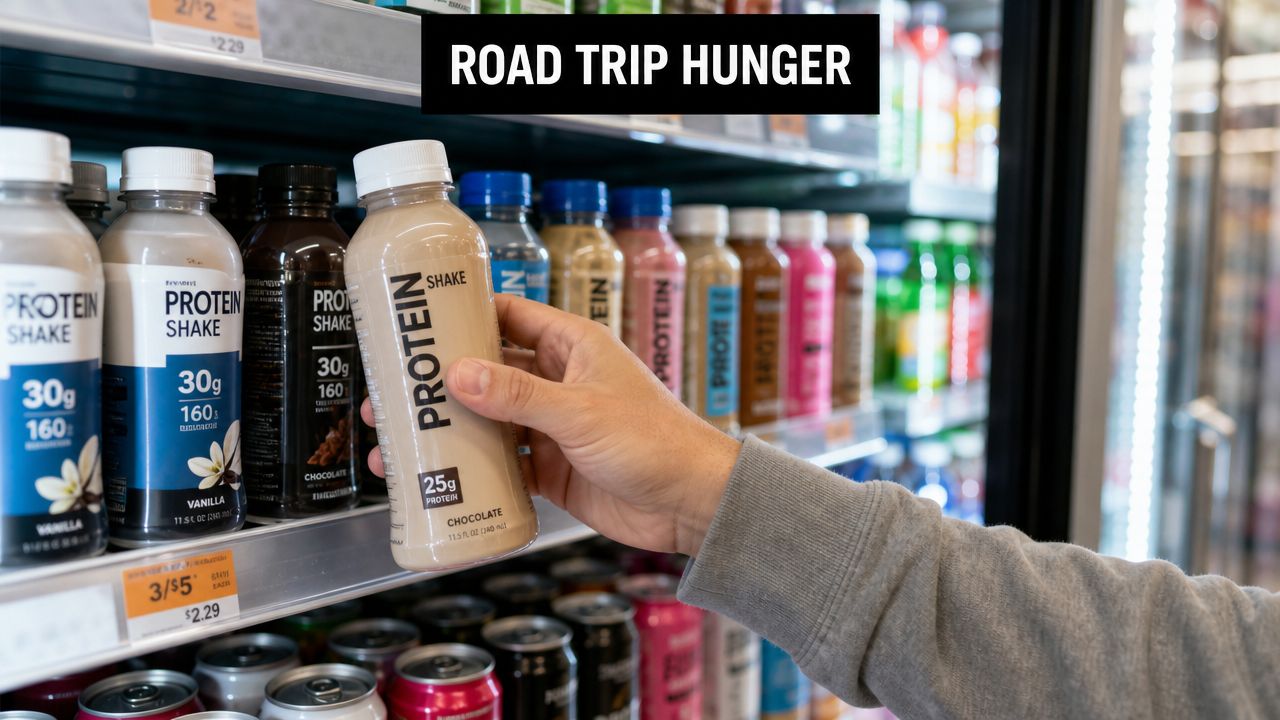
That shift isn't small. The ready-to-drink protein beverage category was valued at USD 2.11 billion in 2026 and is projected to reach USD 3.06 billion by 2031, with North America holding 38.40% of global share in 2025 according to Mordor Intelligence's ready-to-drink protein beverage market analysis. In real life, that means protein shakes are no longer niche gym products. They're part of normal grab-and-go retail.
Why the cooler creates confusion
The problem is that these bottles serve very different buyers.
One shake is built like a compact recovery drink. Another is aimed at casual dieting. Another is basically a sweet dairy beverage with a protein halo. From three feet away, they can look almost identical. If you're trying to eat well on the road, that makes convenience feel risky.
People usually ask me the same question in different words. “Is this a good option, or just the least bad option?”
Gas station protein shakes are useful when they solve a real problem. They're a poor choice when you buy them on branding alone.
Who has the most to gain from choosing well
It's especially important if you're trying to hit a daily protein target, avoid a drive-thru meal, or manage appetite during long travel days. That includes lifters, busy commuters, and people using nutrition to stay full between meals. It also includes travelers who are trying to avoid the classic road pattern of under-eating protein early, then overeating later.
If travel days routinely throw off your food choices, this guide on how to eat healthy while traveling for work is a useful companion. The skill that matters most, though, is knowing how to judge the bottle in your hand before you buy it.
Why Protein Shakes Are Everywhere
Protein didn't stay in the bodybuilding aisle. It moved into mainstream eating.
A 2025 Cargill report found that 61% of consumers increased their protein intake in 2024, up from 48% in 2019, and the trend was linked in part to GLP-1 medication users looking for higher-protein foods for satiety, as covered by CSP Daily News on convenience stores and GLP-1 dietary shifts. That helps explain why gas station coolers now stock protein shakes right next to energy drinks and bottled coffee.
Protein is now a default health cue
For years, people associated protein shakes with muscle gain only. That's changed. Many buyers now reach for them because they want something filling, portable, and simple when they don't have time for a sit-down meal. The gym crowd still buys them, but so do office workers, road trippers, and people trying to keep meals more structured.
Mintel also noted in that same CSP coverage that the broader U.S. protein market was worth $114.4 billion in 2024 and was projected to grow at 1.9% annually through 2028. The practical takeaway is straightforward. Protein has become ordinary consumer behavior, not specialty sports nutrition.
The same trend created a quality problem
When a category goes mainstream, products spread out across a wide quality range. Some companies formulate for actual protein intake. Others formulate for taste, shelf appeal, and diet-language marketing. That's why one bottle can work well as a travel meal bridge while another leaves you with a sugar hit and not much staying power.
If you're not sure what your own target should look like, it helps to calculate ideal protein intake before you rely on convenience foods to fill the gap. Once you know whether you're trying to add a little protein or cover a major chunk of the day, the cooler gets easier to read.
Why this matters for GLP-1 users and appetite control
People using GLP-1 medications often do better with foods that deliver meaningful protein without becoming heavy, greasy, or overly sweet. That makes a well-formulated ready-to-drink shake useful. It also makes a low-protein, high-sugar bottle a frustrating choice, because it takes up appetite without doing much to support intake quality.
That's the key context. Gas station protein shakes are everywhere because demand for convenient protein is real. But convenience doesn't guarantee that the bottle is built for your goal.
The 5-Second Label Check
When you're in front of the cooler, don't start with the brand. Start with three numbers on the nutrition panel: protein, calories, and added sugar.
That's the fastest way to separate a useful shake from a liquid snack that only sounds healthy.
Start with the protein number
A quality ready-to-drink shake often lands around 30 g protein and 160 kcal with 0 g added sugar, which works out to about 5.2 g protein per 100 kcal, based on the benchmark described by Premier Protein's product nutrition information. That's efficient. You're getting a lot of protein for not many calories.
Compare that with the weak end of the category. A poor “slim” shake might give you only 7 to 10 g protein with 20 to 28 g added sugar in an 11 oz bottle at 180 to 220 kcal, a pattern described in this gas station protein shake comparison. That's the kind of bottle that disappoints people. It looks functional and performs like a sweetened drink.
Practical rule: If the protein number is low, nothing else on the front label can rescue it.
Use a traffic light system
This is the simplest screen I use.
- Green light: A shake with strong protein, controlled calories, and little to no added sugar.
- Yellow light: Decent protein, but calories climb fast or sweetness looks excessive.
- Red light: The bottle says protein, but the dose is low and added sugar is doing too much of the work.
You don't need perfect math in the aisle. You just need a quick instinct for efficiency.
Good Shake vs. Bad Shake A Nutritional Snapshot
| Nutrient | High-Quality Shake (Goal) | Low-Quality Shake (Avoid) |
|---|---|---|
| Protein | Around 30 g | 7 to 10 g |
| Calories | Around 160 kcal | 180 to 220 kcal |
| Added sugar | 0 g is ideal | 20 to 28 g |
| Protein density | About 5.2 g per 100 kcal | Roughly 3.2 to 5.6 g per 100 kcal |
| Real-world use | Better for satiety and muscle support | More like a sweet convenience drink |
The 5-second scan in order
- Flip to protein first. If it's under about 15 g, it's usually a weak buy for muscle maintenance, appetite control, or post-workout use.
- Check total calories next. More calories aren't always bad, but they should buy you meaningful protein.
- Look at added sugar. Lower is better if the goal is satiety and cleaner travel nutrition.
- Judge the ratio. A bottle that gives you strong protein without a calorie blow-up usually wins.
If you want extra help understanding what protein labels are really telling you, this breakdown of protein shake nutritional information is worth bookmarking.
Most shoppers overvalue the word protein on the front and undervalue the ratio on the back. The ratio is what tells you whether the bottle is doing a real job.
Decoding the Ingredient List
After the numbers pass the test, check the ingredient list. Two shakes with similar macros can feel very different once you drink them.
Protein source matters
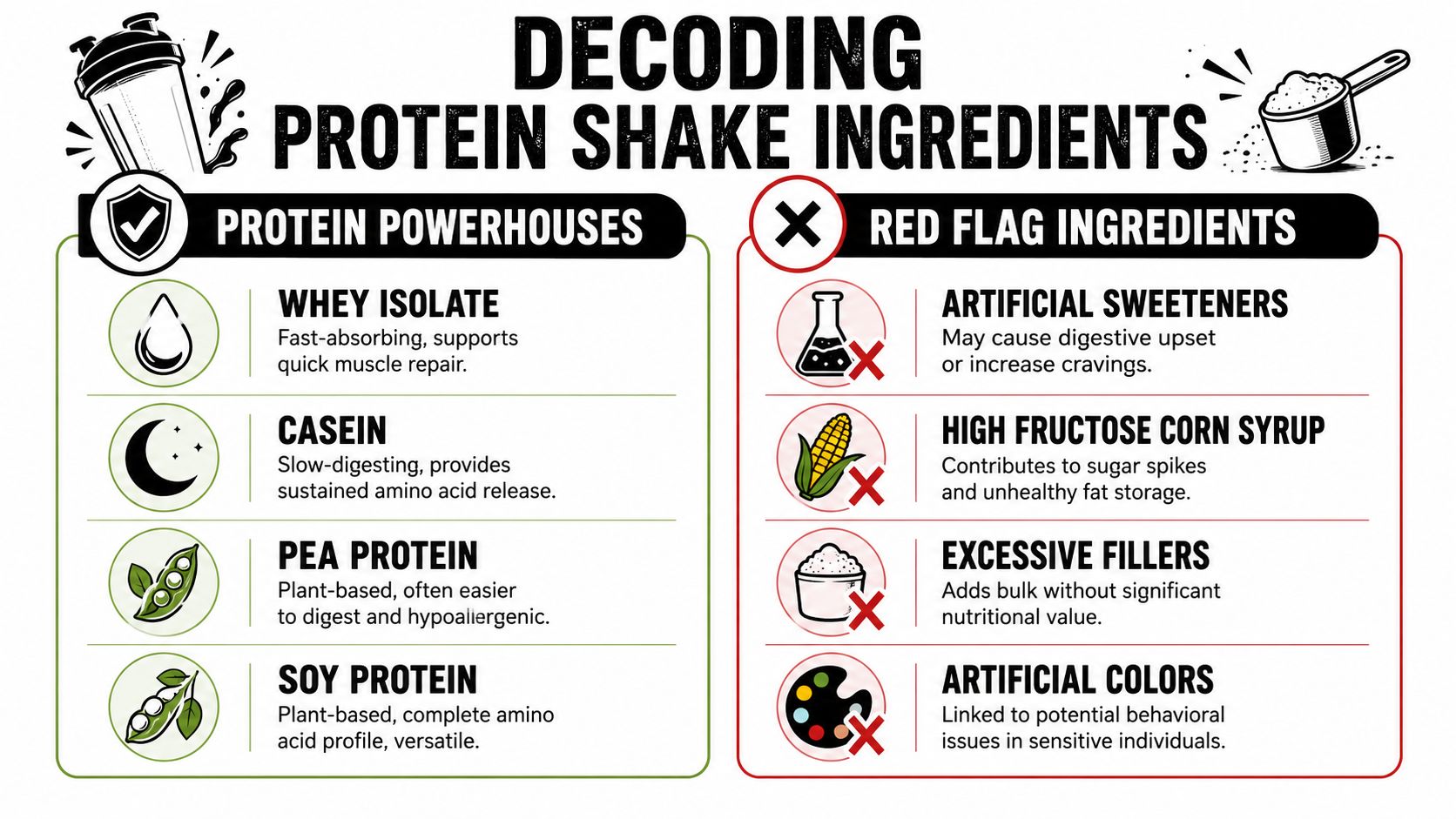
Whey isolate is often the cleanest dairy-based choice for people who want fast-digesting protein with less lactose. Whey concentrate can still work, but it's usually a cheaper form and may come with more carbs or fat. Some people tolerate it fine. Others notice bloating.
Casein digests more slowly, so it can feel heavier. That isn't automatically bad, but it changes the drinking experience. For plant-based options, pea protein and soy protein are the most common serious contenders. A good plant-based shake can work well, but some formulas need more flavoring and texture agents to stay drinkable.
Watch for the extras that make a shake feel worse
Here, I become cautious.
A bottle can have decent macros and still be packed with ingredients that make it harder to digest or easier to overconsume. Artificial sweeteners, heavy thickeners, and long lists of fillers don't make a shake unusable, but they do change the trade-off.
Here are the common things I tell people to notice:
- Artificial sweeteners: These can help keep sugar low, but some people get digestive upset or a lingering aftertaste.
- High fructose corn syrup: If you see this in a product marketed as a health-forward shake, that's a bad sign.
- Excessive fillers: A long ingredient list full of stabilizers and texture builders often points to a formula that's doing more cosmetic work than nutritional work.
- Artificial colors: Not a performance issue by itself, but usually unnecessary in a product you're buying for function.
A shake should solve hunger and support your goal. If the ingredient list reads like a chemistry set and the bottle leaves you feeling worse, it failed.
How to think about trade-offs
Not every additive is a dealbreaker. Shelf-stable beverages need stabilizers. Flavored products need sweetening systems. The better question is whether the ingredient list matches the purpose of the drink.
If you need a practical road option, a short and sensible ingredient list usually beats a flashy front label. The fewer surprises between the first ingredient and the last, the better the odds that the shake performs like food instead of marketing.
Smarter Alternatives for On-the-Go Fuel
Sometimes the best gas station protein shake is no shake at all.
If the cooler options are weak, you're often better off building a quick protein snack from the rest of the store. That's especially true when you want something high in protein without added sugar or a calorie pile-on, which is a question anecdotal traveler coverage shows people are actively trying to solve in real life, as discussed in this travel-focused YouTube video about using protein shakes to stay on track.
Better gas station picks when the shake aisle disappoints
In most decent convenience stores, I'd scan for simple foods first.
- Hard-boiled eggs: High utility, minimal nonsense, and much more filling than a sweet drink.
- Cheese sticks or similar snack cheese: Easy protein, easy portion control.
- Greek yogurt: Good option if you can tolerate dairy and don't mind eating with a spoon.
- Nuts: Better as a support snack than a primary protein source, but useful for staying out of the candy aisle.
- Fruit plus protein: A banana with eggs or cheese works better than fruit alone.
That combination approach often beats a mediocre shake because it gives you chewing, texture, and better appetite control. Drinking calories goes down fast. Solid food slows people down.
Planning beats reacting
The strongest travel nutrition strategy is still bringing your own backup food. A shelf-stable, protein-forward snack gives you more control than whatever happens to be left in the cooler at a rural exit stop.
For travelers doing longer drives or RV trips, practical meal prep matters more than people think. This Motor Sportsland RV cooking guide is useful if you want ideas for eating more intentionally on the road instead of improvising every stop.
This video adds a few practical ideas for road-friendly nutrition swaps:
When a portable snack kit is the real solution
If you travel often, keep a small system.
Pack a few items that are high in protein, shelf-stable, and not dessert-flavored. That last part matters. A lot of people burn out on sweet shakes and bars long before they burn out on savory foods. Crunch helps too. It feels more like eating and less like compensating.
If you need ideas beyond bottled drinks, this guide to alternatives to protein shakes is a smart place to start. The main goal is simple. Don't force a shake to do a job that a better snack could handle more effectively.
Your New Strategy for Road Trip Nutrition
The cooler doesn't need to be confusing anymore. You only need a repeatable filter.
The mental checklist that works fast
When you pick up a bottle, ask four questions:
- Is the protein meaningful? A weak protein dose usually means weak staying power.
- Are the calories earning their place? If calories rise without much protein, put it back.
- Is added sugar doing too much of the work? If yes, it's probably not the shake you hoped it was.
- Does the ingredient list look purposeful? Clean and functional beats crowded and gimmicky.
That's the whole system. It takes seconds once you've used it a few times.
Buy the bottle for what's on the back label, not what's printed on the front.
What works and what usually doesn't
Gas station protein shakes work best when they act like compact nutrition. They don't work well when they're built like sweetened convenience drinks with a little protein added for marketing. The difference is usually obvious once you look at protein density, sugar, and ingredients instead of slogans.
The more often you travel, the more this becomes less about one purchase and more about a pattern. Good road nutrition isn't perfection. It's reducing the number of bad default choices.
The goal is control, not restriction
You don't need to fear convenience stores. You need to stop outsourcing your decision-making to packaging.
A good shake can absolutely save the day. So can eggs, yogurt, cheese, nuts, or a planned snack from home. The win is knowing the difference before you swipe your card. Once that becomes automatic, road trips stop feeling like a nutrition setback and start feeling manageable.
If you want a protein option that doesn't rely on sugary shake formulas or dessert-bar flavors, Gym Snack offers savory, plant-based protein snacks built for travel, training, and busy days. They're a smart backup to keep in your bag when you'd rather control your nutrition than gamble on the gas station cooler.