

Good protein shakes start with a great foundation, and honestly, nothing beats vanilla protein powder. Its subtle, creamy flavor is the perfect blank canvas. You can go in any direction—a bright, fruity shake after a workout, or something rich and decadent when you need a satisfying meal replacement. It all comes down to picking a quality powder and knowing what to pair it with.
Why Vanilla Protein Is Your Ultimate Shake Foundation
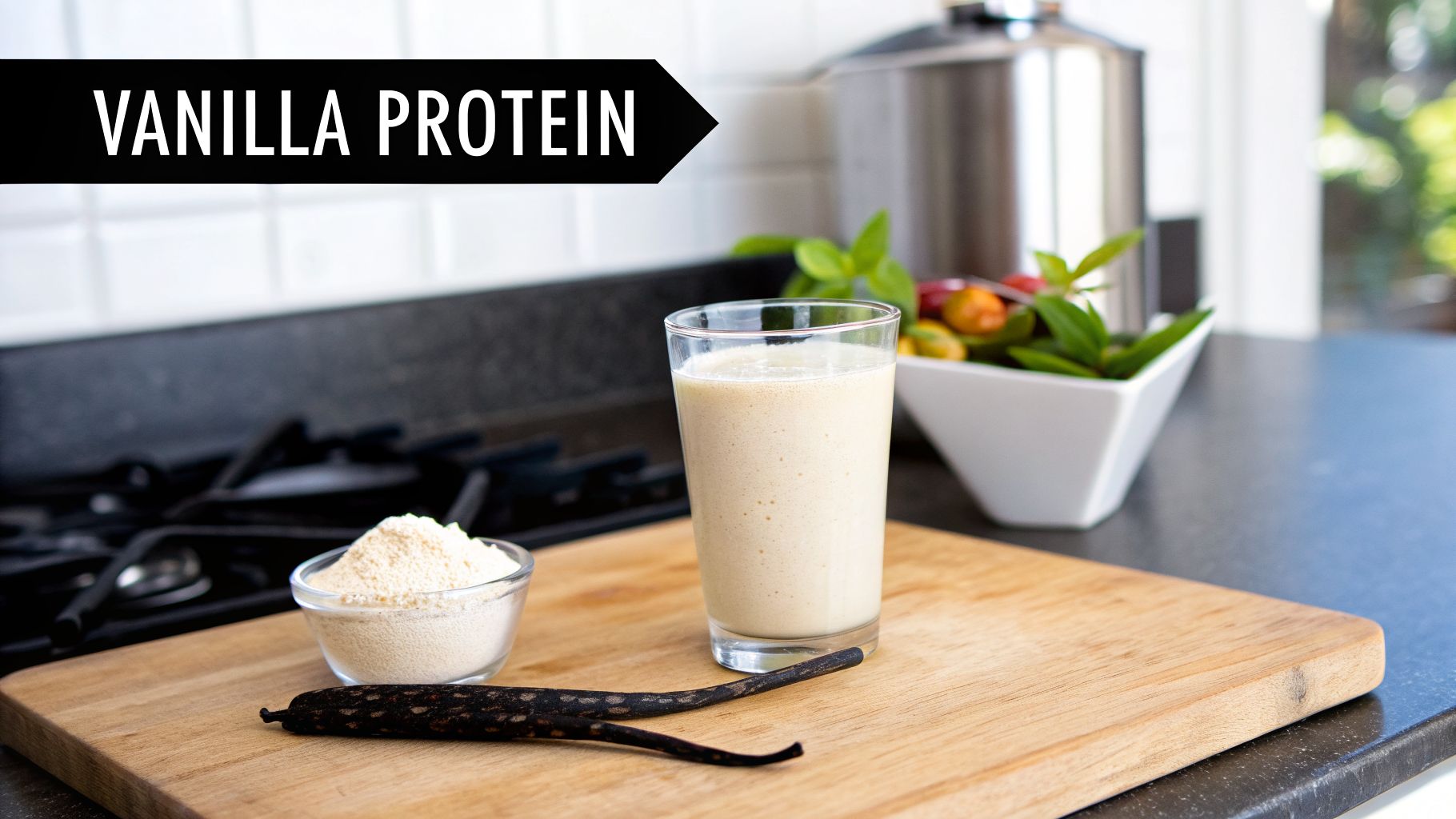
Think of vanilla protein as the most valuable player in your kitchen. Sure, chocolate and strawberry are great, but they tend to dominate everything they're mixed with. Vanilla is different. It doesn't steal the show; it supports the other flavors, making it the ideal starting point for anyone who wants to make consistently good protein shakes with vanilla protein without getting bored.
And it's not just us—the numbers back it up. The vanilla whey protein market is booming, with projections showing it could hit $5,000 million by 2025. This massive growth is all thanks to more people understanding protein's role in muscle support and weight management. You can see this trend reflected across many recent industry analyses.
Choosing the Right Vanilla Base
The vanilla protein you start with will make a huge difference in your shake's final taste and texture. Each type has its own personality, and knowing the basics is key to getting the results you want.
- Whey Protein: This is the go-to for most people, especially for post-workout recovery, because it absorbs quickly. Whey usually has a lighter, milkier taste and mixes into a thinner consistency that’s easy to drink.
- Casein Protein: The complete opposite of whey, casein is a slow-digesting protein. This makes it perfect for a meal replacement shake that keeps you full for hours or a pre-bedtime snack to fuel muscle repair overnight. It whips up into a much thicker, almost pudding-like texture.
- Plant-Based Protein (Pea, Soy, Rice): If you're dairy-free or vegan, these are fantastic alternatives. Pea protein, in particular, has become really popular for its creamy texture and fairly neutral, slightly earthy flavor that works well in shakes. Plus, they’re often easier on the stomach for anyone with lactose sensitivity.
I always tell people to check the ingredient list first. A high-quality vanilla powder should be simple and clean. Steer clear of brands that load their powders with artificial sweeteners, gums, and fillers. They just leave a weird chemical aftertaste and ruin the natural flavors you're trying to add.
At the end of the day, the right powder is the one that fits your diet, your budget, and your fitness goals. Whether you’re a serious athlete or just trying to get a little more protein in your day, starting with a good vanilla base opens up a world of delicious possibilities.
Getting the Texture Just Right
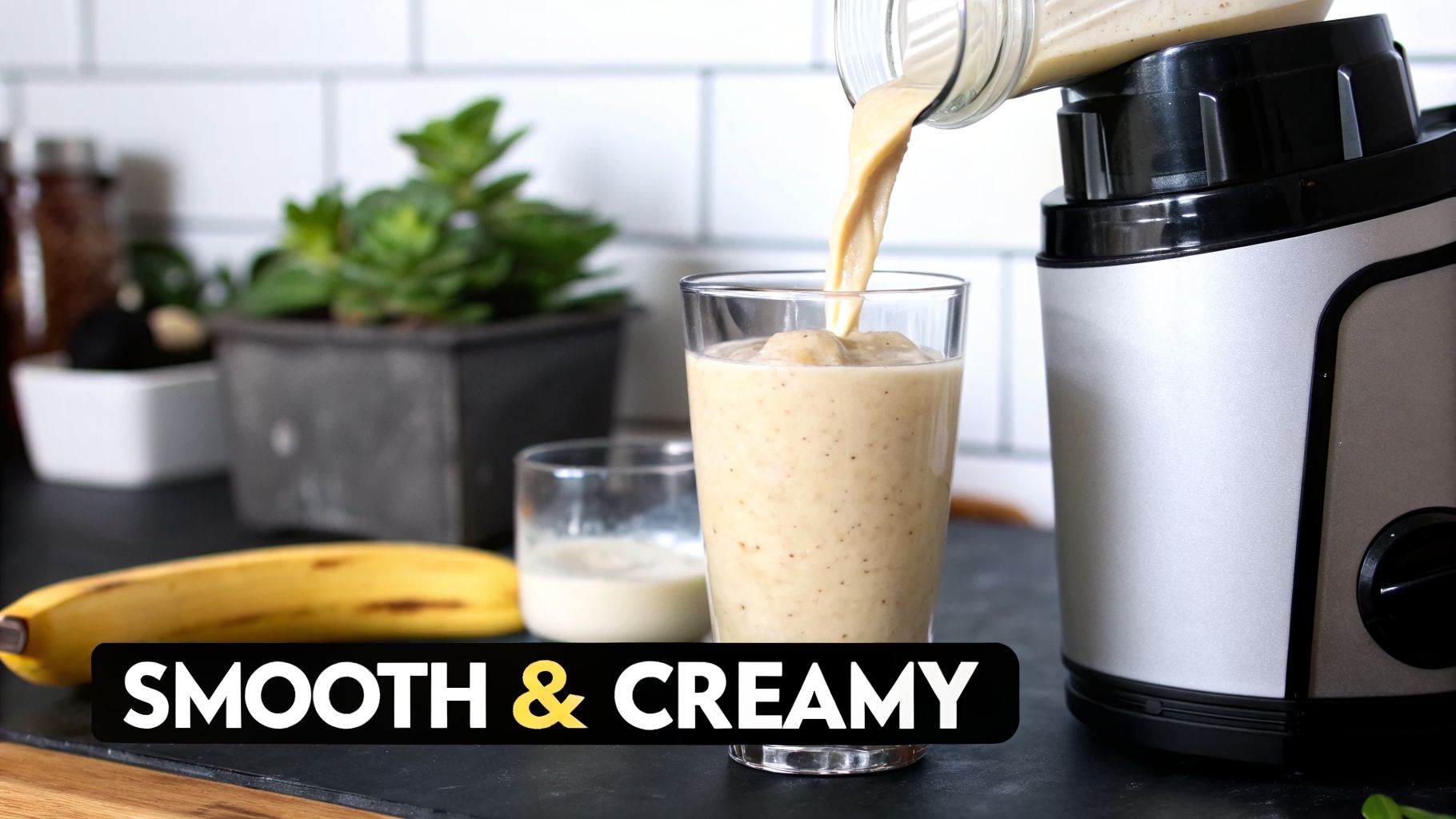
We've all been there: you mix up a shake, take a sip, and it's... gritty. A lumpy, thin protein shake is something you endure, not enjoy. But turning that chalky drink into a creamy, delicious treat isn't about luck—it's all about technique.
Here's a simple game-changer: always add your liquid to the blender before the protein powder. This one small step prevents that frustrating clump of dry powder from getting cemented to the bottom of your blender, ensuring everything mixes together smoothly right from the start.
The Liquid-to-Powder Sweet Spot
The right balance of liquid is everything. While there’s no universal rule that works for every single protein brand, a solid starting point is 8-10 ounces of liquid per scoop. Think of this as your baseline, and don't be afraid to add a little more or less until you find what you like.
The liquid you choose makes a huge difference, too.
- Water: This will give you the thinnest shake. It’s a great option for a light, hydrating post-workout drink when you just want to get the protein in fast.
- Unsweetened Almond Milk: My go-to for daily shakes. It adds a nice touch of creaminess without piling on the calories.
- Oat Milk: If you want a genuinely thick, milkshake-like texture, oat milk is your best bet. It’s naturally creamier and creates a more satisfying shake.
- Coconut Water: Similar to water in consistency, but it brings natural electrolytes and a hint of tropical sweetness to the party.
Honestly, if you want to make good protein shakes with vanilla protein that you actually look forward to drinking, use a plant-based milk instead of water. The improvement in creaminess and mouthfeel is a total game-changer.
How to Thicken a Thin Shake
If your shake is still feeling a little watery, it's time to bring in some reinforcements. These ingredients are fantastic because they don't just add thickness; they add extra nutrients, making your shake more of a complete mini-meal.
Your best tool for an ultra-smooth texture is a high-speed blender, but a shaker bottle can get the job done. If you're using a shaker, make sure it has a blender ball and give it a really good shake for at least 30-45 seconds to pulverize any clumps.
My favorite trick for an instant, creamy upgrade is adding about half of a frozen banana. The cold, starchy fruit creates an incredible ice-cream-like base that’s a perfect match for vanilla.
For other powerhouse additions, try a spoonful of Greek yogurt for a tangy protein kick or even a quarter of an avocado. The avocado adds unbelievable silkiness and healthy fats without really changing the flavor. It’s these little additions that transform your protein shake from basic fuel into something truly delicious.
Creative Vanilla Protein Shake Recipes
Alright, you’ve mastered the art of getting that perfect, silky-smooth texture. Now for the really fun part: making your vanilla protein powder taste incredible. The true magic of vanilla is that it’s a blank canvas. Forget those chalky, one-note shakes you’ve had to force down in the past. We're about to turn that plain powder into some seriously delicious and functional fuel.
I've spent years in my own kitchen tweaking and testing, and these five recipes are some of my absolute favorites. Each one is built for a different need—whether you need a lightning-fast energy boost, a full-blown meal, or a healthy way to crush a dessert craving.
To give you a quick overview, here’s a breakdown of the recipes we're about to dive into.
5 Delicious Vanilla Protein Shake Recipes
| Recipe Name | Key Ingredients | Flavor Profile | Best For |
|---|---|---|---|
| Tropical Sunrise Shake | Mango, Pineapple, Coconut Water | Sweet, fruity, refreshing | Post-cardio energy |
| Green Powerhouse | Spinach, Avocado, Chia Seeds | Creamy, subtly sweet, earthy | Full meal replacement |
| Cafe Mocha Boost | Cold Brew, Cocoa Powder, Almond Milk | Rich, bold, energizing | Pre-workout fuel |
| Berry Antioxidant Blast | Mixed Berries, Almond Milk or Water | Tart, fresh, classic | Daily wellness & recovery |
| Apple Pie Delight | Apple, Cinnamon, Oats | Warm, spiced, comforting | Healthy dessert or snack |
These combinations prove just how far a good scoop of vanilla protein can go. Let's get into the specifics.
Tropical Sunrise Shake
This one is basically a vacation in a blender. It’s light, super refreshing, and just what you need to bounce back after a tough cardio session or to kick off your day on a bright note.
The mango and pineapple deliver a hit of natural sweetness and a ton of vitamin C. I like to use coconut water as the liquid base here because it not only doubles down on the tropical flavor but also helps restock the electrolytes you sweat out.
- Ingredients: 1 scoop vanilla protein, ½ cup frozen mango chunks, ½ cup frozen pineapple, 8-10 oz coconut water.
- Best For: Post-workout recovery, especially after cardio.
- Approximate Macros: 25g Protein / 30g Carbs / 2g Fat.
Green Powerhouse Meal Replacement
Don't be intimidated by the color! This shake is surprisingly creamy, delicious, and incredibly satisfying. I designed this recipe to work as a complete meal when I'm short on time, packing it with healthy fats, fiber, and nutrients to keep me full for hours.
A big handful of spinach melts right in, adding iron and vitamins without changing the taste. The real hero is the avocado, which creates that velvety texture while providing heart-healthy fats. This is my personal go-to for a fast, nutrient-dense lunch on a packed day.
- Ingredients: 1 scoop vanilla protein, 1 large handful of spinach, ¼ avocado, 1 tbsp chia seeds, 10-12 oz unsweetened almond milk.
- Best For: A balanced and satiating meal replacement.
- Approximate Macros: 30g Protein / 15g Carbs / 15g Fat.
The key to a great green shake is all about balance. The creamy avocado and the sweetness from the vanilla protein completely smooth over any "green" flavor from the spinach. You're left with a shake that tastes clean and subtly sweet, not like a salad.
Cafe Mocha Boost
If you need a serious kick before hitting the gym, this is your shake. It’s the ultimate two-for-one: muscle-building protein and the energizing buzz of coffee, all in one glass. It’s perfect for those early morning workouts or beating back that 3 p.m. slump.
Using a chilled cold brew concentrate gives it a much smoother, less acidic coffee flavor that works beautifully with vanilla. A little unsweetened cocoa powder takes it from a simple coffee shake to a rich, healthy mocha that feels like an indulgence.
- Ingredients: 1 scoop vanilla protein, 4 oz cold brew coffee, 4 oz unsweetened almond milk, 1 tsp cocoa powder, ice.
- Best For: A pre-workout energy and protein boost.
- Approximate Macros: 25g Protein / 5g Carbs / 3g Fat.
And if you want to get even more creative with spiced flavors, check out this a delicious vanilla chai protein smoothie recipe—it’s another fantastic way to show off vanilla's versatility.
Berry Antioxidant Blast
You can’t go wrong with this classic. The berry and vanilla combination is popular for a good reason—it’s simple, delicious, and packed with health benefits. Mixed berries are loaded with antioxidants that help fight cellular damage, making this an excellent choice for general wellness and recovery.
My pro-tip is to always use a frozen berry mix. It's way more convenient than fresh and gives the shake a thick, frosty consistency without needing to add ice, which can water down the flavor.
- Ingredients: 1 scoop vanilla protein, 1 cup frozen mixed berries, 10 oz water or almond milk.
- Best For: Daily health and post-workout antioxidant support.
- Approximate Macros: 25g Protein / 25g Carbs / 3g Fat.
Apple Pie Delight
For those moments when you're craving a warm, comforting dessert but don't want to derail your nutrition goals, this shake is the answer. It perfectly mimics the spiced flavors of a classic apple pie in a high-protein, guilt-free form. Plus, the cinnamon is great for helping to regulate blood sugar.
- Ingredients: 1 scoop vanilla protein, ½ apple (cored and chopped), ½ tsp cinnamon, 1 tbsp oats, 10 oz almond milk.
- Best For: A healthy dessert or a comforting snack.
- Approximate Macros: 28g Protein / 25g Carbs / 4g Fat.
Choosing Your Protein: Plant-Based vs. Dairy
Walking into the supplement aisle can feel like a pop quiz. Do you go with the classic whey container your gym buddy swears by, or do you try one of the dozens of new plant-based options? The first step to a truly great vanilla protein shake is picking the right powder for you, and the biggest fork in the road is almost always plant versus dairy.
The best choice really boils down to your digestive system, how fast you want the protein to work, and your specific dietary preferences. For years, dairy-based proteins like whey and casein were the undisputed champions, mostly because they pack a complete amino acid profile and have a long track record of delivering results.
This chart is a great starting point for connecting your main fitness goal—whether that's building muscle, getting a quick energy lift, or just improving your overall health—to the protein that will get you there.
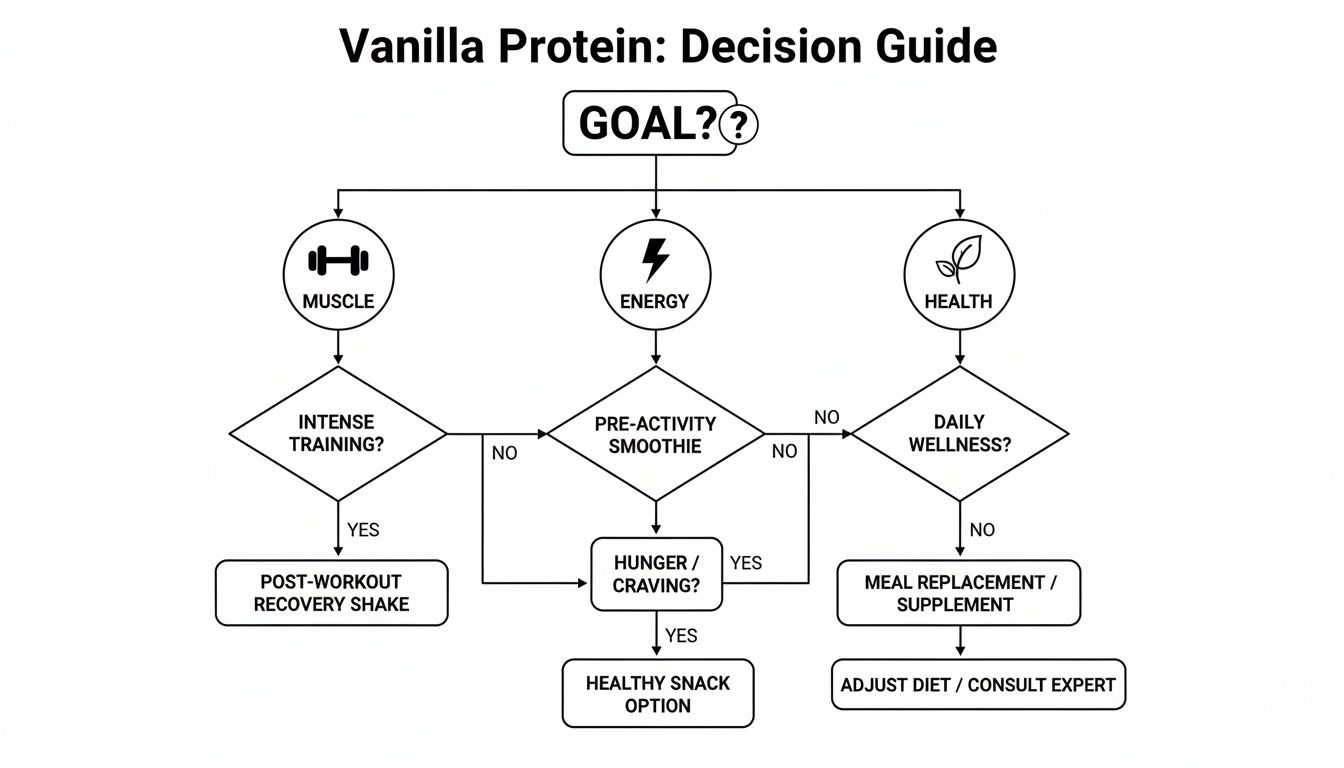
Think of it as a roadmap. It helps you see how different protein sources are better suited for specific outcomes, so you can choose a powder that truly works for you instead of against you.
Understanding Dairy-Based Proteins
Dairy proteins are a natural byproduct of the cheesemaking process. They get a lot of praise for being "complete proteins," which simply means they contain all nine essential amino acids your body needs but can't make on its own.
- Whey Protein: This is the fast-acting one. Whey digests very quickly, which is why it's the go-to for a post-workout shake. It rushes amino acids to your muscles to kickstart the repair process right when you need it most. The downside? Its lactose content can cause bloating and digestive issues for a lot of people.
- Casein Protein: Think of casein as the slow-and-steady member of the dairy family. It forms a gel in your stomach, releasing amino acids over several hours. This makes it a fantastic choice for a meal replacement shake or a pre-bedtime snack to fuel recovery and keep you from waking up hungry.
The Rise of Plant-Based Proteins
The vanilla shake world has been completely reshaped by plant-based proteins. While whey still holds the biggest piece of the pie with 53.47% of the global market, pea protein (7.39%) and soy protein (21.91%) are quickly catching up. Their popularity has been fueled by a massive 3355% increase in people identifying as vegan in the last decade alone.
This isn't just a trend; it's a fundamental shift. We now have more options than ever. For instance, while whey is known for quick absorption, some plant proteins like pea protein can trigger satiety hormones, making you feel fuller for longer. This makes them an incredible tool for weight management.
And they aren’t just for vegans. Plant-based powders are a game-changer for anyone who is lactose intolerant or finds dairy-based proteins heavy on their stomach.
A common misconception I hear all the time is that plant proteins are "incomplete." While many are on their own, most modern vanilla protein blends solve this by combining sources, like pea and rice protein, to create a complete amino acid profile that stands toe-to-toe with whey.
Pea protein is a perfect example of this evolution. It’s hypoallergenic, a great source of iron, and blends into a surprisingly creamy shake. If you’ve ever felt bloated after a whey shake, giving a pea-based vanilla protein a try might be the solution you’re looking for.
If you want to get into the nitty-gritty of how they compare, our deep dive on pea protein vs. whey protein breaks it down even further. At the end of the day, the "best" protein is the one that makes your body feel good and helps you perform at your best.
Strategic Protein Pairing Beyond the Shake
Look, a great vanilla protein shake is a fantastic tool in your arsenal, but let's be real—it's only one part of the equation. If you're only chugging sweet, creamy shakes day in and day out, you're heading straight for flavor fatigue. Trust me, I've been there.
The secret to sticking with your goals long-term is to think beyond the shaker bottle. You need to strategically pair those shakes with other high-protein foods. Think about the contrast. After a sweet, smooth vanilla shake post-workout, something savory and crunchy in the afternoon hits completely different. That variety is what keeps a high-protein diet from feeling like a chore.
Planning Your Protein Day
To keep from getting bored, you have to map out your protein intake for the whole day. The name of the game is variety—in both source and texture. A successful day might look something like this:
- Morning (Post-Workout): You need protein fast. A simple, easy-to-digest vanilla protein shake does the trick, getting protein to your muscles right when they're screaming for it.
- Mid-Afternoon: Instead of reaching for another shake, switch it up. This is the perfect time for a savory, high-protein snack to break the sweet monotony.
- Evening: Your final meal should be built around whole foods. Think lean protein sources like chicken, fish, or tofu to round out your day.
This rhythm does more than just keep your taste buds happy. It ensures you’re getting a broader spectrum of amino acids and micronutrients that shakes alone can’t offer. For a deeper dive, our guide on how to increase protein intake has a ton of practical tips.
Here's the bottom line: don't put all your protein eggs in one basket (or shaker bottle). When you mix sweet shakes with savory snacks and whole-food meals, a high-protein diet starts to feel less like a restrictive plan and more like a genuinely satisfying way to eat.
Beyond the Bottle: A Savory Solution
The protein market has exploded. An incredible 1,251 million protein shake bottles were sold in 2024 alone, which shows just how popular they are. But a lot of us are starting to realize that shakes aren't the only answer.
While vanilla shakes are a go-to for muscle support, many are loaded with sugar or allergens. Smartly pairing them with clean, savory options like Gym Snack's plant-based snacks—which pack over 30g+ of protein per bag with zero cholesterol or seed oils—is a game-changer. This approach helps you nail those daily protein targets of 1.6-2.2g per kg of bodyweight without the junk. You can find more data about this expanding market on marksparksolutions.com.
Your Top Vanilla Protein Shake Questions Answered
Once you start blending shakes regularly, you’ll inevitably run into a few practical hurdles. I’ve been there. Let's walk through some of the most common questions I get about making the perfect vanilla protein shake, so you can skip the trial and error.
Can I Prepare Shakes In Advance?
Absolutely. Making a shake the night before is a great time-saver. Just pour it into an airtight shaker cup or jar and pop it in the fridge.
Keep in mind, though, that certain ingredients will change the texture overnight. If you’ve added chia seeds, flax, or oats, they'll soak up a lot of liquid and make your shake much thicker. It's not a bad thing, just different! A good, hard shake for 15-20 seconds before you drink it is usually all it takes to get it smooth again.
How Do I Fix A Chalky Taste?
Ah, the dreaded chalky shake. I’ve had my share of those. This problem almost always comes down to two culprits: the quality of your protein powder or not using enough liquid to dissolve it fully.
The quickest fix is to mask the chalkiness with a strong, pleasant flavor. My go-to solutions are:
- A spoonful of creamy peanut or almond butter
- Half a frozen banana (this also adds incredible creaminess)
- A dash of cinnamon or a teaspoon of unsweetened cocoa powder
A high-speed blender also makes a world of difference. It pulverizes the powder into a much finer consistency, which goes a long way in eliminating that gritty mouthfeel.
If you're consistently feeling bloated or just "off" after your shake, the issue might go beyond taste. Sometimes, your digestive system just doesn't agree with the protein source. For a deeper dive, check out our guide on why protein shakes can upset your stomach.
Should I Use Water Or Milk?
This choice really boils down to your specific goals for that shake.
If you’re drinking it right after a workout, water is a fantastic choice. It's a zero-calorie mixer that your body can absorb quickly, rushing protein to your muscles when they need it most.
On the other hand, using milk—whether it's dairy or a plant-based option like almond or oat milk—adds creaminess, calories, and extra nutrients. This makes it a much better base if you're building a more substantial meal replacement or trying to bulk up.