

When you're standing in the supplement aisle, the pea protein vs whey protein debate can feel overwhelming. At its core, the difference is straightforward: whey is the fast-absorbing, animal-based classic, while pea protein is its plant-based, allergen-friendly rival that delivers surprisingly similar muscle-building results. The right choice for you hinges on a simple question: are you looking for peak dairy-powered performance, or do you need a gentler, more sustainable option?
This guide cuts through the noise and breaks down every critical factor to help you decide.
The Great Protein Debate: Pea vs. Whey
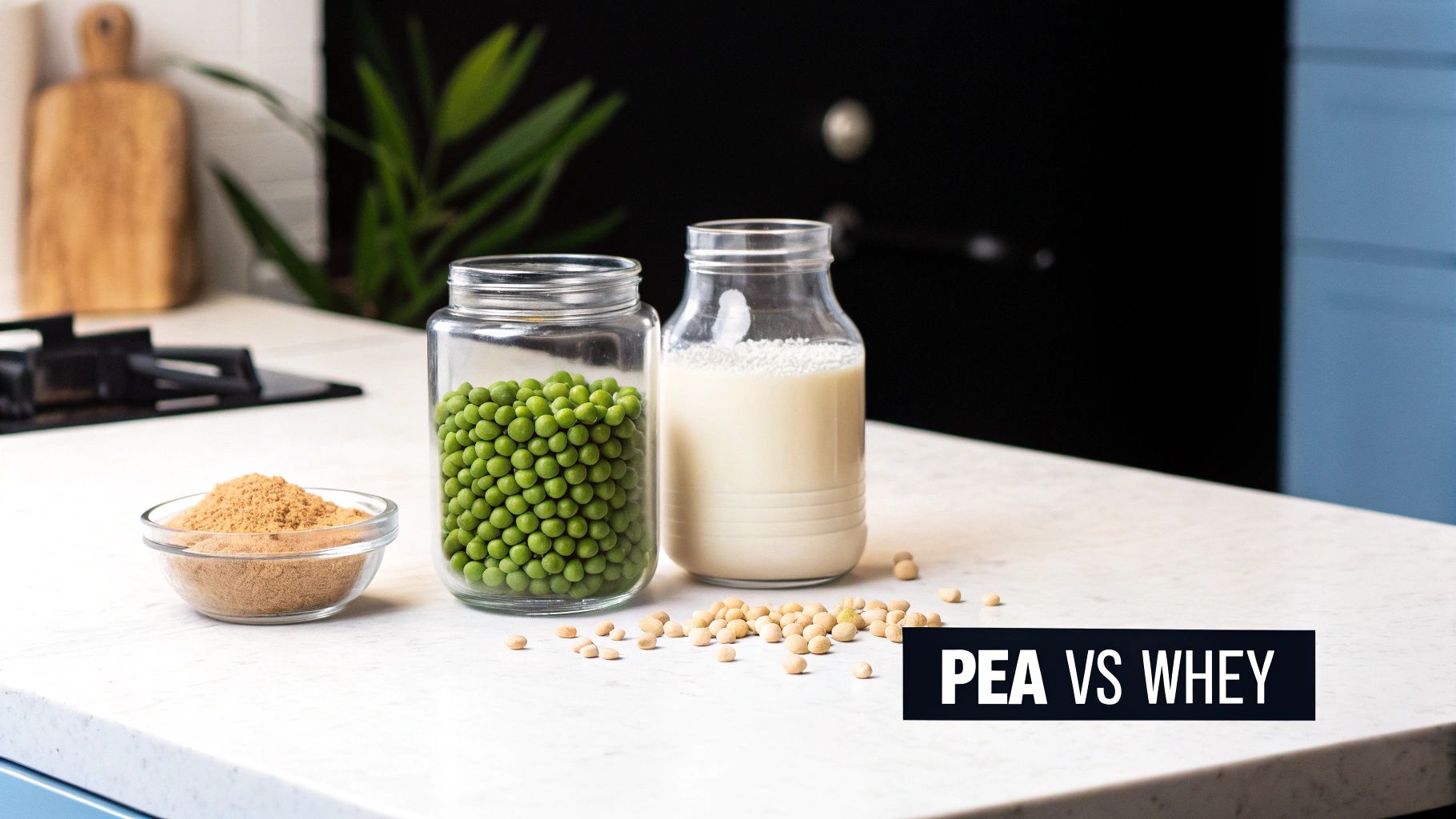
Picking a protein supplement isn't just about a post-workout shake anymore. It's a choice that reflects your dietary philosophy, digestive comfort, and even your environmental impact. The market has exploded beyond the old-school, dairy-only options, pushing plant-based powerhouses like pea protein right into the mainstream.
For years, whey protein was the undisputed king of the fitness world. Its dominance is backed by some serious numbers, with the global market projected to soar to $46.6 billion by 2035. Much of that growth comes from whey protein concentrate (WPC), which commands a 57% market share thanks to its potent nutritional profile and affordability. You can find more details on the global protein market at FutureMarketInsights.com.
But the plant-based movement has introduced a serious contender. Pea protein directly addresses the major downsides of whey—like lactose intolerance and dairy allergies—while still packing a powerful amino acid punch and a much lighter environmental footprint.
This isn't a battle between a mainstream giant and a niche alternative anymore. It's a head-to-head showdown between two incredibly effective protein sources, each with its own unique strengths that shine in different situations.
To help you make an informed decision, we’ll put them to the test across the most important criteria:
- Muscle-Building Effectiveness: How do their amino acid profiles really compare when it comes to sparking muscle growth?
- Digestive Tolerance: Which one is easier on your stomach and less likely to leave you feeling bloated?
- Nutritional Profile: What are the key differences in vitamins, minerals, and other macros?
- Environmental Impact: Which protein is the more sustainable choice for the planet?
Before we dive deep, here’s a quick overview of how these two protein sources stack up against each other.
Quick Comparison: Pea Protein vs. Whey Protein
This summary table compares the key attributes of pea and whey protein, offering an immediate understanding of their primary differences and unique strengths.
| Attribute | Pea Protein | Whey Protein |
|---|---|---|
| Protein Source | Plant-Based (Yellow Peas) | Animal-Based (Dairy/Milk) |
| Allergen Profile | Hypoallergenic; free of dairy, soy, gluten | Contains lactose and milk proteins |
| Digestion Speed | Medium | Fast (Isolate) to Medium (Concentrate) |
| Key Micronutrient | High in Iron | High in Calcium |
| Environmental Footprint | Lower land and water usage | Higher environmental impact |
This table gives you the 30,000-foot view, but the real story is in the details. Let's break down each of these points to see which protein truly aligns with your body and your goals.
Analyzing Protein Quality for Muscle Building
When you’re looking to build muscle, the type of protein you choose really does matter. It all comes down to the protein’s amino acid profile—these are the fundamental building blocks your body needs to repair torn muscle fibers and spark new growth after a workout. Getting this right is central to any effective strategies for muscle growth.
For years, whey protein has been the undisputed king in the fitness world. There's a good reason for that. It’s a complete protein, which means it delivers all nine essential amino acids (EAAs) that your body can't make itself. Critically, whey is packed with branched-chain amino acids (BCAAs)—especially leucine—the single most important amino acid for flipping the "on" switch for muscle protein synthesis.
But this is where pea protein makes a surprisingly strong case for itself. While it's a plant-based option, its amino acid profile is nothing to scoff at. It's also rich in BCAAs and is almost a complete protein, coming up just a little short on one amino acid, methionine.
The term "incomplete protein" often scares people off, but it can be misleading. A slightly lower amount of one amino acid in a single food source isn't a deal-breaker. Your body maintains an amino acid "pool," so as long as your diet is varied, you'll easily make up for that small gap throughout the day.
This is where the pea protein vs whey protein debate gets nuanced. On paper, whey looks technically superior. In the real world, though, the difference in muscle-building outcomes is often negligible if you're hitting your daily protein targets.
Bioavailability and Absorption Scores
It’s not just about what’s in the protein; it's about what your body can actually use. This is where bioavailability scores come in. The gold standard for measuring this is the Digestible Indispensable Amino Acid Score (DIAAS), which tells us how well amino acids are absorbed in the small intestine.
- Whey Protein Isolate: This is a top-performer, consistently scoring 1.09 or higher on the DIAAS scale. That score signifies outstanding digestibility and quality, meaning your body has no trouble putting its amino acids to work.
- Pea Protein Concentrate: Pea protein lands around 0.82, which still qualifies as a good-quality source. It's not as high as whey, but it’s more than effective enough to support muscle repair and growth.
While whey wins on the scoreboard, the real-world results might surprise you. Several studies that put pea and whey head-to-head found no significant difference in muscle thickness gains between the two groups. It seems that as long as the dose is high enough to deliver the key amino acids, pea protein can absolutely hold its own.
If you’re leaning toward plant-based options, check out our guide on the best plant protein for muscle gain. At the end of the day, consistency and total daily protein intake are what truly move the needle.
How Each Protein Affects Digestion and Gut Health

A protein’s real-world value isn't just about what's on the label—it’s about how your body actually uses it. This is where the pea protein vs whey protein debate gets personal, because if a protein doesn't agree with your gut, its benefits are moot. For many people, digestive comfort is the deciding factor.
Whey protein comes from milk, and that means it contains lactose. A huge chunk of the global population struggles to digest this milk sugar, which often leads to bloating, gas, and an upset stomach. This is particularly true for whey concentrate, which has the most lactose.
Even if you aren't officially lactose intolerant, you might find that whey still leaves you feeling a bit off. It’s a common complaint I hear from clients, and that subtle digestive stress can be enough to derail consistency with your nutrition plan.
What About Whey Isolate?
To get around the lactose problem, manufacturers developed whey protein isolate. It goes through an extra filtration process that removes most of the lactose and fat, leaving a purer protein that is generally much kinder to the digestive system. For those with only a mild sensitivity, isolate can be a game-changer.
But it’s not a cure-all. For someone with a true dairy allergy, the problem isn't the lactose—it's the milk proteins themselves, like casein. Since those proteins are still present in isolate, it's a non-starter for anyone with a diagnosed milk allergy.
Pea Protein: The Gut-Friendly Alternative
This is where pea protein really stands out. It’s naturally free from the top allergens that cause issues for so many people, making it a reliable, stress-free option.
- Dairy-Free: No lactose or milk proteins to worry about.
- Soy-Free: It avoids soy, another common allergen that trips people up. For more ideas, check out our guide to soy-free vegan protein sources.
- Gluten-Free: It's also naturally free from gluten.
This clean, hypoallergenic profile makes pea protein exceptionally easy on the stomach. People who switch often tell me the bloating and discomfort they thought were "normal" with protein shakes completely disappear. That means they can finally focus on their training and recovery without any digestive drama.
Picking a protein shouldn't be a gamble. Pea protein offers a level of digestive peace of mind that lets you fuel your body confidently, without the risk of common side effects.
There’s another subtle benefit, too. Many pea protein isolates retain a small amount of the natural fiber from the yellow peas they come from. This fiber can act as a prebiotic, feeding the good bacteria in your gut and promoting a healthier microbiome over time. So, you're not just fueling your muscles—you're supporting your long-term gut health, too.
Satiety and Weight Management: How Pea and Whey Stack Up
Beyond just building muscle, protein is a secret weapon for anyone trying to manage their weight. Why? It all comes down to satiety—that satisfying feeling of fullness that keeps you from raiding the pantry an hour after you eat. When we look at pea protein vs whey protein, both do a fantastic job here, but they go about it in slightly different ways.
Generally speaking, protein is the king of macronutrients for making you feel full, beating out fats and carbs by a long shot. It works its magic by influencing gut hormones that act like messengers to your brain. When protein hits your system, it triggers the release of hormones like GLP-1 (glucagon-like peptide-1) and Peptide YY (PYY), which are basically your body's way of saying, "Alright, we're good here, you can stop eating."
The Hunger Hormone Factor: A Tale of Two Proteins
This is where the real differences between pea and whey start to show. Whey protein is famous for being a fast-acting protein. It digests quickly, causing a rapid spike of amino acids in your bloodstream and, in turn, a strong, almost immediate release of those "I'm full" hormones. For a lot of people, this is exactly what they need to kill hunger right after a tough workout.
Pea protein, on the other hand, takes a more slow-and-steady approach. Its digestion is a bit slower, which means it releases amino acids at a more sustained pace. This can lead to a feeling of fullness that actually lasts longer. In fact, one study found that when men had pea protein before a meal, they ended up eating significantly fewer calories compared to those who had whey.
So, it’s not about one being definitively “better.” It’s about timing and what your body needs. Whey gives you that quick, powerful stop signal for hunger, while pea protein offers a more sustained, drawn-out feeling of satisfaction that’s great for managing hunger over several hours.
Think of it this way: a whey shake is perfect for right after a killer gym session when you feel like you could eat everything in sight. But a snack made with pea protein, like the savory options from Gym Snack, might be the smarter choice to get you through that 3 PM energy slump without caving and hitting the vending machine.
At the end of the day, both proteins are incredible tools for weight management. They both help you hang on to precious muscle mass when you're in a calorie deficit, which is crucial for keeping your metabolism revved up. The choice really boils down to your immediate goal: do you need to shut down hunger right now, or do you need to stay full until your next meal?
Nutritional Profiles and Environmental Footprints
The pea protein vs whey protein discussion goes way beyond just the macros for building muscle. When you dig a little deeper, you find that each has its own distinct micronutrient advantages that can support different health goals. On top of that, their environmental stories are worlds apart, which is a huge deal for a lot of us these days.
Whey protein, being a dairy by-product, is loaded with calcium. This is a non-negotiable mineral for maintaining bone density and supporting proper muscle function, making whey a solid pick for anyone focused on skeletal strength or simply trying to up their calcium intake.
Pea protein, on the other hand, really shines as a plant-based source of iron. Iron is absolutely vital for moving oxygen through your blood and keeping your energy levels up. This makes it particularly important for athletes, active people, and anyone on a plant-based diet who might struggle to get enough. If you're unsure about your specific needs, getting some personalized insight through methods like metabolic testing can really help clear things up.
The Environmental Impact of Your Protein Choice
For a growing number of us, the story doesn't stop at nutrition—it extends to the health of our planet. And this is where pea protein pulls way ahead. It’s no secret that producing plant-based proteins is generally much kinder to the earth, requiring far fewer natural resources than animal-based options.
When it comes to environmental footprint, the difference between these two is night and day. Choosing pea protein is a direct investment in a more sustainable food system—one with lower water usage, less land degradation, and significantly reduced greenhouse gas emissions.
You can see this shift in what people are buying. The global pea protein market was valued at USD 2.12 billion in 2023 and is on track to hit USD 4.71 billion by 2030. This growth is being fueled by people actively choosing sustainable and allergy-friendly options. You can read more about this trend at Grand View Research.
To help you see how these two stack up, here's a quick comparison table. It's designed to help you align your protein choice not just with your body's needs, but with your personal values too. For a more comprehensive look, check out our article on plant-based protein vs animal protein.
Micronutrient and Sustainability Comparison
| Factor | Pea Protein | Whey Protein |
|---|---|---|
| Primary Micronutrient | High in Iron, supporting energy and oxygen transport. | High in Calcium, crucial for bone health. |
| Water Usage | Significantly lower water footprint. | High water consumption due to dairy farming. |
| Land Use | Requires less agricultural land. | Requires extensive land for cattle grazing and feed. |
| Greenhouse Emissions | Produces substantially fewer emissions. | A major contributor to methane and other emissions. |
Making the Right Choice for Your Goals and Lifestyle
So, how do you settle the pea protein vs whey protein debate for yourself? It really boils down to your own body, what you're trying to achieve, and what matters most to you. There's no single "best" protein that works for everyone. The right one is simply the one that fits your life, helps you hit your numbers consistently, and doesn't force you to compromise on your health or values.
For a competitive athlete or a serious bodybuilder who is laser-focused on squeezing out every last drop of performance, whey protein isolate is hard to beat. Its lightning-fast absorption and sky-high leucine content give your muscles an immediate signal to start repairing and growing after a tough workout. If your digestive system handles dairy without any issues, it’s a proven and powerful tool.
But for a massive—and growing—number of people, pea protein is simply the smarter, more practical choice for daily life.
Scenarios Where Pea Protein Excels
If any of these sound familiar, pea protein is probably the way to go for you:
- You Have a Sensitive Gut: Does whey concentrate leave you feeling bloated, gassy, or just generally "off"? Pea protein is a fantastic hypoallergenic and dairy-free option that's much gentler on the digestive system.
- You Follow a Plant-Based Diet: This one is a no-brainer. For vegans, vegetarians, or anyone looking to cut back on animal products, pea protein provides a complete, high-quality protein source to fuel your muscle-building goals.
- You Prioritize Sustainability: If the environmental impact of your food matters to you, pea protein wins by a landslide. Choosing it is a conscious vote for a more sustainable food system.
This isn't just a niche trend; it's a major shift in the market. In the U.S. alone, 22% of all protein powders are now plant-based. And within that category, pea protein is the undisputed king, showing up in a staggering 80% of those products. For comparison, soy protein only accounts for about 12%. This surge is all thanks to its killer amino acid profile, easy digestibility, and clean taste. You can dive deeper into these sports nutrition market trends to see the data for yourself.
The best protein source doesn't have to be a powder you chug in a shaker bottle. It can be built right into your daily routine. Think of Gym Snack’s savory snacks, which make it easy and genuinely enjoyable to hit your protein targets without the sugar overload of typical supplements.
Common Questions Answered
Even after weighing all the evidence, you might still have a few lingering questions. Let's tackle some of the most common ones that come up when people are deciding between pea and whey protein.
Can I Really Build as Much Muscle With Pea Protein as I Can With Whey?
You absolutely can. While it’s true that whey has a slightly more "perfect" amino acid profile on paper, the real-world results tell a different story. Study after study that puts these two head-to-head finds no meaningful difference in muscle growth, strength improvements, or how well you recover.
As long as you’re getting enough total protein throughout the day to support your training, pea protein provides all the essential building blocks—especially the crucial branched-chain amino acids—to kickstart muscle repair and growth. The most important thing is hitting your daily protein target consistently.
Do I Have to Mix Pea Protein With Other Plant Proteins to Make it "Complete"?
That’s a myth that just won’t die. While some plant-based proteins are noticeably low in one or two essential amino acids, a good quality pea protein isolate is a powerhouse all on its own. It's only slightly lower in one amino acid, methionine.
Here's what most people forget: your body keeps a reserve of amino acids from everything you eat. As long as you're eating a reasonably varied diet over the course of a day, your body will easily fill in that tiny gap. There's no need to stress about combining different proteins in every single shake.
What Are the Typical Side Effects for Each?
This is where the two really start to part ways. Most side effects are tied directly to digestion and allergens, and it's a major factor for many people.
- Whey Protein: The number one complaint by far is digestive upset. We're talking bloating, gas, and stomach cramps, which are usually thanks to the lactose found in whey concentrate. Even if you spring for a whey isolate, which has less lactose, people with a true milk allergy can still react to the dairy proteins.
- Pea Protein: This is where pea protein shines. It's naturally free from common allergens like dairy, soy, and gluten, making it incredibly easy on the gut. The vast majority of people have zero side effects, which makes it a go-to choice for anyone with a sensitive stomach or known food intolerances.
Ready to fuel your workouts with a delicious, gut-friendly protein that delivers results without the junk? Gym Snack offers savory, crunchy pea protein snacks packed with 15g+ of protein per serving.
Shop our chef-inspired flavors at GymSnack.com and taste the difference!