

You're probably buying granola bars in bulk for one of two reasons. Either people are burning through them faster than expected, or you're staring at a case pack online and wondering whether it's a smart pantry move or just a larger mistake.
That's the right question.
Bulk snack buying looks simple until you realize how wide the category really is. Some bars work well for office drawers, school bags, and event tables. Others are basically portable dessert. And if you're buying for training, appetite control, or GLP-1 support, the usual “best bulk granola bars” lists often miss the point entirely.
A smart purchase starts with use case, not branding. You need to know who's eating the bars, how often they'll grab one, what nutrition profile fits the goal, and whether the case you're buying will still taste good by the time the last bar gets opened.
Why Buying Granola Bars in Bulk Is a Smart Move
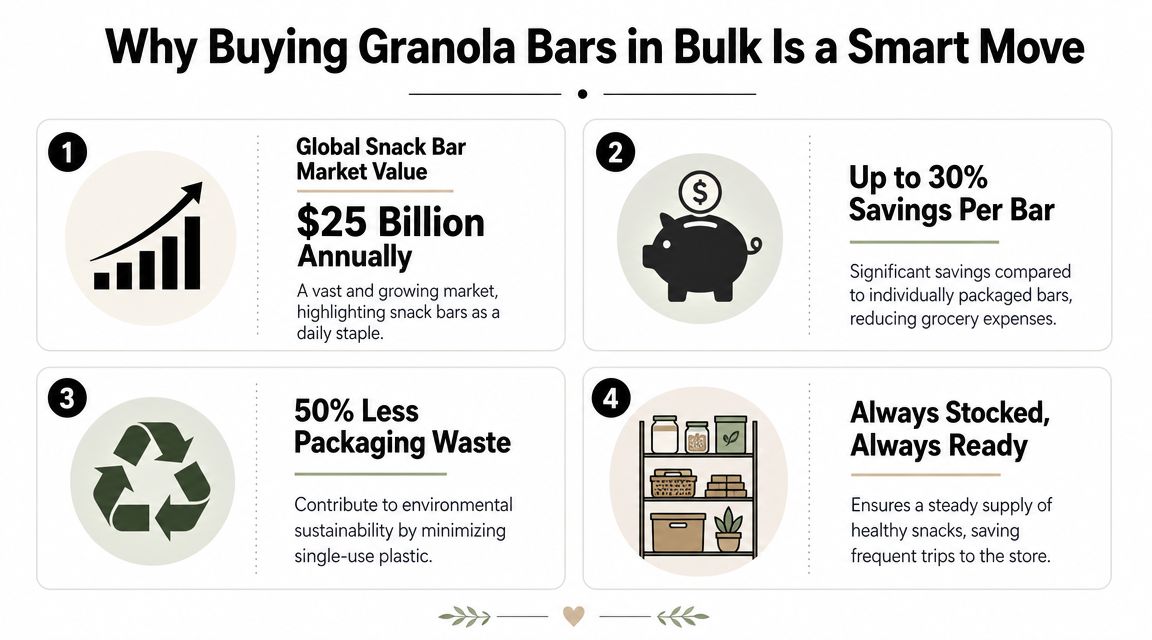
Granola bars aren't some tiny niche aisle item. The category is already large and established. One market analysis values the global granola bars market at USD 5.25 billion in 2024 and projects USD 7.69 billion by 2032, with North America holding 36.58% of global revenue in 2024, according to Data Bridge Market Research on the global granola bars market. That scale matters because it tells you something practical. These products have moved far beyond lunchboxes and impulse buys. They're part of routine snack planning.
Bulk works when demand is predictable
The best bulk buys happen in settings where consumption is steady. Think office kitchens, front desks at fitness studios, tournament weekends, family meal prep, road trips, campus apartments, and event hospitality tables. In each case, the primary value isn't just lower unit cost. It's fewer emergency restocks and less decision fatigue.
If I'm evaluating granola bars bulk for a shared setting, I look at three things first:
- Consumption rhythm. Are people reaching for the same type of snack repeatedly, or do bars sit untouched while other items disappear first?
- Storage reality. Do you have a cool, dry place to hold case inventory?
- Nutrition fit. Will the bar satisfy the reason people are grabbing it, or will they eat one and then keep hunting for something else?
The real savings aren't only financial
People talk about per-bar price, and that matters. But procurement decisions usually improve most when they remove friction.
Buying bulk usually helps in these ways:
- Fewer purchase cycles. You spend less time reordering.
- Better stock consistency. The same bar is available when people expect it.
- Simpler planning. It's easier to build snack routines around case quantities than random single-box purchases.
Practical rule: Bulk only saves money when the product gets eaten before quality drops.
That's where many buyers get it wrong. They assume any case deal is a win. It isn't. A cheap bar that gets stale, crumbles, or falls out of favor becomes expensive fast.
Granola bars fit repeat-use environments
Snack bars are often bought for habitual use, not occasional novelty. That makes them especially compatible with bulk ordering. They work well as pantry stock, gym bag backup, commute insurance, or a quick breakfast bridge when a full meal isn't realistic.
The strongest bulk candidates usually share a few traits:
- Portable format that doesn't require refrigeration
- Consistent taste across flavors and lots
- Packaging that survives transport
- Enough substance to function as more than a token snack
For the right buyer, granola bars bulk is a smart move because it solves a recurring problem. You're not just buying snacks. You're buying continuity.
How to Evaluate Bulk Granola Bar Options
Most buyers compare box count and flavor list first. That's backwards. Start with what the bar delivers, then decide whether the case size makes sense.
Start with price per serving
A larger carton can still be a weak buy if the bars are tiny, underfilling, or nutritionally thin. Compare cost based on the actual serving unit you'll hand out or eat. If one product looks cheaper but requires two bars to feel useful, it isn't cheaper in practice.
Use a simple side-by-side sheet when comparing products. It forces clearer decisions.
| Metric | Budget Bar | Balanced Bar | Performance Bar |
|---|---|---|---|
| Price per serving | Lower | Mid-range | Higher |
| Protein | Low | Moderate | Higher |
| Sugar profile | Often higher | More moderate | Usually more controlled |
| Fiber | Often low | Moderate | Moderate to higher |
| Best use | General snacking | Office and family use | Training and satiety-focused use |
| Ingredient quality | More variable | Usually more consistent | Often more intentional |
| Risk in bulk | Easy to overbuy low-quality stock | Good all-around option | Can be less crowd-friendly on flavor |
This table won't replace the label. It helps you ask the right questions before you commit.
Read the label like a buyer, not a marketer
Front-of-pack claims can waste your time. “Made with whole grains” or “energy” doesn't tell you whether the bar suits your goal. Flip it over.
What matters most:
- Protein. If you want a bar that can hold someone over between meals or support a post-workout window, low protein usually won't cut it.
- Sugar. Sweetness isn't automatically bad, but high sweetness plus low protein often creates the “glorified candy bar” problem.
- Fiber. For fullness and steadier appetite control, fiber matters.
- Fat source. Nuts and seeds can add staying power. Some bars lean more on syrups and coatings than substance.
- Ingredient order. The first few ingredients tell you what the product really is.
If you want a refresher on label literacy, this practical guide to reading nutrition labels is worth keeping open while you compare products.
If the bar's best selling point is the drizzle, chips, or frosting-style coating, it's probably not a nutrition-first bulk buy.
Check allergens before you check out
This matters more than most bulk guides admit. One nut-heavy variety pack can become unusable in schools, shared offices, wellness events, or hospitality setups.
Look for:
- Nut content if you're serving mixed groups
- Gluten status for broader accessibility
- Dairy and soy if you're buying for plant-based or allergen-conscious eaters
- Cross-contact statements when the environment is sensitive
A good office bar isn't always the best gym bar. A family bar isn't always appropriate for an event. Bulk magnifies mistakes because you're committing to a lot of inventory at once.
Freshness is a production issue, not just a date issue
Bar quality changes with process details. Industry guidance notes that granola bars are commonly baked at about 325 to 350°F (162 to 176°C) for 10 to 25 minutes, and small changes in time, temperature, sheeting, and line conditions can affect crunch, chew, and water activity, according to Making.com's granola bar process guide. For buyers, the takeaway is simple. Two cases of the same product can perform differently if the product is already close to its date or if storage conditions weren't ideal.
That's why I always check:
- Best-by date window
- Condition of outer case on arrival
- Whether bars feel overly hard, sticky, or fragile
- Consistency across bars in the same lot
Packaging choice changes the experience
Individually wrapped bars are usually the safer choice for hygiene, grab-and-go use, and controlled portioning. Loose-packed bars can reduce waste in some settings, but they're less practical in shared spaces and more vulnerable once opened.
Packaging also affects how people use the product:
- Single wraps work best for gym desks, school bags, reception areas, and events.
- Multi-bar inner pouches can work at home if the household moves through snacks quickly.
- Large assorted cases are useful when you need broad appeal, but they can leave you stuck with unpopular flavors.
A practical buyer doesn't ask, “What's cheapest?” The better question is, “What will get eaten, store well, and still make sense at bar number fifty?”
Smarter Ordering and Storage
Buying bulk without a usage plan is how snack budgets get sloppy. Bars disappear too fast in some settings and sit too long in others. The fix is simple. Order based on observed behavior, then store like you expect to keep quality intact.
Order from actual consumption, not optimism
Consumer research shows that snack bars have steady, repeat use. Nearly half of U.S. consumers bought cereal and energy bars in the past year, bars are eaten most often a few times a month, and taste and convenience are top purchase drivers, according to Innova Market Insights on U.S. snack bar trends. That kind of durable demand is exactly why bulk ordering can work. It's also why sloppy forecasting creates waste.
Use a simple internal estimate:
- Count your users
- Estimate average bars consumed per week
- Multiply by your reorder window
- Add a small cushion for spikes
If you manage a front desk, office pantry, or self-serve retail shelf, don't guess from memory. Track withdrawals for a short period and build your order quantity from that.
Build a rotation system that people will follow
The best storage systems are boring. That's a compliment. You want something so obvious that anyone can maintain it.
Use these habits:
- First in, first out. Place older inventory in front.
- Flavor grouping. Keep similar products together so slow movers are easy to spot.
- Date checks on receipt. Don't wait until bars are already shelved.
- Cool, dry storage. Heat and humidity punish texture fast.
For buyers managing snack shelves, kiosks, or mixed product assortments, this guide for vending inventory has useful principles that apply well beyond vending machines.
A bulk snack system fails when nobody knows what came in first or what needs to go out next.
Match the storage plan to the product mix
Not every shelf-stable snack behaves the same way. Bars with coatings, softer textures, or fruit-heavy formulas may show quality changes earlier than drier, simpler products. That's one reason many buyers pair bars with sturdier backup options. If you're building a more resilient snack set for work, travel, or gym operations, this list of non-refrigerated protein snacks can help you widen the bench beyond standard sweet bars.
A good ordering system doesn't just prevent stockouts. It protects quality and keeps your inventory aligned with how people really snack.
Matching the Right Bar to Your Needs
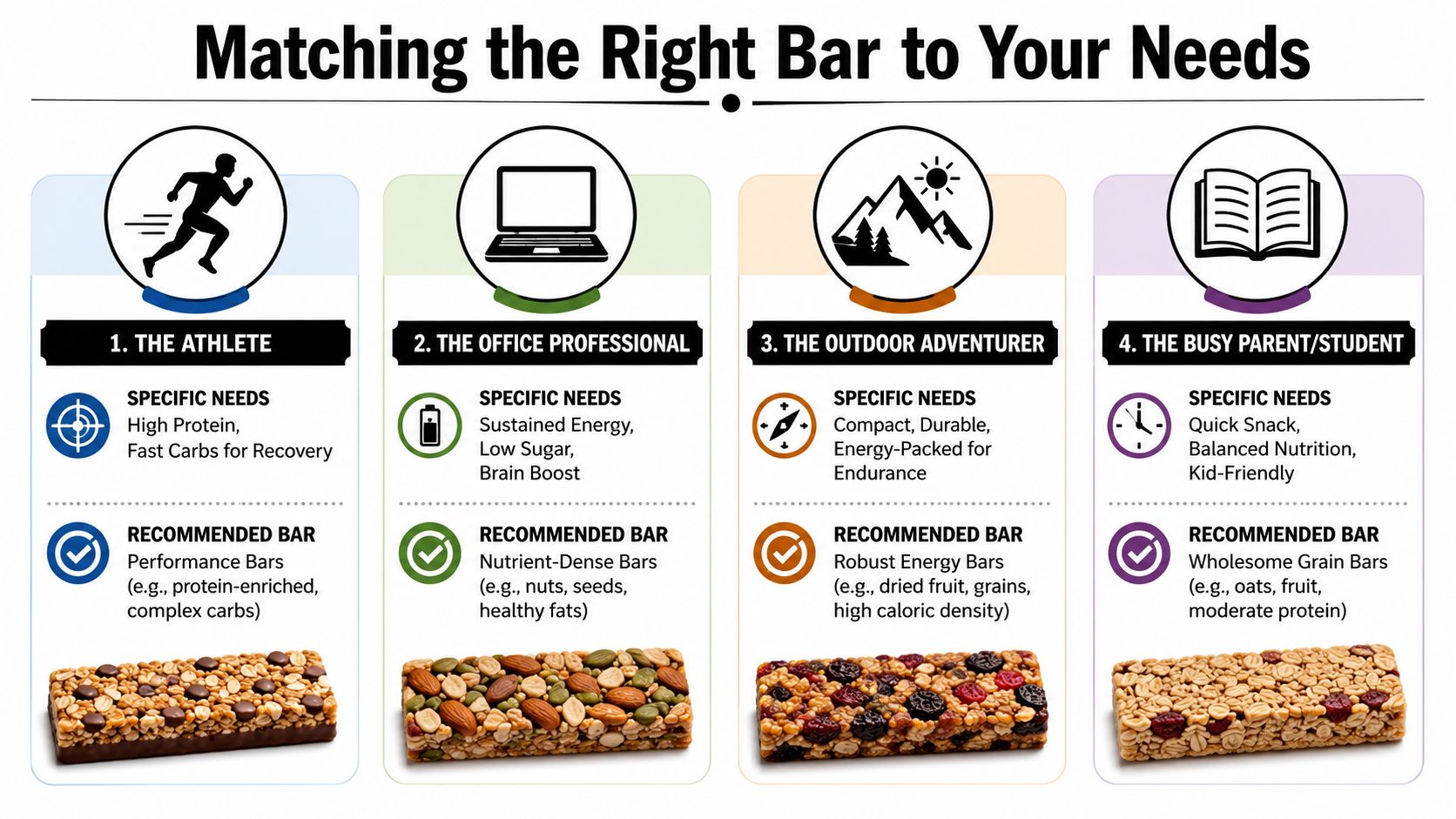
There isn't one best bulk granola bar. There are bars that fit the job and bars that don't. The biggest buying mistake I see is using a crowd-pleasing snack standard for a goal that needs a more specific nutrition profile.
Offices and events need broad usability
For office kitchens, conferences, waiting rooms, and community events, the winning bar is usually the one with the least friction. You want familiar flavors, straightforward packaging, and allergen awareness. Nutrition still matters, but extreme performance positioning usually doesn't.
Look for:
- Moderate sweetness so the bar appeals to more people
- Reasonable texture that doesn't crumble all over desks or seats
- Clear allergen labeling
- Portable individual wrapping
In these settings, variety packs can help. But only if the flavors are mainstream. Assortments with one polarizing flavor often leave a residue of unwanted stock.
Families need consistency more than novelty
At home, bulk works best when it supports routine. Breakfast backup, after-school snack coverage, sports practice fuel, and car stash use are different jobs. One bar doesn't have to do all of them, but it should at least perform reliably in the role you assign it.
For family buying, I'd prioritize:
- Shelf stability
- Flavor predictability
- Kid acceptance
- Ingredients you're comfortable stocking repeatedly
The trap here is buying a huge case because the deal looks strong, then discovering your household only likes one flavor out of six.
Gyms and training-focused buyers need more than oats and sweetness
Generic granola bar advice often proves insufficient. A standard sweet oat bar can be fine for convenience, but it may not do much for recovery or appetite control. If your use case is training support, you need to evaluate whether the bar functions as fuel or merely tastes athletic.
A better gym-oriented bar usually has:
- Enough protein to matter
- Controlled sweetness
- Ingredients that don't sit heavy before training
- A texture people will still tolerate in a gym bag
The bar that works for a break room often underperforms in a gym setting.
That doesn't mean every athlete needs the same product. Some want quick carbs around training. Others want something steadier between meals. The point is that a bar bought for fitness use should earn that label nutritionally, not just through packaging language.
GLP-1 users and weight management buyers need a different filter
This is the most overlooked part of the category. Many bulk pages emphasize convenience and flavor variety, but they don't do much for buyers who care most about protein, fiber, sugar control, and satiety. That gap is real, and it leaves many gym-goers and GLP-1 users sorting through products that look healthy but won't support fullness very well, as reflected in the bulk granola bar marketplace gap highlighted through common retail listings.
For this group, a good snack usually needs to do three things:
- Help with fullness, not just oral gratification
- Avoid turning into a sugar-heavy mini meal
- Fit reduced appetite patterns, where every snack choice needs to count
Traditional sweet granola bars can still fit occasionally. But they're often a weak primary option for someone trying to stay satisfied on less food or avoid a fast rebound in hunger.
If your goal is appetite management, don't let “granola” automatically signal “healthy.” In bulk buying, the healthiest-looking box is often just the most effective packaging.
Beyond Sweet The Rise of Savory Protein Snacks
Sweet bars dominate the shelf because they're familiar, easy to market, and easy to place mentally as “healthy treats.” That doesn't mean they're the best tool for every job.
Sweet bars often solve convenience, not satiety
Many traditional bars live in an awkward middle ground. They're too snacky to serve as serious recovery fuel and too dessert-like to keep some people full for long. That's especially true when the formula leans heavily on syrups, sweeteners, coatings, and soft-baked texture with modest protein behind it.
Industrial bar production reinforces that reality. Granola bars are often made on continuous lines where a sheet is formed, baked or chilled, and cut into uniform units, with the system optimized for high-volume consistency and shelf stability, as described in this industrial guide to granola bar production lines. That manufacturing logic is great for throughput. It doesn't automatically produce the best snack for satiety, blood-sugar management, or protein-first eating.
Why savory is gaining traction
A growing number of fitness-focused buyers are asking a basic question. Why does “protein snack” so often mean brownie, cookie dough, birthday cake, or chocolate drizzle?
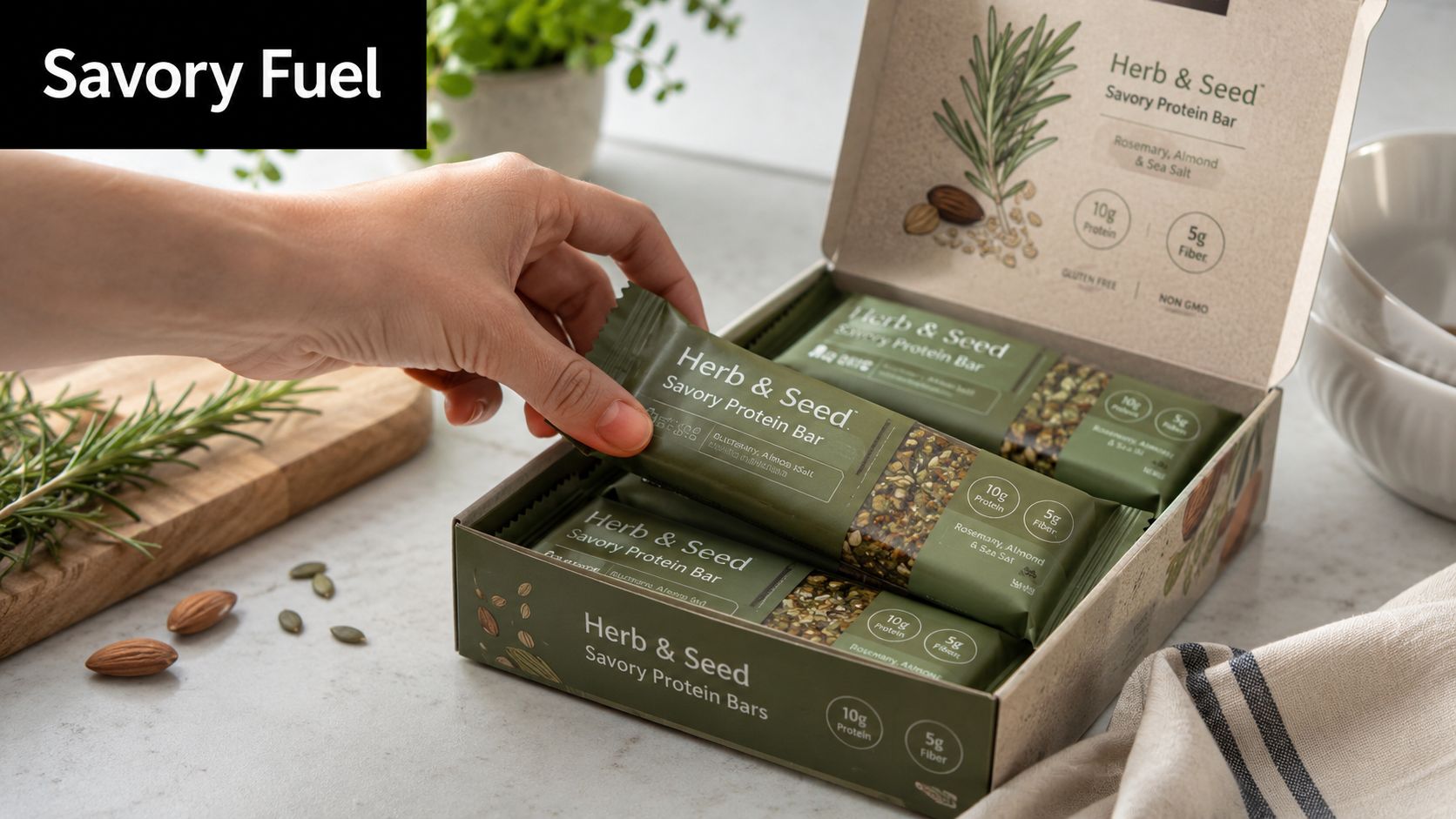
Savory products answer a different need. They don't try to disguise protein inside dessert cues. They lean into crunch, salt, seasoning, and a more meal-adjacent eating experience. For many people, that feels more satisfying and more honest.
Savory protein snacks can work especially well for:
- Post-workout hunger when a sweet bar sounds flat
- Midday appetite control when you want substance, not candy energy
- GLP-1 support routines where small portions need to feel worthwhile
- Snack fatigue from constant sweet flavors
For readers exploring that lane, this roundup of high-protein savory snacks is a useful starting point.
Better snack strategy starts with the job
If the job is quick convenience, a granola bar may be enough. If the job is staying power, training support, or reducing the urge to keep grazing, a savory protein option can make more sense.
Here's the practical trade-off:
| Snack type | Strongest use | Common weakness |
|---|---|---|
| Classic sweet granola bar | Fast grab-and-go convenience | Can be light on satiety |
| Dessert-style protein bar | Higher protein with familiar flavor | Often still very sweet |
| Savory protein snack | Better fit for fullness and variety | Less common in standard bulk aisles |
A short visual overview helps if you're comparing formats for gym, office, or travel use:
The bigger point isn't that sweet bars are bad. It's that they're overused as a default. Buyers often keep choosing them because they're familiar, not because they're best for the goal.
When people say they want a healthy snack, they often mean one of two things. Either they want better ingredients, or they want a snack that actually keeps them full. Those aren't always the same product.
That's why the smartest bulk buyers now think beyond category labels. “Bar” isn't the strategy. Matching the snack to the outcome is.
Your Final Bulk Buying Checklist
Before you place a large order, run through this list:
- Check the use case. Office pantry, family snack bin, event table, training fuel, and GLP-1 support all require different products.
- Compare price per serving. Box price alone hides weak value.
- Read beyond front-of-pack claims. Protein, sugar, fiber, and ingredient order tell the full story.
- Screen for allergens early. Shared environments need wider usability.
- Review date windows on bulk orders. Don't assume every case arrives with a comfortable freshness runway.
- Choose packaging that fits the setting. Individual wraps usually win for hygiene and convenience.
- Set up storage discipline. FIFO rotation and a cool, dry shelf prevent unnecessary waste.
- Question whether a sweet granola bar is the right tool. If your goal is fullness, training support, or better appetite control, another snack format may fit better.
Intentional buying beats impulse stocking every time. Granola bars bulk can be a smart move, but only when the bar matches the job.
If you want an alternative to dessert-style snack bars, Gym Snack offers savory, plant-based protein snacks built for training, steady energy, and better satiety. It's a strong option for buyers who want clean ingredients, bold flavor, and a bulk-friendly snack that doesn't rely on sweetness to do all the work.