

Let's be honest, who doesn't love the satisfying crunch of a good chip? The problem is, that satisfying crunch usually comes with a nutritional cost—empty calories, unhealthy fats, and a carb crash waiting to happen. But what if you could have the crunch and fuel your body at the same time?
That's where high-protein chips come in. Think of them as the intelligent evolution of your favorite snack. They're designed to deliver that classic, crave-worthy texture but with a serious nutritional upgrade, swapping out the junk for muscle-supporting protein.
The Rise of Smarter Snacking
The snack aisle has been going through a massive makeover. For years, "convenience" was just another word for "unhealthy." Now, people are demanding more from their snacks. We want food that fuels our busy lives, supports our fitness goals, and actually tastes good. And at the forefront of this movement, you'll find high-protein chips.
This isn't just a fleeting trend; it's a fundamental shift in how we think about food. We're moving away from old-school, carb-heavy snacks that give you a quick burst of energy followed by a slump. Instead, we're reaching for functional foods that actually work for us—snacks that keep us full, provide sustained energy, and help our muscles recover after a tough workout. This change in thinking has taken protein-packed foods from a niche gym-goer item to a staple in grocery carts everywhere.
A Market Driven by Health
The data backs this up. The global market for protein chips is already valued at around USD 2.26 billion, and it's on track to hit nearly USD 3.85 billion by 2030. This incredible growth is being driven by a collective desire for snacks that fit into healthier lifestyles and popular high-protein diets.
But it’s not just about cramming protein into a chip. The best brands are focused on a total nutritional overhaul. High-quality options, like Gym Snack's plant-based chips, are made with clean, simple ingredients, steering clear of the artificial flavors, preservatives, and unhealthy fats that plague traditional snacks.
A truly great protein chip isn't defined just by its protein count. It's a thoughtfully crafted snack designed for satisfaction, sustained energy, and genuine enjoyment. It turns a quick snack break into a smart nutritional move.
This evolution is all about making better, more conscious choices without sacrificing the foods we love. If you're looking to elevate your own snacking game, the first step is learning how to snack smarter. By choosing snacks that are both delicious and beneficial, you're making a small change that aligns your daily habits with your long-term health goals.
How to Read a Nutrition Label Like a Pro
Let's be honest, the front of the bag is all marketing. To really know what you're eating, you have to flip it over and get familiar with the nutrition facts and ingredient list. This is where the truth lies.
Think of the label as the snack's resume. It tells you everything you need to know—not just the protein count, but the quality of that protein, the types of fats included, and whether there are sneaky sugars or artificial junk that could work against your goals. Learning to read it well is a skill that puts you in control.
Before we dive in, a quick refresher on understanding the fundamentals of macronutrients will give you a solid foundation for making smarter choices with any food, not just chips.
Zero In On High-Quality Protein Sources
"High protein" is a great start, but where that protein comes from is what really counts. The ingredient list tells the whole story. You want to see recognizable, whole-food ingredients at the top of the list.
Here are some of the best protein sources you'll find:
- Plant-Based Proteins: Things like pea protein are fantastic. It’s easy to digest, generally free from common allergens like dairy or soy, and packs a solid amino acid profile to help your muscles recover.
- Dairy-Based Proteins: Whey and casein are popular choices and are technically complete proteins. The only downside is they're a no-go if you're lactose intolerant or have a dairy allergy.
A good rule of thumb? If the ingredient list is a mile long and reads like a chemistry textbook, it’s probably a red flag. Simple is almost always better.
Spotting the Hidden Red Flags
What’s not in your chips is just as important as what is. So many snacks are disguised as "healthy" but are secretly loaded with ingredients that can sabotage your hard work. Keep an eye out for hidden sugars, unhealthy fats, and artificial additives.
To make this easier, here's a quick cheat sheet you can use the next time you're at the store.
High Protein Chip Ingredient Checklist
| Nutrient/Ingredient | What to Look For (Green Flags) | What to Avoid (Red Flags) |
|---|---|---|
| Protein Source | Pea, brown rice, lentil, or chickpea protein. | Soy protein isolate, "proprietary protein blends." |
| Fat Source | High-oleic sunflower oil, avocado oil, olive oil. | "Vegetable oil," corn oil, soybean oil, palm oil. |
| Carbohydrates | Whole grains, legumes (like lentils or chickpeas). | Corn flour, refined white flour, potato starch. |
| Sweeteners | Monk fruit, stevia, or naturally occurring from whole foods. | High fructose corn syrup, sugar, sucralose, aspartame. |
| Additives | Natural flavors, sea salt, spices, vegetable powders. | Artificial flavors, MSG, artificial colors (e.g., Red 40). |
This checklist helps cut through the noise and focus on what truly matters for a clean, effective snack.
Key Takeaway: A genuinely healthy high-protein chip should offer a great protein-to-calorie ratio. I always look for at least 15 grams of protein for every 150-200 calories. That’s how you know the snack is actually working for you.
Sometimes, a simple visual can make the choice crystal clear. This flowchart breaks down the thought process perfectly.
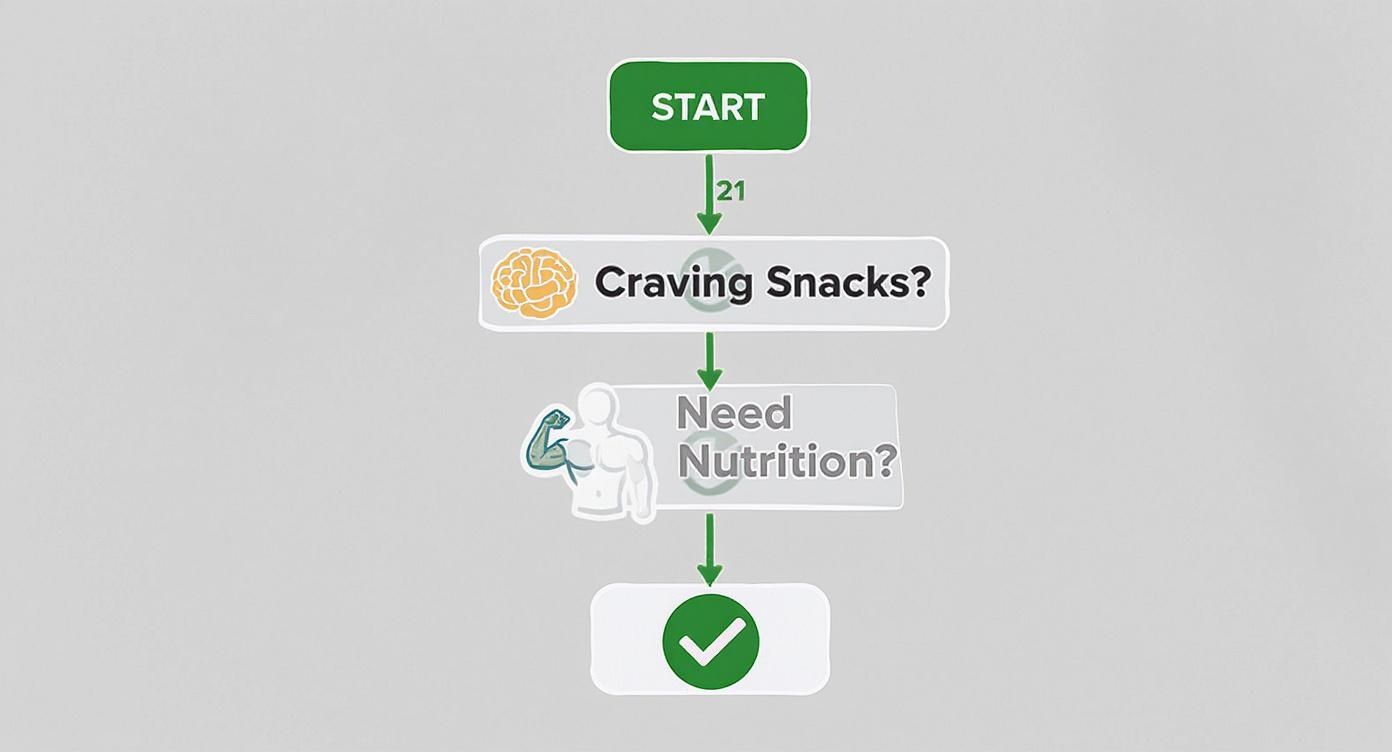
As the chart shows, when that inevitable snack craving hits, you can meet it with something that actually fuels your body instead of just filling a void.
And people are catching on. The market for protein crisps (a close cousin to protein chips) was valued at USD 3.5 billion and is expected to blow past USD 7.4 billion by 2035. This isn't a niche trend anymore; it's a mainstream movement driven by people who want more from their food.
Becoming a skilled label-reader is one of the best things you can do for your health. If you're looking for more great ideas that fit a hectic lifestyle, be sure to check out our guide on the best on-the-go protein snacks.
Who Actually Benefits from Protein Chips?
When most people hear "high-protein snack," they immediately picture a hardcore bodybuilder. While it's true that athletes love them for muscle repair, the reality is that high-protein chips are a game-changer for a much wider crowd.
Think of them as a smart, simple tool for anyone looking to eat better without giving up the convenience and taste they crave.
Take the busy professional hitting that dreaded 3 p.m. wall. Instead of grabbing a sugary candy bar that guarantees an energy crash, a bag of protein chips delivers a satisfying crunch and sustained fuel. The protein keeps you feeling full and focused, helping you power through the rest of the afternoon.
The same goes for students bouncing between classes and late-night study sessions. Having a macro-friendly snack ready to go makes it so much easier to sidestep the vending machine and keep your brain firing on all cylinders. It’s all about making the healthier choice the easy choice, no matter how chaotic your day gets.
More Than Just Muscle: Everyday People, Everyday Goals
The appeal of protein chips goes far beyond just one type of person. They're a fantastic option for anyone with a specific health goal in mind.
Here’s a quick look at who really stands to benefit:
- Anyone Managing Their Weight: Protein is famous for its ability to keep you feeling full. This satiety is a huge advantage, as it helps curb cravings and can naturally lead to eating fewer calories overall. A crunchy, savory snack makes sticking to a nutrition plan feel a lot less like a sacrifice.
- Parents Stocking a Healthier Pantry: Let's be honest, finding snacks that kids actually like and parents feel good about is a constant battle. Protein chips are a brilliant swap for the usual empty-calorie options, giving active, growing kids a more balanced choice.
- Fitness Fans and Weekend Warriors: After a tough workout—whether it’s lifting, running, or yoga—your muscles are crying out for amino acids to repair and grow. A bag of protein chips is an incredibly easy and tasty way to get that recovery process started right away.
The real magic of a well-made protein chip is how it fits into your life. It’s a simple swap that supports a whole range of goals, from building muscle and losing fat to just eating a more balanced diet without feeling deprived.
At the end of the day, these snacks are for anyone who wants to be more intentional with their food choices. If you’re looking for more ways to up your intake, our guide on how to increase protein intake is packed with practical tips. Making smart swaps like this is one of the easiest ways to elevate your nutrition and feel your best.
Smart Ways to Eat High Protein Chips
So you've got a bag of high-protein chips. Great! But just ripping it open and munching away isn't the only way to go. To really make them work for you, it helps to think of them as more than just a snack—they're a powerful tool for your nutrition toolkit. With a bit of thought, they can boost your energy, speed up recovery, and help you stick to your health goals.
First thing’s first: let’s talk portions. Even though these chips are a much smarter choice, calories are still calories. It's easy to lose track when you're eating straight from the bag. Instead, take a quick look at the nutrition label, grab a bowl, and measure out a single serving. It’s a simple move that keeps you in control and makes it easy to track your macros.
Turn Your Snack into a Mini-Meal
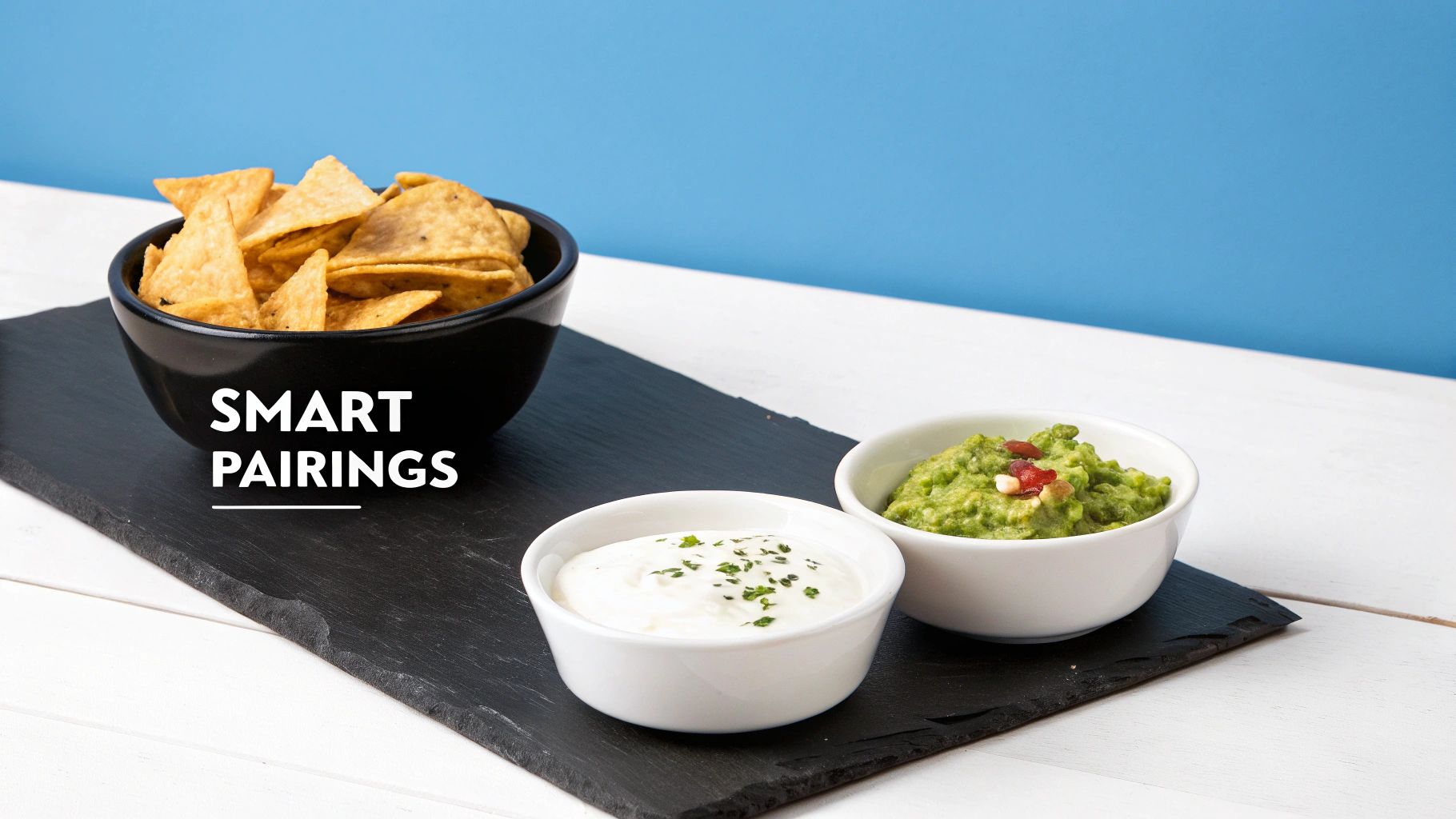
One of the best things about high-protein chips is how well they pair with other healthy foods. A good pairing can take them from a simple snack to a well-rounded mini-meal that will actually keep you satisfied.
Here are a few of my go-to combinations:
- Greek Yogurt Dip: Forget the high-fat sour cream dips. Just mix some plain Greek yogurt with fresh herbs and a squeeze of lemon. You get a creamy, tangy dip that doubles down on the protein.
- Fresh Guacamole: This is a classic for a reason. The healthy fats in avocado are fantastic for sustained energy and help your body absorb nutrients more effectively.
- A Scoop of Hummus: Chickpeas are a powerhouse of fiber and plant-based protein. Dipping your chips in hummus makes for a seriously filling snack that will keep hunger away for hours.
These pairings aren't just about taste; they're about building a more complete nutritional profile with a solid mix of protein, healthy fats, and fiber.
This trend is bigger than just a few new products on the shelf. The demand for functional snacks like these is exploding. In fact, the protein chip market is projected to grow from USD 2.15 billion to a massive USD 4.14 billion by 2033. It's a clear sign that people want more from their food. You can dig into the numbers yourself in Grand View Research's industry analysis.
Nail Your Nutrient Timing
When you eat your protein chips can be just as crucial as what you eat them with, especially if you’re active. Timing your snack right can make a real difference in your performance and recovery.
Think about these two key opportunities:
- Pre-Workout Fuel: Having a serving about 30-60 minutes before a workout gives your body a readily available source of amino acids and carbs. It's the perfect way to top off your energy stores and prevent that dreaded mid-session slump.
- Post-Workout Recovery: After you exercise, your muscles are primed to soak up nutrients. Eating protein chips within an hour of your cool-down helps kickstart the muscle repair and growth process right when your body needs it most.
By paying attention to portion size, smart pairings, and nutrient timing, you can make high-protein chips a truly effective part of your fitness and health routine.
Choosing Between Chips, Bars, and Shakes
When you’re hunting for a quick protein boost, you’ll likely run into three main players: high-protein chips, bars, and shakes. Each one has its own role to play, and the best choice really boils down to what your body and your taste buds are craving in that moment. There's no single "best" option—it’s all about matching the snack to the situation.
Think of a protein shake as the express lane for nutrients. It’s incredibly efficient for post-workout recovery, getting protein to your muscles as fast as humanly possible with zero fuss. The downside? You drink it in a minute, so it often doesn't give you that satisfying "I've actually eaten something" feeling.
Bars for Portability and Cravings
Protein bars sit somewhere in the middle. They give you a substantial, chewy bite that feels more like a real snack than a quick drink. You can't beat their portability; they're perfect for stashing in a gym bag, a car console, or a desk drawer for an emergency. If you're looking at bars, you might check out options like the popular Quest Bars, which come in a ton of different flavors. Just be warned—many bars on the market are either packed with sugar alcohols or have a weird, dense texture that can be a real turn-off.
Chips for Satiety and Satisfaction
And this is exactly where high-protein chips find their sweet spot. They offer something the others just can't: a savory, deeply satisfying crunch. That sensory experience is a powerful tool for fighting off cravings for classic, unhealthy junk food. The physical act of chewing and the crunchy texture do a much better job of telling your brain you're full compared to a liquid or a dense, chewy bar.
For a lot of us, the psychological win from eating a crunchy, savory snack is a total game-changer for sticking to a diet long-term. It makes healthy eating feel less like a sacrifice and more like a choice you actually enjoy.
So, let's break it down to help you decide.
Protein Snack Showdown: Chips vs. Bars vs. Shakes
To make it even clearer, let's compare these three snack powerhouses side-by-side. Think about what you need most—speed, convenience, or pure snacking satisfaction—and you'll find your answer here.
| Feature | High Protein Chips | Protein Bars | Protein Shakes |
|---|---|---|---|
| Best For | Crushing savory cravings, mindful snacking, feeling full. | On-the-go fuel, sweet tooth satisfaction, meal replacement in a pinch. | Rapid post-workout recovery, fastest possible absorption. |
| Pros | Savory crunch, high satiety, feels like a "real" snack. | Extremely portable, wide variety of flavors, no prep required. | Fastest protein delivery, easy to digest, simple and quick. |
| Cons | Can be more fragile, potentially higher in fat/sodium. | Often high in sugar alcohols, can have a dense or chalky texture. | Low satiety, doesn't satisfy the need to chew, can be bland. |
Ultimately, having a few different options on hand is the smartest strategy. That way, you can listen to what your body is telling you and grab the right tool for the job.
Here’s a simple cheat sheet:
- Grab a shake when you need protein delivered to your muscles, stat. Think right after a brutal workout.
- Grab a bar when you need something super convenient and portable that satisfies a sweet craving.
- Grab high-protein chips when you're fighting a craving for something savory, want to feel genuinely full, or just need a snack that feels like a treat without the guilt.
Your Guide to Buying the Best Protein Chips
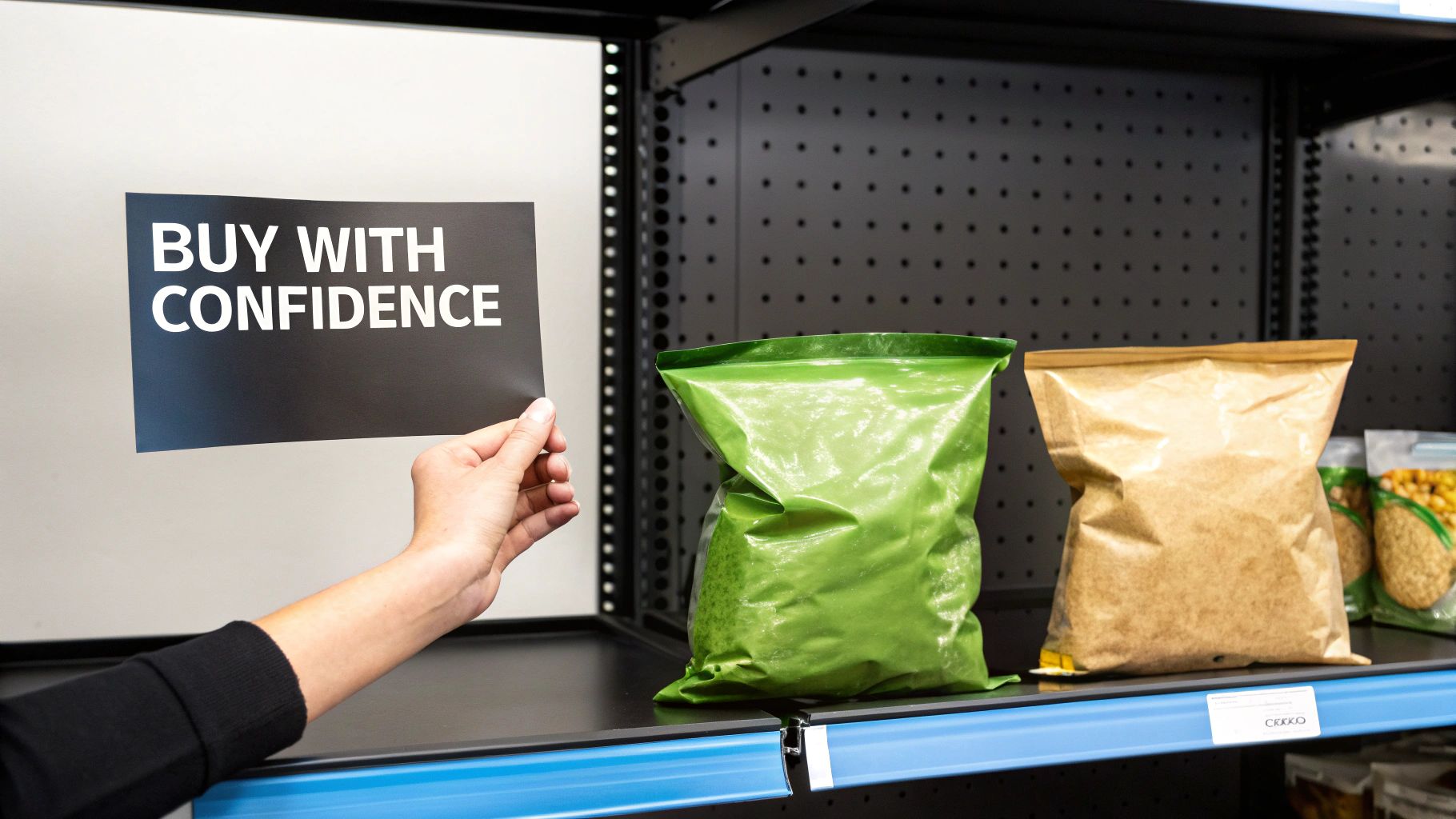
Walking down the snack aisle can be a minefield of confusing labels and bold health claims. But armed with the right know-how, you can cut through the noise. Choosing the best high protein chips isn’t about getting suckered in by flashy marketing—it’s about knowing exactly what to look for on the back of the bag.
Think of this as a mental checklist you can run through in about 30 seconds, right there in the store. This little habit helps you sidestep the junk and pick a snack that actually works for your body and your goals.
Your Quick-Scan Checklist
When you grab a bag, your mission is simple: find a clean label with a serious nutritional punch. Forget the marketing fluff on the front and focus on these three things.
-
Check the Protein-to-Calorie Ratio: This is your number one priority. A solid protein chip should give you at least 15g of protein for around 150-200 calories per serving. This tells you the snack is genuinely protein-dense, not just a carb-heavy chip with a sprinkle of protein added.
-
Scan the Ingredient List: Is it short and sweet? You want to see real, recognizable ingredients. Look for clean, plant-based protein sources like pea protein, and steer clear of a long list of additives you can't pronounce. Brands like Gym Snack are a great example of this, prioritizing ingredients you’d find in your own kitchen.
-
Inspect the Fat Source: Not all fats are created equal. You’re looking for high-quality oils like high-oleic sunflower or avocado oil. If the label just says "vegetable oil" or lists palm oil and other inflammatory seed oils, it’s a good sign to put the bag back on the shelf.
Pro Tip: Good brands have nothing to hide. They make their nutrition facts easy to find and are proud of their short ingredient lists. If you feel like you need a magnifying glass to find the details, that’s usually a red flag.
Using this quick-scan method takes the guesswork out of shopping. It trains you to spot the brands that are genuinely committed to quality, ensuring the high protein chips you choose are actually fueling your body right and helping you crush your goals, one crunchy bite at a time.
Got Questions About High-Protein Chips? We've Got Answers.
When you're trying to eat better, new snacks can feel a bit like the wild west. It's totally normal to have questions. Let's clear up some of the common ones so you can feel good about what you're munching on.
Are High-Protein Chips Actually Healthy?
The short answer? They definitely can be, but it all comes down to what's inside the bag. A truly healthy high-protein chip isn't just about the protein content—it's about the quality of every single ingredient.
Look for snacks that pack at least 15g of protein per serving and keep the added sugar to a minimum. The source of fat is also a huge tell; you want to see healthy options like sunflower or avocado oil, not a list of processed seed oils. A clean, recognizable ingredient list is always your best bet.
Can High-Protein Chips Help You Lose Weight?
Absolutely. Think of them as a secret weapon for managing hunger. Protein is the most satiating macronutrient, meaning it helps you feel full and satisfied for much longer than carbs or fats alone.
That feeling of fullness is key. It helps crush those random cravings that can derail your progress, leading you to consume fewer calories overall. Plus, the satisfying crunch can fulfill that psychological urge to chew on something, making it a smarter swap for regular chips when you need to stick to your plan without feeling deprived.
A snack that keeps you full and satisfies your craving for a crunch? That's a powerful tool for staying on track with any weight management goal.
When’s the Best Time to Eat Them?
One of the best things about high-protein chips is how versatile they are. There’s really no single "best" time to eat them—it all depends on your schedule and what you're trying to accomplish.
- To beat the afternoon slump: They’re perfect for avoiding that 3 p.m. energy crash and staying sharp.
- For pre-workout fuel: Grab a bag about an hour before you hit the gym to give your body some sustained energy.
- For post-workout recovery: Munch on a serving within an hour of finishing your workout to help your muscles start repairing.
And, of course, their grab-and-go nature makes them a lifesaver for busy days when you just need something quick and effective to keep you going.
Ready to experience the satisfying crunch of a truly clean, plant-based protein snack? Gym Snack delivers chef-inspired flavors and macro-friendly nutrition in every bag. Fuel your goals the delicious way. Shop Now.