

High protein plant based snacks are far more than just a quick bite; they're nutritional powerhouses built to fuel your body, kickstart muscle repair, and keep you feeling full and focused. A good one will pack at least 10-15 grams of protein per serving, turning your snack break into a functional part of your day.
Why High Protein Plant Based Snacks Are More Than a Trend
The explosion of high-protein, plant-based snacks isn't just another wellness fad. It’s a genuine shift in how we think about nutrition, fitness, and convenience all rolled into one. People are no longer satisfied with snacks that just quiet a rumbling stomach; they're looking for functional foods that actually help them hit their health goals.
The numbers back this up. The market for these snacks has seen massive growth, with plant-based options now making up over 62.8% of the entire protein snack market. This isn't a small niche—it's a clear signal that consumers are getting smarter about their food choices. You can dive deeper into the growth of the plant-based snack market to see just how big this movement has become.
But what really makes these snacks work so well? It all comes down to the role protein plays in your body.
The Science of Satiety and Energy
One of the biggest wins you get from a protein-rich snack is its effect on satiety—that satisfying feeling of being full. Think about it: a carb-heavy snack often gives you a quick energy spike followed by a hard crash. Protein works differently. It digests much more slowly.
This slow-and-steady digestion process signals your body to release gut hormones like GLP-1 and PYY, which are basically messengers that tell your brain, "Hey, we're full down here!" This is exactly why a handful of roasted chickpeas or a pea protein snack like Gym Snack can shut down cravings for hours, helping you avoid mindless grazing and better manage your overall intake.
The real magic of high-protein snacks lies in their ability to regulate hunger cues on a biological level. By stimulating satiety hormones, they provide a sustainable sense of fullness that simple carbs just can't match.
Fueling Performance and Recovery
If you lead an active life—whether you're a dedicated athlete or a weekend warrior—protein isn't optional. It's the literal building block for repairing and growing muscle.
When you finish a workout, your muscle fibers are broken down and ready for repair. A high-protein plant-based snack provides the essential amino acids your body needs to get to work. This recovery process, called muscle protein synthesis, is what makes you stronger over time. A snack that delivers 15 grams or more of clean plant protein can give this process a powerful kickstart.
These snacks also provide a much more stable form of energy. By keeping your blood sugar from spiking and crashing, protein helps you avoid those classic energy slumps. This makes it the perfect pre-workout fuel to get you started or a mid-afternoon pick-me-up to carry you through the rest of the day without hitting a wall.
To give you a quick snapshot, here’s a breakdown of what’s driving this trend.
Why Plant Based Protein Snacks Are So Popular
This table gives you a quick snapshot of the key drivers and benefits behind the rise of high-protein, plant-based snacks, offering a scannable summary of the core advantages.
| Key Driver | Primary Benefit for You | Common Snack Examples |
|---|---|---|
| Increased Health Consciousness | Snacks that actively support health goals like muscle growth, weight management, and stable energy levels. | Roasted chickpeas, edamame, protein bars made with pea or brown rice protein. |
| Demand for Convenience | Nutrient-dense, portable options that fit into busy schedules without compromising on nutrition. | Ready-to-eat protein puffs, single-serving nut butter packs, plant-based protein shakes. |
| Ethical & Environmental Concerns | A way to get quality protein with a smaller environmental footprint compared to animal-based sources. | Lentil-based chips, fava bean snacks, products from sustainable farming practices. |
| Improved Taste & Texture | Modern food science has made plant-based snacks delicious, overcoming the old "cardboard" stereotype. | Savory pea protein snacks, creamy plant-based yogurts, flavorful tofu jerky. |
Ultimately, choosing the right snack means choosing lasting fuel over a temporary fix. It’s about making a smart, strategic choice that supports your body from the inside out.
Understanding Plant Protein and How Your Body Uses It
To really get why high protein plant based snacks are so effective, it helps to pull back the curtain on what plant protein is and how your body actually uses it. It’s a lot less complicated than you might think.
At the most basic level, all protein is built from smaller compounds called amino acids. Think of them like a set of Legos. To build anything meaningful—whether it's a house, a car, or in your body’s case, muscle tissue, enzymes, and hormones—you need a whole bunch of different brick shapes and sizes. Your body needs 20 different amino acids to keep everything running smoothly.
Nine of those are called essential amino acids, and the "essential" part is key. It means your body can't make them from scratch; you have to get them from the food you eat. This is where the whole "complete" vs. "incomplete" protein conversation comes from, and it’s a big deal when choosing the right plant-based foods.
The Myth of Incomplete Plant Protein
You’ve probably heard it before: animal proteins are “complete,” while plant proteins are “incomplete.” A complete protein is just a food that has all nine essential amino acids in decent amounts. But the idea that plant proteins are somehow inferior is a seriously outdated myth.
Sure, some individual plant sources might be a little low in one or two essential amino acids. But here’s the thing: your body is incredibly resourceful. It doesn’t need every single amino acid from every single bite of food. It maintains a "pool" of amino acids from everything you've eaten throughout the day, mixing and matching as needed to build whatever it needs.
If you’re still trying to figure out how to put this into practice, learning how to get enough protein on a plant-based diet can give you a simple, actionable plan.
The old rule that you have to combine specific plant proteins at every single meal is a misconception. Your body is smart enough to combine amino acids from everything you eat over the course of a day to get the job done.
So, by eating a variety of plant foods or choosing snacks that blend different sources, you're giving your body all the building blocks it needs, without any extra stress.
Powerhouse Plant Protein Sources
When it comes to performance, not all plant proteins are created equal. Smart brands, like the team behind Gym Snack, are very deliberate about the sources they use. Let's break down a few of the all-stars.
- Pea Protein: This is a real MVP in the plant-based world. It's packed with branched-chain amino acids (BCAAs)—leucine, isoleucine, and valine—which are the critical signals for kickstarting muscle repair and growth after a workout. Plus, it's easy on the stomach and hypoallergenic.
- Hemp Protein: A fantastic all-in-one source. Hemp delivers a solid dose of protein along with healthy omega-3 and omega-6 fats and fiber. It also contains all nine essential amino acids, making it a complete protein all by itself.
- Soy Protein: As one of the original plant-based powerhouses, soy is a complete protein that has been studied for decades. Research consistently shows its muscle-building benefits are right on par with whey protein.
Why Protein Blends Are a Smart Choice
This is where things get really clever. The most effective high protein plant based snacks almost always use a blend of different protein sources. For instance, pairing a legume protein like pea with a grain protein like brown rice creates a powerful synergy.
This strategy, known as protein combining, gives you a more robust and complete amino acid profile in one shot. The pea protein might be rich in an amino acid called lysine, while rice protein is high in methionine. Put them together, and they perfectly complement each other, covering all your bases.
This makes the snack every bit as effective for muscle recovery and crushing hunger as any animal-based option. If you want to dig deeper into how protein works for strength, there are plenty of practical guides on muscle building supplements that can offer more detail. It’s this kind of smart formulation that makes modern plant-based snacks a total game-changer.
How to Read Snack Labels Like an Expert
Walking down the snack aisle can feel overwhelming. With so many packages shouting health claims, it’s easy to get lost in the noise. To find high protein plant based snacks that actually deliver, you need to learn to look past the flashy marketing on the front and get fluent in the language of the nutrition label. It’s the only place to find the real story.
Think of the nutrition label as your cheat sheet, not some complex scientific document. Once you know what to look for, you can size up a snack in seconds. The trick is to zero in on a few key details: where the protein comes from, how much sugar is hiding inside, and the quality of the fats.
Start with the Protein Source
The first place I always look is the ingredients list. It’s organized by weight, so whatever is listed first makes up the bulk of the product. For a top-notch plant-based snack, you want to see recognizable, whole-food ingredients right at the top.
Keep an eye out for powerful, clean sources like:
- Pea Protein Isolate: This is a fantastic, highly concentrated protein that's easy on the gut and packed with muscle-building BCAAs.
- Hemp or Brown Rice Protein: Both are great additions that help create a complete amino acid profile.
- Whole Nuts and Seeds: Ingredients like almonds, pumpkin seeds, or chia seeds don't just add protein—they also bring healthy fats and fiber to the table.
If you see vague terms like "soy protein concentrate" or other fillers leading the list, it's often a red flag. The cleaner and more familiar the protein source, the better it is for your body.
A top-tier plant-based snack will be proud of its protein. If you can't figure out where the protein is coming from within the first few ingredients, it’s probably best to put it back on the shelf.
Hunt Down Hidden Sugars
Next, your eyes should jump straight to the "Added Sugars" line on the nutrition facts panel. This number tells you exactly how much sugar was tossed in during processing, not the sugars that occur naturally in things like fruit. A genuinely healthy snack will keep this number as low as possible, ideally under 5 grams per serving.
You have to be a bit of a detective here, because sugar has a lot of aliases on the ingredients list. Look out for things like:
- Sucrose
- High-fructose corn syrup
- Dextrose or maltodextrin
- Cane juice or cane syrup
Snacks sweetened with natural, low-glycemic options like monk fruit or stevia are a much smarter choice. The whole point of a protein snack is sustained energy, and a sugar bomb will just give you a quick spike followed by a nasty crash.
Evaluate the Fat Content
Finally, don’t just glance at the total fat number—dig deeper into the type of fat. Healthy fats are crucial for everything from hormone balance to brain health, but the wrong kinds can be inflammatory. A good-for-you snack should have zero trans fats and be low in saturated fat.
Again, the ingredients list tells the full story. Look for fats from whole sources like nuts, seeds, and avocado oil. Be cautious with snacks that use highly processed seed oils like soybean, corn, or canola oil. Choosing a snack made with clean, functional fats ensures you’re fueling your body right, from the inside out.
When to Eat Plant Protein for the Best Results
Knowing what to eat is one thing, but knowing when to eat is where you really start seeing results. With a little strategy, your high protein plant based snacks stop being just a bite to eat and become a powerful tool for hitting your goals.
Think of your body like a high-performance engine. You wouldn't just toss fuel in whenever; you’d time it for maximum efficiency—right before a big trip or after to help it cool down. It's the same idea with protein. Timing it right helps you optimize your energy, speed up recovery, and finally get a handle on those pesky hunger pangs.
Whether you're looking to build muscle, manage your weight, or just survive a chaotic day without losing steam, matching your snack schedule to your body's demands is the key. Let's break down the best times to put those snacks to work.
Fueling Your Fitness Pre and Post Workout
For anyone who hits the gym, the trail, or the yoga mat, the windows of time before and after a workout are pure gold. This is when timing your protein intake can directly impact your energy, endurance, and how fast your muscles bounce back.
Pre-Workout Power-Up (30-60 minutes before):
Having a light, protein-forward snack before you train gives your muscles a steady drip of amino acids. This simple step can help prevent muscle breakdown when you’re pushing hard and provides sustained energy, completely avoiding that quick spike-and-crash you get from sugary carbs. A savory, crunchy snack like Gym Snack is perfect for this—it’s satisfying but won’t weigh you down.
Post-Workout Recovery (Within 60 minutes after):
This is it—the most crucial window for muscle repair. After a tough session, your muscles are like sponges, ready to soak up whatever nutrients you give them. Getting 15-20 grams of high-quality plant protein in this timeframe kickstarts muscle protein synthesis, which is just the technical term for rebuilding and strengthening the muscle fibers you just worked so hard.
Think of your post-workout snack as the first step in your recovery, not just a reward. Feeding your body immediate, high-quality protein during this window is non-negotiable if you want to minimize soreness and see real strength gains.
Mastering Satiety and All-Day Energy
Even outside the gym, smart snacking can be a total game-changer for managing hunger, keeping your blood sugar stable, and dodging that dreaded afternoon slump. Protein digests slowly, making it your best friend for controlling your appetite and staying sharp.
Take the classic 3 p.m. energy dip, for instance. Grabbing a protein-rich snack instead of something sugary can make all the difference. You get stable blood sugar and avoid the energy crash that usually leads to mindless grazing later on. The rise of convenient, portable options has made this easier than ever. In fact, snack and protein bars now lead the pack in plant-based snacks, a shift driven by people wanting nutrient-dense, on-the-go fuel for their active lives. You can explore the plant-based snack market growth to see just how big this trend has become.
Here’s a simple timeline for all-day wellness:
- Mid-Morning Bridge: A protein snack around 10 a.m. is perfect for curbing hunger and preventing you from overdoing it at lunch.
- Afternoon Slump Buster: Beat that 3 p.m. wall of fatigue with a snack that delivers steady energy to carry you through the rest of the day.
- Evening Craving Crusher: If you struggle with late-night munchies, a small, savory protein snack can satisfy those cravings and support overnight muscle repair without messing with your sleep.
Discovering Your Perfect High Protein Plant Based Snack
Alright, you’ve learned how to read a nutrition label like a pro and time your snacks for maximum impact. Now for the best part: finding the high-protein, plant-based snacks you'll genuinely crave.
The perfect snack isn't just about the numbers; it's about what fits your life. Whether you need something to grab on your way out the door or a satisfying crunch to power through the afternoon, there's an option for you. Think of this as your guide to building a go-to arsenal of delicious, powerful snacks for any situation.
Grab-and-Go Store-Bought Favorites
Let's be real—life gets busy. On those days, having ready-to-eat snacks is a game-changer. These options require zero prep but still pack the protein punch your body needs.
- Savory Protein Puffs: This is where modern food science really shines. Snacks like Gym Snack use clean pea protein to deliver 15+ grams of protein with a deeply satisfying, cheesy crunch. They’re a fantastic choice for right after a workout to get the recovery process started.
- Roasted Chickpeas and Fava Beans: These crunchy little nuggets are true nutritional powerhouses. A single serving gives you a solid hit of protein and fiber, making them perfect for squashing those 3 PM hunger pangs. Plus, they're a great source of iron for energy.
- Single-Serving Edamame Packs: You can usually find these in the frozen aisle. Steamed edamame is a simple, whole-food snack that comes loaded with complete protein. It’s an awesome way to keep your energy levels steady and stable.
The demand for convenient, healthy options is exploding. In fact, the Asia-Pacific region is set to become the fastest-growing market for plant-based protein snacks, with projected growth of 15.4% annually. This boom is fueled by a growing awareness of health and the need for easy nutrition. For a deeper dive into these market trends, you can explore the full report on the global plant-based snacks market.
A Comparison of Popular Plant Based Protein Snacks
With so many choices out there, it can be tough to decide what's right for you. This table breaks down some popular options to help you pick the perfect snack based on convenience, protein content, and what you need it for.
| Snack Type | Typical Protein (per serving) | Best For | Convenience Level |
|---|---|---|---|
| Protein Puffs | 15-20g | Post-workout recovery, crunchy cravings | Very High (Grab-and-go) |
| Roasted Chickpeas | 6-8g | Afternoon satiety, fiber boost | Very High (Grab-and-go) |
| Edamame Packs | 10-12g | Steady energy, whole-food nutrition | High (Quickly steam or thaw) |
| DIY Energy Bites | 5-10g per bite | Pre-workout fuel, customizable | Medium (Requires prep time) |
| Tofu Salad & Crackers | 15-20g | Substantial snack, muscle repair | Low (Requires prep & assembly) |
Ultimately, the best approach is to have a mix of these on hand. Keep some protein puffs in your gym bag for emergencies, and prep some energy bites on Sunday for the week ahead.
Simple DIY High Protein Snacks
Making your own snacks puts you in complete control. You get to decide exactly what goes in, which means you can ditch the extra sugars and weird oils common in many packaged goods. And you don't need to be a professional chef—these recipes are incredibly simple.
Creating your own snacks isn't about being a professional chef; it's about making smart, simple swaps. A few minutes of prep can give you a week's worth of clean, energizing fuel tailored exactly to your tastes.
Here are a few of my favorite easy ideas to get you started:
1. No-Bake Pea Protein Energy Bites
This is the ultimate set-it-and-forget-it snack. Just mix one cup of rolled oats, a half-cup of your favorite nut butter, a third-cup of maple syrup, and two scoops of a good pea protein powder (vanilla or unflavored works best). If it’s too crumbly, add a splash of plant-based milk. Roll the mixture into balls, pop them in the fridge, and you’re done. They're perfect for a quick energy jolt before a workout.
2. Savory Spiced Nut and Seed Mix
Forget boring trail mix. Make your own by tossing almonds, pumpkin seeds, and sunflower seeds with a tablespoon of olive oil and savory spices like smoked paprika, garlic powder, and a pinch of cayenne for a little kick. Roast them at 350°F (175°C) for about 10-15 minutes until golden. This mix is packed with healthy fats and protein, making it ideal for sustained energy on those extra-long days.
3. Creamy Tofu "Egg" Salad
When you need something more substantial, this is my go-to. Mash a block of firm tofu with a fork, then stir in a few tablespoons of vegan mayo, a teaspoon of mustard, and a pinch of turmeric to give it that classic yellow color. Season it up with salt, pepper, and some chopped chives. It’s amazing with whole-grain crackers and gives you a huge dose of complete protein for muscle repair.
These recipes are just a starting point, so have fun with them! Swap in different nuts, seeds, or spices to create your own signature snack. For more ideas on powerhouse ingredients, be sure to check out our complete high-protein vegan foods list.
How to Choose the Right Plant-Based Protein Snack for You
Alright, we’ve covered the what, why, and when of plant-based protein. You know how to read a label and how to time your snacks for the best results. Now, let’s bring it all together and figure out how to pick the perfect snack for you—your goals, your schedule, and your body. Think of it as matching the right fuel to the right job.
Making a smart choice isn't some complex formula. It really just boils down to asking yourself three quick questions before you eat: What am I trying to accomplish right now? When am I eating this? And what is this label actually telling me? Answering these will point you straight to the snack that will best support your body in that moment.
This simple decision tree breaks it down based on whether you need a snack for energy, recovery, or just pure convenience.
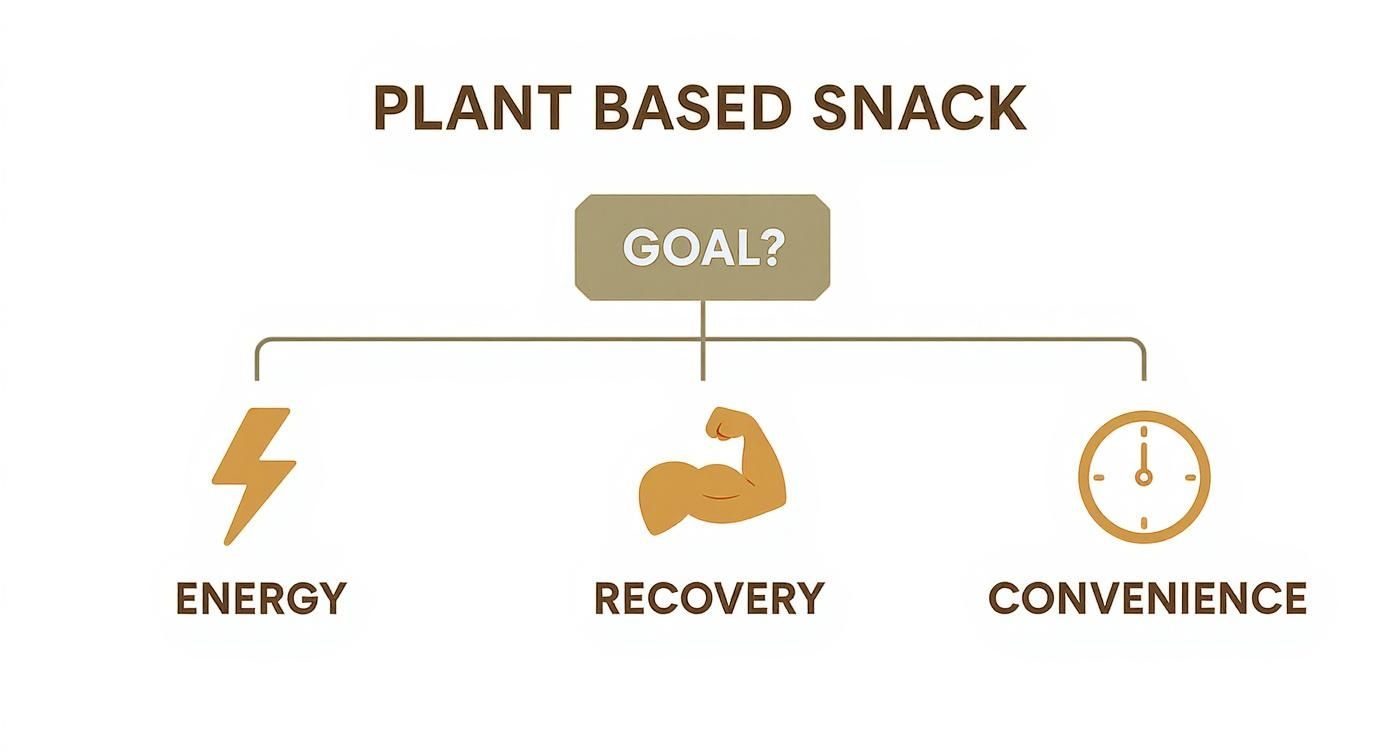
As you can see, your immediate goal should be the first thing you consider. It helps you zero in on the kind of snack that will actually help, not hinder, your progress.
Your Personal Snack Selection Checklist
Here’s a final mental filter to use when you're staring down the snack aisle or stocking your pantry. Running through this quick checklist ensures every snack you eat is a deliberate choice that gets you closer to where you want to be.
-
Define Your Goal: What do you need right now? Are you trying to repair muscles after a workout? Beat that midday energy slump? Or just find something to crush hunger pangs and keep you full until your next meal? For muscle recovery, aim for snacks with at least 15 grams of protein.
-
Check the Protein Quality and Quantity: Flip that package over. Does it meet your protein needs? Look for high-quality, complete protein sources like pea protein isolate. If building muscle is your top priority, you can dive deeper into the best plant protein for muscle gain to really dial in your choices.
-
Analyze the Sugar-to-Fiber Ratio: This is my favorite rule of thumb. A great snack should always have more grams of fiber than grams of added sugar. This little trick helps you pick snacks that deliver sustained energy instead of a sugar crash.
Your ideal snack is a strategic tool, not just a treat. It should deliver high-quality protein, minimal added sugar, and align perfectly with what your body needs in that specific moment.
Putting It All into Practice
Let's walk through a real-life example. It’s 3 p.m. That all-too-familiar afternoon fog is rolling in at your desk. You need something to power you through the rest of the day without derailing your dinner plans.
- Goal: Sustained energy and something to keep me full.
- Protein Check: You grab a savory, crunchy option like Gym Snack and see it has 15g of pea protein. Perfect for promoting that feeling of fullness.
- Sugar Check: A quick glance at the label shows very low added sugar and a solid dose of fiber. This confirms it will give you steady energy, not a spike and crash.
The choice is a no-brainer. It ticks all the boxes for a smart, functional snack that fits the moment.
For those who want to take their nutrition to the next level, using personalized nutrition coaching strategies can offer guidance tailored specifically to your body and fitness journey. But by consistently applying this simple framework, you’re already empowering yourself to make confident, informed choices every single time you snack.
Got Questions About Plant-Based Protein Snacks? We’ve Got Answers.
Stepping into the world of high-protein plant-based snacks can feel a little confusing at first. That's totally normal. Let's tackle some of the most common questions head-on so you can snack with confidence and get the results you're after.
Can Plant-Based Protein Snacks Actually Build Muscle?
You bet they can. Plant-based protein snacks are fantastic for building muscle, as long as they’re built right. The key is making sure they pack enough protein from high-quality sources.
Think of it like this: after a workout, your muscles are broken down and need specific building blocks—amino acids—to repair and grow back stronger. Powerhouse plant sources like pea, soy, and hemp protein are loaded with these essential amino acids. They're especially rich in branched-chain amino acids (BCAAs), which are the critical trigger for kickstarting that muscle repair process. Grabbing a snack with 15-20 grams of protein within an hour or so of your workout is a game-changing strategy for maximizing muscle growth.
Will I Get Enough Protein if I Only Eat Plant-Based Snacks?
While a great high-protein snack is a powerful tool, it’s just one part of your overall nutrition plan. It's still crucial to eat balanced, protein-rich meals throughout the day. That means filling your plate with whole foods like lentils, tofu, beans, and quinoa.
The best way to think about high-protein plant-based snacks is as a booster shot for your diet. They’re perfect for filling the gaps on hectic days or fueling up right before or after a workout. They shouldn't be your only protein source, but they're an incredibly convenient way to hit your daily targets.
Your meals are the foundation of your diet. High-protein snacks are the MVPs you send in at critical moments to help you nail your fitness goals.
How Can I Spot and Avoid Added Sugars in Packaged Snacks?
This one comes down to becoming a pro at reading labels. It's easier than you think. Your first stop should always be the "Added Sugars" line on the nutrition facts panel. A good rule of thumb is to look for snacks with 5 grams or less.
Next, take a quick scan of the ingredients list. Sugar likes to hide under all sorts of names—sucrose, high-fructose corn syrup, cane sugar, you name it. Brands that opt for natural, low-glycemic sweeteners like stevia or monk fruit are usually a much better bet. The simplest path? Stick to snacks made with whole-food ingredients like nuts, seeds, and clean protein isolates. They just don't need all that extra processed junk.
Ready to find a savory, crunchy snack that ticks all the right boxes? Gym Snack delivers over 15g of clean pea protein per serving with zero junk, helping you crush your goals one delicious bite at a time. Discover your new favorite snack today at https://gymsnack.com.