

Let's bust a common myth right now: you absolutely can find powerful, protein-packed fuel on a plant-based diet. And it starts with smart snacking. The best high protein vegan snack ideas aren't complicated; they're all about combining whole-food powerhouses like legumes, nuts, and seeds to keep you full, focused, and energized.
Forget boring old handfuls of trail mix. We're talking about creative, satisfying options like crunchy roasted edamame, creamy hummus with crisp veggie sticks, or even savory pea protein crisps that hit the spot.
Why Protein Matters In Vegan Snacking
Let's be real—for most people, the word "snack" conjures up images of sugary treats or empty carbs that promise a quick fix but deliver an energy crash an hour later. But when you put protein at the center of your snack strategy, everything changes. Snacking goes from being a potential diet-wrecker to a powerful tool for smashing your health and fitness goals.
Protein isn't just for bodybuilders. It's the essential building block for your entire body, handling everything from repairing your muscles after a tough workout to keeping your hair and skin healthy.
If you're following a plant-based diet, making protein a priority during those in-between meal moments is a game-changer. A high-protein vegan snack does so much more than just quiet a rumbling stomach. It delivers steady, sustained energy, helps keep your blood sugar stable, and boosts satiety—that crucial feeling of fullness that stops you from overeating at your next meal.
Fueling Your Body And Your Goals
Think of protein as the anchor for your snack. A snack without it is like a boat without an anchor—it just drifts, and you'll find yourself feeling hungry again in no time. By making smarter choices, you turn your snacks into something that works for you, not against you.
This isn't some niche health trend, either. It's a reflection of a massive cultural shift in how we approach plant-based eating.
The global appetite for plant-based foods is exploding. The vegan food market, valued at around USD 20.22 billion, is expected to grow at a compound annual rate of 10.7% through 2034. This isn't just a fad; it's a clear signal that people everywhere are moving towards healthier, more protein-aware habits.
What does this explosive growth mean for you? More delicious, innovative, and convenient high protein vegan snack ideas are hitting the shelves than ever before. This guide will give you the complete playbook, covering:
- Understanding Macronutrients: We'll break down what "high-protein" really means and how to strike the right balance with healthy fats and carbs.
- Practical Recipes: You'll get quick and easy recipes you can whip up in minutes or prep ahead for a busy week.
- Strategic Timing: Learn how to time your snacks perfectly to fuel workouts, support weight management, and keep your energy levels consistent all day long.
Ready to completely transform your snack game? Let’s get started.
Understanding Your Personal Protein Needs
Before we even start talking about specific snack ideas, let's get one thing straight: "high-protein" isn't a universal number. What’s high for one person might be just a starting point for another. Your personal protein needs are shaped by your goals, how active you are, and your lifestyle.
Think of it this way: a person who works at a desk all day has very different fuel requirements than a serious athlete training for a race. The standard advice you often hear is about 0.8 grams of protein per kilogram of body weight (or 0.36 grams per pound). Honestly, that's just the bare minimum to keep your body running smoothly—it's not a target for anyone looking to make real progress.
If you’re active, trying to build muscle, or working on managing your weight, that number needs a serious bump. Most active people need somewhere in the range of 1.2 to 1.7 grams of protein per kilogram to help their muscles recover, repair, and grow stronger. Figuring out your number gives your snacking a real purpose.
Why Plant Protein Variety Matters
Hitting your daily protein goal is just part of the picture. The quality and variety of the plant protein you eat are just as crucial. Imagine building a strong brick wall. If all your bricks are the exact same shape, you're going to have gaps and weak spots. To build something solid, you need different shapes and sizes that fit together perfectly.
Proteins are built from smaller units called amino acids. Your body needs a complete set of these building blocks to function at its best. While animal proteins conveniently package all the essential amino acids together, most plant proteins are "incomplete," meaning they’re a bit low in one or two.
But that doesn't make plant protein inferior—not at all. It just means you need to be smart about eating a mix of different sources throughout the day. By combining foods like grains, legumes, nuts, and seeds, you give your body all the "bricks" it needs to build and repair muscle.
This strategy is often called protein combining. You don't have to stress about getting every single amino acid in one meal. As long as your diet is varied, you'll cover all your bases. For a deeper dive, check out our guide on how to get enough protein on a plant-based diet.
Calculating Your Estimated Daily Needs
Alright, let's make this real. You can figure out your own protein target with a simple calculation.
-
Find Your Weight in Kilograms: If you think in pounds, just divide that number by 2.2.
- Example: 150 lbs ÷ 2.2 = 68 kg
-
Pick Your Activity Multiplier: Be honest with yourself here.
- Sedentary (little to no exercise): 0.8 g/kg
- Lightly Active (light exercise 1-3 days/week): 1.2 g/kg
- Moderately Active (moderate exercise 3-5 days/week): 1.4 g/kg
- Very Active (intense exercise 6-7 days/week): 1.7 g/kg
-
Do the Math: Multiply your weight in kilograms by the multiplier you chose.
- Example: 68 kg x 1.4 (for a moderately active person) = ~95 grams of protein per day
This final number is your daily goal. When you know your target, a 15-20 gram high-protein snack suddenly goes from being just a bite to eat to a strategic move that helps you meet your body's demands and crush your goals.
How to Build the Perfect High-Protein Vegan Snack
Putting together a truly satisfying and effective vegan snack isn't about following complicated recipes. It's much simpler than that. Think of it as a basic, powerful formula.
The secret? It’s all about the right combination.
Protein Source + Healthy Fat OR Fiber = The Ultimate Snack
This simple pairing is the key to creating a snack that actually crushes hunger, keeps your blood sugar stable, and delivers steady, long-lasting energy. While a protein-heavy snack on its own is good, adding a source of healthy fat or fiber is what really takes it to the next level. This dynamic duo slows down digestion, which is exactly what you want. It keeps you feeling full and satisfied for hours, helping you dodge that dreaded post-snack energy crash and burn.
For example, a handful of roasted edamame (your protein) paired with some almonds (your healthy fat) makes for a crunchy, savory snack that will keep you going. Or think about some black bean dip (protein) with a few whole-grain crackers (fiber)—it’s a perfect balance that will easily carry you to your next meal.
This simple diagram shows how your own goals, activity, and body all play a part in figuring out how much protein you really need. Once you know that, you can build the right snack for you.
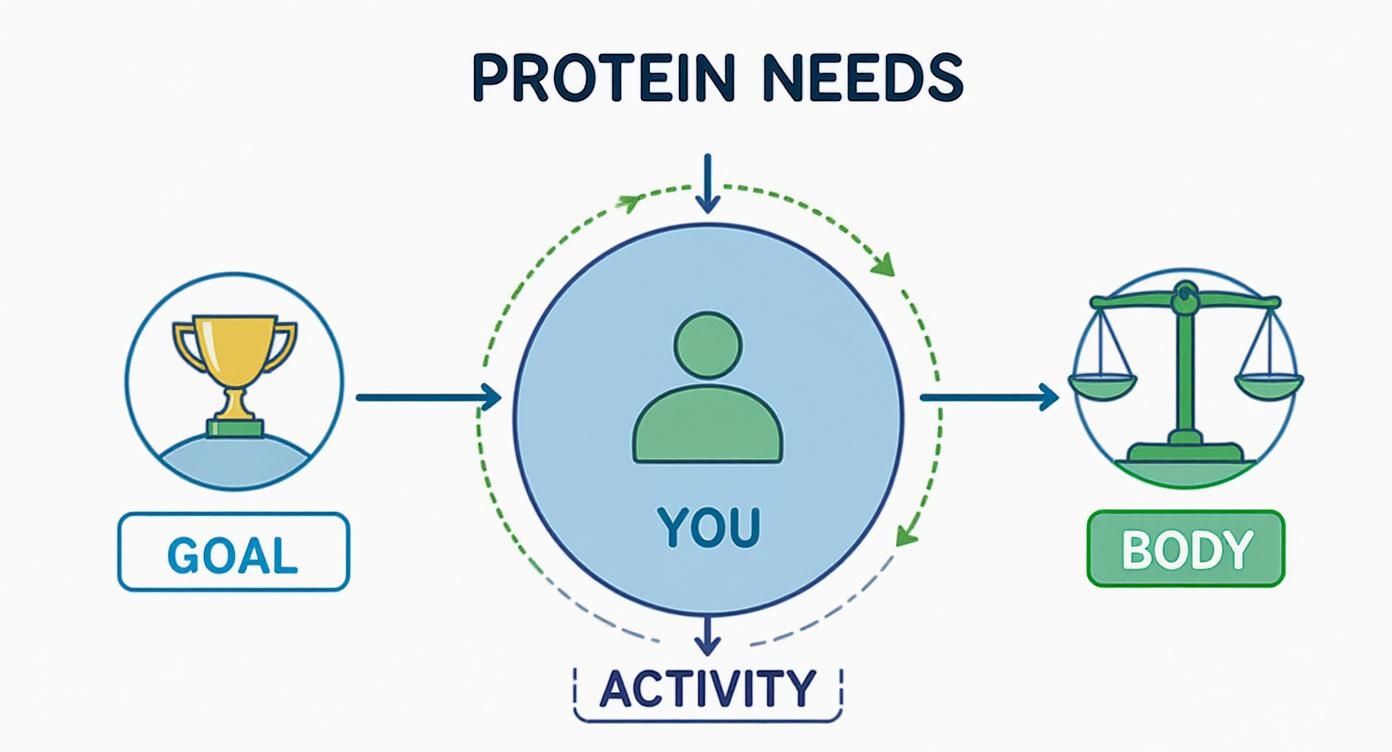
As you can see, your protein target isn't some fixed number; it's a moving target that shifts based on your unique body, how active you are, and what you're trying to achieve with your fitness.
Your Snack-Building Blueprint
To get this formula working in your daily life, the best thing you can do is stock your kitchen with some go-to options from each category. This mix-and-match approach takes all the guesswork out of snacking. When hunger hits, you’ll be just a few minutes away from a perfectly balanced bite.
Here are a few ideas to get your pantry and fridge ready:
-
Protein Powerhouses: These are the anchor of your snack.
- Roasted Chickpeas or Edamame
- Lentil or Black Bean Dip (like hummus)
- A scoop of your favorite vegan protein powder
- Firm Tofu Cubes (baked or air-fried are great)
- Tempeh Strips
-
Healthy Fat Sources: These add that rich, satisfying element.
- Avocado slices or a scoop of guacamole
- A small handful of almonds, walnuts, or cashews
- A spoonful of peanut, almond, or sunflower seed butter
- A sprinkle of chia or hemp seeds
-
High-Fiber Companions: These add bulk and keep your digestion happy.
- Apple slices or pear wedges
- Baby carrots, cucumber slices, or bell pepper strips
- Whole-grain crackers or brown rice cakes
- A small bowl of oatmeal
Keeping these staples on hand means you can easily move beyond just grabbing a handful of nuts and create tons of different combinations. For an even bigger well of ideas, check out our complete high-protein vegan foods list to find some new favorites.
The Snack Building Matrix: Protein + Fat/Fiber
To make things even easier, I've put together a little mix-and-match table. Just pick one item from each column, and you've got a balanced, delicious, high-protein vegan snack ready to go. No overthinking required.
| Protein Source (Choose 1) | Healthy Fat Source (Choose 1) | Fiber Source (Choose 1) |
|---|---|---|
| Hummus (¼ cup) | A few slices of avocado | Bell pepper strips or baby carrots |
| Vegan Greek-style yogurt (¾ cup) | 1 Tbsp chia or hemp seeds | ½ cup of fresh berries |
| Roasted edamame (½ cup) | Handful of almonds or walnuts | An apple or a pear |
| Firm tofu cubes (½ cup) | 1 Tbsp sesame seeds (on the tofu) | Sliced cucumbers |
| Lentil dip (¼ cup) | A drizzle of olive oil | Whole-grain crackers |
This is just a starting point, of course. Feel free to swap in your own favorites and experiment with different flavor combinations to find what you love. The principle is what matters
Easy High-Protein Vegan Snack Recipes
Alright, let's move past the numbers and get to the good part: the food. Knowing which foods to combine is great in theory, but having a few go-to recipes in your back pocket is what makes high-protein snacking feel effortless. Whether you’ve got five minutes flat or a little more time to prep over the weekend, there’s a delicious, satisfying option waiting for you.
These ideas are all about getting the most flavor and nutrition for the least amount of work. You really don't have to choose between something that's good for you and something that's quick.
Quick 5-Minute Fixes
When hunger hits hard and fast, you need something quicker than ordering takeout. These snacks come together in minutes with virtually no cooking, making them perfect for that afternoon slump, a post-workout recovery bite, or a fast energy boost between calls.
- Edamame with Sea Salt: A classic for a reason. A half-cup of shelled edamame packs a solid 9 grams of protein. I like to steam a big batch from frozen and keep it in the fridge. When you're ready to eat, just hit it with a sprinkle of flaky sea salt. Simple, savory, and so good.
- Apple Slices with Seed Butter: Take one medium apple and pair it with two tablespoons of sunflower seed butter. You get that satisfying crunch from the apple and a creamy, rich texture from the butter. It’s a perfect blend of fiber, healthy fats, and around 7-8 grams of protein.
- High-Protein Yogurt Parfait: This feels way more gourmet than it is. Just layer ¾ cup of a high-protein vegan yogurt (look for soy or pea-based Greek styles) with a handful of your favorite berries and a tablespoon of hemp seeds for extra protein and texture. This little parfait can easily deliver 15+ grams of protein.
These simple combos work so well because they nail the macronutrient balance. You get the protein, plus some fiber and healthy fats to keep you feeling full and focused without any complex prep.
A great snack isn’t just about calories; it’s about bridging the gap between meals. By pairing a solid protein source with fiber or fat, you slow down digestion and keep hunger at bay. That’s the secret to avoiding those late-afternoon energy crashes.
This small shift in thinking turns a simple bite into a powerful tool for managing your appetite all day long.
Prep-Ahead Powerhouses
A little time invested on a Sunday afternoon can completely change your snacking game for the week ahead. These recipes are designed for meal prepping, ensuring you always have a genuinely healthy, high-protein option ready to grab from the fridge.
1. Savory Roasted Chickpeas
- Protein: About 7-8 grams per ½ cup serving.
- Ingredients: One 15-oz can of chickpeas (rinsed and dried really well), 1 tbsp olive oil, ½ tsp paprika, ¼ tsp garlic powder, salt to taste.
-
Instructions:
- Get your oven preheating to 400°F (200°C).
- In a bowl, toss the very dry chickpeas with the olive oil and spices until everything is nicely coated.
- Spread them out on a baking sheet in a single layer—don't crowd the pan!
- Bake for 20-25 minutes, giving the pan a good shake halfway through, until they’re golden and crispy. Let them cool completely before storing them in an airtight container so they stay crunchy.
2. Creamy Homemade Hummus
- Protein: Around 5-6 grams per ¼ cup serving.
- Ingredients: One 15-oz can of chickpeas (drained, but save that liquid!), ¼ cup tahini, ¼ cup lemon juice, 1 garlic clove, 2 tbsp olive oil, ½ tsp cumin, salt to taste.
-
Instructions:
- Throw all the ingredients into a food processor.
- Blend away until it's super smooth. If it looks too thick, add a tablespoon of that reserved chickpea liquid (aquafaba) at a time until it's the perfect consistency.
- Serve it with veggie sticks or whole-grain pita. It keeps beautifully in the fridge for up to a week.
3. No-Bake Energy Bites
- Protein: Roughly 3-4 grams per bite (more if you add protein powder).
- Ingredients: 1 cup rolled oats, ½ cup peanut butter, ⅓ cup maple syrup, ¼ cup ground flaxseed, ¼ cup vegan chocolate chips. For an extra boost, add 1 scoop of your favorite vegan protein powder.
-
Instructions:
- Dump everything into a big bowl and mix it up until it’s all combined.
- Roll the mixture into little bite-sized balls.
- Pop them into an airtight container and store them in the fridge. They’re perfect for a quick, energizing treat when you need it most.
Strategic Snacking for Fitness and Health Goals
Knowing what to snack on is a great start, but knowing when to snack is how you make your food truly work for you. Strategic snacking isn’t about following rigid rules. It’s about timing your fuel to perfectly match your body’s needs, whether you're hitting the gym or just trying to manage your weight.
Think of it as turning a simple bite into a high-performance tool.
For anyone serious about fitness, snacks are essential pre- and post-workout fuel. Before you train, you need energy that lasts. A snack combining complex carbs and a hit of protein about 60-90 minutes beforehand will give you a steady release of power, helping you avoid that dreaded mid-session energy crash.
After your workout, the game changes. Now, it's all about recovery. A protein-rich snack within an hour helps kickstart muscle protein synthesis—the critical process your body uses to repair and rebuild what you just broke down. This is your prime window for making the most of your hard work. Our guide on the best plant protein for muscle gain can help you dial in your choices here.
Snacking for Satiety and Weight Management
If weight management is your main focus, high-protein vegan snacks are your secret weapon. Why? Because protein is incredible at promoting satiety, that feeling of fullness that stops you from reaching for another cookie. It helps manage your hunger hormones, sending a clear signal to your brain that you're satisfied.
A well-timed, protein-forward snack between meals can absolutely crush cravings. It stops you from showing up to lunch or dinner so hungry that you'll eat anything in sight. This simple adjustment makes it so much easier to control your portions and make smarter choices at mealtimes.
People are catching on to this. The demand for convenient, functional foods is exploding, with the global protein snacks market projected to hit around US$4.8 billion next year. Plant-based options are leading this movement, accounting for a massive 62.6% of the market as more and more people hunt for high protein vegan snack ideas.
A Sample Daily Snacking Schedule
So, what does this look like in the real world? It's actually pretty simple. Here’s one way to structure your day:
- 10:00 AM (Mid-Morning Boost): A handful of roasted chickpeas. This is perfect for knocking out morning hunger and keeping you focused until lunch.
- 4:00 PM (Pre-Workout Fuel): A small bowl of high-protein vegan yogurt topped with berries. This delivers the quick and sustained energy you need for an evening workout.
- 6:30 PM (Post-Workout Recovery): A savory, crunchy option like Gym Snack Cheddar Cheeze crisps. It’s an easy way to replenish protein and satisfy those post-exercise cravings.
Think of your snacks as intentional moments of nourishment. Each one should have a purpose, whether it's fueling an upcoming activity, helping you recover, or simply keeping your energy stable and your hunger managed until your next meal.
And it’s not just about protein. Strategic snacking can support your overall well-being. A healthy gut, for instance, is vital for performance. Learning about natural probiotics and food sources for optimal gut health can be a fantastic complement to your fitness journey.
Finding the Best Store-Bought Vegan Snacks
Let's be real—while whipping up your own protein-packed snacks is ideal, life often has other plans. Sometimes you just need to grab something from a store shelf that you can trust to fuel your day without a second thought. But navigating those grocery aisles can feel like walking through a minefield of flashy labels and hidden junk.
The secret to becoming a savvy shopper is simple: flip the package over. Ignore the marketing hype on the front and head straight for the nutrition label and ingredient list. That's where the truth lives. You're looking for snacks that pack a serious protein punch without being loaded with sugar, sodium, or other junk your body doesn't need.
Decoding the Nutrition Label
First things first, check the protein-to-calorie ratio. A solid snack should give you at least 10-15 grams of protein without costing you a huge chunk of your daily calorie budget. Pay close attention to the sugar content, too. It's shocking how many "healthy" bars are basically candy in disguise, setting you up for a nasty energy crash later.
Next, give the ingredient list a quick scan. You want to see whole-food powerhouses at the top of the list. Look for things you actually recognize, like:
- Pea protein isolate
- Lentils or chickpeas
- Nuts and seeds (think almonds, pumpkin seeds, or hemp hearts)
- Whole grains like quinoa or oats
Seeing these ingredients is a great sign that you're holding a nutrient-dense snack, not something made from refined flours and weird fillers.
And you're not alone in looking for better options. The demand is exploding. The vegan protein market was valued at around USD 10.90 billion and is expected to rocket to nearly USD 18.96 billion by 2032. This massive growth is all thanks to people like you demanding healthier plant-based foods. You can dive deeper into this trend in this detailed report on the global vegan protein market.
Key Takeaway: Stick to snacks with short ingredient lists filled with words you can actually pronounce. If it reads like a chemistry textbook, it’s probably not the best fuel for your body.
At the end of the day, the best store-bought snacks don't make you choose between convenience and nutrition. Great options, like Gym Snack’s savory pea protein crisps, are specifically designed to deliver on both incredible flavor and solid macros. Once you get the hang of reading labels, you'll be able to confidently pick on-the-go snacks that actually support your goals.
Got Questions About Vegan Protein Snacks? Let's Clear Them Up.
Diving into the world of high-protein vegan snacks can bring up a few common questions, especially if you're just getting started with plant-based eating. Let's tackle some of the most frequent ones so you can build a snacking routine that actually works for you.
One of the biggest questions I hear is whether plant protein is "as good" as animal protein. The short answer? Yes, absolutely. The only nuance is that most plant proteins are considered "incomplete," meaning they might be low in one or two essential amino acids. But this is a non-issue in practice. As long as you eat a variety of foods—think legumes, grains, nuts, and seeds—throughout the day, your body is smart enough to pool all those amino acids together to get the complete set it needs.
What's the Protein Sweet Spot for a Snack?
For a snack to really count, you should aim for 10 to 20 grams of protein. That's the sweet spot. It's enough to keep you feeling full, stabilize your blood sugar, and make a real dent in your daily protein needs without feeling like a heavy meal.
Think about it: a snack with around 15 grams of protein is perfect for beating that 3 p.m. slump or refueling your muscles after a workout. This amount helps trigger the hormones that tell your brain, "Hey, I'm satisfied," making it a fantastic tool for managing hunger.
A snack isn't just about killing time until your next meal; it's about providing functional fuel. Hitting that 10-20 gram range ensures your snack is actively supporting your energy and health goals, not just adding empty calories.
Can I Get Enough Protein if I Avoid Soy?
Totally. While tofu and edamame are great, it's a huge misconception that you need soy to hit your protein goals. The plant world is bursting with other protein-packed options.
- Legumes: Roasted chickpeas or a simple lentil dip are loaded with both protein and fiber.
- Seeds: Hemp, pumpkin, and sunflower seeds are powerhouses you can toss into a smoothie or trail mix.
- Nuts: Almonds, walnuts, and peanuts—and of course, their butters—deliver a great mix of protein and healthy fats.
- Pea Protein: This has become a go-to for a reason. It's found in a lot of newer snacks because it has a fantastic amino acid profile and is super easy to digest.
Ready for a snack that hits these protein targets without any guesswork? Gym Snack packs over 15g of clean pea protein into every savory, crunchy bite. Explore our cheesy, plant-based crisps and fuel your goals the delicious way.