

A standard 1 oz serving of regular potato chips contains only about 1.86 to 1.9 grams of protein. That makes chips a calorie-dense fat-and-carb snack, not a meaningful protein source.
The popular advice is to “just watch your portion.” That's incomplete. Portion control matters, but protein density per calorie matters more if you're training, managing hunger, or trying to preserve muscle while cutting. A small serving of conventional chips can taste satisfying, yet still leave your protein target almost untouched.
The better question isn't only, “How much protein is in chips?” Ask instead: How much protein am I getting for the calories I'm spending, and will this snack keep me full? That shift exposes why regular chips belong in the “crunchy treat” category, while legume-based and pea-protein crisps can serve a useful role.
The Macro Reality of Standard Potato Chips
Regular potato chips deliver crunch through a starch-first formula of potato, cooking oil, and seasoning. That combination works for flavor and texture. It performs poorly as a protein vehicle.
A standard 1 oz portion contains about 1.86 g of protein, while a 29 g serving lists about 1.9 g, according to standardized potato-chip protein data. Protein contributes only about 5% of total calories, compared with roughly 60% from fat. For a snack intended to support training or preserve muscle during a calorie deficit, that is a weak return.
The 100 g reference profile shows the trade-off clearly: 547 calories, 37.47 g of fat, 49.74 g of carbohydrates, and 6.56 g of protein, as reported in the full potato-chip nutrition breakdown. That works out to only about 1.3 g of protein per 100 calories. Protein density matters more than the gram total printed beside a small serving size.
Why the chip matrix matters
The snack matrix sets a ceiling on both protein density and staying power. Potato and corn flours supply starch and texture, while oil supplies much of the energy. Without a concentrated protein ingredient or a different base, the finished chip remains a calorie-dense, protein-light food.
Independent analysis of commercial chips found protein levels of 4.90% to 5.26% for corn chips and 5.81% to 6.82% for potato chips, reinforcing the pattern in this nutrient-analysis study. Those figures explain why conventional chips taste substantial while contributing little toward a muscle-building meal plan. Plant-based pea protein crisps use a different matrix, so they can deliver more protein per calorie and provide a more functional snack format.
Practical rule: If a snack supplies mostly fat and carbohydrates with little protein, log it as a treat or side. Do not count it as your protein serving.
Crunch and salt can also speed up eating. The result is a snack that disappears before appetite has settled, while the protein total barely changes. For post-workout eating, pair the craving with a protein-centered food. If chips are what you want, enjoy them as a treat; recovery fuel needs to come from a protein-centered source.
For the broader profile of tortilla-style snacks, use this tortilla chips nutrition guide. A starch-based chip can fit your calories, but pea protein crisps make the stronger choice when protein density and satiety matter.
Comparing Chip Bases From Potato to Pea Protein
The chip base decides whether you are eating a protein snack or a seasoned starch. Potato and corn start with carbohydrates, oil, and crunch. Legume flours create more room for protein, while pea-protein formulations let manufacturers build the snack around a concentrated protein ingredient.
A peer-reviewed study of legume-based chips reported protein levels from 21.39 to 34.17 g per 100 g. Its highest-protein formulation contained just 3.52 g of lipids per 100 g, according to the legume-chip formulation study. That profile reflects a different snack matrix from conventional potato chips, with more protein available before calories become the main consideration.
Protein density by chip base type
| Chip Base Type | Avg Protein per 100 g | Primary Calorie Source | Satiety Rating |
|---|---|---|---|
| Potato chips | 6.56 g | Fat and carbohydrates | Low |
| Corn chips | About 4.90 to 5.26 g | Carbohydrates and fat | Low |
| Legume-based chips | 21.39 to 34.17 g | Protein and carbohydrates | Higher |
| Pea-protein crisps | Product-specific, label-dependent | Concentrated plant protein | Higher when protein density is strong |
Potato and corn chips rank low because starch, oil, and texture dominate the formula. Legume-based chips improve the protein profile because pulses bring more protein to the recipe. Pea-protein crisps push the concept further by concentrating protein into a lighter, more functional snack matrix.
That distinction matters more than the word “chip.” Judge the product by protein density per calorie, not by its shape or flavor. A snack with more protein for a similar calorie cost can support fullness more effectively and leave more room in your daily intake for complete meals. The matrix also matters: a protein-rich crisp gives your appetite more nutritional input than a starch-and-oil snack that is easy to keep eating.
What to look for on the label
Read the protein line beside the calorie count. A large protein number has limited value if the serving also carries a disproportionate calorie load. Then check the ingredient list. Pea protein or legume flour should play a meaningful role, rather than appearing after potato, corn, or added oil.
Review the rest of the panel for sodium, added fats, and serving size. Dairy-free, soy-free, and gluten-free formulas can simplify choices for people avoiding those ingredients, but those labels do not automatically make a product protein-dense or filling.
Use this pea protein nutrition guide to understand how pea protein contributes to a snack's nutrition profile. A protein chip earns the name through its macro profile, not its shape.
Serving Size Versus the Whole Bag Trap
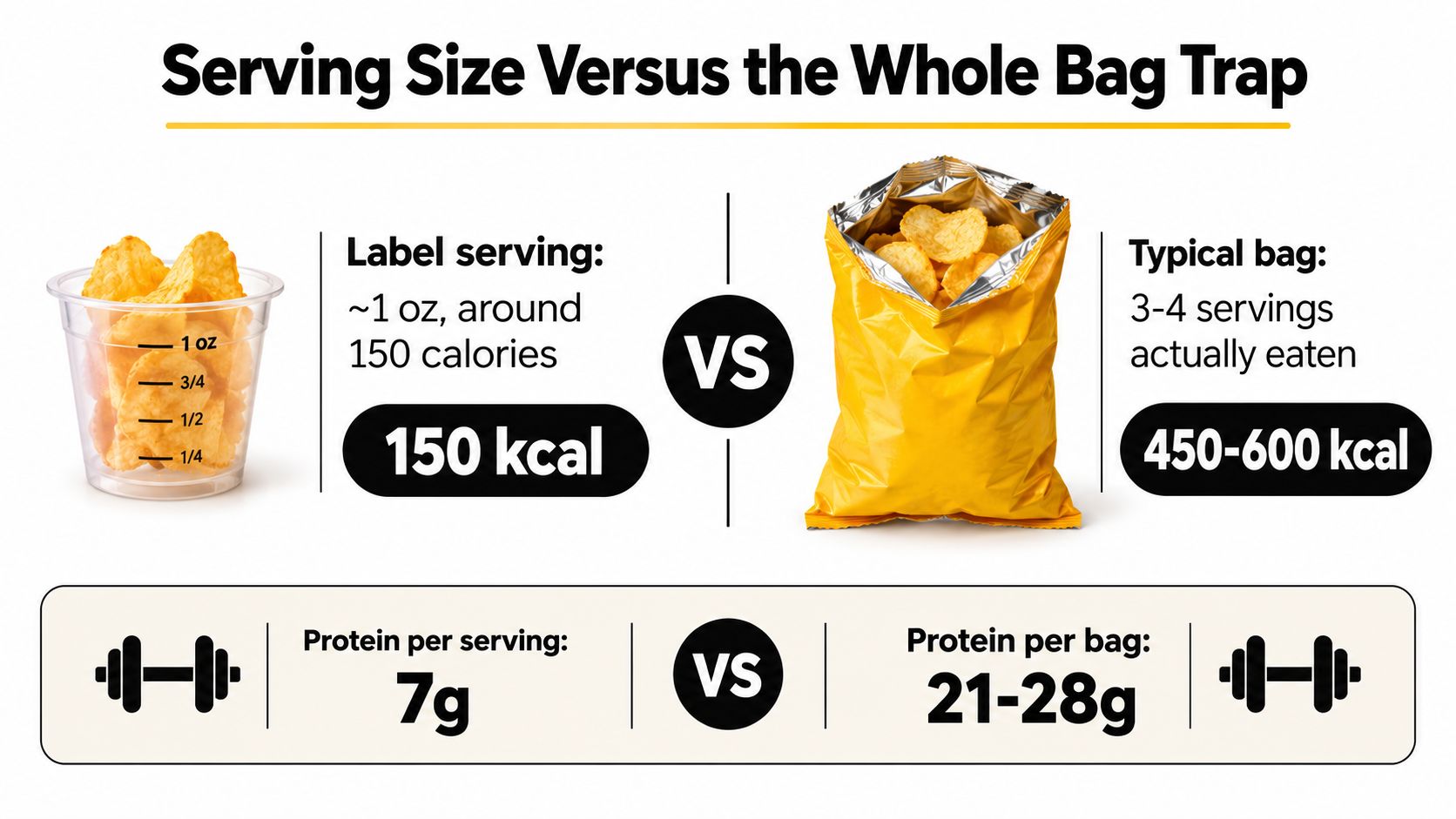
The serving size is a measurement, not a snacking plan. If you eat from the bag, the package total is the number that affects your calories and macros.
A labeled portion can look harmless while the full package contains several servings. That gap matters during work, driving, gaming, or television, when hand-to-mouth eating makes portion control easy to lose. A low-protein snack can consume a large part of your calorie budget and still leave hunger unresolved.
Read the package like an athlete
Check the full panel before deciding whether chips fit your day:
- Serving count: Confirm how many portions the package contains.
- Protein per serving: Compare protein with calories, not with front-of-pack marketing.
- Protein per bag: Multiply the listed protein by the number of servings you will eat.
- Fat and carbohydrate totals: See whether the snack supports your meals or displaces them.
- Ingredient order: Favor a protein-first formula over a starch-and-oil base.
Protein density per calorie is the sharper test. A larger total protein number does not make a snack efficient if it requires eating a calorie-heavy bag to reach it. Plant-based pea protein crisps can improve that trade-off by putting more protein into each calorie, but the label still decides whether the product earns its place.
The plain salted 8 oz potato-chip reference contains about 14.89 g of protein in total, according to the serving and bag-level protein data. That total sounds useful until you account for the calories across the entire bag. Protein distributed through a large starch-and-oil snack is a weak workout-fueling strategy and a poor answer to persistent hunger.
If the bag is what you eat, the full-bag total is what counts.
Use this guide to reading nutrition labels to compare regular chips with protein crisps. Pour one serving into a bowl and put the package away. If you finish the package, record the package, not the serving-size fiction.
The same rule applies during a calorie deficit or lean bulk. Regular chips can deliver substantial energy while leaving protein short. A pea-protein crisp may fit the snack slot better, yet no product gets a free pass because it says protein on the front.
Satiety and GLP-1 Signaling in Savory Snacks
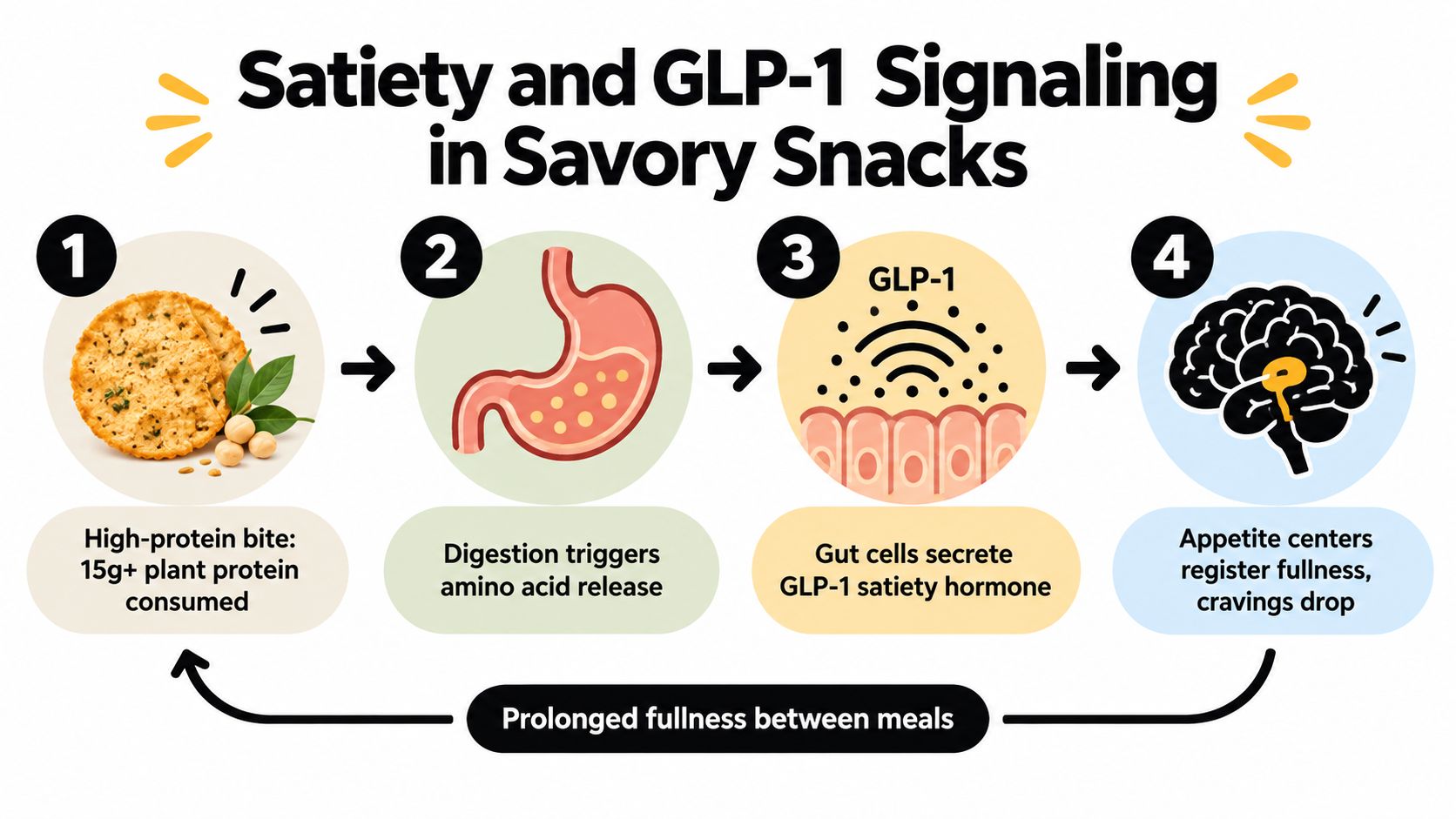
Protein changes what a snack does after the crunch is over. It supports tissue repair, increases protein density per calorie, and can give appetite control a stronger foundation than a starch-and-oil snack.
At under 2 g of protein per ounce, conventional chips offer little amino-acid exposure for a snack intended to manage hunger. A concentrated pea-protein crisp changes that equation by delivering substantially more protein in the serving, making it more useful between meals or after training. The label still matters, because calories, fiber, fat, and serving size determine whether the product works in your diet.
Crunch is useful, but crunch isn't enough
Crunch slows eating for some people and provides sensory satisfaction. It can also address the urge for something salty without turning the snack into dessert. Texture alone does not create lasting fullness, though. Highly craveable chips can disappear quickly while appetite remains.
The snack matrix matters. Protein, fiber, water, fat, and the physical structure of the food affect digestion and the signals that connect the gut with the brain. Protein digestion releases amino acids, while protein-containing meals can influence appetite communication involving GLP-1 and PYY. A crisp does not guarantee a predictable hormonal response. A protein-first crisp gives the snack a nutritional foundation that ordinary chips lack.
A better satiety test
Judge the snack by the result, not the health halo:
- Does it provide meaningful protein? A couple of grams makes it a crunchy extra, not an appetite anchor.
- Does it fit the meal gap? It should bridge hunger without making your next meal difficult to balance.
- Does it digest comfortably? Plant-based formulas suit some people, but tolerance varies.
- Does it satisfy the craving? If the flavor feels like punishment, you will keep looking for food.
People taking GLP-1 medications need the same focus on nutrient quality, especially when appetite is limited. A small, protein-focused savory snack can make better use of that appetite than a low-protein option. Anyone dealing with medication-related nausea, digestive symptoms, kidney disease, or a prescribed diet should follow individualized medical guidance.
Pea protein is not magic, and no crisp replaces a complete diet. Still, meaningful protein, savory flavor, and a satisfying crunch make plant-based crisps a more functional choice than standard chips when appetite control is the priority.
Fitting High-Protein Chips Into a Fitness Diet
Use protein crisps to solve a specific problem, not to decorate your pantry. The best use is the gap between meals, training, and real life.
Before training, pair a protein-forward crisp with a carbohydrate source if the session demands readily available fuel. Fruit, oats, or another familiar carbohydrate can complement the snack. Keep the combination easy to digest, and don't test an unfamiliar product immediately before an important workout.
After training, use the crisps as a recovery bridge when a full meal isn't available. Add a piece of fruit, a bean-based side, or a meal you can eat soon afterward. The snack's job is to prevent the post-workout period from turning into an unplanned vending-machine meal.
Match the snack to the situation
- Busy workday: Keep a measured portion at your desk and pair it with water and a piece of fruit.
- Pre-workout: Choose a familiar serving and avoid adding heavy, greasy foods if they upset your stomach.
- Post-workout: Combine the crisps with a more complete meal rather than treating them as the entire recovery plan.
- Plant-based eating: Use the snack as one protein source among legumes, tofu, tempeh, grains, nuts, and seeds.
- Weight management: Prioritize the protein line and log the portion before opening the bag.
Training rule: A snack should support the next decision. If it leaves you ravenous, it didn't do its job.
You don't need to rely exclusively on sweet bars or shakes. A savory option can improve adherence because it gives your routine a different flavor and texture. That matters psychologically. People abandon diets that feel repetitive, restrictive, or disconnected from the foods they crave.
For readers building a consistent routine, improve your fitness this year offers broader habit-setting context. Apply the same discipline to snack planning: decide when the product fits, portion it deliberately, and track it accurately.
If you have chronic kidney disease or another condition that affects protein intake, don't raise your protein target casually. Work with a qualified clinician or registered dietitian before making protein crisps, powders, or other concentrated products a daily habit.
The Case for Clean Pea Protein Crisps
A savory protein snack earns its place by more than taste. Judge it by protein density per calorie, ingredient quality, tolerance, and whether its crunch and flavor can replace the snack you want.
Use this checklist:
- Protein density: Compare the protein line with total calories, not protein grams alone.
- Formula quality: Choose a protein-first formula instead of a potato or corn base supported mainly by marketing.
- Dietary fit: Dairy-free, soy-free, and gluten-free options suit specific preferences and restrictions.
- Fat choice: Check the oil and saturated-fat lines. “Plant-based” does not automatically mean light.
- Eating satisfaction: Texture and bold savory flavor support adherence. A theoretically perfect snack that you dislike will not fuel your routine.
Legume-based chips show that formulation can push protein well beyond the single-digit amounts common in standard potato chips, as the earlier legume-chip research demonstrated. Pea protein provides a practical foundation for a crisp, savory snack with stronger protein density than a conventional chip.
Gym Snack makes plant-based savory protein crisps built around pea protein. The brand states 15 g or more of protein per serving, along with low saturated fat, no cholesterol, no seed oils, and formulas free of dairy, soy, and gluten. Cheddar Cheeze and Jalapeño Cheddar Cheeze provide savory alternatives to sweet bars and shakes.
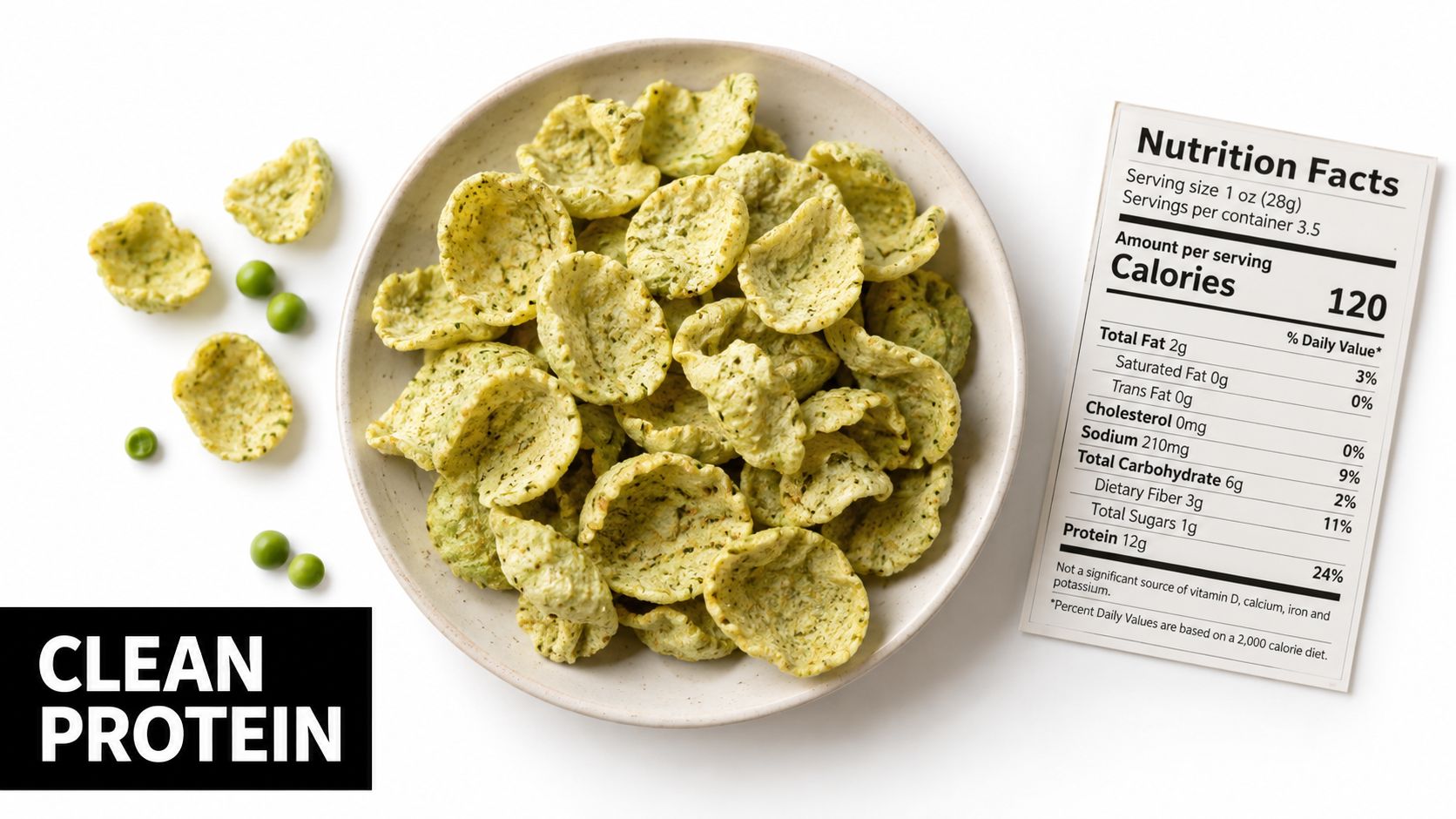
Regular chips deliver crunch and flavor, but they contribute little protein. Choose crisps with a transparent label, meaningful protein density, and a flavor you will willingly eat again.
Visit Gym Snack to compare its pea-protein crisps, review ingredient and nutrition details, and choose a bundle or custom pack for your protein plan.