

Figuring out how much protein you need each day isn't as complicated as it sounds. The general starting point you’ll often hear is 0.8 grams of protein for every kilogram of your body weight. So, for someone who weighs 150 pounds, that works out to about 54 grams per day.
But that’s really just the bare minimum. Your personal needs can change dramatically based on how active you are, your age, and what you’re trying to achieve with your health and fitness.
Why Protein Is Your Body's Essential Building Block
Before we get into the numbers, it’s worth taking a second to understand why protein is so important. It’s not just for bodybuilders—protein is literally the master ingredient that keeps your entire body running.
Think of it like a 24/7 repair crew for your body. This crew is busy rebuilding muscle fibers after a workout, creating new tissue, and keeping your hair, skin, and nails strong. If you don't give the crew enough raw materials (protein), the work slows down, and you'll feel it in your recovery and overall strength.
The Power of Amino Acids
Proteins are made up of smaller compounds called amino acids. You can think of them as individual Lego bricks. Your body uses these bricks in different combinations to build everything it needs.
- Muscle Maintenance and Growth: Exercise creates tiny tears in your muscles. Protein delivers the amino acids to repair them, which is how muscles get stronger. This is a core concept in most strategies for increasing lean muscle mass.
- Hormone and Enzyme Production: Many of your body’s most important messengers, like the hormones that control your mood and metabolism, are built from protein. The same goes for the enzymes that help you digest food.
- Immune System Support: The antibodies that protect you from getting sick are specialized proteins. Not getting enough can leave your immune system struggling to keep up.
Getting enough protein is one thing, but the quality of that protein is just as critical. For your body to work at its best, you need to supply it with all the essential amino acids.
Not every food source contains a full set of these amino acid "bricks." That’s where the difference between complete and incomplete proteins becomes important. We have a great guide that breaks this down further—check out our article on what are complete protein sources.
At the end of the day, dialing in your protein intake is about more than just building muscle. It's about giving your body the fundamental tools it needs to thrive. No matter who you are—an athlete, a busy professional, or a stay-at-home parent—getting the right amount of protein makes a real difference in your energy, strength, and health.
Finding Your Foundational Protein Number
So, where do you even begin when trying to figure out your protein needs? The best starting point is the Recommended Dietary Allowance (RDA). Think of this as the official minimum—the amount you need to prevent deficiency and keep your body's basic systems running smoothly.
The math is pretty simple. For most adults who aren't very active, the RDA is 0.8 grams of protein for every kilogram of body weight. Since most of us here in the US think in pounds, we'll need a quick conversion.
The Simple Math Behind the RDA
Let's break it down. You only need to do two things to find your baseline protein number.
First, convert your weight from pounds (lbs) to kilograms (kg). Then, multiply that by 0.8.
- Pounds to Kilograms: Your Weight in lbs ÷ 2.2 = Your Weight in kg
- Calculate RDA: Your Weight in kg × 0.8 = Your Baseline Protein (grams)
For example, if someone weighs 180 pounds, they'd first divide 180 by 2.2, which comes out to about 82 kg. Multiplying 82 kg by 0.8 gives them a baseline target of roughly 66 grams of protein per day.
Why the RDA Is Just a Starting Point
Here's the critical part: the RDA is a floor, not a ceiling. It’s the bare minimum needed to prevent an inactive person from losing muscle. It’s definitely not the optimal amount for anyone who exercises, wants to build muscle, or is trying to lose fat while keeping their hard-earned lean tissue.
The RDA is a safety net, not a performance target. Your personal goals and activity level will almost certainly require you to eat more than this foundational number.
Think about it this way: a 150-pound person with a desk job has vastly different daily demands than a 200-pound construction worker. Their RDA baselines would be 54g and 73g, respectively, but their optimal intakes are in completely different leagues.
Protein's job goes way beyond muscle. It's a key player in everything from hormone production to keeping your immune system strong.
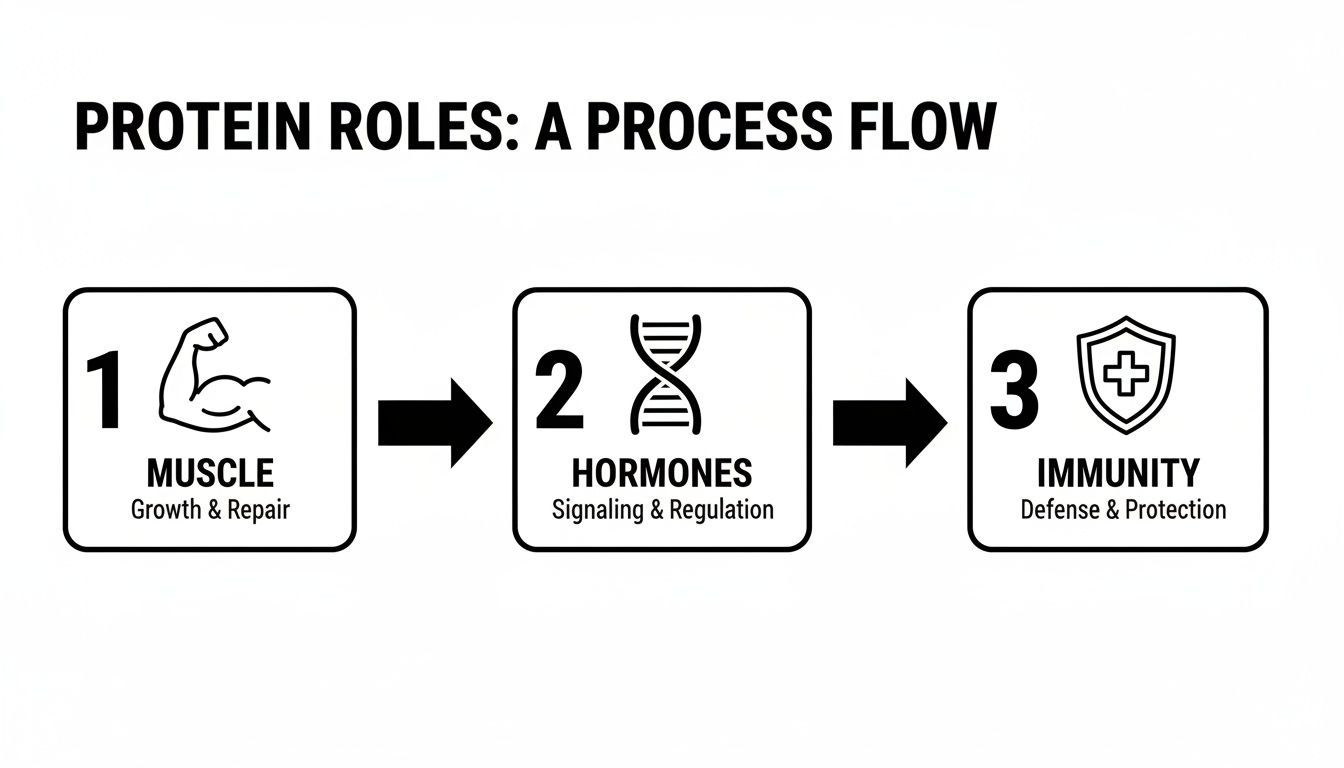
As you can see, getting enough protein is essential for your overall health, resilience, and daily function.
Quick Guide to Baseline Daily Protein Needs (RDA)
To save you from pulling out the calculator, here’s a quick reference table. Just find your approximate body weight to see your minimum daily protein requirement based on the standard 0.8 g/kg formula.
| Your Body Weight (lbs) | Your Body Weight (kg) | Baseline Protein Needs (grams) |
|---|---|---|
| 120 lbs | ~54.5 kg | ~44 g |
| 140 lbs | ~63.6 kg | ~51 g |
| 160 lbs | ~72.7 kg | ~58 g |
| 180 lbs | ~81.8 kg | ~65 g |
| 200 lbs | ~90.9 kg | ~73 g |
| 220 lbs | ~100 kg | ~80 g |
Remember, this is just your starting point! We’ll dive into how to adjust this number for your specific goals in the next sections.
Getting this foundational number right is the first step. For a closer look at how protein fits into the bigger picture of your diet, check out our guide on understanding macros for weight loss. Now that you have your baseline, we can start tailoring it to get you real results.
Tailoring Protein Intake for Your Lifestyle
The standard RDA for protein is really just the bare minimum to prevent deficiency—it’s not designed for an active lifestyle. Think of it as the starting line, not the finish line. Your actual protein needs are a direct reflection of your daily activity, your fitness goals, and the demands you place on your body.
It’s time to move past that one-size-fits-all number and figure out what your body truly needs to thrive.

This isn't about pulling a number out of thin air. It’s about matching your protein multiplier to your activity level. After all, someone who walks for 30 minutes a day has very different muscle repair needs than someone who’s in the gym lifting heavy weights several times a week. Let’s break down what that looks like.
For General Fitness and Moderate Activity
So, you’re hitting the gym a few times a week. Maybe you're into jogging, cycling, or your favorite group fitness class. That's great! It also means your body needs more protein than someone who is sedentary. Every workout creates tiny tears in your muscle fibers, and protein provides the building blocks—amino acids—to repair them and keep you strong.
A solid target for this level of activity is between 1.0 to 1.2 grams of protein per kilogram of body weight. This range gives your body enough fuel for recovery and helps maintain your hard-earned lean muscle.
Let's stick with our example of an 82 kg (180 lb) person. Their baseline RDA was about 66 grams. With regular exercise, their target jumps significantly:
- Low End: 82 kg × 1.0 g/kg = 82 grams per day
- High End: 82 kg × 1.2 g/kg = 98 grams per day
That’s a big leap from the baseline 66 grams. This new 82-98 gram range more accurately reflects the body's increased demand for resources to handle the stress of consistent exercise. Nailing this target will help you recover faster and feel stronger session after session.
For Building Muscle and Intense Training
If your main goal is to build strength and pack on muscle, your protein needs ramp up even more. Intense resistance training puts a massive demand on your body for muscle protein synthesis—the process that repairs and rebuilds muscle fibers bigger and stronger than before. Here, protein isn't just helpful; it's absolutely critical for getting the results you're working for.
Your protein intake should match your ambition. If you're pushing your body to grow stronger, you must provide it with the necessary fuel to rebuild.
For serious lifters, the recommendation climbs to 1.2 to 1.6 grams of protein per kilogram of body weight. While some studies have explored even higher intakes (up to 2.0 g/kg), that 1.2-1.6 g/kg range is widely considered the sweet spot for maximizing muscle growth.
Let’s see what this means for our 82 kg (180 lb) individual:
- Low End (Muscle Growth): 82 kg × 1.2 g/kg = 98 grams per day
- High End (Optimal Growth): 82 kg × 1.6 g/kg = 131 grams per day
Notice how the low end for building muscle (98g) is the same as the high end for general fitness? That’s no coincidence. For someone serious about getting stronger, their daily protein target can easily double from the sedentary baseline, going from just 66 grams to well over 130 grams.
Finding the Performance Sweet Spot
For most active people training 3-5 days a week, the science points to a sweet spot of 1.0 to 1.6 grams of protein per kilogram of body weight daily. So, a 180-pound (82 kg) person looking to build muscle should aim for at least 82 grams but will likely see much better results targeting something closer to 131-164 grams.
Interestingly, a large meta-analysis found that going much beyond that 1.6 g/kg mark didn't lead to more muscle gains, though it did help with fat loss. You can find more of these insights into protein findings on Naked Nutrition.
This gives us a practical upper limit. Pushing your intake way past 1.6 g/kg probably won't build more muscle, so you can confidently aim for that target and use the rest of your daily calories for other important macronutrients, like carbs for energy.
Ultimately, your protein target is personal. It should reflect your goals and your lifestyle, and it should change as your fitness journey evolves.
Adjusting for Life's Different Stages
Your daily protein target isn’t a number you calculate once and then set in stone for life. Far from it. As your body and circumstances change, your nutritional needs have to change right along with them.
The multipliers for activity level are a fantastic starting point, but certain life stages—like aging, pregnancy, or recovering from an injury—place unique demands on your body. Fine-tuning your protein intake during these times is crucial for navigating them successfully. It's less about a generic formula and more about giving your body the specific resources it needs, right when it needs them.
Protein Needs for Older Adults
As we age, our bodies naturally start to lose muscle mass and strength. It’s a process called sarcopenia, and it can have a real impact on everything from balance and mobility to our overall metabolic health. The good news? We can actively fight back, and protein is one of our most powerful tools.
For adults over 65, the standard 0.8 g/kg RDA often just doesn't cut it for preserving muscle. The research is pretty clear that a higher intake works much better.
- The Target: Most experts now recommend that older adults aim for 1.0 to 1.2 grams of protein per kilogram of body weight. This range is much more effective at stimulating muscle protein synthesis and slowing down sarcopenia.
- A Real-World Example: Let's take a 150-pound (68 kg) person. The standard RDA would put them at 54 grams. With the updated recommendation, their target jumps to a much more protective 68-82 grams per day.
This isn’t about trying to look like a bodybuilder. It's about maintaining the strength and independence needed to enjoy a high quality of life for many years to come.
During Pregnancy and Breastfeeding
Pregnancy is a period of massive construction, and protein is the literal building block for the baby's developing tissues, organs, and brain. At the same time, the mother’s body is working overtime, building the placenta and expanding her own blood supply. These heightened demands continue right through breastfeeding, since protein is a critical component of breast milk.
It's no surprise, then, that protein requirements shoot up during these stages.
While a single multiplier doesn't fit everyone, a great rule of thumb from experts is for pregnant and lactating women to add an extra 25 grams of high-quality protein per day on top of their pre-pregnancy baseline.
So, if a woman typically needed 70 grams of protein daily, she should now aim for around 95 grams to properly support both her own health and her baby's development.
Recovery and Clinical Needs
When the body is under serious physical stress—think recovering from surgery, healing a broken bone, or managing a major illness—its demand for protein goes through the roof. During these times, protein is absolutely essential for repairing tissue, keeping the immune system strong, and tamping down inflammation.
The exact amount you'll need can vary wildly depending on the situation, but it's always going to be significantly higher than the norm. For example, some post-surgery recovery protocols might temporarily push protein intake as high as 1.5 to 2.0 g/kg to kickstart the healing process.
This is one area where you absolutely must work with a doctor or a registered dietitian. They are the only ones who can help you figure out a safe and effective protein target for your specific medical needs. They’ll ensure your body gets what it needs to heal without placing unnecessary strain on your kidneys or other organs. Learning how to calculate daily protein needs in these cases is a team effort.
How to Actually Hit Your Protein Goal Every Day
Knowing your target protein number is the easy part. The real challenge? Actually eating that much protein, day in and day out. This is where theory crashes into reality, and frankly, it's where most people get stuck.
The secret isn’t to force down massive, protein-heavy meals. A much smarter—and more effective—approach is something called protein pacing. Instead of cramming your intake into one or two sittings, you simply spread it out evenly across your meals and snacks. This simple shift makes your daily goal feel far less daunting.
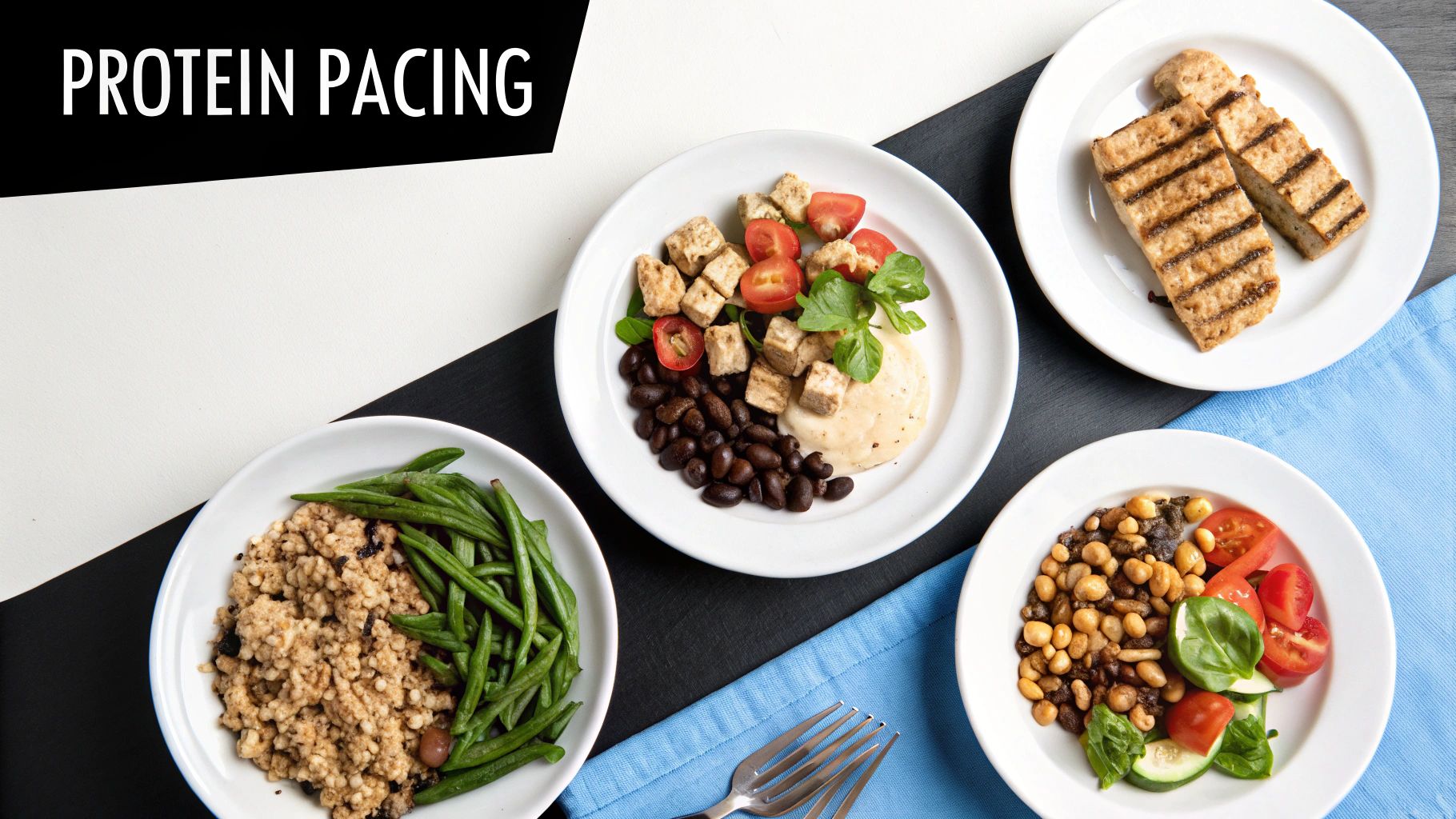
This method does more than just make life easier. It keeps your body in an optimal state for muscle repair and growth, a process known as muscle protein synthesis (MPS).
Top institutions like the Mayo Clinic have shown that splitting your protein into doses of 15-30 grams per meal is the sweet spot for maximizing MPS. In fact, research suggests that consuming more than 40 grams in a single meal provides almost no extra muscle-building benefit. You can explore insights on protein intake from the Mayo Clinic Health System to see the science for yourself.
Building a High-Protein Day Meal by Meal
Let's put this into practice with a common target: 120 grams of protein per day. Using protein pacing, we can break that down into a totally manageable plan. The goal is to aim for roughly 30 grams at breakfast, lunch, and dinner, with another 30 grams from snacks.
Here’s what that could look like:
- Breakfast (30g Goal): Swap your usual cereal for oatmeal supercharged with a scoop of plant-based protein powder and a sprinkle of hemp seeds. Or, try a hearty tofu scramble loaded with black beans and a dash of nutritional yeast.
- Lunch (30g Goal): Turn a simple salad into a protein powerhouse. Just add a full cup of chickpeas, a handful of pumpkin seeds, and a drizzle of quinoa-based dressing over your greens.
- Dinner (30g Goal): A big bowl of lentil soup or chili is a fantastic option, easily packing 20-25 grams of protein. Pair it with whole-grain toast topped with two tablespoons of peanut butter to close the gap.
- Snacks (30g Goal): This is your secret weapon. A cup of shelled edamame gets you 18 grams. To hit your target, a bag of savory, high-protein snacks like Gym Snack's Cheddar Cheeze puffs adds another 30 grams with zero effort.
Pro Tip: Front-load your protein. So many people save the bulk of their protein for dinner. Getting a solid 20-30 grams at breakfast is a game-changer for managing hunger and cravings, as it helps support the hormones that signal fullness.
Easy Plant-Forward Protein Swaps
You don’t need a complete diet overhaul to hit your numbers. Small, strategic swaps and additions can make all the difference. The best mindset is to think about what you can add to meals you already enjoy.
For a deeper dive into simple ways to boost your intake, check out our guide on how to increase protein intake. It's full of practical ideas for any lifestyle.
Here are a few of my favorite plant-based hacks:
- Beef Up Soups & Stews: Stir a cup of red lentils into your go-to vegetable soup. They cook down and add a creamy, thick texture along with about 18 grams of protein, without altering the taste.
- Upgrade Your Grains: Instead of plain rice, cook a 50/50 blend of rice and quinoa. Quinoa is a complete protein that adds a nice, nutty flavor and a serious protein boost.
- Rethink Your Snacks: Ditch the greasy potato chips for roasted chickpeas or edamame. Even better, find a high-protein savory snack designed to give you that crunch you crave while delivering a meaningful dose of plant fuel.
- Sprinkle on Some Seeds: Hemp hearts, pumpkin seeds, and sunflower seeds are like protein confetti. Toss a few tablespoons onto your oatmeal, salad, or yogurt for an effortless 5-10 grams.
Top Plant-Based Protein Sources Per Serving
To help with meal planning and grocery shopping, I've put together this quick reference guide to some of the best plant-based protein powerhouses.
Top Plant-Based Protein Sources Per Serving
| Plant-Based Food | Serving Size | Protein (grams) |
|---|---|---|
| Seitan | 3 ounces | ~21 g |
| Lentils | 1 cup, cooked | ~18 g |
| Tempeh | 3 ounces | ~16 g |
| Edamame | 1 cup, shelled | ~18 g |
| Tofu (firm) | 1/2 cup | ~20 g |
| Chickpeas | 1 cup, cooked | ~15 g |
| Pea Protein Puffs | 1 bag (60g) | ~30 g |
| Quinoa | 1 cup, cooked | ~8 g |
| Peanut Butter | 2 tablespoons | ~8 g |
| Hemp Hearts | 3 tablespoons | ~10 g |
This table makes it easy to see how quickly you can hit your protein goals by mixing and matching a few of these foods throughout your day.
At the end of the day, learning how to calculate daily protein needs is just the starting line. Real success comes from building simple, repeatable habits that make hitting your number feel like second nature.
Answering Your Top Protein Questions
Figuring out your protein number is the first step. But then, the real questions start popping up. It's one thing to have a target, but it's another thing entirely to know how to hit it consistently without getting bogged down by myths. Let's tackle some of the most common concerns I hear all the time.
First up, the big one: "Can I eat too much protein?" While it's true that insanely high amounts aren't great, especially if you have pre-existing kidney issues, most of us aren't even close to that level. A healthy, active body is incredibly good at using what it needs for muscle repair and then converting the rest for energy.
The real goal isn't to worry about some imaginary ceiling. It's to land in that sweet spot for your goals, which for most people putting in work at the gym is somewhere between 1.2 and 1.6 grams per kilogram of body weight. Pushing way past that doesn't usually give you any extra muscle-building bang for your buck.
Does Protein Timing Really Matter That Much?
Ah, the "anabolic window." For years, we've been told we have a 30-minute countdown after a workout to chug a protein shake or all our gains will vanish. The good news? Science shows us it's a lot more forgiving than that.
Your body doesn't just shut down the muscle repair factory after half an hour. What truly moves the needle is your total daily protein intake. Spreading that intake out across your meals during the day is far more effective. Sure, getting a protein-rich meal in within a couple of hours of training is a solid habit, but you don't need to sprint from the squat rack to the shaker bottle.
Consistency beats last-minute panic every time. A steady stream of amino acids throughout the day supports recovery much better than one perfectly timed shake in a day that's otherwise lacking in protein.
The best nutrition plan is the one you can actually stick to. Focus on hitting your total daily protein number and spreading it out before you ever stress about the clock.
Can You Get Enough Complete Protein on a Plant-Based Diet?
This is a huge myth that just won't quit. People often think it's a massive challenge for vegans and vegetarians to get "complete proteins," which are simply proteins that contain all nine essential amino acids. The reality is, it’s not that complicated.
Your body is brilliant. It can pull amino acids from different foods you eat throughout the day to create its own complete protein pool. You don’t have to obsessively pair rice and beans in the same meal to make it work. Just eat a variety of good stuff.
- Quinoa: This grain is a total superstar—it's a complete protein all by itself.
- Soy Products: Tofu, tempeh, and edamame are fantastic and complete protein sources.
- Hemp and Chia Seeds: Both are packed with all the essential amino acids and are super easy to sprinkle on oatmeal or blend into a smoothie.
- Variety is Your Friend: If you’re eating a good mix of legumes, nuts, seeds, and whole grains, you're almost certainly getting a full amino acid profile without even trying.
To make this even easier, you just need to know what to reach for. Take some time to discover a range of high-protein foods you can build your meals around. A well-thought-out plant-based diet can make hitting your protein goals simple and delicious.
Hitting your protein goals should be convenient and enjoyable, not a daily chore. At Gym Snack, we create savory, plant-based protein puffs that pack 30g of clean pea protein into every satisfyingly crunchy bag. Ditch the sugary bars and shakes for a chef-inspired snack that fuels your training and keeps you full. Explore our craveable flavors and build your custom pack today.