

When you're trying to lose weight, the secret weapon isn't some magic pill or punishing workout—it's having a system. An effective meal prep plan combines a smart, slight calorie deficit with total portion control, and it's simpler than you think. The whole point is to have healthy, balanced meals ready to go before you're starving, which stops you from making those last-minute, less-than-ideal food choices.
This strategy is about more than just convenience. It's about taking back control, saving time, and finally making consistency feel effortless.
Why Meal Prep Is Your Weight Loss Game Changer
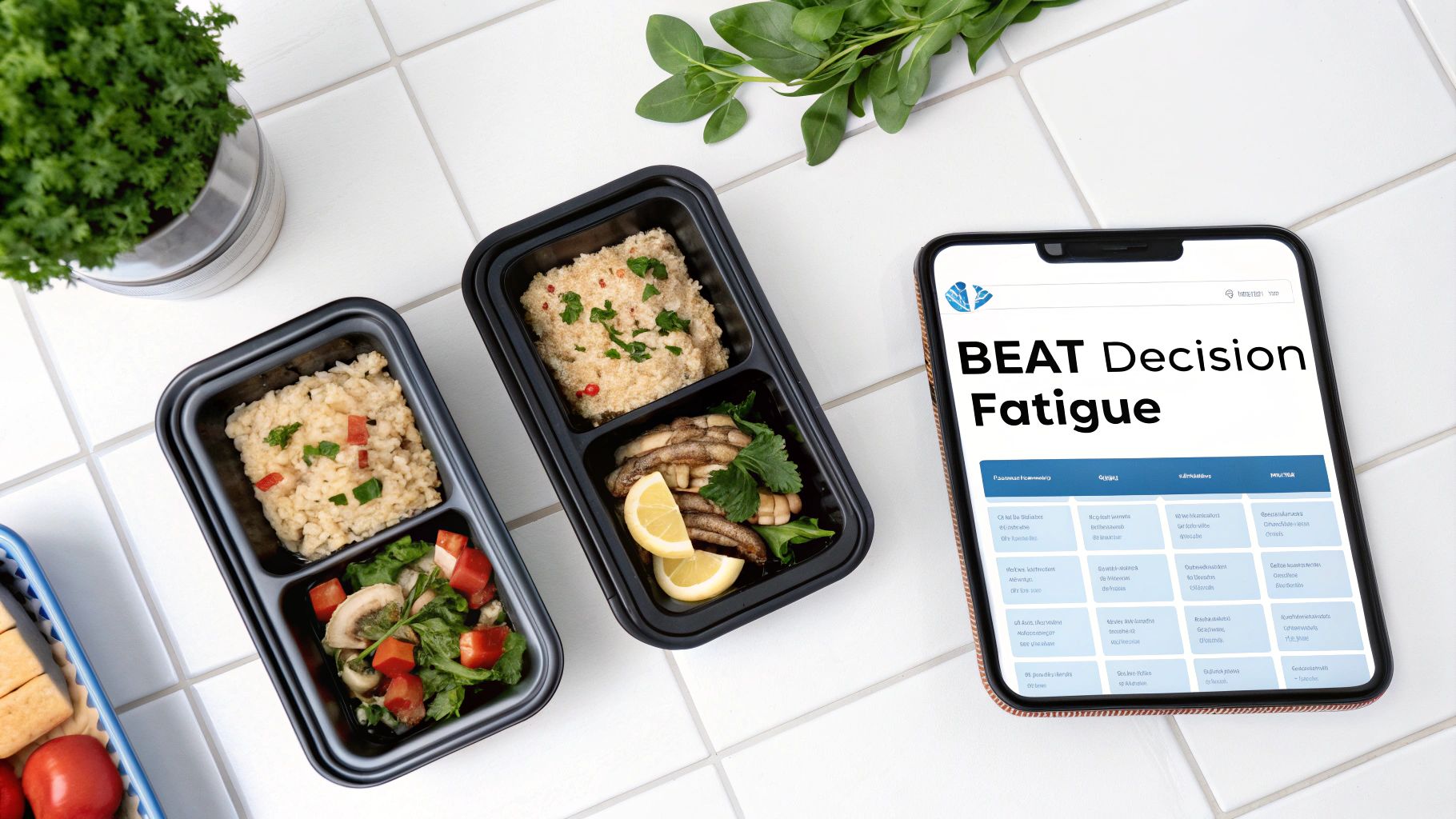
Everyone talks about how meal prepping saves time, and it does. But its real superpower for weight loss is how it tackles a huge mental hurdle: decision fatigue. Think about it—after a long day of making choices at work and home, your brain is tired. That mental exhaustion is exactly why ordering a greasy, high-calorie pizza sounds so much better than figuring out what to cook.
Your willpower isn't an infinite resource. Meal prep protects it.
When a healthy, perfectly portioned meal is already waiting for you in the fridge, there’s no debate. You’ve removed the "What should I eat?" question from the moment you're most vulnerable to temptation. It's a simple, powerful firewall between your goals and the impulsive decisions driven by hunger and fatigue.
Taking Back Control of Your Nutrition
Let's be honest: when you eat out or grab takeout, you're mostly guessing about what's in your food. Hidden oils, sneaky sugars, and loads of sodium can easily tack on hundreds of extra calories, derailing your progress without you even realizing it. Meal prepping puts you firmly in the driver's seat.
You have complete authority over every single ingredient. This means you can finally track your calories and macronutrients (protein, carbs, and fats) with real accuracy. In fact, a 2017 study uncovered a strong connection between meal planning, healthier diets, and lower rates of being overweight.
You're not just cooking; you're engineering your own fuel. Here’s what that control really gives you:
- Portion Precision: You can actually weigh your chicken or measure your quinoa, making sure every meal hits the numbers you’re aiming for.
- Ingredient Quality: You get to pick the lean proteins, whole grains, and healthy fats, skipping all the processed junk so common in restaurant meals.
- Macro Management: Want to bump up your protein to stay full and protect muscle mass? Easy. Just adjust your recipe to hit your specific macro targets.
Meal prepping transforms weight loss from a guessing game into a predictable science. When your healthy choice is also the easiest choice, you set yourself up for consistent success day after day.
More Than Just Meals—It's a Lifestyle Shift
The benefits of meal prepping don't stop at the kitchen door. They spill over into the rest of your life. Just knowing your food is handled for the week lowers daily stress and frees up so much mental energy. And your wallet will thank you, too. Research in the American Journal of Preventive Medicine found that people who spend more time cooking at home spend less money on fast food and restaurants.
Picture this: you're stuck in traffic after a brutal day at the office. The old you might have already been planning a detour through the nearest drive-thru. But the new you knows there’s a delicious, goal-friendly dinner waiting at home. That small shift in mindset is incredibly empowering. It’s the foundation for building the kind of sustainable, healthy habits that will stick with you long after you've hit your goal weight.
Setting Your Goals and Calculating Your Macros
Before you even think about chopping a single vegetable, the real work of meal prep begins. It all starts with a solid, personalized blueprint—one built on clear goals and the right fuel for your body. Trust me, vague goals like "I want to lose weight" just don't cut it. They’re too fuzzy to act on.
Let's get specific. Aim for a sustainable rate of weight loss, which is usually 1 to 2 pounds per week. I know it can be tempting to go faster, but this pace is the sweet spot for losing fat while holding onto precious, metabolism-revving muscle. Drop weight too quickly, and you're often just losing water and muscle, which can sabotage your long-term success.
The real magic happens when you connect that goal to concrete numbers. To lose one pound a week, you need to create a calorie deficit of roughly 3,500 calories. Broken down, that’s a 500-calorie deficit per day.
Find Your Daily Calorie Target
To create that deficit, you first have to know your starting point: your total daily energy expenditure (TDEE). This is just a fancy term for the total calories your body burns in a day, from breathing and sleeping to hitting the gym. Online TDEE calculators are a great place to start, but it helps to know what's under the hood.
Your TDEE is made up of a few key things:
- Basal Metabolic Rate (BMR): What your body burns just to stay alive at rest.
- Thermic Effect of Food (TEF): The energy used to digest the food you eat.
- Activity Level: All the calories you burn through movement, from a walk to a heavy lifting session.
Once you get your TDEE estimate, the math is simple. Just subtract 500 calories to find your daily target for losing one pound a week. For example, if your TDEE is 2,200 calories, your new goal would be 1,700 calories per day.
Calculate Your Weight Loss Macros
Now, calories tell you how much to eat, but macronutrients—protein, carbs, and fats—tell you how to eat for the best results. The right macro balance is the difference between feeling drained and feeling energized, hungry or satisfied. This is where you really start fine-tuning your meal prep.
A great starting point for most people is this balanced ratio:
- 40% Protein
- 30% Carbohydrates
- 30% Fat
Let’s stick with our 1,700-calorie example and see how this plays out.
- Protein: 1,700 kcal x 0.40 = 680 calories. At 4 calories per gram, that's 170g of protein.
- Carbs: 1,700 kcal x 0.30 = 510 calories. At 4 calories per gram, that’s 128g of carbs.
- Fats: 1,700 kcal x 0.30 = 510 calories. At 9 calories per gram, that comes out to 57g of fat.
So, your daily mission is clear: hit 1,700 calories, with 170g protein, 128g carbs, and 57g fat. These numbers are the foundation you’ll use to build every meal, turning a fuzzy goal into a daily action plan.
Prioritize Protein for Satiety and Muscle
While all macros have their place, protein is the undisputed champion when it comes to weight loss. Your body actually burns more calories just digesting it (that's the thermic effect of food). But the real game-changer is how full it keeps you. Hitting your protein target is one of the best ways to crush cravings and stay satisfied between meals.
Plus, getting enough protein is essential for protecting your muscle mass when you’re in a calorie deficit. You want to lose fat, not muscle. Losing muscle just slows down your metabolism, and nobody wants that. A solid goal for active people is 0.7-1.0 grams of protein per pound of body weight. For a deeper dive into dialing this in, check out our guide on understanding macros for weight loss.
If you feel like you could use some one-on-one support, looking into personal nutrition coaching can make a world of difference. Having an expert in your corner can help you set precise goals and ensure your plan is perfectly aligned with what you want to achieve.
Your Meal Prep Blueprint: Recipes and Ideas
This is where the rubber meets the road—turning your goals and numbers into actual food that you'll look forward to eating. A great meal prep plan isn't about suffering through five days of the exact same bland meal. It's about building a smart, flexible system that keeps you on track without making you want to quit by Wednesday.
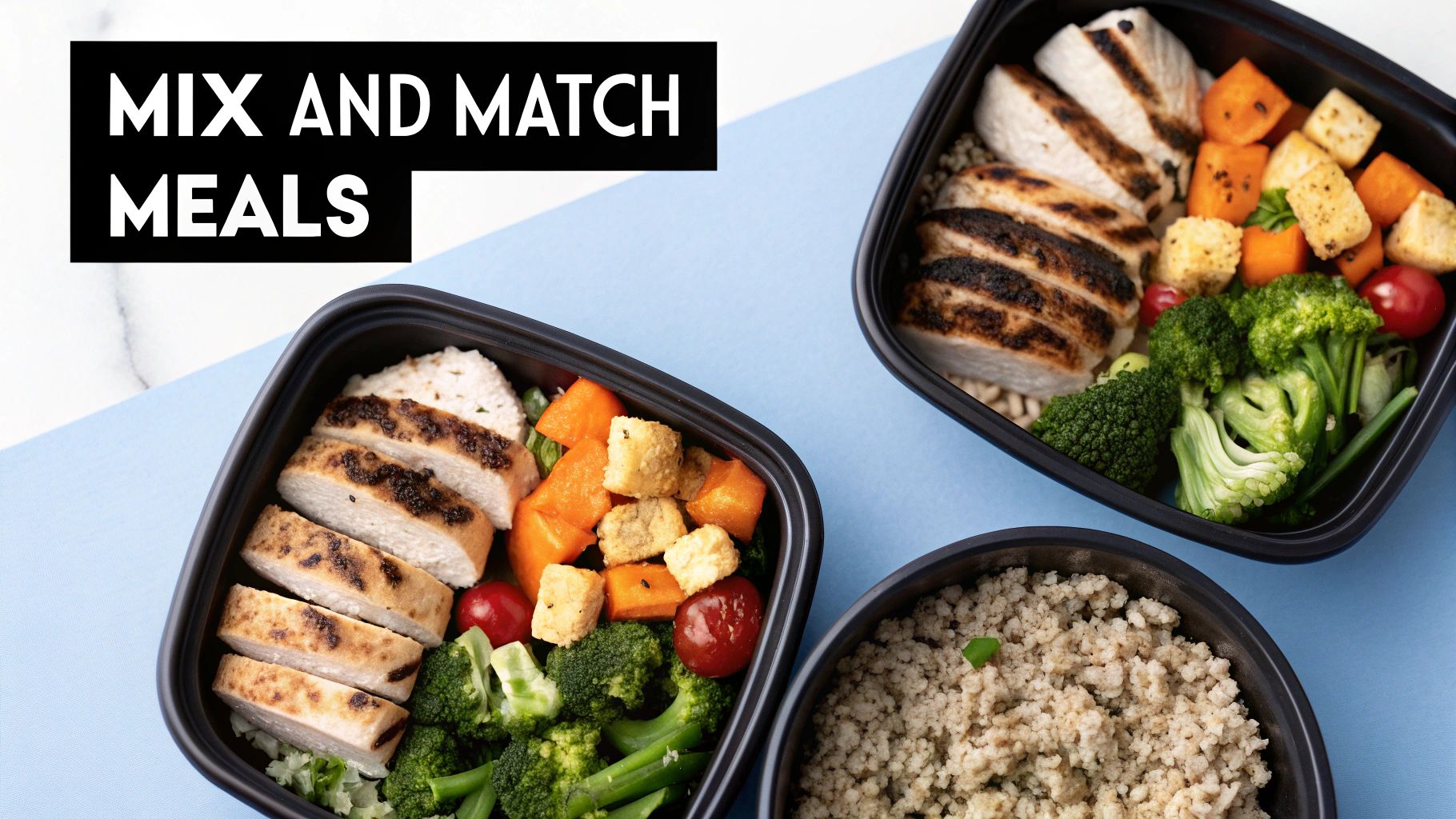
The biggest enemy of any long-term weight loss plan is flavor fatigue. To beat it, we’re going to focus on two game-changing strategies: using a weekly meal template and mastering the art of "component prepping."
A Flexible 5-Day High-Protein Meal Template
Think of this as your playbook, not a strict rulebook. It provides just enough structure to keep you hitting your protein targets and calorie goals without feeling restrictive. Feel free to swap out ingredients based on your personal taste, what’s on sale at the grocery store, or any dietary needs you have.
Here's a sample template to show you what a well-balanced, high-protein week can look like. The goal is simplicity and efficiency.
Sample 5-Day High-Protein Meal Prep Template
This flexible template shows meal ideas for a week, emphasizing protein intake and balanced nutrition for weight loss. Calorie and macro estimates are approximate.
| Day | Breakfast (350-450 kcal) | Lunch (400-500 kcal) | Dinner (450-550 kcal) | Snack Idea |
|---|---|---|---|---|
| Monday | Protein Overnight Oats with Berries & Chia Seeds | Grilled Chicken Salad with Mixed Greens & Light Vinaigrette | Baked Salmon with Roasted Asparagus & Quinoa | Greek Yogurt |
| Tuesday | Greek Yogurt Bowl with Nuts & a Drizzle of Honey | Turkey & Black Bean Burrito Bowl with Brown Rice | Lean Beef Stir-fry with Broccoli & Bell Peppers | Handful of Almonds |
| Wednesday | Scrambled Eggs (or Tofu Scramble) with Spinach & Toast | Leftover Lean Beef Stir-fry | Chicken Breast with Roasted Sweet Potatoes & Green Beans | Apple with Peanut Butter |
| Thursday | Protein Smoothie with Spinach, Banana, & Protein Powder | Quinoa Bowl with Chickpeas, Cucumber, Tomato, & Feta | Baked Cod with a Side of Steamed Veggies & a Small Potato | Hard-Boiled Egg |
| Friday | Protein Overnight Oats (prep two servings) | Leftover Chicken & Sweet Potatoes | Lentil Soup (Batch Cooked) with Whole-Grain Bread | Gym Snack |
Notice how leftovers are built right into the plan? That’s not laziness—it’s smart prepping! Working efficiently is key to making this a sustainable habit.
The Power of Component Prepping
While prepping full meals is a solid strategy, the real pro move for long-term success is component prepping. Instead of making five identical chicken-and-rice bowls, you cook individual ingredients in batches to mix and match all week long. It's your ultimate weapon against food boredom.
Here’s how it works in practice. On Sunday, you might prepare:
- Proteins: Bake a tray of chicken breasts, pan-sear some salmon, hard-boil a dozen eggs, and bake a block of seasoned tofu.
- Carbohydrates: Cook up a big pot of quinoa or brown rice. Roast a sheet pan of sweet potato cubes.
- Vegetables: Chop raw veggies like bell peppers, cucumbers, and carrots for quick snacks or salads. Roast a huge tray of broccoli, Brussels sprouts, and asparagus.
With a fridge full of these ready-to-go components, throwing together a healthy meal takes just a few minutes. One day it's chicken, quinoa, and roasted broccoli. The next, you can shred that same chicken over a massive salad with all your chopped veggies. You get endless variety from just one prep session.
Pro Tip: Don't sleep on sauces and dressings! Having two or three different options on hand can make the same base ingredients feel like entirely different meals. A simple lemon-tahini dressing one day and a spicy peanut sauce the next can completely change the game.
Simple Recipes to Get You Started
Here are a few super easy, high-protein staples that fit perfectly into this system.
1. Protein-Packed Overnight Oats
- Ingredients: 1/2 cup rolled oats, 1 scoop vanilla protein powder, 1 tbsp chia seeds, 1/2 cup unsweetened almond milk, 1/2 cup Greek yogurt, mixed berries.
- Prep: Just mix everything but the berries in a jar and stick it in the fridge overnight. Top with berries in the morning.
- (Approx. 400 kcal, 35g Protein)
2. Vibrant Quinoa Power Bowl
- Ingredients: 1 cup cooked quinoa, 4 oz grilled chicken or 1 cup chickpeas, 1/2 cup chopped cucumber, cherry tomatoes, and bell peppers, 1 oz feta cheese.
- Prep: Toss it all together in a container. Keep your dressing separate until you're ready to eat to avoid sogginess.
- (Approx. 450 kcal, 30g Protein)
3. Sheet Pan Chicken and Veggies
- Ingredients: 4 oz chicken breast, 1 cup chopped sweet potatoes, 1 cup broccoli florets, 1 tbsp olive oil, spices (paprika, garlic powder, salt, pepper).
- Prep: Throw the chicken and veggies on a sheet pan, toss with oil and spices, and bake at 400°F (200°C) for about 20-25 minutes.
- (Approx. 500 kcal, 40g Protein)
As you build out your meal prep blueprint, having the right containers is a must. It's worth looking into quality, sustainable options like eco-friendly takeaway containers to keep your food fresh and organized.
The focus on protein isn't just a trend; it's a fundamental shift in how people approach nutrition. One recent survey found that 71% of people are actively trying to get more protein in their diet. For anyone leaning into plant-based eating, a high-protein approach is especially beneficial for long-term health. This is where having savory, crunchy snacks like Gym Snack becomes so valuable. They're perfect for topping a salad or as a satisfying post-workout bite that keeps you full and helps you hit your goals.
Mastering the Art of Smart Snacking
Snacking gets a bad rap, but let's be clear: it's not the enemy of weight loss. Mindless, unstructured snacking is. When you do it right, snacking becomes an incredibly powerful tool in your meal prep arsenal. It’s a strategic move to manage hunger, keep your blood sugar stable, and prevent you from showing up to dinner so ravenous you undo all your hard work.
The trick is to stop thinking of snacks as guilty pleasures and start treating them like scheduled, nutrient-packed mini-meals. A well-timed, high-protein snack works with your body, not against it. It actually helps support crucial satiety hormones like GLP-1 and PYY, which are the messengers that tell your brain, "Hey, we're full and satisfied now," bridging that long gap between lunch and dinner.
Why Protein Is Your Snacking Superpower
When hunger hits, our first instinct is often to grab quick-energy carbs or something sweet. And while that might give you a temporary boost, it always leads to an inevitable crash that leaves you feeling sluggish and craving even more. This is where protein completely changes the game.
Choosing a high-protein snack is the smartest move you can make. Here's why:
- Keeps You Fuller, Longer: Protein is hands-down the most satiating macronutrient. It sticks with you far longer than fats or carbs.
- Gives Your Metabolism a Nudge: Your body burns more calories digesting protein than it does other foods. This is called the thermic effect of food, and it gives your metabolism a small but helpful boost.
- Protects Your Muscle: When you're eating in a calorie deficit to lose weight, getting enough protein is crucial for preserving lean muscle. You want to lose fat, not muscle.
The goal isn't just to find low-calorie snacks; it's to choose snacks that are packed with nutritional value. A smart snack should actively help you hit your daily protein target while crushing those pesky cravings.
Weaving Smart Snacks into Your Meal Prep
This is where your planning really pays off. Don't leave your snacks up to chance and willpower. Instead, build them right into your weekly prep, portioning them out just like you would your lunches and dinners.
Think about that classic 3 PM slump. Your energy tanks, your focus disappears, and the vending machine starts looking really good. This is where your prep becomes your secret weapon. Having a pre-portioned, high-protein snack ready to go is your best defense. Instead of a sugary protein bar that’s basically a candy bar in disguise, a savory, crunchy option like Gym Snack is a perfect fit.
With over 15g of clean pea protein per serving, it gives you the fuel you need without any of the junk. The bold Cheddar Cheeze flavor and satisfying crunch hit that savory spot, making it feel like a treat while keeping you perfectly aligned with your weight loss goals. If you're looking for even more ideas, our guide on high-protein snacks for weight loss is a great resource.
Here’s how this plays out in the real world:
- Post-Workout Refuel: Throw a bag of Gym Snack in your gym bag. It’s the perfect quick, protein-rich option to kickstart muscle repair right after a tough workout.
- The Desk Drawer Savior: Keep a stash at your desk to fight off that afternoon energy dip. It’ll keep you far away from the office donuts or sugary lattes.
- The Salad Upgrade: Crumble some over your prepped lunch salad. You get an instant boost of protein and flavor, plus a satisfying crunch that makes a healthy meal feel exciting.
Ultimately, mastering snacking is all about being intentional. It’s about choosing options that fuel your body, support your hormones, and keep you on track—one delicious, crunchy bite at a time.
Your Sunday System for Shopping and Batch Cooking
Alright, you’ve got your meal plan locked in. Now comes the fun part: making it all happen. Sunday—or whatever day you’ve set aside—is your time to shine. This is when you turn those recipes and ideas into a fridge full of delicious, ready-to-eat meals that will carry you through the week. A solid system here is what separates a stressful chore from an empowering weekly ritual.
Think of your meal template as the blueprint. Your first move is to translate that blueprint into a detailed grocery list. Go through every single meal and snack on your plan and jot down every ingredient you need. This list is your best friend in the store; it keeps you on track and helps you dodge those impulse buys that can sabotage your progress.
Create a Targeted Grocery List
A great shopping list does more than just remind you to buy apples; it saves you cash and cuts down on food waste. Before you even think about leaving the house, do a quick scan of your pantry, fridge, and freezer. Anything you already have gets crossed off the list. No need to buy another bottle of soy sauce if you’ve got one.
Next, organize that list by store section. This is a game-changer for efficiency.
- Produce: All your fresh fruits and veggies.
- Protein: Chicken, fish, tofu, beans, and eggs.
- Pantry/Dry Goods: Grains like quinoa and oats, canned goods, spices, and nuts.
- Dairy/Refrigerated: Greek yogurt, milk, and cheese.
Organizing your list like this stops you from zig-zagging across the store and keeps you far, far away from the siren song of the chip aisle. A focused list is your best defense against those unplanned purchases that don’t serve your goals. Plus, a smart grocery run is a key part of learning how to practice clean eating on a budget, making every dollar count.
An Efficient Two-Hour Cooking Workflow
You absolutely do not need to spend your entire Sunday chained to the stove. With a smart workflow, you can knock out the majority of your cooking in about two hours. The secret? Multitasking and starting with the things that take the longest to cook.
Here’s how I like to structure my time:
- Get the Long Cooks Going: First thing's first, get grains like quinoa or brown rice simmering on the stovetop since they can pretty much cook themselves. At the same time, preheat your oven to around 400°F (200°C). Toss your seasoned chicken breasts and chopped sweet potatoes or broccoli onto a sheet pan and get them roasting.
- Wash and Chop Everything Else: While your grains and veggies are cooking, use that downtime to wash and chop all the fresh produce for the week. This is when I’ll slice bell peppers for easy snacks, dice onions for stir-fries, and wash lettuce for salads.
- Use the Stovetop: Once the rice is done, you can use that burner to cook other things, like a big batch of lean ground turkey or a pot of hearty lentil soup.
- Cool and Portion: This is critical. As each component finishes cooking, let it cool completely on the counter before you pack it away. Putting hot food in containers creates steam and condensation, which leads to soggy meals and can encourage bacteria to grow.
This simple flow—shop, cook, store—is what makes meal prep a sustainable habit.
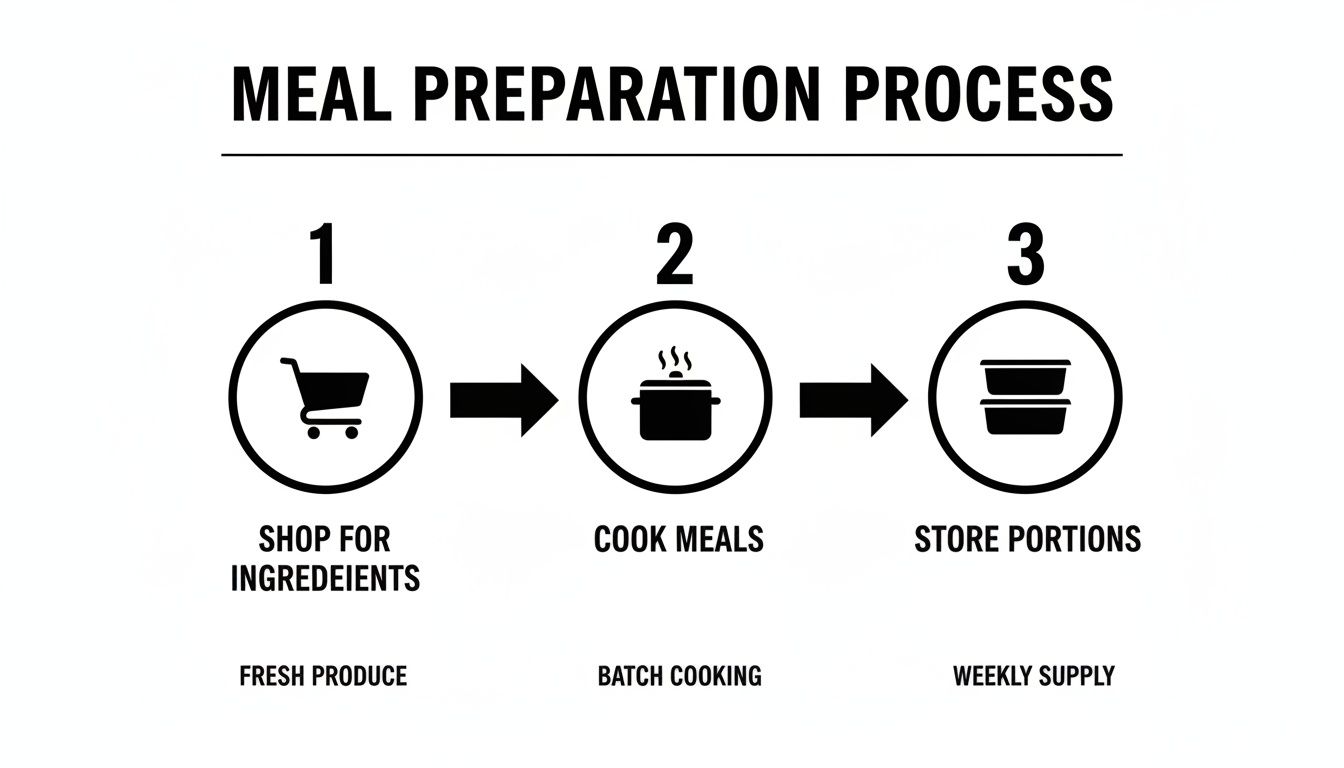
When you have a structured approach like this, meal prep stops feeling like a chore and becomes a simple, repeatable system.
Food Safety and Smart Storage
Storing your food correctly is non-negotiable if you want it to stay fresh, safe, and tasty all week long. The golden rule is to get everything refrigerated within two hours of cooking.
Most of your prepped meals will stay perfectly good for 3-4 days in an airtight container in the fridge. If you're prepping for a full five-day work week, this means you should plan on freezing the meals for Thursday and Friday to maintain their quality and safety.
Pro Tip: Remember that not all foods freeze well. Soups, stews, cooked grains, and most proteins are fantastic freezer candidates. On the other hand, things with high water content like cucumber salads or some creamy sauces can get weird and watery when you thaw them out.
Finally, a quick word on reheating. To avoid a sad, rubbery desk lunch, reheat your food thoughtfully. For chicken or fish, I like to add a splash of water or broth before microwaving to keep it moist. Even better, if you have access to one, a toaster oven or air fryer can work wonders to bring back some of that delicious, freshly cooked texture.
Your Top Meal Prep Questions, Answered
Jumping into meal prep is a great first step, but let's be real—questions are going to pop up. Sticking with it means knowing how to handle those little hurdles that can derail your progress. So, let's walk through some of the most common issues people run into when they start meal prepping for weight loss.
And just so you know, having a system isn't just about convenience; it works. One major study followed 1,740 adults with obesity who used a digital meal planning tool. The results were pretty impressive: a consistent 22.4% of them maintained at least a 5% weight loss over a full 36 months. That's a powerful reminder that a solid plan beats relying on willpower alone. You can dive into the specifics of the study in the full research on PMC.
"How Do I Keep My Prepped Meals From Getting Boring?"
I hear this one all the time. No one wants to eat the exact same sad container of chicken and broccoli five days in a row. The solution? Stop thinking in terms of "meals" and start thinking in terms of "components."
Instead of cooking five identical dishes, you'll prepare versatile building blocks. For example, on Sunday you might grill a big batch of chicken strips, roast a tray of sweet potatoes, cook up some quinoa, and season a can of black beans. Now you have an arsenal of ingredients to mix and match all week.
- Monday: A classic power bowl with chicken, quinoa, and roasted veggies drizzled with lemon-dill dressing.
- Tuesday: Shred some of that chicken for a wrap with fresh spinach and a smear of spicy hummus.
- Wednesday: Go for a Tex-Mex vibe with a quinoa and black bean bowl, topped with salsa and a dollop of Greek yogurt.
This way, you get all the time-saving benefits of meal prep without the soul-crushing monotony.
"What’s the Best Way to Store Food to Keep It Fresh?"
Great question. Your Thursday lunch needs to be just as appealing as Monday's, and that all comes down to storage. My advice? Invest in a good set of airtight glass containers. They’re a game-changer. They don't hold onto stains or smells like plastic, and you can pop them right into the microwave without a second thought.
For salads, the golden rule is to always keep the dressing separate. Drizzle it on right before you eat to keep your greens from turning into a soggy mess. Another pro-tip: if you're prepping things that brown easily, like sliced apples or avocado, just a quick squeeze of lemon juice will keep them looking fresh.
Good containers and a few simple tricks are all it takes. You put in the work to prep the food; make sure it stays fresh, safe, and delicious all week.
"How Long Does Prepped Food Actually Last?"
Food safety first, always. As a general guideline, most of your cooked meals are good for about 3-4 days in the fridge. This timeline works perfectly if you split your prep into two smaller sessions each week.
But what if you're a die-hard Sunday prepper planning for the full five-day workweek? Easy. Just freeze the meals you plan to eat on Thursday and Friday. This isn't just about safety; it also locks in the best flavor and texture. Things like soups, stews, cooked grains, and most proteins freeze beautifully.
"I'm Too Busy on Sundays. Can I Still Meal Prep?"
Of course! There’s no rule that says meal prep is a Sunday-only activity. The best time to prep is simply the time that actually fits into your life.
Lots of people find it easier to split the work. Maybe you tackle the big stuff on Sunday evening and do a quick 30-minute refresh on Wednesday night. You can also embrace "micro-preps"—small, efficient tasks sprinkled throughout your week. Think chopping veggies for tomorrow's stir-fry while your dinner is in the oven or boiling a few eggs while your morning coffee brews. It all adds up.
Ready to crush cravings and hit your protein goals with snacks that actually taste amazing? Gym Snack offers savory, crunchy, plant-based protein snacks that fit perfectly into your meal prep routine. Explore our delicious flavors at https://gymsnack.com.