

If you want to break free from sugar, you first have to understand what you're up against. It’s not just about willpower. The most effective path involves getting to grips with the biology behind your cravings and then methodically swapping out those sugary habits for high-protein, savory options. This isn't a quick fix; it's a strategy to stabilize your blood sugar, retrain your brain's reward system, and reset your taste buds over time. Lasting success is all about identifying your personal triggers and creating an environment that helps you win.
Understanding the Science of Sugar Cravings
That intense, almost overwhelming urge for something sweet? That’s not a character flaw. It’s a very real and powerful biological response hardwired into your brain.
When you eat sugar, your brain’s reward center gets a hit of dopamine, the "feel-good" neurotransmitter tied to pleasure and motivation. This creates a deeply satisfying feedback loop. For a moment, you feel great, and your brain immediately logs that experience, making you want to do it again. Sound familiar? This process is shockingly similar to how other addictive substances get us hooked.
The initial rush is always followed by a crash, leaving you feeling tired and foggy. This is the classic boom-and-bust cycle that sends you right back to the pantry for another sugary fix.
The Dopamine and Insulin Roller Coaster
At the heart of this cycle is the tight-knit relationship between sugar and dopamine. Every cookie, soda, or candy bar reinforces a neural pathway that screams "sweetness equals reward." Over time, your brain can actually become less sensitive to dopamine's effects, which means you start needing more and more sugar to get that same feeling of pleasure. Breaking this chemical dependency is the entire game.
At the same time, sugar sends your hormones on a wild ride, especially insulin. After you eat sugar, your pancreas releases insulin to shuttle that glucose out of your bloodstream and into your cells for energy.
A high-sugar diet forces this system into overdrive. You get a massive blood sugar spike, followed by an equally dramatic crash when insulin overcorrects. That crash is what brings on the fatigue, irritability, and—you guessed it—ferocious cravings for more sugar as your body scrambles for a quick energy boost.
It's a vicious cycle: The dopamine spike and insulin surge from sugar lead to a hard crash. That crash makes your brain and body demand another hit, keeping the addiction firmly in place.
Hidden Sugars and Your Conditioned Palate
Making matters worse, sugar is hiding in plain sight. You might be diligently avoiding the obvious culprits like candy and soda, but added sugars are lurking in countless foods you'd never suspect.
- Savory Surprises: Think your pasta sauce, bread, or salad dressing is safe? Many of these products contain a surprising amount of added sugar to improve their flavor and shelf life.
- So-Called "Healthy" Snacks: Be wary of things marketed as good for you. Flavored yogurts, granola bars, and even dried fruit can be loaded with as much sugar as a dessert.
- Liquid Sugar: It’s not just soda. Sweetened iced teas, sports drinks, and certain plant-based milks can be major sources of your daily sugar intake.
This constant, often unintentional, exposure has conditioned our taste buds to expect and even prefer intense levels of sweetness. Food manufacturers have steadily increased sugar content for years, and our collective palate has adapted. If you want to get a better handle on this, a great place to start is by understanding macros for weight loss and seeing how they impact your body's chemistry.
The first real step toward freedom is simply recognizing that your biology and your environment have been programmed to crave sugar. Once you get that, you can stop blaming yourself for a lack of willpower and start using smart strategies that work with your body to take back control.
Pinpointing Your Personal Sugar Triggers
Sugar cravings don't just materialize out of thin air. They're actually sophisticated, learned responses to very specific cues in your environment and even in your own mind. The most powerful thing you can do to break this cycle is to become a detective of your own habits. It’s about getting ahead of the craving by figuring out what sparks it in the first place.
This whole process starts with simple awareness. Instead of seeing your cravings as random attacks, start treating them like data. The next time a craving hits hard, don't just fight it or give in. Pause. Ask yourself a few questions. This little mental check-in is your secret weapon.
For so many of us, the triggers are tangled up with our emotions. Stress is a massive one. Think about it: after a truly draining day at work, does your brain immediately scream for a pint of ice cream? Or maybe that Sunday afternoon boredom sends you straight to the cookie jar? That's emotional eating in a nutshell—using sugar as a quick fix for comfort or distraction.
Identifying Your Craving Patterns
To really get a handle on this, you need to map out your personal patterns. For the next week, just keep a simple log. A small notebook or a notes app on your phone works perfectly. Whenever a strong sugar craving strikes, jot down the context.
Try to capture these key details:
- Your Emotional State: Were you feeling stressed, anxious, sad, bored? Or even happy and celebratory?
- Time of Day: Do you notice a pattern, like a consistent crash at 3 p.m. or a sweet tooth that only shows up after dinner?
- Your Environment: Where were you? At your desk, slouched on the couch watching TV, or out at a social event?
- What You Were Doing: Did the craving pop up while you were scrolling on your phone, making coffee, or right after finishing a meal?
After just a few days, you'll be surprised at how clear the patterns become. You might realize your trigger isn't just "stress," but the very specific stress you feel right after a long team meeting. Or maybe your craving isn't just "at night," but precisely when you sit down to stream your favorite show.
This isn't about judging yourself; it's about empowering yourself. Once you know what your specific triggers are, you can build a real plan to disrupt that automatic "cue-craving-reward" loop before it even gets going.
And you're not alone in this. The average American consumes a staggering 71 grams of added sugar every day—that's over 280% of the World Health Organization's recommended limit. A single can of soda can blow your entire daily allowance. Getting familiar with our collective sugar consumption habits and their effects really helps put the challenge into perspective.
From Identification to Action
Once your trigger map is clear, you can start being strategic. The goal isn't to avoid every trigger for the rest of your life—that's just not realistic. Instead, the real work is in creating new, healthier responses to them. You're essentially swapping an old, unhelpful habit for a new, constructive one.
Here’s what this looks like in the real world:
- The 3 PM Slump Trigger: Your energy dips and your brain screams for a candy bar. Instead, plan ahead. Have a high-protein snack like roasted chickpeas or a handful of almonds ready to go. The protein will stabilize your blood sugar way more effectively than a sugar spike and crash.
- The Post-Dinner Habit Trigger: If finishing your meal is the automatic cue for dessert, you need a new ritual. Try brewing a flavorful herbal tea (peppermint is great for digestion), going for a short walk around the block, or calling a friend. Anything to break the direct association between dinner and sweets.
- The Boredom Trigger: You're bored, restless, and find yourself drifting toward the kitchen. Have a pre-planned, five-minute activity on deck. This could be a few simple stretches, listening to one of your favorite songs, or tackling a tiny tidying task. More often than not, the craving will pass once your mind is engaged in something else.
By pinpointing these moments and having a better plan ready, you're no longer at the mercy of your cravings. You're actively rewriting the script, training your brain to find new rewards and, ultimately, breaking free from the grip of sugar for good.
Building Your Action Plan to Reduce Sugar
Alright, now that you've pinpointed your personal sugar triggers, it's time to shift from just knowing to actually doing. This is where the rubber meets the road—building a practical, day-to-day strategy to get back in the driver's seat. Understanding why you crave sugar is a huge win, but knowing what to do in the heat of the moment is the game-changer.
The path to kicking a sugar habit isn't one-size-fits-all. Really, it boils down to two main strategies: a slow-and-steady reduction or going cold turkey. Figuring out which one clicks with your personality is the first real step in your action plan.
Gradual Reduction: The Sustainable Slow Burn
The gradual approach is exactly what it sounds like: a slow, methodical process of weaning yourself off sugar. I've found this is often the most sustainable way to go because it avoids shocking your system and gives your taste buds time to adjust. You're less likely to feel deprived.
For instance, if you usually put three spoonfuls of sugar in your coffee, cut back to two for a week or two. Once that feels normal, drop it to one. You can apply this same idea to anything, from adding a bit more water to your juice to swapping one dessert a week for a bowl of fresh berries.
This might be the right path for you if you:
- Prefer making small, steady changes that don't throw your whole routine into chaos.
- Are worried about nasty withdrawal symptoms like headaches or feeling irritable.
- Want to build new, lasting habits without feeling like you're on a super restrictive diet.
This whole process is about breaking a vicious cycle. You feel a trigger, you reach for sugar, and then you crash, which just sets you up for the next craving. Your job is to step in and stop that cycle before it even starts.
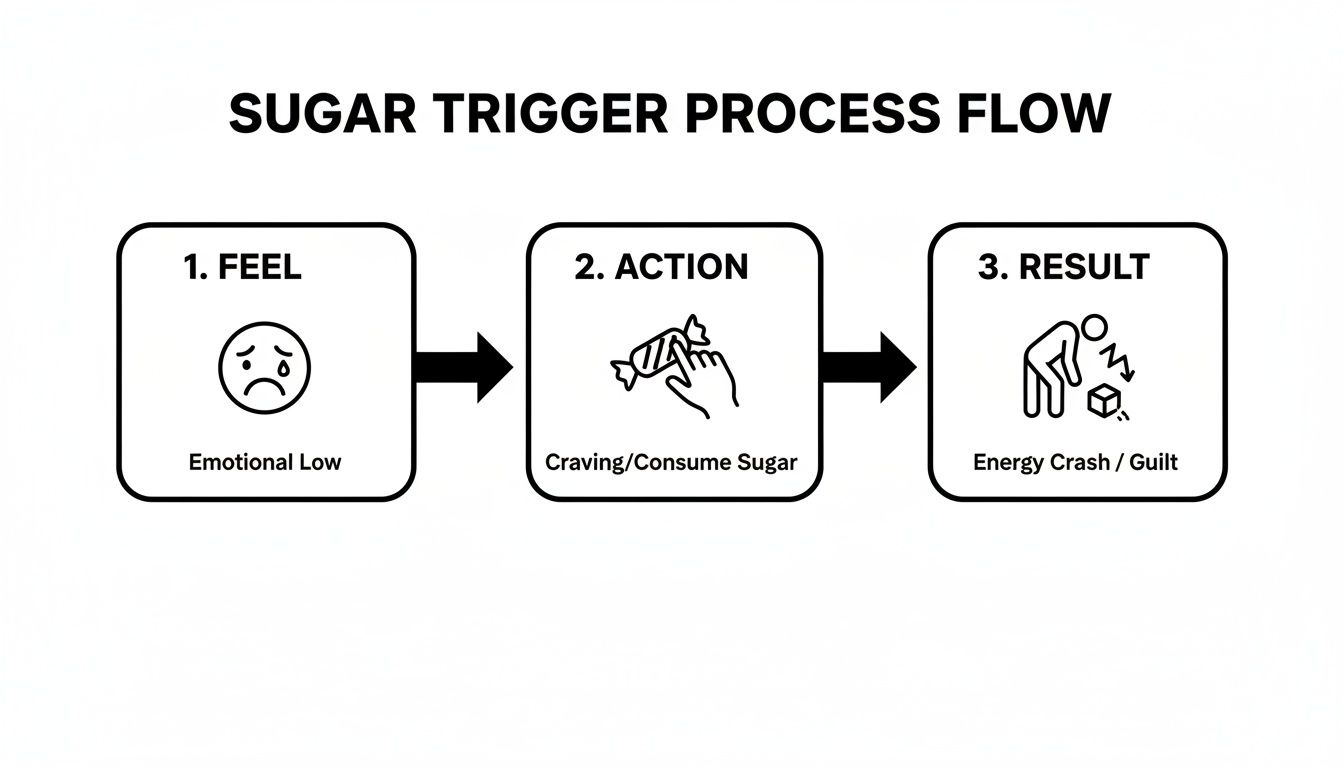
As you can see, that emotional low often feels like a direct pipeline to a sugar binge, giving you a quick lift before the inevitable crash that leaves you feeling worse and craving more.
Cold Turkey: The Decisive Reset
Going "cold turkey" is the fast and furious approach. You cut out all added sugars and refined carbs all at once, usually for a set period like 30 days. It’s intense, no doubt, but it can break that dopamine feedback loop much faster and reset your palate in record time.
This route demands more prep work. You'll need to become an expert label reader, plan your meals meticulously, and have approved snacks on hand 24/7. It's a full-on commitment with very little wiggle room, but for people who thrive on clear rules and a big challenge, it can be incredibly effective.
This might be for you if you:
- Have an "all-or-nothing" personality and find that trying to moderate just doesn't work.
- Need to see results quickly to stay motivated.
- Are ready to take on a significant, short-term challenge to completely reset your system.
Gradual Reduction vs Cold Turkey: A Comparison
So, which approach is best for you? There's no single right answer—it's about what fits your life and your personality. This table breaks down the key differences to help you decide.
| Factor | Gradual Reduction | Cold Turkey |
|---|---|---|
| Pace | Slow and steady, reducing intake over weeks or months. | All-at-once elimination, typically for a set period (e.g., 30 days). |
| Sustainability | High. Easier to maintain long-term as it builds lasting habits. | Lower for some. Can feel too restrictive to maintain permanently. |
| Withdrawal | Milder, less intense symptoms as the body has time to adjust. | More intense withdrawal symptoms are common in the first week. |
| Mindset | Focuses on progress over perfection, building small wins. | Requires strong discipline and an "all-or-nothing" commitment. |
| Best For | People who prefer sustainable changes and dislike feeling deprived. | Individuals who thrive on clear rules and want a quick system reset. |
Ultimately, whether you choose the slow burn or the clean sweep, the most important thing is to choose the path you can genuinely stick with.
Core Tactics for Any Action Plan
No matter which path you take, some foundational habits will make all the difference. These tactics work by stabilizing your blood sugar and getting ahead of the physical drivers behind your cravings.
Master Meal Timing Skipping meals is a recipe for a sugar binge. When your blood sugar plummets, your brain screams for the fastest energy source it knows: sugar. A simple fix is to eat balanced meals or snacks every 3-4 hours. This keeps your energy levels on an even keel and the craving monster quiet.
A well-timed, protein-rich meal is one of the most effective preventative measures against an afternoon sugar binge. Don't wait until you're starving to eat.
Hydration Is Non-Negotiable It's amazing how often we mistake dehydration for hunger or a sugar craving. Before you grab that cookie, try drinking a big glass of water and waiting 15 minutes. You might be surprised when the craving just... disappears. Keep a water bottle with you at all times; it's your first line of defense.
Crowd Out The Bad with The Good Instead of obsessing over what you can't have, focus on what you can add. Pack your plate with lean proteins, fiber-filled veggies, and healthy fats. These foods keep you full and satisfied, helping to manage the hormonal signals that trigger cravings. When you fill up on the good stuff, there’s simply less room (and less desire) for junk.
Handling Social Situations Going out to eat or to a party doesn't have to be a minefield. A great trick is to check the menu online beforehand and pick out a healthy option. At parties, make a point to stand away from the dessert table and focus on the people you're with. If you do decide to have a treat, make it a conscious choice, not a mindless grab. For more ideas, check out our guide on the best foods for appetite control.
Building your action plan is all about creating a roadmap that works for you. Pick the approach that feels right, weave these core tactics into your daily life, and remember that consistency—not perfection—is what will ultimately set you free.
Load Up on Protein and Make Savory Swaps
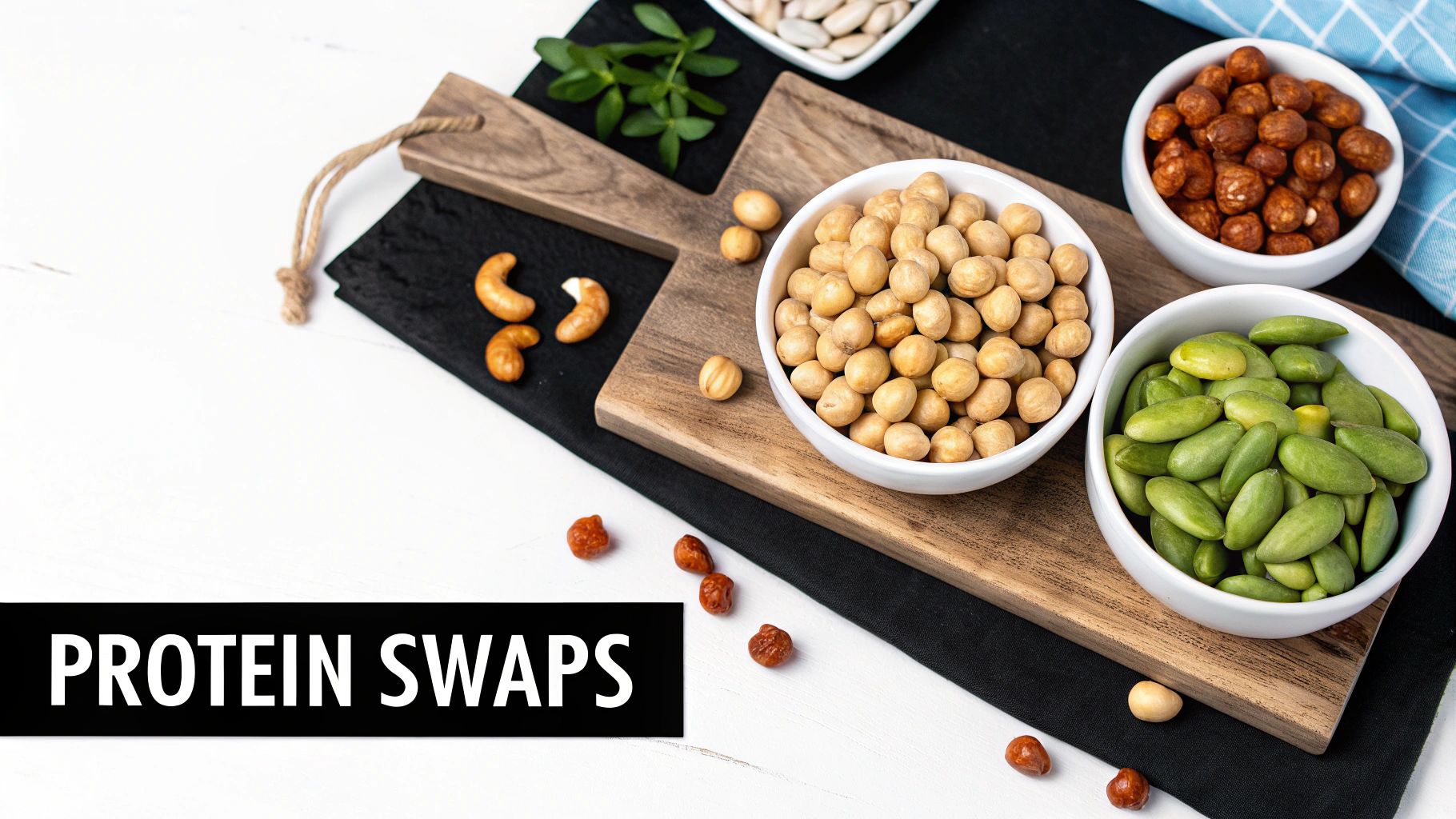
When you're figuring out how to overcome sugar addiction, the secret isn't about what you take away. It's about what you strategically add. White-knuckling it through deprivation rarely works for long. Instead, your most powerful tool is protein.
Protein is the key to shutting down hunger signals and keeping your energy on an even keel. It puts you back in the driver's seat of your cravings.
When you eat a protein-rich food, it gets to work on a hormonal level, creating a deep feeling of fullness called satiety. It triggers the release of hormones like peptide YY (PYY) and GLP-1, which basically send a clear message to your brain: "Hey, we're good down here. Satisfied." This powerfully silences that frantic, primal urge for a quick sugar hit.
Think of it this way: sugar is like a piece of kindling—it gives you a quick, intense flash of energy before you crash. Protein is a slow-burning log, providing steady, sustained fuel for hours. Prioritizing protein is the most direct way to get off the blood sugar roller coaster that drives so many of your cravings.
The Power of the Savory Switch
A huge hurdle for many people is the simple habit of reaching for a snack. Your brain isn’t just screaming for sugar; it's often craving the act of snacking itself—the crunch, the flavor, the mental break. This is where smart, savory swaps become your secret weapon. Instead of fighting the urge to snack, you simply redirect it.
Your goal is to build an arsenal of protein-packed, savory alternatives that are ready to go at a moment's notice. The key is making them just as convenient and satisfying as the junk you're trying to leave behind.
Here’s why this works so well:
- It hits the texture spot: If you're craving something crunchy or chewy, a high-protein snack can deliver that exact same satisfying mouthfeel.
- It breaks the sweet-reward cycle: Choosing something savory actively retrains your palate. You begin to weaken the brain’s deep-seated connection between snacking and sweetness.
- It provides real fuel: Unlike an empty-calorie treat, a protein snack gives your body the building blocks it needs for muscle health and sustained energy.
This strategy is more critical than ever, especially when you consider that a staggering 75% of packaged foods in the U.S. contain added sweeteners. Having your own pre-approved, healthy options on hand is non-negotiable for success.
Building Your Go-To Snack Arsenal
When a craving strikes, having delicious, convenient options ready is the difference between winning the moment and giving in. The best snacks are high in protein, easy to grab, and require little to no prep.
Here are a few powerful, plant-based ideas to get you started:
- Roasted Chickpeas: Toss a can of chickpeas with olive oil and spices like smoked paprika and garlic powder, then roast until crispy. They deliver an amazing crunch and a solid dose of protein and fiber.
- Edamame: A cup of steamed, lightly salted edamame is a true protein powerhouse. It's simple, satisfying, and you can buy it frozen for maximum convenience.
- High-Protein Puffs: For the ultimate grab-and-go solution, snacks like Gym Snack’s Cheddar Cheeze puffs are perfect. They're specifically designed to be savory, crunchy, and packed with over 15g of plant-based protein per serving—hitting all the satisfaction notes without the sugar crash.
- Savory Nut and Seed Mix: Make your own mix of almonds, walnuts, pumpkin seeds, and sunflower seeds. A small handful is incredibly satiating and provides healthy fats along with quality protein.
The best defense is a good offense. Prepare your savory snacks in advance so that when a craving hits, your healthy choice is the easiest choice.
Spending just 30 minutes on a Sunday portioning out nuts into small bags or roasting a big batch of chickpeas can be a total game-changer for your week. This small time investment eliminates decision fatigue and makes staying on track feel almost effortless.
For more inspiration, check out this fantastic list of high-protein savory snacks to keep your rotation fresh and exciting. By focusing on adding protein and making these smart savory swaps, you’re not just fighting cravings—you’re fundamentally changing your body's chemistry and your relationship with food for good.
Navigating Setbacks and Staying on Track for Good
Let’s be honest: the road to kicking a sugar habit is rarely a straight line. You’re going to have moments of weakness. You might find yourself eating the cupcake at the office party. That's not failure—it's just data.
The biggest trap I see people fall into is the "all-or-nothing" mindset. One slip-up makes them feel like they've blown it, so they figure they might as well binge for the rest of the day. This black-and-white thinking is your real enemy, not the occasional cookie.
True, long-term success is built on resilience. It’s about your ability to get back on course quickly after a detour. Every single setback is a golden opportunity to learn what triggered you and figure out how to handle that situation better next time.
What to Do Right After a Slip-Up
The moments immediately following an unplanned sugar indulgence are critical. How you respond sets the stage for everything that comes next. Instead of spiraling into guilt, you need to take immediate, positive action to get back in the driver's seat.
Here’s your immediate recovery plan:
- Hydrate, Hydrate, Hydrate. Sugar can be dehydrating and often triggers even more cravings. The first thing you should do is drink a large glass of water. It helps your system process the sugar and immediately re-establishes a healthy habit.
- Plan Your Next Healthy Meal. The best thing you can do is focus on what's next. Decide exactly what you’re going to eat for your next meal. Make sure it's packed with protein and fiber. This simple act shifts your focus from a past mistake to a future win.
- Get Moving (Gently!). A short, 10-minute walk can do wonders. It helps stabilize your blood sugar, clears your head, and releases feel-good endorphins that counteract that dreaded post-sugar slump. Think of it as a physical reset button, not a punishment.
The goal here isn't perfection; it's persistence. A single sugary snack doesn't undo weeks of progress unless you let it. Your next healthy choice is always just one meal away.
Building Resilience for Lasting Change
Successfully breaking free from sugar for the long haul requires you to build mental resilience and thrive through adversity. This mental toughness is what turns a short-term diet into a sustainable way of life. It’s all about creating systems and mindsets that protect you when things get tough.
One of the most powerful strategies you can develop is mindful eating. This isn't some mystical practice; it's simply paying full attention to the experience of eating, both what's going on in your body and around you.
Before reaching for something sweet, just pause. Ask yourself: Am I actually hungry? Or am I just bored, stressed, or tired? This simple check-in creates a crucial gap between the impulse and the action. It gives you the power to make a conscious choice instead of just reacting on autopilot. Over time, it helps you reconnect with your body’s real hunger signals, which years of sugar have likely distorted.
Create an Environment That Sets You Up for Success
You can't rely on willpower alone to fight temptation 24/7—it's a finite resource. A much smarter approach is to engineer your surroundings to make the healthy choice the easy choice.
Practical Environmental Tweaks:
- Purge Your Pantry. If the junk food isn't in your house, you can't eat it in a moment of weakness. Be ruthless. Get rid of the sugary snacks, sodas, and desserts that call your name.
- Restock with Power Foods. Fill your fridge and pantry with your go-to savory, high-protein snacks. Keep roasted chickpeas, pre-portioned nuts, and plant-based protein puffs right at eye level and easy to grab.
- Talk to Your People. Let your family and close friends know what you're doing. Ask for their support. This might mean asking them not to offer you dessert or to help choose restaurants with healthier options when you go out together.
By reframing setbacks as learning experiences, mastering your immediate recovery, and building a resilient, supportive environment, you create a solid foundation for lasting freedom from sugar. This isn’t about a temporary diet; it’s about fundamentally rewiring your habits for a much healthier life.
Your Questions, Answered
When you decide to break up with sugar, a lot of questions pop up. It’s completely normal. Let's walk through some of the most common ones I hear from people starting this journey, so you can feel clear and confident moving forward.
How Long Does This Actually Take?
This is the big one, isn't it? The honest answer is that it's different for everyone. Your unique biology and how long you've been relying on sugar play a huge role.
Physically, those first few days can be the toughest. You might be dealing with headaches, brain fog, or a serious case of the grumpies. These acute withdrawal symptoms usually peak within the first 3-7 days and then start to fade. For most people, things feel much more manageable within two or three weeks.
But the mental game is a longer one. The psychological cravings are the real challenge. A huge turning point for many happens around the 30-60 day mark. This is when you'll likely notice a massive drop in cravings and a real shift in how you taste things. That super-sweet coffee you used to love might suddenly taste cloying.
The goal here isn't to race to a finish line. It's about building new, healthier habits that stick around for good. Focus on making consistent progress, not hitting a specific date on the calendar.
Should I Go Cold Turkey or Taper Off Slowly?
This is a classic dilemma, and there’s no single right answer. The best approach is the one you can actually stick with. Think about your personality.
-
Going "cold turkey" is like ripping off the band-aid. It’s intense, but it can be incredibly effective for decisively breaking that dopamine cycle your brain is stuck in. If you're an "all-or-nothing" person, this might be your best bet for a clean reset.
-
Gradual reduction is often the more sustainable path. It gives your body, your taste buds, and your daily routines time to adjust without a major shock to the system. This can make the whole process feel less overwhelming and soften the blow of withdrawal symptoms.
A good middle-of-the-road strategy is to start by cutting back on your biggest sugar culprits first—like that daily soda or dessert. If you find that even a little bit triggers more cravings, you can always switch to a full elimination for a couple of weeks to reset.
What Can I Eat When a Sugar Craving Hits?
When a craving strikes, your best defense is a snack that stabilizes your blood sugar, not one that sends it on another rollercoaster. Think protein, fiber, and healthy fats. These are the things that will actually make you feel full and satisfied.
Instead of trying to white-knuckle your way through a craving, have a smart, savory swap ready to go. Here are some of my go-tos:
- A handful of almonds or walnuts
- Roasted chickpeas tossed with sea salt and smoked paprika
- Crisp apple slices with a spoonful of natural peanut or almond butter
- Steamed and lightly salted edamame
For something that feels like a classic "snack" without the guilt, the plant-based protein puffs from Gym Snack are a fantastic option. They hit that savory, cheesy note you’re looking for and pack over 15g of protein per serving. You get the crunch and flavor you want, without the inevitable sugar crash.
Do I Have to Give Up Fruit, Too?
Absolutely not! This is a huge misconception that leads to a lot of unnecessary stress and restriction.
Here's the key difference: the natural sugar in whole fruit (fructose) comes bundled with fiber, water, and a ton of nutrients. That fiber is a game-changer because it dramatically slows down how quickly the sugar enters your bloodstream.
Because of this, whole fruits don't cause the same sharp blood sugar spikes and crashes that you get from the added sugars in candy, pastries, and sodas. While it's smart to be mindful of your portions—especially with sweeter fruits like mangoes or grapes—whole fruit is a fantastic and healthy way to satisfy that desire for something sweet.
Ready to crush your cravings with a snack that actually works for you? Gym Snack offers savory, high-protein puffs designed to keep you full and energized. Build your custom pack today and make your healthy choice the easy choice.